

Are you searching for the foundational element to complete your home audio experience? That missing low-end punch can make the difference between a good sound system and a truly immersive one. This guide is crafted for anyone looking to add serious bass depth to their home theater or music listening setup without the complexity of active components. We have evaluated top models to help you find the best passive subwoofers for your space and needs.
Selecting the right subwoofer involves more than just power. You must consider room size, your existing speakers, and the type of bass response you desire. A well-chosen passive subwoofer seamlessly integrates with your amplifier, delivering the deep frequencies that bring movies and music to life. For more insights on tailoring bass to your listening preferences, explore our guide on choosing the best subwoofers for music.

Pros
- Exceptionally clean and accurate bass output with no distortion, hum, or port chuffing reported by users
- Deep frequency extension to 29Hz rivals subwoofers well above its price point
- Quick and straightforward setup with standard RCA connections compatible with virtually all AV receivers
- Runs cool even during extended high-volume listening sessions, indicating reliable thermal management
- Stylish spun-copper woofer design stands out visually while delivering premium acoustic performance
Cons
- Wired-only connectivity may feel limiting for users who prefer a wireless or Bluetooth subwoofer setup
- The rear-firing port requires a few inches of clearance from walls, which can restrict placement in smaller rooms
- At 12 inches it is a sizable unit, so buyers with very compact living spaces should measure carefully before purchasing
The Klipsch R-120SW is a 12-inch powered subwoofer designed for home theater and high-fidelity audio enthusiasts who want serious bass performance without stepping into audiophile-tier pricing. It fits seamlessly into 5.1 and 7.1 surround sound configurations and pairs naturally with other Klipsch Reference speakers, though it performs equally well alongside third-party systems.
The standout feature here is the 12-inch spun-copper IMG (Injection Molded Graphite) woofer, which is engineered to be both lightweight and extremely rigid. This combination minimizes cone breakup and distortion, resulting in bass that is tight, controlled, and genuinely deep, extending all the way down to 29Hz. The 400-watt all-digital amplifier ensures that power delivery is efficient and accurate, with multiple reviewers confirming that the sub remains clean and distortion-free even when pushed hard during action movies or bass-heavy music.
Build quality is solid throughout. The wood enclosure feels substantial and premium, the acoustically transparent grille adds a polished finish, and the iconic spun-copper woofer gives it a distinctive visual identity. The rear-firing bass-reflex port is well-tuned, and users report no chuffing or unwanted noise from the port even at elevated volumes. The unit also runs cool during extended use, which speaks well to its long-term reliability.
There are a few practical considerations to keep in mind. The subwoofer is wired only via RCA, so those hoping for wireless flexibility will need to look elsewhere or invest in a separate wireless adapter. The rear port also requires a few inches of breathing room from the wall for optimal performance, which can be a minor challenge in tighter spaces. Additionally, the physical footprint is substantial, so compact rooms may feel the size more acutely.
Overall, the Klipsch R-120SW is one of the most compelling subwoofers available in its class. It delivers deep, powerful, and genuinely clean bass that transforms movies, gaming, and music alike. With a strong warranty, excellent build quality, and near-universal praise from a large pool of verified buyers, it earns a strong recommendation for anyone serious about upgrading their home audio setup.
Driver Size: 12-inch spun-copper IMG woofer
Amplifier Power: 200 watts RMS / 400 watts peak
Frequency Response: 29Hz to 120Hz (+/- 3dB)
Maximum Acoustic Output: 116dB
Enclosure Type: Bass-reflex with rear-firing port
Connectivity: RCA (wired)
Compatible Configurations: 5.1 and 7.1 surround sound systems
Enclosure Material: Wood
Color: Black
Power Source: Corded Electric
Warranty: 5 years on woofer, 2 years on amplifier
Included in Box: Subwoofer, grille, power cord, user manual
Model Number: R-120SW
UPC: 743878036213
Manufacturer: Klipsch
If you are shopping for your first subwoofer or upgrading from a smaller entry-level unit, the Klipsch R-120SW hits a sweet spot between performance, build quality, and value. It is best suited for medium to large living rooms where its deep bass extension and high output capability can truly shine. Smaller rooms may find the power overwhelming at higher volume levels.
This subwoofer pairs especially well with Klipsch Reference series speakers, but it integrates smoothly with any home theater receiver that has a dedicated subwoofer pre-out via RCA. Before purchasing, confirm that your AV receiver has a subwoofer output jack, as this is a wired-only unit. Most modern receivers include this as standard.
For placement, allow at least 3 to 6 inches of clearance behind the unit so the rear-firing port can breathe properly. Corner placement can enhance bass output but may make it sound boomy in some rooms. Experimenting with placement and using your receiver's bass management settings will help you dial in the ideal balance for your specific space and speaker setup.

Pros
- Impressive 300W peak power output for a subwoofer in this price range
- Deep 32Hz frequency response brings movie soundtracks and music to life with real impact
- Flexible phase and crossover controls make integration with existing speaker setups straightforward
- Solid wood enclosure construction minimizes unwanted resonance and cabinet coloration
- Backed by Klipsch's reputation for audio quality and a strong limited warranty
Cons
- Wired-only connectivity via RCA means no wireless or Bluetooth streaming options for flexible placement
- At over 16 inches tall, the cabinet footprint may feel bulky in smaller living rooms or tight media setups
The Klipsch R-100SW is a 10-inch floor-standing subwoofer designed for home theater and stereo enthusiasts who want authoritative, room-filling bass without breaking the bank. It fits naturally into any 2.1, 5.1, or 7.1 surround sound system and is equally at home in a dedicated media room or a large living space.
At the heart of this subwoofer is a 10-inch front-firing spun-copper IMG woofer paired with an all-digital amplifier rated at 150 watts continuous and 300 watts peak. This combination delivers a frequency response reaching down to 32Hz, which is deep enough to reproduce the low-end rumble of action films, the punch of kick drums, and the resonance of pipe organs with convincing realism.
The R-100SW is built with a wood enclosure finished in a clean black brushed polymer veneer, giving it a refined appearance that blends into most home decor. The front-firing driver configuration adds placement flexibility, allowing the unit to perform well even when positioned close to a wall. Controls for volume, low-pass crossover frequency, and 0 to 180-degree phase adjustment are accessible on the rear panel, making it easy to dial in the perfect blend with your main speakers.
On the downside, the R-100SW is strictly a wired subwoofer, connecting via RCA inputs only, which limits placement flexibility compared to wireless-enabled alternatives. The cabinet is also fairly substantial in size, so buyers with compact rooms should measure carefully before purchasing.
Overall, the Klipsch R-100SW delivers exceptional bass performance and build quality at its price point. With a class-leading 5-year woofer warranty, broad receiver compatibility, and Klipsch's proven acoustic engineering, it is a compelling choice for anyone looking to add serious low-end impact to their home audio system.
The Klipsch R-100SW features a 10-inch (25.4 cm) spun-copper IMG woofer in a front-firing configuration housed in a wood enclosure. Amplifier power is rated at 150 watts continuous and 300 watts peak, delivered by an all-digital amplifier stage.
Frequency response spans 32Hz to 120Hz at plus or minus 3dB, making it suitable for both cinematic low-frequency effects and musical bass reproduction. Connectivity is handled via line-level LFE RCA inputs, ensuring compatibility with the vast majority of AV receivers and stereo amplifiers.
Rear-panel controls include a volume knob, variable low-pass crossover, and a 0 to 180-degree phase switch. The auto power-on feature activates the subwoofer when a signal is detected and powers it down during periods of silence. Cabinet dimensions are approximately 14.5 inches wide by 12.5 inches deep by 16.4 inches tall. The unit is covered by a 5-year limited warranty on the woofer and a 2-year limited warranty on the amplifier.
If you are building or upgrading a home theater system and want to add deep, impactful bass, the Klipsch R-100SW is worth serious consideration. It pairs especially well with Klipsch Reference series bookshelf or floor-standing speakers, but its flexible crossover controls make it compatible with virtually any brand of main speakers.
For rooms up to around 2,000 square feet, the R-100SW provides more than enough output. If you have a very large open-plan space or you listen at consistently high volumes, you may want to consider a larger 12-inch model for additional headroom. For typical living rooms and dedicated home theaters, this unit is more than capable.
When positioning the subwoofer, try placing it near a front corner of the room for maximum bass reinforcement, then use the phase control to align it with your main speakers. Connect it to your AV receiver using a standard RCA subwoofer cable and set your receiver's crossover to around 80Hz as a starting point, adjusting from there based on your main speakers' bass extension. The auto power-on feature means you can leave it plugged in without worrying about standby power consumption.
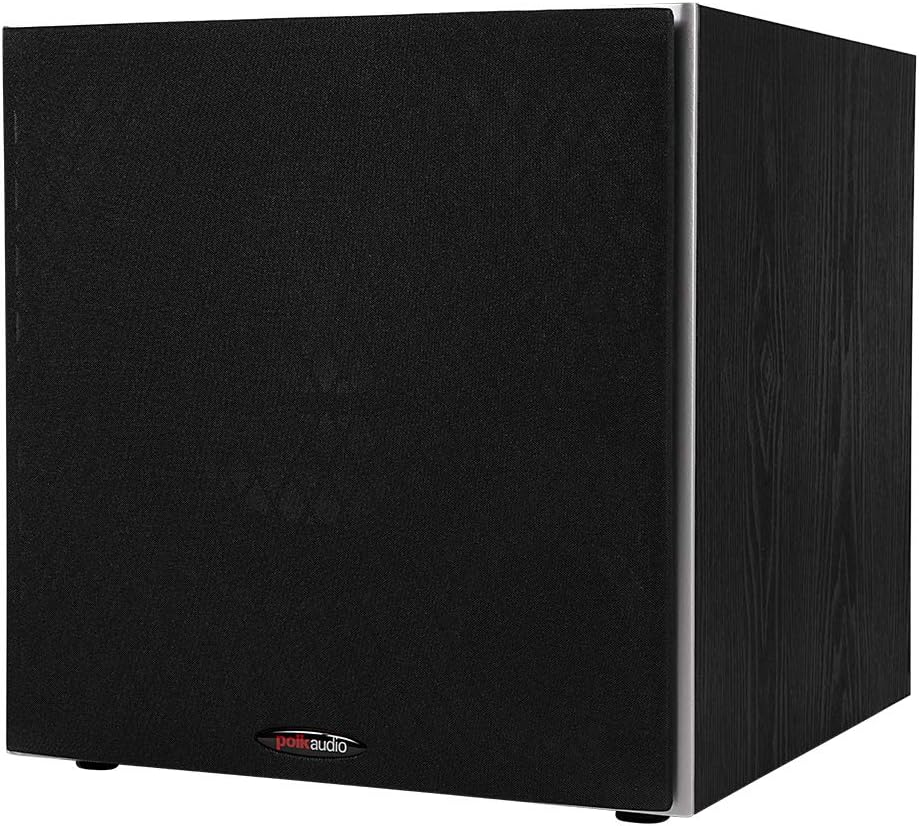
Pros
- Powerful 100W dynamic output in a compact, space-saving enclosure ideal for smaller rooms
- Versatile hookup options including RCA and speaker-level connections suit a wide range of receivers and amplifiers
- Adjustable crossover and volume controls make tuning simple and precise for any listening environment
- Durable resonance-free driver materials ensure consistent performance during extended high-volume use
- Comprehensive 5-year limited warranty with dedicated amplifier coverage adds strong long-term value
Cons
- At 11.8 kg the unit is relatively heavy for its size, which may complicate placement or repositioning in tight spaces
- The 40-160 Hz frequency response means it is optimized for bass duties only and will not extend into higher mid-range frequencies
- No wireless connectivity option means cable management is required for clean installation in modern setups
The Polk Audio PSW10 is a 10-inch powered subwoofer designed for home theater and stereo enthusiasts who want impactful bass without dedicating a large footprint to their audio setup. It targets small to mid-sized rooms and works as a straightforward upgrade to any existing speaker system, requiring no separate amplifier thanks to its fully self-contained design.
At the heart of the PSW10 is a Dynamic Balance woofer paired with a high-current 50W RMS amplifier capable of delivering up to 100 watts of dynamic power. The configured directed port enhances bass depth and extension, producing a frequency response of 40-160 Hz that covers the full range of cinematic low-end effects and musical bass lines with impressive accuracy and minimal distortion.
The cabinet is engineered from non-resonant materials, which prevents unwanted vibrations from coloring the sound at high volumes. A detachable front grille, clean black finish, and compact 17 x 14.25 x 14.5 inch dimensions give the PSW10 a tidy, unobtrusive appearance that fits neatly alongside most furniture. Connectivity is straightforward, with RCA line-level and speaker-level inputs and outputs on the rear panel alongside a Phase Toggle Switch for users running dual subwoofer configurations.
One honest drawback is the lack of wireless connectivity, which is increasingly common at this price point and would simplify placement in modern living rooms. The unit is also on the heavier side at nearly 12 kg, so moving it around during setup can be a bit cumbersome. Additionally, the crossover filter tops out at 160 Hz, so users pairing it with small satellite speakers should verify their main speakers can cover the upper bass and midrange adequately.
Overall, the Polk Audio PSW10 is a well-engineered, reliable subwoofer that delivers genuine low-frequency performance in a compact package. Its flexible inputs, adjustable crossover, and robust warranty make it a smart and accessible choice for anyone looking to add serious bass to a home theater or music system without complexity or compromise.
Driver Size: 10 inches | Amplifier Power: 50W RMS, 100W Dynamic | Frequency Response: 40-160 Hz (-3dB) | Impedance: 8 ohm | Channels: 5.1 compatible
Crossover: Continuously variable 80-160 Hz low-pass filter | Connectivity: RCA line-level input/output, Speaker-level input/output | Power Source: AC corded | Mounting: Floor mount
Dimensions: 17 inches D x 14.25 inches W x 14.5 inches H | Weight: 11.8 kg | Color: Black | Model Number: AM1055-C (PSW10)
Warranty: 5-year limited warranty, 3 years on amplifier parts and labor | In the Box: Powered subwoofer, grille, online registration card, owner's manual | Manufacturer: DEI Holdings (Polk Audio)
If you are shopping for your first subwoofer, the PSW10 is an excellent starting point. Its self-contained amplifier means you do not need to budget for a separate sub amp, and its dual input options make it compatible with virtually any AV receiver, stereo amplifier, or even a soundbar with a subwoofer output.
Room size is an important consideration. The PSW10 performs best in rooms up to roughly 2,000 square feet. For larger spaces or dedicated home theater rooms, you may want to consider a larger driver or a higher-wattage model, but for typical living rooms and apartments this unit delivers more than enough output.
When positioning the subwoofer, start by placing it near the front of the room close to your main speakers, then use the rotary volume and crossover controls to dial in a balanced blend. The Phase Toggle Switch is particularly useful if you ever expand to a dual-subwoofer setup, helping eliminate bass cancellation between units.
Buyers who prioritize wireless convenience or who are building a fully cable-free setup should note that the PSW10 uses only wired connections. In that case, pairing it with an aftermarket wireless subwoofer adapter is a straightforward workaround. For everyone else, the PSW10 represents a dependable, high-value choice backed by a strong warranty and Polk Audio's decades of acoustic engineering expertise.
Buying Guide for Passive Subwoofers
Driver Size and Room Compatibility
The physical size of the woofer directly influences its bass output capability. Larger drivers, like 12-inch models, can move more air, producing deeper and more powerful low frequencies suitable for medium to large rooms. Smaller 10-inch drivers are often ideal for compact spaces or apartments where overwhelming bass is a concern.
Matching the subwoofer to your room dimensions prevents underwhelming performance or boomy, uncontrolled sound. Consider your primary listening area and whether you need room-shaking effects for movies or tight, accurate bass for music. Our Speakers – Home Audio category offers more resources for system building.
Amplifier Power and Sensitivity
A passive subwoofer relies on your external amplifier for power. Therefore, understanding power handling and sensitivity is crucial. Sensitivity, measured in decibels, indicates how efficiently the subwoofer converts amplifier power into sound. A higher sensitivity rating means it will produce more volume with less power.
You must ensure your amplifier or receiver can deliver adequate, clean power to the subwoofer’s impedance rating. An underpowered amp can lead to distortion and potential damage. Always verify your amplifier’s specifications to create a harmonious and powerful system. For high-performance setups, see our recommendations for the best high-end home audio speakers.
Enclosure Design and Bass Response
The type of enclosure significantly shapes the subwoofer’s sound character. Sealed enclosures provide tight, accurate, and fast bass, which is excellent for music. Ported or bass-reflex designs, which use a tuned port, generally offer greater output and deeper extension, making them popular for home theater applications.
Your choice should align with your content priorities. If your system is for critical music listening, a sealed design might be preferable. For cinematic explosions and deep effects, a ported subwoofer could deliver the impactful experience you seek. Learn more about audio components in our Home Audio hub.
Connectivity and Integration
Ease of integration with your existing system is a practical concern. Most passive subwoofers connect via standard speaker wire terminals. However, you should check for features like bi-wiring capability or multiple input options that offer setup flexibility. Proper integration ensures the subwoofer blends seamlessly with your main speakers.
The goal is a cohesive soundstage where the bass appears to come from your main speakers, not a separate box in the corner. Taking time to properly position the subwoofer and adjust crossover settings is as important as the purchase itself. For tips on optimizing audio in smaller spaces, consider our article on the best speakers for apartments.
Final Thoughts
Upgrading your system with a dedicated passive subwoofer is a transformative step toward full-range audio. For those seeking powerful, theater-grade impact, the Klipsch R-120SW Subwoofer, Black stands out with its robust output. If your priority is value and compact performance for music and movies, the Polk Audio PSW10 10″ Subwoofer offers a compelling balance. Carefully assess your room and amplifier to make the choice that will deliver the deep, clear bass your content deserves.
Frequently Asked Questions
What is the difference between a passive and an active subwoofer?
A passive subwoofer requires an external amplifier to provide power, just like traditional speakers. An active subwoofer has a built-in amplifier. Passive models offer more customization for high-end systems, while active subwoofers are generally simpler to set up as all-in-one solutions.
Can I use any amplifier with a passive subwoofer?
Not exactly. You must match the amplifier’s power output and impedance compatibility with the subwoofer’s requirements. Using an underpowered amp can cause distortion, while an incompatible impedance can damage equipment. Always consult both the subwoofer and amplifier manuals before connecting.
How do I make my subwoofer sound balanced with my speakers?
Start with proper placement, often in a corner or along a wall for reinforced bass. Use your receiver’s or amplifier’s crossover setting to blend the frequencies, typically between 80-120 Hz. Adjust the subwoofer’s volume level so it supports the main speakers without overpowering them, creating a unified sound field.
Are larger subwoofer drivers always better?
Not necessarily. While larger drivers can move more air for deeper bass, their performance heavily depends on enclosure design and room size. A well-designed 10-inch subwoofer can outperform a poorly designed 12-inch model. The best choice depends on your specific room acoustics and desired sound signature for 2026.


Write Your Review
No reviews yet. Be the first to share your experience!