

Your home stereo system delivers rich, room-filling sound that modern smart speakers often can’t match. Yet, it sits silent because flipping through CDs or connecting a cable feels inconvenient in a wireless world. You want to stream playlists, podcasts, and audiobooks directly from your phone to your cherished speakers without compromising on audio fidelity.
This guide is for anyone looking to bridge that gap. We have reviewed leading wireless audio receivers that add modern streaming capabilities to existing amplifiers, receivers, and powered speakers. Each product here represents a different path to wireless freedom, from simple Bluetooth adapters to full-featured multiroom streamers. For a broader look at wireless audio solutions, explore our Wireless & Streaming Audio category.

Pros
- Exceptional sound quality thanks to the dedicated 32-bit DAC and aptX-HD Bluetooth codec
- Versatile dual outputs (RCA and optical) work with a wide range of home audio equipment
- Bluetooth 5.3 delivers a stable, low-latency connection with impressive 100-foot range
- Compact and discreet design fits neatly into any existing audio rack or shelf
- Backed by a 3-year manufacturer warranty, reflecting strong build confidence
Cons
- Older devices using Bluetooth 2.1 or earlier may experience audio stuttering, requiring a modern source device for best results
The Audioengine B1 is a high-performance Bluetooth music receiver designed to bring wireless audio streaming to home stereo systems, amplifiers, powered speakers, and other audio components that lack built-in Bluetooth. It is purpose-built for audiophiles and music enthusiasts who want the convenience of wireless streaming without sacrificing the sound quality of their existing equipment.
The standout feature of the B1 is its dedicated 32-bit digital-to-analog converter, which elevates the listening experience well beyond what typical Bluetooth adapters offer. Combined with Bluetooth 5.3 and aptX-HD support, the device handles high-resolution audio streams with impressive clarity, dynamic range, and detail. Reviewers consistently note a dramatic improvement over competing products, describing the sound as fuller, broader, and more immersive.
Connectivity is a strong suit, with both analog RCA and digital optical outputs giving users the flexibility to integrate the B1 into virtually any audio setup. The unit measures a compact 3.5 x 4 x 1 inch and includes an RCA extension cable, making installation straightforward. Setup is genuinely plug-and-play, with pairing handled quickly across iOS, Android, Windows, and MacOS devices.
The primary drawback to be aware of is Bluetooth version compatibility on the source device. Users with older computers or phones running Bluetooth 2.1 or earlier may encounter stuttering, as the bandwidth is insufficient for high-quality audio streaming. This is a limitation of the older source hardware rather than the B1 itself, but it is worth confirming your device supports a modern Bluetooth standard before purchasing.
Overall, the Audioengine B1 is one of the most capable and well-regarded Bluetooth receivers on the market. It earns its premium price through genuinely superior audio performance, versatile connectivity, and a polished, reliable user experience. For anyone looking to modernize a beloved stereo system or high-end audio rig with wireless capability, the B1 is an outstanding and highly recommended choice.
Bluetooth Version: Bluetooth 5.3 with aptX-HD support for high-resolution wireless audio streaming.
Audio Outputs: Dual RCA analog outputs and a digital optical (TOSLINK) output for flexible system integration. Stereo, 2-channel configuration.
DAC: Premium 32-bit digital-to-analog converter for superior audio fidelity from wireless sources.
Wireless Range: Up to 100 feet in typical home environments. Compatible with iOS, Android, Windows, and MacOS source devices.
Dimensions and Weight: 3.5 inches deep x 4 inches wide x 1 inch high, weighing 16 ounces. Includes RCA extension cable. Model number B1, covered by a 3-year manufacturer warranty.
Who should buy the Audioengine B1? This receiver is the ideal choice for audiophiles and serious music listeners who own quality stereo equipment and want to add wireless streaming without downgrading their sound. It is especially well-suited for those with vintage hi-fi systems, tube amplifiers, or high-end powered speakers.
What to check before buying: Confirm that your source device (phone, tablet, or computer) supports Bluetooth 4.0 or later for the best streaming experience. While the B1 will pair with older Bluetooth versions, high-quality audio performance requires sufficient bandwidth from the sending device.
Which output should you use? If your receiver or DAC has a digital optical input, using the optical output from the B1 will bypass its internal DAC and let your own equipment handle conversion, which may be preferable in very high-end setups. For most users, the RCA analog output combined with the B1's 32-bit DAC will deliver excellent results straight out of the box.
Alternatives to consider: If budget is a concern, more affordable Bluetooth adapters exist, but they typically lack the aptX-HD codec and high-quality DAC that define the B1's performance. For users who prioritize sound quality above all else, the B1 represents strong value at its price point within the premium segment.

Pros
- Outstanding sound quality with noticeable improvement over standard Bluetooth adapters
- Extremely easy setup, compatible with virtually any stereo receiver or powered speakers
- Reliable long-range wireless connection that maintains signal through multiple walls
- Versatile output options cover both legacy and modern audio equipment
- Premium build quality with a sleek, unobtrusive design that suits any rack or shelf
Cons
- Analog output volume level may feel slightly low on some systems, requiring phone-side adjustment
- Functions only as a receiver, not a transmitter, which may limit use cases for some buyers
- Premium price point may be a stretch for casual listeners who do not need audiophile-grade performance
The Auris Blume Pro is a high-resolution Bluetooth music receiver designed to modernize vintage and contemporary home audio systems. It is built for audiophiles and music enthusiasts who want the convenience of wireless streaming without compromising on sound fidelity. Whether you own a classic receiver from decades past or a modern AV amplifier, this compact device slots in seamlessly to unlock lossless audio from any smartphone, tablet, or computer.
At the heart of the Blume Pro is an ESS Sabre 32-bit/384kHz DAC paired with a Cirrus Logic digital conversion chip, delivering genuinely impressive audio performance. It supports the full suite of high-resolution Bluetooth codecs including Sony LDAC, Qualcomm aptX Adaptive, aptX HD, and aptX Low Latency. Customers consistently report a noticeable uplift in sound quality compared to older Bluetooth solutions, praising improved stereo separation, fuller bass, and elimination of background hum common with cheaper adapters.
The build quality reflects the premium price point. The anodized aluminum chassis feels solid and looks refined, and the 1.3-inch OLED display adds a practical touch by showing real-time codec, sampling rate, and track information. A high-gain external antenna extends the wireless range to around 100 feet, making it reliable across large rooms and through walls without dropouts.
On the downside, the Blume Pro is strictly a receiver and cannot be used to transmit audio, which rules it out for certain use cases. Some users also note that the analog RCA output volume can run a little low on certain systems, though this is easily compensated via the source device. At $149, it sits firmly in the premium segment and may be more than casual listeners need.
Overall, the Auris Blume Pro earns its strong reputation as one of the best Bluetooth receivers available for home audio. It delivers on its promise of lossless wireless sound, offers broad compatibility through multiple output types, and is backed by consistently positive real-world feedback. For anyone serious about audio quality and looking to add wireless capability to an existing system, this is a compelling and well-executed solution.
Bluetooth Version: 5.3 with high-gain external antenna, range up to 30m / 100ft through multiple walls.
Supported Codecs: LDAC, aptX Adaptive, aptX HD, aptX Low Latency, aptX, AAC, and SBC, covering virtually every modern source device.
DAC: ESS Sabre audiophile-grade 32-bit / 384kHz upsampling DAC with Cirrus Logic digital output chip for optical and coaxial conversion.
Outputs: Digital Optical (Toslink), Digital Coaxial (RCA), and Analog Stereo RCA. Supports stereo 2-channel audio output.
Display: 1.3-inch OLED screen showing Bluetooth status, codec type, sampling rate, and song metadata.
Dimensions and Weight: 4.37 x 2.95 x 1.34 inches, weighing 8.5 ounces. Housed in anodized aluminum with a black finish.
In the Box: Blume Pro unit, 100-240V USB power adapter, 2RCA to 2RCA stereo cable, 3.5mm to 2RCA splitter cable, USB to USB-C power cable, and self-adhesive feet bumpers.
Warranty: 1-year manufacturer warranty with 5-year EU spare part availability.
Who should buy the Auris Blume Pro? This device is ideal for audiophiles and music lovers who own a quality stereo receiver, AV amplifier, or powered speakers but lack modern wireless streaming capability. It is especially well-suited to those with vintage or legacy systems who do not want to replace working equipment just to gain Bluetooth functionality.
What audio source do you need? To get the most out of the Blume Pro, pair it with a device that supports LDAC or aptX HD. Sony Android phones and recent iPhones with AAC will deliver excellent results. If your phone only supports standard SBC Bluetooth, you will still hear an improvement over older adapters, but the full benefit of the premium DAC is best realized with higher-quality codecs.
Which output should you use? If your receiver or amplifier has a digital optical or coaxial input, use those first for the cleanest signal path. The analog RCA output is excellent for systems without digital inputs, and all necessary cables are included in the box so you can connect immediately without additional purchases.
Is it worth the price? Compared to budget Bluetooth adapters, the Blume Pro commands a significant premium. However, the combination of a true audiophile DAC, multiple high-res codec support, long-range antenna, and premium build quality justifies the cost for anyone who values sound quality. If you are simply looking to stream background music casually, a less expensive option may suffice, but for serious listening the Blume Pro represents strong value.

Pros
- Exceptional streaming protocol support covers virtually every major platform and voice assistant
- Hi-res 24-bit/192kHz output delivers audiophile-grade sound quality at a budget-friendly price point
- Easy setup with the WiiM app on iOS and Android, including Android devices without Google Play Services
- Versatile connectivity with optical, coaxial, RCA, USB-C, and Ethernet ports for broad compatibility
- Strong multiroom audio capabilities rivaling systems costing several times more
Cons
- AirPlay receiver only, it cannot transmit streams to other AirPlay-enabled speakers or devices
- The built-in DAC is adequate but audiophiles seeking the best analog output may prefer the upgraded WiiM Pro Plus with its premium AKM DAC chip
- Some users report minor software bugs, particularly with YouTube Music via Chromecast, though the app receives regular updates
The WiiM Pro is a network music streamer designed to breathe new life into existing stereo systems without requiring a full equipment overhaul. It sits in a compact, unobtrusive black box and connects to amplifiers, receivers, or DACs via optical, coaxial, or RCA outputs. It is aimed squarely at audiophiles and everyday music lovers who want modern, app-driven streaming tied to gear they already own and love.
Where the WiiM Pro truly shines is in its breadth of streaming support. AirPlay 2, Google Cast, Spotify Connect, TIDAL Connect, Amazon Music, Qobuz, Roon Ready, and DLNA are all on board, making it one of the most protocol-rich streamers at this price point. Hi-res playback up to 24-bit/192kHz is available through the digital outputs, and gapless playback ensures a seamless listening experience across compatible services.
Build quality is solid for the price, with a clean matte finish and a sensibly laid-out rear panel. The included accessory bundle is generous, featuring an optical cable, RCA cable, USB power adapter, and USB-C cable right in the box. Setup via the WiiM app is consistently praised by users as fast and intuitive, with the Android version notably not requiring Google Play Services.
There are a few limitations worth noting. The WiiM Pro is an AirPlay receiver only and cannot send streams to other AirPlay speakers. The onboard DAC performs well for most listeners, but those feeding the analog output directly into high-end amplifiers may notice a ceiling compared to the Pro Plus variant. Occasional minor app bugs, particularly around YouTube Music via Chromecast, have been flagged by some users, though firmware updates address these over time.
Overall, the WiiM Pro delivers remarkable value as a streaming upgrade for legacy stereo systems. It earns its top-two ranking in audio component receivers through a combination of wide compatibility, hi-res audio support, and a genuinely user-friendly experience. For anyone looking to modernize a beloved amplifier or receiver without spending a fortune, this is a hard device to beat.
Audio Output: Digital Optical (TOSLINK), Coaxial SPDIF, Analog RCA stereo. Supports up to 24-bit/192kHz hi-res audio on digital outputs and 24-bit/96kHz via TIDAL MQA core decoding.
Connectivity: Wi-Fi, Ethernet (wired LAN), Bluetooth. Connector types include USB Type-C, RCA, TOSLINK, Coaxial, and Ethernet for comprehensive integration options.
Streaming Protocols: AirPlay 2, Google Cast, Spotify Connect, TIDAL Connect, Amazon Music, Qobuz Connect, Roon Ready, DLNA, NAS, and Home Media Server support.
Voice Assistant Compatibility: Amazon Alexa, Google Assistant, and Siri. Compatible with Echo devices, Google Home, HomePod, and Apple TV.
Physical: Dimensions 5.5 x 5.5 x 1.6 inches, weight 11.6 ounces. Color: Black. In the box: optical cable, RCA cable, USB power adapter, USB-C cable, and user guide. Warranty: 12 months.
If you own a stereo amplifier, AV receiver, or powered speakers without built-in streaming, the WiiM Pro is one of the most cost-effective ways to add that capability. It works best when connected via the digital optical or coaxial output to an external DAC or a receiver with a built-in DAC, preserving the highest possible audio quality.
Consider the WiiM Pro if your priority is broad streaming service support and multiroom audio flexibility. It covers virtually every major platform and voice ecosystem, so you are unlikely to encounter a service it cannot handle. If you primarily stream Spotify, Apple Music, TIDAL, or Amazon Music, all of these are natively supported with their respective high-quality connect protocols.
If you plan to use the analog RCA output as your primary connection and you own a high-end amplifier, it may be worth stepping up to the WiiM Pro Plus, which features a premium AKM DAC chip for improved analog performance. For digital output users or those pairing with a dedicated external DAC, the standard WiiM Pro offers the same streaming engine at a lower price and represents outstanding value.
For home theater or TV audio integration, note that Google Cast allows streaming of TV audio from Cast-enabled apps, and AirPlay 2 supports audio from Apple TV. This makes the WiiM Pro a versatile addition to both dedicated listening rooms and living room setups alike.
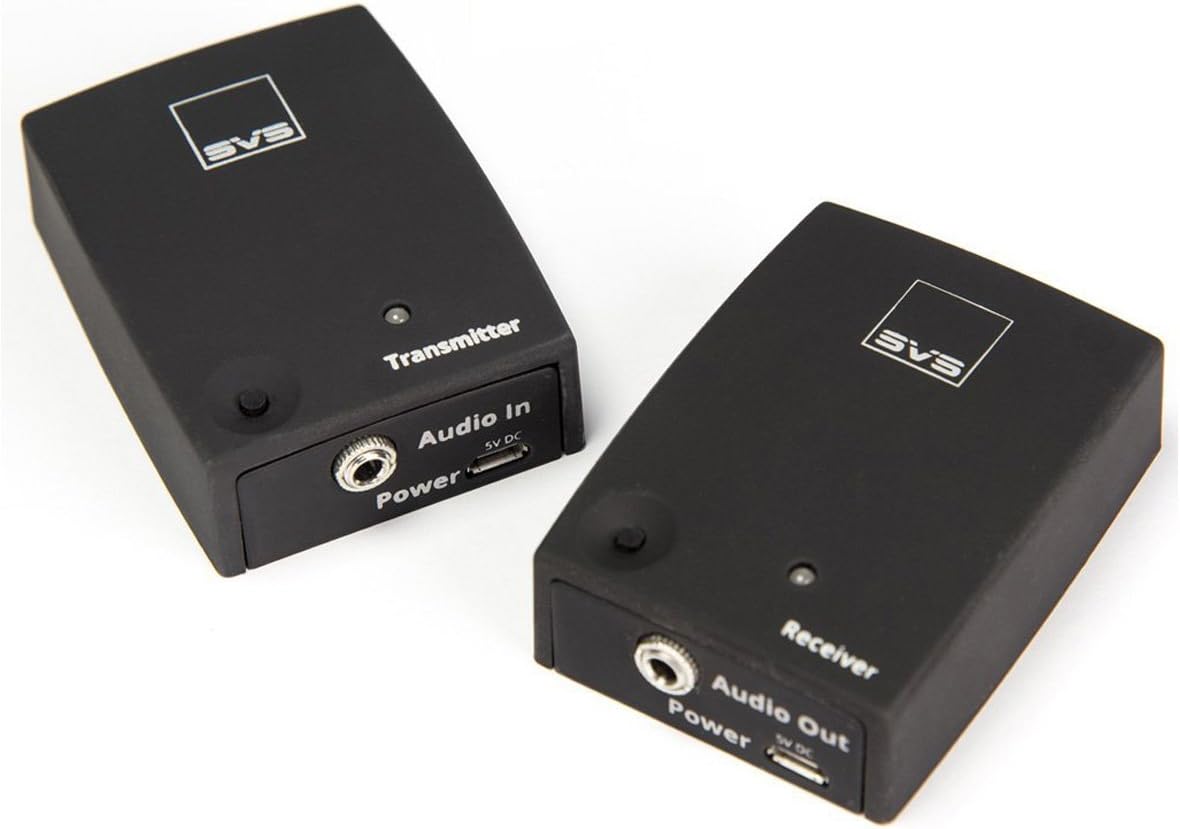
Pros
- Exceptional placement flexibility allows subwoofer positioning based on room acoustics rather than cable length
- Wireless connectivity dramatically reduces cable management hassles and improves room appearance
- 802.11ac standard provides reliable, low-latency performance for critical audio applications
- Straightforward installation process requires minimal technical expertise
- Lightweight and compact form factor integrates easily with existing equipment
Cons
- Limited compatibility requires verification with specific amplifier and speaker models before purchase
- Wireless connectivity may require network setup and occasional troubleshooting
- Premium pricing reflects specialized audio adapter market positioning
The SVS Soundpath Wireless Audio Adapter is a specialized wireless solution designed for home theater enthusiasts and audiophiles who want to break free from cable constraints. This adapter enables wireless connectivity between subwoofers and amplifiers, making it perfect for anyone struggling with cable routing in complex audio setups or seeking optimal speaker placement without visible wiring.
The standout feature is genuine placement freedom. Instead of positioning your subwoofer based on where cables can reach, you can now place it wherever it sounds best in your room. This flexibility directly improves bass response and overall audio performance. The 802.11ac wireless standard ensures stable, low-latency transmission, which is critical for audio applications where timing matters.
Build quality appears solid with a lightweight 0.35 kg construction that suggests quality components without unnecessary bulk. The adapter integrates seamlessly into existing setups, though users should verify compatibility with their specific amplifiers and speakers before purchasing. Installation is straightforward enough for most users to handle independently.
The main limitation is compatibility specificity. This adapter only works with certain amplifiers and speaker systems, so checking your equipment against SVS compatibility lists is essential. Additionally, wireless setup requires basic network knowledge, though most users find the process manageable.
The SVS Soundpath Wireless Audio Adapter delivers genuine value for home theater builders seeking cable-free flexibility and cleaner room aesthetics. If your equipment is compatible and you value placement freedom over traditional wired connections, this adapter justifies its premium positioning in the market.
Wireless Standard: 802.11ac
Brand: SVS
Color: Black
Weight: 0.35 kg
Compatible With: Amplifiers, Speakers
Primary Function: Wireless audio transmission for subwoofers and amplifiers
Who Should Buy: Home theater enthusiasts with compatible SVS or affiliated amplifier systems who want subwoofer placement flexibility and reduced cable clutter. Best for those building new systems or upgrading existing setups where cable routing is problematic.
Who Should Skip: Budget-conscious buyers seeking basic wireless solutions, users with incompatible amplifier brands, or those prioritizing simplicity over advanced placement options.
Key Considerations: Verify your amplifier and speaker model compatibility before purchasing. Ensure your home network supports 802.11ac connectivity. Consider your room layout to maximize the placement freedom this adapter provides.
What to Look for in a Wireless Audio Receiver
Connection Type: Bluetooth vs. WiFi
Your first decision is between Bluetooth and WiFi connectivity. Bluetooth receivers, like the Audioengine B1, offer straightforward pairing directly from your phone or tablet. They are ideal for quick, device-centric streaming within a single room.
WiFi streamers, such as the WiiM Pro, connect to your home network. This enables higher-resolution audio streaming, multiroom audio synchronization, and control via voice assistants without draining your phone’s battery. Consider which ecosystem you use most. If integrating with a home theater setup is a goal, WiFi often provides more robust options.
Audio Quality and Supported Codecs
Not all wireless audio is created equal. Basic Bluetooth compresses sound significantly. For better quality, look for support for advanced codecs like aptX HD, LDAC, or AAC. The Auris Blume Pro, for example, supports LDAC for near-lossless streaming from compatible services.
If you subscribe to services like Tidal Masters or Qobuz, a receiver that can handle high-resolution 24-bit/192kHz streams is essential. Check the product specifications for the maximum supported sampling rate and the types of digital-to-analog converters (DACs) used, as these directly impact sound clarity and detail.
Output Options and Compatibility
Ensure the receiver has the right outputs for your system. The most common are analog RCA outputs, which work with virtually any amplifier or powered speakers. For a potentially cleaner signal path, digital outputs like optical or coaxial are valuable if your amplifier has corresponding inputs.
Some devices, like the SVS SoundPath adapter, use a proprietary wireless link designed for specific use cases, such as connecting a subwoofer. Always match the receiver’s outputs to the inputs available on your existing home audio equipment to avoid frustration.
Ease of Setup and Daily Use
The best technology is invisible when it works. Look for a receiver with a simple, plug-and-play setup. Features like an automatic power-on/off function with your stereo, or a clear display showing connection status and track info, greatly enhance daily usability.
For those new to audio tech, a device with a dedicated app for management and firmware updates, like the WiiM Pro, can simplify the process. If you prefer absolute simplicity, a basic Bluetooth receiver with a physical button for pairing might be the perfect fit. Our guide on audio streamers for beginners covers more user-friendly concepts.
Final Thoughts
Upgrading your stereo with wireless capabilities is one of the most rewarding audio investments you can make. For users deeply invested in the Apple ecosystem who want seamless multiroom audio, the WiiM Pro Music Streamer to Upgrade Stereo is a standout choice. If your priority is pristine, audiophile-grade Bluetooth streaming from a wide range of devices to a classic Hi-Fi system, the Auris Blume Pro HiFi Bluetooth 5.3 Music Receiver delivers exceptional performance and versatility. Whichever path you choose, you’ll rediscover the joy of your home audio system.
Frequently Asked Questions
What is the difference between a Bluetooth receiver and a WiFi streamer?
A Bluetooth receiver creates a direct wireless link between your phone or tablet and your stereo, typically for shorter ranges. A WiFi streamer connects to your home network, allowing for higher-quality audio, multiroom playback, and control via apps or voice assistants without needing your phone as the primary source. The choice depends on your desired audio quality and how you plan to use the system.
Will a wireless receiver work with my old stereo receiver?
Yes, in most cases. The key is to check the outputs on the wireless receiver against the inputs on your old stereo. Most vintage amplifiers have RCA (aux) input jacks, which are supported by nearly every wireless audio receiver. You simply connect the receiver’s outputs to an unused input on your amp, select that input, and stream. It’s a fantastic way to modernize classic equipment.
Can I use one of these to make my wired headphones wireless?
The products reviewed here are designed to connect to home stereo systems, not headphones. To make wired headphones wireless, you would need a dedicated Bluetooth headphone adapter, which is a different type of device. For recommendations on personal audio gear, check out our Headphones & Earbuds section.
Do I need any special subscriptions to use these receivers?
No, you do not need a special subscription for the receiver itself. You can stream any audio that plays on your phone or computer. However, to access the highest possible audio quality (like high-resolution or lossless tiers), you will need a subscription from a music service like Tidal, Qobuz, or Amazon Music HD that offers that content. The receiver is the conduit, not the source.


Write Your Review
No reviews yet. Be the first to share your experience!