

Struggling with hot, uncomfortable ears or feeling cut off from your environment during long gaming sessions? You are not alone. Traditional closed-back headphones can create a sealed, isolating experience that leads to fatigue and disconnects you from important ambient sounds. This is where the best open-ear headphones for gaming change the rules. They provide a spacious, natural audio experience that keeps you cool, aware, and deeply immersed in your game’s soundscape.
This guide is crafted for gamers who prioritize audio precision, comfort for marathons, and situational awareness. We have evaluated leading models to help you find a pair that delivers a competitive edge and a more enjoyable gaming experience. For gamers particularly concerned with synchronization, our resource on the best Open-Ear headphones for low latency gaming offers focused insights.
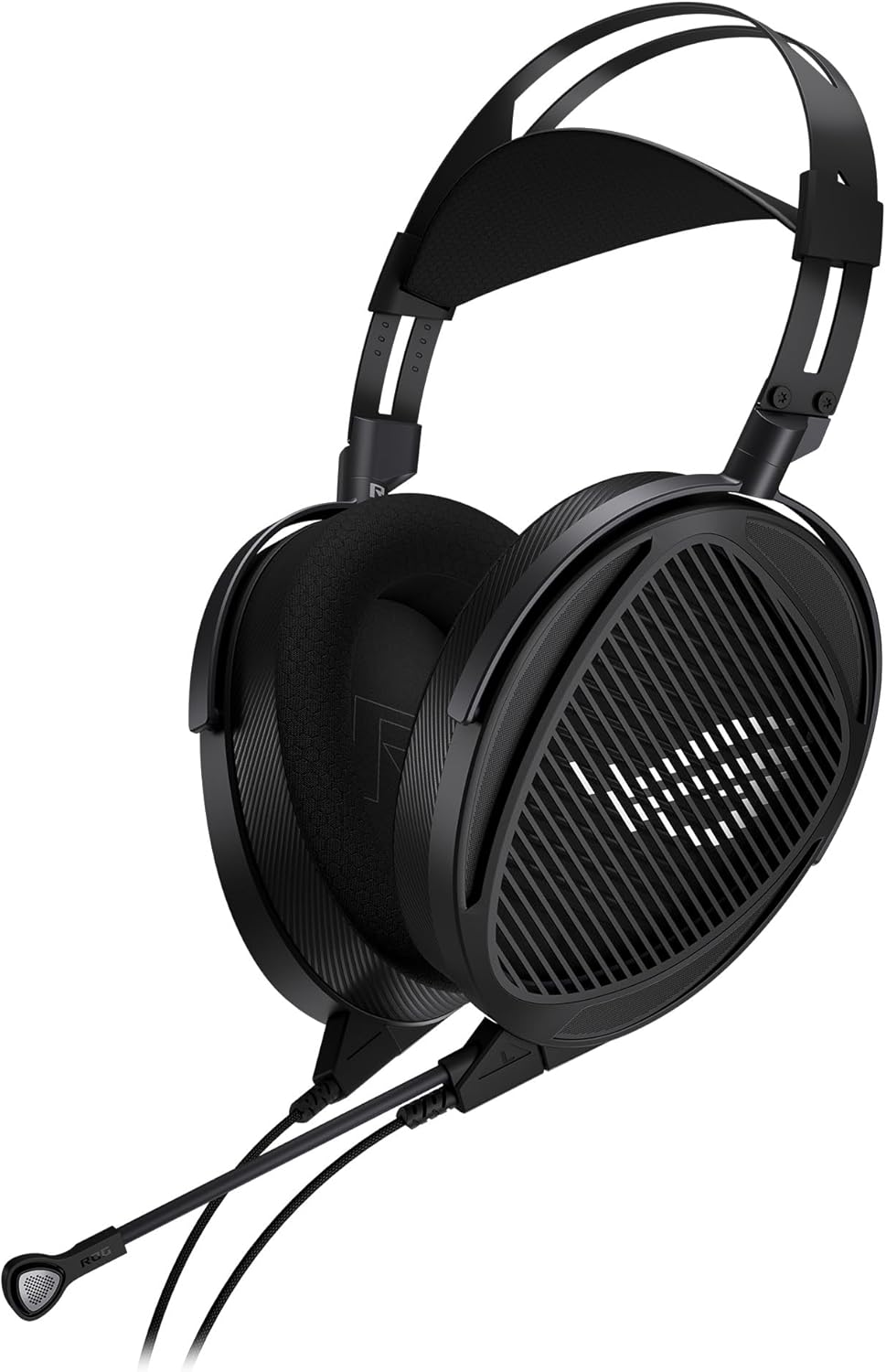
Pros
- Exceptional audio quality rivals high-end audiophile headphones when paired with a DAC/amp
- Comfortable enough for all-day wear, especially praised for fitting larger head sizes without excessive clamp force
- Versatile connectivity with multiple plug types ensures compatibility across gaming platforms, PCs, and mobile devices
- Includes premium accessories like dual ear pad sets and multiple cables for different use cases
- Open-back design provides natural soundstage ideal for competitive gaming and critical listening
Cons
- Requires external DAC/amp to reach full potential, limiting plug-and-play convenience from controllers
- Open-back design offers no noise isolation and allows sound leakage, unsuitable for shared spaces or travel
- Microphone setup involves multiple cables which some users find cumbersome compared to integrated solutions
The ASUS ROG Kithara is a hybrid gaming headset that refuses to compromise on audio quality. It targets competitive gamers and music enthusiasts who view their headphones as both a gaming tool and an audiophile investment. The collaboration between ASUS and HIFIMAN brings legitimate high-end audio engineering to the gaming market at a price point that undercuts pure audiophile brands.
The standout feature is the ROG-tuned 100mm HIFIMAN planar magnetic drivers, which deliver exceptional clarity and detail across the entire frequency spectrum. The open-back design creates a vast, natural soundstage with excellent instrument separation, making footsteps and directional cues in competitive shooters more distinguishable than closed-back alternatives. Users consistently report that these headphones punch well above their price point, particularly when connected to a dedicated DAC or amplifier. The warm sonic signature appeals to both gamers seeking immersion and listeners who prefer musical, non-fatiguing audio.
Build quality is robust with a metal frame, reinforced hinges, and premium materials throughout. The eight-level adjustable headband is genuinely accommodating, with particular praise from users with larger head sizes who struggle with traditional gaming headsets. The inclusion of two ear pad sets (hybrid fabric and leatherette) allows users to tune comfort and sound characteristics to their preference. At 11.2 ounces, the weight is reasonable for the build quality, though some users note the headband design can feel loose on smaller heads.
The main drawbacks stem from the open-back design and microphone complexity. Open-back headphones provide zero noise isolation and leak sound significantly, making them unsuitable for shared living spaces or portable use. The detachable boom microphone requires multiple cables to operate, which feels inelegant compared to integrated solutions. Additionally, these headphones demand proper amplification to shine, meaning direct connection to a controller won't deliver optimal performance.
The ASUS ROG Kithara is recommended for serious gamers willing to invest in proper audio equipment and who have the space for open-back headphones. This is not a casual purchase, but rather an entry point into audiophile-grade gaming audio that justifies its cost through sound quality and build durability.
Drivers: 100mm ROG-tuned HIFIMAN planar magnetic drivers
Frequency Response: 8Hz to 55kHz (full range), 20Hz-20kHz (audible spectrum)
Audio Driver Type: Planar Magnetic
Impedance: Not specified by manufacturer
Microphone: Full-band MEMS boom microphone with 20Hz-20kHz response and high SNR
Connectivity: 4.4mm balanced, 3.5mm single-ended, 6.3mm single-ended, USB-C adapter included
Cable Length: 1.8m dual 3.5mm cables
Weight: 11.2 ounces
Design: Open-back over-ear with adjustable headband (8 levels)
Ear Pad Options: ROG hybrid fabric and ROG leatherette sets included
Compatibility: PC, Mac, PlayStation 4/5, Nintendo Switch, iOS, Android, Xbox (via 3.5mm)
Warranty: 1 year
Water Resistance: None
Who Should Buy This: Competitive gamers seeking superior soundstage and directional audio, music enthusiasts new to audiophile equipment, content creators needing quality monitoring headphones, and streamers who want professional-grade audio without excessive cost.
Who Should Skip This: Users in shared living spaces, frequent travelers, those seeking noise isolation, casual console gamers without external audio equipment, and anyone uncomfortable with multi-cable microphone setups.
Pairing Recommendations: These headphones excel when paired with a dedicated DAC/amplifier. Budget-friendly options like Schiit Magni or FiiO K5 Pro will unlock the full potential of the planar drivers. Direct connection to gaming controllers will work but will not deliver the intended audio performance.
Setup Considerations: Plan for desk space if using with a DAC/amp setup. The open-back design requires a quiet environment to avoid disturbing others. The adjustable headband accommodates most head sizes, but try-before-buy is recommended if you have extreme head dimensions or sensitivity to clamp force.
Value Assessment: At this price point, the Kithara offers exceptional value for gamers willing to invest in proper amplification. It outperforms gaming-branded alternatives costing the same amount and provides genuine audiophile sound quality without the premium price tag of pure audio brands.
How to Choose Your Open-Ear Gaming Headphones
Soundstage and Audio Fidelity
The primary reason to choose open-ear headphones is their expansive soundstage. This refers to the perceived width, depth, and height of the audio. A good soundstage allows you to pinpoint enemy footsteps, distant gunfire, and environmental cues with remarkable accuracy.
Look for terms like “wide,” “natural,” and “spacious” in product descriptions. Driver technology also matters, with planar magnetic drivers, like those in the ASUS ROG Kithara, often praised for detailed separation. If you crave the pinnacle of audio clarity, explore our guide to the best Open-Ear headphones with High-Res audio.
Comfort and Build for Long Sessions
Comfort is non-negotiable for gaming. Open-back designs naturally allow heat and moisture to escape, preventing the clammy feeling common with sealed cups. This is a key feature of models like the FIFINE H18V Lite.
Pay attention to weight, padding material, and headband adjustability. A lightweight build, such as that boasted by the Sony INZONE H6 Air, significantly reduces pressure during extended use. For more options designed for ease of wear, consider the best lightweight Open-Ear headphones.
Connectivity and Compatibility
Your gaming setup dictates your connectivity needs. Wired models like the Sennheiser HD 560S offer universal plug-and-play reliability with no latency. Wireless models, such as the Cleer ARC 3 Gaming Earbuds, provide freedom of movement but require a stable, low-latency connection.
Always confirm compatibility with your specific platforms (PC, PS5, Xbox, etc.). Some headsets include multiple adapters or dongles for seamless cross-platform use. Our broader gaming headsets category covers all form factors for every console and PC configuration.
Microphone Quality
<!–Clear communication is vital for team-based games. While open-ear designs allow you to hear your own voice naturally, a quality boom microphone is essential for your teammates. Look for features like noise cancellation, a cardioid pickup pattern, and convenient mute controls.
Detachable microphones offer flexibility, allowing you to use the headphones for private music listening when not gaming. Evaluate the microphone’s clarity and its ability to minimize keyboard clicks and background noise for crisp in-game chat.
Final Thoughts
Selecting the right open-ear headphones can transform your gaming immersion and comfort. For audiophile-grade precision and a breathtakingly natural soundstage, the Sennheiser HD 560S Open-Back Over-Ear Wired is an exceptional choice. If you prioritize wireless freedom, cross-platform compatibility, and a unique open-ear bud design, the Cleer ARC 3 Gaming Earbuds provide a compelling modern solution. We encourage you to explore all the excellent options in our dedicated open-ear and bone conduction category to find your perfect audio match.
Frequently Asked Questions
Are open-ear headphones good for competitive gaming?
Yes, they can be excellent. The wide soundstage provides superior positional audio, letting you hear exactly where sounds originate. This spatial awareness is a major advantage in competitive shooters and strategy games. The trade-off is that sound leaks out, which might not be ideal in shared spaces.
What is the difference between open-ear and bone conduction headphones for gaming?
Both keep your ears open to ambient sound, but they work differently. Open-ear headphones use traditional speakers near your ears, delivering sound through the air for rich, full-range audio. Bone conduction headphones vibrate your cheekbones, bypassing the eardrum. For gaming, open-ear models typically offer better audio fidelity and bass response for immersion.
Do open-back headphones have more sound leakage?
Absolutely. The open design means people near you will hear what you are listening to, especially at higher volumes. This makes them less suitable for noisy environments or if you need to keep your game audio private. They are best used in a personal, quiet space.
Can I use open-ear gaming headphones for music and movies?
Definitely. Many of the best open-ear headphones for gaming, like the models reviewed here, are praised for their audiophile-grade sound quality. Their spacious and natural audio presentation is fantastic for music listening and creates a cinematic, immersive experience for movies, making them versatile all-purpose headphones.


Write Your Review
No reviews yet. Be the first to share your experience!