

You want rich, detailed sound to fill your room, but your available space and budget are limited. Finding high-quality audio gear that fits both can feel like a compromise. The good news is that the market for compact, high-performance speakers is better than ever, offering impressive clarity and power without demanding a major financial commitment.
This guide is for anyone setting up a home office, a modest living room stereo, or a desktop gaming station. We have reviewed ten of the most popular and highly-rated bookshelf speakers to help you cut through the noise. Whether you need a simple plug-and-play solution or components for a custom system, you will find excellent options here. For a broader look at your choices, explore our category on Speakers – Home Audio.
How to Choose Your Bookshelf Speakers
Active vs. Passive Design
Your first major decision is between active (powered) and passive speakers. Active models, like the Edifier R980T 4″ Active Bookshelf Speakers, have built-in amplifiers. They connect directly to your source, making setup incredibly simple. Passive speakers require a separate amplifier or receiver but offer greater long-term flexibility for upgrading your system. Understand the core differences with our dedicated guides on active speakers and passive speakers.
Speaker Size and Room Fit
Consider both the physical dimensions and the driver size. Compact satellites like the Cambridge Audio MSX 10 are ideal for tight spaces or as part of a surround system. Larger cabinets with bigger woofers, such as those in the Dayton Audio Classic B65 models, generally produce more robust bass. Measure your available shelf, desktop, or stand space to ensure a good fit.
Connectivity and Inputs
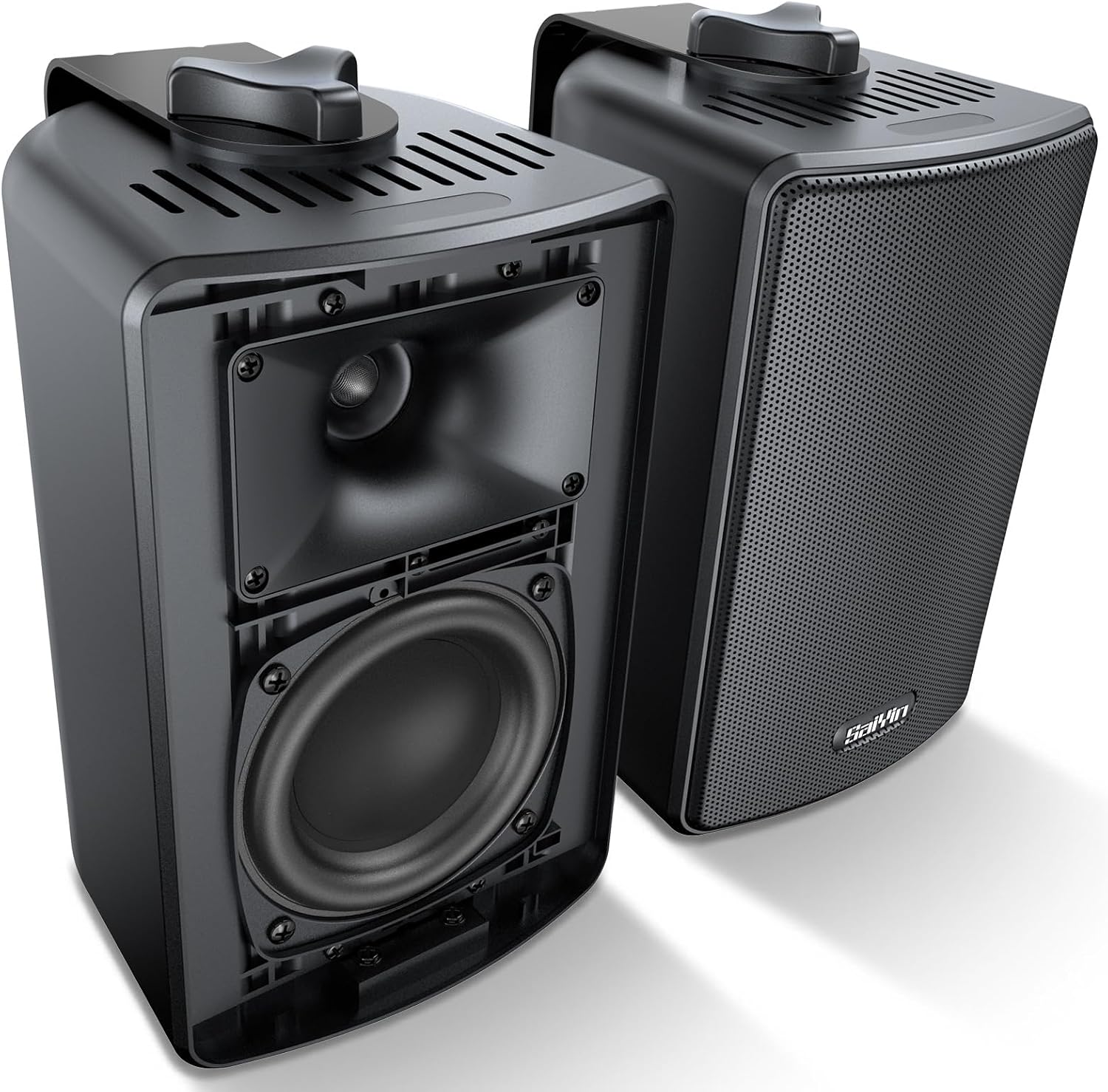
Match the speaker’s inputs to your devices. For a modern, wireless setup, look for Bluetooth capability, a feature found in the Saiyin Powered Bluetooth Bookshelf Speakers. If you are connecting a TV, turntable, or computer, ensure the speaker has the necessary optical, RCA, or 3.5mm aux inputs. This prevents the need for extra adapters and keeps your audio chain clean.
Sound Signature and Use Case
Think about how you will primarily use the speakers. For critical music listening, a detailed soundstage with clear mids and highs is key, something the 3-way Saiyin model aims for. For movies and gaming, a speaker that can be paired with a subwoofer for impactful bass might be preferable. The intended use should guide your final choice.
Final Thoughts
Enhancing your daily audio experience is well within reach. For listeners who value simplicity and a classic aesthetic, the Edifier R980T offers proven performance with its active design and wooden enclosure. If you are building a flexible, component-based system, the versatile Micca MB42 Standard passive speakers are a fantastic foundation that pairs beautifully with a wide range of amplifiers. Whichever model you choose, you are investing in a richer, more immersive sound for your home audio enjoyment.
Frequently Asked Questions
What is the main difference between bookshelf and floor-standing speakers?
Bookshelf speakers are compact, designed to sit on a surface or be mounted, and often prioritize clarity and detail in the mid and high frequencies. Floor-standing speakers are larger, typically produce deeper bass on their own, and are meant to stand directly on the floor. For smaller rooms or desktop use, bookshelf models are usually the more practical and space-efficient choice.
Do I need a separate subwoofer with bookshelf speakers?
It depends on your listening preferences. Many bookshelf speakers provide satisfying bass for music and general TV use. If you are a home theater enthusiast or love bass-heavy music genres, adding a dedicated subwoofer can significantly enhance the low-end impact. Some powered bookshelf speakers, like the Saiyin model, include a subwoofer output for easy expansion.
How important is the speaker’s power rating?
Power handling, measured in watts, indicates how much power a speaker can manage from an amplifier. For a typical room, you do not need extremely high wattage. A more useful metric is sensitivity, which tells you how loud a speaker will play with a given amount of power. A higher sensitivity rating (measured in dB) means the speaker will produce more volume with less amplifier power, making it easier to drive.
Can I use bookshelf speakers for a surround sound system?
Absolutely. Bookshelf speakers are commonly used as front, rear, or surround channels in a home theater setup. Their size makes them easy to position on stands or mount on walls. When selecting speakers for this purpose, ensure they are timbre-matched (from the same product line) for a cohesive soundstage, or choose neutral-sounding models that blend well.




Write Your Review
No reviews yet. Be the first to share your experience!