

You have your dream home theater receiver or a powerful stereo amplifier, but your current speakers leave you wanting more bass. The solution often lies in a dedicated subwoofer, but how do you connect it seamlessly? The answer is a pair of floorstanding speakers equipped with a dedicated subwoofer output. This feature allows you to build your system piece by piece, starting with towers that deliver excellent mid and high frequencies while providing a clean signal path to a powerful sub for those deep, room-shaking lows.
This guide is for anyone looking to upgrade their audio setup, from movie enthusiasts craving cinematic impact to music lovers seeking a full, balanced soundstage. We have reviewed ten top models to help you find the perfect match for your space and listening preferences. For those considering a more integrated solution, you might also explore our guide to the best active floorstanding speakers with HDMI.

Pros
- Highly efficient and sensitive design means they sound loud and detailed even with modest amplifiers
- Integrated Atmos elevation channel removes the need for additional height speakers in a surround setup
- Consistently praised by verified buyers for crisp, clear sound across music, movies, and TV
- Solid MDF construction feels premium and contributes to tight, resonant bass performance
- Strong value proposition as a closeout model, offering flagship-adjacent performance at a reduced price
Cons
- At roughly 22 inches deep and tall, these are large speakers that require dedicated floor space and may overwhelm smaller rooms
- Some buyers note the Atmos elevation feature is less impactful without a compatible AV receiver, limiting full functionality for stereo-only setups
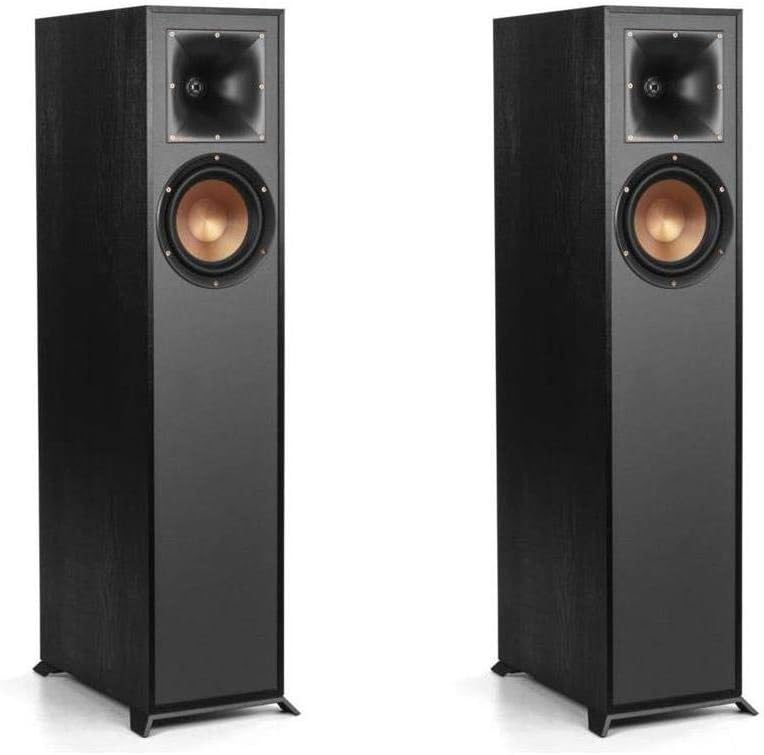
The Klipsch R-26FA is a full-size floorstanding speaker pair designed for home theater enthusiasts and serious music listeners who want immersive, room-filling audio. With built-in Dolby Atmos elevation drivers, these speakers are purpose-built for modern surround sound systems, and they perform just as admirably in a dedicated stereo configuration.
The standout feature is the integrated elevation speaker, which bounces overhead audio off the ceiling to simulate height channels without mounting separate speakers. Combined with the 1-inch aluminum diaphragm compression driver and Klipsch's signature 90x90 Tractrix horn, the high-frequency reproduction is remarkably crisp and airy. Verified buyers consistently highlight the clarity and detail across all types of content, from orchestral music to blockbuster film soundtracks.
Bass performance is handled by dual 6.5-inch copper-spun IMG woofers paired with a front-firing port. The result is deep, well-defined low-end output that holds up at high volumes without becoming muddy or boomy. Multiple reviewers noted these speakers fill large, open living rooms with ease, and several found a dedicated subwoofer unnecessary for everyday listening.
Build quality is a genuine strong point. The MDF cabinet with brushed black polymer veneer feels solid and looks refined, and the dual binding posts add flexibility for bi-wiring or bi-amping. The main drawback is physical size: these are large, heavy speakers that demand floor space and a capable AV receiver to unlock the Atmos functionality. Buyers using a stereo-only amplifier will still enjoy excellent sound, but the elevation driver becomes a passive element.
Overall, the Klipsch R-26FA represents outstanding value for anyone building or upgrading a home theater system. With a near-perfect customer rating backed by hundreds of reviews, and performance that rivals speakers at significantly higher price points, this is a smart buy for audiophiles and casual listeners alike.
Model: Klipsch R-26FA | Color: Black | Enclosure: MDF with brushed black polymer veneer
Tweeter: 1-inch aluminum diaphragm compression driver with 90x90 Tractrix horn | Woofer: Dual 6.5-inch copper-spun IMG woofers | Bass Port: Front-firing reflex port
Power Handling: 100W continuous / 400W peak | Maximum Output: 90W | Input Voltage: 2.83V sensitivity reference
Connectivity: Dual binding posts (bi-wire/bi-amp capable) | Mounting: Freestanding | Dimensions: 22 inches D x 22 inches W x 13 inches H
Special Features: Integrated Dolby Atmos elevation speaker | Warranty: 1 Year Limited | UPC: 846431059725
If you are upgrading from bookshelf speakers or a soundbar and want a significant leap in audio quality, the R-26FA is an excellent entry point into full-size floorstanding performance. They work well in medium to large rooms, ideally open-plan living spaces where their output can fully expand.
To get the most from the Dolby Atmos elevation driver, you will need an AV receiver that supports Atmos height virtualization or object-based audio processing. Popular compatible receivers come from Yamaha, Denon, and Marantz. Buyers using a stereo amplifier will still enjoy excellent two-channel performance, but the elevation channel will not be active.
Because these are efficient, high-sensitivity speakers, they pair well with a wide range of amplifiers, including modestly powered units. However, pairing them with a quality 80 to 150 watt per channel receiver will unlock their full dynamic range. A dedicated subwoofer is optional but can enhance very low bass below 40Hz for dedicated home theater setups.
These speakers are sold as a pair and are intended as front left and right channels. For a complete surround system, Klipsch recommends pairing them with matching Reference Series center and surround speakers for a tonally consistent soundstage throughout the room.
Buying Guide
Understanding Subwoofer Output and Connectivity
The primary feature you are looking for is a dedicated subwoofer output port, typically an RCA jack. This allows you to send a full-range or filtered signal directly from the speaker to a powered subwoofer. Some active or powered tower speakers, like the Fluance models, include this directly. For passive speakers, this connection is handled by your AV receiver.
It is crucial to confirm the type of output. A simple line-level output offers the most flexibility. Also, consider if you want speakers with built-in amplification, which simplifies setup, or passive models that rely on your existing receiver. If wireless streaming is a priority, check out our list of the best powered floorstanding speakers with bluetooth.
Sound Quality and Driver Configuration
The core driver design dictates the speaker’s character. Look for a robust woofer size, like the dual 6.5″ drivers in many Klipsch models, for strong mid-bass before the subwoofer takes over. Tweeter technology is equally important, with options like horn-loaded designs for efficiency or AMT tweeters for detailed highs.
A balanced sound signature ensures the subwoofer integrates smoothly. The goal is a seamless transition where the towers handle vocals and instruments, and the sub manages the deepest frequencies. This creates a cohesive and immersive soundstage, whether you are building a dedicated home theater or a high-fidelity stereo system.
Power Handling and Room Size Compatibility
Match the speaker’s power handling and sensitivity to your room. High-sensitivity speakers, common in the Klipsch lineup, produce more volume with less amplifier power, making them ideal for larger spaces. The amplifier’s wattage in powered models should also be sufficient to fill your listening area without strain.
Consider the low-frequency extension of the towers themselves. While a subwoofer will handle the deepest bass, towers that go down to 40Hz or lower provide a fuller mid-bass punch. This results in a more authoritative and dynamic sound even before you add the sub. For larger rooms, a robust setup is key, as highlighted in our roundup of the best floorstanding speakers for your home theater.
Form Factor and Additional Features
Floorstanding speakers are substantial pieces of furniture. Assess their height, footprint, and aesthetic to ensure they fit your space. Modern designs like the brushed polymer veneer on Klipsch speakers offer a sleek look, while traditional wood finishes may suit other decors.
Beyond the sub output, look for features that match your use case. This includes Dolby Atmos elevation speakers for immersive overhead effects, multiple input options like HDMI ARC for TV connectivity, and bi-wiring terminals for advanced audio setups. These features add flexibility and future-proof your investment.
Final Thoughts
Selecting the right floorstanding speakers with subwoofer output empowers you to build a truly customizable and powerful audio system. For those seeking an unparalleled immersive experience with overhead sound, the Klipsch Reference R-26FA Floorstanding Speaker is an outstanding choice that delivers thrilling Dolby Atmos performance. Alternatively, if you prefer a simple, all-in-one active solution with built-in amplification and versatile connectivity, the Fluance Ri91 Reference Stereo Powered tower speakers provide exceptional clarity and seamless integration with a matching subwoofer.
Frequently Asked Questions
Why would I need a floorstanding speaker with a subwoofer output?
This feature provides a direct and optimized signal path to a powered subwoofer. It is essential for active or powered floorstanding speakers that do not use a traditional AV receiver. It allows for easy system expansion and ensures you can add deep bass without complicated wiring or relying on a receiver’s features.
Can I use any subwoofer with these speakers?
Yes, you can typically use any powered subwoofer with a standard line-level (RCA) input. The subwoofer output on the speaker sends an audio signal that the sub’s internal amplifier then powers. Ensure the subwoofer has the appropriate inputs to match the output on your speakers for the best connection.
Are floorstanding speakers with sub outs better than a full home theater package?
They offer greater flexibility. A package is convenient and guaranteed to be timbre-matched, but individual components let you tailor your system. You can start with two great towers and a sub, then add a center channel and surrounds later. This modular approach is often favored by enthusiasts. For more on building a system, see our guide on floorstanding speakers.
Do I still need an AV receiver with these speakers?
It depends. Passive floorstanding speakers always require an external amplifier or AV receiver. Powered or active floorstanding speakers, like the Fluance Ai81 or Ri91, have built-in amplification and often include multiple inputs, so they can operate independently of a receiver, simplifying your setup significantly.


Write Your Review
No reviews yet. Be the first to share your experience!