

You have your speakers dialed in, but something is missing in your home theater or music setup. The low-end punch just isn’t there, and traditional front-firing subwoofers feel too bulky or restrictive for your room layout. This is where the unique design of side-firing subwoofers becomes a game-changer. By directing sound laterally, these subs offer superior placement flexibility, allowing you to tuck them away without sacrificing the deep, room-filling bass your audio deserves.
This guide is for anyone looking to add authoritative bass to their system without the visual or spatial footprint of a conventional sub. We have evaluated top-performing models, focusing on the practical benefits of side-firing designs. Whether you are setting up a compact living room theater or enhancing a desktop audio station, you will find a suitable option here. For a broader look at low-frequency options, explore our category page for Subwoofers.
How to Choose a Side-Firing Subwoofer
Driver Size and Power Output
The driver size, measured in inches, directly influences the depth and authority of the bass. A larger driver, like an 8-inch woofer, can typically move more air, producing lower frequencies with greater impact. Power, measured in watts RMS, determines how loud and clean that bass can play. Match these specs to your room size and listening habits. A compact room may be well-served by a potent 6.5-inch model, while larger spaces benefit from an 8-inch driver with higher wattage.
It is crucial to consider the amplifier class as well. Class-D amplifiers, common in modern subs, are highly efficient. They deliver robust power in a compact form factor without excessive heat. This efficiency pairs perfectly with the space-saving ethos of a side-firing design. For insights into subs known for clean output, see our guide on the best subwoofers with low distortion.
Connectivity and System Integration
Versatile connectivity ensures your new subwoofer works with your existing gear. Look for models offering both line-level/LFE inputs for modern AV receivers and speaker-level inputs for older stereo systems. This dual compatibility future-proofs your purchase. A dedicated LFE input is ideal for home theater signals, while RCA and 3.5mm AUX inputs cater to simpler setups from TVs or desktop audio sources.
Essential onboard controls include a adjustable low-pass crossover and a volume knob. The crossover lets you blend the sub’s output with your main speakers seamlessly, preventing bass overlap. The volume control allows you to dial in the perfect amount of low-end impact, whether for subtle music enhancement or movie-rattling effects. These features are key for achieving balanced sound in any environment.
Form Factor and Placement Flexibility
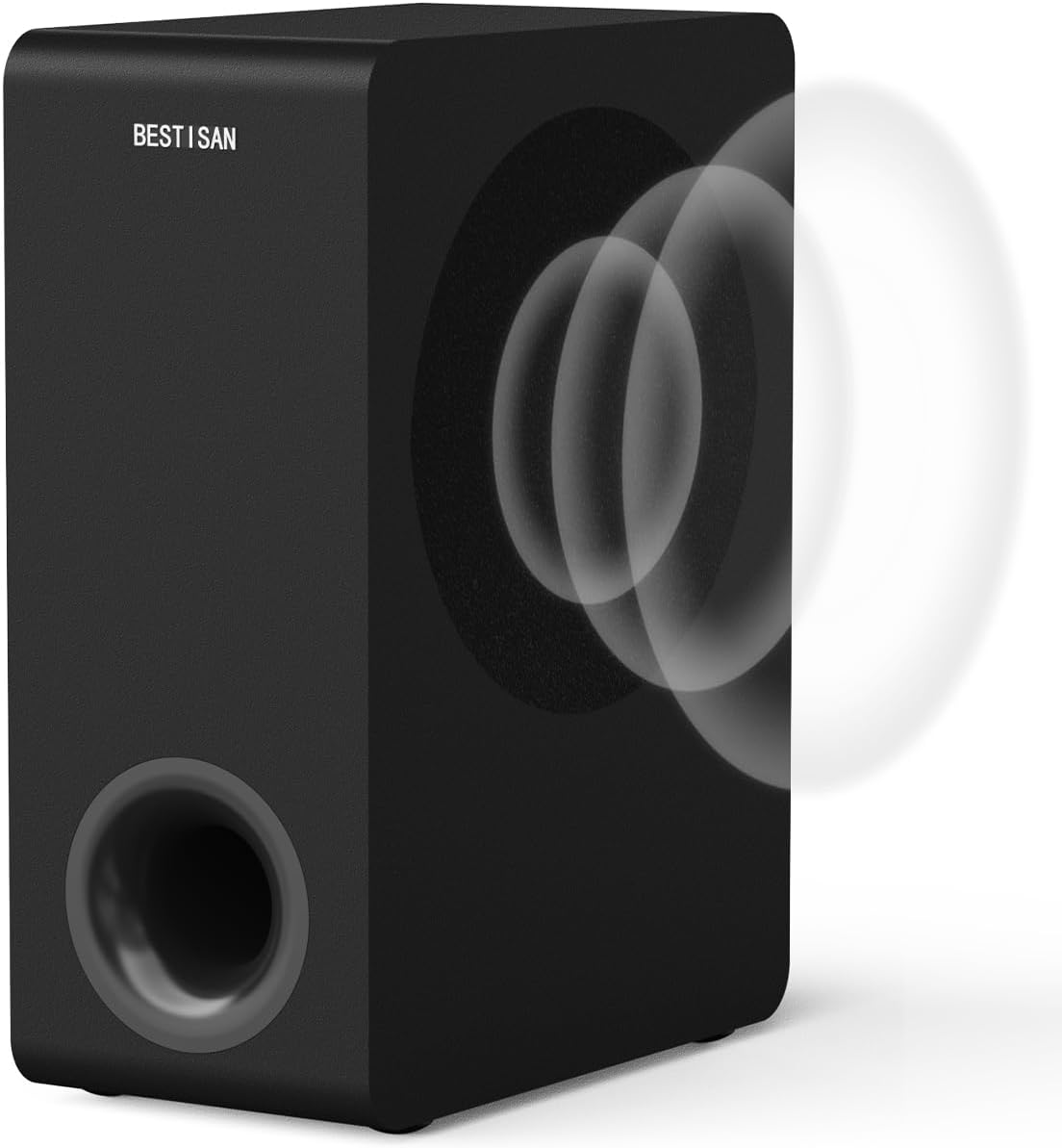
The primary advantage of a side-firing subwoofer is placement freedom. Because the sound projects from the side, you can position the cabinet with its driver facing a wall, under furniture, or next to a couch. This often results in less audible mechanical noise from the driver itself. A slim, low-profile design further enhances this versatility, allowing the sub to slide into media consoles or under desks without a hitch.
When planning placement, consider the sub’s dimensions and port design. Some models feature a bass-reflex port, often on the bottom, which requires a small amount of clearance from the floor. Always ensure there is adequate airflow around the cabinet for optimal performance and cooling. The right placement can maximize bass response while keeping your living space tidy. Discover more innovative designs in our roundup of best modern subwoofers.
Additional Features for Convenience
Convenience features add significant value. An auto on/off or standby function is highly recommended. It powers the subwoofer down after a period of signal inactivity, saving energy and extending the unit’s lifespan. Many quality subs also include necessary cables in the box, such as RCA or speaker wire, for a true out-of-the-box setup experience.
Pay attention to the finish and build quality. A sturdy cabinet with internal bracing reduces unwanted resonance, leading to tighter, more accurate bass. Aesthetic choices like a wood grain or matte black finish help the subwoofer blend into your room’s decor. These thoughtful details contribute to both performance and long-term satisfaction. For models built to last, check our recommendations for best heavy duty subwoofers.
Final Thoughts
Side-firing subwoofers offer a brilliant solution for achieving deep, powerful bass in spaces where traditional models simply will not fit. Their flexible design and often compact footprint make them ideal for modern living rooms, desktop setups, and home theaters. After reviewing the top contenders, we find the BESTISAN Basscore Powered Subwoofer stands out for its balanced 8-inch driver and robust power, perfect for filling a medium-sized room. For those with stricter space constraints or a smaller budget, the BESTISAN Powered Subwoofer delivers impressive performance from its 6.5-inch side-firing design, making it an excellent value. Whichever you choose, you are on your way to a more immersive and complete audio experience.
Frequently Asked Questions
What is the main benefit of a side-firing subwoofer?
The primary benefit is placement flexibility. Because the driver fires laterally, you can position the subwoofer in more locations, like with its side against a wall or tucked into a cabinet opening. This often reduces audible distortion from the driver itself and allows for a slimmer cabinet design that saves space.
Can I use a side-firing subwoofer with any receiver or amplifier?
Yes, most modern side-firing subwoofers are designed for broad compatibility. Look for models with both line-level/LFE inputs for AV receivers and high-level speaker inputs for stereo amplifiers without a dedicated subwoofer output. This ensures you can integrate the sub into virtually any audio system from 2026 or older.
How do I set the crossover frequency on my new subwoofer?
Start by setting the subwoofer’s low-pass crossover knob to match the lowest frequency your main speakers can handle cleanly, often around 80Hz. You can then fine-tune by ear, playing music with known deep bass. Adjust the crossover until the transition between your speakers and the sub is smooth, with no audible gap or boominess. Your receiver’s manual may also provide a recommended setting.
Are compact side-firing subs powerful enough for home theater?
Absolutely. Many compact models use high-excursion drivers and efficient Class-D amplifiers to produce surprising bass output from a small box. They are excellent for enhancing movie soundtracks in small to medium-sized rooms. For larger home theater spaces, consider an 8-inch model with higher power handling to ensure the bass impact meets the scale of your screen. Learn more about building your system in our Speakers – Home Audio hub.





Write Your Review
No reviews yet. Be the first to share your experience!