

You have your main speakers dialed in, but your audio system still lacks that visceral, chest-thumping low end that brings movies and music to life. A standard subwoofer might not deliver the specific, punchy bass response you crave for certain applications. This is where the specialized design of a bandpass subwoofer comes into play, offering a unique acoustic output that can be perfect for portable PA systems, DJ setups, or dedicated home theater zones.
This guide is for audio enthusiasts, mobile entertainers, and installers seeking the focused performance of a bandpass design. We will examine a leading model in this category, breaking down its capabilities to help you determine if it’s the right solution to complete your sound. For a broader look at low-frequency options, explore our main Subwoofers category.

Pros
- Exceptional power-to-size ratio makes it ideal for mobile and installation applications
- Premium birch construction delivers durability and a refined professional appearance
- Low-noise casters and compact footprint simplify transport and venue setup
- Flexible mounting options with dual threaded pole receptacles for vertical or horizontal use
- Built-in Intrinsic Correction tuning ensures accurate bass response across different environments
Cons
- Premium pricing reflects professional-grade equipment, making it a significant investment for casual users
- Requires external audio source and amplified input, not a standalone standalone speaker system
- Speaker pole for mounting sold separately, requiring additional purchase for certain setups
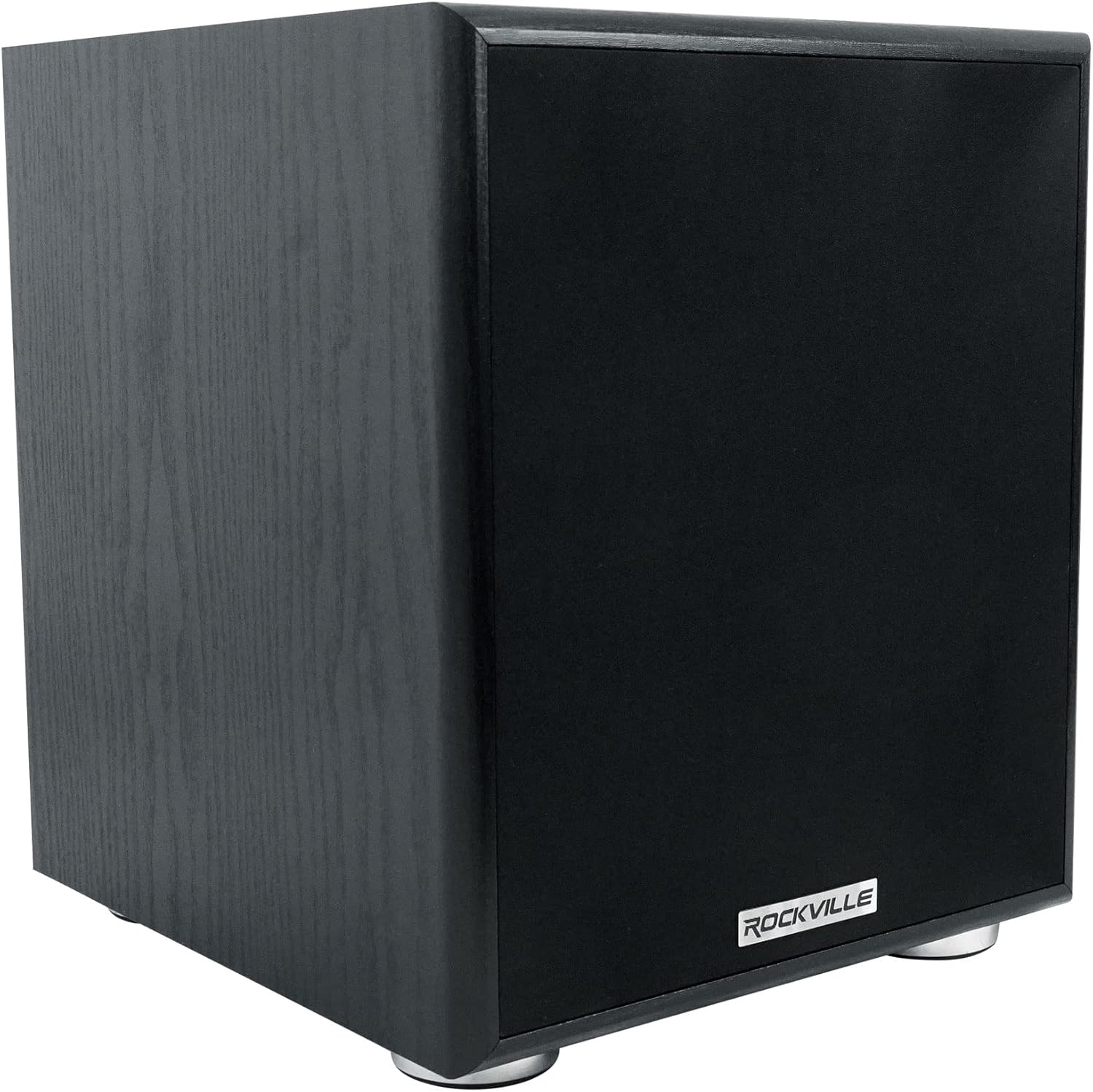
The QSC KS112 is a professional-grade active subwoofer engineered for mobile DJs, live sound engineers, event planners, and installation professionals who need powerful, portable bass reinforcement. This 12-inch powered sub combines serious output with genuine portability, making it a versatile choice for venues that demand both performance and flexibility.
What sets the KS112 apart is its intelligent engineering: the bandpass design maximizes bass impact while keeping the cabinet ultra-compact, and the 2000-watt Class D amplifier delivers punchy, controlled low-end without excessive heat or power consumption. Intrinsic Correction tuning automatically adapts the subwoofer's response to different acoustic environments, ensuring consistent bass quality whether you're in a small club, outdoor venue, or installed installation space.
Build quality is excellent throughout. The premium birch cabinet resists warping and damage, while the included low-noise casters roll smoothly without the squeaking common on cheaper alternatives. The dual M20 threaded pole receptacles provide rock-solid mounting stability in either vertical or horizontal orientation, and the optional security cover adds peace of mind for rental and touring applications.
The main drawback is the premium price point, which reflects its professional-grade status. Additionally, this is a powered subwoofer requiring an external audio source with subwoofer output or a crossover, so it's not a standalone solution for casual listeners. The mounting pole is sold separately, which is typical for pro audio but worth noting.
The QSC KS112 delivers professional performance and reliability in a genuinely portable package. If you need serious bass that travels well and maintains consistent quality across different venues, this subwoofer justifies its investment with years of dependable service.
Driver and Design: Single 12-inch bandpass subwoofer design optimized for compact, portable applications.
Amplification: 2000 watts peak power Class D amplifier module with efficient thermal management and low power consumption.
Frequency Response: 108 Hz and below for deep, impactful bass reproduction.
Cabinet Construction: Premium birch wood for durability, stability, and professional appearance. Includes high-quality, low-noise casters for mobility.
Mounting: Two M20 threaded pole receptacles allow vertical or horizontal mounting on standard speaker poles (pole not included). Wobble-free connection design.
Audio Management: Intrinsic Correction tuning and advanced loudspeaker management system for optimized performance across different venues and acoustic environments.
Connectivity: Wired audio input with stereo audio output mode. Requires external amplified source or subwoofer output from mixer or amplifier.
Optional Accessories: KS-LOC security cover available to prevent unauthorized tampering with controls during rental or touring use.
Who Should Buy: The QSC KS112 is ideal for mobile DJs, live sound engineers, rental companies, event professionals, and installation specialists who need portable, professional-grade bass reinforcement. It's also suitable for small to medium venues upgrading their sound system with a powered subwoofer solution.
Who Should Skip: Casual home listeners seeking a simple plug-and-play subwoofer should consider consumer-grade alternatives. This is a pro audio tool requiring knowledge of audio system setup and integration.
Key Considerations: Verify your audio source has a dedicated subwoofer output or use an external crossover. Budget separately for a speaker pole if you plan to use the mounting receptacles. Consider the optional security cover if the unit will be in rental or touring scenarios. Ensure adequate power supply, as the Class D amplifier draws significant current at peak output.
Long-Term Value: The premium birch construction and professional-grade amplifier design provide years of reliable service in demanding applications. The Intrinsic Correction tuning means less time spent adjusting EQ across different venues, adding value through faster setup and consistent performance.
Buying Guide for Bandpass Subwoofers
Enclosure Design and Bass Response
The bandpass enclosure is the defining feature. It uses a sealed chamber behind the woofer and a ported chamber in front, acting as an acoustic filter. This design yields a very pronounced peak in output within a specific frequency band. It can sound incredibly loud and punchy within that range but rolls off more sharply outside it compared to other designs. Consider the primary content you’ll be amplifying. This focused response is excellent for electronic music and kick drums but may be less ideal for full-range, nuanced musical reproduction.
Amplification and Power Handling
Most modern bandpass subwoofers are active, meaning they have a built-in amplifier. This simplifies setup and ensures optimal power matching. Look for a robust Class D amplifier for high efficiency and less heat generation. Power ratings should be assessed carefully. Pay attention to continuous (RMS) power rather than peak figures for a true sense of sustained output capability. A well-powered subwoofer will maintain clarity and impact without distortion, even at high volumes.
Portability and Build Quality
Many bandpass subs are built for mobility. Key features include integrated handles and heavy-duty casters for easy transport. The cabinet construction is critical for durability and sound quality. Premium plywood like birch offers excellent rigidity, reducing unwanted resonance that can color the sound. A rugged build also protects the components during transport, making it suitable for heavy duty use on the road. A compact, professional appearance allows it to blend into both permanent installations and temporary setups.
Connectivity and System Integration
Evaluate the input and output options. Balanced XLR and TRS inputs are essential for professional audio gear, rejecting noise over long cable runs. Outputs for daisy-chaining to full-range tops are a major convenience. Features like built-in crossover filters and pole mounts add significant value. Pole sockets allow you to securely stack your main speakers atop the sub, saving space and ensuring optimal alignment. Advanced models may include DSP for precise tuning to different rooms or applications, representing the pinnacle of modern subwoofer technology.
Final Thoughts
Selecting the right bandpass subwoofer hinges on matching its unique acoustic signature to your specific needs. For those requiring a potent, portable low-end solution for live sound or high-impact media, the focused output is a significant advantage. Our evaluation leads us to recommend the QSC KS112 Active 12″ Subwoofer for its professional build and integrated power, while those prioritizing different design philosophies for critical listening should also consider options featured in our guide to the best subwoofers with low distortion for a wider perspective.
Frequently Asked Questions
What is the main advantage of a bandpass subwoofer design?
The primary advantage is exceptionally high output efficiency within a specific, tuned frequency band. This makes it sound very loud and punchy for those frequencies, ideal for applications like live DJing or movie sound effects where impact in a defined range is desired. It is a more specialized tool compared to a broad-spectrum sealed or ported subwoofer.
Are bandpass subwoofers good for music?
They can be excellent for certain genres of music, particularly electronic, hip-hop, and any style where a powerful, focused low-end thump is a key element. However, for acoustic or classical music where accurate reproduction of the full bass range is critical, other designs like sealed enclosures might be more accurate and musical.
How do I connect an active bandpass sub to my system?
Connection is typically straightforward. Use a cable from your mixer or receiver’s subwoofer or main output into the sub’s input. Many active subs also have output jacks to pass the signal along to your main speakers, often with a high-pass filter applied to them. This relieves your main speakers from trying to produce deep bass, improving overall system clarity and power handling as explored in our Speakers – Home Audio resources.
What size bandpass subwoofer do I need?
The size depends on your space and output requirements. A compact 12-inch model like the one reviewed is highly portable and sufficient for many mobile events and mid-sized rooms. For very large venues or seeking the utmost subterranean extension, larger 15-inch or 18-inch drivers are available, though they sacrifice portability.



Write Your Review
No reviews yet. Be the first to share your experience!