

You’ve invested in a great audio system, but something feels missing during movie explosions or your favorite bass-heavy tracks. The room-shaking, chest-thumping impact just isn’t there. That’s where a dedicated 200W subwoofer comes in, bridging the gap between good sound and a truly immersive experience. This guide is for home theater enthusiasts and music lovers seeking to add authoritative, clean bass without overwhelming their space or budget. We’ve assessed the top models to help you find the perfect low-frequency foundation. For those particularly concerned with audio purity, our resource on the best subwoofers with low distortion offers deeper insights.
| Pick | Product | BRD Score | Where to buy |
|---|---|---|---|
| Top Pick |
 Klipsch R-12SW 12-Inch 400W Front-Firing Subwoofer |
9.8/10 | View on Amazon.com |
| 16% OFF |
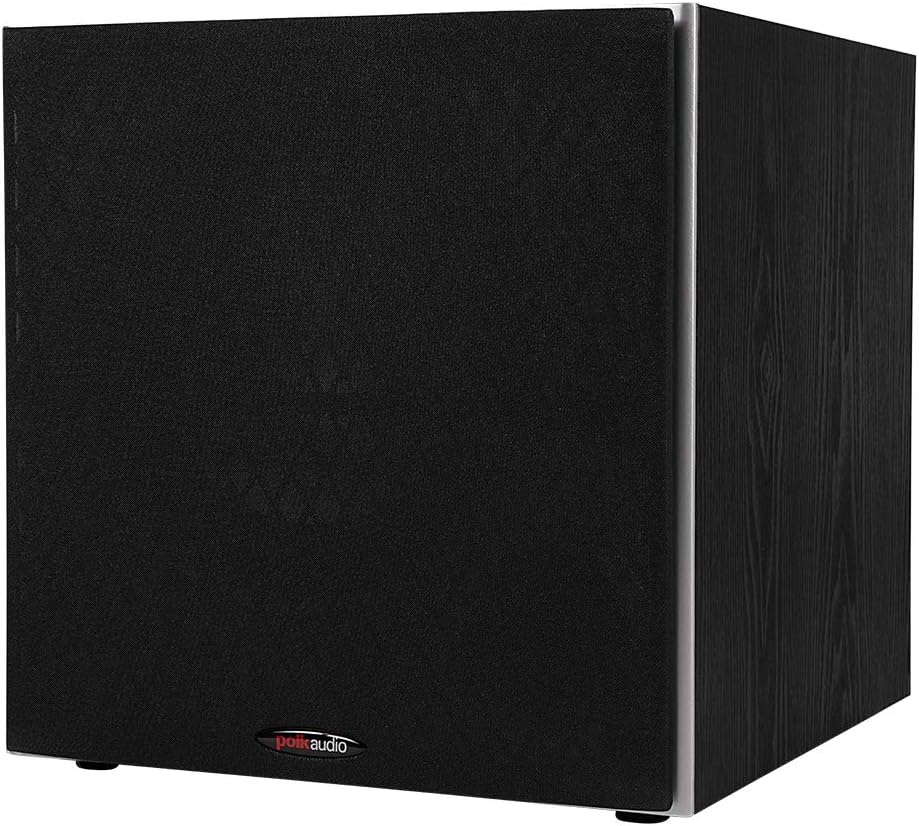 Polk Audio PSW10 10-Inch Powered Subwoofer |
9.7/10 | View on Amazon.com |
Prices and discounts as of Nov 23, 2026 and may have changed. Check Amazon for the current price.
Pros
- High 400-watt output provides authoritative, room-filling bass without distortion
- Copper-spun woofer cone adds rigidity and accuracy for cleaner low-frequency reproduction
- Flexible phase control and crossover settings make integration with existing speaker systems straightforward
- Dual input options (LFE and line level) ensure compatibility with a wide range of receivers and amplifiers
- Compact cabinet dimensions make placement easy without sacrificing output power
Cons
- At 12 inches, it may be too large for very small rooms or minimalist setups where a compact subwoofer would be more appropriate
- Wired-only connectivity means placement is limited by cable length, with no wireless or Bluetooth option available
- Plastic enclosure material may not feel as premium as wood-cabinet alternatives at a similar price point
The Klipsch R-12SW is a 12-inch front-firing powered subwoofer designed for home theater and stereo music systems. It targets enthusiasts who want serious bass performance without stepping into the high-end audiophile price bracket. Whether you are building a 5.1 surround sound setup or upgrading a two-channel music system, this subwoofer is engineered to deliver.
The standout feature is the 12-inch copper-spun woofer paired with a 400-watt all-digital amplifier. This combination produces a frequency response starting as low as 29 Hz, which means you will physically feel deep bass from action movies, electronic music, and orchestral recordings. The copper-spun cone adds stiffness and reduces resonance, resulting in tighter, more accurate bass compared to standard paper or polypropylene cones.
Setup and integration are made simple through the onboard low pass crossover and phase control. These tools allow you to dial in the subwoofer so it blends naturally with your main speakers, avoiding the muddy or disconnected bass that can plague poorly configured systems. Both LFE and line level inputs are included, ensuring compatibility with virtually any modern AV receiver or stereo amplifier.
On the design side, the brushed black polymer veneer cabinet with a satin painted plinth looks clean and modern. The enclosure is compact for a 12-inch driver, measuring roughly 20.5 inches on each side, which keeps placement options practical. The build quality is solid, though the plastic cabinet construction may feel less premium to buyers accustomed to MDF or real wood enclosures found on pricier competitors.
Overall, the Klipsch R-12SW delivers outstanding value for anyone seeking powerful, accurate bass for home theater or music listening. Its high power output, precise tuning controls, and flexible inputs make it a versatile performer that punches well above its price. If you need wireless connectivity or a very compact footprint, you may want to explore alternatives, but for sheer bass performance and build quality at this price, the R-12SW is a compelling choice.
The Klipsch R-12SW features a 12-inch (30.48 cm) copper-spun front-firing woofer and an all-digital amplifier rated at 400 watts of dynamic power. Its frequency response spans 29 Hz to 120 Hz, covering the full range of low-frequency audio content.
Connectivity includes both LFE (Low Frequency Effects) and line level inputs, making it compatible with 5.1, 7.1, and stereo receiver configurations. The unit supports up to 5.1 audio channels and uses wired connectivity only. Onboard controls include a low pass crossover and phase adjustment.
Cabinet dimensions measure 20.5 inches deep by 20.5 inches wide by 18 inches tall, and the enclosure is finished in brushed black vinyl. The model number is R-12SW and it is backed by a 2-year limited warranty from Klipsch. It is designed for floor-standing placement in home theater environments.
When shopping for a subwoofer, the most important factors are room size, power output, and integration flexibility. The Klipsch R-12SW is best suited for medium to large living rooms or dedicated home theater spaces where its 400-watt output can be fully appreciated. In very small rooms, a 10-inch or smaller subwoofer may actually deliver more controlled bass without overwhelming the space.
If you already own an AV receiver with a dedicated subwoofer output (LFE), the R-12SW will connect directly and easily. If you are running a stereo-only setup, the line level inputs ensure compatibility as well. Make sure your receiver supports a subwoofer channel or pre-out before purchasing any powered subwoofer.
For buyers comparing the R-12SW to competitors, consider that Klipsch is known for efficiency and dynamic performance. If you prioritize deep, impactful bass for movies and gaming, this model excels. Audiophiles focused purely on music reproduction at low volumes may want to audition alternatives with sealed enclosures, as ported designs like this one can sometimes trade ultimate accuracy for louder, more dramatic output. At its price point, the R-12SW remains one of the strongest performers available.
Pros
- Powerful 100W dynamic output in a compact, space-saving enclosure ideal for smaller rooms
- Versatile hookup options including RCA and speaker-level connections suit a wide range of receivers and amplifiers
- Adjustable crossover and volume controls make tuning simple and precise for any listening environment
- Durable resonance-free driver materials ensure consistent performance during extended high-volume use
- Comprehensive 5-year limited warranty with dedicated amplifier coverage adds strong long-term value
Cons
- At 11.8 kg the unit is relatively heavy for its size, which may complicate placement or repositioning in tight spaces
- The 40-160 Hz frequency response means it is optimized for bass duties only and will not extend into higher mid-range frequencies
- No wireless connectivity option means cable management is required for clean installation in modern setups
The Polk Audio PSW10 is a 10-inch powered subwoofer designed for home theater and stereo enthusiasts who want impactful bass without dedicating a large footprint to their audio setup. It targets small to mid-sized rooms and works as a straightforward upgrade to any existing speaker system, requiring no separate amplifier thanks to its fully self-contained design.
At the heart of the PSW10 is a Dynamic Balance woofer paired with a high-current 50W RMS amplifier capable of delivering up to 100 watts of dynamic power. The configured directed port enhances bass depth and extension, producing a frequency response of 40-160 Hz that covers the full range of cinematic low-end effects and musical bass lines with impressive accuracy and minimal distortion.
The cabinet is engineered from non-resonant materials, which prevents unwanted vibrations from coloring the sound at high volumes. A detachable front grille, clean black finish, and compact 17 x 14.25 x 14.5 inch dimensions give the PSW10 a tidy, unobtrusive appearance that fits neatly alongside most furniture. Connectivity is straightforward, with RCA line-level and speaker-level inputs and outputs on the rear panel alongside a Phase Toggle Switch for users running dual subwoofer configurations.
One honest drawback is the lack of wireless connectivity, which is increasingly common at this price point and would simplify placement in modern living rooms. The unit is also on the heavier side at nearly 12 kg, so moving it around during setup can be a bit cumbersome. Additionally, the crossover filter tops out at 160 Hz, so users pairing it with small satellite speakers should verify their main speakers can cover the upper bass and midrange adequately.
Overall, the Polk Audio PSW10 is a well-engineered, reliable subwoofer that delivers genuine low-frequency performance in a compact package. Its flexible inputs, adjustable crossover, and robust warranty make it a smart and accessible choice for anyone looking to add serious bass to a home theater or music system without complexity or compromise.
Driver Size: 10 inches | Amplifier Power: 50W RMS, 100W Dynamic | Frequency Response: 40-160 Hz (-3dB) | Impedance: 8 ohm | Channels: 5.1 compatible
Crossover: Continuously variable 80-160 Hz low-pass filter | Connectivity: RCA line-level input/output, Speaker-level input/output | Power Source: AC corded | Mounting: Floor mount
Dimensions: 17 inches D x 14.25 inches W x 14.5 inches H | Weight: 11.8 kg | Color: Black | Model Number: AM1055-C (PSW10)
Warranty: 5-year limited warranty, 3 years on amplifier parts and labor | In the Box: Powered subwoofer, grille, online registration card, owner's manual | Manufacturer: DEI Holdings (Polk Audio)
If you are shopping for your first subwoofer, the PSW10 is an excellent starting point. Its self-contained amplifier means you do not need to budget for a separate sub amp, and its dual input options make it compatible with virtually any AV receiver, stereo amplifier, or even a soundbar with a subwoofer output.
Room size is an important consideration. The PSW10 performs best in rooms up to roughly 2,000 square feet. For larger spaces or dedicated home theater rooms, you may want to consider a larger driver or a higher-wattage model, but for typical living rooms and apartments this unit delivers more than enough output.
When positioning the subwoofer, start by placing it near the front of the room close to your main speakers, then use the rotary volume and crossover controls to dial in a balanced blend. The Phase Toggle Switch is particularly useful if you ever expand to a dual-subwoofer setup, helping eliminate bass cancellation between units.
Buyers who prioritize wireless convenience or who are building a fully cable-free setup should note that the PSW10 uses only wired connections. In that case, pairing it with an aftermarket wireless subwoofer adapter is a straightforward workaround. For everyone else, the PSW10 represents a dependable, high-value choice backed by a strong warranty and Polk Audio's decades of acoustic engineering expertise.
Buying Guide for 200W Subwoofers
Driver Size and Enclosure Design
The driver size, typically between 6.5 and 12 inches, dictates how much air the subwoofer can move. Larger drivers, like the 12-inch units in the Klipsch models, generally produce deeper extension and more output. The enclosure design is equally critical. A front-firing design, common in many home theater subs, projects sound directly into the room. A side-firing or down-firing design can offer more placement flexibility and a different dispersion pattern. Consider your room size and where you plan to place the unit.
Amplifier Type and Power Handling
Look beyond the peak wattage number. Continuous or RMS power, like the 200W rating on several models here, indicates sustainable output. A modern Class-D digital amplifier, featured in options from Klipsch and Rockville, offers high efficiency and less heat generation. This ensures reliable performance during long listening sessions. Proper power handling means the subwoofer can deliver dynamic peaks in movie soundtracks without distortion or strain, contributing to a more authentic experience.
Connectivity and Control Options
Versatile inputs are essential for seamless integration. Most subwoofers offer both line-level RCA inputs and a dedicated LFE (Low-Frequency Effects) input for home theater receivers. Models like the BESTISAN and Rockville also provide high-level speaker wire inputs and outputs, allowing connection to stereo amplifiers without a subwoofer output. User-adjustable controls, such as a low-pass crossover and phase switch, let you fine-tune the bass to blend perfectly with your main speakers. This prevents muddiness and creates a cohesive soundstage.
Room Compatibility and Build Quality
A subwoofer’s physical dimensions and output should match your listening environment. A compact 6.5-inch model might be ideal for a bedroom or desktop setup, while a larger 12-inch sub is better suited for a living room home theater. Build quality directly affects sound and longevity. A thick MDF cabinet, like on the Edifier T5, reduces unwanted resonance. A sturdy driver with a robust surround material ensures durability, especially for those seeking heavy duty subwoofers for frequent, high-volume use.
Final Thoughts
Selecting the right 200W subwoofer transforms your audio from flat to fully dimensional. For listeners seeking classic, powerful home theater performance with proven brand heritage, the Klipsch Synergy Black Label Sub-120 12” is an outstanding choice. If your priority is maximizing value in a compact form factor for a smaller room or secondary system, the feature-rich Rockville Rock Shaker 6.5″ Black Powered Subwoofer delivers impressive performance. Whichever model you choose, you’re investing in the foundational element that makes music and movies truly come alive.
Frequently Asked Questions
Is a 200W subwoofer powerful enough for a medium-sized living room?
Yes, a well-designed 200W subwoofer is typically more than sufficient for a medium-sized living room. The key is the subwoofer’s efficiency and how low it can extend, not just the wattage number. Models with larger drivers, like 10-inch or 12-inch woofers, can move more air and pressurize the room effectively at this power level. Proper placement in a corner or along a wall can also significantly enhance perceived bass output.
What’s the difference between a powered and a passive subwoofer?
All the subwoofers in this guide are powered, meaning they have a built-in amplifier. This simplifies setup, as you only need to connect an audio signal from your receiver. A passive subwoofer requires a separate external amplifier to provide power, similar to main speakers. Powered subwoofers are the standard for home theater and most consumer audio due to their convenience and optimized amplifier-to-driver matching. For a broader look at all types, visit our main subwoofers category page.
Can I use a subwoofer with a basic stereo system that doesn’t have a subwoofer output?
Absolutely. Many modern subwoofers, including several reviewed here, offer high-level (speaker wire) inputs. You connect the speaker outputs from your stereo amplifier to the subwoofer’s high-level inputs, and then run another set of wires from the subwoofer’s high-level outputs to your main left and right speakers. The subwoofer filters out the low bass for itself and passes the full-range signal to your mains, allowing for integration with almost any amplifier.
Where is the best place to put a subwoofer in my room?
Bass frequencies are non-directional, offering some placement flexibility. A common starting point is in a front corner of the room, which can increase output due to room gain. Placing it near a wall also reinforces bass. However, the optimal spot is often found through experimentation. Try the “subwoofer crawl” method: place the subwoofer in your primary listening seat, play bass-heavy content, and crawl around the room. Where the bass sounds smoothest and most balanced is likely the ideal placement spot for the sub itself.



Write Your Review
No reviews yet. Be the first to share your experience!