

You know the feeling. A movie’s explosion rumbles through your room, but instead of a crisp punch, you get a bloated, one-note drone that muddies the dialogue. Or your favorite bassline loses its definition, blending into a messy low-end soup. The culprit is often a subwoofer that can’t deliver tight, controlled bass.
This guide is for listeners who prioritize clarity and speed in their low frequencies. We’ve assessed a curated selection of subwoofers known for their articulate bass response, spanning compact home theater models to powerful car audio systems. Whether you’re building a surround sound setup or upgrading your car’s audio, our goal is to help you find a subwoofer that enhances, rather than overwhelms, your sound. For those particularly concerned with sonic purity, our resource on the best subwoofers with low distortion offers deeper insight.
| Pick | Product | BRD Score | Where to buy |
|---|---|---|---|
| Top Pick |
 Klipsch R-100SW 10-Inch Subwoofer with 300W Peak |
9.8/10 | View on Amazon.com |
| 16% OFF |
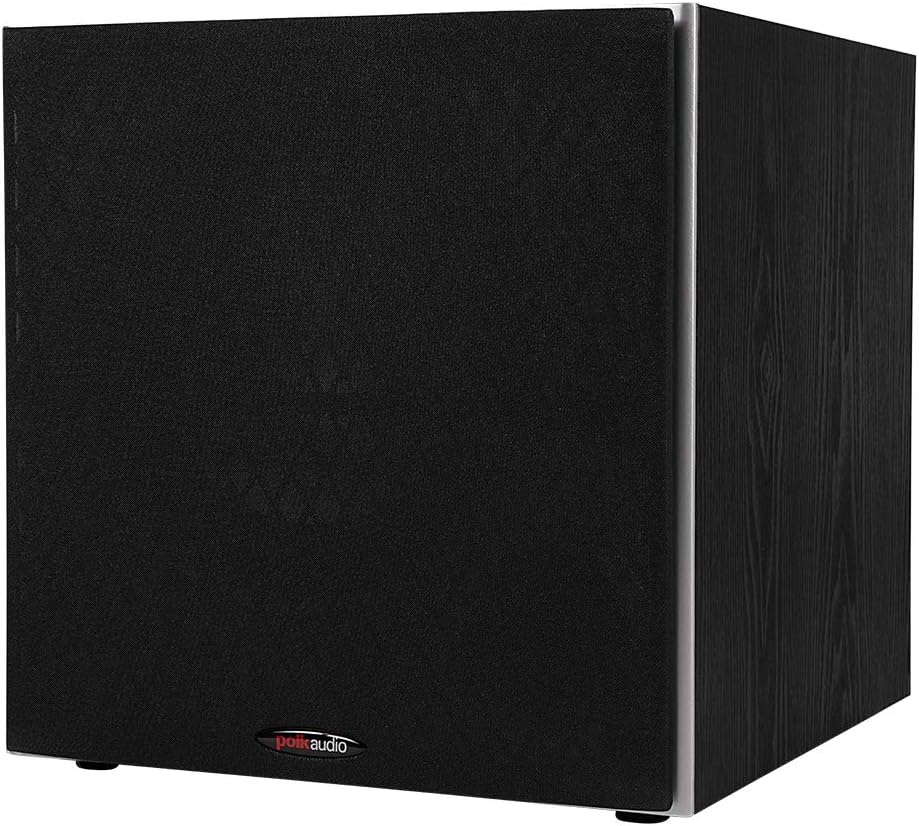 Polk Audio PSW10 10-Inch Powered Subwoofer |
9.7/10 | View on Amazon.com |
| 25% OFF |
 Edifier T5s 70W Powered Subwoofer, 8-Inch Woofer |
9.6/10 | View on Amazon.com |
Prices and discounts as of Nov 23, 2026 and may have changed. Check Amazon for the current price.
Pros
- Impressive 300W peak power output for a subwoofer in this price range
- Deep 32Hz frequency response brings movie soundtracks and music to life with real impact
- Flexible phase and crossover controls make integration with existing speaker setups straightforward
- Solid wood enclosure construction minimizes unwanted resonance and cabinet coloration
- Backed by Klipsch's reputation for audio quality and a strong limited warranty
Cons
- Wired-only connectivity via RCA means no wireless or Bluetooth streaming options for flexible placement
- At over 16 inches tall, the cabinet footprint may feel bulky in smaller living rooms or tight media setups
The Klipsch R-100SW is a 10-inch floor-standing subwoofer designed for home theater and stereo enthusiasts who want authoritative, room-filling bass without breaking the bank. It fits naturally into any 2.1, 5.1, or 7.1 surround sound system and is equally at home in a dedicated media room or a large living space.
At the heart of this subwoofer is a 10-inch front-firing spun-copper IMG woofer paired with an all-digital amplifier rated at 150 watts continuous and 300 watts peak. This combination delivers a frequency response reaching down to 32Hz, which is deep enough to reproduce the low-end rumble of action films, the punch of kick drums, and the resonance of pipe organs with convincing realism.
The R-100SW is built with a wood enclosure finished in a clean black brushed polymer veneer, giving it a refined appearance that blends into most home decor. The front-firing driver configuration adds placement flexibility, allowing the unit to perform well even when positioned close to a wall. Controls for volume, low-pass crossover frequency, and 0 to 180-degree phase adjustment are accessible on the rear panel, making it easy to dial in the perfect blend with your main speakers.
On the downside, the R-100SW is strictly a wired subwoofer, connecting via RCA inputs only, which limits placement flexibility compared to wireless-enabled alternatives. The cabinet is also fairly substantial in size, so buyers with compact rooms should measure carefully before purchasing.
Overall, the Klipsch R-100SW delivers exceptional bass performance and build quality at its price point. With a class-leading 5-year woofer warranty, broad receiver compatibility, and Klipsch's proven acoustic engineering, it is a compelling choice for anyone looking to add serious low-end impact to their home audio system.
The Klipsch R-100SW features a 10-inch (25.4 cm) spun-copper IMG woofer in a front-firing configuration housed in a wood enclosure. Amplifier power is rated at 150 watts continuous and 300 watts peak, delivered by an all-digital amplifier stage.
Frequency response spans 32Hz to 120Hz at plus or minus 3dB, making it suitable for both cinematic low-frequency effects and musical bass reproduction. Connectivity is handled via line-level LFE RCA inputs, ensuring compatibility with the vast majority of AV receivers and stereo amplifiers.
Rear-panel controls include a volume knob, variable low-pass crossover, and a 0 to 180-degree phase switch. The auto power-on feature activates the subwoofer when a signal is detected and powers it down during periods of silence. Cabinet dimensions are approximately 14.5 inches wide by 12.5 inches deep by 16.4 inches tall. The unit is covered by a 5-year limited warranty on the woofer and a 2-year limited warranty on the amplifier.
If you are building or upgrading a home theater system and want to add deep, impactful bass, the Klipsch R-100SW is worth serious consideration. It pairs especially well with Klipsch Reference series bookshelf or floor-standing speakers, but its flexible crossover controls make it compatible with virtually any brand of main speakers.
For rooms up to around 2,000 square feet, the R-100SW provides more than enough output. If you have a very large open-plan space or you listen at consistently high volumes, you may want to consider a larger 12-inch model for additional headroom. For typical living rooms and dedicated home theaters, this unit is more than capable.
When positioning the subwoofer, try placing it near a front corner of the room for maximum bass reinforcement, then use the phase control to align it with your main speakers. Connect it to your AV receiver using a standard RCA subwoofer cable and set your receiver's crossover to around 80Hz as a starting point, adjusting from there based on your main speakers' bass extension. The auto power-on feature means you can leave it plugged in without worrying about standby power consumption.
Pros
- Powerful 100W dynamic output in a compact, space-saving enclosure ideal for smaller rooms
- Versatile hookup options including RCA and speaker-level connections suit a wide range of receivers and amplifiers
- Adjustable crossover and volume controls make tuning simple and precise for any listening environment
- Durable resonance-free driver materials ensure consistent performance during extended high-volume use
- Comprehensive 5-year limited warranty with dedicated amplifier coverage adds strong long-term value
Cons
- At 11.8 kg the unit is relatively heavy for its size, which may complicate placement or repositioning in tight spaces
- The 40-160 Hz frequency response means it is optimized for bass duties only and will not extend into higher mid-range frequencies
- No wireless connectivity option means cable management is required for clean installation in modern setups
The Polk Audio PSW10 is a 10-inch powered subwoofer designed for home theater and stereo enthusiasts who want impactful bass without dedicating a large footprint to their audio setup. It targets small to mid-sized rooms and works as a straightforward upgrade to any existing speaker system, requiring no separate amplifier thanks to its fully self-contained design.
At the heart of the PSW10 is a Dynamic Balance woofer paired with a high-current 50W RMS amplifier capable of delivering up to 100 watts of dynamic power. The configured directed port enhances bass depth and extension, producing a frequency response of 40-160 Hz that covers the full range of cinematic low-end effects and musical bass lines with impressive accuracy and minimal distortion.
The cabinet is engineered from non-resonant materials, which prevents unwanted vibrations from coloring the sound at high volumes. A detachable front grille, clean black finish, and compact 17 x 14.25 x 14.5 inch dimensions give the PSW10 a tidy, unobtrusive appearance that fits neatly alongside most furniture. Connectivity is straightforward, with RCA line-level and speaker-level inputs and outputs on the rear panel alongside a Phase Toggle Switch for users running dual subwoofer configurations.
One honest drawback is the lack of wireless connectivity, which is increasingly common at this price point and would simplify placement in modern living rooms. The unit is also on the heavier side at nearly 12 kg, so moving it around during setup can be a bit cumbersome. Additionally, the crossover filter tops out at 160 Hz, so users pairing it with small satellite speakers should verify their main speakers can cover the upper bass and midrange adequately.
Overall, the Polk Audio PSW10 is a well-engineered, reliable subwoofer that delivers genuine low-frequency performance in a compact package. Its flexible inputs, adjustable crossover, and robust warranty make it a smart and accessible choice for anyone looking to add serious bass to a home theater or music system without complexity or compromise.
Driver Size: 10 inches | Amplifier Power: 50W RMS, 100W Dynamic | Frequency Response: 40-160 Hz (-3dB) | Impedance: 8 ohm | Channels: 5.1 compatible
Crossover: Continuously variable 80-160 Hz low-pass filter | Connectivity: RCA line-level input/output, Speaker-level input/output | Power Source: AC corded | Mounting: Floor mount
Dimensions: 17 inches D x 14.25 inches W x 14.5 inches H | Weight: 11.8 kg | Color: Black | Model Number: AM1055-C (PSW10)
Warranty: 5-year limited warranty, 3 years on amplifier parts and labor | In the Box: Powered subwoofer, grille, online registration card, owner's manual | Manufacturer: DEI Holdings (Polk Audio)
If you are shopping for your first subwoofer, the PSW10 is an excellent starting point. Its self-contained amplifier means you do not need to budget for a separate sub amp, and its dual input options make it compatible with virtually any AV receiver, stereo amplifier, or even a soundbar with a subwoofer output.
Room size is an important consideration. The PSW10 performs best in rooms up to roughly 2,000 square feet. For larger spaces or dedicated home theater rooms, you may want to consider a larger driver or a higher-wattage model, but for typical living rooms and apartments this unit delivers more than enough output.
When positioning the subwoofer, start by placing it near the front of the room close to your main speakers, then use the rotary volume and crossover controls to dial in a balanced blend. The Phase Toggle Switch is particularly useful if you ever expand to a dual-subwoofer setup, helping eliminate bass cancellation between units.
Buyers who prioritize wireless convenience or who are building a fully cable-free setup should note that the PSW10 uses only wired connections. In that case, pairing it with an aftermarket wireless subwoofer adapter is a straightforward workaround. For everyone else, the PSW10 represents a dependable, high-value choice backed by a strong warranty and Polk Audio's decades of acoustic engineering expertise.
Pros
- Powerful 70W RMS output with Class-D efficiency delivers deep, clean bass without running hot
- Versatile connectivity with dual hookup modes makes it compatible with a wide range of speakers and amplifiers
- Compact slim design with attractive wood grain finish fits neatly into home and desktop environments
- Auto-standby feature is a practical energy-saving touch for everyday use
- Officially compatible with a broad lineup of Edifier speakers and works with third-party systems via RCA
Cons
- Series connection mode (Signal In to Signal Out) does not support Bluetooth, USB, or optical speaker inputs, which may limit compatibility with some modern wireless desktop speakers
- At just under 23 lbs, the unit is moderately heavy for a compact subwoofer, which could be a consideration for desk or shelf placement
- No wireless connectivity means users with fully wireless setups will need to run physical cables
The Edifier T5s is a compact powered subwoofer aimed at desktop audio fans, bookshelf speaker owners, and home theater enthusiasts who want a meaningful bass upgrade without committing to a large, traditional subwoofer. With a 70W RMS Class-D amplifier driving an 8-inch long-throw woofer, it punches well above its size and price bracket, reaching a low frequency extension of 35Hz that adds genuine depth and body to music, movies, and gaming audio.
One of the T5s's strongest attributes is its tuning flexibility. The adjustable low-pass filter, spanning 30Hz to 160Hz, lets you dial in the crossover point to blend naturally with your existing speakers, while the 0 and 180 degree phase selector ensures the subwoofer stays in acoustic sync with your mains. This level of control is typically found on more expensive units and makes the T5s genuinely versatile across different room setups and speaker pairings.
The cabinet design is a highlight in a product category where aesthetics are often an afterthought. The 18mm MDF enclosure with a wood grain finish and low-profile grille looks refined and understated, sitting comfortably in a living room or on a media shelf. The front-firing driver combined with a right-firing acoustic port is a smart engineering choice that reduces placement sensitivity and keeps bass response tight and controlled rather than boomy.
There are a few practical limitations worth noting. The series-connection mode, which routes audio through the subwoofer to your main speakers, only works with speakers that have a wired line-in port. Bluetooth, USB, and optical inputs are not supported in this configuration, so users with modern wireless desktop speakers may find their options more restricted. Additionally, there is no wireless connectivity of any kind, meaning cables are always part of the equation.
Overall, the Edifier T5s is a well-engineered, attractively designed powered subwoofer that delivers serious low-frequency performance in a compact, easy-to-place package. The plug-and-play setup, included cables, and auto-standby feature make it approachable for casual users, while the precise tuning controls satisfy more demanding listeners. It is a strong recommendation for anyone looking to add clean, impactful bass to a desktop or small home theater system.
Driver: 8-inch long-throw dynamic woofer with front-firing configuration and right-firing acoustic port.
Amplifier: Class-D built-in amplifier delivering 70W RMS continuous output. No external receiver required.
Frequency Response: 35Hz and above. Low-pass filter adjustable from 30Hz to 160Hz. Phase selector: 0 degrees or 180 degrees.
Connectivity: RCA Signal In and RCA Signal Out. Includes 3.5mm-to-RCA cable and RCA cable. No wireless connectivity.
Cabinet: 18mm MDF construction with wood grain finish. Dimensions: 15.71 inches deep, 6.69 inches wide, 16.14 inches tall. Weight: approximately 22.9 lbs (10.38 kg).
Power: Corded electric. Auto-standby activates after 15 minutes of inactivity. Warranty: 2-year manufacturer limited warranty.
If you are shopping for your first subwoofer or upgrading a compact desktop speaker setup, the Edifier T5s is one of the most approachable options in its class. Its plug-and-play design means you do not need a separate AV receiver or amplifier, and the included cables mean you can be up and running within minutes of unboxing.
For buyers pairing this with Edifier bookshelf speakers such as the R1280Ts, R1700BT, or R1850DB, the T5s is officially optimized for those pairings and will integrate with minimal fuss. If you are using third-party speakers, check that your speakers or amplifier have a dedicated subwoofer output (sub out) or standard RCA line outputs, as this is the most reliable connection method.
Consider the series-connection mode carefully if your main speakers rely on Bluetooth, USB, or optical inputs. In that scenario, the T5s cannot pass audio through to those speakers, and you would need a system with a dedicated sub out or a wired RCA line input on your main speakers to take full advantage of the T5s's dual-connection flexibility.
Room placement is relatively forgiving thanks to the front-firing woofer and side-firing port design, but as a general rule, placing the subwoofer near a wall or in a corner will naturally reinforce bass output. Use the phase control to eliminate any cancellation effects between the subwoofer and your main speakers once positioned.
How to Choose a Subwoofer for Tight Bass
Enclosure Type: Sealed vs. Ported
The subwoofer’s cabinet design profoundly impacts its sound character. Sealed enclosures, like that of the MTX Terminator system, are renowned for delivering fast, accurate, and tight bass. They excel in musicality and controlled transients.
Ported designs, used by models such as the Sonos Sub 4, can extend low-frequency reach and increase output efficiency. A well-engineered ported sub can still sound precise, but the design requires careful tuning to avoid port noise or slower bass response.
Driver and Amplifier Quality
A stiff, lightweight woofer cone is essential for quick starts and stops. Materials like Klipsch’s spun-copper IMG or high-grade paper cones with robust surrounds help the driver move with precision. The amplifier must provide clean, ample power with strong control over the woofer’s movement.
This damping factor prevents the woofer from overshooting or ringing, which translates to sloppy bass. Look for subwoofers with dedicated, high-quality built-in amps that match the driver’s power handling, as seen in the detailed specs of the American Bass XFL.
Integration and Control Features
Even the best subwoofer can sound boomy if poorly integrated with your main speakers. A variable low-pass crossover is non-negotiable. It lets you dial in the frequency where the subwoofer takes over, creating a seamless blend.
Phase control, offered on models like the Edifier T5s and Polk Audio PSW10, is another critical tool. It aligns the subwoofer’s sound waves with those from your main speakers, preventing cancellation and ensuring a cohesive, tight soundstage. Explore more modern subwoofers that excel in connectivity and control.
Room and Application Considerations
Your listening environment dictates your needs. A compact, front-firing subwoofer like the Sony SA-CS9M2 is ideal for smaller rooms or near-wall placement, as it minimizes interaction with room boundaries that can cause bloated bass.
For car audio, the installation is part of the design. A pre-loaded, sealed enclosure like the MTX system is engineered for controlled output in a vehicle’s acoustic environment. Always match the subwoofer’s output potential and size to your space. The broader category of subwoofers on our site can help you narrow your search by application.
Final Thoughts
Selecting the right subwoofer transforms your audio experience from muddy to magnificent. For listeners seeking authoritative, detailed bass in a home theater, the Klipsch R-100SW 10″ Subwoofer stands out with its dynamic driver and robust amplification. If your priority is a sleek, wireless solution that integrates effortlessly into a multi-room system while delivering remarkably clean low-end, the Sonos Sub 4 – Wireless Subwoofer – Black represents the pinnacle of convenient, high-fidelity bass. We encourage you to consider how each model’s strengths align with your specific setup and listening preferences.
Frequently Asked Questions
What makes a subwoofer “tight” sounding?
Tight bass refers to low frequencies that are well-defined, fast, and controlled. It hits with impact and stops abruptly without lingering or blurring into other notes. This is achieved through precise engineering of the driver, amplifier, and enclosure to minimize distortion and unwanted resonance, allowing you to hear the subtle details in the bass line or sound effect.
Can I use a car audio subwoofer for my home theater?
While technically possible with additional equipment, it is not recommended. Car subwoofers like the American Bass XFL are designed for the specific power supply and acoustic environment of a vehicle. Home subwoofers, such as those from Polk Audio or Rockville, include integrated amplifiers and crossovers optimized for home voltage and room integration, ensuring easier setup and better sound quality for that application.
How do I connect a subwoofer to my existing sound system?
Most modern home theater receivers have a dedicated “Sub Out” port, requiring a single RCA cable to the subwoofer’s line-level input. For stereo systems without a sub output, you can often use speaker-level connections, running wires from your amplifier to the sub and then to your main speakers. Always consult your subwoofer’s manual, as models like the Edifier T5s offer multiple connection methods for flexibility.
Is a wireless subwoofer a good choice for tight bass?
Is a wireless subwoofer a good choice for tight bass?
Yes, modern wireless subwoofers can deliver excellent performance. High-end models like the Sonos Sub 4 use robust wireless protocols that maintain signal integrity, and their built-in amplifiers are specifically tuned to their drivers. The primary advantage is placement flexibility, allowing you to position the subwoofer in the optimal spot in your room for the tightest bass response without worrying about cable runs. Learn more about compatible options in our guide to the best subwoofers for sonos.



Write Your Review
No reviews yet. Be the first to share your experience!