

You just invested in a stunning 4K HDR television, ready for movie nights that rival the local cinema. But something feels missing. The breathtaking visuals are held back by flat, compressed audio from your TV’s built-in speakers. The solution is a home theater system that not only delivers immersive sound but also preserves that pristine video signal. This is where 4K pass-through becomes non-negotiable.
This guide is for anyone seeking to complete their high-definition entertainment setup. We have evaluated six leading home theater systems, from advanced soundbars to comprehensive speaker packages, all featuring 4K pass-through. Our goal is to help you find the audio powerhouse that unlocks the full potential of your 4K content, ensuring every thunderous explosion and whispered dialogue is experienced as the director intended. For a deep dive into systems optimized for specific content, explore our guide on the best home theater systems for action movies.
Pros
- Excellent sound quality with true 3D surround sound and overhead channels for cinematic immersion
- Easy setup and intuitive controls with multiple connectivity options (HDMI eARC, optical, Bluetooth)
- Q-Symphony integration with Samsung TVs creates a cohesive, premium audio ecosystem
- Adaptive Sound technology intelligently adjusts audio based on content type for consistent clarity
- Competitive price point for a full 3.1.2 Dolby Atmos system with included subwoofer
Cons
- Subwoofer power may feel insufficient for bass-heavy content or larger rooms according to some users
- Q-Symphony feature requires compatible Samsung TV, limiting full functionality for non-Samsung TV owners
- Limited to 6 customer reviews, so long-term durability data is still emerging
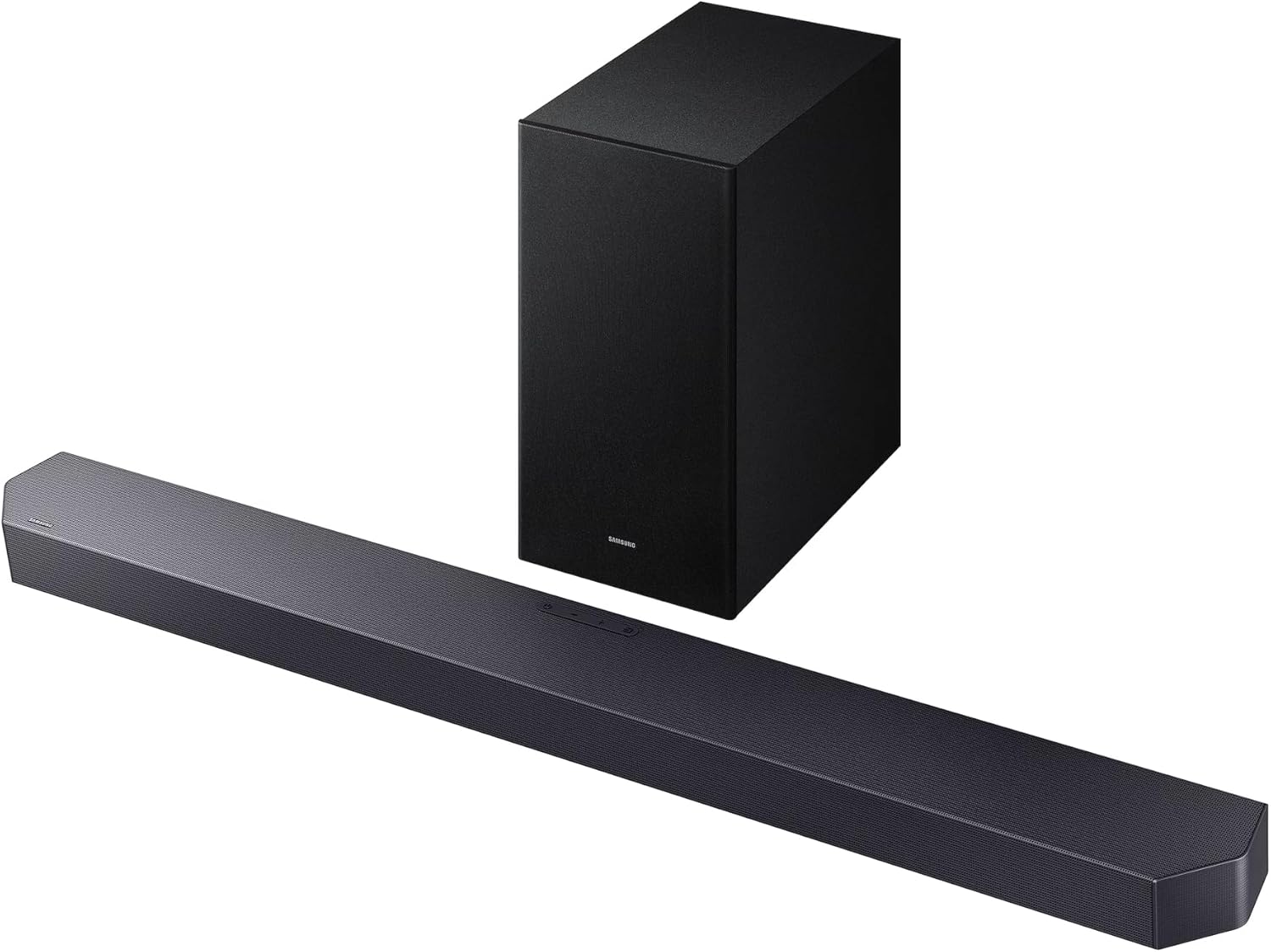
The Samsung HW-Q600F is a mid-range 3.1.2 channel soundbar system designed for home theater enthusiasts, gamers, and streaming lovers who want genuine Dolby Atmos immersion without breaking the bank. It combines a 40.5-inch soundbar with an included wireless subwoofer, delivering 380 watts of audio power across multiple channels including up-firing speakers for overhead effects.
The standout feature is its true 3.1.2 channel configuration with Dolby Atmos and DTS Virtual:X support, which creates convincing overhead sound that makes movies, sports, and games feel genuinely immersive. Adaptive Sound technology automatically analyzes your content and adjusts dialogue, music, and effects in real time, while SpaceFit Sound calibration optimizes performance for your specific room. When paired with compatible Samsung TVs, Q-Symphony technology syncs the TV speakers with the soundbar for an even wider, more layered soundstage.
Build quality is solid with a sleek, low-profile design that fits modern entertainment setups without dominating your living room. The wireless subwoofer offers convenient cable-free placement, and connectivity options include HDMI eARC, optical, and Bluetooth for flexible integration with various devices. Game Pro Mode provides precise directional audio for competitive gaming, while 4K HDR pass-through ensures your video quality remains uncompromised.
The primary limitation is subwoofer output, which some users find lacks the room-shaking power expected for bass-heavy content in larger spaces. Additionally, the Q-Symphony feature only unlocks its full potential with Samsung TVs, so non-Samsung TV owners miss this ecosystem benefit. Setup is straightforward, and the remote control is intuitive, making it accessible even for less tech-savvy users.
The Samsung HW-Q600F represents excellent value for buyers seeking genuine 3D Dolby Atmos surround sound with adaptive audio optimization. It excels for movie nights, streaming shows, and gaming sessions, particularly in medium-sized rooms. If you own a Samsung TV and want seamless integration or prioritize overhead surround effects, this soundbar delivers impressive cinematic performance at a reasonable price point.
Audio Configuration: True 3.1.2 channel system with up-firing speakers for Dolby Atmos and DTS Virtual:X support. Total output power: 380 watts across all channels.
Connectivity: HDMI eARC, optical audio input, and Bluetooth wireless streaming. Subwoofer connects wirelessly for cable-free placement.
Smart Audio Features: Adaptive Sound technology for automatic content optimization, SpaceFit Sound for room calibration, Q-Symphony for Samsung TV integration, Game Pro Mode for immersive gaming, and Bass Boost for enhanced low frequencies.
Physical Specifications: Soundbar dimensions are 40.55 inches wide by 11.64 inches deep by 13.5 inches tall. Low-profile design suitable for wall mounting or TV stand placement. Frequency response starts at 20 Hz for deep bass reproduction.
Warranty: 1-year manufacturer's warranty included. Power source is corded electric with remote control operation.
Best For: Home theater enthusiasts, gamers, and streaming fans in medium-sized living rooms who want genuine Dolby Atmos immersion. Ideal if you own a Samsung TV and want Q-Symphony ecosystem integration. Perfect for anyone upgrading from TV speakers to a full surround sound system.
Consider Alternatives If: You have a very large room and need maximum subwoofer power for bass-heavy music or action movies. You own a non-Samsung TV and don't need Q-Symphony functionality. You prefer a soundbar without a separate subwoofer for space-saving simplicity.
Setup Considerations: The wireless subwoofer requires placement within reasonable range of the soundbar but offers flexibility for optimal bass response in your room. HDMI eARC connection to your TV is recommended for best performance and automatic format support. Bluetooth connectivity works well for streaming music from phones and tablets.
Performance Expectations: Expect genuine 3D surround sound with convincing overhead effects during movies and games. Dialogue clarity improves noticeably with Adaptive Sound enabled. Bass response is solid for movies but may feel moderate rather than thunderous in larger rooms. Audio quality scales well across movies, music, sports, and gaming content.

Pros
- Exceptionally deep and adjustable bass that suits both action-packed movies and quieter listening sessions
- True 5.1.4 channel configuration with physical rear speakers creates a genuinely immersive surround sound stage
- Simple setup process with an intuitive companion app for fine-tuning audio settings on the fly
- Premium build quality with a sophisticated aesthetic that enhances any living room setup
- Outstanding value compared to traditional multi-component home theater systems at a similar price point
Cons
- Some users report that dialogue and vocals can sound thin or tinny at certain settings, which may require EQ adjustment through the app
- The auto power-off feature when no audio signal is detected can cause the TV to revert to its built-in speakers, requiring a manual input switch to restore soundbar output
The ULTIMEA Skywave X50 is a premium 5.1.4-channel surround sound bar system aimed at home theater enthusiasts who want a true cinematic audio upgrade without the complexity of a traditional AV receiver setup. With a fully wireless design, dedicated rear surround speakers, a powered subwoofer, and 760W of peak output, it targets buyers ready to move beyond a basic single-bar soundbar experience.
The standout feature here is the fully wireless architecture powered by dual 5GHz transmission. Unlike systems that still require a wired rear speaker connection, the Skywave X50 keeps the entire surround setup cable-free, making room placement flexible and installation clean. The NEURACORE audio engine processes 24-bit/192kHz audio with less than 0.5% distortion, and the GaN amplifier ensures that power is delivered efficiently with minimal heat buildup. Reviewers consistently praise the bass depth and the noticeable improvement in sound staging once the rear speakers are placed correctly.
In terms of design, ULTIMEA has clearly invested in aesthetics as much as acoustics. The main sound bar features a refined metal grille and rose gold accent details, while the subwoofer sports a wood-finish enclosure that looks at home in a modern living space. At 43 inches wide and weighing just over 22 pounds for the full system, the components are substantial without being overwhelming.
There are a couple of practical considerations worth noting. A small number of users have found that vocal and dialogue clarity can feel slightly thin at default settings, though the companion app offers enough EQ flexibility to compensate. The auto-shutoff feature, which activates after a period of audio silence, has also caused some users to find their TV reverting to its built-in speakers, requiring a manual input reselection. These are manageable quirks but worth knowing before purchase.
Overall, the ULTIMEA Skywave X50 delivers a compelling combination of wireless convenience, genuine surround sound immersion, and premium build quality at a price point that undercuts many comparable systems. For buyers who want a significant step up from a single-bar soundbar and do not want to invest in a full AV receiver stack, this system is a strong and well-rounded contender.
Audio Channels: 5.1.4 (supports up to 17 channels via NEURACORE engine)
Peak Power Output: 760W
Frequency Response: 28Hz
Signal-to-Noise Ratio: 100dB
Audio Processing: 24-bit / 192kHz, less than 0.5% THD
Connectivity: HDMI eARC, Digital Optical, Bluetooth 5.0, USB
Wireless System: Dual 5GHz RF transmission for subwoofer and rear speakers
Bluetooth Range: Up to 15 meters
4K HDR Pass-Through: Yes
Control: Companion app
Subwoofer Driver: 8-inch woofer
Sound Bar Dimensions: 43.31 inches wide x 2.76 inches deep x 3.94 inches tall
Total System Weight: 22.1 pounds
Color: Black and Gold
Warranty: 1-year limited manufacturer warranty
In the Box: 1 x Sound Bar, 1 x 8-inch Wireless Subwoofer, 2 x Wireless Surround Speakers, 1 x HDMI Cable, 1 x Digital Optical Cable, 1 x Sound Bar Power Adaptor, 1 x Subwoofer Power Cord, 2 x Surround Speaker Power Adaptors, Wall Mounting Hardware, User Manual
If you are upgrading from a basic single-bar soundbar or a built-in TV speaker, the Skywave X50 represents a substantial leap in audio quality. The inclusion of physical rear surround speakers and a dedicated subwoofer creates a sound stage that a single bar simply cannot replicate, making it particularly rewarding for action films, gaming, and live sports.
Room size is an important consideration. With 760W of peak power and bass extension down to 28Hz, this system is well suited for medium to large living rooms. In smaller spaces it may require careful volume and bass management through the app, but the adjustability means it is not limited to large rooms exclusively.
Buyers who prioritize dialogue clarity, such as those who frequently watch dramas or news content, should plan to spend a few minutes tuning the EQ settings in the companion app after setup. Default vocal reproduction has received mixed feedback, and a small adjustment to the mid-range can make a meaningful difference to speech intelligibility.
For connectivity, ensure your TV supports HDMI eARC for the best audio signal quality and to take full advantage of Dolby processing. If your TV only has an optical output, the included optical cable will still deliver excellent performance, though some advanced audio formats may be limited. The 4K HDR pass-through is a practical bonus for those routing their streaming devices or gaming consoles through the sound bar rather than directly into the TV.

Pros
- Genuinely effortless setup with factory-paired components and HDMI eARC connectivity confirmed by multiple buyers as truly plug-and-play
- Exceptional bass output from the 10-inch wireless subwoofer that fills large rooms, including cathedral-ceiling spaces, with authority
- ULTIMEA app provides real visual feedback, 10-band EQ control, and 121 presets for a level of customization rarely seen at this price tier
- GaN amplifier technology ensures low heat generation, high efficiency, and clean audio dynamics at all volume levels
- Outstanding value compared to higher-priced component systems, with reviewers noting it rivals systems costing significantly more
Cons
- The 10-inch subwoofer is physically large and may be difficult to tuck discreetly into smaller living spaces
- Switching Bluetooth sources requires manually re-entering pairing mode, which can be inconvenient for households with multiple devices
- The included remote is basic and functional but offers limited controls, meaning most users will rely on the smartphone app for full adjustment
The ULTIMEA Skywave X70 is a 7.1.4-channel home theater sound bar system designed for buyers who want a true Dolby Atmos experience without the complexity of a traditional wired multi-component setup. Priced at the upper end of the mid-range market, it targets enthusiasts who demand cinematic immersion, powerful bass, and modern wireless convenience in a single cohesive package.
The standout feature is its fully wireless architecture, using dual 5GHz RF transmission to connect the subwoofer and surround speakers with no signal dropouts reported by early adopters. The 10-inch wireless subwoofer is a genuine powerhouse, reaching down to 20Hz with 980W peak output, and real-world reviewers confirm it fills large rooms with deep, authoritative bass that you feel as much as hear. The GaN amplifier and NEURACORE DSP engine work together to keep distortion below 0.5% even at peak volume, producing remarkably clean and detailed audio across all channels.
Setup is a genuine highlight. Components arrive factory-paired, meaning the system is operational within minutes of unboxing using HDMI eARC. The ULTIMEA companion app elevates the experience further, offering a 10-band EQ, 121 sound presets, and clear visual feedback that far surpasses the cryptic scrolling text displays found on competing sound bars. The 4K HDR pass-through ensures your video signal remains uncompromised when routing through the sound bar.
On the downside, the subwoofer cabinet is quite large and may not suit compact living rooms where discreet placement is a priority. Bluetooth source-switching requires re-entering pairing mode manually, which feels like a minor oversight for a system of this sophistication. The physical remote is also fairly basic, though the app compensates for this limitation effectively.
Overall, the Skywave X70 is a compelling and well-executed home theater system that delivers on its ambitious feature set. The combination of true wireless freedom, Dolby Atmos height channels, GaN amplification, and an intuitive app makes it one of the most capable sound bar systems available at its price point. For anyone looking to upgrade their home theater with minimal setup friction and maximum sonic impact, this system is a strong and confident recommendation.
Audio Channels: 7.1.4 surround with Dolby Atmos height channels. Peak Output Power: 980 watts. Frequency Response: 20Hz and above. Signal-to-Noise Ratio: 102dB. Audio Resolution: 24-bit / 192kHz via NEURACORE DSP engine.
Subwoofer: 10-inch wireless driver with Gravus Ultra-Linear bass technology. Wireless Technology: Dual 5GHz RF transmission plus Bluetooth (up to 15 meters). Connectivity: HDMI eARC, Digital Optical, Bluetooth, USB. Video Pass-Through: 4K Ultra HD with HDR support via HDMI eARC.
Soundbar Dimensions: 43.31 inches wide x 3.94 inches deep x 2.76 inches tall. Total System Weight: 48.5 pounds. Enclosure Materials: Metal and wood. Color: Black with rose gold accents. Control Methods: Remote control and ULTIMEA smartphone app (iOS and Android).
In the Box: Soundbar (three-piece snap assembly), 10-inch wireless subwoofer, two surround speakers, HDMI cable, digital optical cable, remote control, all necessary power adaptors, wall mounting hardware, and user manual. Warranty: 12 months manufacturer warranty with 60-day hassle-free replacement policy and 24/7 technical support.
If you are considering the ULTIMEA Skywave X70, the first question to ask is whether your TV supports HDMI eARC. While the system also connects via optical and Bluetooth, eARC unlocks the full Dolby Atmos signal path and is the recommended connection for the best audio quality. Most televisions manufactured after 2019 include at least one eARC-compatible HDMI port.
Room size is another important consideration. The 10-inch subwoofer is tuned for large living rooms and open-plan spaces, and reviewers confirm it performs excellently in cathedral-ceiling environments. In smaller rooms or apartments, you may need to dial back the bass via the app EQ to avoid overpowering the space. The good news is that the 10-band EQ and 121 presets give you precise control to tune the system to your specific environment.
This system is best suited for buyers who primarily use a single streaming device or cable box connected via HDMI, as Bluetooth source-switching requires re-pairing each time. If you frequently switch between a TV, phone, and gaming console over Bluetooth, factor in this minor inconvenience. For HDMI-connected devices, switching is seamless via CEC control.
Compared to traditional 7.1 component systems, the Skywave X70 trades some of the granular speaker placement flexibility for a dramatically simpler installation. If you want true Dolby Atmos immersion without running cables across your room or hiring an installer, this system represents one of the most accessible and high-performing options currently available in its category.

Pros
- Exceptional value for a fully featured 5.1-channel system with a well-respected brand and proven audio performance
- YPAO room optimization makes setup straightforward even for users with no prior home theater experience
- Versatile connectivity with four HDMI ports, Bluetooth, USB, and legacy audio inputs covers nearly every device
- 4K HDR passthrough including Dolby Vision ensures the system remains future-compatible with modern displays
- Compact speaker footprint and flexible virtual front placement options suit a wide variety of room sizes and layouts
Cons
- Included speaker wire is thin and short, so most users will want to purchase heavier-gauge wire separately for longer runs or better performance
- Occasional video signal dropout has been reported when used with certain gaming consoles, which may require troubleshooting HDMI handshake settings
- No built-in Wi-Fi or multi-room audio support limits wireless functionality to Bluetooth only, which may disappoint users wanting network streaming features
The Yamaha YHT-4950U is a complete 5.1-channel home theater system designed for buyers who want genuine surround sound without the complexity or cost of assembling individual components. It includes an AV receiver, two front speakers, a center channel, two surround speakers, and a powered subwoofer, making it a true plug-and-play solution for living rooms, dedicated media rooms, and basement theaters alike.
Audio performance is where this system genuinely shines. Reviewers consistently describe the surround sound as comparable to a real movie theater, with clean dialogue reproduction through the center channel and satisfying low-end impact from the subwoofer. The Compressed Music Enhancer also does a commendable job of restoring detail to compressed streaming audio, so Bluetooth playback from Spotify or Pandora sounds noticeably better than on budget competing systems.
The YPAO automatic room calibration is one of the most user-friendly features in this price range. Using a supplied microphone, the system measures your room acoustics and adjusts speaker levels, distances, and EQ automatically. This removes the guesswork from setup and consistently delivers a balanced soundstage regardless of room shape. The Virtual CINEMA FRONT mode is an added bonus for apartments or rooms where running cables to rear speakers is impractical.
On the connectivity front, four HDMI 2.0 inputs with HDCP 2.2 support and 4K HDR passthrough including Dolby Vision mean this receiver will handle every modern source device without a bottleneck. The inclusion of Bluetooth, optical, coaxial, and USB inputs ensures older devices are not left out either. One honest drawback is the absence of Wi-Fi, which limits wireless audio to Bluetooth range only and rules out integration with multi-room audio platforms.
Overall, the Yamaha YHT-4950U represents outstanding value in the home theater category. It delivers on its core promise of clear, immersive 5.1 surround sound, backs it up with thoughtful features like YPAO calibration and flexible speaker placement, and comes from a manufacturer with a strong reputation for reliability. For anyone stepping into home theater for the first time or upgrading from a soundbar, this system is a highly recommended choice.
Audio Configuration: 5.1-channel surround sound with 150 watts total output. Frequency response ranges from 28Hz to 25kHz, covering deep bass through crisp high frequencies for a full-spectrum listening experience.
Video Compatibility: Supports 4K Ultra HD passthrough at 60 frames per second with HDCP 2.2. HDR formats include Dolby Vision and Hybrid Log-Gamma, ensuring compatibility with the latest televisions and projectors.
Connectivity: 4 HDMI inputs, 1 HDMI output, Ethernet, optical digital, coaxial digital, USB, auxiliary, and Bluetooth. Wireless technology also includes AM/FM tuner for traditional broadcast radio.
What Is Included: 1 AV receiver, 2 front speakers, 1 center speaker, 2 surround speakers, 1 subwoofer, speaker wire, and subwoofer cable. The receiver measures 17 inches wide by 6 inches tall by 12 inches deep. Total system weight is approximately 51.8 pounds.
Additional Details: Standby power consumption is under 0.2 watts. The system carries a 2-year manufacturer warranty and is ranked among the top home theater systems in its category on Amazon.
Is This System Right for You? The YHT-4950U is best suited for buyers who want a single-purchase, all-in-one solution for 5.1 surround sound. If you are upgrading from a soundbar or setting up your first dedicated home theater, this package removes the complexity of matching separate components and delivers a cohesive, tuned system out of the box.
Room Size Considerations: This system performs well in small to medium-sized rooms, typically up to around 400 square feet. For very large open-plan spaces, you may eventually want to supplement with additional speakers or a more powerful receiver, but for most standard living rooms and media rooms it is more than sufficient.
What to Buy Alongside It: Most reviewers recommend purchasing additional speaker wire, especially for longer runs to rear surround speakers. A heavier gauge wire (16 AWG or thicker) will ensure a clean signal over distance. If your room layout makes rear speaker placement difficult, the Virtual CINEMA FRONT mode allows all five speakers to be positioned at the front of the room as a practical alternative.
Pairing With Your TV or Projector: Use an HDMI ARC connection between the receiver and your television for the simplest setup. This allows your TV remote to control the system volume and eliminates the need for additional cables. The system is also an excellent match for 4K projectors, as confirmed by multiple buyers who use it in dedicated home cinema rooms.
When to Consider Alternatives: If Wi-Fi streaming, multi-room audio, or voice assistant integration are priorities for you, consider stepping up to a receiver with network audio capabilities. Similarly, if you are an advanced audiophile with a large room and high-efficiency speakers already, a standalone AV receiver with more power headroom may serve you better.
Pros
- Exceptional value at under $170 for a full 5.1 surround sound system with subwoofer
- Versatile input options support TVs, smartphones, DVD players, and streaming devices
- Built-in karaoke features make it ideal for social gatherings and home entertainment
- LED lighting effects add visual appeal and synchronize with audio content
- Includes comprehensive installation accessories for quick setup without additional purchases
Cons
- No customer reviews available yet, making it difficult to assess real-world reliability and performance
- 8-inch subwoofer may deliver limited bass depth compared to larger dedicated subwoofers in premium systems
- Not waterproof, restricting use to indoor environments only
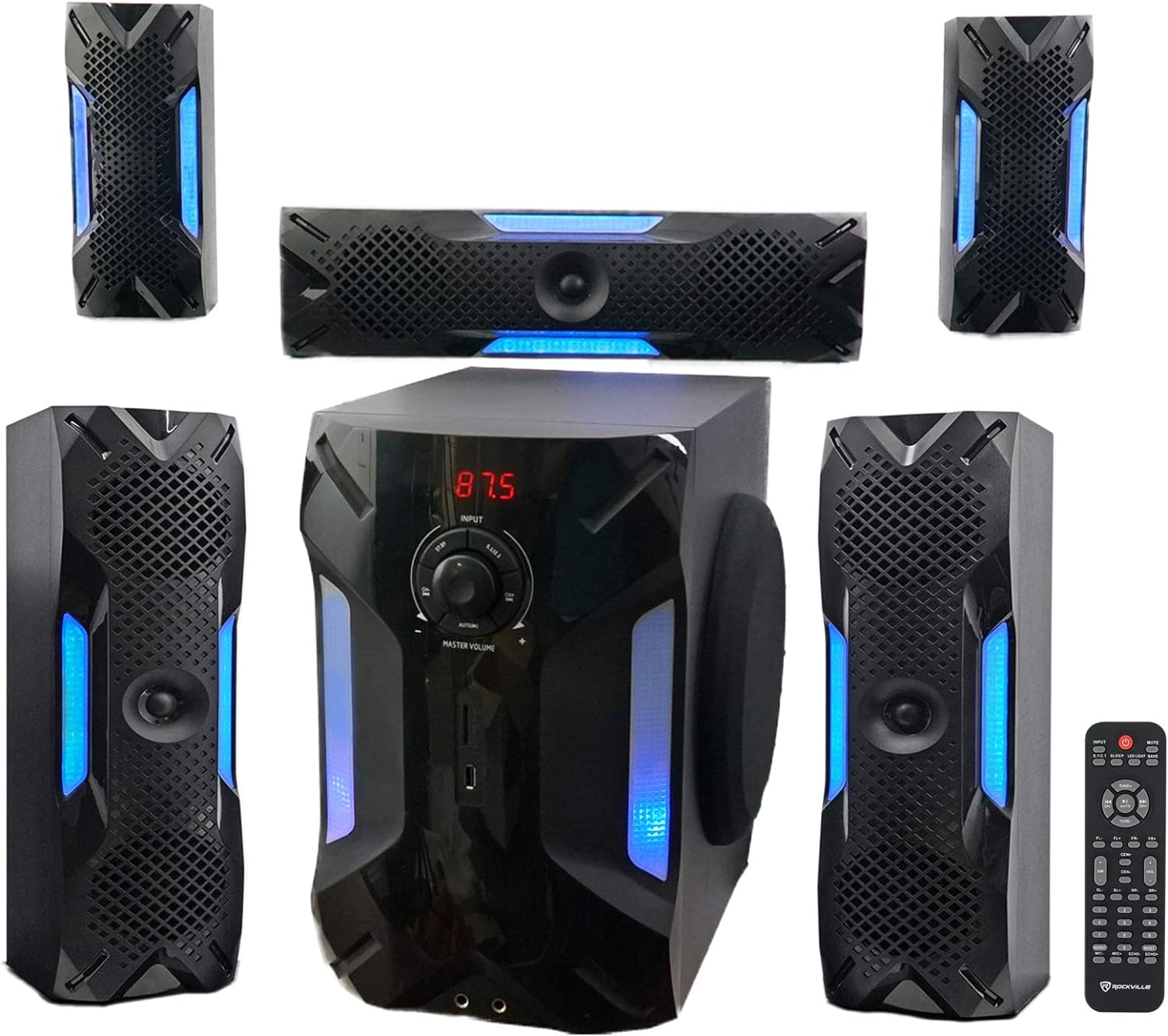
The Rockville HTS56 is a 5.1-channel home theater system designed for budget-conscious consumers seeking an affordable entry point into surround sound. It combines a 1000W peak power output with five satellite speakers and an 8-inch subwoofer, making it suitable for living rooms, bedrooms, and entertainment spaces up to medium size.
The standout feature is its versatility. With Bluetooth, USB, SD card, RCA, and optical inputs, the HTS56 connects to virtually any audio source. The built-in karaoke functionality with dual microphone inputs and echo control transforms it into an entertainment hub for parties. The 5-band EQ allows fine-tuning of audio characteristics, while the FM radio tuner adds another entertainment dimension.
Design-wise, the system uses wood enclosure construction for the satellite speakers and subwoofer, providing durability and acoustic benefits. The LED light modes that blink to the beat and display spectrum analysis add visual appeal without feeling gimmicky. The included remote control makes operation straightforward, and the full installation package with cables up to 30 feet eliminates the need for additional purchases.
The main limitations are the lack of customer reviews to verify long-term reliability and the modest 8-inch subwoofer, which may not satisfy bass enthusiasts seeking room-shaking low frequencies. Additionally, the system is not waterproof, confining use to indoor settings.
The Rockville HTS56 represents solid value for home theater newcomers and party hosts. Its combination of 5.1 surround sound, multiple connectivity options, karaoke features, and attractive lighting effects make it a compelling choice for entertainment-focused buyers with budget constraints.
Audio Performance: 1000W peak power output, 5.1 channel surround sound configuration, 20Hz to 20kHz frequency response, 70dB signal-to-noise ratio, zero distortion technology.
Connectivity: Bluetooth (10-meter wireless range), USB, SD card, RCA inputs, optical input, FM antenna input, dual microphone inputs with echo control.
Physical Specifications: 8-inch subwoofer with dynamic driver, wood enclosure construction, tabletop mounting type, black color, dimensions support standard living room placement.
Features: 5-band EQ, LED display with blink-to-beat and spectrum analyzer modes, FM radio tuner, remote control included, digital display, 1-year limited warranty.
Package Contents: 5 satellite speakers, 8-inch subwoofer, speaker cables up to 30 feet, mounting kits, signal cables, antenna, setup manual, remote control.
Who Should Buy This: First-time home theater buyers, apartment dwellers with space constraints, party hosts seeking karaoke capability, budget-conscious consumers wanting surround sound without premium pricing.
Room Size Compatibility: Best suited for small to medium-sized rooms (living rooms under 300 square feet). The 8-inch subwoofer provides adequate bass for typical room sizes but may underwhelm in larger spaces.
Setup Considerations: The system includes comprehensive installation accessories, making setup manageable for most users. The 10-meter Bluetooth range allows flexible speaker placement without running long cables throughout your room.
Use Case Optimization: Excels at movie watching, music streaming, gaming, and karaoke parties. The multiple input options ensure compatibility with TVs, soundbars, gaming consoles, smartphones, and streaming devices. The LED light effects enhance the entertainment experience during movies and music playback.
Alternative Considerations: If you require deeper bass response, consider systems with larger subwoofers. If waterproof outdoor capability is needed, look for weatherproof-rated systems. For professional audio quality, premium systems with higher wattage may be necessary.

Pros
- Dolby Atmos with TrueSpace ensures immersive audio for virtually all content types
- A.I. Dialogue Mode is a standout feature for viewers who struggle with hearing speech in movies and TV
- Dual voice assistant support with both Alexa and Google makes it highly versatile for smart home users
- Six-transducer array with upward-firing speakers provides genuine surround sound without extra satellite speakers
- Bose SimpleSync ecosystem integration adds flexibility for headphone pairing and multi-room audio
Cons
- Premium pricing puts it out of reach for budget-conscious buyers when compared to competing soundbars with similar specs
- No built-in subwoofer means bass performance, while solid for a soundbar, may not satisfy those who want deep, room-shaking low end without a separate sub
- Plastic enclosure construction may feel less premium than the price point suggests for some buyers
The Bose Smart Ultra Soundbar is a flagship all-in-one audio solution designed for TV enthusiasts who want a cinematic sound experience without the complexity of a full surround sound setup. Priced at the premium end of the soundbar market, it targets home theater fans, smart home users, and anyone who has grown frustrated with flat, uninspiring TV audio.
At the heart of this soundbar is Dolby Atmos support paired with Bose's proprietary TrueSpace technology, which works together to create a convincing three-dimensional soundstage. Six full-range transducers, including two custom-engineered upward-firing dipole speakers, push audio in multiple directions to simulate overhead and surround channels without a single extra speaker in the room. The result is a genuinely immersive listening experience that stands out from most single-unit soundbars.
One of the most practical features is A.I. Dialogue Mode, which automatically balances vocal clarity against ambient sound effects and music. For viewers who often find themselves reaching for the remote to catch missed dialogue, this feature alone could justify the purchase. Voice control is equally well-implemented, with both Amazon Alexa built in and Google Voice Control available via a compatible device, making smart home integration seamless.
Build quality is solid and the design is understated and elegant, fitting neatly beneath most televisions. The inclusion of both an HDMI eARC cable and an optical cable in the box means setup is straightforward regardless of your TV's connection options. One area worth noting is that the enclosure is primarily plastic, which some buyers may find at odds with the premium price, and those craving deep bass may want to consider pairing it with a dedicated subwoofer down the line.
Overall, the Bose Smart Ultra Soundbar is a compelling choice for anyone who wants best-in-class dialogue clarity, genuine spatial audio, and smart home convenience in a single, elegantly designed unit. It is not the most affordable option on the market, but for those who prioritize audio quality and ease of use, it delivers a premium experience that is hard to match at this form factor.
Audio: Dolby Atmos, Bose TrueSpace Technology, 180W maximum output, six full-range transducers with two upward-firing dipole speakers, 1-inch tweeter diameter.
Connectivity: HDMI eARC, Optical Audio, Bluetooth (up to 33 feet), Wi-Fi, compatible with Amazon Alexa and Google Voice Control. Bose SimpleSync for headphone and speaker pairing.
Design and Build: Tabletop mount, plastic enclosure, black finish, 4.21-inch speaker size, corded electric power source. Not water resistant.
Smart Features: Built-in Amazon Alexa, Google Voice Control via compatible device, Bose Voice4Video for TV and cable/satellite box control, app and remote control support, 2 built-in microphones.
In the Box: Bose Smart Ultra Soundbar, HDMI eARC cable, optical cable, power cord, remote control with battery, ADAPTiQ headset, Quick Start Guide. One-year limited manufacturer warranty.
Who should buy this soundbar? The Bose Smart Ultra Soundbar is best suited for buyers who want a single-unit solution that delivers true Dolby Atmos spatial audio without needing to wire up rear speakers or a separate subwoofer. It is particularly well-matched for living rooms where cable management is a concern.
Smart home compatibility: If you are already invested in the Amazon Alexa or Google ecosystem, this soundbar fits in naturally. Built-in Alexa means you can control playback, adjust volume, and manage smart home devices entirely hands-free. Google users can connect a compatible device for similar functionality.
TV connection options: The soundbar supports both HDMI eARC and optical audio connections, and both cables are included. HDMI eARC is recommended for the best audio quality and easiest control integration, but optical is a reliable fallback for older televisions.
Considering an upgrade? If you currently own a basic soundbar or are relying on built-in TV speakers, the jump in audio quality here will be substantial. However, if you already own a dedicated 5.1 or 7.1 surround sound system, the improvement may be less dramatic and the value proposition shifts toward convenience and smart features rather than raw audio performance.
Bass expectations: While the soundbar handles mid and high frequencies impressively, buyers who prioritize heavy bass for action movies or music should be aware that a separate Bose Bass Module would complement this unit well for a fuller low-end experience.
How to Choose Your 4K Home Theater System
Audio Format and Channel Configuration
The channel configuration dictates your spatial immersion. A basic 3.1.2 system offers front and overhead effects, while a 7.1.4 setup creates a full 3D sound bubble. Look for support for object-based formats like Dolby Atmos and DTS:X, which place sounds precisely in a three-dimensional space. Your choice should match your room size and desired level of envelopment. More channels generally provide a more precise and cinematic experience, especially for larger rooms.
Connectivity and 4K Pass-Through Specifications
4K pass-through is the core feature here, but its implementation matters. Ensure the system supports the latest HDMI standards, ideally with HDMI eARC on at least one port. This allows for high-bandwidth audio return from your TV. Verify it passes through 4K at 60Hz or 120Hz, along with HDR formats like HDR10, HLG, and Dolby Vision. This guarantees your gaming console, 4K Blu-ray player, or streaming device delivers video without compromise. For systems with separate receivers, our AV receivers category offers further insights into connectivity options.
System Design and Setup Flexibility
Consider your space and tolerance for wires. All-in-one soundbars with wireless subwoofers offer a clean, minimalist look and simple setup. Full home theater in a box (HTIB) systems with wired satellite speakers provide more authentic surround sound but require cable management. Wireless surround speaker systems offer a middle ground, eliminating long cable runs. Also, assess room correction technologies like Yamaha’s YPAO or proprietary calibration apps, which optimize sound for your specific room acoustics.
Additional Features and Smart Integration
Modern systems extend beyond basic audio playback. Many feature built-in voice assistants from Alexa or Google, allowing for hands-free control. Look for dedicated sound modes for music, movies, and gaming. Music lovers should check if a system has dedicated high-fidelity modes or streaming services built-in. For a system that excels with music, see our review of the best home theater systems for rock music. Multi-room audio compatibility and smartphone app control are also valuable conveniences for a streamlined smart home.
Final Thoughts
Selecting the right home theater system with 4K pass-through fundamentally elevates your viewing experience by marrying cinematic audio with lossless video. For those seeking a premium, wire-free immersive solution, the ULTIMEA 7.1.4ch Home Theater System stands out with its powerful channel configuration and advanced wireless technology. If your priority is a sleek, space-saving bar that delivers impressive Dolby Atmos height effects and seamless smart TV integration, the Samsung Q-Series Soundbar HW-Q600F offers a compelling and user-friendly package. Whichever path you choose, you are investing in a complete sensory upgrade for your home entertainment.
Frequently Asked Questions
Why is 4K pass-through important in a home theater system?
4K pass-through allows your video source signal to travel through the audio system to your television without any degradation in quality. Without it, you might be forced to connect devices directly to the TV, which can limit your ability to get the highest quality audio formats back to your sound system, especially if your TV lacks a modern eARC port. It ensures both your picture and sound remain at their absolute best.
What’s the difference between a soundbar and a home theater in a box system?
A soundbar is a single, elongated speaker cabinet, often with a separate wireless subwoofer, designed for simplicity and a clean aesthetic. A home theater in a box (HTIB) typically includes an AV receiver and multiple separate speakers for distinct channels. HTIB systems generally offer more authentic, discrete surround sound placement but require more space and wiring. Soundbars are ideal for smaller rooms and easier setup. You can explore more options in our dedicated soundbars category.
Can I use these systems for watching sports effectively?
Absolutely. Systems with clear dialogue enhancement and a wide soundstage are excellent for sports, making you feel like you are in the stadium. Features like adaptive sound modes can boost crowd atmosphere and commentator clarity. For specific recommendations, check out our guide on the best home theater systems for sports.
Do I need special cables to use 4K pass-through?
Yes, you will need High-Speed HDMI cables that support the necessary bandwidth. For the best results and future-proofing, especially for 4K at 120Hz or with advanced HDR, use certified Ultra High-Speed HDMI cables. Most systems include at least one cable, but you may need to purchase additional ones depending on your number of source devices.


Write Your Review
No reviews yet. Be the first to share your experience!