

Do you ever strain to hear delicate details in your music, only to be met with a faint hiss or hum from your audio gear? That persistent background noise can ruin even the most meticulously recorded track. For audiophiles and critical listeners, a low noise floor isn’t just a luxury; it’s the foundation for hearing every nuance, from the subtle decay of a cymbal to the quietest breath in a vocal performance.
This guide is for anyone seeking to eliminate digital glare and electrical interference from their audio chain. We’ve assessed a curated selection of desktop and portable DACs renowned for their clean signal paths and high-performance components. Whether you’re building a serious listening station or need pristine sound on the go, you’ll find a solution here.
| Pick | Product | BRD Score | Where to buy |
|---|---|---|---|
| Top Pick 9% OFF |
 FiiO KA13 Portable USB-C DAC Amp |
9.6/10 | View on Amazon.com |
| 20% OFF |
 Kiwi Ears Allegro Mini Portable HiFi DAC |
9.6/10 | View on Amazon.com |
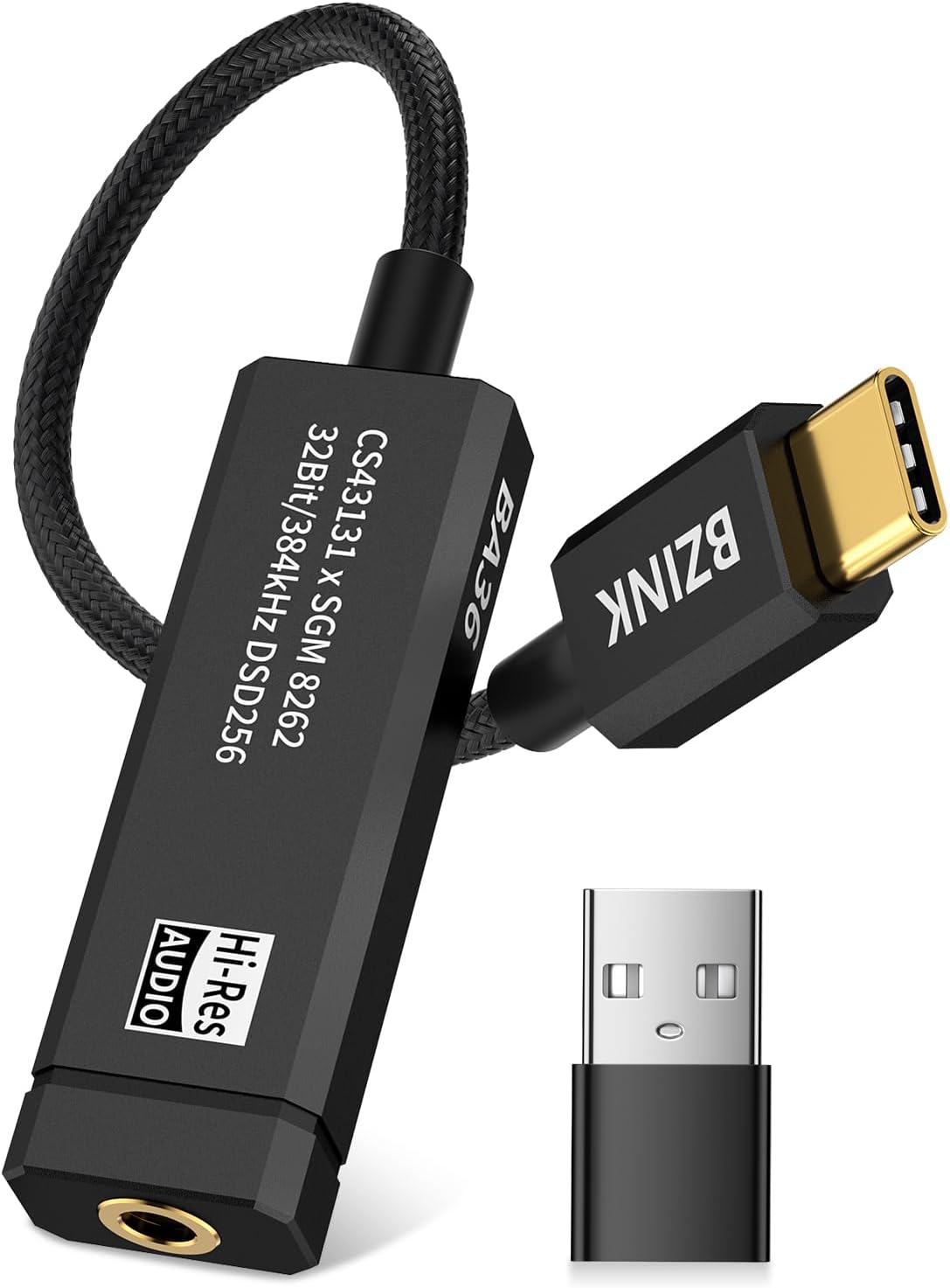 BZINK BA36 USB-C HiFi DAC Headphone Amplifier |
9.8/10 | View on Amazon.com |
Prices and discounts as of Nov 23, 2026 and may have changed. Check Amazon for the current price.
Pros
- Exceptional power delivery for its size, capable of driving high-impedance headphones with authority
- Pristine audio quality with minimal noise floor thanks to dual-core DAC and op-amp architecture
- Versatile connectivity with both 3.5mm single-ended and 4.4mm balanced outputs on one compact device
- App-based controls add convenience with customizable audio filters and visual feedback via RGB lighting
- Excellent build quality with premium aluminum construction that feels durable and professional
Cons
- Desktop Mode significantly increases battery drain on mobile devices, limiting portability benefits
- Device runs warm during extended use, particularly when powering demanding headphones
- Premium pricing compared to basic USB-C adapters, though justified by audio quality and features
The FiiO KA13 is a portable USB-C DAC/amplifier designed for serious audio enthusiasts and professionals who demand high-quality sound from their mobile and desktop devices. This compact dongle bridges the gap between convenience and audio fidelity, offering features typically found in much larger desktop equipment in a form factor that fits in your pocket.
The standout feature is its impressive 550mW power output in Desktop Mode, which allows it to drive full-size over-ear headphones and high-impedance monitors with excellent clarity and dynamics. The dual CS43131 DAC chips combined with SGM8262 op-amps create a powerful audio engine that supports hi-res formats including 32-bit/384kHz PCM and DSD256. Real-world testing shows it handles demanding headphones like Sennheiser Momentum and Denon models with authority, delivering clean, detailed sound that outperforms most smartphone audio outputs.
The dual output design (3.5mm and 4.4mm) is a practical engineering achievement that eliminates the need to choose between single-ended and balanced connections. The aluminum construction feels premium and durable, while the FiiO Control app provides convenient access to audio filters, RGB lighting customization, and SPDIF output settings. The device also offers a Normal Mode for lighter battery drain when maximum power isn't needed.
Consider that Desktop Mode does consume significant battery power on mobile devices, and the unit generates noticeable heat during extended use with power-hungry headphones. These are minor trade-offs for users seeking portable audio quality, though they merit consideration for all-day mobile use scenarios.
The FiiO KA13 delivers exceptional value for audiophiles seeking portable hi-res audio capability. It successfully combines powerful amplification, pristine audio quality, and practical versatility in a remarkably compact package, making it one of the best portable DAC/amp solutions available at its price point.
Audio Architecture: Dual CS43131 DAC chips, dual SGM8262 op-amps, 2-channel stereo configuration
Power Output: 550mW balanced (Desktop Mode), standard output in Normal Mode
Audio Format Support: PCM up to 32-bit/384kHz, DSD256
Connectivity: USB-C input, 3.5mm single-ended output, 4.4mm balanced output
Compatibility: Android, iOS, PC, dedicated music players
Build: Aluminum construction, compact dongle form factor
Control: FiiO Control app for filters, RGB lighting, SPDIF output settings
Operating Modes: Desktop Mode (maximum power, higher battery drain), Normal Mode (balanced power efficiency)
Best For: Audiophiles with high-impedance headphones, mobile professionals needing portable audio quality, users transitioning from phones without headphone jacks, music producers working with mobile devices
Consider This If: You own demanding headphones (Sennheiser Momentum, Denon, high-impedance monitors) and refuse to compromise on audio quality while mobile. You need both 3.5mm and 4.4mm connectivity options. You want hi-res audio support (384kHz PCM, DSD256) in a pocket-sized package.
May Not Be Ideal If: You prioritize all-day battery life without any drain concerns. You only use efficient IEMs that don't require significant amplification. You need a device that stays cool during extended sessions without thermal concerns.
Alternatives to Consider: Basic USB-C audio adapters if you only need impedance matching without amplification. Larger desktop DAC/amp units if portability is not a priority. Wireless solutions if you prefer Bluetooth convenience over wired audio quality.
Pros
- Exceptional portability without sacrificing sound quality, ideal for mobile audiophiles
- Dual connector options provide maximum flexibility for any headphone or IEM setup
- Industry-leading audio specifications deliver transparent, distortion-free playback
- Premium aluminum construction feels durable and looks sleek and minimalist
- Easy plug-and-play USB-C connection with broad Android and PC compatibility
Cons
- Limited to Android 5.1+ and USB-C equipped devices, no native iOS support
- No reviews available yet, making it difficult to assess real-world user experiences
- Premium pricing for a portable DAC may not appeal to casual listeners
The Kiwi Ears Allegro Mini is a portable USB-C DAC amplifier designed for audiophiles and mobile music enthusiasts who refuse to compromise on sound quality. Built by Linsoul under the Kiwi Ears brand, this device targets professional musicians, studio engineers, and discerning listeners who need high-fidelity audio on the go.
The standout feature is its exceptional audio performance, supporting PCM up to 32bit/384kHz and DSD128 playback. With a remarkably low THD+N of just 0.004% at 32 Ohms, the Allegro Mini delivers studio-grade clarity and detail. The dual output options, 3.5mm single-ended and 4.4mm balanced, cater to different headphone and IEM requirements, making it versatile for any audio setup.
Design and build quality are impressive for a portable device. The all-aluminum alloy construction provides durability while maintaining a minimalist aesthetic. At a compact size, it's genuinely pocket-friendly without feeling cheap or fragile, reflecting Kiwi Ears' attention to craftsmanship.
The main limitation is compatibility, as it requires Android 5.1+ or USB-C equipped computers, with no native iOS support. Additionally, the lack of user reviews makes it harder to validate real-world performance claims, though the specifications are impressive on paper.
The Kiwi Ears Allegro Mini is an excellent choice for portable high-resolution audio. If you own professional headphones or IEMs and need studio-quality sound during travel or work, this compact DAC delivers exceptional value and performance that justifies the investment.
Audio Performance: PCM up to 32bit/384kHz, DSD up to DSD128, THD+N 0.004% at 32 Ohms, stereo output
Connectivity: USB Type-C input, 3.5mm single-ended and 4.4mm balanced outputs, 2 channels
Compatibility: Android devices version 5.1 and above, PC, phones with USB-C
Build: All-aluminum alloy body, 32-pin connector, premium minimalist design
Warranty: 1 year manufacturer warranty, includes user manual
Who Should Buy: Professional musicians, studio engineers, audiophiles, and anyone with high-end headphones or IEMs who needs portable high-resolution audio. Ideal for those who work with Android devices or PCs and value sound quality above all else.
Who Should Skip: iOS users without USB-C adapters, casual listeners content with standard audio quality, or those seeking a budget-friendly amplifier solution.
Key Considerations: Ensure your device has USB Type-C connectivity and runs Android 5.1+. The dual outputs mean you can use either your balanced or single-ended headphones, but you'll need to match the connector to your preferred audio gear.
Pros
- Exceptional audio quality with professional-grade DAC chipset suitable for critical listening and studio work
- Impressive power output handles demanding headphones that many portable DACs cannot drive effectively
- Truly plug-and-play with zero software installation required across all compatible devices
- Excellent build quality using premium materials that justify the mid-range price point
- Strong customer satisfaction with 4.4-star rating and ranked #33 in headphone adapters category
Cons
- Limited to 3.5mm output only, incompatible with newer wireless or balanced XLR connections
- May require USB-C power delivery on some devices for optimal performance at maximum output levels
- Compact size could make the connector feel fragile during frequent travel use
The BZINK BA36 is a premium USB-C to 3.5mm digital audio converter designed for audiophiles, musicians, and mobile professionals who refuse to compromise on sound quality. This portable DAC adapter transforms any USB-C device into a high-fidelity audio source, making it essential for iPhone 15 users, Android enthusiasts, and laptop owners seeking lossless audio reproduction on the go.
What sets the BA36 apart is its dual-chip architecture combining CS43131 and SGM8262 processors, enabling Hi-Res audio decoding at 32bit/384kHz resolution. The 227mW output power at 32 ohms is genuinely impressive for a dongle-sized device, successfully driving high-impedance studio headphones and monitoring equipment without audible distortion. The measured specifications of >125dB signal-to-noise ratio and -110dB total harmonic distortion demonstrate genuine engineering excellence rather than marketing hyperbole.
Build quality reflects premium positioning with an aluminum alloy shell and silver-plated oxygen-free copper cabling. The compact, lightweight design makes it genuinely portable for daily commuting, travel, or studio sessions. The included USB-A adapter adds versatility for older devices, while the 20-month warranty and responsive customer support provide real peace of mind for this investment.
The primary limitation is the single 3.5mm output connection, which may feel restrictive for users preferring balanced audio or wireless connectivity. Additionally, some devices may require active USB-C power delivery to achieve maximum output levels, though most modern smartphones handle this automatically.
The BZINK BA36 represents outstanding value for serious listeners seeking portable Hi-Res audio without the premium pricing of boutique brands. Its combination of technical performance, build quality, and genuine usability makes it a compelling choice for anyone with a USB-C device and quality headphones.
Audio Performance: Hi-Res audio support up to 32bit/384kHz, dual CS43131 + SGM8262 DAC chipset, 227mW output at 32 ohms, impedance support 16Ω to 600Ω, signal-to-noise ratio >125dB, THD+N -110dB
Connectivity: USB Type-C input, 3.5mm stereo jack output, plug-and-play operation with no driver installation required
Compatibility: iPhone 15 series, Android smartphones and tablets, iPad, USB-C laptops and computers, universal across iOS and Android platforms
Physical: Aluminum alloy shell with metallic finish, silver-plated oxygen-free copper cable, lightweight and compact design, weight 37.65g
Package Contents: BA36 USB-C to 3.5mm adapter, USB-A adapter, 20-month limited warranty, 24-hour email support
Who Should Buy: This DAC is ideal for audiophiles with USB-C devices, music producers needing portable monitoring solutions, gamers seeking competitive audio advantages, and commuters who value lossless audio quality on mobile devices.
Who Should Skip: Users exclusively using older USB-A devices, those requiring wireless audio output, or listeners satisfied with standard smartphone audio quality may not justify the investment.
Key Considerations: Verify your headphones are 3.5mm compatible, ensure your USB-C device supports USB audio output (all modern iPhones and Android flagships do), and consider whether you need the included USB-A adapter for legacy device support.
Value Assessment: At this price point, the BA36 offers superior performance compared to basic adapters while remaining significantly more affordable than boutique audiophile DACs. The dual-chip architecture and measured audio specifications deliver genuine technical advantages that justify the investment for quality-conscious listeners.
Choosing Your Low Noise HiFi DAC
DAC Chipset and Circuit Design
The heart of any DAC is its chipset, but the implementation is equally critical. Look for premium DAC chips like the AKM AK4493SEQ or ESS Sabre variants, known for their low noise and high dynamic range. However, a quality chip alone isn’t enough. The surrounding circuitry, including power regulation and output stages, must be designed to minimize interference. A fully balanced design, as found in the Fosi Audio ZH3 DAC Headphone Amp, can further reduce noise by canceling out common-mode interference.
Advanced models may even feature proprietary resistor-ladder (R2R) architectures, like the FiiO K13 R2R Desktop DAC, which can offer a uniquely natural, analog-like sound with exceptionally low digital noise. For more on how design impacts performance, explore our guide on the best low distortion HiFi DACs.
Power Output and Headphone Compatibility
Adequate, clean power is essential for driving headphones without added distortion. While high wattage numbers are impressive, the quality of that power matters more for a silent background. Look for amplifiers with high signal-to-noise ratio (SNR) specifications. Desktop units like the FiiO K7 Desktop DAC and Amplifier provide substantial, stable power for demanding planar magnetic headphones, which you can learn more about in our dedicated guide.
For portable use, the FiiO/JadeAudio KA13 Portable DAC Dongle offers a surprising amount of clean power in a compact form. Ensure your chosen DAC’s output impedance is low enough to work well with sensitive in-ear monitors to avoid hiss, a topic we cover in depth elsewhere.
Connectivity and System Integration
Consider how the DAC will fit into your existing setup. Desktop models should offer a variety of digital inputs (USB, optical, coaxial) and outputs (RCA, XLR) to connect to amplifiers, active speakers, or recording interfaces. Versatility is a key strength of the Fosi Audio K7 DAC Headphone Amp. For a purely portable solution, a simple USB-C dongle like the BA36 USB C DAC with CS43131+SGM8262 HiFi Chip provides a direct, high-quality connection to your phone or laptop.
Bluetooth connectivity, especially with high-resolution codecs like LDAC on the Qudelix-5K, adds wireless convenience without a significant compromise in audio quality. This flexibility allows you to switch between sources seamlessly.
Use Case: Desktop vs. Portable
Your primary listening environment dictates the ideal form factor. A dedicated desktop DAC-amp is the choice for a permanent, high-performance station. It provides the robust power supply and extensive connectivity needed for critical listening with full-size dynamic headphones, a category we explore separately.
If your audio journey is just beginning, an accessible desktop unit like the Fosi Audio Q4 DAC Headphone Amp for PC offers a fantastic introduction. For listeners who prioritize mobility, portable DACs and dongles deliver exceptional sound quality on the go, making them perfect for commutes, travel, or a decluttered desk.
Final Thoughts
Finding the right low noise HiFi DAC transforms your listening by removing the veil of electronic interference, allowing the music itself to shine through with pristine clarity. For audiophiles building a versatile desktop system, the feature-rich Fosi Audio K7 DAC Headphone Amp is an outstanding hub, while those seeking ultimate portable fidelity with app-controlled precision should consider the Qudelix-5K Bluetooth USB DAC AMP with LDAC. Your path to a silent, detailed soundstage starts with choosing the tool that best fits your lifestyle and listening goals.
Frequently Asked Questions
What makes a DAC “low noise”? A low noise DAC utilizes high-quality digital-to-analog conversion chips, meticulous power supply design with ultra-low noise regulators, and often balanced circuitry. These elements work together to minimize inherent electrical hiss and interference, resulting in a blacker background and greater audio detail retrieval.
Do I need a desktop DAC or is a portable dongle sufficient? It depends on your headphones and listening environment. Desktop DAC-amps provide significantly more clean power and connectivity options, ideal for driving high-impedance headphones at home. Portable dongles are perfect for efficient headphones, IEMs, and on-the-go use, with many modern options like the FiiO KA13 offering desktop-rivaling performance in a tiny package. For a broader look at starting your setup, see our roundup of the best desktop DAC amps for beginners in 2026.
How important is a balanced connection for reducing noise? A balanced connection can be very effective, especially in environments with potential electromagnetic interference. It uses a differential signal that cancels out noise picked up along the cable run. For this reason, many premium DACs, including several reviewed here, offer 4.4mm or 2.5mm balanced headphone outputs alongside single-ended options.





Write Your Review
No reviews yet. Be the first to share your experience!