

You have a great amplifier and a pair of speakers ready to sing, but the sound from your computer or TV feels flat and compressed. The missing link is often a dedicated Digital-to-Analog Converter, or DAC, with a proper line-level output. This component is crucial for bypassing low-quality internal sound cards and delivering a pure, robust signal your amp can truly amplify.
This guide focuses specifically on HiFi DACs equipped with line-level outputs, such as RCA or XLR, designed to integrate seamlessly into your existing audio chain. Whether you are building a desktop listening station or upgrading your home theater’s two-channel sound, we have assessed leading options to help you achieve a significant audio upgrade. For a broader look at DACs with similar connectivity, explore our guide on the best HiFi DACs with RCA outputs.

Pros
- Exceptional value for money, offering performance comparable to much more expensive dedicated DACs and amplifiers
- Balanced output (4.4mm) provides noticeably improved sound quality with reduced background noise and better channel separation
- Versatile connectivity with USB, optical, coaxial, and RCA outputs accommodates virtually any audio source or speaker setup
- Easily drives demanding headphones including high-impedance models like the HD650 without distortion or strain
- Sleek, compact metal construction looks professional on any desktop and pairs well with modern RGB lighting setups
Cons
- Menu navigation requires some familiarity and experimentation to fully understand all settings and digital filter options
- Digital filters produce noticeably different sound characteristics, requiring manual selection rather than automatic impedance detection
- Some users report filter presets can sound overly bright, dark, or compressed depending on the selection
The FiiO K11 is a desktop DAC and headphone amplifier designed for audio enthusiasts, PC gamers, and home theater users who want professional-grade sound quality without the premium price tag. It serves as an excellent entry point into high-fidelity audio, offering balanced output connectivity and powerful amplification that rivals dedicated sound cards from just a decade ago. Whether you're upgrading from onboard motherboard audio or seeking better sound from your existing headphone collection, the K11 delivers noticeable improvements in clarity, detail, and dynamic range.
The standout feature is undoubtedly the balanced 4.4mm output, which provides superior stereo imaging and significantly reduces background noise compared to standard single-ended connections. With 1400mW of power output, the K11 effortlessly drives high-impedance headphones up to 350 ohms, making it compatible with professional studio monitors and demanding audiophile-grade headphones. The device supports high-resolution audio formats up to 384kHz/24-bit and DSD256, ensuring your music files are reproduced with studio-quality precision. Users consistently report that even low-impedance headphones sound noticeably more dynamic and controlled through the balanced output.
Build quality is solid and professional, featuring an aluminum alloy chassis with a sleek, compact design that fits naturally on any desktop. The high-definition VA display provides real-time feedback on sampling rate, volume, gain, and output mode, making operation straightforward once you familiarize yourself with the menu system. The included USB Type-C to Type-A cable ensures compatibility with most modern computers, and the multiple input options (USB, optical, coaxial) mean you can connect virtually any audio source without compatibility issues.
The primary consideration is that the K11 requires some menu navigation to access all features, and the adjustable digital filters require manual selection rather than automatic optimization. Different filter presets produce noticeably different sound signatures, ranging from bright and sharp to dark and muffled, so experimentation is necessary to find your preferred setting. Additionally, the device doesn't automatically detect headphone impedance, requiring manual gain adjustment for optimal performance with different headphones.
The FiiO K11 represents outstanding value for budget-conscious audiophiles and anyone seeking to significantly upgrade their desktop audio setup. Its combination of balanced connectivity, powerful amplification, high-resolution audio support, and compact design makes it one of the best dollar-for-performance DAC/amplifier combinations currently available. Highly recommended for PC gamers, music production professionals, and anyone serious about improving their listening experience.
Audio Performance
Maximum Power Output: 1400mW
Headphone Impedance Support: 8 to 350 ohms
Audio Resolution: 384kHz/24-bit, DSD256 compatible
Number of Channels: 2 (stereo)
Connectivity
Inputs: USB Type-C, Coaxial, Optical
Outputs: 6.35mm (1/4 inch) headphone jack, Balanced 4.4mm, RCA line-out, Coaxial
Included Cable: USB Type-C to USB Type-A adapter
Physical Specifications
Dimensions: 9.65 x 7.8 x 2.32 inches
Weight: 2.1 pounds
Material: Aluminum alloy chassis
Mounting Type: Cable mount
Display: High-definition VA display with contrast and long lifespan
Additional Features
Digital Filters: Multiple adjustable filter presets
Warranty: 1 year manufacturer warranty
Manufacturer: FiiO
Who Should Buy This Product
The FiiO K11 is ideal for PC users, console gamers, and home audio enthusiasts who want to significantly upgrade their sound quality without spending $300 or more. It's perfect for anyone with high-impedance headphones (100+ ohms), as it provides the power and control needed to drive them properly. Music producers, podcasters, and content creators will appreciate the high-resolution audio support and multiple connectivity options for different source equipment.
Who Might Want to Look Elsewhere
If you prefer a completely plug-and-play experience with no menu navigation, you may find the K11 slightly inconvenient. Users exclusively using wireless headphones or Bluetooth connectivity should note that the K11 requires wired connections only. Those with very low-impedance headphones (under 32 ohms) may not need the K11's power output and could consider more budget-friendly options.
Setup Tips for Best Performance
Spend time exploring the digital filter options to find the preset that best matches your headphone characteristics and personal listening preferences. Use the balanced 4.4mm output whenever possible for superior sound quality, and manually set the gain mode (low or high) based on your headphone impedance for optimal amplification. For USB connections, ensure your computer drivers are up to date and consider the latest firmware version for improved functionality.

Pros
- Exceptional musicality and organic sound character that audiophiles consistently praise in reviews
- Versatile connectivity with balanced XLR, dual RCA, and dual headphone outputs for any system
- Powerful amplification section handles high-impedance and demanding headphones effortlessly
- Intuitive app-based 10-band PEQ with presets makes sound tuning accessible and enjoyable
- Wireless LDAC streaming provides high-resolution audio quality without wired limitations
Cons
- Remote control features loud, stiff buttons that may feel less refined than competing products
- EQ settings require app access for full control, which some users find less convenient than physical controls
- Premium pricing positions it at the higher end of the desktop DAC/amp market
The FiiO K13 R2R is a desktop DAC and headphone amplifier designed for serious music listeners who value sound quality and versatility. This unit combines a proprietary R2R digital-to-analog converter with a powerful headphone amplifier in a compact package, making it perfect for anyone upgrading from consumer-grade audio equipment to true high-fidelity sound.
What sets the K13 apart is its proprietary 24-bit R2R DAC architecture, built with 192 ultra-precise 0.1% thin-film resistors that deliver warmth, musicality, and organic character that digital audio enthusiasts consistently describe as transformative. The dual NOS/OS modes give you flexibility to preserve original recordings or enhance clarity through upsampling to 384kHz. With 2400mW of power output and support for PCM 384kHz/32-bit and DSD256, this amplifier handles even demanding headphones with exceptional control and detail.
The connectivity is genuinely comprehensive. You get XLR balanced line outputs, dual RCA outputs, a 4.4mm balanced headphone jack, and a 6.35mm single-ended headphone output. The 10-band parametric EQ with app control and web interface adds professional-grade sound customization, letting you match the K13 to your specific headphones and listening preferences. LDAC Bluetooth 5.4 support means you can enjoy high-resolution wireless streaming without compromising audio quality.
Build quality is solid with a compact footprint that fits naturally on any desktop setup. The unit runs cool and quiet with a dual power supply for stable, clean amplification. Some users note the remote control buttons are stiffer and louder than competitors, and full EQ control requires smartphone access rather than physical knobs, which may feel inconvenient to some.
The FiiO K13 R2R represents excellent value for audiophiles seeking a versatile, powerful desktop audio solution. Whether you're upgrading from basic equipment or sidestepping expensive dedicated preamps and amplifiers, this unit consistently delivers the musicality and performance that justify its investment.
DAC Architecture: Proprietary 24-bit R2R, fully differential, 4-channel design with 192 ultra-precise 0.1% thin-film resistors
Audio Support: PCM up to 384kHz/32-bit, DSD256, LDAC/AAC/SBC over Bluetooth 5.4
Output Power: 2400mW maximum headphone output for powerful, controlled amplification
Connectivity: XLR balanced line out, dual RCA line out, 4.4mm balanced headphone jack, 6.35mm single-ended headphone jack
EQ: 10-band parametric EQ with app control, web interface, and preset library
Operating Modes: NOS (Non-Oversampling) and OS (Oversampling to 384kHz)
Physical: Compact desktop design, 0.7 kg weight, includes quick start guide and 1-year warranty
Who Should Buy This: The K13 R2R is ideal for desktop audiophiles, music producers, and headphone enthusiasts who want professional-grade sound quality without the complexity of multi-component systems. If you own quality headphones (over 100 ohms impedance) or high-end speakers, this unit will unlock their full potential. It's also perfect for anyone seeking wireless high-resolution audio combined with wired connectivity flexibility.
Who Might Want to Look Elsewhere: If you prioritize minimalist design with physical controls over app-based customization, or if you have a strict budget under 300 dollars, consider exploring entry-level DAC/amp combos. Those seeking only headphone amplification without preamp functionality may find dedicated headphone amps more cost-effective.
Setup Considerations: The K13 works as a standalone headphone amp, a desktop preamp for powered speakers, or a digital hub for your audio system. Ensure your audio source supports high-resolution formats to maximize the DAC's capabilities. The app-based EQ requires smartphone access, so factor that into your workflow preferences.
Value Assessment: At its price point, the K13 R2R competes favorably with dedicated DACs and amplifiers costing significantly more. The combination of R2R architecture, parametric EQ, wireless LDAC support, and multiple outputs delivers exceptional versatility that justifies the investment for serious listeners.
Pros
- Exceptional audio quality with reference-grade PCM5122 DAC and professional-grade specifications at consumer pricing
- Hassle-free installation requires no soldering, external wiring, or technical knowledge beyond basic Pi setup
- Versatile dual outputs accommodate both powered studio monitors and high-impedance headphones simultaneously
- Proven compatibility across multiple Raspberry Pi models and popular audio operating systems ensures long-term usability
- Master-clock mode eliminates Raspberry Pi jitter for noticeably cleaner, more detailed audio reproduction
Cons
- Requires a Raspberry Pi device, adding to total system cost for users without existing hardware
- Advanced features like DSD over PCM and master-clock configuration may require some technical knowledge to optimize
- Limited to Raspberry Pi ecosystem, restricting compatibility compared to universal USB DAC solutions
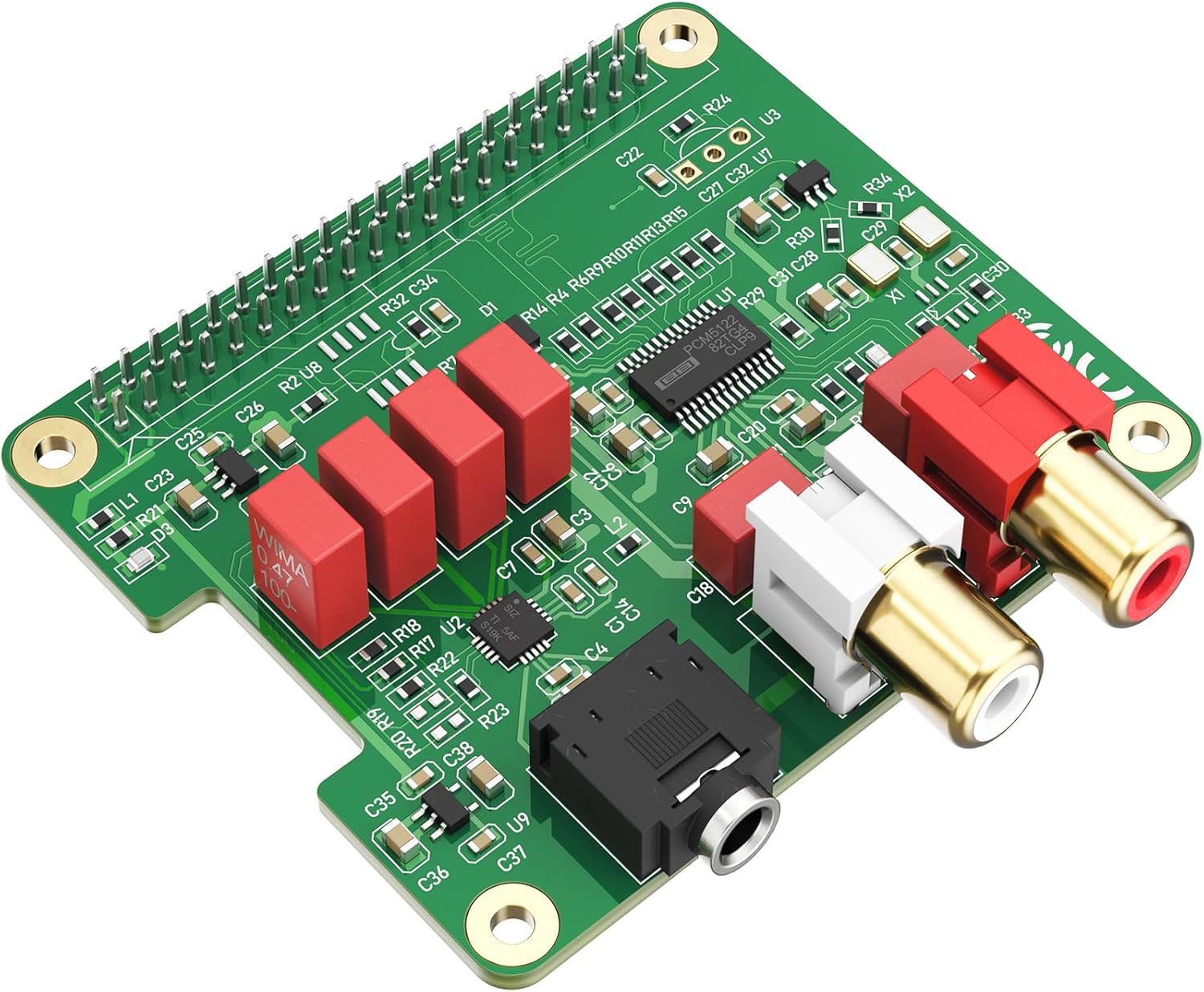
The InnoMaker HiFi DAC HAT is a direct-connect audio expansion board designed specifically for Raspberry Pi single-board computers. It transforms any compatible Pi model into a high-fidelity music server capable of handling studio-quality audio streams. This product targets audiophiles, home theater enthusiasts, and DIY builders seeking professional audio performance without the five-figure price tag of traditional audio interfaces.
The standout technical achievement here is the integration of Texas Instruments' PCM5122 reference DAC with dual ultra-low jitter oscillators, delivering 112dB signal-to-noise ratio and -78dB total harmonic distortion. Real-world performance reflects these specs: users report noticeably cleaner, more detailed playback compared to the Raspberry Pi's built-in audio, with support for 384kHz/32-bit resolution and DSD over PCM formats. The master-clock mode actively eliminates timing jitter from the host system, a feature typically reserved for dedicated audio equipment.
Design quality emphasizes both functionality and reliability. The board uses film capacitors in the audio signal path, gold-plated RCA connectors for oxidation resistance, and includes a dedicated TPA6133 headphone amplifier capable of driving high-impedance headphones with 138mW of power at 32 ohms. The plug-and-play installation via 40-pin GPIO requires no soldering or external wiring, making it accessible to users without electronics experience. Onboard EEPROM enables automatic driver loading on compatible operating systems.
The primary limitation is ecosystem dependency: this board only works with Raspberry Pi devices, so users without existing hardware must factor in the Pi's cost. Additionally, while the plug-and-play setup handles basic operation, optimizing advanced features like master-clock mode or DSD playback requires some technical configuration knowledge. These considerations are minor for the target audience but worth noting for casual buyers.
Verdict: The InnoMaker HiFi DAC HAT delivers exceptional value and genuine audio performance improvements. It's the best choice for anyone building a Raspberry Pi-based music server or streaming system. At this price point with these specifications, it offers compelling performance that rivals dedicated audio interfaces costing significantly more.
Audio Performance: PCM5122 reference DAC, 112dB SNR, -78dB THD+N, 384kHz/32-bit max sample rate, 8kHz to 384kHz sampling range, DSD over PCM (DOP) support
Outputs: RCA line-level outputs (2.1Vrms), 3.5mm headphone jack with TPA6133 amplifier (138mW@32 ohms), independent grounding for crosstalk elimination
Oscillators: Dual ultra-low jitter oscillators at 45.158MHz and 49.152MHz frequencies for master-clock mode operation
Compatibility: Raspberry Pi 5, 4, 3B+, Zero, Zero W via 40-pin GPIO connector, compatible with Volumio, Moode, RuneAudio, LibreELEC, and Raspberry Pi OS
Physical: HAT-compliant form factor, onboard EEPROM for plug-and-play configuration, reserved IR port (GPIO26), ultra-low-noise power regulation
Who Should Buy: This board is ideal for audiophiles building Raspberry Pi-based music servers, home theater enthusiasts seeking high-quality audio streaming, and DIY builders wanting professional DAC performance without soldering. It's also excellent for music producers and engineers needing a portable, budget-friendly high-resolution audio interface.
Setup Requirements: You'll need a compatible Raspberry Pi device, a microSD card with a supported operating system, basic networking knowledge for audio streaming setup, and compatible audio software like Volumio or Moode. The board itself installs without tools or technical expertise.
Audio Streaming Options: Use network streaming from NAS devices, USB storage, or online music services through compatible software. The dual outputs let you connect both active studio monitors and headphones simultaneously for flexible listening scenarios.
Alternatives to Consider: USB DACs offer broader device compatibility but typically cost more and lack the integrated design benefits. Dedicated audio interfaces provide more features but require significantly larger investments. This board offers the best balance of price, performance, and ease of use within the Raspberry Pi ecosystem.

Pros
- Exceptional value as an integrated solution combining DAC, headphone amp, and preamp functionality in one device
- High-quality components and balanced circuit design deliver noticeably cleaner, more detailed sound than separate budget alternatives
- Flexible connectivity and output options make it compatible with virtually any audio source, headphone, or powered speaker system
- Intuitive interface with physical controls and remote, plus customizable EQ and filter options for personalized sound tuning
- Strong output power handles both sensitive IEMs and high-impedance headphones without compromise
Cons
- EQ functionality is limited to headphone output only, not available for preamp output to powered speakers
- Some users report the amplifier section sounds slightly sterile compared to dedicated high-end amplifiers when used as a preamp
- Requires direct USB connection to computers in some setups rather than working through USB docks or hubs
The Fosi Audio ZH3 is a premium all-in-one desktop audio solution designed for audiophiles, music producers, and gamers who demand exceptional sound quality without the clutter of multiple components. It combines a high-performance DAC, powerful headphone amplifier, and balanced preamp into a single compact unit, making it an excellent choice for anyone looking to upgrade their listening experience on a budget.
The ZH3 delivers standout performance through its premium chipset architecture, featuring the respected AKM4493SEQ DAC paired with an XMOS XU316 processor and four OPA1612 amplifiers. It supports up to PCM 768kHz/32bit and DSD512, meaning it can handle virtually any audio format you throw at it. The fully balanced circuitry maintains ultra-low noise at just 1.9μV, resulting in clean, detailed sound with minimal distortion. Real-world testing confirms users hear noticeably improved clarity and soundstage compared to budget DAC/amp combos.
The ZH3 excels in versatility and power delivery. Dual output stages provide 640mW at 32Ω on the 6.35mm single-ended output and an impressive 2570mW at 32Ω on the balanced 4.4mm output, easily driving everything from sensitive IEMs to demanding full-size headphones. The three-level gain switch intelligently matches impedance ranges from 16Ω to 300Ω, eliminating the guesswork of volume matching. Four input types (USB, optical, coaxial, RCA) and four output formats (XLR, RCA, 4.4mm, 6.35mm) provide exceptional flexibility for connecting to any audio ecosystem.
Design and usability are thoughtfully executed. The compact desktop form factor integrates all functions into a clean interface with an OLED display and included remote control, allowing seamless switching between headphone and speaker modes with a double-click. Customization options including bass/treble EQ, six filter types, and swappable op-amps enable you to fine-tune the sound signature to match your preferences. However, note that EQ adjustments only apply to headphone output, not preamp output.
The main consideration is that while the ZH3 performs excellently as a DAC and headphone amp, some users report the amplifier section sounds slightly clinical compared to dedicated high-end power amps when used primarily as a preamp. Additionally, USB connectivity can be finicky with certain dock setups. Despite these minor limitations, the ZH3 represents exceptional value as an integrated solution, delivering studio-quality sound and professional features at an accessible price point.
DAC Specifications: AKM4493SEQ DAC with XMOS XU316 processor, supports PCM up to 768kHz/32bit and DSD512, noise floor 1.9μV.
Amplifier Output: 6.35mm single-ended output 640mW at 32Ω (x2 channels), 4.4mm balanced output 2570mW at 32Ω (x2 channels). Three-level gain switch for impedance range 16Ω to 300Ω.
Inputs: USB, optical (TOSLINK), coaxial (S/PDIF), RCA.
Outputs: 4.4mm balanced, 6.35mm single-ended, XLR (preamp), RCA (preamp).
Additional Features: Bass/treble EQ, 6 filter types, swappable op-amps, 12V trigger input, OLED display, remote control, UAC mode switching for gaming consoles.
Physical: Weight 2.9 lbs, compact desktop form factor. Warranty: 24 months.
Who Should Buy: The ZH3 is ideal for desktop audio enthusiasts, music producers, gamers, and anyone using high-quality headphones or powered speakers who wants a single integrated solution. It's perfect if you currently use separate DAC and amp components and want to simplify your setup while maintaining or improving sound quality.
Headphone Compatibility: The three-level gain switch makes the ZH3 compatible with virtually any headphone or IEM on the market, from ultra-sensitive IEMs (16Ω) to demanding full-size cans (300Ω). The balanced 4.4mm output provides exceptional power for even the most demanding headphones.
Speaker Integration: If you use powered active speakers, the XLR and RCA preamp outputs provide fixed-level outputs perfect for driving studio monitors or high-end powered speakers. Note that EQ adjustments only apply to headphone output.
Gaming and Console Use: UAC mode switching ensures full compatibility with gaming consoles for both music playback and gaming audio, making it a versatile choice for streamers and console gamers.
Setup Considerations: For best results with USB connections, connect directly to your computer rather than through USB docks or hubs. After connecting, manually select the ZH3 as your audio output device in your system sound preferences.

Pros
- Exceptional sound quality improvement over integrated soundcards with noticeably cleaner bass and wider soundstage
- Powerful amplification handles high-impedance headphones (like HD 6XX) with single-ended output at reasonable volume levels
- Zero driver installation required on USB, making setup instant and hassle-free
- Flexible dual output switching allows simultaneous control of headphones and powered speakers
- Robust build quality with heavy chassis that remains stable during volume adjustments
Cons
- Non-linear volume knob requires careful adjustment in the lower range, making initial volume control less intuitive
- Modest thermal output during extended listening sessions, though not problematic for typical use
- Sound improvements are audible but incremental rather than transformative, especially if you already have a quality soundcard
The FiiO K7 is a desktop DAC and headphone amplifier designed for audiophiles and music enthusiasts who want to elevate their listening experience beyond integrated computer audio. It combines dual AK4493SEQ DAC chips with THX AAA 788+ amplification in a compact form factor, making it ideal for anyone serious about sound quality but working within a reasonable budget.
What sets the K7 apart is its genuine commitment to audio quality without unnecessary complexity. The dual DAC architecture and six-stage audio circuit deliver noticeably refined sound with better clarity, detail retrieval, and a wider sense of space compared to standard soundcards. Real-world users report that muddy bass clears up, instruments sound more defined, and the overall presentation feels less compressed. With 2000mW of stable output power, it handles everything from sensitive IEMs to demanding 300-ohm headphones, though high-impedance models may require the high-gain setting.
The build quality reflects the price point well. The unit is substantial and heavy enough to remain stable during volume adjustments, and the weighted volume knob has a satisfying mechanical feel. The inclusion of balanced 4.4mm output, unbalanced 6.35mm and 3.5mm outputs, plus four input options (USB, optical, coaxial, RCA) makes this amp genuinely flexible for various setups. The RGB indicator lights provide useful visual feedback about input selection and sampling rates up to DSD256 and PCM384kHz.
The primary drawback is the non-linear volume knob, which stays very quiet through the lower range before suddenly jumping in volume around the 12 o'clock position. This requires more deliberate adjustment initially but becomes manageable with familiarity. Additionally, while the sound improvements are real and audible, they're evolutionary rather than revolutionary, especially if you already have a decent soundcard.
The FiiO K7 represents the best value in the desktop DAC/amp category under $300. It's the ideal gateway into high-fidelity audio for someone ready to move beyond their computer's built-in audio but not yet ready to invest in a full audiophile chain. Highly recommended for first-time DAC/amp buyers and a genuine step up for existing headphone enthusiasts.
Audio Chipset: Dual AK4493SEQ DACs, Dual THX AAA 788+ amplifiers, XMOS XU208 processor
Audio Formats: PCM up to 384kHz, DSD up to DSD256
Output Power: 2000mW stable output at balanced output, 1% THD+N distortion specification
Outputs: 4.4mm balanced, 6.35mm single-ended, 3.5mm single-ended
Inputs: USB, Optical, Coaxial, RCA
Gain Settings: 2 switchable levels for flexible headphone compatibility
Build: Desktop form factor, 1.18 kg weight, includes power adapter, power cable, and USB cable
Warranty: 1 year manufacturer coverage
Who Should Buy This: First-time DAC/amp buyers, audiophiles upgrading from integrated soundcards, anyone using high-impedance headphones like Sennheiser HD 6XX or similar models, music producers needing accurate monitoring, and those seeking balanced audio output without premium pricing.
Who Might Want to Look Elsewhere: Portable audio enthusiasts looking for battery-powered solutions, those needing only 3.5mm connections, or anyone requiring tube amplification aesthetics or coloration.
Setup Tips: Connect via USB for plug-and-play operation without driver installation. Use high-gain mode for high-impedance headphones (300 ohms and above). The balanced 4.4mm output provides marginally lower noise than single-ended outputs for sensitive headphones. Allow 30 minutes of warm-up for optimal sound signature stabilization.
Best Pairings: Works excellently with Sennheiser HD 6XX, Beyerdynamic DT 990 Pro, Audeze LCD-2, and other demanding full-size headphones. Also pairs well with mid-tier IEMs that benefit from dedicated amplification.

Pros
- Eliminates PC audio hum and flatness with clean digital-to-analog conversion
- Powerful headphone amplification drives high-impedance headphones with authority and bass impact
- Adjustable EQ knobs provide flexibility that many competitors lack at this price
- Universal compatibility works with PCs, TVs, DVD players, and speaker systems
- Excellent value compared to premium DACs with only minor sonic differences
Cons
- Some units may produce subtle white noise or hissing, particularly noticeable with low-impedance headphones
- Not ideal for professional critical listening or studio mastering applications
- No microphone input limits functionality for voice chat or recording applications
The Fosi Audio Q4 is an entry-level DAC and headphone amplifier designed for PC users, gamers, and home theater enthusiasts seeking audio improvement without complexity. This compact device bridges the gap between budget audio solutions and higher-end equipment, delivering meaningful upgrades to sound quality for everyday listening across multiple content types.
The Q4 excels in eliminating common PC audio problems like ground hum and digital flatness while providing enough amplification power to drive demanding headphones up to 200Ω impedance. The standout feature is the adjustable bass and treble controls, which break from the audiophile orthodoxy of flat response and instead offer real-world flexibility for optimizing sound to your preferences and headphone characteristics. Users report noticeable improvements in clarity, bass impact, and overall engagement compared to standard PC audio jacks.
Build quality impresses with a full metal chassis, quality metal knobs, and a compact footprint that fits naturally into any desktop setup. The device includes all necessary cables for immediate use and supports high-resolution audio up to 24-bit/192kHz with low jitter circuitry. Connectivity is comprehensive with USB, Optical, and Coaxial inputs alongside RCA and 3.5mm outputs, making it compatible with virtually any audio source or destination.
The main limitation is occasional white noise or hissing on certain units, though this is often less noticeable with higher-impedance headphones and may reflect individual unit variation rather than a design flaw. The Q4 is not intended for critical studio work or professional mastering, but for general use across music, movies, and gaming, it delivers excellent performance at its price point.
Verdict: The Fosi Audio Q4 represents outstanding value for anyone seeking meaningful audio improvement on a budget. Its combination of multiple inputs, headphone amplification, sound tuning controls, and no-driver convenience make it an excellent entry point into quality desktop audio without requiring significant investment or technical knowledge.
Audio Specifications: Supports 24-bit/192kHz HD audio with low jitter circuitry. Drives headphones from 16Ω to 200Ω impedance. Stereo output with adjustable bass and treble controls.
Connectivity: Inputs: USB, Optical (TOSLINK), Coaxial. Outputs: RCA (stereo), 3.5mm headphone jack. No microphone input.
Physical Specifications: Dimensions: 3.9 inches length x 2.9 inches width. Weight: 430 grams. Full metal chassis construction. Tabletop mount design.
Power: 5V DC power supply. USB powered or external power adapter compatible.
Warranty: 24-month manufacturer warranty. Includes USB charging cable, optical cable, and PC-USB to Type-B cable.
Who Should Buy: PC gamers seeking improved audio quality, home theater enthusiasts wanting to upgrade TV sound, music listeners with high-impedance headphones, and anyone experiencing ground hum or audio flatness from standard computer outputs.
Who Should Look Elsewhere: Professional audio engineers requiring critical listening tools, users needing microphone inputs for streaming or recording, and those seeking premium sound quality willing to spend significantly more.
Key Considerations: Verify your headphone impedance rating for optimal performance. Higher impedance headphones (100Ω and above) tend to exhibit less background noise. Check your audio source compatibility with USB, Optical, or Coaxial outputs. Consider placement near your PC or audio system for convenient cable management.
Setup Tips: No driver installation needed for USB connection on most systems. Adjust bass and treble controls to match your headphone characteristics and listening preferences. Use optical or coaxial inputs for superior isolation from PC electrical noise if available on your source device.

Pros
- Delivers warm, detailed sound quality that rivals amplifiers at significantly higher price points
- Compact footprint with high power output makes it perfect for desktop or shelf placement without sacrificing performance
- Multiple input options support turntables, computers, smartphones, CD players, and wireless devices seamlessly
- Beautiful vintage design with visible vacuum tubes and responsive VU meter adds character to any room
- Replaceable tube design allows you to fine-tune the sound signature to your preferences
Cons
- Tubes are recessed into the chassis and difficult to see unless viewed directly from above, reducing visual impact
- Remote control responsiveness could be improved for faster operation and menu navigation
- Requires a few minutes of warm-up time for tubes to reach optimal sound quality and dynamic range
The Fosi Audio MC331 is a beautifully engineered all-in-one tube amplifier designed for audiophiles and music enthusiasts who want high-quality sound without the complexity or cost of a full separates system. This compact powerhouse combines a DAC, integrated amplifier, preamplifier, and headphone amp into a single chassis, making it ideal for desktop setups, bedroom systems, or as a centerpiece for a small living room audio installation.
What truly sets the MC331 apart is its ability to deliver warm, detailed sound with impressive power output of 105W per channel at 4 ohms. Users consistently praise its ability to drive bookshelf speakers with authority while maintaining clarity and musicality. The tube circuitry imparts a characteristic warmth and smoothness that makes vocals sound intimate and instruments feel present. The built-in DAC handles USB, optical, and coaxial inputs, while Bluetooth connectivity adds modern convenience. Bass response is notably good for the size and price, and the remote-controlled bass and treble adjustments give you real control over the sound character from your listening position.
The design is where this amp truly shines. The visible vacuum tubes and responsive VU meter create a mesmerizing vintage aesthetic that looks equally at home in a retro setup or a contemporary space seeking character. The build quality feels solid and substantial despite the modest price. However, one design compromise is that the tubes are recessed into the chassis, making them difficult to see unless you peer down into the unit from above. For some buyers seeking maximum visual impact, this may be disappointing.
Minor drawbacks include the lack of a physical power switch on the unit itself, requiring you to use the remote to power on and off. Additionally, the tubes require a 3-5 minute warm-up period before reaching their full sonic potential, during which the sound can feel slightly harsh and compressed. Some users also reported that the remote control responsiveness could be more immediate, though this is a minor usability concern rather than a performance issue.
The Fosi Audio MC331 represents exceptional value in the affordable amplifier market. It competes favorably with amplifiers costing twice as much, delivering genuine tube warmth, impressive power, and surprising versatility. Whether you are building your first serious audio system, upgrading a desktop setup, or seeking a compact solution for a secondary listening space, the MC331 deserves serious consideration. Its combination of sound quality, build integrity, aesthetic appeal, and connectivity options makes it one of the best compact amplifiers available today.
Power Output: 105W x2 at 4 ohms
Inputs: Bluetooth, USB, optical, coaxial, RCA
Outputs: RCA pre-out, 3.5mm headphone output
Tubes: 2x vacuum tubes included with tube covers
Dimensions: Compact desktop form factor
Weight: 4.2 pounds
Warranty: 24 months manufacturer warranty
Accessories: Remote control, 24V/4.5A power adapter, tube covers
Who Should Buy: The MC331 is perfect for audiophiles on a budget, music lovers upgrading from computer speakers, vinyl enthusiasts seeking a compact amplifier solution, and anyone wanting to add vintage character to their audio setup. It works exceptionally well with high-quality bookshelf speakers and passive monitors.
Setup Considerations: Ensure adequate ventilation around the unit as tubes generate heat during operation. Allow 5 minutes for warm-up before critical listening. The remote control requires a clear line of sight to the unit for reliable operation. Compatible with turntables that have built-in phono preamps, external DACs, and wireless audio devices.
Sound Quality Expectations: Expect warm, smooth midrange presentation with good detail retrieval. Bass response is punchy and well-defined. Treble is smooth without harshness. The tube warmth is immediately audible and becomes more refined after warm-up. Sound character can be customized by replacing the vacuum tubes with different models.
Comparison Notes: This amplifier punches above its price point compared to solid-state alternatives. It offers better musicality and character than budget Class-D amplifiers while maintaining reliability and ease of use. It is not a replacement for high-end separates but delivers remarkable performance for the investment.

Pros
- Delivers clean amplification without audible noise or distortion at normal operating levels
- Compact, durable all-metal construction shields against electromagnetic interference effectively
- Multiple input options accommodate iPods, phones, computers, CD players, and receivers
- Adjustable gain control lets you fine-tune signal strength for different audio sources
- Includes USB-to-DC cable for convenient power connection to computers or USB adapters
Cons
- Some users report high-frequency roll-off and buzz at maximum gain settings with certain sources
- Requires external 5V power supply, limiting true portability for battery-powered applications
- Performance varies depending on audio source quality and impedance matching with connected equipment
The Douk Audio L1-MINI is a stereo line-level booster amplifier designed to solve a common audio problem: weak output signals from portable devices, fixed-output receivers, and computers. This compact preamp is perfect for audiophiles, hearing aid users, and anyone who needs independent volume control over audio sources that lack built-in adjustment capabilities.
The standout feature is its adjustable 20dB gain with a high-voltage 26V circuit delivering up to 12.5V output amplitude. Real-world users report excellent results boosting Bluetooth hearing aid transmitters, TV zone audio outputs, and computer-to-stereo connections without introducing audible distortion. The NE5532P op amp with pluggable socket design allows users to upgrade the amplification circuit for even better sound quality, adding significant playability for audio enthusiasts.
Build quality impresses with a double-sided PCB, all-metal chassis that shields against electromagnetic interference, and a high-quality sealed potentiometer ensuring wide frequency response and excellent dynamic range. The compact form factor makes it easy to integrate into existing setups without cluttering your audio rack or entertainment center. Included USB-to-DC cable provides convenient power connectivity.
Honest drawbacks exist: some users report high-frequency roll-off and buzz when operating at maximum gain with certain audio sources, suggesting careful gain adjustment and source matching is necessary. The device requires external 5V power, eliminating true portability. Performance depends significantly on proper impedance matching and source quality.
For the price, the Douk Audio L1-MINI delivers exceptional value as a signal booster and volume controller. It excels at amplifying weak audio signals cleanly and providing precise volume control over fixed-output devices. Recommended for hearing aid users, home theater enthusiasts, and anyone frustrated by inadequate audio amplification.
Power Supply: 5V DC via USB cable
Maximum Gain: 20dB with adjustable control
Output Voltage: +/- 12.5V at 26V operation
Channels: 2 (stereo)
Inputs: 3.5mm AUX and stereo RCA
Outputs: Stereo RCA
Op Amp: NE5532P (upgradeable socket design)
PCB Design: Double-sided with sealed potentiometer
Construction: All-metal chassis with electromagnetic shielding
Dimensions: Compact mini size
Warranty: 18-month limited warranty
Hearing Aid Users: Boost audio signals to Bluetooth hearing aid transmitters and bone conduction devices for consistent connectivity and volume control.
Home Theater Enthusiasts: Control volume on receiver zone outputs, amplify TV audio, and integrate multiple audio sources into your entertainment system.
Audiophiles and Musicians: Use as a preamp for turntables, CD players, and computers. The upgradeable op amp socket allows customization for enhanced sound quality.
Gaming and Content Creators: Amplify weak audio from gaming consoles, computers, and recording equipment without distortion for professional-quality output.
Budget-Conscious Audio Enthusiasts: Get professional-grade amplification and signal conditioning at a fraction of the cost of full-featured preamps or receivers.
Pros
- Exceptional audio quality rivals dedicated audiophile equipment, especially when paired with quality headphones
- Solid build quality with premium metal construction that withstands daily use and accidental drops
- Physical controls eliminate touchscreen dependency, making it easy to navigate by touch while commuting or exercising
- Versatile connectivity options work as standalone player, USB DAC, or audio receiver for multiple use cases
- Includes 64GB microSD card out of the box, ready to load your music library immediately
Cons
- Stock user interface lacks intuitive album organization within artists, though Rockbox custom firmware can resolve this
- Bluetooth connectivity has limited range and occasional reliability issues compared to newer wireless standards
- Steep learning curve for non-audiophiles, and volume control issues reported by some users requiring firmware troubleshooting
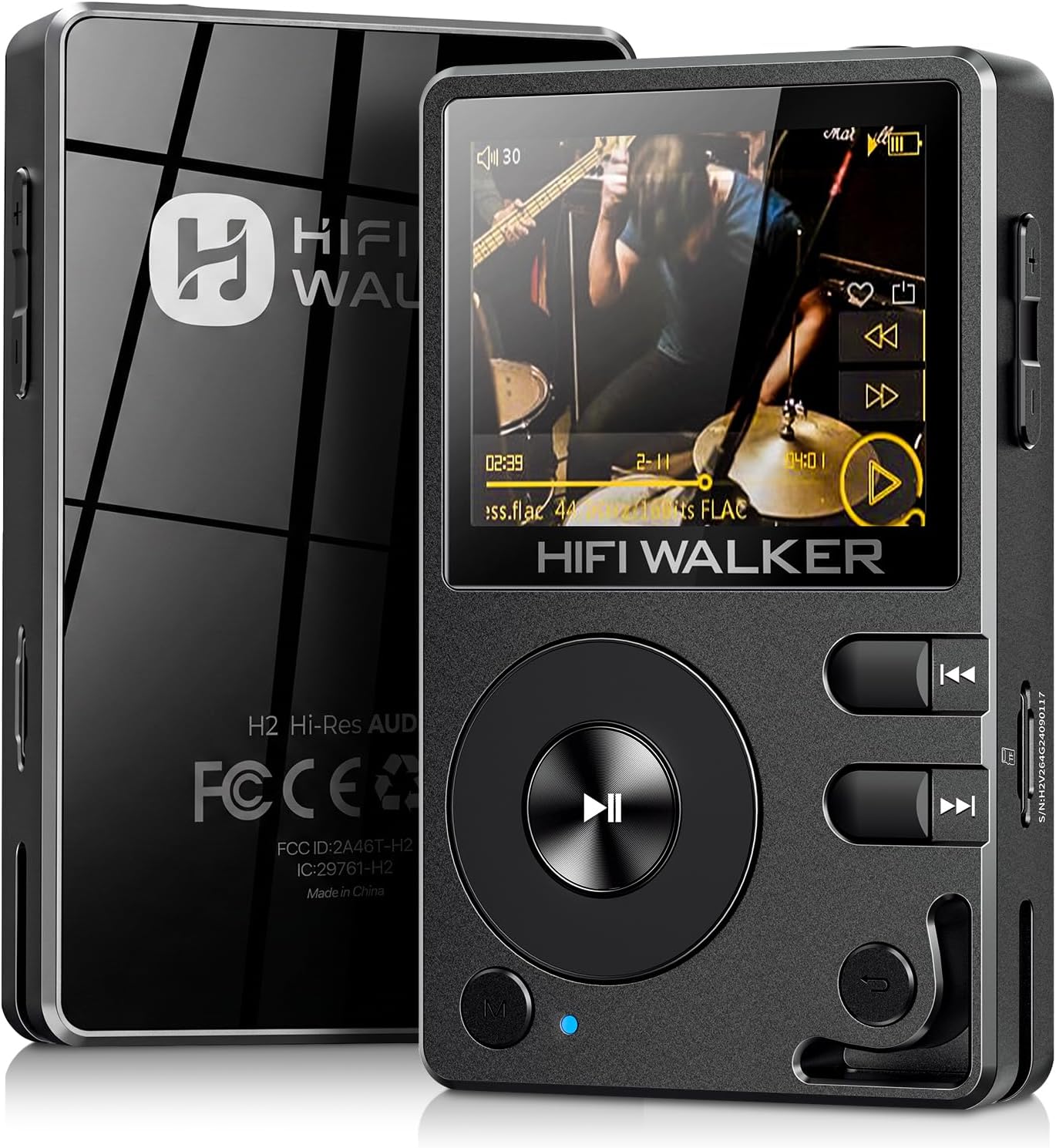
The HIFI WALKER H2 is a dedicated portable music player designed specifically for audiophiles and music enthusiasts who refuse to compromise on sound quality. Unlike smartphones that prioritize apps and features over audio fidelity, the H2 strips away distractions and focuses entirely on delivering exceptional lossless music playback. It's the perfect choice for anyone seeking an iPod Classic successor with modern DAC technology and wireless capabilities.
At the heart of the H2 sits the ESS ES9018K2M DAC, a professional-grade digital-to-analog converter that transforms your music files into pristine analog signals. With a 107dB signal-to-noise ratio and support for high-resolution formats including DSD128, FLAC, WAV, APE, and ALAC, this player reveals subtle details and nuances that standard smartphone audio cannot reproduce. Users consistently report that FLAC files sound noticeably clearer and more dynamic than compressed MP3s, making the H2 ideal for critical listening sessions at home or on the go.
The H2 features a premium zinc alloy chassis with physical buttons and a scroll wheel, delivering a solid, tactile user experience that feels substantially more durable than plastic competitors. At just 152 grams with dimensions of 3.54 inches by 2.17 inches, it fits comfortably in a pocket or bag. The 10-hour battery life ensures all-day listening without interruption, while the included 64GB microSD card lets you start building your library immediately. Support for microSD cards up to 512GB means you can store your entire music collection locally.
The main drawback is the stock user interface, which sorts music by artist or album but not hierarchically within both categories simultaneously. However, experienced users can install Rockbox custom firmware to fix this limitation. Additionally, Bluetooth connectivity has a relatively short range and occasional reliability issues in some user reports, though wired listening remains consistently excellent. Some users have also encountered volume control problems requiring firmware updates.
For serious music lovers willing to invest in a dedicated listening device, the HIFI WALKER H2 represents exceptional value. It delivers professional-grade audio quality at a mid-range price point, making high-resolution music enjoyment accessible to passionate audiophiles. If your priority is pure sound quality over convenience features, this player deserves your consideration.
Audio Performance: ESS ES9018K2M DAC, 107dB SNR, supports DSD128, FLAC, WAV, APE, ALAC, AAC, OGG, MP2, MP3, and other formats
Connectivity: Bluetooth 5.2 (transmitter and receiver), aptX codec support, USB DAC, 3.5mm headphone jack, dedicated line out
Storage: 64GB microSD card included, supports up to 512GB microSD cards, expandable storage for 14,999+ songs
Display: 2-inch LCD screen
Battery: 10-hour average playback time
Design: Zinc alloy chassis, physical buttons with scroll wheel, compact form factor (3.54 x 2.17 x 0.59 inches), 152 grams
Compatibility: Works with laptops, personal computers, and headphones via multiple connection methods
Warranty: 1-year manufacturer warranty
Best For: Audiophiles seeking lossless music playback, music enthusiasts with large FLAC or WAV libraries, iPod Classic users looking for a modern replacement, travelers wanting dedicated music listening without smartphone distractions, and anyone willing to prioritize audio quality over convenience features.
Consider Alternatives If: You need intuitive touchscreen navigation without firmware modifications, require extended Bluetooth range and reliability, prefer smartphone integration for streaming services, or want a device that doubles as a general-purpose media player.
Investment Consideration: At this price point, the H2 offers exceptional value for dedicated music listening. The ESS DAC technology and high-resolution format support typically cost significantly more in standalone audio equipment, making this player a smart investment for serious listeners.
How to Choose Your HiFi DAC with Line Output
Output Type and Signal Quality
The primary function of a line-level DAC is to provide a clean, fixed-voltage signal to an external amplifier. Most models offer unbalanced RCA outputs, which are standard for consumer audio. For longer cable runs or systems with balanced inputs, look for DACs with XLR outputs, which help reject noise.
Beyond the connector type, assess the DAC chip and output stage design. A high signal-to-noise ratio (SNR) and low total harmonic distortion (THD) are key metrics that indicate a clean, uncolored output. This ensures the signal sent to your amp is as accurate as possible.
Input Versatility and Connectivity
Consider all the digital sources you plan to use. A USB-B input is essential for connecting to a computer, while optical (Toslink) and coaxial inputs are common for TVs, game consoles, and CD transports. Some advanced DACs also include Bluetooth for wireless streaming.
Having multiple inputs allows you to consolidate your system. You can switch between your PC, TV, and streamer without constantly swapping cables. For wireless convenience, check our list of the best HiFi DACs with bluetooth 5.0.
Form Factor and Additional Features
Desktop DACs range from compact units that fit discreetly on a shelf to feature-rich centers with displays and remote controls. If you also use headphones, a built-in headphone amplifier with a dedicated jack, like a 6.35mm output, adds tremendous value. You can find dedicated models in our review of the best HiFi DACs with 6.35mm headphone output.
Other useful features include a preamp function with volume control, digital filters to subtly tailor the sound, and a high-resolution display for monitoring the audio format. For those interested in sound shaping, some units offer extensive HiFi DACs with filter options.
Final Thoughts
Upgrading to a dedicated DAC with a quality line-level output is one of the most effective ways to elevate your audio system’s performance. For users seeking a versatile and powerful all-in-one desktop solution, the Fosi Audio ZH3 DAC Headphone Amp stands out with its balanced circuitry and extensive connectivity. Alternatively, for those integrating a DAC into a Raspberry Pi-based streamer, the HiFi DAC HAT for Raspberry Pi 5/4/3B+/Zero offers exceptional value and plug-and-play simplicity. You can explore more options like these in our main HiFi DAC category.
Frequently Asked Questions
What is the difference between a DAC’s line out and pre-out?
A line-level output provides a fixed signal strength meant to be controlled by an external amplifier’s volume knob. A pre-out includes a volume control circuit, allowing the DAC itself to act as a preamplifier and control the volume sent to a power amp or active speakers.
Do I need a special cable for a DAC line output?
For standard RCA outputs, use a pair of quality RCA interconnect cables. For balanced XLR outputs, you will need XLR cables. The quality of the cable can matter, but well-constructed, shielded cables from a reputable brand are sufficient for most home setups.
Can a DAC improve the sound from my TV?
Absolutely. Most TVs have poor-quality internal DACs focused on cost-saving. Connecting your TV’s optical or coaxial output to an external HiFi DAC can dramatically improve clarity, detail, and dynamic range for movies, music, and games, making dialogue clearer and soundtracks more immersive.
How do I know if a DAC supports high-resolution audio?
Check the product specifications for supported formats. Look for support beyond standard CD quality (44.1kHz/16-bit), such as PCM up to 384kHz/32-bit and DSD256 or DSD512. This indicates the DAC can handle the high-resolution files available from many streaming services and digital downloads.


Write Your Review
No reviews yet. Be the first to share your experience!