

You have assembled a collection of high-resolution music files, invested in a pair of revealing headphones or sensitive speakers, and your computer remains the weakest link in your audio chain. The built-in sound card simply cannot do justice to your library, introducing noise and flattening the dynamic range you paid for. For the discerning listener seeking true fidelity, a dedicated desktop DAC with a dual-mono architecture is the essential upgrade. This guide evaluates the leading desktop dual DACs, helping you unlock the full potential of your digital music with pristine channel separation and a noise-free background.
Dual DAC designs are not just a marketing gimmick. By dedicating a separate digital-to-analog converter chip to each audio channel, these devices minimize crosstalk and improve stereo imaging. The result is a soundstage that feels wider and more precise, with instruments holding their distinct place in the mix. Whether you prioritize the analytical detail of ESS Sabre chips, the musical warmth of AKM or R2R designs, or need a versatile all-in-one unit with a powerful headphone amplifier, our reviewed selection covers the key contenders. For a broader look at this technology, explore our guide on the best dual DACs available.

Pros
- Exceptional audio quality with ultra-low distortion (0.0002% THD+N) and industry-leading SNR specifications
- Flexible dual DAC design allows seamless switching between ultra-clear ESS sound and warm AKM character
- Fully balanced circuit architecture eliminates noise and interference for pristine audio reproduction
- Stunning visual display with dynamic VU meters enhances any high-end audio setup aesthetically
- Comprehensive connectivity and compatibility spans music production, gaming, home theater, and hi-fi systems
Cons
- Requires understanding of balanced audio and DAC technology to fully appreciate its capabilities
- Limited to 2-channel stereo output, not suitable for surround sound or multi-channel systems
The AIYIMA D20 is a high-end balanced audio DAC and pre-amplifier designed for discerning audiophiles who demand exceptional sound quality and flexibility. This desktop decoder combines professional-grade audio processing with user-friendly features, making it suitable for music enthusiasts, content creators, and serious gamers alike.
The standout feature is its innovative dual DAC architecture, combining ESS9039Q2M and AKM4493S chips that deliver two completely different sonic signatures. Users can switch seamlessly between the ultra-resolving clarity of ESS technology and the warm, musical character of AKM, giving you sonic flexibility that adapts to your music preferences and equipment. The true fully balanced pre-amplifier achieves an astonishing 124dB signal-to-noise ratio with distortion measurements of just 0.0002%, ensuring pristine audio fidelity.
Build quality is excellent with premium components including LME49720 op-amps and a fully balanced circuit design. The large color display with dynamic retro VU meters adds visual appeal to any audio rack, while the bypass mode technology allows direct signal pass-through, skipping preamp intervention for purest analog output. Connectivity is comprehensive, featuring USB, optical, coaxial, RCA, ARC, and Bluetooth with LDAC support for high-resolution wireless audio.
The main limitation is its premium price point, which restricts its appeal to casual listeners. Additionally, the technical sophistication means users benefit from understanding balanced audio concepts to maximize its potential. The device is limited to stereo output, making it unsuitable for surround sound applications.
Overall, the AIYIMA D20 represents exceptional value for serious audiophiles seeking a versatile, high-performance DAC and pre-amplifier. Its dual DAC flexibility, outstanding audio specifications, and elegant design make it a compelling choice for building professional-grade or enthusiast-level audio systems.
Audio Processing: Dual DAC architecture with ESS9039Q2M and AKM4493S chips, XMOS XU316 processor, True Fully Balanced Pre-Amplifier with LME49720 op-amps
Audio Performance: Signal-to-Noise Ratio: 124dB or greater, Total Harmonic Distortion: 0.0002%, 2-channel stereo output
Connectivity: USB, Optical, Coaxial, RCA inputs, ARC support, Bluetooth 5.0 with LDAC and aptX HD, 12V Trigger inputs and outputs
Display and Controls: Large color display with 10+ dynamic VU meter styles, multiple UI themes, full-function remote control
Physical Specifications: Dimensions 7.48 inches L x 7.48 inches W, Weight 0.95 kg, Aluminum construction
Power and Compatibility: 12V DC power supply, UAC 1.0 and UAC 2.0 support, compatible with computers, TVs, amplifiers, phones, speakers, PS5, and Nintendo Switch
Warranty and Package: 24-month manufacturer warranty, includes user manual, power adapter, and remote control
Who Should Buy This: The AIYIMA D20 is ideal for serious music enthusiasts, audiophiles, content creators, and gamers who prioritize audio quality. It's perfect for those building high-end desktop audio systems or upgrading existing amplifier setups with a premium pre-amplifier and DAC.
Use Cases: This device excels in music production environments, high-fidelity listening rooms, gaming setups requiring superior audio, and home theater systems needing upgraded audio processing. The dual DAC design is particularly valuable for users who want to compare different sonic signatures or adapt to various music genres.
Integration Considerations: The D20 works best with quality powered speakers, external amplifiers, or existing audio systems. Its balanced pre-amplifier design maximizes performance when used with balanced cables and compatible amplification. The bypass mode is essential if you're using high-quality power amplifiers that benefit from direct signal connection.
Technical Requirements: Users should have basic knowledge of audio connectivity and balanced signal flow. Understanding the differences between DAC chips and preamp functionality will help you maximize this device's capabilities. The remote control simplifies operation, but the color display provides intuitive menu navigation.
Value Assessment: While the $329.99 price point is premium, the dual DAC flexibility, exceptional audio specifications, and versatile connectivity justify the investment for serious audio enthusiasts. The 24-month warranty provides peace of mind, and the device's compatibility with gaming consoles adds unexpected value for gamers seeking superior audio quality.

Pros
- Audiophile-grade chipset delivers transparent, high-fidelity audio across all input sources
- Exceptional power output easily handles planar magnetic and high-impedance headphones
- Flexible connectivity hub replaces multiple devices for streamlined desktop setup
- All-metal aluminum construction provides durability and EMI shielding
- Intuitive controls with angled chassis design for comfortable daily use
Cons
- No user reviews available yet to validate real-world performance claims
- Premium price point may be steep for casual listeners not requiring high-resolution audio
- Requires external 12V power supply, limiting true portability
The Fosi Audio K7 is a desktop DAC headphone amplifier engineered for audiophiles, gamers, and content creators who demand superior sound quality. It combines professional-grade audio processing with gaming-friendly features, making it a versatile hub for PC, PS5, Switch, and studio environments. The K7 bridges the gap between casual listening and serious audio work without requiring a large footprint on your desk.
At its core, the K7 delivers impressive technical performance with the AK4493S DAC, XMOS XU208 USB processor, and dual TPA6120 headphone amplifiers. The 2100mW output power easily drives demanding headphones, from balanced armature monitors to power-hungry planar magnetics. Support for high-resolution audio up to PCM 384kHz/32bit and DSD256 ensures you get every detail in your music, while Bluetooth aptX HD with low-latency support provides wireless convenience without sacrificing quality for gaming sessions.
Connectivity is where the K7 truly shines. USB-C, optical, coaxial, and Bluetooth inputs give you flexibility to connect virtually any audio source, while balanced 4.4mm, single-ended 3.5mm, and RCA outputs let you drive headphones or integrate with powered speakers and external amplifiers. The included 3.5mm microphone input adds functionality for streaming and content creation. The all-aluminum chassis with dual control knobs, five shortcut buttons, and a high-resolution display creates an intuitive, premium user experience.
Build quality reflects the premium positioning. The solid aluminum alloy construction resists wear and provides excellent electromagnetic interference shielding, protecting audio signals from digital noise. The angled chassis design promotes ergonomic comfort during extended use, while the sleek metallic finish complements modern desktop aesthetics.
The K7 is best suited for headphone enthusiasts and gamers willing to invest in audio quality. If you value high-resolution audio, appreciate balanced sound, or need a flexible audio hub for multiple devices, this amplifier delivers exceptional value. The 24-month warranty and included accessories provide confidence in your purchase, though the external power supply does limit portability.
Audio Processing: AK4493S DAC, XMOS XU208 USB processor, TPA6120 headphone amplifiers. Maximum output power: 2100mW. Audio format support: PCM up to 384kHz/32bit, DSD256.
Connectivity: USB-C, Bluetooth 5.0 aptX HD/LL, optical, coaxial, 3.5mm microphone input. Outputs: 4.4mm balanced, 3.5mm single-ended, RCA.
Physical: All-aluminum alloy chassis with angled design. Dual large control knobs, five shortcut buttons, high-resolution display. Power: 12V external supply. Dimensions and weight not specified.
Compatibility: PC, PS5, Nintendo Switch, studio equipment. Works with headphones, powered speakers, and external amplifiers via balanced or single-ended outputs.
Warranty: 24-month manufacturer warranty. Included accessories: K7 unit, USB-A/C to USB-C cable, Y-splitter cable, Bluetooth antenna, 12V power supply.
Is the K7 Right for You? Choose the K7 if you own high-quality headphones, play competitive games on console or PC, create content with multiple audio sources, or appreciate high-resolution audio. It's a long-term investment that grows with your audio setup.
Key Considerations: Verify your headphones are compatible with balanced 4.4mm connectors if you plan to use that output for maximum quality. If you need portable audio, note the K7 requires AC power and isn't battery-powered. Ensure your audio sources support at least one of the available input types (USB-C, Bluetooth, optical, coaxial).
Setup Tips: Use balanced 4.4mm output with compatible headphones for lowest noise floor and best sound quality. For gaming, the Bluetooth aptX LL mode provides low-latency wireless connectivity. The Y-splitter cable helps integrate the K7 with existing audio setups. Experiment with the dual control knobs to fine-tune gain and volume for your specific headphones.

Pros
- Exceptional musicality and organic sound character that audiophiles consistently praise in reviews
- Versatile connectivity with balanced XLR, dual RCA, and dual headphone outputs for any system
- Powerful amplification section handles high-impedance and demanding headphones effortlessly
- Intuitive app-based 10-band PEQ with presets makes sound tuning accessible and enjoyable
- Wireless LDAC streaming provides high-resolution audio quality without wired limitations
Cons
- Remote control features loud, stiff buttons that may feel less refined than competing products
- EQ settings require app access for full control, which some users find less convenient than physical controls
- Premium pricing positions it at the higher end of the desktop DAC/amp market
The FiiO K13 R2R is a desktop DAC and headphone amplifier designed for serious music listeners who value sound quality and versatility. This unit combines a proprietary R2R digital-to-analog converter with a powerful headphone amplifier in a compact package, making it perfect for anyone upgrading from consumer-grade audio equipment to true high-fidelity sound.
What sets the K13 apart is its proprietary 24-bit R2R DAC architecture, built with 192 ultra-precise 0.1% thin-film resistors that deliver warmth, musicality, and organic character that digital audio enthusiasts consistently describe as transformative. The dual NOS/OS modes give you flexibility to preserve original recordings or enhance clarity through upsampling to 384kHz. With 2400mW of power output and support for PCM 384kHz/32-bit and DSD256, this amplifier handles even demanding headphones with exceptional control and detail.
The connectivity is genuinely comprehensive. You get XLR balanced line outputs, dual RCA outputs, a 4.4mm balanced headphone jack, and a 6.35mm single-ended headphone output. The 10-band parametric EQ with app control and web interface adds professional-grade sound customization, letting you match the K13 to your specific headphones and listening preferences. LDAC Bluetooth 5.4 support means you can enjoy high-resolution wireless streaming without compromising audio quality.
Build quality is solid with a compact footprint that fits naturally on any desktop setup. The unit runs cool and quiet with a dual power supply for stable, clean amplification. Some users note the remote control buttons are stiffer and louder than competitors, and full EQ control requires smartphone access rather than physical knobs, which may feel inconvenient to some.
The FiiO K13 R2R represents excellent value for audiophiles seeking a versatile, powerful desktop audio solution. Whether you're upgrading from basic equipment or sidestepping expensive dedicated preamps and amplifiers, this unit consistently delivers the musicality and performance that justify its investment.
DAC Architecture: Proprietary 24-bit R2R, fully differential, 4-channel design with 192 ultra-precise 0.1% thin-film resistors
Audio Support: PCM up to 384kHz/32-bit, DSD256, LDAC/AAC/SBC over Bluetooth 5.4
Output Power: 2400mW maximum headphone output for powerful, controlled amplification
Connectivity: XLR balanced line out, dual RCA line out, 4.4mm balanced headphone jack, 6.35mm single-ended headphone jack
EQ: 10-band parametric EQ with app control, web interface, and preset library
Operating Modes: NOS (Non-Oversampling) and OS (Oversampling to 384kHz)
Physical: Compact desktop design, 0.7 kg weight, includes quick start guide and 1-year warranty
Who Should Buy This: The K13 R2R is ideal for desktop audiophiles, music producers, and headphone enthusiasts who want professional-grade sound quality without the complexity of multi-component systems. If you own quality headphones (over 100 ohms impedance) or high-end speakers, this unit will unlock their full potential. It's also perfect for anyone seeking wireless high-resolution audio combined with wired connectivity flexibility.
Who Might Want to Look Elsewhere: If you prioritize minimalist design with physical controls over app-based customization, or if you have a strict budget under 300 dollars, consider exploring entry-level DAC/amp combos. Those seeking only headphone amplification without preamp functionality may find dedicated headphone amps more cost-effective.
Setup Considerations: The K13 works as a standalone headphone amp, a desktop preamp for powered speakers, or a digital hub for your audio system. Ensure your audio source supports high-resolution formats to maximize the DAC's capabilities. The app-based EQ requires smartphone access, so factor that into your workflow preferences.
Value Assessment: At its price point, the K13 R2R competes favorably with dedicated DACs and amplifiers costing significantly more. The combination of R2R architecture, parametric EQ, wireless LDAC support, and multiple outputs delivers exceptional versatility that justifies the investment for serious listeners.

Pros
- Exceptional sound quality with noticeably improved clarity and detail compared to onboard audio or budget DACs
- Switchable NOS/OS modes provide sonic flexibility, letting you choose between musical warmth and analytical precision
- Powerful amplifier section handles high-impedance and demanding headphones without distortion
- Excellent value for an R2R DAC with professional-grade components at an accessible price
- Dual output ports and gain modes work with virtually any headphone or IEM setup
Cons
- Entry-level R2R DAC may not produce noticeable differences compared to quality delta-sigma DACs in blind listening tests
- Limited front-panel controls require software adjustments for input switching, which some users find inconvenient
- Requires external 12V power supply, adding desk clutter compared to USB-powered alternatives
The FiiO K11 R2R is a compact desktop DAC and headphone amplifier designed for audiophiles and music enthusiasts who want high-resolution audio quality without breaking the bank. This all-in-one device combines a fully-differential 24-bit R2R DAC with a powerful headphone amplifier, making it an excellent upgrade from onboard computer audio or budget DAC dongles.
The standout feature is the dual NOS and OS operating modes, which fundamentally change how the K11 sounds. NOS mode maintains the original sampling rate for a warmer, more organic presentation that feels musical and engaging, while OS mode upsamples to 384kHz for a more precise, detailed, and organized sound. This flexibility lets you tailor the audio to your music preference or headphone pairing. The amplifier section is genuinely powerful, delivering 1300mW per channel through professional-grade SGM8262 op-amps, capable of driving demanding headphones like the Hifiman Ananda with authority and control.
Build quality is solid with an aluminum alloy chassis and 192 high-precision resistors engineered for accuracy and low distortion. The K11 supports high-resolution formats up to 32-bit/384kHz PCM and DSD256, ensuring your lossless music library sounds its best. Dual output ports (balanced 4.4mm and single-ended 6.35mm) plus three-level gain modes provide excellent flexibility for different headphones and IEMs.
The main drawback is that the R2R architecture doesn't guarantee audible improvements over quality delta-sigma DACs in blind comparisons, so expectations should be realistic. Additionally, the external power supply adds desk clutter, and input switching requires software control rather than a physical front-panel switch. Some users may find these limitations frustrating in daily use.
The FiiO K11 R2R delivers excellent sound quality and genuine value for entry-level R2R enthusiasts. If you want a capable DAC and headphone amplifier combo with professional components and sonic flexibility, this deserves serious consideration. It's particularly recommended for users upgrading from onboard audio or entry-level DACs who want to hear a meaningful improvement in clarity and detail.
DAC Architecture: Fully-differential 24-bit R2R resistor array with 192 high-precision ultra-thin film resistors (0.1% accuracy)
Audio Processing: NOS (Non-Oversampling) and OS (Oversampling to 384kHz) dual operating modes
Supported Formats: PCM up to 32-bit/384kHz, DSD256 (native DSD mode)
Amplifier Output: 1300mW x2 (maximum 2.6W total)
Gain Modes: Three-level adjustable gain for flexible headphone matching
Headphone Outputs: Balanced 4.4mm and single-ended 6.35mm ports
Op-Amps: Ti OPA1642 (low-pass filters), dual SGM8262 (professional-grade amplification)
Volume Control: NJW1195A precise digital volume chipset with low distortion
Power Supply: External 12V power supply with 17 low-noise LDO regulators and 2 DC-DCs
Material: Aluminum alloy chassis
Included: USB Type-C to USB Type-A cable
Warranty: 1 year
Ideal For: This DAC is perfect for desktop audio enthusiasts, gamers, and music listeners who want a significant upgrade from onboard computer audio or budget DAC dongles. It's especially suited for users with mid-range to high-end headphones like Beyerdynamic, Hifiman, or quality IEMs who want to hear their full potential.
Use Cases: Music production monitoring, gaming with high-quality audio, casual audiophile listening, office setups requiring both DAC and amplification, and anyone wanting to explore R2R DAC technology without major investment.
Not Ideal For: Portable audio users seeking a compact, battery-powered solution, or those exclusively using budget headphones where amplification benefits are minimal. Users requiring simple plug-and-play operation without software configuration may also find the limited front-panel controls frustrating.
Comparison Context: This is an entry-level R2R DAC and should be compared to other DACs in its price range rather than professional-grade R2R converters. It offers exceptional value for the component quality and audio performance delivered.

Pros
- Audibly cleaner, more refined sound with improved detail and spatial imaging compared to built-in computer audio
- Powerful enough to drive high-impedance headphones like Sennheiser HD 6XX at reasonable volume levels
- Versatile connectivity accommodates diverse audio sources and output requirements for headphones and speakers
- Weighted aluminum chassis stays stable during volume adjustments, premium build quality at the price point
- Plug-and-play USB operation with zero driver installation required
Cons
- Volume knob exhibits non-linear response, requiring careful adjustment in the lower range before reaching usable levels
- Minimal thermal management, unit becomes noticeably warm during extended listening sessions
The FiiO K7 is a desktop DAC and headphone amplifier designed for audiophiles and music enthusiasts seeking to upgrade their computer audio setup. It bridges the gap between budget-conscious buyers and those wanting genuine sonic improvements, making it an excellent entry point into dedicated audio hardware without breaking the bank.
Performance-wise, the K7 delivers audible improvements in clarity, detail retrieval, and soundstage compared to typical computer audio outputs. The dual AK4493 DACs and THX AAA 788+ amplifiers work together to reduce distortion and provide clean amplification capable of driving demanding headphones like the Sennheiser HD 6XX. Users report noticeably tighter bass response and less compressed midrange, particularly when upgrading from laptop speakers or basic sound cards.
Build quality impresses for the price range, featuring a weighted aluminum chassis that feels substantial and stays put on your desk. The precision volume knob has a smooth, weighted feel that inspires confidence during operation. The RGB indicator lights add visual appeal while providing practical information about sample rates and operational status, making the device both functional and aesthetically pleasing in any desktop setup.
One notable drawback is the non-linear volume knob response, which remains very quiet until reaching approximately the 12 o'clock position. Additionally, the unit does generate noticeable warmth during extended listening sessions, though users report this remains within acceptable operating ranges without thermal concerns.
The FiiO K7 represents exceptional value for serious listeners ready to move beyond computer audio. Its combination of powerful amplification, versatile connectivity, and clean sound reproduction makes it the best-sounding sub-$300 balanced DAC/amp solution available today.
Audio Components: Dual AK4493SEQ DACs, Dual THX AAA 788+ Amplifiers, Six-stage audio circuit
Output Power: 2000mW stable output, 1% THD+N under balanced output
Connectivity: USB, Optical, Coaxial, RCA inputs; 4.4mm balanced and 6.35mm/3.5mm single-ended outputs
Physical: Aluminum alloy construction, 1.13 kg weight, 12V power supply
Features: Two gain levels, three output levels, switchable input selection, RGB indicator lights, dedicated volume control knob
Warranty: 1 year manufacturer coverage
Who Should Buy: The K7 is ideal for desktop audio enthusiasts, gamers, music producers, and casual audiophiles seeking noticeable sonic improvements. It works exceptionally well for users with high-impedance headphones, multiple audio sources, or those needing both headphone and speaker outputs from one device.
Who Might Want to Wait: If you require a completely linear volume knob or need minimal heat generation during continuous operation, consider alternatives. Those with very sensitive hearing in the low-volume range may find the non-linear response frustrating.
Setup Considerations: The K7 requires minimal setup, connecting via USB to your computer with no driver installation. Position it on a stable surface due to the weight and volume knob interaction. For best results, use quality USB cables and ensure your audio source is set to maximum output before using the K7's volume control.
Complementary Purchases: Consider balanced headphone cables (4.4mm connectors) to fully leverage the K7's balanced output capabilities, and quality USB cables to maintain audio integrity from source to device.

Pros
- Exceptional sound quality with remarkable instrument separation and clarity that noticeably improves upon entry-level DACs
- Versatile connectivity and dual output options make it compatible with virtually any audio system configuration
- Intuitive Topping Tune software enables precise audio customization with saved EQ profiles for different listening spaces
- Solid build quality and professional design suitable for desktop or rack mounting in home studios
- Outstanding value proposition for the performance level delivered at this price point
Cons
- Software stability issues reported by some users, with the parametric EQ app occasionally requiring restarts
- Highly analytical sound signature may sound harsh on poorly mastered recordings or bright source material
- Small display screen limits usability from a distance, best suited for desktop proximity use
The TOPPING D50 III is a desktop DAC and preamplifier engineered for serious music listeners who demand exceptional audio quality without breaking the bank. This unit combines professional-grade digital-to-analog conversion with flexible preamp functionality, making it suitable for headphone systems, active speaker setups, or as a front-end component in traditional amplifier-based audio chains. Whether you're upgrading from a budget DAC or seeking a dedicated preamp with hi-res capabilities, the D50 III delivers measurable performance improvements.
At the heart of this device sit dual ES9039Q2M DAC chips, which generate an impressive 132dB signal-to-noise ratio and 132dB dynamic range with distortion below 0.00006% THD+N. The newly optimized I/V conversion circuit further refines the output, resulting in noticeably improved instrument separation and clarity compared to single-chip competitors. Real-world listening confirms the technical specs, with users reporting dramatically enhanced detail retrieval and more complete soundstage presentation, particularly when transitioning from older Wolfson or entry-level DAC implementations.
The D50 III shines through its comprehensive feature set and connectivity flexibility. Dual Type-C interfaces provide both signal and power inputs, while RCA and TRS balanced outputs accommodate any downstream equipment. The integrated 10-band parametric EQ allows precise frequency adjustments to compensate for room acoustics or personal preference, with profiles saved for instant recall. Bluetooth 5.1 with LDAC support brings high-resolution wireless audio capability, supporting formats up to 96kHz/24bit for streaming from compatible devices.
Build quality reflects TOPPING's reputation for value engineering, with a compact aluminum chassis and intuitive front panel layout. The included remote control and 12V trigger output enable integration into automated systems. However, the small display screen limits visibility from typical listening distances, and some users have experienced intermittent software stability with the Topping Tune app, though this doesn't affect core DAC functionality. The analytical sound signature, while technically impressive, may require EQ adjustments on bright recordings or lower-quality source material.
The TOPPING D50 III represents exceptional value for discerning listeners seeking measurable audio improvements and genuine functionality. Its combination of dual-chip architecture, wireless hi-res support, parametric EQ, and flexible connectivity creates a genuinely versatile solution for modern audio systems. Recommended for desktop enthusiasts, critical listeners, and anyone looking to maximize sonic performance in a compact, affordable package.
DAC Architecture: Dual ES9039Q2M chips with advanced I/V conversion circuit. Signal-to-Noise Ratio: 132dB. Dynamic Range: 132dB. Total Harmonic Distortion: Less than 0.00006% THD+N.
Audio Format Support: PCM up to 768kHz, DSD512. Bluetooth 5.1 with LDAC, aptX-HD, aptX-Adaptive, and AAC codecs. Wireless transmission up to 96kHz/24bit.
Outputs: RCA (2V or 2.5V selectable) and TRS balanced (4V or 5V selectable). Dual Type-C inputs for USB signal and 12V DC power. 10-band parametric EQ with customizable frequency, gain, and bandwidth.
Physical: Compact freestanding aluminum chassis. Weight: 10.5 ounces. 12V trigger output for system integration. Includes quick start guide and remote control. 2-year manufacturer warranty.
Who Should Buy: Desktop audiophiles seeking measurable sound quality improvements, critical listeners needing flexible EQ capabilities, those upgrading from budget DACs or outdated source components, and anyone requiring wireless hi-res audio with balanced preamp functionality.
Ideal Use Cases: Desktop audio systems with active speakers or headphone amplifiers. Home theater front-end component. Office or studio monitoring setup. Turntable and phono preamp integration. Tube amplifier front-end in traditional stereo systems.
Setup Considerations: Position on desktop for easy remote access and display visibility. Use balanced TRS connections when possible for improved noise rejection. Experiment with the 10-band EQ to optimize for your room acoustics and personal preference. Allow the Topping Tune app to fully initialize before making critical listening evaluations.
Alternatives to Consider: If software stability is a primary concern, consider single-chip DAC designs with simpler interfaces. If you need wireless-only operation, explore dedicated Bluetooth DAC receivers. If you prefer warmer, more musical sound signatures, explore tube-based preamp designs instead.

Pros
- Exceptional audio quality with natural, balanced sound across all frequencies
- Versatile connectivity options support PC, Mac, phones, tablets, and TVs
- Audiophile-grade components and precision circuit design in a compact form factor
- USB bus-powered design eliminates need for separate power adapter
- Ranked #65 in Digital-Analog Converters category, proving its market credibility
Cons
- Windows users must install drivers for full functionality, adding setup complexity
- New product with no customer reviews yet, limiting real-world user feedback
- Premium pricing for desktop DAC category may be steep for casual listeners
The SMSL D1 is a premium desktop digital-to-analog converter designed for audiophiles, music producers, and discerning listeners who demand high-resolution audio. It's built for anyone with a computer, phone, or tablet who wants to unlock the full potential of their music collection and experience studio-quality sound at home.
The standout feature is the ROHM BD34352EKV DAC chip, which delivers exceptional audio fidelity with a THD+N rating of just 0.00038% and an impressive SNR of 126dB. This translates to clean, detailed sound with minimal distortion and noise. The D1 supports cutting-edge formats including DSD512 and PCM at 32-bit/768kHz, ensuring compatibility with virtually any high-resolution audio file you own.
Build quality is excellent, featuring a CNC-machined aluminum alloy chassis that feels substantial and professional. The touch-control interface is intuitive, and the compact design makes it easy to place on a desk, bookshelf, or audio cabinet without taking up valuable space. The XMOS XU-316 firmware provides flexible multi-input options via USB, optical, and coaxial connections, making it compatible with computers, tablets, TVs, and other audio devices.
One consideration is that Windows users need to install drivers, whereas macOS and Linux systems work plug-and-play. Additionally, as a relatively new product, it lacks customer reviews, so early adopters won't have extensive user feedback to reference. The price point is premium for a desktop DAC, though justified by the high-end components and performance specifications.
The SMSL D1 is an excellent investment for anyone serious about audio quality. It delivers genuine Hi-Res audio performance in a compact, stylish package that integrates seamlessly into any setup. Whether you're a professional audio engineer or an audiophile seeking to elevate your listening experience, this DAC delivers measurable improvements in sound clarity and detail.
Core Audio Specs: DAC Chip: ROHM BD34352EKV, Firmware: XMOS XU-316, THD+N: 0.00038%, SNR: 126dB
Supported Formats: DSD512, PCM 32-bit/768kHz sampling rate
Connectivity: USB, Optical, Coaxial inputs, RCA stereo output
Power Requirements: USB bus-powered (5V DC minimum), no external power adapter needed
Compatibility: Windows, macOS, Linux (Windows requires driver installation)
Design: CNC-machined anodized aluminum alloy chassis, touch-control buttons, compact form factor
Channels: Stereo output, 8-channel internal architecture
Package: Includes USB-A to USB-C data cable
Who Should Buy: PC and Mac users, audiophiles, music producers, professional audio engineers, and anyone seeking high-resolution audio quality. Ideal for desktop listening setups where sound quality is a priority.
Who Might Skip It: Casual listeners on a tight budget, those needing portable solutions, or users unwilling to install drivers on Windows systems.
Setup Considerations: The D1 is plug-and-play on macOS and Linux. Windows users should allow time for driver installation. Connect via USB to your computer or use optical/coaxial inputs from other devices. Power is supplied entirely through the USB connection, eliminating cable clutter.
Pairing Recommendations: Works best with quality headphones or powered speakers capable of handling high-resolution audio. Pair with a good USB cable for optimal performance. Compatible with high-end music players and streaming services that support Hi-Res formats.
Pros
- Exceptional value for professional-grade DAC and amplifier functionality in one unit
- Transparent, neutral sound signature with excellent channel matching from DAC-controlled volume
- Versatile connectivity and multi-platform support across Windows, Mac, Linux, iOS, and Android
- Feature-rich design with customizable EQ and multiple output modes for any audio setup
- Robust 2-year manufacturer warranty provides peace of mind
Cons
- Quality control concerns reported by some users, particularly with headphone jack durability during hot-swapping
- Requires careful handling to avoid damaging connectors, as they lack protective design
- May require learning curve to fully utilize advanced PEQ and system integration features
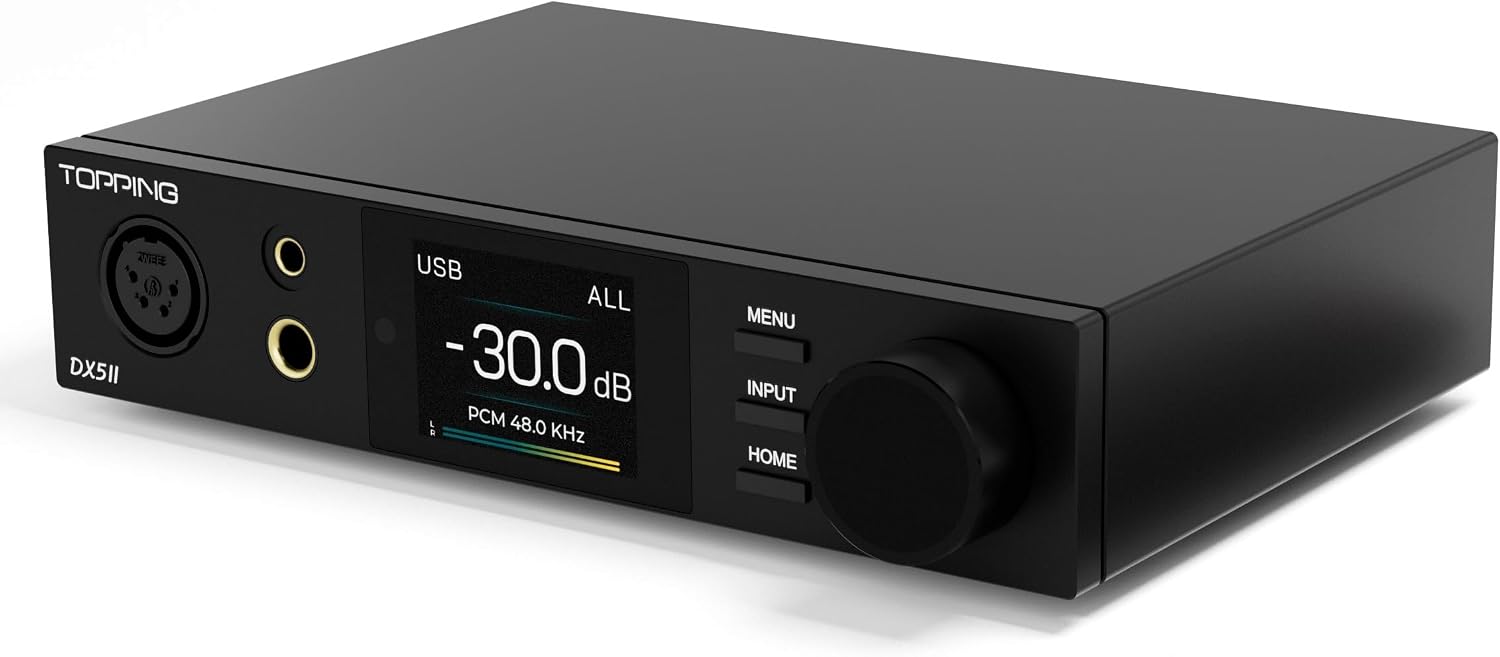
The TOPPING DX5 II is a desktop DAC and headphone amplifier combo designed for serious audiophiles, content creators, and HiFi enthusiasts who demand professional audio quality without the premium price tag. It combines dual ESS9039Q2M DAC chips with a powerful X-Hybrid balanced amplifier in a single compact unit, making it an excellent centerpiece for a high-end audio workstation.
The standout feature is its dual DAC architecture paired with 7600mW of balanced power output, delivering transparent and detailed sound reproduction. The 10-band parametric EQ is a game-changer for customization, allowing users to fine-tune their system to match their headphones, room acoustics, or personal preferences. LDAC Bluetooth 5.1 support brings wireless convenience without sacrificing audio quality, while the Aurora UI display makes navigation and mode switching intuitive and visually appealing.
Build quality is solid with metal and plastic construction, though some users have noted that the headphone jacks lack protective design and can be vulnerable to damage during hot-swapping. The internal power supply and extensive connectivity options, including USB, optical, coaxial, and Bluetooth inputs, make it compatible with virtually any audio source and operating system.
The main drawback is the reported quality control inconsistency with connector durability. Users should avoid frequent hot-swapping of headphone cables and handle connections carefully to prevent premature failure. Despite this concern, the unit delivers exceptional audio performance and versatility for the price.
The TOPPING DX5 II is a smart investment for anyone building a professional-grade desktop audio system or upgrading from consumer-level equipment. It offers the features and performance of much more expensive DAC amplifiers, making it a standout value in the audiophile market.
DAC Chipset: Dual ESS9039Q2M
Audio Format Support: PCM up to 768kHz/32bit, DSD512
Headphone Output Power: 7600mW x2 (balanced)
Audio Processing: 10-band parametric EQ with self-developed IV circuitry
Connectivity: USB, Bluetooth 5.1 (LDAC, aptX Adaptive, aptX HD, AAC, SBC), Coaxial SPDIF, Optical SPDIF
USB Controller: XMOS XU316
Bluetooth Chipset: QCC5125
Display: 2.0 inch Aurora UI with 9 customizable themes
Outputs: 4.4mm balanced headphone jack, 6.35mm single-ended headphone jack
Additional Features: 12V trigger in/out, preamp mode, volume control via DAC
Power Supply: 12V DC internal power supply
Compatibility: Windows, Mac, Linux, iOS, Android
Warranty: 2 years manufacturer
Included Accessories: USB A to USB B cable, remote control, power cable, Bluetooth cable, headphone adapter, quick start guide
Who Should Buy This? The TOPPING DX5 II is perfect for desktop audio enthusiasts, professional audio engineers, musicians, and anyone who wants studio-quality sound from their headphones or active speakers. It's ideal if you own demanding high-impedance headphones, multiple IEMs, or want wireless audio without quality loss.
What Makes It Special? The combination of dual DAC chips, powerful balanced amplification, and 10-band EQ in one unit is rare at this price point. Most competitors force you to choose between a standalone DAC and a separate headphone amp. The parametric EQ allows you to compensate for headphone frequency response issues or room acoustics without external software.
Connectivity Considerations: This unit works with almost any audio source thanks to its multiple inputs. Use USB for computers, optical for CD transports or gaming consoles, Bluetooth for mobile devices, and coaxial for digital streamers. The preamp mode lets you connect it directly to powered speakers or active subwoofers.
Important Notes: Handle the headphone connectors gently and avoid frequent hot-swapping to prevent damage. The unit runs cool and quiet, making it suitable for near-field desktop use. Allow time to explore the PEQ settings and Aurora UI themes to maximize your investment.
Pros
- Superior dual-mono architecture eliminates channel crosstalk and delivers exceptionally clean, dynamic sound with wide soundstage
- Drives headphones from 16 to 600 ohms effortlessly with zero dynamic compression across all impedance ranges
- Exceptional build quality with discrete linear power supply and thermal stability for consistent long-term performance
- Versatile connectivity supports virtually all audio sources from computers, mobile devices, and streaming services
- Balanced XLR outputs with 5.2Vrms make it ideal for use as a high-quality preamp in professional and audiophile setups
Cons
- Requires driver installation on Windows systems, which may present setup complications for less technical users
- No reviews available yet, making it difficult to assess real-world user experiences and long-term reliability
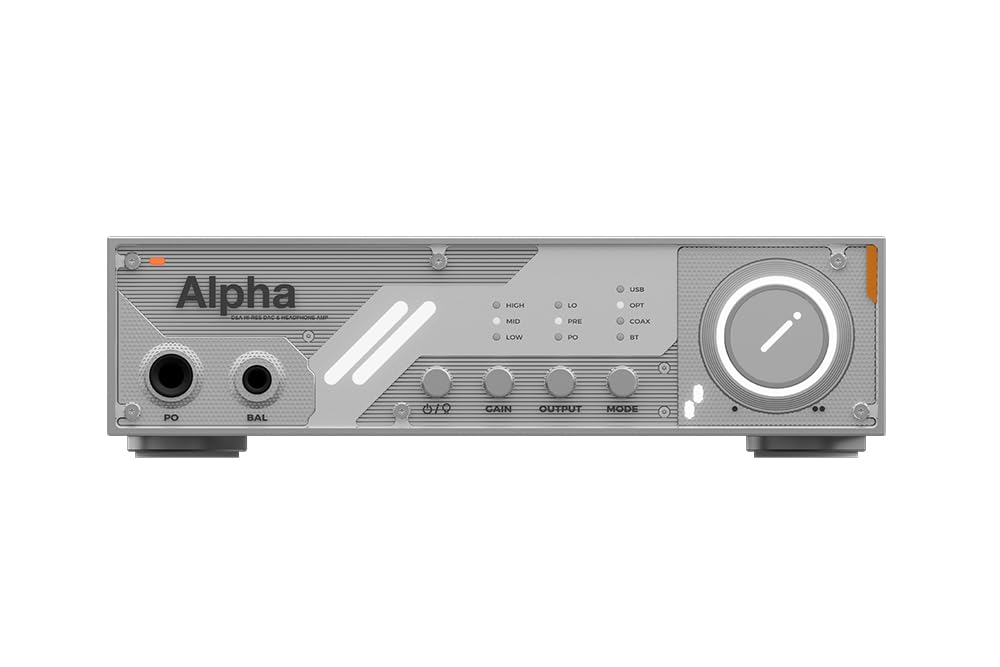
The D&A Alpha is a high-end desktop audio interface designed for audiophiles, music producers, and professionals who prioritize sound quality above all else. This fully balanced DAC and headphone amplifier combines dual ES9039Q2M decoder chips with sophisticated analog amplification to deliver reference-grade audio reproduction. It's purpose-built for anyone serious about extracting maximum fidelity from their music collection, whether streaming high-resolution files or working in a professional audio environment.
What sets the Alpha apart is its dual-mono balanced architecture and proprietary SIGMA DAC topology. By processing four channels per side with independent DACs and clocks, it reduces noise to one-quarter of conventional levels, resulting in a noticeably blacker background and more articulate detail retrieval. The 4C-FBDA fully balanced discrete amplifier uses 32 individual transistors across four channels, achieving exceptionally low output impedance of near 0 ohms and vanishingly low distortion of 0.00017% THD. In practical terms, this means the Alpha drives any headphone from 16 to 600 ohms with effortless power delivery and complete dynamic control.
The build quality reflects its premium positioning with a discrete linear power supply featuring dual independent Mean Well modules and sophisticated thermal management that maintains temperature stability within 2 degrees Celsius. Connectivity options are comprehensive, including USB 2.0 asynchronous, optical, coaxial, and Bluetooth 5.3 with aptX HD and LDAC codec support. The inclusion of balanced XLR outputs at 5.2Vrms makes it equally valuable as a dedicated preamp, while the analog volume control preserves micro-detail at lower listening levels without the information loss typical of digital attenuation.
The main limitation is the lack of user reviews, which makes it impossible to assess real-world reliability or whether the technical specifications translate into the subjective listening experience audiophiles expect. Additionally, the $399 price point demands serious commitment, and Windows users must install drivers for full functionality. The unit also consumes up to 50 watts during operation, which is notable for a desktop device.
The D&A Alpha represents a genuine investment in audio quality for those who understand the value of proper signal conversion and amplification. Its technical architecture, build quality, and versatile connectivity justify consideration for anyone building a serious audio workstation or upgrading from entry-level desktop solutions.
Audio Inputs: USB 2.0 (asynchronous), optical, coaxial, Bluetooth 5.3 (SBC, AAC, aptX, aptX HD, LDAC)
Audio Outputs: XLR balanced (5.2Vrms), RCA unbalanced (2.5Vrms), 4.4mm balanced headphone jack, 6.35mm unbalanced headphone jack
Headphone Amplifier Gain: Balanced mode: -3.3dB (low), +6dB (medium), +12dB (high); Unbalanced mode: -9.3dB (low), 0dB (medium), +6dB (high)
Output Impedance: Line output 100 ohms, headphone output near 0 ohms
Headphone Power: 9000mW plus 9000mW at 32 ohms, drives 16 to 600 ohm headphones
DAC Architecture: Dual ES9039Q2M chips, true dual-mono balanced configuration with independent clocks per channel
Distortion: 0.00017% THD with 32 discrete transistors in 4C-FBDA amplifier
Power Supply: Discrete linear design with dual independent Mean Well modules
Power Consumption: Less than 50 watts operating, less than 0.5 watts standby
Dimensions: 195 x 55 x 208mm (width x height x depth)
Weight: 1.65kg (3.64 lbs)
Compatibility: Windows 7, 8, 8.1, 10, 11 (driver required), Mac OSX, iOS, Linux, Android
Warranty: 1 year
Included: Alpha unit, power cable, USB cable, user manual
Who Should Buy This: The D&A Alpha is ideal for serious music enthusiasts, professional audio engineers, content creators, and anyone with high-end headphones or studio monitors who demands transparent, detailed audio reproduction. It's particularly valuable for those streaming lossless audio formats or working with high-resolution music files.
Who Should Look Elsewhere: Casual listeners, gamers, or those seeking a budget-friendly audio solution should consider more affordable options. If you primarily use basic earbuds or consumer-grade headphones, the Alpha's capabilities will be largely wasted.
Setup Considerations: Windows users must install drivers before first use. The unit requires a USB port and standard AC power outlet. Allow 30 minutes for thermal stabilization before critical listening. Position away from heat sources and ensure adequate ventilation for optimal thermal performance.
Headphone Pairing: The Alpha excels with impedance-matched headphones in the 32 to 300 ohm range but accommodates anything from 16 to 600 ohms. Balanced 4.4mm headphones will deliver superior performance compared to unbalanced 6.35mm connections due to the fully balanced amplifier architecture.
Integration Options: Use the XLR balanced outputs to connect to powered studio monitors or a high-end preamp for maximum flexibility. The analog volume control makes it suitable for both headphone listening and speaker-based setups in the same system.
How to Choose Your Desktop Dual DAC
DAC Chipset and Sound Signature
The heart of any DAC is its converter chip, and dual-DAC units often feature premium models. ESS Sabre chips, like the ES9039Q2M, are renowned for their ultra-high resolution and razor-sharp detail retrieval, offering a clean, analytical sound. In contrast, AKM chips (such as the AK4493S) and proprietary R2R ladder designs, like those in the FiiO K13 and K11, tend to produce a more organic, musically engaging tone with natural harmonic richness. Some innovative models, like the AIYIMA D20, incorporate both ESS and AKM chips, allowing you to switch sonic signatures on the fly.
Connectivity and System Integration
Consider how the DAC will fit into your existing setup. Essential inputs include USB for computer connection and optical or coaxial for connecting to TVs, game consoles, or CD transports. For wireless convenience, look for Bluetooth with high-quality codecs like LDAC or aptX HD. Outputs are equally critical: balanced XLR or 4.4mm outputs provide a stronger, noise-resistant signal to powered monitors or separate amplifiers, while RCA outputs are the standard for most integrated amps. If you use active speakers, a preamplifier mode with volume control is a vital feature.
Amplification and Output Power
If you plan to drive headphones directly from the unit, the built-in amplifier’s power and design are paramount. Look at the output power rating in milliwatts (mW) and the supported impedance range. High-impedance studio headphones demand more voltage, while sensitive in-ear monitors require a low-noise floor to avoid hiss. Fully balanced amplifier circuits, found in units like the D&A Alpha, provide separate amplification paths for each channel, further enhancing the wide soundstage and dynamic impact. A good DAC should disappear, leaving only your music.
Form Factor and Additional Features
Desktop real estate matters. Some DACs are compact and minimalist, designed to sit discreetly under a monitor, while others are statement pieces with large displays and VU meters. Useful extras include a remote control, a high-precision parametric EQ for room or headphone correction, and 12V trigger ports for automatically powering on downstream components. These features contribute to both the usability and the precise imaging of your system. Your choice should balance performance with the practicalities of your listening space.
Final Thoughts
Upgrading to a dedicated desktop dual DAC is one of the most impactful steps you can take toward audiophile-grade sound at home. For those seeking the ultimate in flexibility and sonic choice, the AIYIMA D20 Balanced Audio DAC,Dual ES9039Q2M stands out with its unique dual-chip design. If your priority is a powerful, all-in-one solution that can drive even the most demanding headphones with authority, the TOPPING DX5 II Hi-Res DAC & Headphone Amp Combo represents a compelling flagship option. Whichever path you choose, you are investing in the clarity and immersion that your music deserves. Explore more options in our HiFi DAC category.
Frequently Asked Questions
What is the main advantage of a dual DAC over a single DAC?
A dual DAC configuration uses separate digital-to-analog converter chips for the left and right audio channels. This architecture significantly reduces inter-channel crosstalk and distortion, resulting in a wider, more precise stereo image and a lower overall noise floor. The improvement in channel separation is often immediately audible, providing a more immersive and accurate listening experience.
Do I need a DAC if I only stream music?
Absolutely. While streaming services offer high-resolution tiers, your computer or smartphone’s internal DAC and amplifier are not designed for critical listening. They add electrical noise and compression. An external desktop DAC provides a clean, dedicated conversion path and, if it includes a headphone amp, much more power and control. Many modern DACs also include high-quality Bluetooth receivers, so you can stream wirelessly without sacrificing fidelity.
Can I connect a desktop DAC to my powered studio monitors?
Yes, this is a very common and excellent setup. You would connect the DAC’s line-level outputs (either RCA or balanced XLR/TRS) directly to the inputs on your powered monitors. Crucially, you will want a DAC that features a preamplifier function or variable output, so you can control the volume from the DAC itself rather than adjusting each speaker individually. This creates a streamlined and high-quality desktop audio system.
What should I look for in a DAC for gaming?
For gaming, low latency is key to synchronizing audio with on-screen action. Look for a DAC that supports UAC 1.0 mode or explicitly mentions low-latency performance for compatibility with consoles like PS5. A powerful headphone amplifier is also beneficial for driving gaming headsets, and features like microphone input, like on the Fosi Audio K7, can consolidate your setup. The enhanced audio detail can provide a competitive edge by making spatial cues like footsteps more distinct.


Write Your Review
No reviews yet. Be the first to share your experience!