

Does your TV’s built-in speaker leave dialogue muffled and action scenes feeling flat? You’re not alone. Many find that standard audio fails to create the immersion that modern movies, shows, and games are designed for. The solution isn’t necessarily a complex, multi-speaker home theater system with cables snaking around your room. Instead, a soundbar equipped with virtual surround sound technology can project a expansive, three-dimensional audio field from a single, sleek unit placed right under your screen.
This guide is for anyone seeking that cinematic punch and spatial audio without the installation headache. We have evaluated top-rated models from brands like JBL, TCL, and ULTIMEA that use sophisticated digital signal processing to simulate a multi-channel surround experience. Whether you’re a movie buff, a dedicated gamer, or simply want clearer dialogue for nightly viewing, you’ll find a soundbar here that elevates your entertainment. For gamers specifically, some of these technologies are also featured in our roundup of the best gaming soundbars under $300.
Pros
- Exceptional speech and dialogue clarity thanks to a dedicated center tweeter and Dialogue Mode
- Effortless setup with a single cable connection and included optical cable
- Versatile connectivity with HDMI-ARC, optical, AUX, and Bluetooth inputs
- Sleek, low-profile design blends seamlessly with any TV setup
- Expandable with optional Bose subwoofers for a fuller home theater experience
Cons
- HDMI cable is sold separately, which may add unexpected cost for users who prefer that connection method
- At 35 watts with no built-in subwoofer, bass performance may feel limited for action movies or music lovers without an upgrade
- Wall mounting brackets are sold separately, adding cost for those who want a cleaner installation
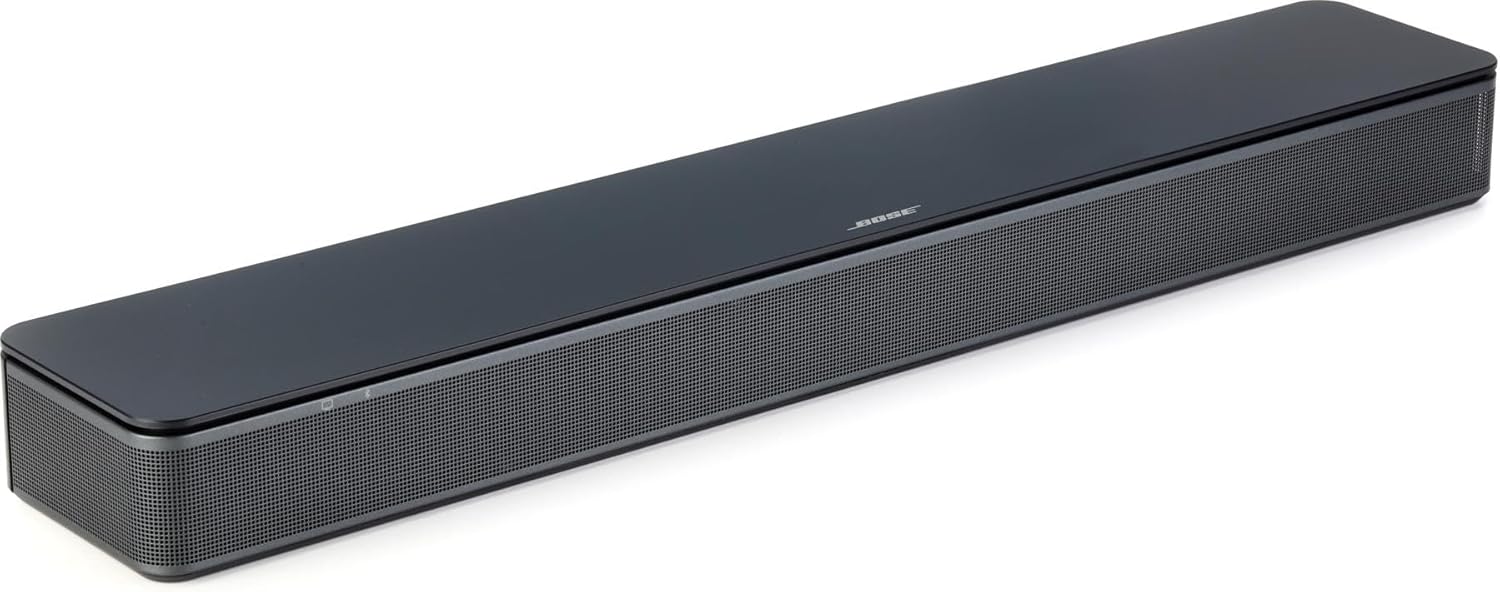
The Bose TV Speaker is a compact all-in-one soundbar built specifically to solve one of the most common frustrations with modern flat-screen TVs: poor audio quality and hard-to-understand dialogue. At just 2.21 inches tall and 23.38 inches wide, it is designed for everyday TV watchers, seniors, and anyone who wants a straightforward audio upgrade without the complexity of a full surround sound system.
The standout feature here is the Enhanced Dialogue Mode, which uses a dedicated center tweeter to sharpen vocal clarity and pronunciation. Combined with two angled full-range drivers and built-in Dolby decoding, the soundbar delivers surprisingly wide and natural-sounding audio for its compact size. Real-world performance is well-suited for news broadcasts, dramas, and talk shows where speech intelligibility is the priority.
Design-wise, Bose has kept things clean and minimal. The slim black enclosure is built from durable plastic and sits unobtrusively in front of a TV. Small LED indicators on the front provide subtle visual feedback for volume changes and feature activation. The included remote control is compact and straightforward, offering quick access to Dialogue Mode and a bass boost toggle.
There are a few honest limitations worth noting. The soundbar outputs 35 watts with no built-in subwoofer, so bass response is modest on its own. Users who enjoy action films or bass-heavy music will likely want to invest in the optional Bose Bass Module 500 or 700. Additionally, the HDMI cable is not included, and wall mounting brackets are sold separately, which can add to the overall cost.
Overall, the Bose TV Speaker earns its reputation as one of the best compact soundbars in its category. It excels at what it promises: clearer TV audio with minimal setup effort. It is a strong choice for anyone seeking a reliable, brand-trusted audio upgrade that is simple to use and easy to place in any living space.
Dimensions: 4.02 inches D x 23.38 inches W x 2.21 inches H. Weight: 8.2 pounds. The slim profile makes it easy to place on a TV stand or media console without obstructing the screen.
Audio: 35 watts maximum output power, stereo audio output mode, dynamic driver type with a 5.6 cm audio driver size and 1-inch tweeter diameter. Built-in Dolby decoding enhances audio realism.
Connectivity: HDMI-ARC with CEC support, optical audio input (cable included), AUX input (3.5mm), and Bluetooth with a 30-foot wireless range. Supports up to 3 paired Bluetooth devices simultaneously.
Compatibility: Works with all televisions. Expandable with Bose Bass Module 500 or 700 via Bose Bass Module Connection Cable or standard 3.5mm audio cable (both sold separately). Wall brackets also sold separately.
In the Box: Bose TV Speaker, remote control with pre-installed battery, optical cable, power cord (5 ft), and quick start guide. Model number: 838309-1100. Warranty: 1-year limited warranty from Bose.
If you are shopping for a soundbar primarily to improve TV dialogue clarity, the Bose TV Speaker is one of the most targeted solutions available. Its Dialogue Mode and center tweeter design make it especially well-suited for households where hearing speech on TV is the main concern, including older adults or those with mild hearing difficulties.
For buyers who want a simple plug-and-play experience, this soundbar delivers. Setup takes only minutes with the included optical cable, and HDMI-ARC connectivity means you can use your existing TV remote to control volume. There is no app required, no complex configuration, and no steep learning curve.
However, if you are a dedicated home theater enthusiast looking for booming bass and cinematic surround sound, this soundbar alone may not fully satisfy. Consider pairing it with the Bose Bass Module 500 or 700 for a more immersive experience. Budget-conscious buyers should also factor in the cost of an HDMI cable and optional wall brackets if needed.
Compared to generic budget soundbars, the Bose TV Speaker justifies its price through brand reliability, audio engineering quality, and the expandable ecosystem. It is a long-term investment for anyone who values clear, natural sound over raw volume or deep bass. It is best matched with small to medium-sized living rooms and TVs up to 55 inches.
How to Choose Your Soundbar with Virtual Surround
Audio Format and Processing Technology
The core of a great virtual surround experience lies in its audio decoding and processing. Look for support for modern formats like Dolby Atmos and DTS:X, which include height channel information for overhead effects. Technologies like DTS Virtual:X or brand-specific solutions (e.g., Samsung’s Surround Sound Expansion, ULTIMEA’s SurroundX) are engineered to upmix standard stereo or 5.1 content into a wider, more enveloping soundstage. These processors use psychoacoustic principles to trick your ears into hearing sound coming from beside and behind you.
Your choice here depends on your primary content sources. If you stream from services like Disney+ or Netflix that offer Atmos tracks, a compatible soundbar is essential. For general TV viewing and music, robust virtual processing can make all the difference. You can explore more high-fidelity options in our dedicated guide to the best high-end soundbars.
Speaker Configuration and Driver Design
Virtual surround is software magic, but it needs capable hardware to perform. Soundbars achieve a wide soundstage through strategic driver placement. Many models feature side-firing or upward-firing speakers that bounce sound off your walls and ceiling, creating the illusion of space. A higher number of internal channels (like a 5.1.2 or 7.1 configuration mentioned in the product specs) typically means more precise sound positioning and separation.
Also, consider if the system includes a separate subwoofer. A dedicated sub handles the deep bass frequencies, freeing the main bar to focus on mid and high-range details, which results in cleaner, more impactful surround effects. For smaller spaces where a subwoofer might be overbearing, some soundbars with built-in subwoofers offer a balanced solution, similar to compact systems reviewed for the best speakers for apartments.
Connectivity and Room Calibration
Seamless connection is key to a hassle-free setup. HDMI eARC (Enhanced Audio Return Channel) is the gold standard, transmitting the highest quality audio formats from your TV to the soundbar with a single cable. It also allows for convenient control via your TV remote. Bluetooth is a must for wireless music streaming from your phone or tablet.
To ensure the virtual surround effect is optimized for your unique room, look for auto-calibration features. Technologies like AI Room Calibration or built-in microphones measure your room’s acoustics and adjust the sound output accordingly. This personalized tuning ensures you get the most accurate and immersive audio possible from your specific seating position. For more on versatile audio setups, check out our wireless and streaming audio category.
Dialogue Clarity and Specialized Modes
An immersive soundscape shouldn’t come at the cost of understanding the plot. Advanced soundbars include dedicated dialogue enhancement features, such as JBL’s PureVoice or Samsung’s Adaptive Sound, which isolate and boost vocal frequencies. This ensures conversations remain crisp and intelligible even during loud background music or action sequences.
Specialized listening modes further tailor the experience. A Game Mode often reduces audio latency for perfect sync with on-screen action, while a Night Mode compresses dynamic range to keep explosions quiet without losing dialogue clarity. These smart features make a single soundbar versatile enough for all your household’s viewing and listening habits.
Final Thoughts
Investing in a soundbar with advanced virtual surround sound is one of the most effective ways to enhance your daily entertainment. The technology has matured to a point where the auditory immersion is genuinely convincing, pulling you into the heart of the action without requiring rear speakers. For those seeking a premium, all-in-one cinematic experience with detachable rear speakers for true wireless surround, the JBL Bar 700MK2 Soundbar with Subwoofer represents a top-tier choice. If your priority is exceptional value and robust virtual processing in a complete 5.1 system, the TCL S65K S Series 5.1 Channel Soundbar System delivers remarkable performance that belies its accessible positioning. Whichever model you choose, you’re steps away from a dramatically better audio experience.
Frequently Asked Questions
How does virtual surround sound work in a soundbar?
Virtual surround uses digital signal processing (DSP) algorithms and strategic speaker placement inside the soundbar. By manipulating the timing, phase, and frequency of audio signals, it creates auditory cues that trick your brain into perceiving sound as coming from directions beyond the physical location of the bar itself. Technologies like DTS Virtual:X or Dolby Atmos processing are common methods for achieving this effect.
Do I need special content to hear virtual surround effects?
No, you do not. While content mixed in formats like Dolby Atmos will provide the most authentic and object-based surround experience, a good virtual surround soundbar can upmix standard stereo or 5.1 channel content. It processes the audio to expand the soundstage, making even regular TV shows or music streams feel more spacious and immersive.
Is a soundbar with virtual surround as good as a real 5.1 speaker system?
It provides a highly convincing and satisfying alternative with far less complexity. A true discrete 5.1 system with physically separated rear speakers can offer more pinpoint accuracy in sound placement. However, for most living rooms, a high-quality virtual surround soundbar delivers about 80-90% of the immersive effect with zero wire clutter and a much simpler setup, making it an excellent choice for the majority of users.
What’s the difference between Dolby Atmos and DTS Virtual:X?
Dolby Atmos is an object-based audio format that can include overhead sound information, creating a three-dimensional ‘sphere’ of sound. It often requires specific content and hardware support. DTS Virtual:X is primarily a post-processing technology designed to create a heightened sense of immersion and vertical sound from any audio source, making it very versatile for all types of content. Many premium soundbars in 2026 support both for maximum flexibility.









Write Your Review
No reviews yet. Be the first to share your experience!