

Your home studio deserves a microphone that captures your true sound without compromise. Whether you are recording vocals, laying down a podcast, or capturing the nuance of an acoustic guitar, the right mic makes all the difference. This guide focuses on proven performers that deliver professional results without exceeding a modest budget. We have evaluated six standout models to help you make an informed choice for your recording setup.
Starting with a quality microphone is the most impactful upgrade you can make to your audio chain. The options reviewed here come from brands with legendary reputations in audio. They offer a balance of durability, sonic character, and features tailored for creators. For a broader look at entry-level gear, explore our guide on the best studio microphones under $100.

Pros
- Exceptional build quality and ruggedness that withstands drops, impacts, and years of heavy use
- Precise cardioid pickup pattern effectively minimizes room noise and unwanted bleed in close-miking situations
- Versatile across multiple instruments and applications, making it a true studio and stage workhorse
- Warm, focused tone that captures instrument character without sounding thin, harsh, or over-processed
- Proven reliability with decades of professional use and endorsement across recording and live sound industries
Cons
- Dynamic design produces slightly warmer, less bright tone compared to condenser microphones in some applications
- Requires XLR cable and audio interface connection, not a standalone or USB solution for beginners
- Cardioid pattern is highly directional, requiring precise mic placement for optimal results
The Shure SM57-LC is a professional-grade cardioid dynamic microphone designed for recording and live sound applications. It's ideal for guitarists, drummers, engineers, and musicians who demand reliable, studio-quality results whether in a bedroom setup, professional studio, or on stage.
What sets the SM57 apart is its carefully engineered frequency response that enhances instrument clarity without sounding processed or harsh. The tight cardioid pattern isolates your source exceptionally well, making it perfect for close-miking guitar amps and drums in noisy environments. Users consistently report that the mic captures natural tone, crisp attack, and full character across diverse instruments from snare drums to brass to acoustic guitars.
Build quality is exceptional. The SM57 feels substantial and durable, with a proven track record of surviving drops, road transport, and years of heavy studio and live use. The included swivel stand adapter and storage bag add practical value, though you'll need an XLR cable and audio interface to get started.
The main trade-off is that dynamic microphones like the SM57 produce a slightly warmer, less bright tone compared to condenser mics. This is actually a strength for many applications, as it reduces harshness and captures natural instrument tone. However, if you need extreme brightness or ultra-detailed high-end capture, a condenser mic might be preferable.
The Shure SM57-LC is an investment in professional-grade audio that will serve you reliably for decades. It's the industry standard for good reason, and belongs in every serious musician's or engineer's toolkit.
Connectivity: Wired XLR (3-pin)
Microphone Type: Cardioid Dynamic
Frequency Range: 40 Hz to 15 kHz
Signal-to-Noise Ratio: 78 dB
Polar Pattern: Unidirectional (Cardioid)
Weight: 10 ounces
Dimensions: 6.19 x 1.25 x 1.25 inches
Included Accessories: A25D Swivel Stand Adapter, 95A2313 Storage Bag
Warranty: 2-year limited warranty (proof of purchase required)
Model Number: SM57-LC
Studio Recording: Guitar amplifiers, snare drums, percussion, toms, kick drums, brass instruments, acoustic guitars, woodwinds, and vocals
Live Sound: Instrument miking on stage, guitar and bass cabinets, drum kit miking, brass and horn sections, acoustic instruments
Why It Works: The cardioid pattern isolates each instrument while minimizing bleed from adjacent sources. The contoured frequency response cuts through mix clutter and captures natural tone with crisp attack. Close-miking capability lets you maintain separation in busy sessions without sacrificing sound quality.
Not Ideal For: Ultra-bright ambient room recording, distant miking of orchestral ensembles, or applications requiring extreme high-frequency detail where a condenser microphone would be preferable

Pros
- Exceptional sound quality with warm, articulate vocals that professionals trust across all applications
- Rugged durability with metal construction and reinforced components that survive drops and road wear
- Effective noise rejection and feedback control through precision cardioid design
- Built-in pop filter reduces need for additional accessories and setup complexity
- Industry-standard choice backed by decades of proven performance in professional settings
Cons
- Requires audio interface or mixer connection, not suitable as standalone USB microphone
- XLR cable sold separately, adding to initial setup cost
- Heavier than some competing handheld microphones, which may matter for extended use
The Shure SM58-LC is the industry-standard dynamic vocal microphone that has defined professional audio for decades. It's designed for singers, performers, podcasters, and content creators who demand reliable, broadcast-quality vocal capture whether on live stages, in studios, or during streaming sessions. This is the microphone trusted by professionals worldwide and the natural choice for anyone serious about vocal recording.
The SM58 excels through its finely tuned frequency response with a subtle midrange lift that delivers warm, articulate vocals that cut through any mix. The precision cardioid pickup pattern focuses tightly on your voice while minimizing background noise and feedback, making it equally effective in live performance and controlled studio environments. Real-world users consistently praise its ability to isolate vocals, reject ambient noise, and maintain clarity even in challenging acoustic spaces.
Build quality is exceptional, featuring rugged metal construction and a reinforced stand adapter engineered to withstand the demands of touring and professional use. The integrated spherical grille includes a built-in pop filter that reduces plosives, breath, and wind noise without requiring additional accessories. At 310 grams, it's substantial enough to feel professional-grade while remaining comfortable for extended handheld use.
The main limitation is that this is a dynamic XLR microphone requiring an audio interface or mixer connection, not a plug-and-play USB solution. You'll also need to purchase an XLR cable separately, which adds to initial setup costs. However, these aren't drawbacks but rather reflections of its professional-grade design.
The Shure SM58-LC delivers on its legendary reputation with consistent, professional vocal capture across live and studio applications. For anyone investing in quality vocal recording equipment, this microphone represents exceptional value and proven reliability that justifies its position as an industry standard.
Connectivity and Design: XLR connector, 1 channel, cardioid (unidirectional) pickup pattern, handheld form factor with included A25D swivel stand adapter and storage bag.
Audio Performance: Frequency response 50 Hz to 15 kHz, signal-to-noise ratio 78 dB, audible noise 78 dB. Tailored frequency response with subtle midrange presence boost optimized for vocal clarity.
Build Quality: Metal enclosure construction, rugged design engineered for professional touring and live performance. Weight 310 grams, dimensions 10.31 x 4.92 x 3.31 inches.
Included Accessories: SM58 cardioid dynamic vocal microphone, A25D swivel stand adapter, storage bag. XLR cable sold separately. Backed by 2-year manufacturer warranty.
Who Should Buy: The SM58-LC is ideal for live performers, recording artists, podcasters, streamers, and broadcast professionals who need reliable, professional-grade vocal capture. It's also excellent for musicians recording acoustic instruments like saxophone and trumpet.
Setup Requirements: You'll need an audio interface, mixer, or XLR-compatible amplifier to use this microphone. Additionally, purchase a quality XLR cable (typically 15-25 feet for most applications). The included stand adapter works with standard microphone stands.
Best Use Cases: Live vocal performance on any stage size, studio vocal recording and overdubs, podcast and audiobook recording, YouTube and streaming audio, instrument recording, broadcast applications. Works effectively in both quiet studio environments and moderately noisy live venues.
Comparison Note: If you need a plug-and-play USB solution without audio interface setup, consider USB microphone alternatives. The SM58-LC's XLR design provides superior audio quality and professional flexibility that justifies the additional setup complexity.
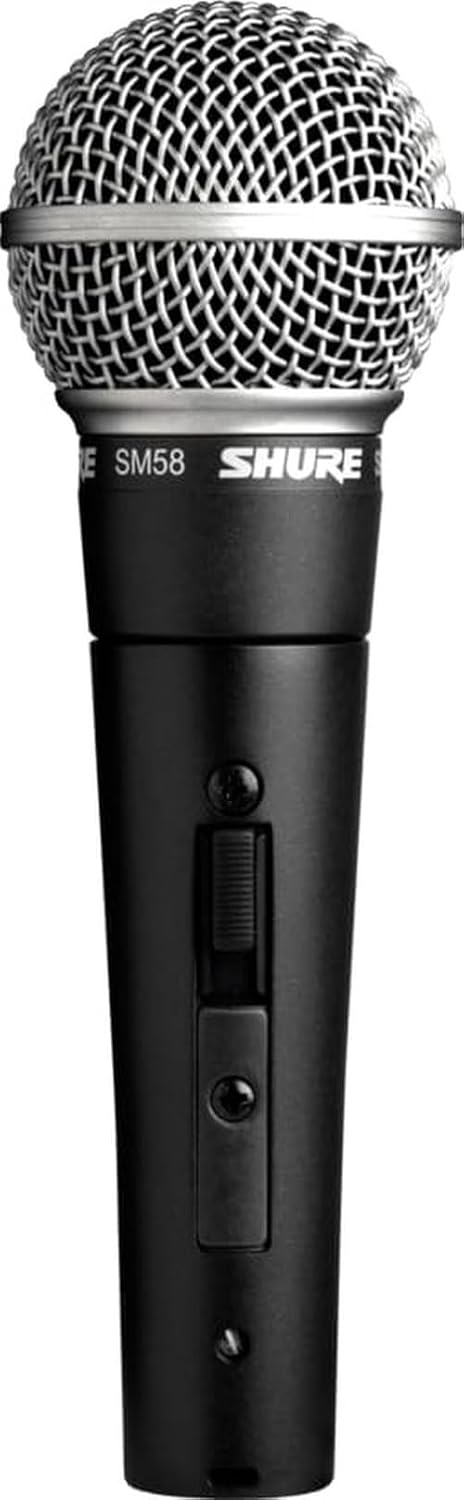
Pros
- Legendary reliability with consistent performance night after night across live stages and studios
- Superior cardioid pattern effectively isolates vocals from instruments and crowd noise
- Rugged metal grille and internal filtering handle close-mic technique and energetic performances
- On/off switch provides instant muting control for transitions between songs or speakers
- Exceptional value for a professional-grade microphone backed by decades of industry trust
Cons
- Requires XLR connector and mixer setup, not suitable for plug-and-play USB streaming
- Wired connection limits mobility compared to wireless microphone systems
- Premium price point compared to budget alternatives, though justified by durability and performance
The Shure SM58S is a cardioid dynamic vocal microphone engineered as the professional standard for live performances, studio recording, and spoken-word applications. It's built for singers, speakers, sound engineers, and performers who demand consistent, high-quality vocal capture in real-world conditions where reliability cannot be compromised.
What makes the SM58S stand out is its tuned frequency response that delivers clear, warm, and present vocals without requiring extensive post-processing or EQ. The focused cardioid pickup pattern effectively isolates your voice from instruments, monitors, and crowd noise, making it invaluable for loud live environments. The hardened grille and internal filtering reduce plosives and handling noise, while the integrated on/off switch provides instant muting control for seamless transitions between songs or speakers.
Build quality is exceptional. The metal construction feels solid and professional, designed to withstand years of touring, gigs, and demanding use. Users consistently report that this microphone maintains its performance characteristics over decades of professional work, making it a true investment rather than a disposable purchase.
The main consideration is that this is a wired XLR microphone requiring a mixer or PA system, so it's not ideal for direct USB streaming or portable recording without additional equipment. Additionally, the premium price reflects its professional-grade quality, though it delivers superior performance and durability compared to budget alternatives.
The SM58S remains the benchmark by which vocal microphones are judged. Whether you're performing live, recording in a studio, presenting speeches, or running a podcast, this microphone delivers the professional sound quality and reliability that serious performers trust.
Connectivity and Audio: Wired XLR connector with 150 ohm impedance. Cardioid (unidirectional) polar pattern for focused vocal capture. Signal-to-noise ratio of 78 dB ensures clean audio reproduction.
Audio Performance: Frequency range spans 50 Hz to 15 kHz with 4 kHz presence peak for vocal clarity. Audio sensitivity rated at 54.5 dB, providing efficient signal capture with standard audio equipment.
Physical Design: Metal enclosure with hardened grille and built-in pop filter. Weighs 10.5 ounces. Dimensions 6.37 x 2 x 2 inches. Includes A25D swivel stand adapter and storage bag.
Features and Warranty: Integrated on/off switch for muting control. Backed by Shure's 2-year limited warranty with proof of purchase. Single-channel, corded electric operation.
Best For: The SM58S is ideal for live vocalists, touring musicians, sound engineers, presenters, podcasters, and anyone requiring professional-grade vocal microphone performance. Perfect for concert venues, clubs, houses of worship, rehearsal spaces, and studio recording.
Setup Requirements: You'll need an XLR cable, audio mixer or PA system, and a microphone stand. The included A25D adapter works with standard mic stands. This is not a plug-and-play USB microphone for computers.
Comparison Considerations: If budget is your primary concern, the Shure PG58 costs less but delivers noticeably lower output and sound quality. The SM58S justifies its premium price through superior performance, durability, and consistency that professionals rely on for critical applications.
Long-Term Value: Users report using this microphone for 50+ years without failure. The build quality and performance consistency make it a one-time investment that outperforms cheaper alternatives over time, making the higher initial cost economical for serious performers.

Pros
- Exceptional build quality and durability, with users reporting flawless performance after 10+ years
- Highly sensitive microphone captures professional-grade audio detail at a fraction of studio mic prices
- Cardioid pattern effectively isolates desired sound sources while rejecting side and rear noise
- Compatible with any standard audio interface or preamp, making it flexible for various setups
- Backed by 2-year warranty and trusted Audio-Technica brand reputation
Cons
- Requires 48V phantom power, which means you'll need a compatible audio interface or preamp
- Sensitive nature requires proper gain staging to avoid picking up unwanted ambient noise and room reflections
- Does not include microphone stand or pop filter, requiring additional purchases for complete setup
The Audio-Technica AT2020 is a cardioid condenser microphone engineered for home studios, content creators, and musicians who demand professional sound without premium pricing. This side-address condenser has become the industry standard for budget-conscious recording enthusiasts, offering studio-grade performance that competes with microphones costing twice as much.
What sets the AT2020 apart is its exceptional sensitivity and frequency response. The custom-engineered low-mass diaphragm captures vocal nuance, instrument detail, and ambient texture with remarkable clarity. Users consistently praise its ability to pick up subtle frequencies and maintain consistency over years of use. The cardioid polar pattern effectively isolates your primary sound source while rejecting unwanted noise from the sides and rear, making it ideal for untreated rooms and imperfect recording environments.
Build quality is where this microphone truly shines. The metal enclosure feels solid and professional, with users reporting zero degradation after a decade of regular use. The XLR connector is robust, and the overall construction suggests Audio-Technica's commitment to longevity. The microphone is lightweight yet substantial, mounting easily to any standard mic stand.
One consideration is the phantom power requirement. The AT2020 needs 48V phantom power to operate, which means you must have a compatible audio interface or preamp. This isn't a drawback per se, but it does require basic knowledge of recording equipment setup. Additionally, the microphone's high sensitivity means you'll need to manage gain levels carefully to avoid picking up excessive room noise or reflections in untreated spaces.
The AT2020 represents exceptional value for aspiring engineers, podcasters, and musicians. It delivers professional results consistently, lasts for years, and integrates seamlessly into any modern recording setup. For anyone building a home studio on a realistic budget, this microphone should be your first purchase.
Connectivity and Connectors: Wired via integral 3-pin XLR male connector. Requires 48V phantom power from audio interface or preamp.
Audio Performance: Cardioid (unidirectional) polar pattern, 20 Hz to 20 kHz frequency response, 37 dB audio sensitivity, 74 dB signal-to-noise ratio, 20 dB audible noise floor. Handles high SPL with wide dynamic range for versatile recording applications.
Physical Specifications: Dimensions 9.6 x 9.6 x 2.6 inches, weight 0.6 kg, metal enclosure construction. Includes user manual and 2-year warranty on parts and labor.
Impedance: 200 ohm output impedance, compatible with any standard recording interface, preamp, or mixing console with XLR input and phantom power capability.
Is This Microphone Right for You? The AT2020 is ideal if you're starting a home studio, recording podcasts, capturing vocals and instruments, or streaming content. It works for beginners and experienced recordists alike. If you already have an audio interface with XLR input and phantom power, you can start recording immediately.
What You'll Need: An audio interface or preamp with XLR input and 48V phantom power capability, a microphone stand (not included), and optionally a pop filter to reduce plosive sounds during vocal recording. A quality XLR cable is also recommended.
Setup Considerations: Place the microphone in a treated or well-controlled room to minimize echo and ambient noise pickup. Start with moderate gain levels and adjust based on your source material. The cardioid pattern helps rejection, but room acoustics still matter. Watch setup tutorials on phantom power if you're unfamiliar with the concept.
Longevity and Support: Audio-Technica backs this microphone with a 2-year warranty. Users report 10+ year lifespans with basic care. The microphone requires minimal maintenance beyond occasional cleaning to prevent dust accumulation.

Pros
- Exceptional audio clarity and focus with super cardioid polar pattern, even when positioned 3-6 inches from mouth
- Intelligent Clipguard 2.0 and Auto Gain eliminate distortion and level-setting hassles for beginners and pros alike
- Onboard DSP effects and Wave Link software provide professional audio control without expensive external gear
- Tap-to-mute button and multifunction dial offer intuitive, hands-on control during live streaming or recording
- Durable metal and plastic construction with proven long-term reliability based on extended user experiences
Cons
- USB-C only connectivity may require adapters for older devices or setups without native USB-C support
- Built-in effects, while powerful, may have a learning curve for users unfamiliar with audio software
- Premium pricing reflects professional-grade quality but may exceed budgets for casual or entry-level users
The Elgato Wave:3 MK.2 is a professional USB condenser microphone engineered for streamers, content creators, podcasters, and online gamers who demand broadcast-quality audio without the complexity of traditional studio setups. This compact desktop microphone combines a high-performance condenser capsule with intelligent processing to deliver clear, focused vocals that listeners consistently praise for sounding intimate and professional.
The standout feature is Clipguard 2.0, a multi-stage anti-distortion system that makes audio clipping virtually impossible, paired with Auto Gain calibration that optimizes levels automatically in seconds. Combined with onboard DSP effects including voice enhancement, compression, and EQ, the Wave:3 MK.2 lets you shape your sound directly on the microphone without relying on external software or plugins. The Wave Link app unifies all effects and VST plugins into one intuitive signal chain, giving you professional-grade control from your desktop.
Build quality is solid, with a metal and plastic enclosure that feels premium and durable. The multifunction dial and tap-to-mute button sit within arm's reach for quick adjustments during live sessions, while the integrated headphone jack enables direct monitoring of your audio without latency. The included desk stand, USB-C cable, and dual mic adapters mean you can set up and start recording within minutes. Users report exceptional performance even when positioned at slight angles or several feet away, thanks to the super cardioid polar pattern.
The primary limitation is USB-C only connectivity, which may require adapters for older setups. Additionally, while the onboard effects are powerful, first-time users may need time to explore the Wave Link software to unlock the microphone's full potential. The price point reflects professional-grade quality and may exceed budgets for casual users seeking basic functionality.
Verdict: The Elgato Wave:3 MK.2 is an excellent investment for anyone serious about streaming, content creation, or professional audio work. Its combination of studio-quality sound, intelligent anti-distortion protection, and built-in effects delivers professional results without the complexity or cost of traditional studio equipment. Highly recommended for creators at any level.
Connectivity: USB Type-C with 150 cm cable included
Audio Performance: Super cardioid condenser capsule, 110 dB signal-to-noise ratio, studio-quality vocal capture
Processing: Clipguard 2.0 anti-distortion, Auto Gain calibration, onboard voice enhancer, compressor, and EQ effects
Controls: Multifunction dial, tap-to-mute button, integrated headphone jack for direct monitoring, real-time LED feedback
Compatibility: PC and Mac via USB, native Wave Link software integration
Physical: Metal and plastic construction, 7.52 ounces, 3.9 x 3.9 x 8.4 inches, includes desk stand and dual mic adapters
Warranty: 2-year manufacturer coverage
Who Should Buy: The Wave:3 MK.2 is ideal for streamers, podcasters, content creators, online gamers, and anyone recording video content or hosting virtual meetings who wants professional audio quality without expensive studio equipment. It's also perfect for musicians and singers recording demos or practicing remotely.
Setup Considerations: Ensure your PC or Mac has a USB-C port or USB-C adapter available. Position the microphone 3-6 inches from your mouth for optimal clarity and use the included desk stand for stable placement on your desktop. Download the Wave Link software to access full DSP effect capabilities and audio routing options.
Positioning Tips: The super cardioid polar pattern works well even at slight angles and distances, so you don't need to keep your mouth directly on the microphone. This flexibility makes it comfortable for extended use during streams or calls. The built-in sibilance reduction means you typically won't need a pop filter.
Comparison Note: If you need XLR connectivity for professional studio environments or plan to use dynamic microphones, consider alternative options. For USB-only setups prioritizing ease of use and professional sound, the Wave:3 MK.2 is hard to beat at this price point.

Pros
- Exceptional audio quality with industry-trusted sound signature developed over two decades
- Ultra-low self-noise specification means nothing compromises your vocal recordings
- All essential accessories included in the box, no hidden costs for quality recording
- Tight cardioid pattern effectively isolates vocals and minimizes room reflections and background noise
- Excellent value for professional-grade performance at an accessible price point
Cons
- Requires an audio interface to connect to a computer, adding to total setup cost
- Large-diaphragm design may require proper microphone technique to avoid proximity effect on vocals
- Cardioid pattern limits versatility for instruments beyond close-miked vocal applications
The RODE NT1 Signature Series is a professional studio condenser microphone designed specifically for vocalists, podcasters, and streamers who demand broadcast-quality audio. This large-diaphragm condenser delivers the warm, detailed sound signature that has made the NT1 a studio staple for over 20 years. It is perfect for anyone serious about home recording who wants professional results without professional-level complexity.
The standout feature is the exceptional clarity combined with whisper-quiet self-noise performance. This means your vocals sit front and center in your recordings without distracting background hum or electronic artifacts. The tight cardioid polar pattern works intelligently to focus on your voice while rejecting room reflections, making even untreated home studios sound more professional. The included shock mount and pop filter are quality components that would cost extra separately.
Build quality is solid with a professional appearance that looks at home in any studio setting. The included accessories are not cheap add-ons but genuine components designed to work seamlessly with the microphone. The 6-meter XLR cable and dust cover demonstrate that RODE has thought through what users actually need out of the box. The black finish is sleek and professional without unnecessary frills.
The main consideration is that this microphone requires an audio interface to function, which represents an additional investment. Additionally, the large-diaphragm design responds noticeably to proximity effect, meaning you need to maintain consistent microphone distance for even vocal levels. These are not drawbacks but rather normal characteristics of professional condenser microphones that users should understand.
The RODE NT1 Signature delivers exceptional value for serious home recordists and content creators. It combines proven studio performance with a complete accessory package and exceptional noise performance. If you are ready to elevate your vocal recordings or streaming audio quality, this microphone is a smart investment that will serve you reliably for years.
Microphone Type: Large-diaphragm condenser
Polar Pattern: Unidirectional (cardioid)
Connectivity: XLR
Color: Black
Included Accessories: SM6 shock mount, pop filter, 6-meter XLR cable, dust cover
Recommended Use: Vocal recording, singing, streaming
Compatible With: Audio interfaces and mixing equipment with XLR inputs
Is this microphone right for you? The NT1 Signature excels for vocalists, podcasters, and streamers who need professional audio quality. It works best in home studios with some acoustic treatment, though the cardioid pattern helps even in untreated rooms.
What you still need: An audio interface is essential to connect this microphone to your computer. Budget approximately $100-300 for a quality entry-level interface depending on your needs.
Setup considerations: Plan for a microphone stand or boom arm to position the microphone at mouth level. The included shock mount isolates vibration effectively. Allow the microphone to warm up for 10-15 minutes before critical recordings for optimal performance.
Maintenance: Store with the included dust cover when not in use. Avoid exposing the microphone to extreme humidity or temperature changes. The pop filter helps prevent moisture damage to the capsule during extended vocal sessions.
How to Choose Your Studio Microphone
Dynamic vs. Condenser Microphones
Your primary decision is between dynamic and condenser types. Dynamic microphones, like the Shure SM58 Pro XLR Dynamic Vocal Microphone, are incredibly rugged. They handle loud sound sources well and excel in live or untreated room environments.
Condenser microphones, such as the Audio-Technica AT2020 Cardioid Condenser Studio, are generally more sensitive. They capture finer details and a wider frequency range, making them ideal for studio vocals and acoustic instruments. They typically require phantom power from an audio interface.
Primary Application and Sound Source
Consider what you will record most often. Dedicated vocal mics are tuned for the human voice. An instrument microphone like the Shure SM57 Pro XLR Dynamic Instrument Microphone is optimized for amps and drums.
For streamers and content creators, a USB microphone like the Elgato Wave:3 MK.2 USB Condenser Microphone offers plug-and-play convenience with built-in controls. Your choice should align with your main creative output. Check our Recording / Musical Instruments category for more gear insights.
Connectivity and Required Gear
XLR microphones offer the most flexibility and highest potential sound quality. They require an external audio interface, which is a worthwhile investment for any serious setup. We have guides on selecting the right one, like the best audio interfaces under $200.
USB microphones have a built-in audio interface. This makes them incredibly simple to use with a computer, perfect for beginners or mobile creators. Just plug in and start recording. Ensure your choice matches your current setup and future expansion plans.
Polar Pattern and Room Acoustics
Most studio mics in this range use a cardioid polar pattern. This heart-shaped pickup area captures sound clearly from the front while rejecting noise from the sides and rear. It helps isolate your voice or instrument from room noise and computer fans.
If your recording space is not acoustically treated, a dynamic cardioid mic can be more forgiving. A sensitive condenser will pick up more room reflections. Consider your environment, as even basic treatment can significantly improve recorded sound quality.
Final Thoughts
Investing in a quality studio microphone elevates every project you create. For the versatile workhorse trusted on global stages, the Shure SM58 Pro XLR Dynamic Vocal Microphone is an unbeatable choice. If your focus is on detailed studio vocals or acoustic instruments with minimal self-noise, the complete kit offered by the RØDE NT1 Signature Series Studio Condenser delivers exceptional value. Both provide the professional foundation your audio deserves.
Frequently Asked Questions
Do I need an audio interface for these microphones?
You will need an audio interface for any microphone with an XLR connection, like the Shure or Audio-Technica models. The interface provides phantom power for condenser mics and converts the analog signal to digital for your computer. USB microphones, like the Elgato Wave:3, have this conversion built in, so they connect directly. For interface recommendations, see our roundup of the best audio interfaces under $300.
What is the main difference between the Shure SM57 and SM58?
The Shure SM57 and SM58 share similar rugged internal components. The key difference is in their grille design and frequency tuning. The SM58 has a spherical grille with a built-in pop filter, making it ideal for vocals. The SM57 has a simpler grille and a presence boost tailored for instrument clarity, particularly on guitar amps and snare drums.
Can I use these microphones for live streaming or podcasting?
Absolutely. All the microphones reviewed are excellent for content creation. The USB option provides the easiest setup for streaming. XLR microphones paired with an interface often yield higher audio quality and more control. The cardioid pattern on each model helps minimize background noise, which is crucial for clear voice communication.
How important is a shock mount and pop filter?
A shock mount isolates the microphone from desk vibrations and handling noise, which is essential for clean recordings. A pop filter reduces plosive sounds (like “p” and “b”) that can cause distortion. Some microphones, like the RØDE NT1 Signature, include these accessories. For others, they are affordable, highly recommended additions that improve your final audio quality significantly.


Write Your Review
No reviews yet. Be the first to share your experience!