

Whether you’re laying down a vocal track, hosting a podcast, or performing live, an unstable microphone stand can sabotage your audio. Wobble, limited positioning, and flimsy construction lead to unwanted noise and frustration, pulling focus from your content. This guide cuts through the clutter to present verified, high-performance stands that provide the solid foundation your microphone deserves. We have assessed options for home studios, podcasters, and performers, focusing on critical factors like stability, range of motion, and ease of use.
Choosing the right support is a fundamental step in building a professional-sounding setup. For more essentials to enhance your recordings, explore our guide on the best pop filters to tame plosives and sibilance. Let’s find the stand that will keep your mic securely in the perfect position.
Pros
- Exceptional value for budget-conscious creators, podcasters, and streamers
- Solid steel construction delivers reliable stability and durability for daily use
- Versatile boom arm design allows precise angle and height adjustments for optimal mic placement
- Wide microphone compatibility covers most popular USB and XLR models
- Lightweight enough to transport but heavy enough to stay stable without tipping
Cons
- Not designed for heavy loads over 2 kg, may show slight leg flex with extended boom arm and heavy microphones
- Carrying bag requires complete disassembly rather than compact folding, reducing portability convenience
- Budget components like threaded fittings and mic clamps feel less premium than higher-end alternatives
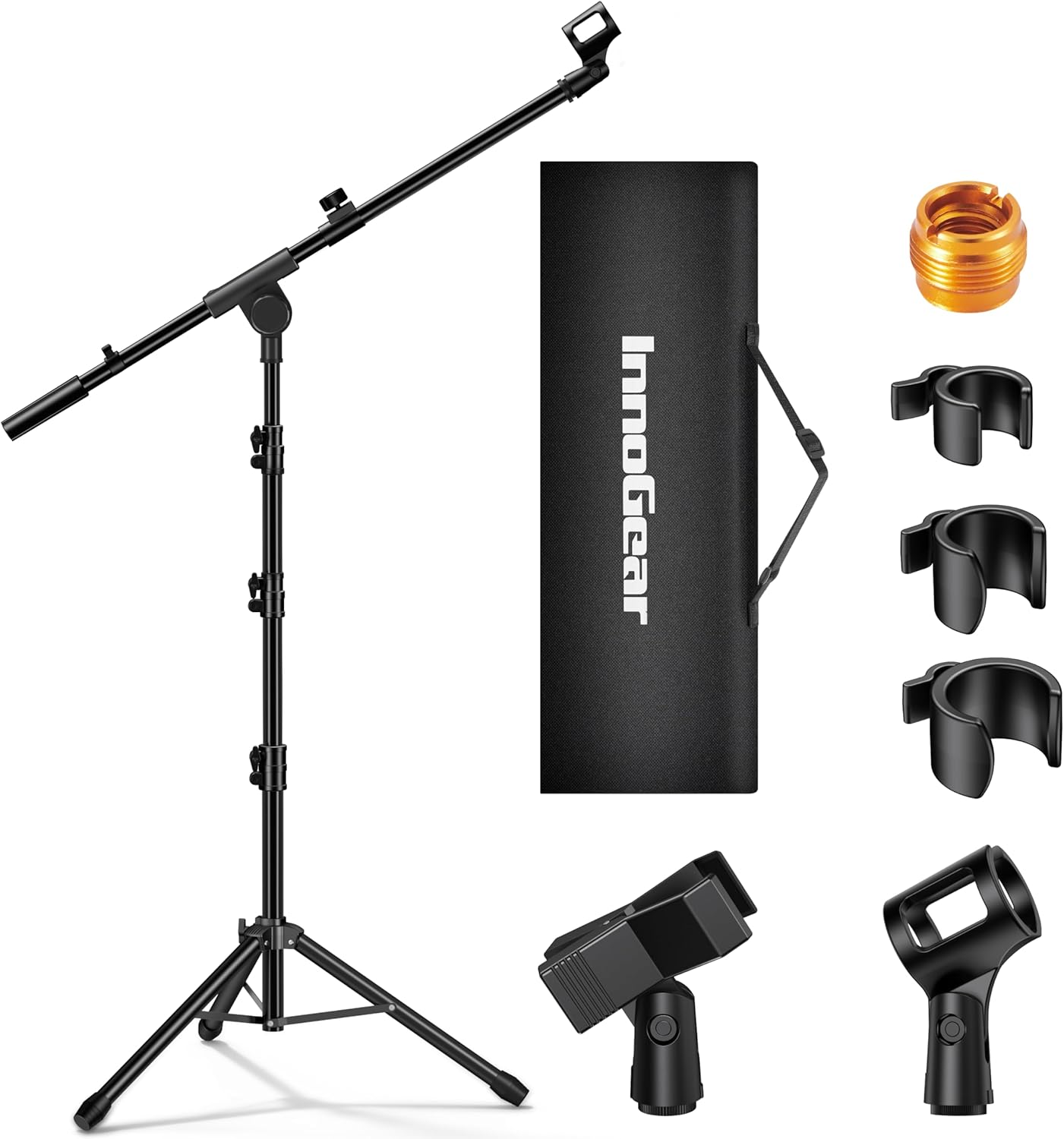
The InnoGear TS186 is a floor-based microphone stand designed for podcasters, streamers, singers, and content creators who need reliable microphone positioning at an affordable price point. This tripod stand bridges the gap between desk-mounted solutions and professional studio equipment, making it ideal for home recording setups, gaming streams, and podcast production.
The standout feature is the adjustable boom arm that extends from 16 to 30 inches and rotates 360 degrees horizontally plus 180 degrees vertically, giving you complete freedom to position your microphone exactly where you need it. The main stand adjusts from 28 to 90 inches in height, accommodating both seated and standing recording positions. The heavy-duty alloy steel construction weighs 4.2 lbs, providing genuine stability that prevents tipping when properly balanced, a major upgrade from flimsy lightweight stands.
Build quality reflects its budget-friendly positioning. The steel poles are thickened and durable, but the threaded fittings and mic clamps feel economical rather than premium. The included carrying bag requires near-complete disassembly, which is less convenient than competitors, though the included cable clips and dual mic clip styles add practical value. Assembly is straightforward and requires no tools.
The main limitation is weight capacity at 2 kg. While adequate for most USB microphones and standard XLR mics, extending the boom arm with a heavier microphone can cause slight leg flex. Users report needing sandbags or counterweights for maximum stability in extended configurations. This is not a limitation for typical podcasting or streaming setups.
Verdict: The InnoGear TS186 delivers genuine value for creators on a budget. It offers real stability, thoughtful design with the detachable boom arm, and broad microphone compatibility. If you record light to medium-weight microphones and need flexible positioning without premium pricing, this stand solves the problem reliably.
Physical Specifications
Model: TS186 | Brand: InnoGear | Material: Alloy Steel | Weight: 4.2 lbs | Color: Black | Finish: Spray Paint
Height and Reach
Minimum Height: 28.1 inches | Maximum Height: 89.8 inches | Boom Arm Length: 16 to 30 inches (adjustable) | Boom Arm Rotation: 360 degrees horizontal, 180 degrees vertical
Compatibility and Mounting
Mount Thread Size: 0.63 inches | Microphone Stand Thread Size: 3/8 inch and 5/8 inch | Maximum Weight Capacity: 2 kg (4.4 lbs) | Compatible Microphones: Shure SM58, SM48, PGA48, Samson Q2U, ATR2100x-USB, Blue Yeti, Snowball, HyperX QuadCast, SoloCast, Shure SM7B, Audio-Technica AT2020, Fifine AM8, and most standard microphones
Included Components
Tripod Mic Stand | 3/8 to 5/8 inch Screw Adapter | Two Mic Clip Styles | Cable Clips | Premium Carrying Bag
Warranty
12 months manufacturer warranty included
Who Should Buy This Stand
The InnoGear TS186 is perfect for podcasters, YouTube creators, Twitch streamers, home recording musicians, and audiobook narrators who need a stable, adjustable microphone stand without premium pricing. It works well for anyone upgrading from a desk arm or searching for their first proper floor stand. The versatility of the boom arm makes it especially valuable for creators who need to position microphones at various angles and distances.
Who Should Look Elsewhere
If you record with heavy studio microphones (over 2 kg), require a compact folding design, or need premium build quality, consider higher-end alternatives. This stand is not designed for outdoor use in wind or for mounting cameras or other heavy equipment.
Setup and Optimization Tips
Assemble the stand on a hard, level surface for maximum stability. If extending the boom arm significantly, place a sandbag or counterweight on the base for added security. Use the included cable clips to route microphone cables cleanly away from the stand base. The detachable boom arm means you can convert this to a straight stand for different recording scenarios. Keep the carrying bag for storage and transport, though consider a larger bag if you want to avoid disassembling the entire stand.
Maintenance
Wipe down the steel poles occasionally with a dry cloth to prevent dust accumulation. Check that all adjustment knobs remain tight before each recording session. The 12-month warranty covers manufacturing defects, providing peace of mind for your investment.

Pros
- Excellent stability and minimal wobble thanks to reinforced steel construction and weighted base
- Wide height range from 22-70 inches works for standing, sitting, and tall individuals over 6 feet
- Compact square base design saves studio space and reduces tripping hazards compared to tripod stands
- Quick-detach system makes it ideal for mobile podcasters and content creators who travel between locations
- Universal microphone compatibility covers most popular broadcasting and streaming microphone models
Cons
- Some users report that stability decreases slightly when the stand is fully extended to maximum height
- Mid-range pricing means certain material and design compromises compared to premium studio stands
- Square base design, while space-saving, may feel less stable than traditional tripod bases for some users
The BILIONE LD36 is a floor-standing microphone boom stand designed for podcasters, streamers, and content creators who record without a desk or table. It combines a weighted base with an adjustable boom arm to deliver flexible mic positioning for various recording scenarios, from couch podcasts to standing live streams.
The stand's standout feature is its impressive height range from 22 to 70 inches, making it suitable for both seated and standing recording positions. The 1.5mm steel arm and 25mm reinforced rod provide solid construction, and the 180-degree swivel microphone clip allows precise positioning. The 5.2lb weighted base with EVA pads grips floors securely while protecting surfaces, and the square design is more compact than traditional tripod stands, reducing studio clutter and tripping hazards.
Build quality is respectable for the price point, with metal construction throughout and universal compatibility with major microphone models including Blue Yeti, HyperX QuadCast, and Audio-Technica AT2020. The quick-detach system breaks down in under 20 seconds, making it genuinely portable for mobile recording setups. Cable management features help keep your studio tidy and organized.
The main drawback is that some users report reduced stability when the boom arm is fully extended to maximum height, and the weighted base, while good, doesn't quite match premium studio stands. At this price point, certain material and design compromises are evident compared to higher-end alternatives.
Overall, the BILIONE LD36 is a solid mid-range choice for podcasters and streamers who prioritize portability and flexible positioning over absolute rock-solid stability. It delivers good value for couch setups, multi-host podcasts, and mobile content creation where a traditional desk stand won't work.
Physical Specifications: Height adjustable from 22 to 70 inches, weighted base of 5.2 lbs, total unit weight 2.8 kg, square base design with compact footprint.
Construction: 1.5mm steel boom arm, 25mm reinforced center rod, metal body throughout, EVA pads on base for floor protection.
Compatibility: Dual-thread microphone clips, 3/8 inch and 5/8 inch mount thread sizes, includes 3/8 to 5/8 inch adapter for universal mic compatibility.
Features: 180-degree swivel microphone clip, smooth clutch knob for height adjustment, quick-detach design, integrated cable management, included microphone clips and adapter.
Warranty: 60 days free return policy from manufacturer BILIONE.
Best For: The BILIONE LD36 is ideal for podcasters recording on couches, streamers doing live broadcasts, multi-host setups without desks, and mobile content creators who need to transport their equipment between locations.
Consider This Stand If: You need flexibility to position a microphone without a desk, want quick portability, record in multiple locations, or have limited studio space. The wide height range makes it suitable for standing or sitting recording positions.
Look Elsewhere If: You require maximum stability for extended boom arm positioning, need premium studio-grade construction, or prefer traditional tripod base designs. Higher-end stands offer greater rigidity for professional broadcast environments.
Setup Tips: The stand breaks down quickly for transport but takes minimal time to reassemble. Use the included adapter to ensure proper thread compatibility with your microphone. Position the weighted base away from high-traffic areas to prevent accidental kicks.

Pros
- Exceptionally stable weighted base prevents tipping even with heavier microphones
- Thicker 1.5mm steel arm delivers noticeably better rigidity than competitor 1mm designs
- Quick setup and breakdown takes under 5 minutes for stage or studio use
- Excellent value at competitive price point with professional-grade build quality
- Compatible with virtually all popular streaming and recording microphones
Cons
- Some users report occasional thread stripping with repeated assembly and disassembly
- Maximum weight capacity of 4.5 lbs limits use with heavier specialty microphones
- Thin construction in some areas may not withstand extreme road touring conditions
The InnoGear MS250 is a professional-grade floor microphone stand designed for singers, podcasters, content creators, and studio engineers who demand reliable performance without breaking the bank. This stand excels in live performance settings, home studios, and streaming setups where stability and adjustability are critical.
What sets this stand apart is its reinforced 1.5mm steel arm, which is 50 percent thicker than standard competitor designs. Combined with the substantial 4.5 lbs weighted base featuring non-slip pads and an internal metal gasket, the MS250 delivers rock-solid stability that prevents microphone drift during vocal takes or live performances. The 34 to 60-inch height range with smooth clutch adjustment and 180-degree rotatable clip accommodates virtually any performer or studio configuration.
Build quality is impressive for the price point. The alloy steel construction feels substantial and durable, with cable management clips and dual thread adapters included for hassle-free setup. The three-piece design disassembles quickly, making it genuinely portable for gigging musicians and traveling content creators who need professional equipment that travels light.
The main limitation is the 4.5 lbs weight capacity, which works fine for most popular microphones but excludes heavier specialty models. Some users report occasional thread stripping with repeated assembly cycles, suggesting care should be taken during setup. The overall construction, while sturdy, may show wear under extreme touring conditions.
For anyone seeking a dependable, affordable microphone stand that handles most popular models and delivers professional-grade stability, the InnoGear MS250 is an excellent choice. Its combination of heavy-duty base, reinforced arm, and universal compatibility makes it a smart investment for both beginners and experienced audio professionals.
Physical Specifications: Model MS250, Height adjustable from 34 to 60 inches, 4.5 lbs weighted round base with 9.8-inch diameter, Total weight 6.6 lbs, Base type flat with non-slip pads.
Construction: Alloy steel body with 1.5mm thickened steel arm, 180-degree rotatable microphone clip, user-friendly twist clutch for height adjustment, metal gasket between base and stand.
Compatibility: 3/8 inch and 5/8 inch microphone thread sizes, works with Blue Yeti, Shure SM7B, HyperX QuadCast, Razer Seiren V3, Fifine K669B, and most standard studio microphones. Maximum weight capacity 4.5 lbs.
Included Components: Cable management clips, 3/8 inch to 5/8 inch screw adapter, 12-month manufacturer warranty.
Who Should Buy This: The MS250 is ideal for singers performing live shows, podcasters recording at home, content creators streaming on Twitch or YouTube, and studio engineers needing an affordable yet professional stand. It works perfectly for anyone using Blue Yeti, Shure SM7B, HyperX, or similar mid-range microphones.
Best Use Cases: Stage performances, home recording studios, podcasting setups, streaming studios, live events, and outdoor performances. The portable three-piece design makes it excellent for musicians who gig regularly or producers who move between locations.
Setup Tips: Assembly takes under 5 minutes. Use the included dual thread adapters to match your microphone's thread size. Position the weighted base away from foot traffic to maximize stability. The cable management clips help keep cables organized and prevent tangling during performances.
Maintenance: Periodically check that all clutches and connections remain tight. When disassembling for transport, handle connection threads carefully to avoid stripping. Store in a protective case or bag when traveling to extend the stand's lifespan.
How to Choose Your Microphone Stand
Assess Your Stability Needs
The core function of any stand is to hold your microphone steady. A wobbly stand transmits vibrations and can even tip over. For heavy microphones like the Shure SM7B, a stand with a substantial weighted base or a robust tripod design is non-negotiable.
Lighter setups for streaming or podcasting with a USB microphone may prioritize a smaller footprint but still benefit from a stable, low-profile base. The material and construction thickness of the boom arm and center column are also primary indicators of overall stability and durability.
Evaluate Adjustability and Range
Your ideal stand should adapt to you, not the other way around. Consider the total height adjustment range, especially if you record while standing or have multiple users. A boom arm that extends, retracts, and swivels provides immense flexibility for positioning the microphone exactly where you need it.
Look for smooth, secure clutch knobs or mechanisms that allow for precise adjustments without slipping mid-session. The ability to detach the boom arm to convert the stand into a straight floor model adds significant versatility for different recording scenarios.
Prioritize Build Quality and Compatibility
A stand is a long-term investment in your audio chain. Seek out models constructed from thickened steel or heavy-duty materials that resist bending under load. Check the thread types on the included microphone clip; most quality stands include a 3/8″ to 5/8″ adapter to ensure compatibility with a wide range of microphones.
Additional features like integrated cable management channels, non-slip base pads, and a protective carrying bag enhance functionality and portability. For a complete studio setup, pairing your stand with proper acoustic treatment is key; learn more in our review of the best reflection filters.
Consider Your Space and Portability
The physical footprint of your stand matters. A round weighted base offers great stability but requires more floor space. A tripod design can be more compact but must be assessed for its resistance to tipping. If you plan to transport your gear for gigs or mobile recordings, a stand that quickly breaks down into manageable pieces with a dedicated bag is highly valuable.
Think about your primary use environment. A permanent studio setup can accommodate a larger stand, while a desktop used for streaming and gaming might demand a more space-conscious design that integrates well with other gear, similar to considerations for a compact audio system.
Final Thoughts
Selecting the right microphone stand is a critical decision that directly impacts your recording quality and workflow. For users seeking maximum versatility and a traditional tripod setup with an exceptionally wide height range, the InnoGear Mic Stand Tripod Boom Arm Floor is a superb choice. Alternatively, if your priority is rock-solid stability for a heavy microphone in a fixed location, the BILIONE Microphone Stand Floor with Tray & Boom and its substantial weighted base provides exceptional security. Whichever model you choose, investing in a quality stand will provide a reliable foundation for your audio projects for years to come.
Frequently Asked Questions
What is the difference between a boom arm and a straight stand?
A straight stand holds the microphone directly above its base, which is simple but offers limited positioning. A boom arm is a horizontal extension that allows you to position the microphone laterally over a desk, instrument, or away from the stand’s base, providing much greater flexibility for optimal mic placement without the stand being in your way.
How much weight can a typical microphone stand hold?
Capacity varies by model. Lightweight stands may support 2-3 pounds, while heavy-duty studio stands are engineered to securely hold broadcast microphones weighing 5 pounds or more without sagging or wobbling. Always check the manufacturer’s specifications, especially if you are using a larger microphone like the Shure SM7B.
Are all microphone stands universally compatible?
Most microphones use a standard 5/8″-27 thread mount. However, some microphones, particularly certain USB models, may use a 3/8″ thread. The best practice is to confirm your microphone’s thread size and ensure your chosen stand includes the appropriate clip or a reliable 3/8″ to 5/8″ adapter, which most quality stands provide.
Why is a weighted base important for a microphone stand?
A weighted base lowers the center of gravity and increases the stand’s overall mass, making it significantly more resistant to tipping over, especially when a boom arm is extended horizontally. This is crucial for preventing accidents with expensive microphones and for maintaining consistent microphone position during long recording sessions, ensuring clean audio capture. For managing multiple audio sources in such a setup, you might also consider a patchbay to streamline your connections.


Write Your Review
No reviews yet. Be the first to share your experience!