

You’re ready to elevate your audio game. Whether you’re filming a documentary, conducting street interviews, or recording a podcast, your voice needs to be heard with clarity and professionalism. Background noise, tangled wires, and complicated setups can sabotage your best content. This guide is for creators, journalists, educators, and anyone who needs reliable, broadcast-quality sound without the complexity and high cost of traditional gear.
We have assessed the current market to identify a wireless lavalier system that excels within a specific budget range. For more options at different price points, you can explore our guide to the best wireless lavalier microphones under $200.
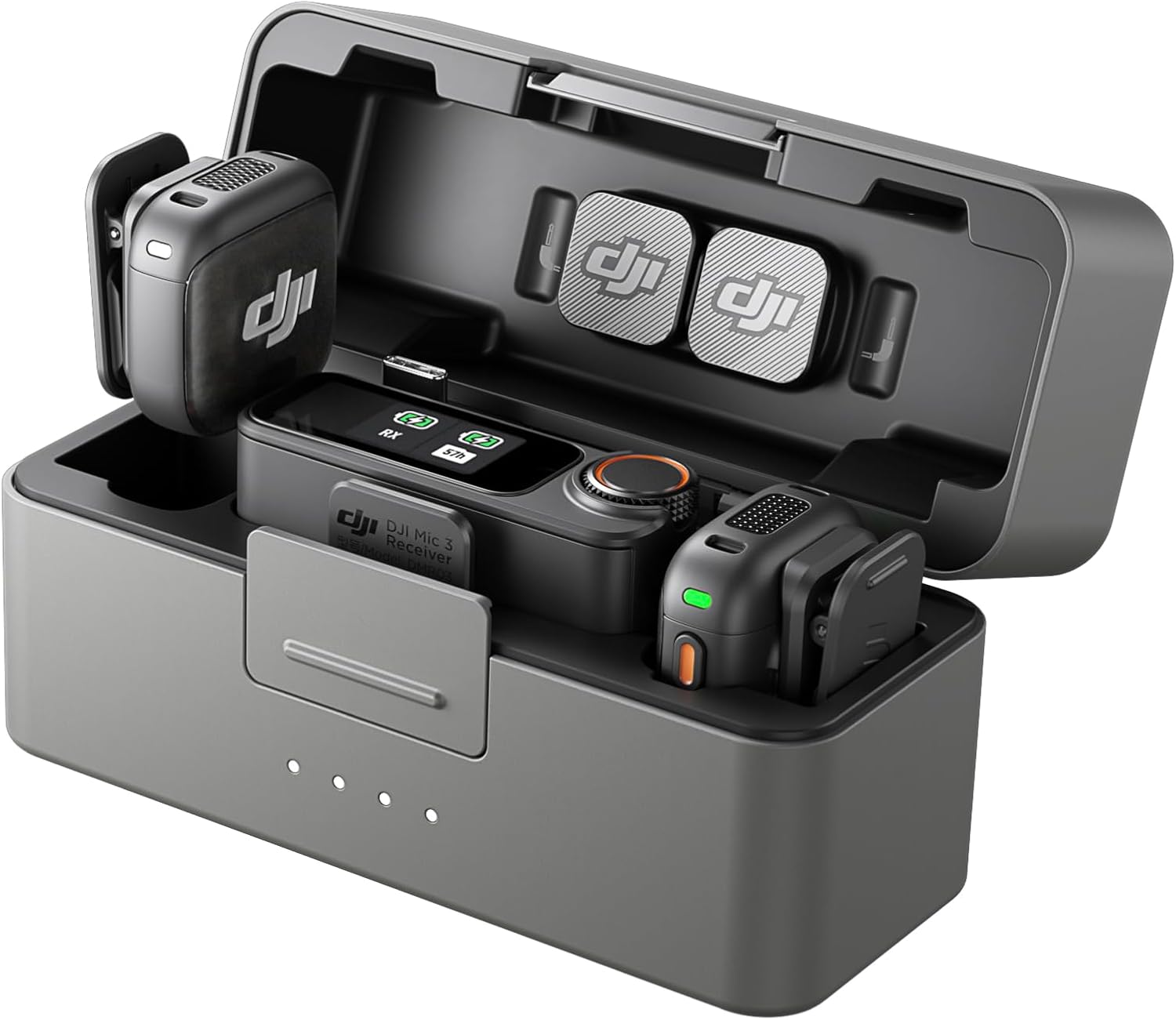
Pros
- Exceptional audio quality with crystal-clear capture and minimal background noise in real-world conditions
- Incredibly intuitive setup and pairing process that takes minutes, ideal for beginners and professionals alike
- Dual transmitters included enable two-person recording without additional purchases
- Smart charging case keeps all components organized and fully charged for extended shooting sessions
- Lightweight and discreet design ensures transmitters remain unobtrusive on camera and comfortable to wear
Cons
- Requires USB-C adapter for older devices without native USB-C connectivity
- Learning curve for advanced features like multi-channel setup and app customization despite intuitive basics
- Premium pricing compared to budget wireless microphone alternatives limits appeal for casual hobbyists
The DJI Mic 3 is a professional wireless microphone system designed for content creators, vloggers, podcasters, and videographers who demand broadcast-quality audio without the complexity of traditional setups. The 2TX+1RX configuration is ideal for interviews, dual-person content, and collaborative projects where capturing multiple voices simultaneously is essential.
What sets this system apart is its combination of intelligent audio processing and foolproof reliability. The adaptive gain control automatically adjusts levels in real-time, maintaining crisp vocals whether you're recording in a quiet studio or a bustling coffee shop. The dual-file 32-bit float internal recording acts as a safety net, capturing a backup recording that ensures no take is ever lost to audio clipping or unexpected issues. Dual-band anti-interference technology and dual noise-cancelling levels give you professional control over your audio environment.
The hardware design reflects DJI's attention to detail with ultra-lightweight transmitters that won't weigh you down during long shoots, magnetic clips for secure attachment, and a comprehensive charging case that extends your recording time to 28 hours. Setup is remarkably fast, typically taking just minutes from unboxing to first recording, and the system pairs effortlessly with cameras, smartphones, and DJI ecosystem devices.
The main limitation is that this is a premium product with a price tag reflecting its professional capabilities, which may be overkill for casual users. Additionally, older devices without USB-C require the included adapter, and maximizing advanced features like multi-channel configurations requires time exploring the DJI OsmoAudio app.
For serious content creators, the DJI Mic 3 represents excellent value, combining professional audio quality with user-friendly operation and reliable performance in real-world scenarios. The included dual transmitters and charging case make this a complete, ready-to-use solution that justifies its investment for anyone creating content regularly.
Audio Specifications: 4-channel output, up to 4 transmitters and 8 receivers pairing capability, lossless audio transmission, 32-bit float internal recording, three voice tone options, two noise-cancelling levels, adaptive gain control, dual-band anti-interference.
Connectivity: Bluetooth and Wi-Fi enabled, USB-C and 3.5mm jack connectors, compatible with cameras, phones (iOS and Android), and DJI ecosystem devices including Osmo Mobile 8, Osmo Action 6, and Osmo Pocket 3.
Battery and Power: 28 hours total battery life with included charging case, 4 batteries included, USB-C charging for all components.
Physical Dimensions: Compact lavalier form factor, 221.2 grams total weight, 4.21 x 2.32 x 1.69 inches, fits easily in pockets and bags.
Included Accessories: 2 transmitters, 1 receiver, charging case, carrying pouch, 2 magnetic clips, 2 magnets, USB-C mobile phone adapter, 3.5mm locking audio cable, 4 windscreens (2 black, 2 black/gray), USB-C data cable.
Ideal For: YouTube content creators, vloggers, podcasters, video journalists, livestreamers, wedding videographers, corporate video producers, and anyone creating professional-quality video content where audio reliability is non-negotiable.
Best Use Cases: Dual-person interviews, collaborative content creation, on-location reporting, travel vlogging, outdoor event coverage, studio voiceovers, and situations requiring backup audio recording and noise management.
Consider Alternatives If: You're a casual hobbyist on a tight budget, you only record solo content occasionally, or you primarily work in controlled studio environments where simpler setups suffice. Budget wireless microphones may meet your needs at lower cost.
Buying Guide
Sound Quality and Noise Reduction
Audio clarity is non-negotiable. Look for systems with built-in noise-cancelling features that can adapt to different environments. This ensures your voice remains the focus, whether you are in a quiet studio or a bustling city street.
Advanced options include adaptive gain control and multiple voice tone settings. These features provide consistent audio levels and let you tailor the sound profile to match your project’s needs perfectly.
System Flexibility and Expandability
Consider your future needs. A system that supports multiple transmitters paired to a single receiver is invaluable for interviews or multi-person podcasts. This expandability saves you from buying entirely new kits as your projects grow.
Some receivers can sync audio to additional units, making them ideal for complex shoots. This capability is a hallmark of professional-grade equipment, offering significant long-term value. For solo creators, a simpler system from our list of the best wireless lavalier microphones under $100 may suffice.
Reliability and Backup Features
<!–Wireless interference and data loss are a creator’s worst nightmares. Dual-band transmission technology helps maintain a stable connection in crowded wireless environments. This is crucial for live events or busy office settings.
Internal recording on the transmitter itself is a game-changer. It acts as a safety backup, capturing audio locally in case the wireless signal drops. This pro-grade feature guarantees you never lose a critical take.
Portability and Battery Life
<!–A system is only useful if it’s ready when you are. Compact storage, like a dedicated charging case, protects your gear and keeps it charged on the go. The entire kit should be lightweight and easy to pack.
Long battery life is essential for all-day shoots. Look for systems that offer extended recording time, often supported by a charging case that provides multiple full recharges. This eliminates power anxiety during long recording sessions. You can find more portable options in our broader category of lavalier and wireless mics.
Final Thoughts
After a detailed assessment, the DJI Mic 3 (2 TX + 1 RX + Charging Case) stands out for creators seeking a powerful and versatile audio solution that punches above its weight class. Its combination of crystal-clear audio, robust backup recording, and exceptional ease of use makes it a compelling top choice. For those whose needs are more foundational, exploring reliable best wireless microphones across all categories can provide excellent starting points for any project.
Frequently Asked Questions
What is the main advantage of a wireless lavalier microphone over a handheld one?
Wireless lavalier microphones offer hands-free operation and are much less obtrusive on camera. They are clipped close to the speaker’s mouth, which typically results in clearer, more consistent audio pickup, ideal for interviews, presentations, and video content where you want the focus to be on the speaker, not the microphone.
How do I ensure my wireless mic doesn’t pick up too much background noise?
Choose a system with effective noise-cancelling capabilities. Many modern wireless lavalier mics offer adjustable noise reduction settings. Proper placement of the lavalier transmitter, typically 6-8 inches below the chin on the chest, also helps minimize rustling and maximize voice capture.
Are these microphones compatible with smartphones and cameras?
Yes, most contemporary wireless lavalier systems are designed for universal compatibility. They typically connect via a receiver that plugs into a smartphone’s charging port (with an included adapter) or a camera’s 3.5mm microphone input. Always check the included accessories for the specific connections you need. For beginners looking at other mic types, our guide to the best USB microphones for beginners is a great resource.
What should I look for if I need to record two people at once?
You will need a system that includes at least two transmitter units. Some advanced receivers can pair with and record from multiple transmitters simultaneously on separate audio channels, which is perfect for interviews, podcasts, or dual-host videos. This provides individual control over each person’s audio in post-production.


Write Your Review
No reviews yet. Be the first to share your experience!