

You have invested in a quality surround sound system, but the audio still feels flat or poorly directed. The culprit is often speaker placement. Without precise angling, sound waves miss their mark, leaving your home theater experience lacking the immersive punch you deserve.
This is where speaker mounts with ball joints become essential. These versatile brackets allow you to tilt, swivel, and rotate your satellite speakers to direct audio exactly where it needs to go. In this guide, we evaluate the top-rated models available, focusing on their flexibility, build quality, and ease of installation to help you find the perfect mount for your space. For a broader look at options specifically for immersive audio, explore our guide to the best speaker mounts for surround sound.

Pros
- Exceptional range of motion with 120-degree tilt and 180-degree swivel for optimal positioning
- Heavy-duty aluminum construction ensures stability and longevity even with heavier speakers
- Universal compatibility eliminates guesswork when mounting different speaker brands and models
- New multi-surface screw fittings adapt to any wall type without additional hardware purchases
- Two-pack value provides complete coverage for stereo setups or multiple room installations
Cons
- Not compatible with SONOS Era 100 and Era 300 speakers, limiting options for some users
- Requires wall studs or appropriate anchors for maximum weight capacity on drywall
- Limited to 30 lb weight capacity, which may not suit very large or heavy professional speakers
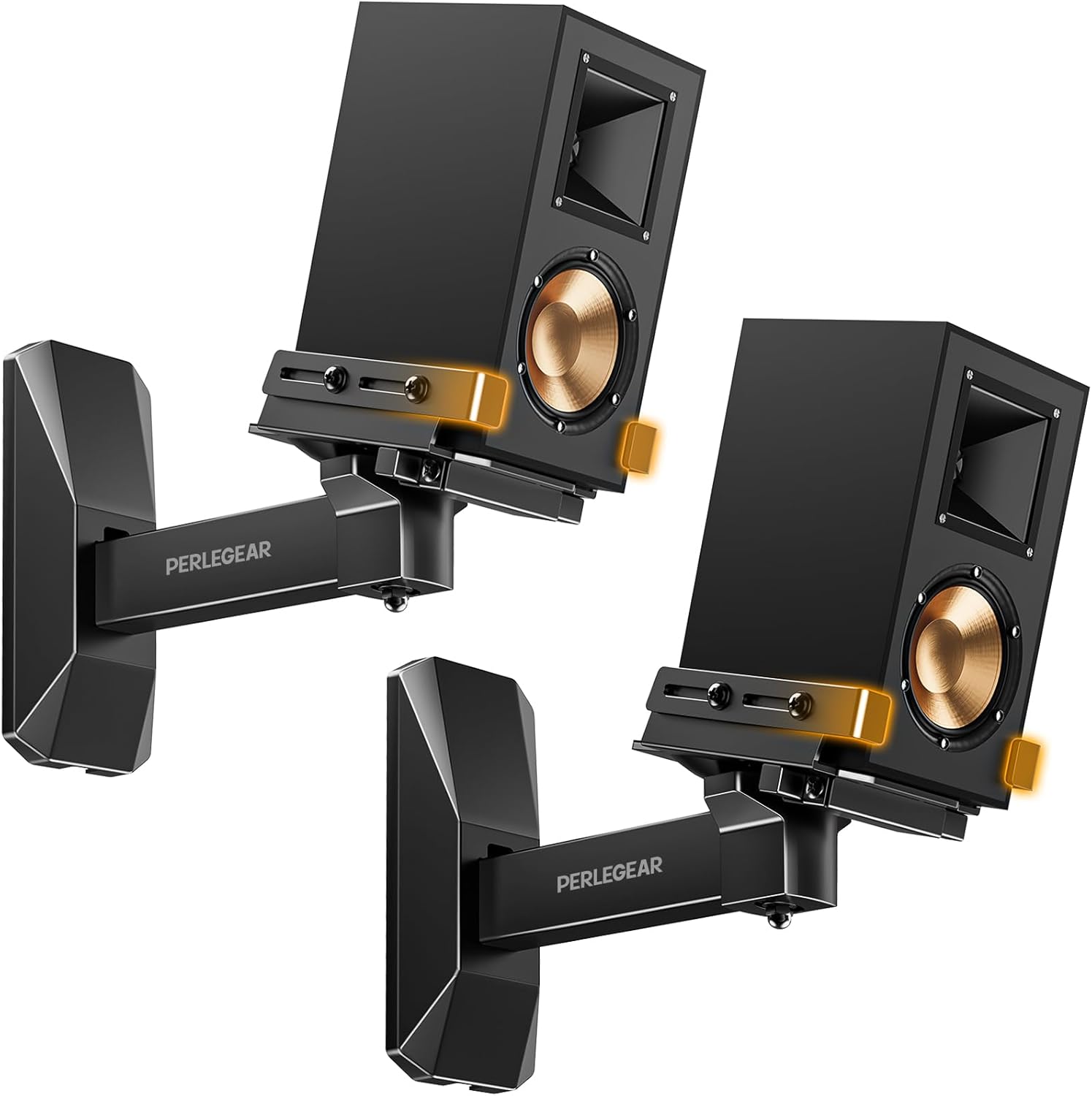
The Howonder BS-218pro speaker wall mount is a practical solution for anyone looking to optimize speaker placement and audio quality throughout their home or office. This two-pack of mounts is designed for standard to mid-range speakers and provides the flexibility needed to achieve ideal listening angles without permanent installation or complicated setup procedures.
The standout feature is the exceptional range of motion, offering 120 degrees of tilt and 180 degrees of swivel. This allows you to position speakers precisely for optimal sound projection and listening experience. Combined with the 30 lb weight capacity and heavy-duty die-cast aluminum construction, these mounts handle most common speaker sizes with confidence and stability.
Build quality is solid throughout. The aluminum enclosure feels substantial and professional, with a sleek black finish that blends seamlessly into most room decor. Installation is straightforward, taking just minutes with the included hardware and clear instructions. The new universal screw fittings are a genuine upgrade, working reliably on concrete, brick, drywall, and wood surfaces without requiring separate anchors or hardware.
The main limitation is compatibility, as these mounts are not designed for SONOS Era 100 and Era 300 speakers. Additionally, the 30 lb capacity may be insufficient for larger professional-grade or commercial speakers. For standard residential speaker mounting, however, these constraints are rarely problematic.
The Howonder speaker wall mounts deliver excellent value with their universal design, impressive adjustability, and reliable construction. Backed by a 12-month quality guarantee and promising 30-year service life, they represent a smart investment for anyone seeking to upgrade their audio setup with minimal fuss and maximum flexibility.
Model: BS-218pro (Howonder)
Weight Capacity: 30 pounds maximum
Tilt Range: Up to 120 degrees
Swivel Range: 180 degrees
Material: Die-cast aluminum
Color: Black
Mount Dimensions: 4.72 x 1.18 x 2.36 inches
Mount Weight: 1 kg per unit
Mounting Type: Wall mount with universal bracket
Compatible Surfaces: Concrete, brick, drywall, wood
Warranty: 12 months quality guarantee
Service Life: 30 years
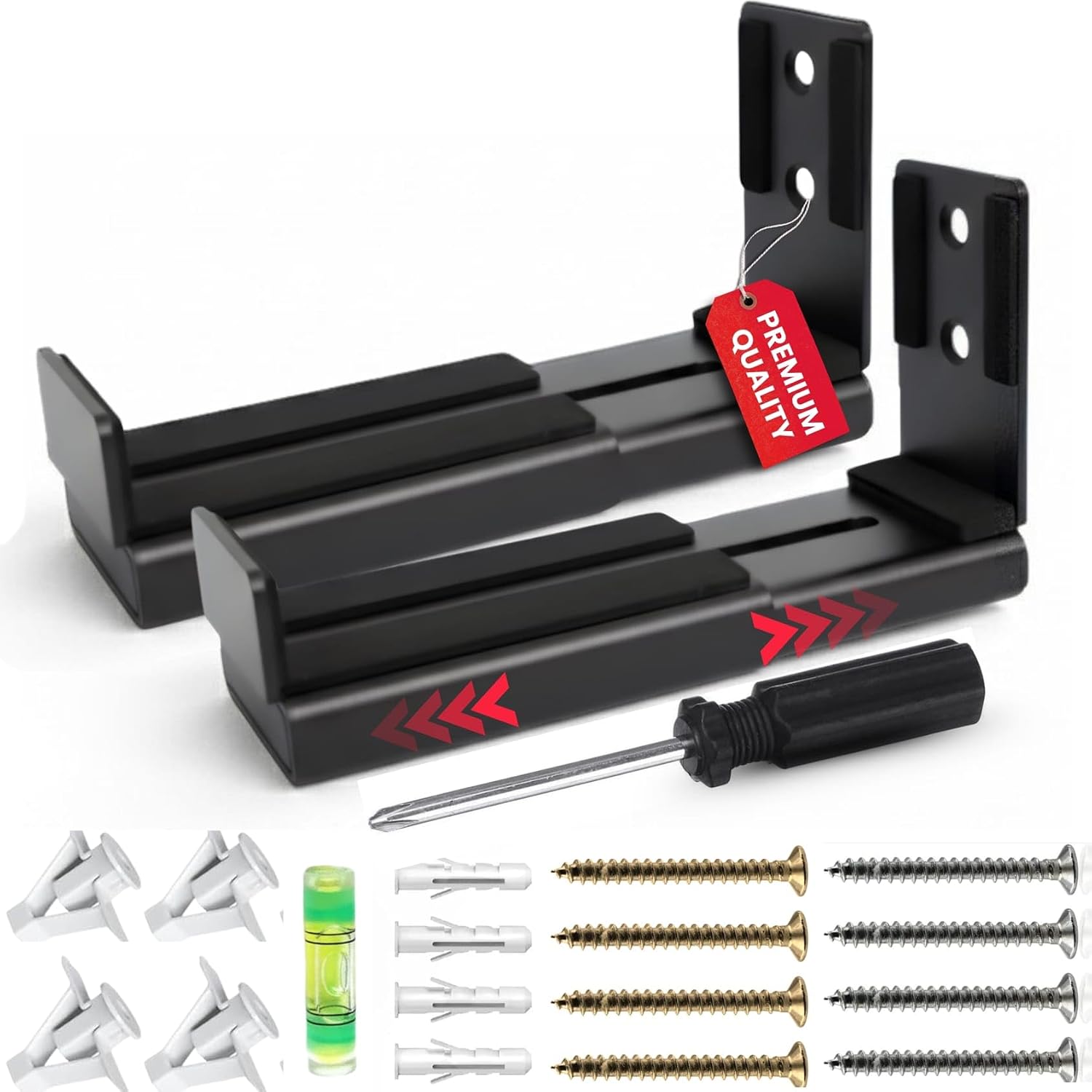
Package Contents: 2 speaker mounts, installation screws, mounting hardware, instruction manual
Compatibility: Most standard speakers except SONOS Era 100 and Era 300
Pre-Installation Preparation: Identify your desired speaker location and verify wall type (drywall, concrete, brick, or wood). Locate wall studs using a stud finder for maximum support, especially with heavier speakers. Mark mounting points at appropriate height for optimal listening angle, typically ear-level when seated.
Mounting Process: Use the included screws appropriate for your wall type. The universal screw fittings are pre-selected for different surfaces, so follow the instruction manual for correct screw selection. Drill pilot holes to prevent wall damage and ensure secure installation. Attach the mounting bracket firmly to the wall, then attach the adjustable arm to the bracket.
Speaker Attachment: Carefully position your speaker on the mount, ensuring it is balanced and secure. Use the tilt and swivel adjustments to achieve your preferred listening angle. Verify the speaker is stable and level before full use, and allow adequate clearance around the speaker for ventilation and cable management.
Buying Guide: How to Choose the Right Ball Joint Mount
1. Range of Motion and Adjustment
The primary advantage of a ball joint mount is its ability to fine-tune your speaker’s direction. Look for the specific degrees of tilt, pan, and rotation offered. Most quality mounts provide at least ±30 degrees of tilt and 180 degrees of pan, but some models offer significantly more, like 120 degrees of tilt for extreme angling needs.
This flexibility ensures you can direct sound toward your primary listening position, whether your speakers are mounted high on a wall or on a ceiling. A secure clamping mechanism is also crucial to lock the ball joint firmly in place once you have found the perfect angle, preventing any drift or sag over time.
2. Compatibility and Mounting Types
Universal compatibility saves you from a frustrating mismatch. The most versatile mounts support multiple attachment methods. The standard is a 1/4″-20 threaded insert, commonly found on many speakers. Additionally, look for mounts that accommodate smaller metric threads (like 4mm, 5mm, or 6mm) and keyhole or gourd-hole slots.
Before purchasing, verify your speaker’s weight and its specific mounting pattern. Most brackets in this category are designed for compact satellite speakers. If you need to mount slightly larger bookshelf models, our dedicated resource on best speaker mounts for bookshelf speakers offers suitable alternatives.
3. Build Quality and Weight Capacity
The mount must be sturdy enough to hold your speaker securely. Heavy-duty metal construction, such as die-cast aluminum or steel, is a good indicator of durability and resistance to corrosion. Always check the manufacturer’s stated maximum weight capacity and ensure it exceeds your speaker’s weight with a comfortable margin.
A robust build minimizes vibration transfer, which can subtly degrade sound clarity. For smaller, lighter satellite speakers, a capacity of 10-15 lbs per bracket is often sufficient. For more heavy-duty applications, some models are rated for 30 lbs or more, providing extra peace of mind.
4. Installation Kit and Ease of Setup
A complete hardware kit is a major convenience. Look for packages that include all necessary screws, wall anchors for different surface types (drywall, concrete, brick), thread adapters, and a hex wrench. A clear installation manual, or even linked video guides, can make the process straightforward for DIY enthusiasts.
Some upgraded models feature helpful additions like a built-in bubble level for perfect alignment or pre-sorted hardware packs. Considering where you will install your mounts is also key. The best speaker mounts for home theater often consider both wall and ceiling placement options.
Final Thoughts
For most users seeking a reliable balance of flexibility, universal fit, and proven performance, the VideoSecu Speaker Wall Ceiling Mount Bracket One remains a standout choice due to its extensive positive feedback and straightforward design. If your priority is maximum weight capacity and extreme adjustability for heavier or uniquely positioned speakers, the robust Speaker Wall Mount, Swivel and Tilt from Howonder offers exceptional strength and a wide range of motion, making it a versatile solution for demanding setups.
Frequently Asked Questions
Can I use these mounts on a plaster or concrete ceiling? Yes, most mounts in this category are designed for both wall and ceiling installation. The included hardware typically features concrete anchors. Always use the correct anchor for your wall material to ensure a secure hold that can support the speaker’s weight.
How do I know if my speaker is compatible with a ball joint mount? Check the back or bottom of your speaker for a threaded hole or a keyhole slot. The most common thread is 1/4″-20. If your speaker only has a keyhole, most universal mounts include an adapter screw to secure it. You can find more details on compatibility for various sizes in our guide to the best speaker mounts for small speakers.
Will the ball joint stay in position over time, or will it sag? A quality mount uses a clamping mechanism, often tightened with a hex wrench, that locks the ball joint firmly. When properly tightened, it should not sag. It is a good practice to check the tightness periodically, especially after initial setup, to confirm it remains secure.
Are these mounts suitable for outdoor use? Some models are marketed for indoor/outdoor use, but you must verify the product description. Look for materials like aluminum or powder-coated steel that resist corrosion. Even then, for prolonged outdoor exposure, covered or partially sheltered placement is highly recommended to protect both the mount and your speakers from the elements.



Write Your Review
No reviews yet. Be the first to share your experience!