

You are setting up your home theater or refining your music listening space. The dialogue in movies is crisp, and the music’s mids and highs are clear. Yet, something crucial is missing. That visceral punch, the room-filling rumble that makes action scenes thrilling and music feel alive, remains absent. This is the gap a quality powered subwoofer fills, delivering the low-frequency foundation your audio system lacks.
Selecting the right subwoofer involves more than just seeking the biggest bass. You need a unit that matches your room size, integrates seamlessly with your existing speakers, and offers the control to tailor the sound to your preferences. This guide is designed for anyone looking to add serious low-end performance to their home audio or studio setup. We have evaluated four standout powered subwoofers, each offering a compelling blend of power, precision, and features. For those particularly focused on musicality, our resource on choosing the best subwoofers for music offers deeper insights.

Pros
- Innovative spun-copper woofer technology produces exceptionally clean bass with minimal distortion
- Flexible front-firing configuration works well in various room layouts and placement scenarios
- Powerful 400-watt all-digital amplifier provides room-filling bass without quality compromise
- Precise phase and crossover controls allow perfect integration with existing speaker systems
- Highly rated by customers for performance, reliability, and value
Cons
- Limited to 120 Hz frequency response floor, which may not reach the absolute lowest frequencies some users desire
- Front-firing design may require more careful room placement optimization compared to downfiring alternatives
- Premium pricing reflects the advanced technology but may challenge budget-conscious buyers
The Klipsch Reference is a high-performance front-firing subwoofer designed for home theater systems and serious music listeners who demand accurate, powerful bass without compromise. Its 12-inch spun-copper woofer represents a significant advancement in subwoofer cone technology, combining exceptional lightness with the rigidity needed for clean low-frequency reproduction.
The standout feature is the innovative spun-copper thermoformed crystalline polymer woofer, which minimizes cone breakup and eliminates the distortion that plagues traditional subwoofers. Paired with the built-in all-digital amplifier delivering 400 watts of power, this subwoofer reproduces bass with remarkable clarity and impact. The front-firing driver provides flexibility in room placement while maintaining deep, articulate bass response across your listening area.
Build quality reflects Klipsch's reputation for precision engineering. The combination of advanced materials and thoughtful amplifier design ensures this subwoofer will integrate seamlessly into any AV setup. The low-pass crossover and phase control adjustments allow fine-tuning to match your room acoustics and speaker configuration perfectly, while universal line and LFE inputs work with virtually any receiver.
The primary consideration is the 120 Hz frequency response floor, which handles most home theater and music content exceptionally well but may not reach the absolute lowest organ tones or movie sound effects some enthusiasts crave. Additionally, front-firing subwoofers require slightly more thoughtful placement than downfiring models to optimize room coupling.
The Klipsch Reference is an excellent choice for anyone seeking a subwoofer that prioritizes accuracy and integration over raw output. Its combination of innovative technology, powerful amplification, and flexible design makes it ideal for upgrading existing systems or building a new home theater setup with professional-grade bass reproduction.
Driver: 12-inch spun-copper thermoformed crystalline polymer woofer
Amplifier: All-digital, 400 watts peak power
Frequency Response: 120 Hz and below
Driver Type: Front-firing high-performance driver
Controls: Low-pass crossover and phase control
Connectivity: Line and LFE inputs via speaker wire
Audio Mode: Surround compatible
Brand: Klipsch Reference Series
Who Should Buy This? Home theater enthusiasts, music lovers, and anyone upgrading their audio system who values clean, accurate bass over maximum output. This subwoofer excels in medium to large rooms where flexibility in placement matters.
Room Placement Tips: The front-firing design works well when positioned near listening areas or along front walls. Experiment with placement to find the sweet spot where bass integrates smoothly with your main speakers. Use the phase control to align the subwoofer output with your room acoustics.
Integration: The low-pass crossover lets you blend subwoofer output seamlessly with your existing speakers. Start with crossover set around 80 Hz and adjust phase control until bass feels cohesive and distortion-free. The universal inputs work with any modern AV receiver.
Comparison Consideration: This subwoofer prioritizes accuracy and integration over maximum output. If you need earth-shaking bass for large commercial spaces, consider higher-output models. For typical home theater and music listening, the Reference delivers exceptional performance.

Pros
- Exceptional accuracy and clarity, letting you hear room characteristics and mix details clearly
- Tight, controlled bass with no bloat or rumble, perfect for critical listening
- Comprehensive controls including low-cut, high-cut, and phase adjustment for any room
- Solid construction and engineering from a trusted brand with 15+ years of professional endorsement
- Excellent value for pro-level quality and performance
Cons
- Premium price point requires significant investment for home studio enthusiasts
- 8-inch driver may require careful placement and tuning in larger rooms
- Limited wireless connectivity, primarily wired XLR connection for best performance
The Yamaha HS8S is a professional-grade powered subwoofer designed for recording studios, live music monitoring, and serious home studio setups. If you're mixing music, producing podcasts, or working with any audio that requires accurate low-end reproduction, this subwoofer fills the critical gap that small studio monitors cannot reach.
What sets the HS8S apart is its commitment to accuracy over flashiness. The 150W amplifier drives an 8-inch bass-reflex driver with a frequency response of 22Hz to 150Hz, delivering tight, controlled bass that reveals room acoustics and mix imperfections rather than masking them. The low-cut and high-cut controls allow you to dial in the perfect blend with your main monitors, while the phase switch ensures coherent integration with your monitoring system. Users consistently report that this subwoofer transforms their ability to hear and mix accurate low-end content.
Build quality is exceptional, with Yamaha's engineering expertise evident in every detail. The shockproof stainless steel enclosure feels durable and professional. The touch controls and comprehensive connectivity options, including XLR inputs and routing outputs, make this subwoofer a seamless addition to any studio setup. This is equipment designed by engineers for engineers, not marketing departments.
The main consideration is price. This is a professional investment, not an impulse purchase. Additionally, the 8-inch driver performs best in rooms where proper placement and tuning are possible. If you have a very large room or prefer wireless convenience, you may want to evaluate alternatives.
For serious home studio owners, music producers, and professional engineers, the Yamaha HS8S represents exceptional value in the studio subwoofer category. It delivers the accuracy and reliability needed for professional mixes at a reasonable price point for this quality tier.
Driver and Output: 8-inch bass-reflex powered subwoofer with 150W amplifier. Frequency response 22Hz to 150Hz. Dynamic driver design for accurate reproduction.
Controls and Connectivity: Low-cut switch and control (80-120Hz), high-cut control (80-120Hz), and phase switch for room integration. XLR connectivity with audio routing outputs. Touch control interface.
Physical: Floor-standing design with stainless steel enclosure. Compact footprint suitable for studio environments. Not water-resistant.
Warranty: 1-year manufacturer limited warranty from Yamaha Corporation of America. Valid only when purchased from authorized Yamaha retailers.
Who Should Buy: Music producers, audio engineers, podcast creators, and serious home studio owners who need accurate low-end monitoring. This subwoofer is ideal for mixing and mastering applications where precision matters.
Room Considerations: The HS8S performs best in treated studio environments or rooms where you can place and tune the subwoofer properly. Smaller rooms benefit most from the compact 8-inch design. Larger rooms may require additional subwoofers or larger drivers.
Integration Tips: Use the low-cut control to keep bass out of your main monitors, allowing them to focus on midrange clarity. Experiment with the phase switch to achieve seamless blending. Proper placement away from room corners typically yields best results.
Comparison: The HS8S is the compact option in Yamaha's HS line. It competes with other professional 8-inch studio subwoofers but stands out for accuracy and control rather than maximum output or size.

Pros
- Exceptional bass performance with long-throw 12-inch woofer producing powerful, controlled low-end impact
- Easy setup and calibration with straightforward controls that integrate quickly with most home theater systems
- Outstanding value for money, delivering performance comparable to subwoofers costing significantly more
- Versatile design works equally well for movies, gaming, and music listening across different room sizes
- Solid construction quality with precision-fit grille and engineered wood cabinet that isolates woofer vibration
Cons
- Not waterproof or water-resistant, limiting placement options to indoor environments only
- Powerful output may require careful volume calibration in apartments or shared living spaces to avoid disturbing neighbors
- Fixed 12-inch size may be too large for very small rooms or compact home theater setups
The Polk Audio Monitor XT12 is a 12-inch powered subwoofer designed for anyone serious about home theater, gaming, or music listening. This subwoofer combines affordability with impressive performance, making it an excellent choice for both first-time buyers upgrading their systems and experienced audiophiles seeking reliable, room-filling bass without excessive expense.
The standout feature is the 12-inch dynamic balanced woofer paired with 100W Class A/B amplification, delivering bass response down to 24Hz. Real-world performance is impressive, with users reporting that action movie scenes gain satisfying low-end impact, gaming explosions feel more immersive, and music gains depth and clarity. The variable crossover (80-160Hz) and phase polarity controls allow precise calibration to your specific room, ensuring seamless integration with your receiver and other speakers. Setup is straightforward, typically taking just minutes.
Build quality reflects Polk Audio's reputation. The rigid, critically braced MDF cabinet minimizes resonances that muddy bass clarity, while the removable precision-fit grille isolates woofer vibration from the cabinet. The sleek midnight black design fits naturally into modern home theater rooms without appearing bulky or intrusive. At 39 pounds and 16 inches tall, it's substantial enough to deliver serious bass yet manageable for placement flexibility.
One consideration is that this subwoofer produces significant output. In apartments or shared walls, you'll need to calibrate volume carefully to avoid neighbor complaints. Additionally, the subwoofer is not water-resistant, so placement must be indoors away from moisture. For very small rooms, the 12-inch driver might feel overpowered, though crossover adjustment helps manage this.
The Polk Monitor XT12 represents exceptional value for serious bass enthusiasts. With its powerful performance, flexible controls, and solid warranty, it delivers the impact and clarity expected from much more expensive alternatives. Whether you're building a dedicated theater room or enhancing an existing system, this subwoofer justifies its investment.
Driver and Amplification: 12-inch dynamic balanced woofer, 100W Class A/B amplifier, frequency response 24Hz-40kHz
Controls and Tuning: Volume control, variable crossover (80-160Hz), phase polarity (0/180), compatible with Dolby Atmos and DTS:X receivers
Connectivity: RCA line level inputs, LFE (unfiltered/low pass disabled) input, nickel-plated 5-way binding posts
Cabinet: Rigid engineered wood MDF construction, critically braced, removable precision-fit grille, low-resonance design
Physical: Dimensions 16 inches D x 18 inches W x 16 inches H, weight 39 pounds, color midnight black
Power: Corded electric, 100 watts peak output, 5.1 channel compatible
Warranty: 5-year full warranty from Polk Audio
Who Should Buy This Subwoofer: Home theater enthusiasts looking for affordable, quality bass, gamers wanting immersive low-end impact, music listeners seeking accurate deep frequencies, and anyone upgrading from basic or aging subwoofers.
Room Size Considerations: The XT12 performs well in medium to large rooms (15x20 feet and larger). For smaller spaces, start with lower crossover settings (80-100Hz) and adjust volume carefully. In very small rooms under 150 square feet, consider whether the 12-inch driver matches your needs.
Placement Tips: Corner placement typically maximizes bass response but may cause boom. Experiment with positioning and use phase control to integrate smoothly with your main speakers. Avoid placement near walls that back onto shared apartments.
Integration with Receivers: Works with all modern AV receivers supporting subwoofer outputs. Ensure your receiver has RCA or LFE outputs. This subwoofer pairs excellently with Polk's Monitor XT speaker line for seamless sonic blending.
Expansion Strategy: Consider adding a second XT12 subwoofer to smooth bass response and eliminate dead zones in larger rooms, though one unit delivers impressive performance for most setups.
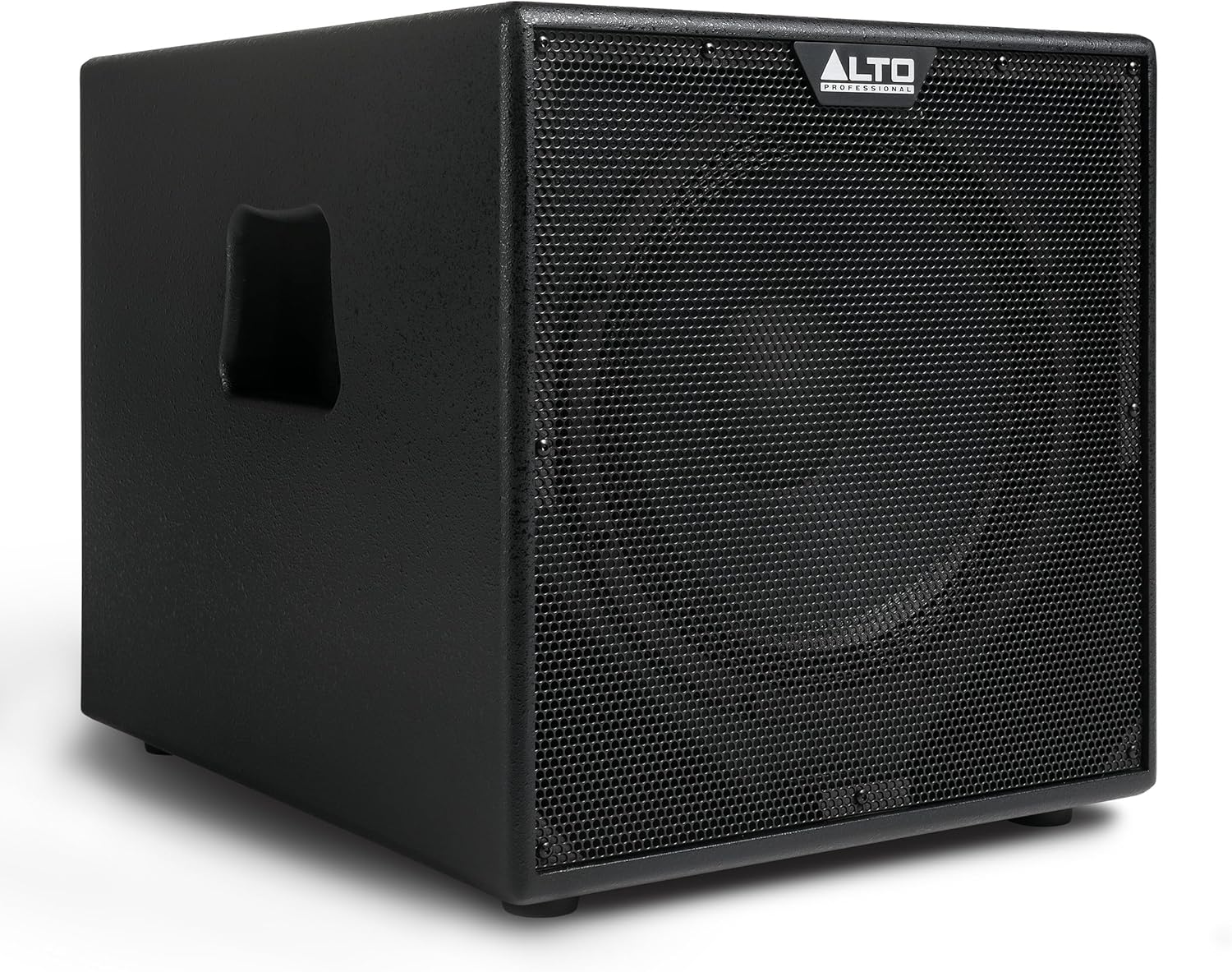
Pros
- Exceptional bass quality and clarity at an affordable price point, delivering performance typically found in more expensive subwoofers
- Versatile DSP controls and multiple EQ modes allow customization for different venues and music styles
- Robust construction with resonant-free fiberboard and overload protection ensures reliability during intense use
- Compact footprint and lightweight design make it ideal for musicians with space constraints or frequent setup changes
- Multiple connectivity options (XLR and 1/4" TRS) work with powered speakers, DJ mixers, and audio interfaces
Cons
- Limited to 100/120V input voltage, not suitable for international use without a step-down transformer
- 1-year limited warranty provides basic coverage but lacks extended protection options for professional touring use
- 115Hz frequency response floor means it may not reach the absolute lowest sub-bass frequencies some electronic music producers require
The ALTO TX12S is a powered subwoofer designed for musicians, DJs, and small business owners who need powerful low-end extension without breaking the bank. With its 900W amplifier and 12-inch woofer, it's engineered to handle small to mid-sized performance spaces, rehearsal rooms, and intimate venues where standard full-range PA speakers fall short on bass impact.
The standout feature is how effectively this subwoofer reproduces deep bass frequencies while maintaining clarity and punch. The 2-inch voice coil and Class-D amplifier work together to deliver tight, responsive bass that can be felt as much as heard. Real-world users consistently praise the "thump" and presence it adds to any audio system, with several reviewers noting it performs at a level typically associated with more expensive models. The DSP-based EQ system with Live and Music voicing modes, combined with selectable low pass filters (80Hz, 100Hz, 120Hz), gives you precise control to match your specific venue or speaker setup.
Build quality is solid throughout. The resonant-free fiberboard enclosure minimizes unwanted vibrations while enhancing acoustic performance, and the full metal grille with splatter-spray finish can withstand the rigors of touring. The 36mm pole socket allows integration into speaker stands, and at 22.4kg with convenient side handles, it's genuinely portable compared to heavier alternatives. Overload protection circuitry ensures clean bass even when pushed hard, which is crucial during extended performances.
The main limitations are the 115Hz frequency response floor, which may disappoint electronic music producers seeking extreme sub-bass, and the 100/120V power requirement that limits international use. The 1-year warranty is standard but relatively basic for professional applications. Setup is straightforward enough for non-technical users, though the quickstart guide could be more detailed.
The ALTO TX12S represents exceptional value for anyone needing serious bass extension on a budget. Whether you're upgrading a rehearsal space, building a portable DJ rig, or adding low-end weight to a small venue PA system, this subwoofer delivers performance and reliability that justifies its price point and earns strong recommendations from actual users.
Audio Output: 900W RMS, Class-D amplifier with overload protection
Driver: 12-inch high-output woofer with 2-inch voice coil
Frequency Response: 115Hz and up
Low Pass Filter: Selectable 80Hz, 100Hz, or 120Hz at 24dB per octave
Enclosure: Front-ported fiberboard, resonant-free design
Dimensions: 15.9"D x 15.9"W x 20.1"H
Weight: 22.4kg (49.3 lbs)
Connectivity: XLR and 1/4" TRS inputs
Power: 100/120V, 50/60Hz (corded electric)
Warranty: 1 year manufacturer limited warranty
Included: 6-foot power cable, quickstart guide, safety and warranty manual
Best For: This subwoofer is ideal for live musicians performing in small to mid-sized venues, DJs building portable rigs, rehearsal studios, houses of worship, nightclubs, and music producers who need reliable low-end monitoring without excessive expense. If you already own a PA speaker system and want to add impact and presence, the TX12S is a practical upgrade.
Consider Alternatives If: You require extreme sub-bass frequencies below 115Hz for electronic music production, need international power compatibility, or operate in extremely demanding touring environments where extended warranty coverage is essential. Professional sound engineers working with large-scale events may also want higher power output options.
Real-World Use Cases: Pair it with powered PA speakers as a dedicated bass reinforcement system, use it as a standalone subwoofer in music studios for accurate bass monitoring, integrate it into DJ setups for club or event work, or deploy it in small worship spaces where budget constraints are tight but quality cannot be compromised.
Essential Buying Considerations
Driver Size and Amplifier Power
Driver size, measured in inches, largely determines a subwoofer’s potential output and depth. A larger driver can move more air, producing lower frequencies and higher volume levels with less strain. However, a well-designed smaller driver in a properly tuned enclosure can also perform exceptionally. The built-in amplifier’s power rating is equally critical. It supplies the energy needed to drive the speaker cone. Look for a combination that suits your room; a massive driver in a small apartment might be overkill, while a modest one in a large living room could struggle.
Connectivity and Control Options
Versatile connectivity ensures your new subwoofer works with your current gear. Standard line-level RCA inputs are common, but a dedicated LFE (Low-Frequency Effects) input is essential for home theater receivers. For fine-tuning, variable controls are invaluable. A low-pass crossover control lets you set the frequency point where bass is handed off from your main speakers to the sub. Phase control helps align the subwoofer’s sound waves with those from your other speakers, preventing cancellation for a smoother blend.
Cabinet Design and Placement Flexibility
<!–The subwoofer’s cabinet construction directly impacts sound quality. A rigid, well-braced enclosure minimizes unwanted resonances that can color the bass, leading to cleaner, tighter output. Consider the driver orientation as well. Front-firing designs offer more placement flexibility, as they can be positioned closer to walls without as much muffling. This is a key factor for integrating a subwoofer into your existing home audio speaker layout without compromising performance.
Intended Use Case and Room Size
<!–Your primary use should guide your choice. A subwoofer for critical music listening in a nearfield studio monitor setup prioritizes accuracy and speed. For home theater, output and impact for movie soundtracks take precedence. Always factor in your room’s dimensions. A powerful subwoofer can overwhelm a compact space, while a less capable model might sound anemic in a large, open area. Understanding your room’s acoustics is part of optimizing any audio setup for your living space.
Final Thoughts
Adding a powered subwoofer is one of the most effective upgrades for your home audio experience. For listeners seeking authoritative, theater-quality bass with refined control, the Klipsch Reference Front-Firing Subwoofer stands out with its efficient design and powerful output. Alternatively, if your needs lean towards a versatile, musical subwoofer that excels in both studio and living room environments, the precise and articulate Yamaha HS8 Studio Subwoofer is a superb choice. Either option will provide the deep, controlled bass your system deserves.
Frequently Asked Questions
What is the difference between a powered and a passive subwoofer?
A powered, or active, subwoofer has a built-in amplifier specifically matched to its driver and cabinet. This simplifies setup, as you only need to connect an audio signal and power cable. A passive subwoofer requires a separate external amplifier, similar to standard speakers, offering more customization but with added complexity and cost for the average user.
Where is the best place to put a subwoofer in a room?
Bass frequencies are non-directional, but placement still affects sound quality due to room interactions. A common starting point is in a front corner, which can increase output. However, the “subwoofer crawl” method is often recommended: place the subwoofer in your primary listening seat, play bass-heavy content, and crawl around the room until the bass sounds best. That spot is typically the ideal location for the subwoofer itself.
Can I use a subwoofer with a stereo system that doesn’t have a subwoofer output?
Yes, you often can. Many subwoofers offer high-level inputs, also called speaker-level inputs. You connect the speaker wire from your amplifier to these inputs on the subwoofer, and then run another set of wires from the subwoofer’s high-level outputs to your main left and right speakers. The subwoofer filters out the low frequencies for itself and passes the rest to your speakers.
Do I need a special receiver to use a subwoofer with wireless speakers?
It depends on your specific wireless audio system. Some soundbars and wireless speaker systems have a dedicated subwoofer output or are part of an ecosystem that supports a proprietary wireless sub. For standard setups, you would typically connect a powered subwoofer to an AV receiver’s subwoofer output. If your primary system is wireless, check the manufacturer’s specifications for subwoofer compatibility.


Write Your Review
No reviews yet. Be the first to share your experience!