

You’ve dedicated time and resources to curating a high-fidelity audio system, but the centerpiece, your speakers, demands a critical choice. The quest for speakers that deliver both breathtaking detail and room-filling presence, without compromise, is a common challenge for discerning listeners. This guide is crafted for you, the audiophile seeking to elevate your home theater or dedicated listening room with floorstanding speakers that represent a significant, yet intelligent, investment in sound quality. We’ve assessed a selection of premier models to simplify your search. For those exploring options at different investment levels, you might also consider our guide on the best Full-Range floorstanding speakers.
Key Considerations for Your Purchase
Driver Technology and Horn Design
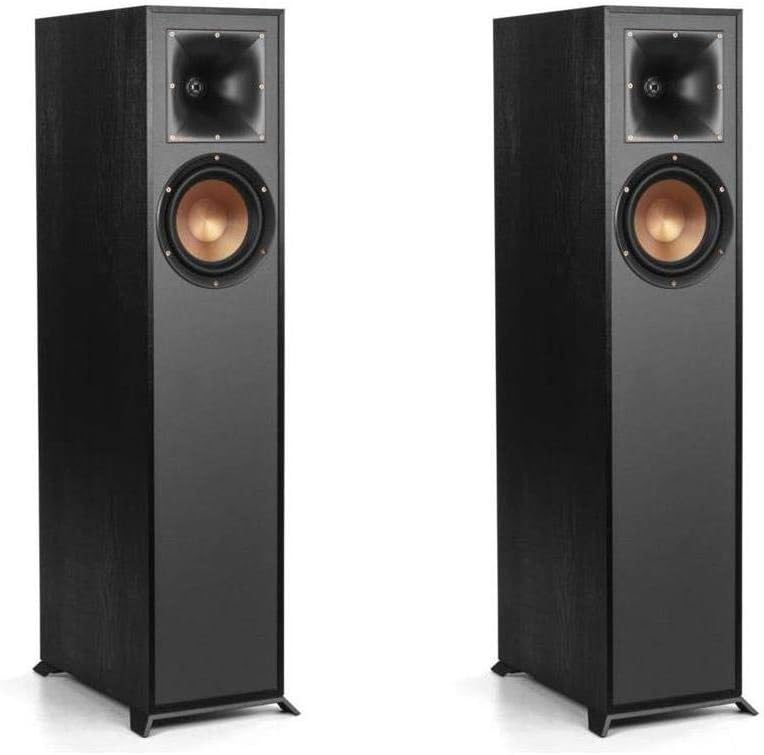
The core of any speaker’s performance lies in its drivers and how they project sound. Compression drivers paired with horn-loaded waveguides, like the Tractrix horn found in Klipsch models, are engineered for high efficiency and dynamic impact. This design minimizes distortion and delivers sound with exceptional clarity and authority, even at lower amplifier power. Conversely, designs utilizing dome tweeters and advanced cabinet architecture aim for pinpoint imaging and a wide, cohesive soundstage. Your preference for the immediacy of a horn or the precise dispersion of a dome tweeter will significantly influence your listening experience.
Cabinet Construction and Aesthetics
A speaker’s cabinet is far more than a housing; it’s an acoustic instrument. Rigid, well-braced construction with internal damping is essential to prevent unwanted resonance that colors the sound. Features like bifurcated or acoustically centered cabinets isolate drivers to eliminate interference. Beyond acoustics, these are substantial pieces of furniture. Finishes like genuine wood veneers in walnut or cherry offer a timeless aesthetic that complements a refined space. The build quality should match the sonic performance, ensuring your speakers are a lasting centerpiece. For models that make a visual statement, explore our picks for the best tall floorstanding speakers.
System Matching and Room Integration
No speaker exists in a vacuum. Its performance is intimately tied to your room’s acoustics and the supporting components. High-efficiency designs are forgiving and can shine with a wide range of amplifiers, from tubes to solid-state. Models with complex crossover networks or lower sensitivity may demand more robust amplification to reach their potential. Consider your room size; larger spaces benefit from speakers with greater output and bass extension, while some heritage-inspired designs excel in more intimate settings. Proper placement, away from walls and in a symmetrical layout, is crucial for achieving the intended soundstage and frequency balance.
Heritage Sound vs. Modern Engineering
This choice defines your sonic philosophy. Heritage models are revered for their lively, engaging character and timeless design, often delivering a dynamic and immediate presentation that feels visceral and real. Modern engineered speakers frequently prioritize measured neutrality, extreme detail retrieval, and expansive soundstaging with controlled dispersion. The former often connects emotionally with classic rock, jazz, and vocals, while the latter can excel with complex orchestral works and modern studio recordings. Understanding this fundamental difference guides you toward the sound signature that best matches your music library and personal taste. Lovers of classic design should not miss our review of the best retro floorstanding speakers.
Final Thoughts
Investing in a pair of high-caliber floorstanding speakers is a commitment to transformative audio. Each model reviewed brings a distinct philosophy to sound reproduction, from the commanding presence and efficiency of horn-loaded designs to the meticulous engineering of modern tower speakers. For listeners who prioritize sheer dynamic scale and classic American audio heritage, the Klipsch RF-7 III Walnut Wood Furniture Made represents a benchmark. Conversely, if your preference leans toward contemporary neutrality, precise imaging, and sophisticated cabinet technology, the SVS Pair of Ultra Evolution Pinnacle Tower offers a compelling and thoroughly modern alternative. Whichever path you choose, these speakers are designed to be the enduring heart of a remarkable listening experience. For complementary audio components, consider pairing your towers with options from our selection of the best tower floorstanding speakers or explore the versatility of the best bookshelf speakers for a surround setup.
Frequently Asked Questions
Do I need a separate subwoofer with high-end floorstanding speakers?
Many premium floorstanding speakers, especially those with multiple large woofers, produce substantial and articulate bass on their own. For dedicated home theater use or music genres with extreme low-frequency content, adding a quality subwoofer can provide that last octave of depth and impact. However, for pure stereo music listening, a well-integrated pair of towers often delivers a more coherent and satisfying full-range experience without a sub.
How important is speaker placement for audiophile-grade sound?
Placement is critically important, often as crucial as the speakers themselves. Proper positioning affects soundstage width and depth, imaging precision, and bass response. Start by placing speakers well away from rear and side walls, forming an equilateral triangle with your primary listening position. Fine-tune the toe-in angle to focus the imaging. Even the best speakers will underperform if placed poorly in a room.
What should I look for in an amplifier to pair with these speakers?
Match the amplifier’s power output and current delivery to the speaker’s sensitivity and impedance characteristics. High-efficiency horn-loaded speakers can perform wonderfully with lower-wattage amplifiers, even tube models. Speakers with lower sensitivity or complex loads benefit from amplifiers with robust power supplies and high current capability. Focus on clean power and a synergistic sound character rather than wattage alone.
Are newer speaker models always better than older or heritage designs?
Not necessarily. While modern advancements in materials, measurement, and cabinet design have led to speakers with exceptional neutrality and detail, classic heritage designs offer a timeless, engaging musicality that many listeners prefer. The choice is subjective. Modern engineering often aims for accuracy, while heritage sound prioritizes a lively, dynamic presentation. The best speaker for you is the one that most convincingly recreates the emotional intent of your music in 2026.


Write Your Review
No reviews yet. Be the first to share your experience!