

You have the perfect space, a quality receiver, and a growing collection of music and films. The missing piece is the audio presence that can bring it all to life. Tower floorstanding speakers offer that foundational power and full-range sound that smaller speakers simply can’t match, filling your room with rich, detailed audio from the deepest bass notes to the crispest highs.
This guide is crafted for anyone ready to upgrade their home audio, whether you’re building a dedicated home theater or seeking a powerful stereo pair for music. We have assessed ten leading models, from renowned brands like Klipsch and Polk Audio to impressive value-focused options. Our goal is to cut through the specifications and help you identify the speakers that align with your listening preferences, room size, and aesthetic vision. For a broad overview of options, explore our main category page for floorstanding speakers.
| Pick | Product | BRD Score | Where to buy |
|---|---|---|---|
| Top Pick |
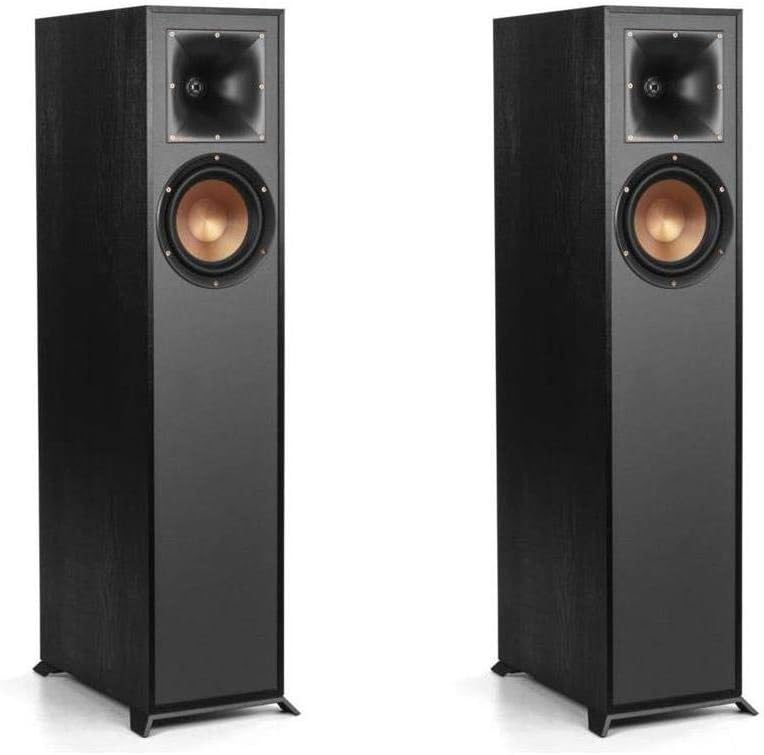 Klipsch R-610F Floorstanding Tower Speakers (Pair) |
9.4/10 | View on Amazon.com |
 Klipsch R-26FA Floorstanding Speakers with Dolby |
9.6/10 | View on Amazon.com |
Pros
- Exceptionally high sensitivity (94dB) makes them easy to drive and noticeably loud even at modest amplifier wattage
- Tractrix horn-loaded tweeter produces detailed, fatigue-free highs that audiophiles and casual listeners both appreciate
- Versatile enough to serve as front mains, rear surrounds, or standalone stereo speakers in a variety of room sizes
- Outstanding value for the price, with sound quality that rivals speakers costing significantly more
- Solid build quality with a sleek black finish that integrates well into modern home theater setups
Cons
- At 90.2 pounds for the pair, these speakers are heavy and may require two people to position and install safely
- The 6.5-inch woofers deliver respectable bass but may leave dedicated bass enthusiasts wanting a separate subwoofer for the lowest frequencies
- The cabinet design prioritizes efficiency over cabinet depth, so very large rooms may benefit from a more powerful companion subwoofer
The Klipsch R-610F is a pair of floor-standing tower speakers designed for home theater and stereo listening. At just 37 inches tall, they fit comfortably in most living spaces while still delivering the kind of dynamic, room-filling sound typically associated with much larger and more expensive speakers. They are an excellent choice for anyone building or upgrading a home theater system, as well as for music lovers who want a high-sensitivity, high-efficiency speaker that works with a wide range of amplifiers and receivers.
The standout feature of the R-610F is Klipsch's signature 90x90 Square Tractrix Horn paired with a 1-inch aluminum LTS tweeter. This combination produces exceptionally clear and detailed highs, making dialogue in movies easy to follow and revealing subtle nuances in music that lesser speakers might obscure. The dual 6.5-inch spun-copper IMG woofers complement the tweeter well, delivering tight and articulate bass that holds up in mid-sized rooms without requiring a subwoofer, though adding one will enhance the lowest octaves further.
Build quality is solid and purposeful. The black finish is clean and professional, and the magnetic grilles snap on and off easily for a polished look or an open, direct-radiating presentation. The injection-molded feet provide stability on hard floors, and the overall construction feels robust given the accessible price point. Reviewer feedback consistently highlights that these speakers look and feel more premium than their cost suggests.
On the downside, the combined weight of the pair makes setup a two-person job, and buyers with very large rooms or a strong preference for deep sub-bass may find the 6.5-inch drivers benefit from a dedicated subwoofer. The frequency response rolls off at 45Hz, which is respectable but not quite full-range for the most demanding low-end content.
Overall, the Klipsch R-610F represents one of the best values in the floorstanding speaker category. With a top-tier sensitivity rating, proven Klipsch horn technology, and a 5-year limited warranty, these speakers deliver a genuinely impressive listening experience for home theater enthusiasts and music lovers alike. Whether used as front mains or rear surrounds, they consistently outperform expectations at their price point.
Model: Klipsch R-610F | Configuration: Pair (2 speakers) | Speaker Type: Floorstanding Tower
Tweeter: 1-inch Aluminum LTS with 90x90 Square Tractrix Horn | Woofer: 6.5-inch Spun-Copper IMG | Frequency Response: 45Hz to 21kHz | Sensitivity: 94dB
Continuous Power Handling: 85W | Peak Power Handling: 340W | Impedance: 8 Ohms | Channels: 2.0 Stereo
Dimensions (each): 18.25"D x 12.75"W x 41.25"H | Total Weight: 90.2 lbs (pair) | Color: Black | Connectivity: Wired (binding posts)
Included in Box: 2x R-610F Speakers, Injection-Molded Feet and Screws, Magnetic Grilles | Warranty: Klipsch 5-Year Limited
If you are considering the Klipsch R-610F, the most important question is what role these speakers will play in your system. As front left and right main speakers in a 2.0 or 5.1 home theater setup, they excel, providing wide, even sound dispersion thanks to the Tractrix horn. As rear or side surrounds in a larger system, they bring a noticeable upgrade in clarity and volume over typical bookshelf or satellite speakers.
These speakers are compatible with virtually any AV receiver rated at 8 ohms, including popular models from Denon, Marantz, Yamaha, and Sony. Their 94dB sensitivity means even a modest 50W per channel receiver will drive them to very satisfying volume levels. You do not need a high-powered amplifier to get great results, which makes them a cost-effective choice for budget-conscious system builders.
For rooms up to approximately 20x25 feet, the R-610F can often perform without a subwoofer for music listening. However, for action movies with heavy low-frequency effects or for listeners who enjoy bass-heavy music genres, pairing them with a dedicated subwoofer such as the Klipsch R-100SW or R-120SW will complete the frequency spectrum and deliver a truly cinematic experience.
Consider the R-610F if you want: a high-sensitivity speaker that is easy to drive, a compact tower that does not overwhelm a room, and a brand with a strong track record and warranty support. If you need ultra-deep bass or are equipping a very large room above 400 square feet, budgeting for a subwoofer alongside these speakers is a wise investment.
Pros
- Highly efficient and sensitive design means they sound loud and detailed even with modest amplifiers
- Integrated Atmos elevation channel removes the need for additional height speakers in a surround setup
- Consistently praised by verified buyers for crisp, clear sound across music, movies, and TV
- Solid MDF construction feels premium and contributes to tight, resonant bass performance
- Strong value proposition as a closeout model, offering flagship-adjacent performance at a reduced price
Cons
- At roughly 22 inches deep and tall, these are large speakers that require dedicated floor space and may overwhelm smaller rooms
- Some buyers note the Atmos elevation feature is less impactful without a compatible AV receiver, limiting full functionality for stereo-only setups
The Klipsch R-26FA is a full-size floorstanding speaker pair designed for home theater enthusiasts and serious music listeners who want immersive, room-filling audio. With built-in Dolby Atmos elevation drivers, these speakers are purpose-built for modern surround sound systems, and they perform just as admirably in a dedicated stereo configuration.
The standout feature is the integrated elevation speaker, which bounces overhead audio off the ceiling to simulate height channels without mounting separate speakers. Combined with the 1-inch aluminum diaphragm compression driver and Klipsch's signature 90x90 Tractrix horn, the high-frequency reproduction is remarkably crisp and airy. Verified buyers consistently highlight the clarity and detail across all types of content, from orchestral music to blockbuster film soundtracks.
Bass performance is handled by dual 6.5-inch copper-spun IMG woofers paired with a front-firing port. The result is deep, well-defined low-end output that holds up at high volumes without becoming muddy or boomy. Multiple reviewers noted these speakers fill large, open living rooms with ease, and several found a dedicated subwoofer unnecessary for everyday listening.
Build quality is a genuine strong point. The MDF cabinet with brushed black polymer veneer feels solid and looks refined, and the dual binding posts add flexibility for bi-wiring or bi-amping. The main drawback is physical size: these are large, heavy speakers that demand floor space and a capable AV receiver to unlock the Atmos functionality. Buyers using a stereo-only amplifier will still enjoy excellent sound, but the elevation driver becomes a passive element.
Overall, the Klipsch R-26FA represents outstanding value for anyone building or upgrading a home theater system. With a near-perfect customer rating backed by hundreds of reviews, and performance that rivals speakers at significantly higher price points, this is a smart buy for audiophiles and casual listeners alike.
Model: Klipsch R-26FA | Color: Black | Enclosure: MDF with brushed black polymer veneer
Tweeter: 1-inch aluminum diaphragm compression driver with 90x90 Tractrix horn | Woofer: Dual 6.5-inch copper-spun IMG woofers | Bass Port: Front-firing reflex port
Power Handling: 100W continuous / 400W peak | Maximum Output: 90W | Input Voltage: 2.83V sensitivity reference
Connectivity: Dual binding posts (bi-wire/bi-amp capable) | Mounting: Freestanding | Dimensions: 22 inches D x 22 inches W x 13 inches H
Special Features: Integrated Dolby Atmos elevation speaker | Warranty: 1 Year Limited | UPC: 846431059725
If you are upgrading from bookshelf speakers or a soundbar and want a significant leap in audio quality, the R-26FA is an excellent entry point into full-size floorstanding performance. They work well in medium to large rooms, ideally open-plan living spaces where their output can fully expand.
To get the most from the Dolby Atmos elevation driver, you will need an AV receiver that supports Atmos height virtualization or object-based audio processing. Popular compatible receivers come from Yamaha, Denon, and Marantz. Buyers using a stereo amplifier will still enjoy excellent two-channel performance, but the elevation channel will not be active.
Because these are efficient, high-sensitivity speakers, they pair well with a wide range of amplifiers, including modestly powered units. However, pairing them with a quality 80 to 150 watt per channel receiver will unlock their full dynamic range. A dedicated subwoofer is optional but can enhance very low bass below 40Hz for dedicated home theater setups.
These speakers are sold as a pair and are intended as front left and right channels. For a complete surround system, Klipsch recommends pairing them with matching Reference Series center and surround speakers for a tonally consistent soundstage throughout the room.
Essential Buying Guide for Tower Speakers
Driver Configuration and Sound Signature
The arrangement and type of drivers determine a speaker’s character. Models with multiple woofers and dedicated midrange drivers, like the Polk Audio Monitor XT70, often deliver more powerful and controlled bass. Horn-loaded tweeters, a Klipsch signature, provide high efficiency and dynamic, detailed highs. Consider whether you prefer a neutral, accurate sound or a more vibrant, forward presentation.
Two-way designs offer simplicity and coherence, while three or four-way designs can handle different frequency ranges with specialized drivers. Your choice should reflect your primary use: nuanced music listening or explosive home theater effects. Sleek designs like those found in our roundup of the best piano black floorstanding speakers often house sophisticated driver arrays.
Power Handling and Room Compatibility
Power handling specs indicate how much amplifier power a speaker can manage. A speaker with higher power handling, such as the Rockville RockTower 68B, can play louder without distortion when paired with a robust amplifier. More critical is sensitivity, measured in decibels. Higher sensitivity speakers produce more volume with less amplifier power, making them easier to drive.
Match the speaker’s output potential to your room size. Large, open spaces benefit from towers with high power handling and multiple woofers. For smaller rooms, a compact yet capable model like the Klipsch Reference R-610F can provide ample sound without overwhelming the space. Always consult the broader context of your home audio system.
Cabinet Design and Build Quality
The cabinet is not just a box; it’s an integral part of the speaker’s performance. High-quality Medium-Density Fiberboard (MDF) is the standard, as it resists resonance that can color the sound. A well-braced, inert cabinet, like that on the Dayton Audio Classic T65, ensures the sound comes from the drivers, not from the enclosure vibrating.
Bass reflex ports, either front or rear-firing, are common. They extend low-frequency response, but rear-ported models need some space from the wall to breathe. The physical footprint and finish are also practical considerations. A sturdy, well-finished cabinet promises longevity and adds to your room’s decor. For deep bass enthusiasts, pairing towers with a dedicated subwoofer can be an excellent upgrade path.
Connectivity and System Integration
Most tower speakers are passive, requiring connection to an external amplifier or AV receiver. Look for robust, five-way binding posts that accept banana plugs, spade connectors, or bare wire for a secure and high-quality connection. Some premium models offer dual binding posts for bi-wiring or bi-amping, providing more setup flexibility for enthusiasts.
Ensure the speaker’s impedance (typically 4, 6, or 8 ohms) is compatible with your amplifier. Consider future expansion; many towers, like the Polk Audio T50, are part of a matched series, making it easy to add center channels and surrounds later. If space is a premium, you might also evaluate quality bookshelf speakers as an alternative.
Final Thoughts
Selecting the right floorstanding speakers is a rewarding investment in your daily entertainment. For those seeking an immersive, three-dimensional home theater experience with cutting-edge technology, the Klipsch Reference R-26FA Floorstanding Speaker with its integrated Dolby Atmos elevation channels is a compelling choice. Alternatively, if your priority is exceptional value and balanced, room-filling sound for both movies and music, the widely acclaimed Polk Audio T50 Home Theater Floor Standing Tower remains a benchmark in its category. Whichever model you choose, you are one step closer to a truly captivating audio experience.
Frequently Asked Questions
Do I need a subwoofer with tower speakers?
Many tower speakers are designed to produce substantial bass on their own, thanks to multiple woofers or passive radiators. For general music and film listening, they may be sufficient. However, adding a dedicated subwoofer will deliver the deepest, most impactful low frequencies, especially for home theater effects and certain music genres. It ultimately depends on your personal bass preference and room size.
How far should floorstanding speakers be from the wall?
Placement significantly affects sound. As a starting point, position speakers at least one to two feet from the rear wall, especially if they are rear-ported, to allow the bass to develop properly. Toe them in slightly toward your primary listening position for the best stereo imaging and high-frequency detail. Experimentation is key to finding the sweet spot in your specific room.
What is the difference between a 2-way and 3-way tower speaker?
A 2-way speaker uses a crossover to split the signal between a woofer (for mid and bass) and a tweeter (for highs). A 3-way speaker adds a dedicated midrange driver, handling vocals and critical mid-frequencies. This can lead to clearer, more detailed sound reproduction as each driver specializes in a narrower frequency band. The best cherry floorstanding speakers in 2026 often feature sophisticated multi-way designs.
Can I use different brands for my front left and right speakers?
It is highly recommended to use an identical pair for your front left and right channels. This ensures perfect tonal matching and a seamless, cohesive soundstage. Using different models or brands can create an imbalanced and distracting listening experience, as the two sides will have different sonic characteristics.


Write Your Review
No reviews yet. Be the first to share your experience!