

You’ve just settled in for a late-night movie marathon or want to immerse yourself in a complex music album, but others in your household are sleeping. The solution lies in a quality AV receiver equipped with a dedicated headphone output. This feature transforms your expansive home theater into a personal listening sanctuary, delivering full, detailed audio directly to your ears without compromise.
This guide is crafted for anyone seeking to upgrade their audio setup with the flexibility for both shared and private enjoyment. We have assessed nine leading receivers that include this crucial headphone jack, spanning from powerful multi-channel home theater units to compact stereo amplifiers. Whether you’re building a new system or enhancing an existing one, finding the right model ensures you never have to sacrifice sound quality for courtesy.
| Pick | Product | BRD Score | Where to buy |
|---|---|---|---|
| Top Pick |
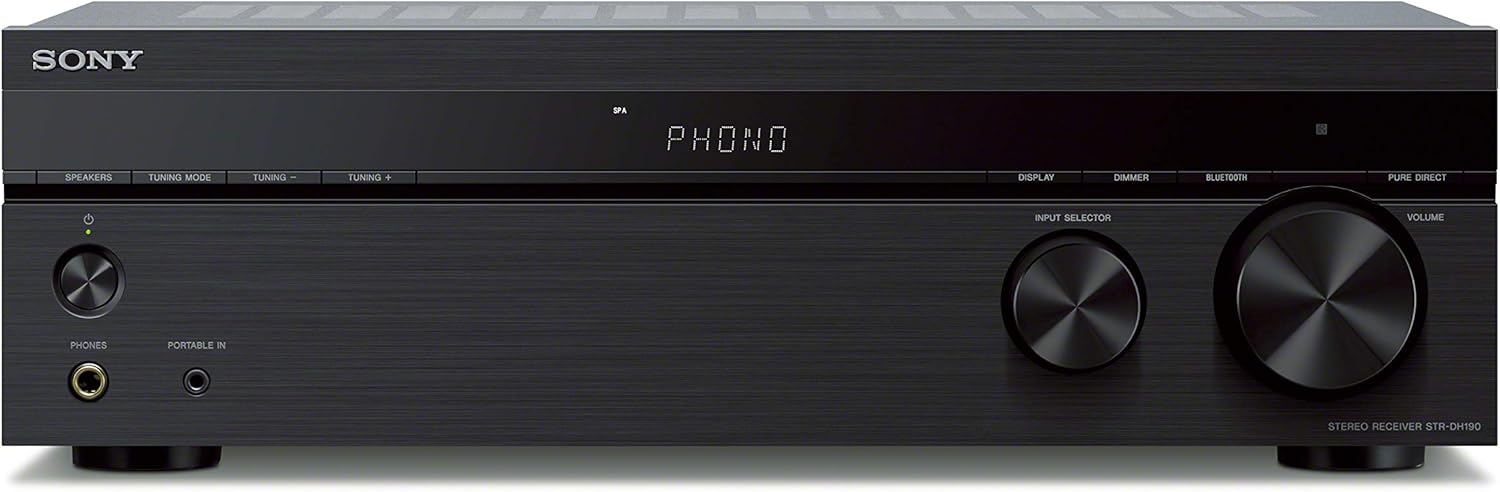 Sony STRDH190 2-Channel Home Stereo Receiver |
9.8/10 | View on Amazon.com |
| 32% OFF |
 Denon AVR-X1700H 7.2 Channel 8K AV Receiver |
9.8/10 | View on Amazon.com |
| 8% OFF |
 Yamaha RX300A 5.2-Channel AV Receiver with Dolby |
9.6/10 | View on Amazon.com |
 Sony STRDH590 5.2 Channel 4K HDR AV Receiver |
9.7/10 | View on Amazon.com | |
 Rockville BluTube WD 70W Bluetooth Tube Amplifier |
9.6/10 | View on Amazon.com |
Prices and discounts as of Nov 23, 2026 and may have changed. Check Amazon for the current price.
Pros
- Excellent sound clarity with balanced highs, mids, and bass across all input sources
- Phono input eliminates the need for a separate turntable preamp, saving money and desk space
- Bluetooth connection is quick to pair and remains stable during extended listening sessions
- Compact low-profile design fits standard AV furniture without any awkward modifications
- Highly rated by a large number of verified buyers, reflecting consistent real-world reliability
Cons
- Maximum volume output may feel limited for larger rooms or listeners who prefer concert-level loudness
- 2-channel stereo only, so it is not suitable for home theater surround sound setups
- No digital optical or coaxial inputs, which may frustrate users wanting to connect modern TVs or DACs directly
The Sony STRDH190 is a 2-channel home stereo receiver designed for music lovers who want a clean, capable hub for multiple audio sources. Whether you are spinning vinyl, streaming from a phone, or tuning into FM radio, this receiver handles it all in one compact unit. It is particularly well suited to first-time stereo system builders and returning audiophiles who value simplicity over complexity.
Sound performance is the STRDH190's strongest suit. With 100 watts per channel and Sony's large-capacity power transformer, the receiver delivers a composed, detailed soundstage with crisp highs and solid bass. Customer feedback consistently praises its clarity at moderate to high volumes, and High-Resolution Audio support means the unit can resolve fine details that compressed streaming formats often obscure.
The feature set is thoughtfully chosen for its target audience. The built-in phono preamp is a genuine convenience for turntable users, while Bluetooth pairing is described by owners as fast and reliable. The A/B speaker switching is a practical bonus, allowing two pairs of speakers to run simultaneously or independently for multi-room flexibility. A full-size headphone jack and 30-preset FM tuner round out the everyday usability.
On the design side, the STRDH190's low-profile chassis at just over 5 inches tall is a real-world advantage for anyone working with a standard AV cabinet. Build quality feels solid for the price point, and the included remote adds a layer of convenience that budget receivers often skip. The unit weighs 17 pounds, which speaks to the substantial internal components rather than hollow construction.
The main limitations are its 2-channel-only configuration, which rules it out for surround sound duties, and a lack of digital inputs for users wanting to connect a TV or external DAC. Volume headroom in very large rooms can also feel modest. That said, for a stereo-focused listener who values vinyl, Bluetooth, and clean audio in one tidy package, the STRDH190 is a genuinely impressive and well-rounded receiver.
Model: Sony STRDH190 | Color: Black | Channels: 2 (Stereo) | Output Power: 100W x 2 (8 ohms, 1 kHz) | Total Wattage: 200W
Speaker Impedance: 6 to 16 ohms | Inputs: Phono input, 4x stereo RCA, 3.5mm aux | Outputs: Stereo RCA, A/B speaker terminals, 1/4-inch headphone jack
Wireless: Bluetooth (2.4 GHz, max output 5.0 dBm) | FM Tuner: 30 station presets | Audio Format: WMA, High-Resolution Audio
Dimensions: 11"D x 17"W x 5.2"H | Weight: 17.1 lbs | Power: AC 120V, 60 Hz | Warranty: 1 year limited
In the Box: Receiver, remote control (RMT-AA400U), batteries, FM antenna | ASIN: B078WFDR8D | UPC: 027242908383
If you are shopping for your first stereo receiver, the STRDH190 is one of the most complete entry-level options available. It covers all the essential bases: Bluetooth streaming, FM radio, a phono stage for turntables, and enough inputs for a CD player, TV audio output, and more. You will not need to buy a separate phono preamp, which keeps your total system cost down.
Pairing advice: this receiver works best with bookshelf or floor-standing speakers rated between 6 and 16 ohms. Popular matches noted by owners include Yamaha bookshelf speakers and classic Bose 301s. For turntable users, Sony's own PS-LX310BT is a frequently recommended companion that integrates seamlessly with the STRDH190's phono input.
Consider your room size before purchasing. The 100-watt-per-channel rating is more than adequate for small to medium rooms, but listeners in large open-plan spaces who prefer very high volume levels may eventually want to step up to a higher-powered model. For most living rooms and dedicated listening spaces, however, the power on offer is genuinely sufficient.
This receiver is not the right choice if you need surround sound for a home theater setup, or if you want to connect a modern TV via optical or coaxial digital audio. For those use cases, a dedicated AV receiver would be a better fit. But as a pure stereo music receiver with broad source compatibility, the STRDH190 is hard to beat at its price point.
Pros
- Intuitive setup process with color-coded connections and an on-screen wizard that guides you step by step
- Exceptional audio performance with support for Dolby Atmos, DTS:X, and virtual height channels for cinema-grade immersion
- Versatile connectivity including phono input, eARC, 6 HDMI ports, Bluetooth, Wi-Fi, and AirPlay 2
- HEOS multi-room streaming and broad voice assistant support add serious smart home value
- Solid build quality and a compact form factor compared to older generation receivers
Cons
- The HEOS app and on-screen interface feel dated and can be clunky to navigate, especially for streaming configuration
- Older 4K TVs may experience compatibility issues with the advanced HDMI feature set, potentially requiring a TV upgrade
- Auto-calibration results may disappoint critical listeners, with some users preferring to manually tune speaker settings
The Denon AVR-X1700H is a 7.2 channel AV receiver aimed at home theater enthusiasts who want a powerful, future-ready centerpiece without spending on a flagship model. With 80 watts per channel, 8K HDMI support, and a rich suite of audio formats, it sits comfortably in the sweet spot between entry-level and premium receivers.
On the audio side, this receiver truly shines. Support for Dolby Atmos, DTS:X, DTS Virtual:X, and Dolby Atmos Height Virtualization means you can enjoy three-dimensional surround sound even in a room without dedicated overhead speakers. Real-world users consistently praise the theater-like experience it creates, particularly in 7.1.2 configurations with height channels.
Setup is one of the AVR-X1700H's strongest selling points. The color-coded rear panel, labeled speaker wire connections, and award-winning on-screen setup wizard make the installation process far less daunting than many competing receivers. Connectivity is equally impressive, offering six HDMI inputs, a phono input for turntables, AirPlay 2, Bluetooth, Wi-Fi, and dual subwoofer pre-outs, covering virtually every source a modern home theater might need.
The main drawback worth noting is the HEOS app and receiver interface, which several users describe as outdated and difficult to navigate. While the hardware performance is excellent, the software experience lags behind the overall quality of the unit. Additionally, users with older 4K televisions may encounter HDMI compatibility hurdles due to the advanced 8K HDMI specification.
Overall, the Denon AVR-X1700H delivers outstanding value for its class. It is a well-built, feature-rich receiver that performs reliably in real home theater environments. If you are upgrading from an older receiver or building a serious surround sound system for the first time, this Denon model is a highly recommended choice backed by strong user satisfaction.
Channels: 7.2 Channel | Power Output: 80W per channel | HDMI Ports: 6 In / 1 Out | Video Support: 8K/60Hz, 4K/120Hz, HDR10, HDR10+, Dolby Vision, HLG, H.264, H.265/HEVC
Audio Formats: Dolby Atmos, Dolby Atmos Height Virtualization, DTS:X, DTS Virtual:X | Wireless: Wi-Fi, Bluetooth, AirPlay 2 | Streaming: HEOS Built-in, Spotify, Amazon Music HD, TIDAL, Pandora, Deezer
Voice Control: Amazon Alexa, Google Assistant, Apple Siri, Josh.ai | Inputs: 2 Digital Optical, 2 Analog, 1 Coaxial, 1 Phono (MM/MC) | Pre-Outs: 2 Subwoofer Pre-Outs | eARC: Yes
Dimensions: 13.3"D x 17.1"W x 6"H | Weight: 19 lbs | Color: Black | Warranty: 3-Year Limited | Model: AVR-X1700H | UPC: 747192134600
If you are considering the Denon AVR-X1700H, it is best suited for buyers building or upgrading a dedicated home theater room with 5.1, 7.1, or 7.1.2 speaker configurations. It delivers the most value when paired with a modern 4K or 8K television that supports HDMI 2.1 features like VRR and ALLM, especially for gaming setups.
This receiver is an excellent fit for users who want multi-room audio capability without purchasing a separate streaming device. The HEOS ecosystem allows you to expand audio to other HEOS-compatible speakers throughout your home, making it a smart long-term investment for whole-home audio enthusiasts.
Vinyl listeners will appreciate the built-in phono stage, which supports both moving magnet and moving coil cartridges, though note that only one type can be used at a time. If you own a turntable and want to integrate it into a modern AV setup, this feature alone sets the AVR-X1700H apart from many competitors at this price point.
Buyers with older 4K televisions should verify HDMI compatibility before purchasing, as the advanced HDMI 2.1 feature set can occasionally cause handshake issues with legacy displays. If you are comfortable with manual speaker calibration, you may also want to plan to fine-tune the auto-calibration results for the best possible audio performance.
Pros
- Comprehensive Dolby Atmos and DTS Virtual:X support delivers genuinely immersive surround sound at this price range
- Next-gen HDMI features including 4K/120, 8K/60, ALLM, and VRR make it an ideal companion for modern gaming consoles
- Bluetooth Multipoint is a rare and highly convenient feature that simplifies switching between a phone and a tablet or laptop
- Automatic Room Correction with an included microphone takes the guesswork out of speaker calibration
- Intuitive Quick Guide and on-screen setup menu make installation approachable even for first-time AV receiver owners
Cons
- With only one HDMI output, users with multiple display devices such as a TV and projector will need additional switching equipment
- At 70 watts per channel, the power output may fall short for larger rooms or for driving demanding, low-sensitivity speakers to high volumes
- No built-in Wi-Fi or streaming app support means music playback is limited to Bluetooth only, lacking the flexibility of network streaming
The Yamaha RX300A is a 5.2-channel AV receiver aimed squarely at home theater enthusiasts who want modern features without paying flagship prices. Priced accessibly and backed by Yamaha's long-standing reputation in audio, this receiver is ideal for living room setups pairing a 4K TV or projector with a surround sound speaker system, and it is equally suited to gamers who demand low-latency video performance.
The headline features are genuinely impressive for this tier. Dolby Atmos and DTS Virtual:X support enables three-dimensional audio that adds height and depth to movie soundtracks, while the 4K/120 and 8K/60 HDMI passthrough with ALLM and VRR support makes this receiver a strong match for PlayStation 5 and Xbox Series X owners. The inclusion of Dolby Vision and HDR10+ ensures that the picture quality from your source devices is passed through without compromise.
Bluetooth Multipoint is a standout convenience feature that allows two devices to remain paired at once, so switching from a smartphone playlist to a laptop stream requires no re-pairing. The automatic room correction system, which uses the included setup microphone, does a commendable job optimizing speaker levels and distances for the specific acoustics of your room. Scene buttons add further everyday usability by letting you save preferred input and sound mode combinations for instant recall.
There are a few limitations worth noting. The single HDMI output restricts users who want to feed both a TV and a projector simultaneously. The 70-watt-per-channel power rating is adequate for most medium-sized rooms but may leave larger spaces or power-hungry speakers sounding underpowered at high volumes. The absence of Wi-Fi and network streaming also means users who rely on services like Spotify Connect or AirPlay will need to use Bluetooth as their only wireless audio path.
Overall, the Yamaha RX300A delivers a well-rounded package that punches above its weight in features and audio quality. For anyone building or upgrading a home theater system on a sensible budget, it offers a compelling combination of immersive audio, next-gen video, and everyday convenience that is hard to match at this price point.
Channels: 5.2-channel configuration with support for 3.1.2-channel Dolby Atmos layouts using up-firing or in-ceiling height speakers.
Power Output: 70 watts per channel, suitable for small to medium-sized home theater rooms with standard sensitivity speakers.
HDMI: 4 HDMI inputs and 1 HDMI output, supporting 4K/120Hz and 8K/60Hz passthrough, ALLM, VRR, eARC/ARC, Dolby Vision, and HDR10+.
Audio Formats: Dolby Atmos, DTS Virtual:X, Dolby TrueHD, and a range of selectable sound modes for music, movies, and games.
Connectivity: Bluetooth (Multipoint), HDMI, optical, coaxial, and analog inputs. No built-in Wi-Fi or Ethernet.
Dimensions and Weight: 12.5 inches deep, 17.13 inches wide, 6.13 inches tall, weighing 16.8 pounds. Includes remote control, setup microphone, FM antenna, and AAA batteries.
Warranty: 2-year limited manufacturer warranty from Yamaha.
Who should buy the Yamaha RX300A? This receiver is a strong fit for first-time home theater builders and upgraders who want a modern, feature-rich AV receiver without overspending. If your setup includes a 4K TV, a gaming console, and a 5.1 or 5.2 speaker system, this unit covers all the bases confidently.
Gamers: The support for 4K/120Hz, ALLM (Auto Low Latency Mode), and VRR (Variable Refresh Rate) makes the RX300A a genuinely game-ready receiver. Connecting a PlayStation 5 or Xbox Series X will unlock these features automatically, reducing input lag and enabling smooth frame rates.
Atmos enthusiasts on a budget: If you want to experience Dolby Atmos without investing in a high-end receiver, the RX300A supports up-firing Atmos speakers or in-ceiling height channels in a 3.1.2 configuration. This is a practical entry point into three-dimensional audio at a reasonable cost.
What to consider before buying: If you need Wi-Fi streaming, multi-zone audio, or more than one HDMI output, you may want to look at higher-tier Yamaha models or competing brands. Similarly, if your room is large or your speakers have low sensitivity ratings, you may want a receiver with higher wattage to ensure sufficient headroom at louder listening levels.
Accessories to consider: A set of Dolby Atmos-enabled up-firing speaker modules or in-ceiling height speakers will unlock the full potential of this receiver's immersive audio capabilities. Pairing it with a quality subwoofer will also significantly enhance the low-frequency performance for movies and music.
Pros
- Generous 725W power output supports large rooms and demanding speaker configurations
- 4K HDR and HDCP 2.2 support keeps the receiver compatible with the latest TVs and streaming devices
- Bluetooth Standby mode adds modern convenience for wireless music streaming
- S-Force PRO virtual surround works well for users who cannot accommodate a full 5-speaker layout
- Multiple input options including 4 HDMI, 4 RCA stereo, and digital audio inputs offer broad device compatibility
Cons
- No built-in Wi-Fi or network streaming limits smart home integration compared to higher-end receivers
- THD of 0.9% at rated power is higher than audiophile-grade receivers, which may concern critical listeners
- Pandora is the only supported internet streaming service, which feels limited for modern users
The Sony STR-DH590 is a 5.2 channel AV receiver designed for home theater enthusiasts who want powerful, cinematic sound without the complexity or cost of high-end separates. At 725 watts total output and priced in the mid-range segment, it targets upgraders moving from a basic soundbar or entry-level receiver to a full surround sound system.
The standout feature of this receiver is its combination of 4K HDR passthrough with HDCP 2.2 support, ensuring it remains compatible with the latest Ultra HD content from streaming services and Blu-ray players. Bluetooth connectivity adds everyday convenience, and the Standby mode means you can power on the unit and start playing music directly from your phone without touching a remote. Sony's S-Force PRO virtual surround is a practical bonus for those who cannot place rear speakers, delivering a convincing wide soundstage from just two speakers.
Build quality is consistent with Sony's mid-range lineup, featuring a clean black chassis measuring 17 inches wide and weighing a solid 17.1 pounds. The front panel includes a quarter-inch headphone jack, which is a welcome touch for late-night listening. The layout is straightforward, and the included remote keeps day-to-day operation simple and accessible.
On the downside, the absence of Wi-Fi and multi-room audio support means this receiver cannot compete with network-connected alternatives from Denon or Yamaha at a similar price point. The 0.9% THD rating, while acceptable for most listeners, falls short of what dedicated audiophiles might prefer. Streaming service support is also limited to Pandora, which feels dated compared to competitors offering Spotify Connect or Tidal integration.
Overall, the Sony STR-DH590 is a compelling choice for anyone building or upgrading a 5.1 or 5.2 home theater system on a reasonable budget. It delivers reliable power, solid 4K video handling, and convenient Bluetooth use in a no-fuss package. If you do not need Wi-Fi streaming or advanced room correction, this receiver punches well above its weight class.
Model: Sony STR-DH590 | Channels: 5.2 | Total Output Power: 725W | Impedance: 6 ohms | THD: 0.9% at 1kHz
HDMI: 4 inputs / 1 output with ARC | HDCP: 2.2 | Video Support: 4K HDR, H.264, H.265/HEVC | Audio Inputs: 4x Stereo RCA | Digital Outputs: 1x Optical, 1x Coaxial
Wireless: Bluetooth 2.4GHz | Special Audio: 360 Reality Audio, High-Resolution Audio | Tuner: FM Radio | Headphone: 1/4 inch jack | Streaming: Pandora
Dimensions: 11.75"D x 17"W x 5.25"H | Weight: 17.1 lbs | Color: Black | Power: AC 120V 60Hz / AC 230V 50Hz | Warranty: 1 Year Limited
If you are shopping for your first true surround sound receiver, the Sony STR-DH590 is one of the most accessible entry points into 5.2 channel audio. It pairs well with any passive bookshelf or floor-standing speakers rated at 6 ohms or higher, and the 725W total power means it can comfortably drive a mid-sized living room without strain.
For buyers who primarily stream music wirelessly, note that this receiver uses Bluetooth rather than Wi-Fi. This means you will need to keep your phone or tablet nearby for streaming, and multi-room audio setups are not supported. If whole-home audio or voice assistant integration is a priority, consider stepping up to a Wi-Fi enabled receiver such as the Sony STR-DN1080 or a comparable Denon AVR model.
The four HDMI inputs make this receiver a strong hub for households with multiple devices such as a gaming console, streaming stick, Blu-ray player, and cable box all connected simultaneously. The 4K HDR and HDCP 2.2 support ensures compatibility with modern 4K televisions and protected content, so you will not need to upgrade the receiver when you upgrade your TV.
Budget-conscious buyers who want to start with a 2.0 or 3.1 speaker setup can still benefit from this receiver today and expand to a full 5.2 configuration over time. The S-Force PRO virtual surround mode bridges the gap in the meantime, making the STR-DH590 a practical long-term investment for growing home theater systems.
Pros
- Exceptional sound quality for the price, with tube warmth that outperforms comparably-priced solid-state receivers
- Multiple connectivity options handle virtually any audio source, from streaming devices to vinyl turntables
- Compact footprint and attractive retro design make it perfect for small spaces and modern listening rooms
- Real-time VU meter and dual-band EQ give users precise control over their audio experience
- Subwoofer output and headphone jack expand versatility for different listening scenarios
Cons
- 70W rating may feel underpowered for large rooms or demanding speaker systems requiring higher output
- Bluetooth range of 33 feet is adequate but shorter than some newer wireless standards
- Tube amplifiers require periodic maintenance and eventual tube replacement, adding long-term ownership costs
The Rockville BluTube WD is a hybrid tube amplifier and stereo receiver designed for audio enthusiasts who value warm, detailed sound quality over raw power. This compact unit bridges the gap between vintage tube aesthetics and modern connectivity needs, making it ideal for music lovers, vinyl collectors, and gamers seeking an upgrade from standard receivers or powered speakers.
The standout feature is its vacuum tube amplification architecture, which delivers 25W x 2 RMS at 8 ohms or 35W x 2 RMS at 4 ohms with impressively low distortion at just 0.02% THD. Users consistently report that the sound feels more powerful than the wattage suggests, thanks to efficient tube design that produces warm, natural tones without harsh digital artifacts. The 22Hz-20kHz frequency response covers the full audible spectrum, while the 2-band equalizer and VU meter provide real-time feedback for precise sound tuning across different room conditions.
Build quality reflects its retro-inspired design with a striking 2-tone silver and wood finish that complements both modern and vintage decor. The compact dimensions (10.6" x 10.2" x 5.1") and lightweight 6.6 lb construction make it suitable for desktops, shelving, or dedicated audio setups. Connectivity is comprehensive, featuring Bluetooth 2.1+EDR with 33-foot range, HDMI, optical, coaxial, USB, and RCA inputs, plus a subwoofer output and headphone jack for flexible configuration.
The main limitation is power output, which may struggle with demanding speakers or large rooms. Tube amplifiers also require occasional maintenance and eventual tube replacement, representing additional long-term costs beyond the initial purchase. The 1-year warranty provides basic coverage but reflects the budget positioning of this product.
The Rockville BluTube WD represents exceptional value for audio enthusiasts prioritizing sound quality and aesthetics over maximum wattage. It excels as a bedroom receiver, gaming setup amplifier, or vinyl turntable hub, delivering the warm, musical character that draws many listeners to tube amplification in the first place.
Power Output: 25W x 2 RMS at 8 ohms, 35W x 2 RMS at 4 ohms, 70W total
Frequency Response: 22Hz to 20kHz
THD (Total Harmonic Distortion): 0.02% or less
Signal-to-Noise Ratio: 86dB
Input Sensitivity: 300mV
Input Impedance: 47kO
Connectivity: Bluetooth 2.1+EDR (33-foot range), HDMI (1 port), Optical, Coaxial, USB, RCA (including Tiffany input), Headphone output, Subwoofer output
Audio Formats Supported: WAV, MP3, WMA, APE, FLAC
Dimensions: 10.6"W x 10.2"D x 5.1"H
Weight: 6.6 lbs
Warranty: 1 Year
Who Should Buy This: The Rockville BluTube WD is perfect for music enthusiasts, vinyl collectors, PC gamers, and anyone seeking warm, detailed audio in a compact package. It works exceptionally well as a bedroom receiver, desktop amplifier, or turntable hub. Best suited for listeners in small to medium rooms who prioritize sound quality and aesthetic appeal over maximum volume.
Who Should Look Elsewhere: If you need high-power output for large rooms or demanding speaker systems, consider higher-wattage amplifiers. Users requiring wireless convenience should note the 33-foot Bluetooth range may be limiting in very large spaces. Those wanting the latest audio technologies should explore receivers with newer wireless standards.
Room Size Considerations: This amplifier performs best in rooms up to 300-400 square feet. Larger spaces may benefit from higher-wattage alternatives or additional subwoofer support to maintain dynamic range.
Speaker Pairing Tips: Pair with efficient speakers (88dB or higher sensitivity) to maximize output. The subwoofer output allows adding a powered subwoofer to enhance bass response without upgrading the main amplifier.
How to Choose Your Receiver
Headphone Jack Type and Quality
The headphone output itself deserves your attention. Look for a full-size 1/4-inch jack, often found on higher-fidelity models like the Sony STRDH190, as it typically provides a more robust connection and can drive a wider range of headphones. Some units may only offer a smaller 3.5mm port. The amplifier circuitry dedicated to the headphone output also varies, influencing the clarity and power delivered to your headphones.
A superior headphone stage ensures your private listening session matches the quality of your speaker experience. It prevents the audio from sounding thin or compressed. For those exploring extensive setups, understanding this can complement your search for the best Multi-Channel AV receivers, as many high-end models include premium headphone components.
Audio Channels and Surround Support
Your choice between a stereo receiver and a multi-channel AV receiver hinges on your listening goals. Stereo models, like the Pyle 200W amplifier, are perfect for dedicated music listening in two channels. For cinematic immersion with formats like Dolby Atmos, a 5.2 or 7.2 channel receiver such as the Denon AVR-X1700H is essential. These can downmix complex surround soundtracks for a compelling headphone experience.
This downmixing capability is crucial. It ensures that when you plug in headphones, you still sense the directionality and depth of a movie’s audio mix. If your ambition is a no-compromise home theater, reviewing the best flagship AV receivers can reveal models with advanced headphone surround processing.
Connectivity and Source Flexibility
Modern listening involves multiple sources. Ensure your receiver has the inputs you need, such as HDMI for TVs and gaming consoles, phono for turntables, and Bluetooth for wireless streaming. The Yamaha RX300A offers a great blend of next-gen HDMI and Bluetooth Multipoint. A variety of inputs means you can easily switch between your vinyl collection, streaming service, and movie night without reconnecting cables.
This flexibility extends the usefulness of your investment. A receiver that can handle everything from a classic CD player to a modern streaming stick becomes the true hub of your entertainment. For powerful systems that manage numerous sources, consider options listed among the best heavy duty AV receivers.
Power Output and Speaker Compatibility
While headphone use is a priority, the amplifier’s power rating for speakers remains important for when you do want to fill the room. Power is measured in watts per channel and should match your speakers’ impedance and sensitivity. A model like the Donner 5.2Channel receiver provides robust power for a full surround setup. Adequate power ensures dynamic, distortion-free audio whether through speakers or headphones.
Choosing a receiver with ample power headroom protects your speakers and improves sound quality at all volume levels. It also future-proofs your system if you decide to upgrade to more demanding speakers later. You can explore more about system integration in our main AV Receivers category.
Final Thoughts
Selecting the right AV receiver with a headphone output fundamentally enhances how you enjoy audio, granting you the freedom for private, high-fidelity listening without sacrificing performance for shared moments. For audiophiles seeking pristine stereo sound and a classic phono input, the Sony STRDH190 2-ch Home Stereo Receiver with Phono is an outstanding choice. If your goal is a future-proof home theater centerpiece with immersive 3D audio and advanced connectivity, the Denon AVR-X1700H 7.2 Channel AV Receiver delivers exceptional versatility and power for both speakers and headphones.
Frequently Asked Questions
Can I get true surround sound through headphones from an AV receiver?
Yes, many modern AV receivers feature advanced audio processing that can downmix multi-channel surround sound formats like Dolby Atmos or DTS:X for headphones. This creates a virtual surround sound experience, simulating speaker placement and directionality directly in your ears, which is ideal for private movie viewing.
What is the advantage of a full 1/4-inch headphone jack over a 3.5mm port?
A 1/4-inch jack, often found on higher-end audio equipment, provides a more secure physical connection and is commonly associated with a more powerful, dedicated headphone amplifier circuit. This can better drive high-impedance audiophile headphones, resulting in improved dynamic range and clarity compared to a standard 3.5mm output.
Do all AV receivers have a headphone output?
No, not all models include this feature. It is common in many stereo and mid-range home theater receivers, but some ultra-compact or budget-focused models may omit it to save space or cost. Always verify the front panel specifications or feature list before purchasing if private listening is a priority for you.
How do I control the volume when using headphones with an AV receiver?
The volume for the headphone output is almost always controlled by the receiver’s main master volume knob or remote control. It typically overrides the speaker output, muting your main speakers when headphones are plugged in. Some advanced models with web-based control, which you can learn about in our guide to the best AV receivers with web interface, may also allow for separate headphone volume presets.




Write Your Review
No reviews yet. Be the first to share your experience!