

You have invested in a premium television and a collection of high-quality speakers, but the sound still lacks the cinematic punch and immersive detail you crave. The heart of your home theater system, the AV receiver, is what unlocks the full potential of your gear. Choosing the right flagship model can feel overwhelming with so many specifications and features to consider.
This guide is crafted for the discerning home theater enthusiast seeking a centerpiece component that delivers both raw power and nuanced audio fidelity. We have assessed a curated selection of the market’s leading AV receivers, focusing on their capabilities for object-based audio, video processing, and system integration. Our goal is to help you navigate the options to find a receiver that transforms your viewing and listening experience. For those considering more specialized configurations, you might explore our guide on the best modular AV receivers.

Pros
- Exceptional sound quality with meticulous Japanese tuning that excels at both home theater and music playback
- Massive 140W per channel power handles complex soundtracks with clarity and precision across all channels
- Comprehensive immersive audio format support including Dolby Atmos, DTS:X Pro, and Auro-3D
- Extensive connectivity with seven 8K HDMI inputs, analog, digital, and phono options for maximum flexibility
- Intelligent room calibration technology adapts performance to your unique acoustic environment
Cons
- Full 11.4 channel configuration requires significant speaker setup and room space to maximize capabilities
- Learning curve for advanced features and calibration may require time investment for optimal results
The Marantz Cinema 30 is a flagship 11.4-channel AV receiver engineered for discerning home theater enthusiasts and audiophiles who refuse to compromise on sound quality. With 140W per channel and 1,540W total output, this reference-level component delivers the power and precision needed to drive complex speaker configurations while maintaining sonic integrity across all channels. It's designed for those building serious dedicated home theater systems or high-end two-channel music setups who want a single component to handle everything with grace.
What truly sets the Cinema 30 apart is its meticulous tuning at Shirakawa Audio Works in Japan, combined with comprehensive support for modern immersive audio formats. The receiver handles Dolby Atmos, DTS:X Pro, and Auro-3D with equal expertise, placing listeners at the center of three-dimensional soundscapes that bring every scene to life. Real-world users report phenomenal accuracy in soundtrack presentation, with the receiver demonstrating equal prowess in both quiet, nuanced moments and dynamic action sequences. The improved Audyssey MultEQ XT32 room calibration software ensures optimal performance tailored to your specific acoustic environment.
Construction quality reflects the premium positioning, with elegant steel and aluminum casework that looks as refined as it sounds. The extensive connectivity suite includes seven 8K-compatible HDMI inputs, analog, digital, and phono connections, welcoming virtually any source into your entertainment system. HEOS integration enables streaming of high-resolution audio from leading services including Spotify, TIDAL, and Amazon Music HD, while voice control via Google Assistant and Amazon Alexa adds modern convenience to this traditionally manual component.
The primary consideration is the substantial investment required, making this a decision for serious enthusiasts rather than casual listeners. Additionally, maximizing the 11.4-channel configuration demands significant speaker investment and room space. The advanced feature set also benefits from taking time to properly calibrate and learn the system for optimal results.
The Marantz Cinema 30 delivers reference-level performance that justifies its flagship positioning. It competes with high-end separates at a fraction of the cost while providing the finish, feature depth, and sonic quality that serious home theater builders and music lovers seek. This receiver belongs on the audition list for anyone building a premium audio system.
Audio Performance: 11.4 channels, 140W per channel, 1,540W total output, Surround sound with 13.4 channel configuration support
Connectivity: 7 HDMI inputs (8K-compatible), 10 total HDMI ports, Bluetooth wireless technology, Analog, digital, and phono connections
Audio Formats: Dolby Atmos, DTS:X Pro, Auro-3D, WAV format support
Smart Features: HEOS multiroom streaming, Google Assistant, Amazon Alexa voice control, Spotify compatibility
Calibration: Audyssey MultEQ XT32, optional Dirac Live room correction
Design: Steel and aluminum casework, black color
Model: CINEMA30, UPC: 747192140434
Who Should Buy: This receiver is ideal for dedicated home theater enthusiasts, serious music listeners, and those building premium audio systems who prioritize sound quality above all else. It works best in rooms where a full 11.4-channel configuration can be properly implemented, and for users who appreciate Japanese audio engineering and meticulous tuning.
Who Should Consider Alternatives: Budget-conscious buyers or those with limited speaker setup needs should explore more affordable options. Casual viewers who primarily stream content without audiophile aspirations may not justify the premium investment. Those seeking simpler interfaces or plug-and-play solutions might find the advanced feature set overwhelming.
Setup Considerations: Plan for adequate speaker placement to utilize all 11.4 channels effectively. Allow time to run the Audyssey calibration software and consider optional Dirac Live calibration for even more precise room optimization. Ensure your room acoustics are reasonably treated for best results. The extensive HDMI and analog connectivity accommodates complex source chains, so plan your equipment layout accordingly.
Value Assessment: At its premium price point, the Cinema 30 competes with high-end separates while offering convenience of an integrated solution. The value proposition strengthens if you plan to use it as the centerpiece of a serious home theater or music system for many years, and if you appreciate the Marantz sound signature and Japanese craftsmanship.
Pros
- Excellent sound clarity with balanced highs, mids, and bass across all input sources
- Phono input eliminates the need for a separate turntable preamp, saving money and desk space
- Bluetooth connection is quick to pair and remains stable during extended listening sessions
- Compact low-profile design fits standard AV furniture without any awkward modifications
- Highly rated by a large number of verified buyers, reflecting consistent real-world reliability
Cons
- Maximum volume output may feel limited for larger rooms or listeners who prefer concert-level loudness
- 2-channel stereo only, so it is not suitable for home theater surround sound setups
- No digital optical or coaxial inputs, which may frustrate users wanting to connect modern TVs or DACs directly
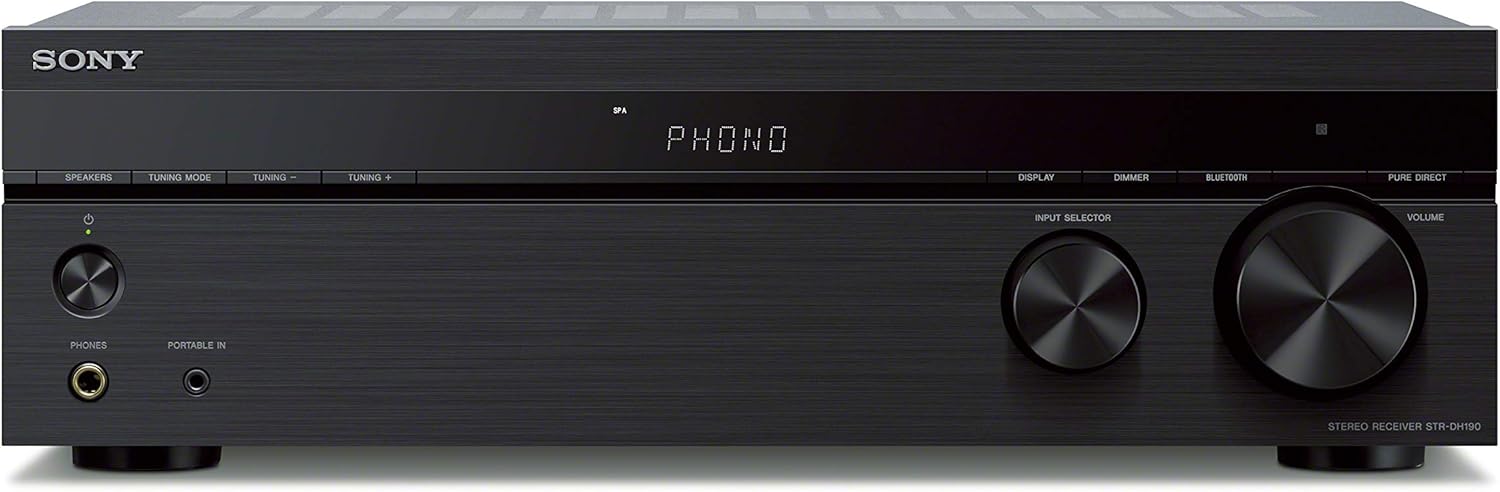
The Sony STRDH190 is a 2-channel home stereo receiver designed for music lovers who want a clean, capable hub for multiple audio sources. Whether you are spinning vinyl, streaming from a phone, or tuning into FM radio, this receiver handles it all in one compact unit. It is particularly well suited to first-time stereo system builders and returning audiophiles who value simplicity over complexity.
Sound performance is the STRDH190's strongest suit. With 100 watts per channel and Sony's large-capacity power transformer, the receiver delivers a composed, detailed soundstage with crisp highs and solid bass. Customer feedback consistently praises its clarity at moderate to high volumes, and High-Resolution Audio support means the unit can resolve fine details that compressed streaming formats often obscure.
The feature set is thoughtfully chosen for its target audience. The built-in phono preamp is a genuine convenience for turntable users, while Bluetooth pairing is described by owners as fast and reliable. The A/B speaker switching is a practical bonus, allowing two pairs of speakers to run simultaneously or independently for multi-room flexibility. A full-size headphone jack and 30-preset FM tuner round out the everyday usability.
On the design side, the STRDH190's low-profile chassis at just over 5 inches tall is a real-world advantage for anyone working with a standard AV cabinet. Build quality feels solid for the price point, and the included remote adds a layer of convenience that budget receivers often skip. The unit weighs 17 pounds, which speaks to the substantial internal components rather than hollow construction.
The main limitations are its 2-channel-only configuration, which rules it out for surround sound duties, and a lack of digital inputs for users wanting to connect a TV or external DAC. Volume headroom in very large rooms can also feel modest. That said, for a stereo-focused listener who values vinyl, Bluetooth, and clean audio in one tidy package, the STRDH190 is a genuinely impressive and well-rounded receiver.
Model: Sony STRDH190 | Color: Black | Channels: 2 (Stereo) | Output Power: 100W x 2 (8 ohms, 1 kHz) | Total Wattage: 200W
Speaker Impedance: 6 to 16 ohms | Inputs: Phono input, 4x stereo RCA, 3.5mm aux | Outputs: Stereo RCA, A/B speaker terminals, 1/4-inch headphone jack
Wireless: Bluetooth (2.4 GHz, max output 5.0 dBm) | FM Tuner: 30 station presets | Audio Format: WMA, High-Resolution Audio
Dimensions: 11"D x 17"W x 5.2"H | Weight: 17.1 lbs | Power: AC 120V, 60 Hz | Warranty: 1 year limited
In the Box: Receiver, remote control (RMT-AA400U), batteries, FM antenna | ASIN: B078WFDR8D | UPC: 027242908383
If you are shopping for your first stereo receiver, the STRDH190 is one of the most complete entry-level options available. It covers all the essential bases: Bluetooth streaming, FM radio, a phono stage for turntables, and enough inputs for a CD player, TV audio output, and more. You will not need to buy a separate phono preamp, which keeps your total system cost down.
Pairing advice: this receiver works best with bookshelf or floor-standing speakers rated between 6 and 16 ohms. Popular matches noted by owners include Yamaha bookshelf speakers and classic Bose 301s. For turntable users, Sony's own PS-LX310BT is a frequently recommended companion that integrates seamlessly with the STRDH190's phono input.
Consider your room size before purchasing. The 100-watt-per-channel rating is more than adequate for small to medium rooms, but listeners in large open-plan spaces who prefer very high volume levels may eventually want to step up to a higher-powered model. For most living rooms and dedicated listening spaces, however, the power on offer is genuinely sufficient.
This receiver is not the right choice if you need surround sound for a home theater setup, or if you want to connect a modern TV via optical or coaxial digital audio. For those use cases, a dedicated AV receiver would be a better fit. But as a pure stereo music receiver with broad source compatibility, the STRDH190 is hard to beat at its price point.

Pros
- Intuitive setup process with color-coded connections and an on-screen wizard that guides you step by step
- Exceptional audio performance with support for Dolby Atmos, DTS:X, and virtual height channels for cinema-grade immersion
- Versatile connectivity including phono input, eARC, 6 HDMI ports, Bluetooth, Wi-Fi, and AirPlay 2
- HEOS multi-room streaming and broad voice assistant support add serious smart home value
- Solid build quality and a compact form factor compared to older generation receivers
Cons
- The HEOS app and on-screen interface feel dated and can be clunky to navigate, especially for streaming configuration
- Older 4K TVs may experience compatibility issues with the advanced HDMI feature set, potentially requiring a TV upgrade
- Auto-calibration results may disappoint critical listeners, with some users preferring to manually tune speaker settings
The Denon AVR-X1700H is a 7.2 channel AV receiver aimed at home theater enthusiasts who want a powerful, future-ready centerpiece without spending on a flagship model. With 80 watts per channel, 8K HDMI support, and a rich suite of audio formats, it sits comfortably in the sweet spot between entry-level and premium receivers.
On the audio side, this receiver truly shines. Support for Dolby Atmos, DTS:X, DTS Virtual:X, and Dolby Atmos Height Virtualization means you can enjoy three-dimensional surround sound even in a room without dedicated overhead speakers. Real-world users consistently praise the theater-like experience it creates, particularly in 7.1.2 configurations with height channels.
Setup is one of the AVR-X1700H's strongest selling points. The color-coded rear panel, labeled speaker wire connections, and award-winning on-screen setup wizard make the installation process far less daunting than many competing receivers. Connectivity is equally impressive, offering six HDMI inputs, a phono input for turntables, AirPlay 2, Bluetooth, Wi-Fi, and dual subwoofer pre-outs, covering virtually every source a modern home theater might need.
The main drawback worth noting is the HEOS app and receiver interface, which several users describe as outdated and difficult to navigate. While the hardware performance is excellent, the software experience lags behind the overall quality of the unit. Additionally, users with older 4K televisions may encounter HDMI compatibility hurdles due to the advanced 8K HDMI specification.
Overall, the Denon AVR-X1700H delivers outstanding value for its class. It is a well-built, feature-rich receiver that performs reliably in real home theater environments. If you are upgrading from an older receiver or building a serious surround sound system for the first time, this Denon model is a highly recommended choice backed by strong user satisfaction.
Channels: 7.2 Channel | Power Output: 80W per channel | HDMI Ports: 6 In / 1 Out | Video Support: 8K/60Hz, 4K/120Hz, HDR10, HDR10+, Dolby Vision, HLG, H.264, H.265/HEVC
Audio Formats: Dolby Atmos, Dolby Atmos Height Virtualization, DTS:X, DTS Virtual:X | Wireless: Wi-Fi, Bluetooth, AirPlay 2 | Streaming: HEOS Built-in, Spotify, Amazon Music HD, TIDAL, Pandora, Deezer
Voice Control: Amazon Alexa, Google Assistant, Apple Siri, Josh.ai | Inputs: 2 Digital Optical, 2 Analog, 1 Coaxial, 1 Phono (MM/MC) | Pre-Outs: 2 Subwoofer Pre-Outs | eARC: Yes
Dimensions: 13.3"D x 17.1"W x 6"H | Weight: 19 lbs | Color: Black | Warranty: 3-Year Limited | Model: AVR-X1700H | UPC: 747192134600
If you are considering the Denon AVR-X1700H, it is best suited for buyers building or upgrading a dedicated home theater room with 5.1, 7.1, or 7.1.2 speaker configurations. It delivers the most value when paired with a modern 4K or 8K television that supports HDMI 2.1 features like VRR and ALLM, especially for gaming setups.
This receiver is an excellent fit for users who want multi-room audio capability without purchasing a separate streaming device. The HEOS ecosystem allows you to expand audio to other HEOS-compatible speakers throughout your home, making it a smart long-term investment for whole-home audio enthusiasts.
Vinyl listeners will appreciate the built-in phono stage, which supports both moving magnet and moving coil cartridges, though note that only one type can be used at a time. If you own a turntable and want to integrate it into a modern AV setup, this feature alone sets the AVR-X1700H apart from many competitors at this price point.
Buyers with older 4K televisions should verify HDMI compatibility before purchasing, as the advanced HDMI 2.1 feature set can occasionally cause handshake issues with legacy displays. If you are comfortable with manual speaker calibration, you may also want to plan to fine-tune the auto-calibration results for the best possible audio performance.

Pros
- Exceptional audio quality with warm, enveloping sound signature praised by owners and reviewers
- Robust 100W per channel power handles demanding speaker loads without distortion
- Comprehensive 8K video support with three compatible HDMI inputs future-proofs your investment
- Intelligent room calibration microphone included, making setup straightforward for most users
- Extensive streaming capabilities via HEOS support major music services in high resolution
Cons
- Premium price point may exceed budgets for casual home theater users or smaller rooms
- Complex feature set and firmware updates require some technical patience during initial setup
- Some advanced features remain locked until Audyssey room correction process is completed
The Marantz Cinema 60 is a flagship 7.2-channel AV receiver engineered for serious home theater enthusiasts who demand both sonic excellence and cutting-edge video technology. With 100 watts per channel and hand-tuned sound at Marantz's Tokyo facility, this receiver delivers the warm, immersive audio signature the brand is known for. It's designed for larger rooms and demanding speaker systems that require genuine amplification power.
The standout feature is the combination of Dolby Atmos and DTS:X immersive audio with room-perfecting Audyssey MultEQ XT calibration, which measures your specific space and tailors the sound accordingly. Users consistently praise the clarity of dialogue, the precision of spatial effects, and the overall musicality of the presentation. The receiver includes three 8K-compatible HDMI inputs alongside full support for HDR10+, Dolby Vision, and variable refresh rate gaming, making it future-proof for next-generation content and gaming consoles.
Build quality reflects the premium positioning with symmetrical, elegantly proportioned design using quality materials. The included Audyssey microphone and remote control are thoughtfully designed, and the user interface, while feature-rich, becomes intuitive after the initial setup phase. HEOS streaming integration lets you access Spotify, TIDAL, and Amazon Music HD throughout your home with multi-room audio capabilities.
The main drawback is the learning curve during setup, particularly with sequential firmware updates that must be installed in order. Additionally, this level of power and features comes at a significant investment, making it less suitable for casual listeners or compact rooms where a smaller receiver would suffice. Some features require completion of the room correction process before they become available.
The Marantz Cinema 60 represents a thoughtful investment for dedicated home theater builders who value audio fidelity, modern video standards, and long-term reliability. Its combination of legendary Marantz sound engineering, robust amplification, and comprehensive connectivity options makes it an excellent foundation for demanding entertainment systems.
Audio Performance: 7.2 channels, 100 watts per channel, Dolby Atmos, DTS:X, Dolby Height Virtualization, DTS Virtual:X support
Video Connectivity: 8 HDMI ports total (6 inputs, 2 outputs), 3 inputs with 8K pass-through, supports HDR10+, HDR10, Dolby Vision, HLG, VRR, ALLM, QFT
Wireless & Streaming: HEOS, Wi-Fi, Bluetooth, AirPlay, Apple HomeKit compatible, Spotify, Pandora, TuneIn, Amazon Music HD, TIDAL
Calibration: Audyssey MultEQ XT with included measurement microphone and stand
Physical: 21.65 inches wide, 17.32 inches deep, 11.81 inches high, black finish
Warranty: 5-year manufacturer coverage
Who Should Buy: Home theater enthusiasts with larger rooms, multiple high-performance speakers, and a commitment to quality audio and video. Ideal for those upgrading from older receivers or building a new dedicated theater space. Perfect for gamers seeking low-latency performance with 4K/8K support.
Who Should Consider Alternatives: Budget-conscious buyers, apartment dwellers with space constraints, or those needing only basic surround sound. If you have a smaller room or use only 5.1 channels, a more compact receiver may offer better value.
Setup Tips: Use the included Audyssey microphone for automatic calibration rather than manual settings. Check for firmware updates in sequence during initial setup. Allow time to explore the HEOS app for full streaming capabilities and multi-room audio configuration.
Compatibility: Works with virtually any speaker system, turntables with phono inputs, gaming consoles, 4K Blu-ray players, streaming devices, and multiple audio sources via analog, digital, and wireless connections.

Pros
- Comprehensive Dolby Atmos and DTS Virtual:X support delivers genuinely immersive surround sound at this price range
- Next-gen HDMI features including 4K/120, 8K/60, ALLM, and VRR make it an ideal companion for modern gaming consoles
- Bluetooth Multipoint is a rare and highly convenient feature that simplifies switching between a phone and a tablet or laptop
- Automatic Room Correction with an included microphone takes the guesswork out of speaker calibration
- Intuitive Quick Guide and on-screen setup menu make installation approachable even for first-time AV receiver owners
Cons
- With only one HDMI output, users with multiple display devices such as a TV and projector will need additional switching equipment
- At 70 watts per channel, the power output may fall short for larger rooms or for driving demanding, low-sensitivity speakers to high volumes
- No built-in Wi-Fi or streaming app support means music playback is limited to Bluetooth only, lacking the flexibility of network streaming
The Yamaha RX300A is a 5.2-channel AV receiver aimed squarely at home theater enthusiasts who want modern features without paying flagship prices. Priced accessibly and backed by Yamaha's long-standing reputation in audio, this receiver is ideal for living room setups pairing a 4K TV or projector with a surround sound speaker system, and it is equally suited to gamers who demand low-latency video performance.
The headline features are genuinely impressive for this tier. Dolby Atmos and DTS Virtual:X support enables three-dimensional audio that adds height and depth to movie soundtracks, while the 4K/120 and 8K/60 HDMI passthrough with ALLM and VRR support makes this receiver a strong match for PlayStation 5 and Xbox Series X owners. The inclusion of Dolby Vision and HDR10+ ensures that the picture quality from your source devices is passed through without compromise.
Bluetooth Multipoint is a standout convenience feature that allows two devices to remain paired at once, so switching from a smartphone playlist to a laptop stream requires no re-pairing. The automatic room correction system, which uses the included setup microphone, does a commendable job optimizing speaker levels and distances for the specific acoustics of your room. Scene buttons add further everyday usability by letting you save preferred input and sound mode combinations for instant recall.
There are a few limitations worth noting. The single HDMI output restricts users who want to feed both a TV and a projector simultaneously. The 70-watt-per-channel power rating is adequate for most medium-sized rooms but may leave larger spaces or power-hungry speakers sounding underpowered at high volumes. The absence of Wi-Fi and network streaming also means users who rely on services like Spotify Connect or AirPlay will need to use Bluetooth as their only wireless audio path.
Overall, the Yamaha RX300A delivers a well-rounded package that punches above its weight in features and audio quality. For anyone building or upgrading a home theater system on a sensible budget, it offers a compelling combination of immersive audio, next-gen video, and everyday convenience that is hard to match at this price point.
Channels: 5.2-channel configuration with support for 3.1.2-channel Dolby Atmos layouts using up-firing or in-ceiling height speakers.
Power Output: 70 watts per channel, suitable for small to medium-sized home theater rooms with standard sensitivity speakers.
HDMI: 4 HDMI inputs and 1 HDMI output, supporting 4K/120Hz and 8K/60Hz passthrough, ALLM, VRR, eARC/ARC, Dolby Vision, and HDR10+.
Audio Formats: Dolby Atmos, DTS Virtual:X, Dolby TrueHD, and a range of selectable sound modes for music, movies, and games.
Connectivity: Bluetooth (Multipoint), HDMI, optical, coaxial, and analog inputs. No built-in Wi-Fi or Ethernet.
Dimensions and Weight: 12.5 inches deep, 17.13 inches wide, 6.13 inches tall, weighing 16.8 pounds. Includes remote control, setup microphone, FM antenna, and AAA batteries.
Warranty: 2-year limited manufacturer warranty from Yamaha.
Who should buy the Yamaha RX300A? This receiver is a strong fit for first-time home theater builders and upgraders who want a modern, feature-rich AV receiver without overspending. If your setup includes a 4K TV, a gaming console, and a 5.1 or 5.2 speaker system, this unit covers all the bases confidently.
Gamers: The support for 4K/120Hz, ALLM (Auto Low Latency Mode), and VRR (Variable Refresh Rate) makes the RX300A a genuinely game-ready receiver. Connecting a PlayStation 5 or Xbox Series X will unlock these features automatically, reducing input lag and enabling smooth frame rates.
Atmos enthusiasts on a budget: If you want to experience Dolby Atmos without investing in a high-end receiver, the RX300A supports up-firing Atmos speakers or in-ceiling height channels in a 3.1.2 configuration. This is a practical entry point into three-dimensional audio at a reasonable cost.
What to consider before buying: If you need Wi-Fi streaming, multi-zone audio, or more than one HDMI output, you may want to look at higher-tier Yamaha models or competing brands. Similarly, if your room is large or your speakers have low sensitivity ratings, you may want a receiver with higher wattage to ensure sufficient headroom at louder listening levels.
Accessories to consider: A set of Dolby Atmos-enabled up-firing speaker modules or in-ceiling height speakers will unlock the full potential of this receiver's immersive audio capabilities. Pairing it with a quality subwoofer will also significantly enhance the low-frequency performance for movies and music.

Pros
- Generous 725W power output supports large rooms and demanding speaker configurations
- 4K HDR and HDCP 2.2 support keeps the receiver compatible with the latest TVs and streaming devices
- Bluetooth Standby mode adds modern convenience for wireless music streaming
- S-Force PRO virtual surround works well for users who cannot accommodate a full 5-speaker layout
- Multiple input options including 4 HDMI, 4 RCA stereo, and digital audio inputs offer broad device compatibility
Cons
- No built-in Wi-Fi or network streaming limits smart home integration compared to higher-end receivers
- THD of 0.9% at rated power is higher than audiophile-grade receivers, which may concern critical listeners
- Pandora is the only supported internet streaming service, which feels limited for modern users
The Sony STR-DH590 is a 5.2 channel AV receiver designed for home theater enthusiasts who want powerful, cinematic sound without the complexity or cost of high-end separates. At 725 watts total output and priced in the mid-range segment, it targets upgraders moving from a basic soundbar or entry-level receiver to a full surround sound system.
The standout feature of this receiver is its combination of 4K HDR passthrough with HDCP 2.2 support, ensuring it remains compatible with the latest Ultra HD content from streaming services and Blu-ray players. Bluetooth connectivity adds everyday convenience, and the Standby mode means you can power on the unit and start playing music directly from your phone without touching a remote. Sony's S-Force PRO virtual surround is a practical bonus for those who cannot place rear speakers, delivering a convincing wide soundstage from just two speakers.
Build quality is consistent with Sony's mid-range lineup, featuring a clean black chassis measuring 17 inches wide and weighing a solid 17.1 pounds. The front panel includes a quarter-inch headphone jack, which is a welcome touch for late-night listening. The layout is straightforward, and the included remote keeps day-to-day operation simple and accessible.
On the downside, the absence of Wi-Fi and multi-room audio support means this receiver cannot compete with network-connected alternatives from Denon or Yamaha at a similar price point. The 0.9% THD rating, while acceptable for most listeners, falls short of what dedicated audiophiles might prefer. Streaming service support is also limited to Pandora, which feels dated compared to competitors offering Spotify Connect or Tidal integration.
Overall, the Sony STR-DH590 is a compelling choice for anyone building or upgrading a 5.1 or 5.2 home theater system on a reasonable budget. It delivers reliable power, solid 4K video handling, and convenient Bluetooth use in a no-fuss package. If you do not need Wi-Fi streaming or advanced room correction, this receiver punches well above its weight class.
Model: Sony STR-DH590 | Channels: 5.2 | Total Output Power: 725W | Impedance: 6 ohms | THD: 0.9% at 1kHz
HDMI: 4 inputs / 1 output with ARC | HDCP: 2.2 | Video Support: 4K HDR, H.264, H.265/HEVC | Audio Inputs: 4x Stereo RCA | Digital Outputs: 1x Optical, 1x Coaxial
Wireless: Bluetooth 2.4GHz | Special Audio: 360 Reality Audio, High-Resolution Audio | Tuner: FM Radio | Headphone: 1/4 inch jack | Streaming: Pandora
Dimensions: 11.75"D x 17"W x 5.25"H | Weight: 17.1 lbs | Color: Black | Power: AC 120V 60Hz / AC 230V 50Hz | Warranty: 1 Year Limited
If you are shopping for your first true surround sound receiver, the Sony STR-DH590 is one of the most accessible entry points into 5.2 channel audio. It pairs well with any passive bookshelf or floor-standing speakers rated at 6 ohms or higher, and the 725W total power means it can comfortably drive a mid-sized living room without strain.
For buyers who primarily stream music wirelessly, note that this receiver uses Bluetooth rather than Wi-Fi. This means you will need to keep your phone or tablet nearby for streaming, and multi-room audio setups are not supported. If whole-home audio or voice assistant integration is a priority, consider stepping up to a Wi-Fi enabled receiver such as the Sony STR-DN1080 or a comparable Denon AVR model.
The four HDMI inputs make this receiver a strong hub for households with multiple devices such as a gaming console, streaming stick, Blu-ray player, and cable box all connected simultaneously. The 4K HDR and HDCP 2.2 support ensures compatibility with modern 4K televisions and protected content, so you will not need to upgrade the receiver when you upgrade your TV.
Budget-conscious buyers who want to start with a 2.0 or 3.1 speaker setup can still benefit from this receiver today and expand to a full 5.2 configuration over time. The S-Force PRO virtual surround mode bridges the gap in the meantime, making the STR-DH590 a practical long-term investment for growing home theater systems.

Pros
- Exceptional audio quality with immersive sound formats and Surround:AI real-time optimization
- Comprehensive connectivity including 8 HDMI ports with 8K/4K120 passthrough on select inputs
- Robust multi-room audio ecosystem with MusicCast, AirPlay 2, and Sonos integration
- Advanced room calibration with YPAO R.S.C. ensures optimal performance in any space
- Premium AVENTAGE build quality and performance justify the investment for serious home theater setups
Cons
- Occasional HDMI compatibility issues reported with certain newer TV models may require receiver resets
- Premium pricing positions it above entry-level receivers, though less expensive than flagship models
- Steeper learning curve with updated menu system compared to previous Yamaha receiver generations
The Yamaha RX-A2A AVENTAGE is a sophisticated 7.2-channel AV receiver engineered for home theater enthusiasts and gamers who demand premium audio and video performance. This receiver sits in Yamaha's top-tier AVENTAGE line, combining robust engineering with cutting-edge connectivity features that position it as a future-proof centerpiece for modern home entertainment systems.
The standout feature is undoubtedly the comprehensive HDMI implementation with 8K60 and 4K120 support across multiple inputs, paired with immersive audio technologies including Dolby Atmos, DTS:X, and Auro-3D. The Surround:AI technology intelligently optimizes sound effects in real-time, adapting to your content and room conditions. Advanced room calibration via YPAO R.S.C. with multipoint measurement ensures accurate audio reproduction tailored to your specific space, while gaming features like ALLM and VRR deliver smooth, responsive performance for next-generation consoles.
Build quality reflects the AVENTAGE pedigree with substantial construction and a well-designed interface, though some users note the digital display is smaller than previous models. The 100-watt per channel output delivers clean, powerful sound across the 7.2 configuration. Connectivity is extensive, featuring 8 HDMI ports, optical, coaxial, analog, and phono inputs, plus comprehensive wireless options including MusicCast, AirPlay 2, Bluetooth, and Wi-Fi for streaming from all major music services.
The primary concern involves occasional HDMI handshake issues with certain newer televisions, though these are typically resolved with a simple power cycle. Additionally, the updated menu system represents a learning curve for users familiar with previous Yamaha generations. The premium price point may challenge budget-conscious buyers, though it remains competitive within the high-end receiver category.
The RX-A2A represents an excellent choice for discerning home theater builders seeking a receiver that balances current technology with future-proofing, particularly when purchased on sale. Its combination of immersive audio, gaming optimization, and multi-room audio integration makes it a compelling centerpiece for sophisticated entertainment systems.
Audio Performance: 7.2-channel configuration, 100 watts per channel (115W rated output), Dolby Atmos, DTS:X, Auro-3D support, Surround:AI real-time optimization, advanced YPAO R.S.C. room calibration with multipoint measurement.
Video Connectivity: 8 HDMI ports with HDCP 2.3 and eARC support, all inputs support 4K60, three inputs support 8K60 and 4K120, ALLM and VRR for gaming, support for Dolby Vision, HDR10+, HLG, and BT.2020 color space.
Wireless and Streaming: Wi-Fi, Bluetooth, AirPlay 2, Spotify Connect, MusicCast, Works with Sonos (via Sonos Port), voice control via Amazon Alexa, Google Assistant, and Siri. Compatible with Spotify, Apple Music, Amazon Music HD, SiriusXM, TIDAL, Pandora, Deezer, and Qobuz. Roon Tested.
Physical Specifications: Dimensions 17.13W x 14.63D x 6.75H inches, weight 25.4 pounds, includes remote control, FM/AM antennas, and YPAO calibration microphone. Two-year manufacturer warranty.
Ideal For: Home theater enthusiasts upgrading from older receivers, gamers seeking next-generation console support, audiophiles wanting immersive sound formats, and users who value multi-room audio streaming and voice control integration. Best suited for those planning to maintain their receiver for many years and wanting future-proof 8K capability.
Consider Alternatives If: You require entry-level pricing, prefer simpler setup without room calibration, or need only basic 4K support without 8K passthrough. Budget-conscious buyers might explore Yamaha's lower-tier models, though they sacrifice immersive audio formats and advanced features.
Sweet Spot: Mid to high-end home theater builders with existing quality speakers and a desire for premium audio processing, modern gaming features, and comprehensive streaming integration at a more accessible price point than flagship models.

Pros
- THX Select Certification guarantees cinema-grade audio accuracy and consistent performance
- HDMI 2.1 support with 8K and 4K/120Hz keeps the receiver compatible with the latest displays and consoles
- Comprehensive gaming features including VRR and ALLM make it one of the best AV receivers for next-gen gaming
- Wide streaming service support combined with smart home integration adds everyday convenience
- Strong 210W dynamic power output delivers headroom for dynamic and demanding soundtracks
Cons
- At this price point the physical design is functional but unremarkable, lacking the premium aesthetic of some competitors
- The setup process and menu system can feel complex and dated for users new to AV receivers
- Large physical dimensions and weight of over 10kg require dedicated rack space and careful placement planning
The Onkyo TX-NR6100 is a 7.2-channel AV receiver aimed squarely at home theater enthusiasts and dedicated gamers who refuse to compromise on audio or video quality. With THX Select Certification and support for both Dolby Atmos and DTS:X, it sits comfortably in the upper tier of mid-range receivers and is designed to serve as the long-term centerpiece of a serious home entertainment system.
The standout feature set here is genuinely impressive. HDMI 2.1 with 40Gbps bandwidth enables 8K/60Hz and 4K/120Hz HDR pass-through, while gaming-specific enhancements like Variable Refresh Rate (VRR), Auto Low Latency Mode (ALLM), and Quick Frame Transport (QFT) ensure that PlayStation 5 and Xbox Series X owners will get the most out of their consoles. The 210-watt dynamic power output provides ample headroom for explosive movie soundtracks and concert recordings alike.
In terms of connectivity, the TX-NR6100 is well-equipped with eight HDMI ports in total, built-in Wi-Fi and Bluetooth, and support for popular streaming services including Spotify, TIDAL, and Amazon Music. Apple HomeKit and Google Assistant integration round out a smart and modern feature package. The physical build is solid and utilitarian, though the front panel design is straightforward rather than stylish, reflecting Onkyo's focus on performance over aesthetics.
There are a few considerations worth noting. The receiver's menu system and initial configuration can feel overwhelming for first-time AV receiver buyers, and the unit's considerable size and weight demand a sturdy dedicated shelf or AV rack. Some users may also find the interface design feels a generation behind competitors at a similar price point.
Overall, the Onkyo TX-NR6100 delivers exceptional value for its price, combining THX-certified audio performance, next-generation video capabilities, and a comprehensive smart home feature set. It is the right choice for anyone building or upgrading a serious home theater or gaming room and wanting a receiver that will remain relevant for years to come.
The TX-NR6100 has been designed with next-generation gaming as a core priority, not an afterthought. Its HDMI 2.1 ports support 4K at 120Hz with HDR pass-through, ensuring that games on PS5 and Xbox Series X are displayed with maximum clarity, color depth, and smoothness when paired with a compatible display.
Variable Refresh Rate (VRR) synchronizes the frame output of the console with the refresh rate of the TV, eliminating screen tearing and stutter during fast-paced gameplay. Auto Low Latency Mode (ALLM) automatically switches the receiver into its lowest-latency mode when a game is detected, removing the need to manually adjust settings mid-session.
Quick Frame Transport (QFT) further reduces latency by speeding up the delivery of frames from source to screen, a feature that makes a tangible difference in competitive gaming scenarios. Together, these technologies make the TX-NR6100 one of the most gaming-capable AV receivers available at its price point.
The Onkyo TX-NR6100 offers a comprehensive specification sheet suited to modern home theater demands. It features 7.2 channels of amplification with 100 watts per channel (rated) and 210 watts dynamic power, alongside a full 7.2-channel surround configuration supporting Dolby Atmos 5.2.2 and DTS:X layouts.
Video capabilities include HDMI 2.1 with 40Gbps bandwidth across three inputs, supporting 8K at 60Hz and 4K at 120Hz with HDR. The unit includes a total of eight HDMI ports and supports H.264 and H.265/HEVC video encoding. Audio formats supported include Dolby Atmos, DTS:X, and WAV, with ARC (Audio Return Channel) also featured.
Wireless connectivity covers both Wi-Fi and Bluetooth, with streaming services including Spotify, TIDAL, Amazon Music, Deezer, Pandora, and TuneIn supported natively. Smart home compatibility includes Apple HomeKit and Google Assistant. Physical dimensions are 21 inches deep by 18.64 inches wide by 10.64 inches tall, with a weight of approximately 10.4 kg. A 2-year parts and labor warranty is included.

Pros
- Exceptional room correction with DIRAC Live eliminates the need for professional acoustic treatment and delivers superior dialogue clarity and bass response
- Versatile connectivity supports Bluetooth, Wi-Fi, streaming services (Spotify, TIDAL, Deezer), and DTS Play-Fi for whole-home audio distribution
- Outstanding gaming performance with HDMI 2.1 enhancements provides ultra-responsive, lag-free gameplay on PS5 and next-gen consoles
- Reliable Onkyo build quality with 2-year warranty and positive user feedback praising straightforward setup and noticeable sound quality improvements
- Excellent value at current pricing compared to original retail, offering premium features typically found in higher-end receivers
Cons
- PC connectivity via Bluetooth can be problematic for streaming video content like YouTube due to audio-video data separation limitations
- Some units may arrive as open-box or repackaged stock, so verify product condition upon delivery despite competitive pricing
- Requires careful speaker placement optimization and potentially a third-party USB microphone for full DIRAC Live calibration capabilities
The Onkyo TX-NR7100 is a premium 9.2-channel AV receiver engineered for home theater enthusiasts, gamers, and music lovers who refuse to compromise on audio quality. With THX certification and factory-installed DIRAC Live room correction, this receiver eliminates guesswork from acoustic setup and delivers studio-quality sound calibration right out of the box. It's the ideal centerpiece for building a high-performance home entertainment system that sounds exceptional regardless of your room's acoustic characteristics.
The standout feature is undoubtedly the integrated DIRAC Live room correction technology, which automatically measures and compensates for your room's acoustic properties using either a smartphone and included microphone or a third-party USB mic. This transforms sound staging, clarity, and bass response without requiring expensive professional acoustic treatment. Coupled with 9.2 channels of Dolby Atmos support and 100 watts per channel, the receiver delivers immersive, dynamic audio that brings movies and games to life. The 9.2 configuration includes height channels for true three-dimensional sound, while the Dolby Atmos Height Virtualizer ensures impressive surround effects even with traditional speaker layouts.
Connectivity and future-proofing are exceptional, with eight HDMI ports supporting uncompressed 8K/4K transfer at 40 Gbps, HDMI 2.1 gaming enhancements, and eARC support for seamless TV integration. The receiver is Sonos certified, allowing you to expand audio throughout your home while maintaining centralized control. Multi-zone HDMI switching enables different content in separate rooms simultaneously, while support for Spotify, TIDAL, Deezer, and DTS Play-Fi covers virtually every streaming scenario. For gamers, Variable Refresh Rate, Auto Low Latency Mode, and Quick Frame Transport eliminate lag and stuttering on PS5 and next-generation consoles.
Build quality reflects Onkyo's heritage, with a solid 27.5-pound chassis that runs cool and quiet while delivering clean, dynamic power. Setup is straightforward for most users, though optimizing DIRAC Live calibration requires attention to speaker placement and microphone positioning. One limitation: Bluetooth connectivity to PCs can be problematic for streaming video content, as the receiver defaults to its miniplayer, which may not suit all use cases.
The TX-NR7100 represents excellent value in the premium receiver category, offering features typically found in receivers costing significantly more. Whether you're building a dedicated home theater, upgrading an existing system, or seeking a gaming-focused AV hub, this receiver delivers professional-grade performance, comprehensive connectivity, and reliable Onkyo engineering backed by a 2-year warranty.
Audio Performance 9.2 channel surround configuration, 100 watts per channel, THX certified, Dolby Atmos and DTS:X support, DIRAC Live room correction, Dolby Atmos Height Virtualizer
Video Connectivity 8 HDMI ports total, HDMI 2.1 with 8K/4K support at 40 Gbps, 8K60 resolution capability, eARC support, discrete zone 2 HDMI switching
Wireless Technology Bluetooth with SBC, AAC, aptX, and aptX HD codecs, Wi-Fi connectivity, Sonos certified (works with up to 3 Sonos Ports)
Streaming Services Spotify, TIDAL, Deezer, TuneIn, Pandora, Amazon Music, DTS Play-Fi, Sonos Radio
Gaming Features HDMI 2.1 enhancements, Variable Refresh Rate (VRR), Auto Low Latency Mode (ALLM), Quick Frame Transport (QFT), 4K/120Hz HDR pass-through
Physical Dimensions 17.13 inches width, 14.9 inches depth, 6.8 inches height, 27.5 pounds, black finish
Warranty 2 year parts and labor coverage
Is This Receiver Right For You? The TX-NR7100 excels for buyers seeking a versatile, future-proof AV receiver with excellent room correction and gaming capabilities. It's ideal if you have a dedicated home theater space, multiple zones to manage, or want to integrate with Sonos speakers throughout your home. Gamers will appreciate the HDMI 2.1 enhancements and low-latency performance.
Setup Considerations Plan for straightforward HDMI and speaker connections, typically taking 30-60 minutes. DIRAC Live calibration requires 15-30 minutes using either the included smartphone microphone method or a third-party USB mic. Ensure speakers are positioned optimally before calibration for best results. The receiver runs cool but benefits from adequate ventilation space.
Compatibility Works with any passive speakers rated for your desired volume levels. Sonos integration requires a separate Sonos Port (sold separately). Compatible with PS5, PS4, Xbox Series X/S, and all current gaming consoles. Supports both traditional 5.1 setups and advanced 9.2.4 configurations with height channels.
Pricing Note Current pricing represents significant savings from original retail. Verify product condition upon arrival, as some units may be open-box or repackaged stock. This is normal for discounted receivers and does not affect performance if the unit functions properly.

Pros
- Genuine power output verified by independent testing, delivering effortless dynamics even with demanding speakers
- Dirac Live room correction with bass control provides reference-grade calibration without expensive professional installation
- Exceptional value compared to separates and competitors at the same price point with more features and power
- Intuitive setup and user interface makes complex 11.2 configuration accessible to non-technical users
- Zero HDMI handshake issues reported by users, unlike many competing receivers with connectivity problems
Cons
- Initial Dirac Live setup can be time-consuming, taking up to 2 hours for optimal calibration on some systems
- Some isolated reports of early reliability issues, though warranty coverage mitigates this risk
The Onkyo TX-RZ70 is a flagship 11.2-channel AV receiver engineered for serious home theater enthusiasts, two-channel audiophiles, and content creators who demand reference-grade performance. This receiver serves as the centerpiece of high-end home entertainment systems, offering the flexibility to power complex multi-zone installations with independent subwoofers and discrete channels for advanced Atmos configurations.
The standout feature is genuine amplification power backed by real-world testing, with independent measurements confirming 170 watts per channel in 2-channel mode, exceeding the rated 140W specification. Dirac Live room calibration with machine learning technology automatically adapts audio settings to your unique speaker placement and room acoustics, eliminating the need for expensive professional installation. The receiver also includes IMAX Enhanced Mode for theatrical picture quality with up to 26 percent expanded image and THX certification across four distinct listening modes that guarantee signal integrity regardless of input source or feature combination.
Build quality reflects flagship positioning with studio-grade ESS Sabre DACs, dual independent subwoofer pre-outs for multi-sub optimization, 10 HDMI ports with eARC support, and Klipsch speaker optimization for seamless integration with premium speaker brands. The intuitive interface and firmware upgradeability make this receiver future-proof, with planned enhancements including Dirac Live Bass Control for multi-subwoofer systems. Users consistently report zero HDMI handshake problems, a notable advantage over competing receivers known for connectivity headaches.
The primary drawback is setup complexity, with initial Dirac Live calibration potentially requiring up to 2 hours for optimal results on complex systems. The $1,990 price point demands significant investment, though independent reviews consistently confirm this represents exceptional value compared to separates or competing flagships at similar or higher prices. A small number of reliability concerns exist in user reports, though the 3-year warranty provides meaningful protection.
The Onkyo TX-RZ70 delivers reference-level home theater performance with genuine power, elite room correction, and unmatched value for serious enthusiasts. This is the receiver to buy if you want separates-quality sound, real amplification power, and advanced features without the separates price tag, provided you're willing to invest time in proper setup and calibration.
Amplification and Channels: 11.2-channel configuration, 140 watts per channel, dual independent subwoofer pre-outs, discrete zone capability for multi-room installations.
Audio Processing: ESS Sabre DACs, THX certification with four listening modes, Dirac Live Full Bandwidth room calibration with machine learning, Dirac Live Bass Control support (firmware upgrade available), support for Dolby Atmos and DTS:X immersive formats.
Video and Connectivity: 10 HDMI ports with eARC support, 4K video passthrough, IMAX Enhanced Mode, Klipsch speaker optimization, Bluetooth and Wi-Fi connectivity, Apple HomeKit compatibility, support for major streaming services.
Physical Specifications: 23 inches wide by 24 inches deep by 14 inches tall, 57.9 pounds, black finish, requires adequate ventilation and power management for optimal performance.
Warranty and Support: 3-year manufacturer warranty, firmware upgradeable for future enhancements, THX certified for signal integrity across all inputs and feature combinations.
Who Should Buy This Receiver: The TX-RZ70 is ideal for home theater enthusiasts building reference-level systems, two-channel audiophiles seeking real amplification power, and installers designing complex multi-zone entertainment spaces. This receiver excels in rooms where precise room calibration matters, where you plan to use multiple subwoofers, or where you want genuine amplification without separates complexity.
Who Should Look Elsewhere: Budget-conscious buyers should explore mid-range receivers under $1,000, as this flagship's premium pricing requires commitment to high-end audio quality. Casual viewers with simple 5.1 setups may find the 11.2 complexity unnecessary. Users seeking plug-and-play simplicity should factor in 1-2 hours for Dirac Live calibration during initial setup.
Setup Considerations: Allocate adequate space for ventilation, plan your speaker configuration before purchase, and ensure your room has proper acoustic treatment for Dirac Live calibration to deliver optimal results. The receiver supports everything from basic stereo listening to complex Atmos installations with multiple subwoofers, making it highly scalable as your system evolves.
Value Assessment: Independent reviewers consistently rate this as the best value in its class, offering power, features, and room correction that typically require separates costing $3,000 or more. The 3-year warranty provides confidence, and firmware upgrades ensure future compatibility with emerging audio technologies.
Choosing Your Flagship AV Receiver
Channel Configuration and Power Output
Your desired speaker layout dictates the minimum channel count you need. A 7.2-channel receiver supports a traditional surround setup with two subwoofers, while 9.2 or 11.4-channel models are essential for adding overhead or wide channels for formats like Dolby Atmos. Power per channel, measured in watts, determines how authoritatively your receiver can drive your speakers, especially at higher volumes in larger rooms.
Higher power typically yields cleaner sound with less distortion. Consider the sensitivity of your speakers and the size of your listening space. A model like the Marantz Cinema 60 Premium 7.2 Channel AV Receiver offers robust power for most setups, while the Marantz Cinema 30 Reference 11.4 Channel AV provides expansive channel processing for the most elaborate home theaters.
Immersive Audio and Video Formats
Modern flagship receivers must support the latest object-based audio codecs. Dolby Atmos and DTS:X are non-negotiable for three-dimensional sound that moves around and above you. Look for support for virtual height processing if you cannot install in-ceiling speakers. On the video side, ensure full compatibility with 4K/120Hz, 8K/60Hz, HDR10+, Dolby Vision, and HDMI 2.1 features like VRR and ALLM for next-generation gaming.
This future-proofing guarantees your receiver can handle content from new gaming consoles, streaming services, and physical media for years. The Denon AVR-X1700H 7.2 Channel AV Receiver is a strong example, offering comprehensive support for these advanced formats. For systems requiring deep integration, our review of the best AV receivers with RS-232 control is a valuable resource.
Room Calibration and System Integration
No room is acoustically perfect. Advanced room correction software is a hallmark of a true flagship receiver. Systems like Audyssey MultEQ XT32, Dirac Live, and Yamaha’s YPAO measure your room’s unique characteristics and automatically adjust the receiver’s output to correct for acoustic issues. This results in a more balanced, accurate, and immersive soundstage regardless of your room’s shape or furnishings.
Integration features are also crucial. Look for robust streaming via Wi-Fi and Bluetooth, multi-room audio capabilities, and compatibility with smart home systems. Receivers with built-in HEOS, like many Marantz and Denon models, or MusicCast, as seen on Yamaha units, offer seamless whole-home audio. For professional installations, consider the options highlighted in our article on the best AV receivers for custom installation.
Build Quality and Connectivity
A flagship receiver should be built to last, with a heavy-duty chassis, quality internal components, and effective heat dissipation. This ensures stable performance and longevity. Examine the rear panel for ample, well-organized connections. You need sufficient HDMI inputs for all your sources, plus outputs for multiple zones, pre-outs for external amplifiers, and legacy audio inputs for older components.
Features like phono inputs for turntables and dedicated subwoofer outputs add versatility. The number and type of connections directly impact how scalable and flexible your system can be. To explore models excelling in modern connectivity, check out our guide to the best AV receivers with streaming. For a broader look at this product category, you can always visit our main AV Receivers page.
Final Thoughts
Selecting the right flagship AV receiver is about matching formidable power and advanced processing to your specific home theater ambitions. Whether you prioritize the musical refinement and expansive channel processing of a model like the Marantz Cinema 30 Reference 11.4 Channel AV or seek the exceptional value and cutting-edge room correction found in the Onkyo TX-RZ70 11.2-Channel AV Receiver, the goal is a transformative audio-visual experience. By focusing on the key criteria outlined above, you can confidently choose a receiver that will serve as the proud, powerful heart of your entertainment system for years to come.
Frequently Asked Questions
What is the main advantage of an 11-channel receiver over a 7-channel model?
The primary advantage is the ability to support more elaborate speaker configurations for immersive audio formats like Dolby Atmos and DTS:X. An 11-channel receiver can power a 7.2.4 setup, which includes four overhead or height speakers, creating a more convincing three-dimensional sound bubble. A 7-channel receiver is typically limited to a 5.2.2 configuration with two height channels.
Is room calibration software really necessary?
Yes, it is highly recommended. Every room introduces acoustic challenges like reflections, standing waves, and bass nulls that color the sound. Advanced calibration systems like Dirac Live or Audyssey MultEQ XT32 use a microphone to measure these effects and apply precise digital filters to correct them. The result is a more accurate, balanced, and immersive soundstage that better reflects the original audio mix.
Can I use a flagship AV receiver for music as well as movies?
Absolutely. Many of the best flagship AV receivers are designed with high-fidelity music playback in mind. They often feature high-quality digital-to-analog converters (DACs), dedicated stereo or direct listening modes that bypass unnecessary processing, and support for high-resolution audio streaming. Brands like Marantz, in particular, are renowned for delivering a warm, musical sound signature that excels with both music and film soundtracks.
How do I know if an AV receiver will work with my future 8K TV?
To ensure full compatibility with an 8K television, look for an AV receiver that explicitly supports HDMI 2.1 specifications, including 8K/60Hz and 4K/120Hz video pass-through. Check for features like HDCP 2.3 copy protection and support for High Frame Rate (HFR) content. Most receivers released in 2026 and beyond with 8K labeling will meet these requirements, but always verify the specifications for the specific HDMI bandwidth and feature set.



Write Your Review
No reviews yet. Be the first to share your experience!