

You settle into your favorite chair, ready to immerse yourself in your favorite album. But something’s missing. The music feels flat, lacking the depth and power you crave. The heart of this problem often lies not with your speakers or source, but with the amplifier. Choosing the right amplifier is the critical step that unlocks the full potential of your music, delivering the clarity, detail, and emotional impact the artist intended.
This guide is designed for anyone looking to elevate their listening experience, from the aspiring audiophile building a first hi-fi system to someone needing robust audio for a multi-room commercial space. We have evaluated a curated selection of the top amplifiers for music available, focusing on performance, features, and real-world usability. Our goal is to help you cut through the specifications and find the amplifier that will make your music collection sound truly exceptional.
| Pick | Product | BRD Score | Where to buy |
|---|---|---|---|
| Top Pick 15% OFF |
 WiiM Ultra Hi-Res Music Streamer with Touchscreen |
9.4/10 | View on Amazon.com |
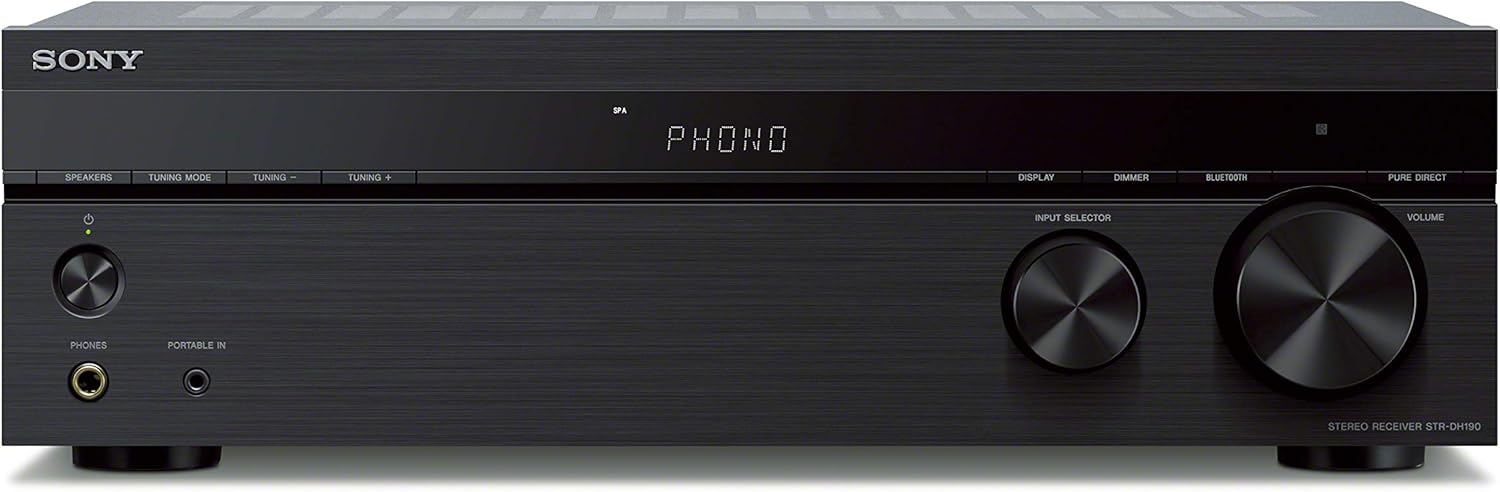 Sony STRDH190 2-Channel Home Stereo Receiver |
9.8/10 | View on Amazon.com |
Prices and discounts as of Nov 23, 2026 and may have changed. Check Amazon for the current price.
Pros
- Exceptional audio performance with audiophile-spec DAC at a mid-range price point
- Unmatched connectivity options covering virtually every digital and analog source and output format
- Intuitive WiiM Home App praised by reviewers for seamless setup and reliable day-to-day control
- Built-in bass management with adjustable crossover and subwoofer output fills a gap many receivers leave open
- Supports a wide range of streaming services and voice assistants including Alexa and Google Assistant
Cons
- No AirPlay support, which may be a dealbreaker for users deeply invested in the Apple ecosystem
- AAA batteries for the included voice remote are not included in the box, requiring an extra purchase out of the gate
The WiiM Ultra is a compact, feature-packed music streamer and preamplifier designed for listeners who want high-resolution audio without building a rack full of separate components. At its core sits an ESS ES9038 Q2M DAC, the same chip found in dedicated DACs costing significantly more, making it a compelling option for both entry-level audiophiles and seasoned enthusiasts looking to simplify their setup.
Streaming performance is where the Ultra genuinely shines. It supports hi-res playback up to 24-bit/192kHz from major platforms including Spotify, TIDAL, Qobuz, and Amazon Music HD, with gapless playback and Roon Ready certification for those already in the Roon ecosystem. Wi-Fi 6 and Bluetooth 5.3 ensure a stable, low-latency wireless connection, while the WiiM Home App receives consistent praise in user reviews for its clean interface and reliable multiroom synchronization with Echo and Google Home devices.
Build quality is a clear step above what the price might suggest. The aluminum chassis feels solid and premium, and the 3.5-inch touchscreen is bright and responsive for quick on-device control. Connectivity is genuinely comprehensive, covering HDMI ARC, USB, Optical, Coaxial, RCA, a Phono input with ground adapter, a dedicated headphone output, and a Subwoofer Out with adjustable crossover, a combination rarely found at this price tier.
There are a couple of considerations worth noting before purchasing. The WiiM Ultra does not support AirPlay in any form, so Apple ecosystem users relying on AirPlay 2 will need to look elsewhere or use an alternative streaming method. Additionally, while the included accessory bundle is generous, the voice remote ships without batteries, which is a minor but slightly frustrating omission.
Overall, the WiiM Ultra represents outstanding value for its category. It delivers audiophile-adjacent performance, exceptional versatility, and a polished user experience at a price that undercuts most comparable separates. For anyone with an existing amplifier or receiver looking to add a capable, modern streaming front-end, this is one of the most well-rounded choices currently available.
DAC: ESS ES9038 Q2M | THD+N: -116dB | SNR: 121dB | Max Resolution: 24-bit/192kHz
Wireless: Wi-Fi 6, Bluetooth 5.3 | Wired: Ethernet | Display: 3.5-inch touchscreen
Outputs: RCA, Headphone, Coaxial, Optical, USB, HDMI ARC, Subwoofer Out | Inputs: RCA, Phono, Optical, USB
Streaming Services: Spotify Connect, Amazon Music, TIDAL Connect, Qobuz Connect, Deezer, iHeartRadio, TuneIn, SoundCloud, Pandora, and more | Voice Control: Amazon Alexa, Google Assistant
Dimensions: 8.3 x 7.87 x 2.83 inches | Weight: 3.1 lbs | Power: 100-240V AC | Warranty: 1 Year | In the Box: WiiM Ultra, WiiM Voice Remote, HDMI cable, RCA cable, Optical cable, AC power cable, Phono ground adapter, Quick start guide
The WiiM Ultra is best suited for listeners who already own a quality amplifier or receiver and want to add a modern, high-resolution streaming front-end without replacing their existing gear. If your current amp lacks network streaming, a phono stage, or bass management for a subwoofer, this device addresses all three in a single compact unit.
If you are comparing the WiiM Ultra to standalone network streamers in the same price range, its built-in DAC and preamp functionality offer clear added value. For those who plan to use an external DAC, the Ultra still serves as an excellent Roon endpoint or digital transport via its Coaxial or Optical outputs, as demonstrated by several reviewers who pair it with dedicated DACs like the Denafrips Ares 2.
Buyers who rely heavily on AirPlay 2 for whole-home audio, particularly in Apple-centric households, should note that the WiiM Ultra does not support AirPlay in any capacity. In that scenario, a WiiM Pro or a competing device with AirPlay 2 support may be a better fit. For everyone else, especially those using Android, Alexa, or Google ecosystems, the Ultra is a compelling and well-priced choice.
Pros
- Excellent sound clarity with balanced highs, mids, and bass across all input sources
- Phono input eliminates the need for a separate turntable preamp, saving money and desk space
- Bluetooth connection is quick to pair and remains stable during extended listening sessions
- Compact low-profile design fits standard AV furniture without any awkward modifications
- Highly rated by a large number of verified buyers, reflecting consistent real-world reliability
Cons
- Maximum volume output may feel limited for larger rooms or listeners who prefer concert-level loudness
- 2-channel stereo only, so it is not suitable for home theater surround sound setups
- No digital optical or coaxial inputs, which may frustrate users wanting to connect modern TVs or DACs directly
The Sony STRDH190 is a 2-channel home stereo receiver designed for music lovers who want a clean, capable hub for multiple audio sources. Whether you are spinning vinyl, streaming from a phone, or tuning into FM radio, this receiver handles it all in one compact unit. It is particularly well suited to first-time stereo system builders and returning audiophiles who value simplicity over complexity.
Sound performance is the STRDH190's strongest suit. With 100 watts per channel and Sony's large-capacity power transformer, the receiver delivers a composed, detailed soundstage with crisp highs and solid bass. Customer feedback consistently praises its clarity at moderate to high volumes, and High-Resolution Audio support means the unit can resolve fine details that compressed streaming formats often obscure.
The feature set is thoughtfully chosen for its target audience. The built-in phono preamp is a genuine convenience for turntable users, while Bluetooth pairing is described by owners as fast and reliable. The A/B speaker switching is a practical bonus, allowing two pairs of speakers to run simultaneously or independently for multi-room flexibility. A full-size headphone jack and 30-preset FM tuner round out the everyday usability.
On the design side, the STRDH190's low-profile chassis at just over 5 inches tall is a real-world advantage for anyone working with a standard AV cabinet. Build quality feels solid for the price point, and the included remote adds a layer of convenience that budget receivers often skip. The unit weighs 17 pounds, which speaks to the substantial internal components rather than hollow construction.
The main limitations are its 2-channel-only configuration, which rules it out for surround sound duties, and a lack of digital inputs for users wanting to connect a TV or external DAC. Volume headroom in very large rooms can also feel modest. That said, for a stereo-focused listener who values vinyl, Bluetooth, and clean audio in one tidy package, the STRDH190 is a genuinely impressive and well-rounded receiver.
Model: Sony STRDH190 | Color: Black | Channels: 2 (Stereo) | Output Power: 100W x 2 (8 ohms, 1 kHz) | Total Wattage: 200W
Speaker Impedance: 6 to 16 ohms | Inputs: Phono input, 4x stereo RCA, 3.5mm aux | Outputs: Stereo RCA, A/B speaker terminals, 1/4-inch headphone jack
Wireless: Bluetooth (2.4 GHz, max output 5.0 dBm) | FM Tuner: 30 station presets | Audio Format: WMA, High-Resolution Audio
Dimensions: 11"D x 17"W x 5.2"H | Weight: 17.1 lbs | Power: AC 120V, 60 Hz | Warranty: 1 year limited
In the Box: Receiver, remote control (RMT-AA400U), batteries, FM antenna | ASIN: B078WFDR8D | UPC: 027242908383
If you are shopping for your first stereo receiver, the STRDH190 is one of the most complete entry-level options available. It covers all the essential bases: Bluetooth streaming, FM radio, a phono stage for turntables, and enough inputs for a CD player, TV audio output, and more. You will not need to buy a separate phono preamp, which keeps your total system cost down.
Pairing advice: this receiver works best with bookshelf or floor-standing speakers rated between 6 and 16 ohms. Popular matches noted by owners include Yamaha bookshelf speakers and classic Bose 301s. For turntable users, Sony's own PS-LX310BT is a frequently recommended companion that integrates seamlessly with the STRDH190's phono input.
Consider your room size before purchasing. The 100-watt-per-channel rating is more than adequate for small to medium rooms, but listeners in large open-plan spaces who prefer very high volume levels may eventually want to step up to a higher-powered model. For most living rooms and dedicated listening spaces, however, the power on offer is genuinely sufficient.
This receiver is not the right choice if you need surround sound for a home theater setup, or if you want to connect a modern TV via optical or coaxial digital audio. For those use cases, a dedicated AV receiver would be a better fit. But as a pure stereo music receiver with broad source compatibility, the STRDH190 is hard to beat at its price point.
How to Choose Your Music Amplifier
Power Output and Speaker Compatibility
Matching your amplifier’s power to your speakers is fundamental. Look at the wattage rating per channel, typically listed for 8-ohm and 4-ohm loads. More power isn’t always better; it’s about having enough clean power to drive your specific speakers without distortion, even at higher volumes. Underpowering can damage speakers, while a well-matched pair ensures dynamic range and control.
Consider your speaker’s sensitivity and impedance. A high-sensitivity speaker will sound louder with less power. Always check the amplifier’s recommended speaker impedance range. For a detailed look at amplifiers suited for specific speaker types, explore our guide on the best amplifiers for In-Wall speakers.
Connectivity and Source Support
Your amplifier should serve as a central hub. Essential connections include analog RCA inputs for CD players or streamers, a dedicated phono input for turntables if you spin vinyl, and digital inputs like optical or coaxial for TVs and digital media players. Built-in Bluetooth is now a near-essential convenience for wireless streaming from phones and tablets.
For a true modern system, consider an amplifier with integrated high-resolution streaming capabilities via Wi-Fi. This opens access to services like Spotify Connect, Tidal, and Qobuz directly, often with superior sound quality compared to Bluetooth. If vinyl is your primary source, our review of the best amplifiers for vinyl delves deeper into phono stage quality.
Sound Signature and Build Quality
Amplifiers have distinct sonic characters. Some are praised for a warm, musical tone that smooths over harsh recordings, while others prioritize analytical precision and detail retrieval. Reading reviews from trusted sources can help you identify which sound profile aligns with your listening preferences. The build quality of the chassis and internal components also contributes to longevity and stable performance.
A sturdy, well-ventilated case minimizes vibrations and heat buildup. High-quality internal components, like toroidal transformers and premium capacitors, are hallmarks of an amplifier built to last. For compact solutions that don’t sacrifice quality, our list of the best mini amplifiers showcases space-efficient designs.
Final Thoughts
Finding the perfect amplifier is a rewarding journey that pays off every time you listen. For those seeking a classic, high-performance stereo experience with excellent connectivity, the Denon PMA-600NE Bluetooth Stereo Amplifier stands out as a superb integrated choice. If your needs lean towards a powerful, all-in-one streaming solution that simplifies your setup, the feature-packed WiiM Amp Pro Streaming Amplifier for TV offers incredible versatility for both music and home theater. Whichever path you choose, investing in a quality amplifier is the surest way to fall in love with your music all over again.
Frequently Asked Questions
What is the difference between an integrated amplifier and a receiver?
An integrated amplifier combines a preamplifier (for source selection and volume control) and a power amplifier (to drive speakers) in one unit, focused purely on audio performance. A receiver includes an integrated amplifier but also adds a radio tuner (AM/FM) and, in the case of AV receivers, video switching and surround sound processing. For dedicated music listening, an integrated amplifier is often the preferred choice.
Do I need a special amplifier for a turntable?
Yes, most turntables require a phono preamplifier to boost the signal to a standard line level. Many modern integrated amplifiers, like the Sony STRDH190, include a built-in phono stage. If your chosen amplifier lacks this input, you will need to purchase an external phono preamp. Our dedicated guide on the best amplifiers for turntables covers this in more detail.
How important is Bluetooth codec support in an amplifier?
For casual streaming, standard Bluetooth (SBC codec) is sufficient. However, if you stream from high-quality services, look for amplifiers supporting advanced codecs like aptX HD or LDAC. These codecs transmit more audio data wirelessly, preserving more detail and providing sound quality closer to a wired connection. The latest models often feature Bluetooth 5.0 or higher for improved stability and range.
Can I use a home theater receiver for stereo music?
You can, and many people do. However, dedicated two-channel stereo amplifiers are often engineered with a singular focus on music reproduction. They may use higher-grade audio components and simpler signal paths that some listeners prefer for pure musicality. For a system used equally for movies and music, a high-quality AV receiver is a great compromise, as explored in our article on the best amplifiers for home theater.




Write Your Review
No reviews yet. Be the first to share your experience!