

You hear a familiar track, but this time, the background vocalist’s subtle breath, the violinist’s bow changing direction, and the guitarist’s fingers sliding on the fretboard are suddenly distinct. This is the promise of an analytical-sounding DAC. For the critical listener, sound enthusiast, and audio professional, a DAC that prioritizes detail retrieval and transparency transforms listening from passive enjoyment into active discovery.
This guide is for anyone building a system where accuracy is paramount. We have evaluated nine of the most capable DACs on the market, from budget-friendly converters to ultra-flagship designs, all chosen for their ability to dissect a mix with precision. Whether you’re driving high-end headphones or feeding a pristine stereo amplifier, you’ll find a model here that elevates your audio to a new level of clarity.
| Pick | Product | BRD Score | Where to buy |
|---|---|---|---|
| Top Pick |
 Luxsin X8 AI DAC Headphone Amplifier |
9.9/10 | View on Amazon.com |
| 15% OFF |
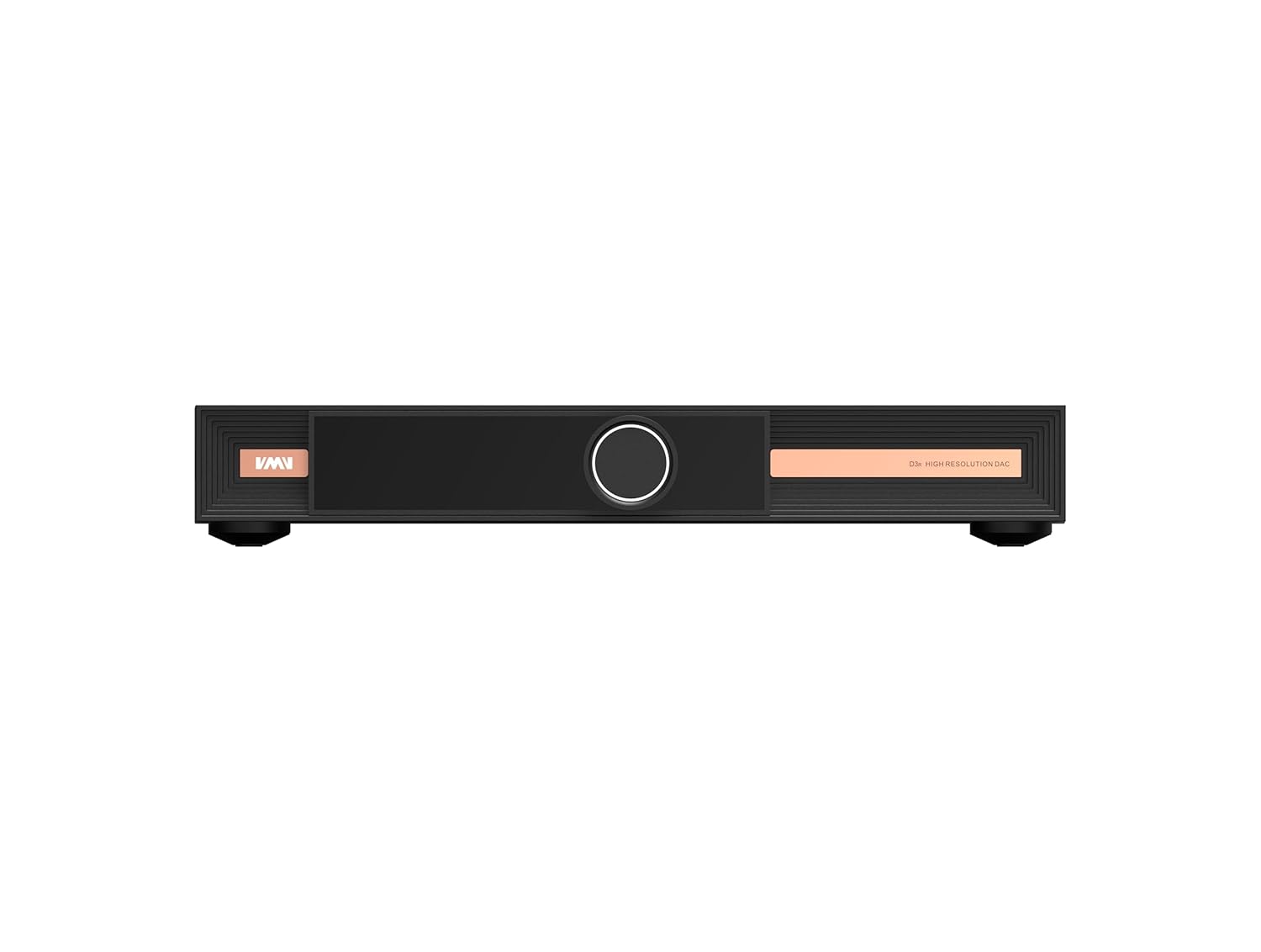
 SMSL D1 Hi-Res Audio DAC with ROHM BD34352EKV |
9.6/10 | View on Amazon.com |
Prices and discounts as of Nov 23, 2026 and may have changed. Check Amazon for the current price.
Pros
- Industry-first AI EQ tuning eliminates guesswork and delivers professional sound customization without technical expertise
- Dual-mono architecture with isolated signal paths ensures exceptional stereo separation and minimal interference
- Exceptional power delivery with 4800mW per channel handles high-impedance and demanding headphones effortlessly
- Future-proof architecture with advanced DSP and firmware upgrade capability extends product longevity
- Multiple input/output options and impedance auto-detection provide flexible integration with any audio setup
Cons
- Premium price point positions this as a luxury purchase rather than a mainstream consumer product
- New product with zero user reviews makes it difficult to verify real-world performance and reliability claims
- Steep learning curve for advanced DSP features and customization options may overwhelm casual users
The Luxsin X8 is a flagship desktop DAC and headphone amplifier designed for serious audiophiles and professional audio engineers who refuse to compromise on sound quality. This is not an entry-level device, but rather a high-end component built for users with demanding headphones and critical listening requirements.
The standout feature is undoubtedly the AI-powered parametric EQ, which learns your headphones and preferences through voice or text commands to deliver personalized sound tuning automatically. Combined with the eight Cirrus Logic CS43198 DACs arranged in a dual-mono configuration with fully isolated left and right signal paths, the X8 achieves remarkable clarity, dynamic range, and stereo imaging. The 4800mW per channel output ensures pristine amplification of even the most power-hungry flagship headphones.
Build quality is exceptional, with a CNC aluminum chassis, 4-inch touchscreen interface, and comprehensive connectivity options including USB, Optical, Coaxial, I2S, and both balanced and unbalanced outputs. The dual-core HiFi-5 DSP processor running at 500MHz+ enables complex real-time audio processing and supports ultra-high resolution formats up to DSD512 and PCM 768kHz/32Bit.
The main drawback is the premium price and complete lack of user reviews, which makes it difficult to verify performance claims in real-world scenarios. Additionally, the advanced features and customization options may overwhelm users seeking a simple plug-and-play solution.
Verdict: The Luxsin X8 represents cutting-edge DAC and amplifier technology with genuinely innovative AI-assisted tuning. For dedicated audiophiles willing to invest in premium sound quality and future-proof architecture, this device delivers exceptional value despite its high cost.
Audio Processing: Eight Cirrus Logic CS43198 DACs in parallel dual-mono architecture, 4 per channel with isolated signal paths. Supports DSD512, PCM 768kHz/32Bit, and all standard audio formats.
Amplification: Up to 4800mW per channel with ultra-low distortion and high linearity. Premium op-amps and high-current drivers ensure precise control and fast transients.
Processing Power: Dual-core HiFi-5 DSP processor at 500MHz+ with ARM architecture for real-time audio processing and advanced DSP features.
Connectivity: USB, Optical, Coaxial, I2S, 6.35mm balanced outputs, 3.5mm unbalanced outputs. Impedance auto-detection and per-output setting memory included.
Physical: CNC aluminum chassis, 1kg weight, 4-inch touchscreen display, 240V AC power supply. Includes USB-B cable, power cable, and 6.35mm to 3.5mm adapter.
Warranty: 1 year manufacturer warranty. Control via mobile app, web interface, or physical remote.
Who Should Buy This: The Luxsin X8 is ideal for critical listeners, professional audio engineers, studio professionals, and high-end audiophiles who own flagship headphones and demand exceptional sound quality. This device is also perfect for music producers and mixing engineers who require precise audio monitoring and customizable EQ capabilities.
Who Should Skip This: Casual listeners, budget-conscious buyers, and users seeking a simple plug-and-play solution should consider more affordable alternatives. This is a premium product requiring investment and technical engagement.
Key Considerations: Verify your headphone impedance and power requirements fall within the X8's capabilities. Ensure your audio sources support high-resolution formats to maximize the device's potential. Consider whether the AI EQ features and advanced DSP options align with your specific needs. Check compatibility with your existing audio equipment and setup.
Value Proposition: The X8 justifies its premium price through industry-first AI tuning technology, exceptional build quality, future-proof architecture, and the ability to drive any headphone with pristine clarity and control. Long-term firmware support and expansion capabilities add significant long-term value.
Pros
- Exceptional audio quality with natural, balanced sound across all frequencies
- Versatile connectivity options support PC, Mac, phones, tablets, and TVs
- Audiophile-grade components and precision circuit design in a compact form factor
- USB bus-powered design eliminates need for separate power adapter
- Ranked #65 in Digital-Analog Converters category, proving its market credibility
Cons
- Windows users must install drivers for full functionality, adding setup complexity
- New product with no customer reviews yet, limiting real-world user feedback
- Premium pricing for desktop DAC category may be steep for casual listeners
The SMSL D1 is a premium desktop digital-to-analog converter designed for audiophiles, music producers, and discerning listeners who demand high-resolution audio. It's built for anyone with a computer, phone, or tablet who wants to unlock the full potential of their music collection and experience studio-quality sound at home.
The standout feature is the ROHM BD34352EKV DAC chip, which delivers exceptional audio fidelity with a THD+N rating of just 0.00038% and an impressive SNR of 126dB. This translates to clean, detailed sound with minimal distortion and noise. The D1 supports cutting-edge formats including DSD512 and PCM at 32-bit/768kHz, ensuring compatibility with virtually any high-resolution audio file you own.
Build quality is excellent, featuring a CNC-machined aluminum alloy chassis that feels substantial and professional. The touch-control interface is intuitive, and the compact design makes it easy to place on a desk, bookshelf, or audio cabinet without taking up valuable space. The XMOS XU-316 firmware provides flexible multi-input options via USB, optical, and coaxial connections, making it compatible with computers, tablets, TVs, and other audio devices.
One consideration is that Windows users need to install drivers, whereas macOS and Linux systems work plug-and-play. Additionally, as a relatively new product, it lacks customer reviews, so early adopters won't have extensive user feedback to reference. The price point is premium for a desktop DAC, though justified by the high-end components and performance specifications.
The SMSL D1 is an excellent investment for anyone serious about audio quality. It delivers genuine Hi-Res audio performance in a compact, stylish package that integrates seamlessly into any setup. Whether you're a professional audio engineer or an audiophile seeking to elevate your listening experience, this DAC delivers measurable improvements in sound clarity and detail.
Core Audio Specs: DAC Chip: ROHM BD34352EKV, Firmware: XMOS XU-316, THD+N: 0.00038%, SNR: 126dB
Supported Formats: DSD512, PCM 32-bit/768kHz sampling rate
Connectivity: USB, Optical, Coaxial inputs, RCA stereo output
Power Requirements: USB bus-powered (5V DC minimum), no external power adapter needed
Compatibility: Windows, macOS, Linux (Windows requires driver installation)
Design: CNC-machined anodized aluminum alloy chassis, touch-control buttons, compact form factor
Channels: Stereo output, 8-channel internal architecture
Package: Includes USB-A to USB-C data cable
Who Should Buy: PC and Mac users, audiophiles, music producers, professional audio engineers, and anyone seeking high-resolution audio quality. Ideal for desktop listening setups where sound quality is a priority.
Who Might Skip It: Casual listeners on a tight budget, those needing portable solutions, or users unwilling to install drivers on Windows systems.
Setup Considerations: The D1 is plug-and-play on macOS and Linux. Windows users should allow time for driver installation. Connect via USB to your computer or use optical/coaxial inputs from other devices. Power is supplied entirely through the USB connection, eliminating cable clutter.
Pairing Recommendations: Works best with quality headphones or powered speakers capable of handling high-resolution audio. Pair with a good USB cable for optimal performance. Compatible with high-end music players and streaming services that support Hi-Res formats.
How to Choose a DAC for Analytical Sound
DAC Chipset and Architecture
The heart of any DAC is its conversion chip. Models like the Fosi Audio ZH3 DAC Headphone Amp use respected chips like the AKM4493SEQ, known for a detailed and musical profile. For ultimate precision, look for advanced architectures, such as the parallel dual-mono design in the Luxsin X8 or the proprietary 1-bit system in the TOPPING D900. These designs minimize noise and crosstalk, ensuring each channel’s signal remains pure and distinct, which is fundamental for accurate precise imaging.
Output Stage and Power
A revealing DAC needs a clean, powerful output stage to drive your headphones or preamp without adding coloration. High-quality, low-noise op-amps and discrete components are key. The ample power of the Fosi Audio ZH3 or the Luxsin X8 ensures dynamic transients remain crisp and headphones are controlled perfectly. This prevents the amplifier section from softening the fine details the DAC chip so carefully extracted.
Connectivity and System Integration
Your DAC must fit seamlessly into your existing chain. Consider your primary sources: a dedicated USB input is essential for computer audio, while optical or coaxial inputs connect TVs and game consoles. For a purist analog setup, the Denon PMA-600NE Bluetooth Stereo Amplifier offers the ability to bypass its digital circuits entirely. Versatile units like the SMSL D1 provide multiple high-quality inputs, making them a central hub for all your digital sources.
Features for Sound Shaping
While analytical sound often implies neutral sound, having control can be beneficial. Some DACs offer switchable digital filters that slightly alter the treble roll-off. Others, like the Fosi Audio ZH3, include bass and treble adjustments for the headphone output. For the ultimate customization, the AI-powered parametric EQ in the Luxsin X8 or the software PEQ in the TOPPING D900 allow you to tailor the analytical presentation to your exact preference without hardware modifications.
Final Thoughts
Selecting the right analytical DAC is about matching precision engineering to your listening goals. For those seeking an all-in-one desktop solution with exceptional clarity and balanced outputs, the Fosi Audio ZH3 DAC Headphone Amp represents outstanding value and performance. If your priority is integrating a DAC into a pure two-channel stereo system with the option for analog purity, the Denon PMA-600NE Bluetooth Stereo Amplifier is a compelling and versatile choice. Ultimately, the best DAC for you will reveal new layers in your favorite music, providing a transparent window into the recording that rewards attentive listening.
Frequently Asked Questions
What is the main benefit of an analytical-sounding DAC?
An analytical DAC excels at detail retrieval and instrument separation. It reveals subtle nuances in recordings, such as the decay of a cymbal, the texture of a vocal breath, or the placement of individual musicians in the soundstage. This makes it ideal for critical listening, audio editing, and anyone who wants to hear exactly what is in their music files. For more on clarity in specific frequency ranges, explore our guide on DACs for vocal clarity.
Can a budget DAC provide good analytical sound?
Absolutely. Modern chip technology has trickled down, making detailed sound more accessible. Entry-level models like the Fosi Audio Q4 or the PROZOR 192kHz converter offer a significant upgrade over basic computer or TV audio, providing a cleaner, more detailed presentation. While they may not match the ultimate refinement of flagship models, they are excellent starting points for building a critical listening system on a budget.
Do I need a separate headphone amplifier with a DAC?
It depends on the DAC and your headphones. Many modern DACs, like the Fosi Audio ZH3 or K5 Pro, have powerful, high-quality built-in headphone amplifiers capable of driving a wide range of headphones. If you own particularly demanding, high-impedance headphones, a dedicated amplifier might provide more control. However, for most users, an all-in-one DAC/amp combo reviewed here will offer a complete and satisfying solution.
How do I integrate a new DAC into my existing home audio setup?
Integration is straightforward. Connect the DAC’s digital input (USB, optical, or coaxial) to your source device, like a computer, streamer, or TV. Then, connect the DAC’s analog outputs (usually RCA or XLR) to the corresponding inputs on your integrated amplifier, preamp, or active speakers. Most units are plug-and-play, though some high-resolution USB DACs may require a quick driver installation on Windows computers.




Write Your Review
No reviews yet. Be the first to share your experience!