

You hear a familiar track, but this time, the background vocalist’s subtle breath, the violinist’s bow changing direction, and the guitarist’s fingers sliding on the fretboard are suddenly distinct. This is the promise of an analytical-sounding DAC. For the critical listener, sound enthusiast, and audio professional, a DAC that prioritizes detail retrieval and transparency transforms listening from passive enjoyment into active discovery.
This guide is for anyone building a system where accuracy is paramount. We have evaluated nine of the most capable DACs on the market, from budget-friendly converters to ultra-flagship designs, all chosen for their ability to dissect a mix with precision. Whether you’re driving high-end headphones or feeding a pristine stereo amplifier, you’ll find a model here that elevates your audio to a new level of clarity.
Pros
- Exceptional sound quality with warm, tube-like character that audiophiles and vintage audio fans consistently praise
- Versatile connectivity including Bluetooth, phono preamp, and multiple digital inputs eliminates need for separate components
- Thoughtful design with analog mode that disconnects digital circuits for undistorted, pure analog listening experience
- Solid build quality backed by Denon's 100-year audio heritage and 3-year manufacturer warranty
- Excellent value for entry-level hi-fi, delivering performance comparable to higher-priced amplifiers
Cons
- Input selector knob labeling is small and difficult to read without glasses, limiting ease of use
- 70 watts per channel may be insufficient for very large rooms or power-hungry speakers requiring higher output
- No built-in streaming service controls or app integration, requiring separate device for source management
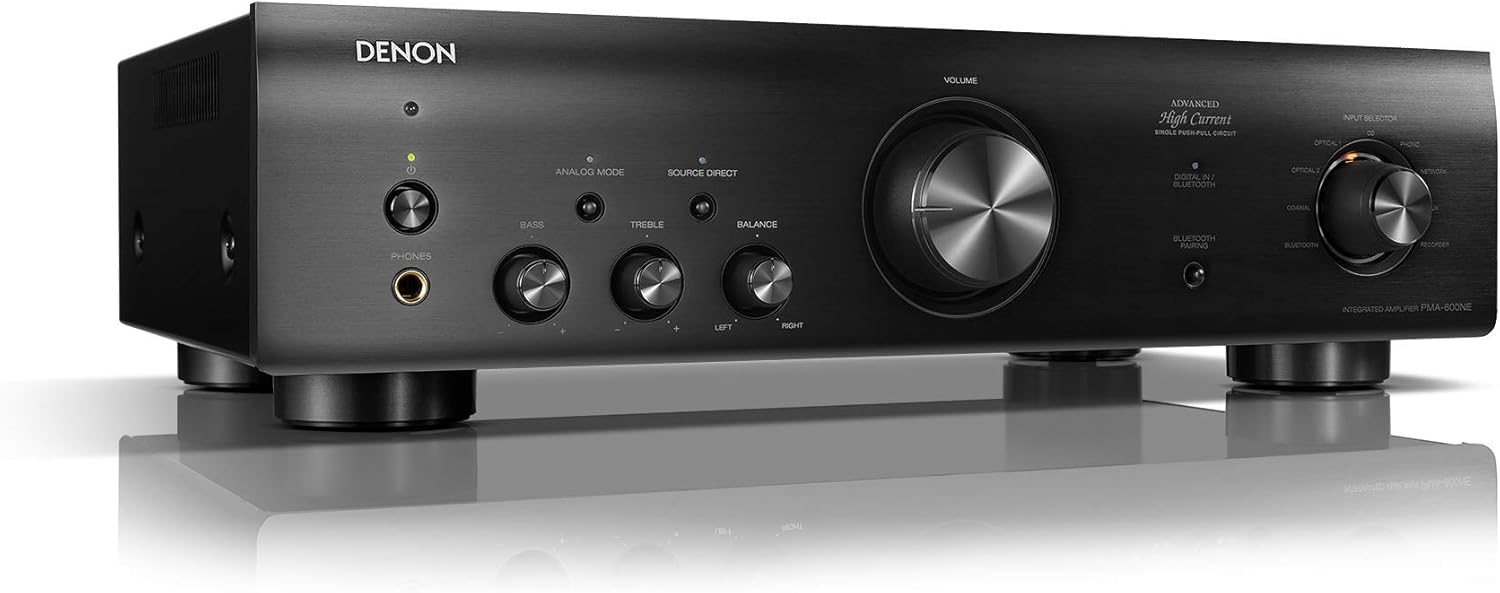
The Denon PMA-600NE is a purpose-built integrated amplifier designed for music enthusiasts entering the hi-fi world or upgrading from vintage equipment. It combines the warm, inviting sound character of classic 1970s receivers with modern connectivity options like Bluetooth and digital inputs, making it equally at home with turntables, streaming services, or CD players. This amplifier serves as the perfect centerpiece for a compact, high-quality stereo system.
What sets the PMA-600NE apart is its thoughtful engineering and feature density. The 70-watt-per-channel output, powered by Denon's Advanced High Current circuit, delivers surprising power and musicality from a compact chassis. The built-in phono preamp with proper equalization makes vinyl sound vivid and emotionally engaging, while the 192kHz/24-bit DAC ensures digital sources reveal deep bass and delicate highs. Real-world testing confirms the internal DAC rivals dedicated streaming components, and the divided circuitry design allows you to disconnect digital circuits entirely for pure analog listening without digital noise contamination.
Build quality reflects Denon's century-long audio heritage. The amplifier arrives well-protected, features a vibration-resistant enclosure, and includes a remote control and comprehensive documentation. The industrial design is clean and modern, appealing to both minimalist and retro-styled listening rooms. The 3-year manufacturer warranty provides confidence in long-term reliability and support.
Minor drawbacks exist. The input selector knob's small font makes identifying your current input difficult without reading glasses, and the 70-watt output may struggle with very large rooms or inefficient speakers. Additionally, there's no built-in app or streaming service integration, requiring a separate device for playlist control.
The Denon PMA-600NE represents excellent value for anyone seeking genuine hi-fi sound quality without excessive complexity or cost. Whether you're reconnecting with vinyl, upgrading from vintage gear, or building your first quality stereo system, this amplifier delivers the musical performance and versatile connectivity that modern listening demands.
Power Output: 70W per channel at 4 ohms, 1 kHz, THD 0.7%
Audio Processing: 192kHz/24-bit D/A converter, built-in phono preamp with proper equalization
Connectivity: Bluetooth wireless, 2 optical digital inputs, 1 coaxial digital input, 1 phono input for turntables
Circuit Design: Advanced High Current single-push-pull circuit with divided circuitry for analog-only listening mode
Physical: Compact, vibration-resistant chassis, black finish, 18 pounds
Warranty: 3-year manufacturer coverage
Included: Remote control, AAA batteries, quick start guide, owner's manual, safety documentation
Who Should Buy This Amplifier? The PMA-600NE is ideal for first-time hi-fi buyers, vinyl enthusiasts, vintage audio fans upgrading from older equipment, and anyone seeking quality stereo sound without complexity. It's perfect for small to medium-sized rooms and works well with both efficient vintage speakers and modern designs.
Who Might Want to Look Elsewhere? If you need surround sound or multi-channel audio, this 2-channel stereo amplifier won't meet your needs. Very large rooms requiring 150+ watts per channel, or listeners needing integrated streaming app control, should consider higher-powered or more feature-rich alternatives.
Pairing Recommendations: This amplifier pairs exceptionally well with turntables, CD players, and streaming devices like the WiiM Mini. It works with most passive speakers rated 4 ohms or higher, though efficient designs (above 87 dB) will perform best. Consider adding a dedicated streamer for enhanced wireless audio quality.
Setup Considerations: The phono preamp is ready for turntables without additional equipment. For streaming, connect via Bluetooth or use optical/coaxial inputs with an external DAC or streamer. The analog mode switch allows you to disable digital circuits for distraction-free vinyl listening.

Pros
- Excellent audio quality with 192kHz 24-bit sampling rate and minimal signal loss
- Versatile connectivity with three digital input types and two analog output options
- Automatic signal detection and conversion eliminates setup complexity
- Affordable solution for connecting modern digital audio sources to older analog equipment
- Highly rated by users with consistent positive feedback on performance and reliability
Cons
- Volume control affects both RCA and 3.5mm outputs simultaneously, not independently
- One-way conversion only, cannot output digital signals back to optical connections
- Limited to stereo analog output, does not preserve full 5.1 surround sound channels
The PROZOR 192kHz Digital to Analog Audio Converter is a practical solution for bridging the gap between modern digital audio sources and legacy analog equipment. This DAC converter is perfect for anyone connecting a soundbar, receiver, or powered speakers to a TV, gaming console, or streaming device that only outputs digital audio via optical or coaxial connections.
The standout feature is its comprehensive format support, handling Dolby AC-3, DTS 5.1CH, and PCM signals while maintaining exceptional audio fidelity at 192kHz 24-bit resolution. The converter automatically detects and processes incoming signals without requiring manual configuration, making setup straightforward. Dual output options (RCA and 3.5mm) provide flexibility for different audio equipment, and the responsive volume knob allows real-time output adjustment for both connections simultaneously.
Build quality is solid for the price point, with a compact form factor that fits easily into most entertainment setups. The unit operates reliably at standard operating temperatures and draws minimal power from a USB connection. Physical construction feels durable, and the straightforward interface makes operation intuitive even for non-technical users.
The main limitation is that volume control adjusts both output types together rather than independently, which may require careful placement in your setup. Additionally, surround sound information is converted to stereo, so you won't preserve the full 5.1 channel experience, though the stereo output remains high quality. One-way conversion means you cannot send audio back through the optical port.
Overall, this converter delivers excellent value for anyone needing to connect digital audio sources to analog equipment. With strong user ratings, reliable performance, and professional-grade audio quality at an accessible price, it's a smart choice for home theater upgrades, gaming setups, or audio equipment modernization.
Audio Format Support: Dolby AC-3, DTS 5.1CH, PCM 2.0
Sampling Rate: Up to 192kHz 24-bit lossless
Input Connectors: Optical (TOSLINK), SPDIF, Coaxial
Output Connectors: RCA (L/R stereo), 3.5mm stereo jack
Power Supply: USB (4.9V to 5V DC)
Operating Temperature: Up to 70°C
Signal Transmission: One-way only (no optical output)
Output Channels: 2.0 stereo (converted from up to 5.1 input)
Who Should Buy This: This converter is ideal for users connecting digital audio sources to older amplifiers, powered speakers, or audio receivers that only have analog inputs. It's perfect for gaming console setups, TV audio enhancement, and computer audio routing to legacy equipment.
Compatibility Check: Verify your source device has at least one digital audio output (optical, SPDIF, or coaxial). Confirm your destination audio equipment has either RCA or 3.5mm analog inputs. This converter works with most TVs, gaming consoles, streaming devices, and computers.
Setup Tips: Connect the appropriate digital cable from your source device to the converter. Select either RCA or 3.5mm output based on your audio equipment. Use the volume knob to set output levels, then adjust your amplifier or speaker volume normally. No additional software or drivers required.
Alternatives to Consider: If you need independent volume control for each output type, look for higher-end DAC converters. If you require surround sound preservation, consider an AV receiver instead of a simple converter.

Pros
- Exceptional value as an integrated solution combining DAC, headphone amp, and preamp functionality in one device
- High-quality components and balanced circuit design deliver noticeably cleaner, more detailed sound than separate budget alternatives
- Flexible connectivity and output options make it compatible with virtually any audio source, headphone, or powered speaker system
- Intuitive interface with physical controls and remote, plus customizable EQ and filter options for personalized sound tuning
- Strong output power handles both sensitive IEMs and high-impedance headphones without compromise
Cons
- EQ functionality is limited to headphone output only, not available for preamp output to powered speakers
- Some users report the amplifier section sounds slightly sterile compared to dedicated high-end amplifiers when used as a preamp
- Requires direct USB connection to computers in some setups rather than working through USB docks or hubs
The Fosi Audio ZH3 is a premium all-in-one desktop audio solution designed for audiophiles, music producers, and gamers who demand exceptional sound quality without the clutter of multiple components. It combines a high-performance DAC, powerful headphone amplifier, and balanced preamp into a single compact unit, making it an excellent choice for anyone looking to upgrade their listening experience on a budget.
The ZH3 delivers standout performance through its premium chipset architecture, featuring the respected AKM4493SEQ DAC paired with an XMOS XU316 processor and four OPA1612 amplifiers. It supports up to PCM 768kHz/32bit and DSD512, meaning it can handle virtually any audio format you throw at it. The fully balanced circuitry maintains ultra-low noise at just 1.9μV, resulting in clean, detailed sound with minimal distortion. Real-world testing confirms users hear noticeably improved clarity and soundstage compared to budget DAC/amp combos.
The ZH3 excels in versatility and power delivery. Dual output stages provide 640mW at 32Ω on the 6.35mm single-ended output and an impressive 2570mW at 32Ω on the balanced 4.4mm output, easily driving everything from sensitive IEMs to demanding full-size headphones. The three-level gain switch intelligently matches impedance ranges from 16Ω to 300Ω, eliminating the guesswork of volume matching. Four input types (USB, optical, coaxial, RCA) and four output formats (XLR, RCA, 4.4mm, 6.35mm) provide exceptional flexibility for connecting to any audio ecosystem.
Design and usability are thoughtfully executed. The compact desktop form factor integrates all functions into a clean interface with an OLED display and included remote control, allowing seamless switching between headphone and speaker modes with a double-click. Customization options including bass/treble EQ, six filter types, and swappable op-amps enable you to fine-tune the sound signature to match your preferences. However, note that EQ adjustments only apply to headphone output, not preamp output.
The main consideration is that while the ZH3 performs excellently as a DAC and headphone amp, some users report the amplifier section sounds slightly clinical compared to dedicated high-end power amps when used primarily as a preamp. Additionally, USB connectivity can be finicky with certain dock setups. Despite these minor limitations, the ZH3 represents exceptional value as an integrated solution, delivering studio-quality sound and professional features at an accessible price point.
DAC Specifications: AKM4493SEQ DAC with XMOS XU316 processor, supports PCM up to 768kHz/32bit and DSD512, noise floor 1.9μV.
Amplifier Output: 6.35mm single-ended output 640mW at 32Ω (x2 channels), 4.4mm balanced output 2570mW at 32Ω (x2 channels). Three-level gain switch for impedance range 16Ω to 300Ω.
Inputs: USB, optical (TOSLINK), coaxial (S/PDIF), RCA.
Outputs: 4.4mm balanced, 6.35mm single-ended, XLR (preamp), RCA (preamp).
Additional Features: Bass/treble EQ, 6 filter types, swappable op-amps, 12V trigger input, OLED display, remote control, UAC mode switching for gaming consoles.
Physical: Weight 2.9 lbs, compact desktop form factor. Warranty: 24 months.
Who Should Buy: The ZH3 is ideal for desktop audio enthusiasts, music producers, gamers, and anyone using high-quality headphones or powered speakers who wants a single integrated solution. It's perfect if you currently use separate DAC and amp components and want to simplify your setup while maintaining or improving sound quality.
Headphone Compatibility: The three-level gain switch makes the ZH3 compatible with virtually any headphone or IEM on the market, from ultra-sensitive IEMs (16Ω) to demanding full-size cans (300Ω). The balanced 4.4mm output provides exceptional power for even the most demanding headphones.
Speaker Integration: If you use powered active speakers, the XLR and RCA preamp outputs provide fixed-level outputs perfect for driving studio monitors or high-end powered speakers. Note that EQ adjustments only apply to headphone output.
Gaming and Console Use: UAC mode switching ensures full compatibility with gaming consoles for both music playback and gaming audio, making it a versatile choice for streamers and console gamers.
Setup Considerations: For best results with USB connections, connect directly to your computer rather than through USB docks or hubs. After connecting, manually select the ZH3 as your audio output device in your system sound preferences.

Pros
- Eliminates PC audio hum and flatness with clean digital-to-analog conversion
- Powerful headphone amplification drives high-impedance headphones with authority and bass impact
- Adjustable EQ knobs provide flexibility that many competitors lack at this price
- Universal compatibility works with PCs, TVs, DVD players, and speaker systems
- Excellent value compared to premium DACs with only minor sonic differences
Cons
- Some units may produce subtle white noise or hissing, particularly noticeable with low-impedance headphones
- Not ideal for professional critical listening or studio mastering applications
- No microphone input limits functionality for voice chat or recording applications
The Fosi Audio Q4 is an entry-level DAC and headphone amplifier designed for PC users, gamers, and home theater enthusiasts seeking audio improvement without complexity. This compact device bridges the gap between budget audio solutions and higher-end equipment, delivering meaningful upgrades to sound quality for everyday listening across multiple content types.
The Q4 excels in eliminating common PC audio problems like ground hum and digital flatness while providing enough amplification power to drive demanding headphones up to 200Ω impedance. The standout feature is the adjustable bass and treble controls, which break from the audiophile orthodoxy of flat response and instead offer real-world flexibility for optimizing sound to your preferences and headphone characteristics. Users report noticeable improvements in clarity, bass impact, and overall engagement compared to standard PC audio jacks.
Build quality impresses with a full metal chassis, quality metal knobs, and a compact footprint that fits naturally into any desktop setup. The device includes all necessary cables for immediate use and supports high-resolution audio up to 24-bit/192kHz with low jitter circuitry. Connectivity is comprehensive with USB, Optical, and Coaxial inputs alongside RCA and 3.5mm outputs, making it compatible with virtually any audio source or destination.
The main limitation is occasional white noise or hissing on certain units, though this is often less noticeable with higher-impedance headphones and may reflect individual unit variation rather than a design flaw. The Q4 is not intended for critical studio work or professional mastering, but for general use across music, movies, and gaming, it delivers excellent performance at its price point.
Verdict: The Fosi Audio Q4 represents outstanding value for anyone seeking meaningful audio improvement on a budget. Its combination of multiple inputs, headphone amplification, sound tuning controls, and no-driver convenience make it an excellent entry point into quality desktop audio without requiring significant investment or technical knowledge.
Audio Specifications: Supports 24-bit/192kHz HD audio with low jitter circuitry. Drives headphones from 16Ω to 200Ω impedance. Stereo output with adjustable bass and treble controls.
Connectivity: Inputs: USB, Optical (TOSLINK), Coaxial. Outputs: RCA (stereo), 3.5mm headphone jack. No microphone input.
Physical Specifications: Dimensions: 3.9 inches length x 2.9 inches width. Weight: 430 grams. Full metal chassis construction. Tabletop mount design.
Power: 5V DC power supply. USB powered or external power adapter compatible.
Warranty: 24-month manufacturer warranty. Includes USB charging cable, optical cable, and PC-USB to Type-B cable.
Who Should Buy: PC gamers seeking improved audio quality, home theater enthusiasts wanting to upgrade TV sound, music listeners with high-impedance headphones, and anyone experiencing ground hum or audio flatness from standard computer outputs.
Who Should Look Elsewhere: Professional audio engineers requiring critical listening tools, users needing microphone inputs for streaming or recording, and those seeking premium sound quality willing to spend significantly more.
Key Considerations: Verify your headphone impedance rating for optimal performance. Higher impedance headphones (100Ω and above) tend to exhibit less background noise. Check your audio source compatibility with USB, Optical, or Coaxial outputs. Consider placement near your PC or audio system for convenient cable management.
Setup Tips: No driver installation needed for USB connection on most systems. Adjust bass and treble controls to match your headphone characteristics and listening preferences. Use optical or coaxial inputs for superior isolation from PC electrical noise if available on your source device.

Pros
- Industry-first AI EQ tuning eliminates guesswork and delivers professional sound customization without technical expertise
- Dual-mono architecture with isolated signal paths ensures exceptional stereo separation and minimal interference
- Exceptional power delivery with 4800mW per channel handles high-impedance and demanding headphones effortlessly
- Future-proof architecture with advanced DSP and firmware upgrade capability extends product longevity
- Multiple input/output options and impedance auto-detection provide flexible integration with any audio setup
Cons
- Premium price point positions this as a luxury purchase rather than a mainstream consumer product
- New product with zero user reviews makes it difficult to verify real-world performance and reliability claims
- Steep learning curve for advanced DSP features and customization options may overwhelm casual users
The Luxsin X8 is a flagship desktop DAC and headphone amplifier designed for serious audiophiles and professional audio engineers who refuse to compromise on sound quality. This is not an entry-level device, but rather a high-end component built for users with demanding headphones and critical listening requirements.
The standout feature is undoubtedly the AI-powered parametric EQ, which learns your headphones and preferences through voice or text commands to deliver personalized sound tuning automatically. Combined with the eight Cirrus Logic CS43198 DACs arranged in a dual-mono configuration with fully isolated left and right signal paths, the X8 achieves remarkable clarity, dynamic range, and stereo imaging. The 4800mW per channel output ensures pristine amplification of even the most power-hungry flagship headphones.
Build quality is exceptional, with a CNC aluminum chassis, 4-inch touchscreen interface, and comprehensive connectivity options including USB, Optical, Coaxial, I2S, and both balanced and unbalanced outputs. The dual-core HiFi-5 DSP processor running at 500MHz+ enables complex real-time audio processing and supports ultra-high resolution formats up to DSD512 and PCM 768kHz/32Bit.
The main drawback is the premium price and complete lack of user reviews, which makes it difficult to verify performance claims in real-world scenarios. Additionally, the advanced features and customization options may overwhelm users seeking a simple plug-and-play solution.
Verdict: The Luxsin X8 represents cutting-edge DAC and amplifier technology with genuinely innovative AI-assisted tuning. For dedicated audiophiles willing to invest in premium sound quality and future-proof architecture, this device delivers exceptional value despite its high cost.
Audio Processing: Eight Cirrus Logic CS43198 DACs in parallel dual-mono architecture, 4 per channel with isolated signal paths. Supports DSD512, PCM 768kHz/32Bit, and all standard audio formats.
Amplification: Up to 4800mW per channel with ultra-low distortion and high linearity. Premium op-amps and high-current drivers ensure precise control and fast transients.
Processing Power: Dual-core HiFi-5 DSP processor at 500MHz+ with ARM architecture for real-time audio processing and advanced DSP features.
Connectivity: USB, Optical, Coaxial, I2S, 6.35mm balanced outputs, 3.5mm unbalanced outputs. Impedance auto-detection and per-output setting memory included.
Physical: CNC aluminum chassis, 1kg weight, 4-inch touchscreen display, 240V AC power supply. Includes USB-B cable, power cable, and 6.35mm to 3.5mm adapter.
Warranty: 1 year manufacturer warranty. Control via mobile app, web interface, or physical remote.
Who Should Buy This: The Luxsin X8 is ideal for critical listeners, professional audio engineers, studio professionals, and high-end audiophiles who own flagship headphones and demand exceptional sound quality. This device is also perfect for music producers and mixing engineers who require precise audio monitoring and customizable EQ capabilities.
Who Should Skip This: Casual listeners, budget-conscious buyers, and users seeking a simple plug-and-play solution should consider more affordable alternatives. This is a premium product requiring investment and technical engagement.
Key Considerations: Verify your headphone impedance and power requirements fall within the X8's capabilities. Ensure your audio sources support high-resolution formats to maximize the device's potential. Consider whether the AI EQ features and advanced DSP options align with your specific needs. Check compatibility with your existing audio equipment and setup.
Value Proposition: The X8 justifies its premium price through industry-first AI tuning technology, exceptional build quality, future-proof architecture, and the ability to drive any headphone with pristine clarity and control. Long-term firmware support and expansion capabilities add significant long-term value.

Pros
- Exceptional audio clarity and detail with professional-grade DAC chip and optimized circuit design for low distortion
- Versatile connectivity with USB Type C, optical, and coaxial inputs compatible with virtually any audio source
- Powerful amplification drives high-impedance headphones with ease while maintaining clean, detailed sound
- Intuitive physical controls for bass and treble adjustments allow quick sound tuning without menu navigation
- Solid build quality with aluminum housing and premium feel inspires confidence in long-term reliability
Cons
- USB Type C port serves dual purpose for both charging and audio input, which may limit simultaneous phone charging while using the DAC
- Requires separate USB-A to USB-C cable for some devices, adding minor complexity to initial setup
- May require driver installation on some older PC systems for full compatibility
The Fosi Audio K5 Pro is a premium desktop DAC and headphone amplifier designed for gamers, music enthusiasts, and anyone seeking superior audio quality from their PS5, PC, Mac, or mobile device. This compact unit functions as an external sound card, converting digital audio signals into clean analog output while simultaneously amplifying headphones to their full potential.
What sets the K5 Pro apart is its impressive technical foundation. Built around the renowned Texas Instruments NE5532 op-amp chip, this DAC achieves exceptionally low distortion (THD at 0.003%) and a noise floor that rivals much more expensive equipment. The multiple connectivity options, including USB Type C, optical, and coaxial inputs, ensure compatibility with virtually any modern audio source. Users report noticeably improved audio clarity, better spatial imaging in games, and the ability to hear subtle details like footsteps and directional cues that competitive gamers value.
The physical design deserves praise. The all-aluminum chassis feels solid and premium, with rubber feet that prevent vibration and movement on desktop surfaces. The rotary knobs for volume, bass, and treble adjustment provide satisfying tactile feedback and allow real-time sound customization without diving into software menus. The compact footprint makes it unobtrusive in any gaming or music setup, while the dual headphone and microphone jacks eliminate cable clutter.
One consideration is the dual-purpose USB Type C port, which handles both power and audio input simultaneously. While this design is clever and space-efficient, it means you cannot charge a phone while using the DAC. Additionally, some older PC systems may require driver installation for full compatibility, though most modern computers recognize it immediately as a supported audio device.
The K5 Pro delivers exceptional value for the price, offering studio-quality audio conversion and powerful headphone amplification that transforms gaming and music listening experiences. Whether you're a competitive gamer seeking audio clarity, a music lover wanting better sound quality, or someone tired of weak onboard audio, this DAC amp combo represents a smart upgrade that pays dividends immediately.
Audio Specifications
USB Type C input: 24-bit/96kHz maximum sampling rate
Optical/Coaxial input: 24-bit/192kHz maximum sampling rate
Total Harmonic Distortion (THD): Less than 0.003%
Signal-to-Noise Ratio (SNR): Greater than or equal to 110dB
Output power: 1000mW at 16 ohms, 500mW at 32 ohms, 300mW at 64 ohms, 150mW at 128 ohms, 80mW at 300 ohms
Connectivity
Inputs: USB Type C, Optical (SPDIF), Coaxial (RCA)
Outputs: 3.5mm headphone jack, RCA stereo outputs, 3.5mm microphone input
Headphone impedance support: 16 ohms to 300 ohms
Physical Specifications
Housing: Aluminum chassis with rubber feet
Controls: Combined power and volume button (long press to power on), separate bass and treble controls, input mode selector
Included accessories: 3.5mm headphone splitter, 2-in-1 USB Type A/C to Type C cable, optical cable, user manual
Who Should Buy the K5 Pro
The Fosi Audio K5 Pro is ideal for PS5 and PC gamers seeking audio advantages, audiophiles wanting better sound from their computers, and anyone with high-impedance headphones that their current equipment struggles to drive. It's also excellent for content creators, streamers, and music producers who need clean audio conversion without breaking the bank.
Compatibility Considerations
The K5 Pro works seamlessly with PS5 via USB-A to USB-C cable connection. PC and Mac users benefit from plug-and-play compatibility on most modern systems, though older Windows installations may require driver setup. The dual USB Type C port handles both power and audio, so ensure your source device has USB Type C capability or use the included USB-A to USB-C adapter cable.
Headphone Pairing
This DAC excels with high-impedance headphones (100 ohms and above) that struggle with standard headphone outputs. However, it also drives sensitive IEMs beautifully thanks to its low noise floor. The bass and treble controls allow customization for different headphone signatures, making it versatile across various audio gear.
Setup Tips
For optimal performance, use the included cables when possible. When connecting to powered speakers or subwoofers via RCA outputs, ensure proper gain staging to avoid distortion. The optical and coaxial inputs support higher resolution audio (up to 192kHz), so prioritize these connections for critical listening when available.

Pros
- Exceptional value for the price with solid build quality and responsive front-panel controls
- Works immediately upon connection with no driver downloads or complex setup required
- Delivers clean, distortion-free audio with noticeable improvements in soundstage and clarity
- Versatile connectivity supports USB, optical, and coaxial inputs for various audio sources
- Built-in output protection circuit safeguards connected audio equipment from damage
Cons
- Some users report occasional high-pitched noise issues, though these appear to be rare occurrences
- Requires additional USB cable for power, adding one more cable to your desk setup
- Limited to 192kHz over optical and coaxial inputs, which may not leverage full resolution capabilities of some source devices
The AIYIMA DAC-A2 is a compact digital-to-analog converter and headphone amplifier designed for desktop audio enthusiasts, gamers, and anyone looking to upgrade their PC or Mac audio without technical hassle. This device bridges the gap between budget-friendly pricing and genuine audio improvement, making it an accessible entry point into higher-fidelity sound.
The standout feature is its immediate plug-and-play functionality combined with meaningful tone controls. Unlike many DACs that require driver installation, the DAC-A2 connects directly to your system and begins improving audio quality instantly. The independent bass and treble rotary knobs provide tactile, real-time sound customization without diving into software menus. Support for 24-bit/192kHz high-resolution audio via optical and coaxial inputs ensures you're capturing fine audio details, while the 160mW RMS output power handles a wide range of headphones and powered speakers with authority.
Build quality impresses at this price point. The full-metal aluminum chassis provides both durability and electromagnetic shielding, protecting against interference that degrades audio. The compact 3.86 by 2.89-inch footprint fits neatly on any desk, and the included cables (USB, optical, and user manual) get you started immediately. Real-world testing from verified buyers confirms reliable performance over extended periods, with users reporting flawless operation after years of constant use.
Potential drawbacks are minimal but worth noting. A small percentage of users report occasional high-pitched noise, though seller responsiveness suggests this is a rare defect rather than a design flaw. The device requires an additional USB cable for power, which some may find inconvenient in cable-crowded setups. Additionally, optical and coaxial inputs max out at 192kHz rather than supporting higher resolution formats, though practical audio differences at these levels are negligible for most listeners.
The AIYIMA DAC-A2 delivers genuine audio improvement at a price that makes it an easy recommendation. Whether you're gaming competitively, enjoying music production, or simply tired of mediocre desktop audio, this device provides measurable benefits without complexity or expense. The combination of straightforward setup, quality components, and independent tone control makes it an exceptional value proposition in the budget DAC amplifier category.
Audio Performance
Maximum Output Power: 160mW RMS at 32 Ohms
Headphone Impedance Range: 16 to 200 Ohms
Maximum Resolution: 24-bit/192kHz (optical and coaxial), USB support for high-resolution audio
Audio Output Modes: RCA and 3.5mm analog outputs
Noise Floor: Ultra-low noise design with premium audio chips
Connectivity and Inputs
Input Types: USB, Optical, Coaxial
Output Types: RCA, 3.5mm headphone jack
Number of Channels: 2 (stereo)
Compatible Devices: PC, Mac, Linux, home audio systems, gaming consoles with USB/Optical/Coaxial support
Physical Specifications
Dimensions: 3.86 inches length by 2.89 inches width
Material: Full-metal aluminum alloy chassis with plastic housing
Power Input: DC 5V (via USB cable)
Mounting Type: Cable mount
Weight: Compact desktop form factor
Package Contents
AIYIMA DAC-A2 unit, PC-USB cable, optical cable, user manual
Who Should Buy the AIYIMA DAC-A2?
This DAC amplifier is ideal for PC and Mac users seeking immediate audio improvement without technical complexity, competitive gamers wanting precise soundstage and audio positioning, content creators using USB audio inputs, and anyone upgrading from onboard computer audio to dedicated audio equipment. It's also excellent for home theater enthusiasts looking to add tone control to passive speaker systems.
Who Might Want to Look Elsewhere
If you need wireless connectivity, this wired-only device won't suit you. Those requiring support for audio formats beyond 192kHz or needing balanced XLR outputs should consider higher-end models. Users with extremely noise-sensitive setups may want to test first, given isolated reports of high-pitched noise from a small percentage of units.
Setup and Installation Tips
Connect the USB power cable first, then choose your audio input method (USB for computers, optical for gaming consoles, or coaxial for dedicated audio sources). Use the front-panel rotary knobs to set your preferred bass and treble levels. For best results, use a power conditioner if you're in an electrically noisy environment. Start with tone controls at neutral and adjust gradually to find your preferred sound signature.
Compatibility Considerations
Verify your device has USB, optical, or coaxial output capabilities. For Mac users, the USB connection works seamlessly without driver installation. Gaming console users should confirm their system supports optical audio output. The device supports bit-perfect audio transmission, meaning no quality loss during conversion when properly configured in your system settings.

Pros
- Exceptional audio quality with natural, balanced sound across all frequencies
- Versatile connectivity options support PC, Mac, phones, tablets, and TVs
- Audiophile-grade components and precision circuit design in a compact form factor
- USB bus-powered design eliminates need for separate power adapter
- Ranked #65 in Digital-Analog Converters category, proving its market credibility
Cons
- Windows users must install drivers for full functionality, adding setup complexity
- New product with no customer reviews yet, limiting real-world user feedback
- Premium pricing for desktop DAC category may be steep for casual listeners
The SMSL D1 is a premium desktop digital-to-analog converter designed for audiophiles, music producers, and discerning listeners who demand high-resolution audio. It's built for anyone with a computer, phone, or tablet who wants to unlock the full potential of their music collection and experience studio-quality sound at home.
The standout feature is the ROHM BD34352EKV DAC chip, which delivers exceptional audio fidelity with a THD+N rating of just 0.00038% and an impressive SNR of 126dB. This translates to clean, detailed sound with minimal distortion and noise. The D1 supports cutting-edge formats including DSD512 and PCM at 32-bit/768kHz, ensuring compatibility with virtually any high-resolution audio file you own.
Build quality is excellent, featuring a CNC-machined aluminum alloy chassis that feels substantial and professional. The touch-control interface is intuitive, and the compact design makes it easy to place on a desk, bookshelf, or audio cabinet without taking up valuable space. The XMOS XU-316 firmware provides flexible multi-input options via USB, optical, and coaxial connections, making it compatible with computers, tablets, TVs, and other audio devices.
One consideration is that Windows users need to install drivers, whereas macOS and Linux systems work plug-and-play. Additionally, as a relatively new product, it lacks customer reviews, so early adopters won't have extensive user feedback to reference. The price point is premium for a desktop DAC, though justified by the high-end components and performance specifications.
The SMSL D1 is an excellent investment for anyone serious about audio quality. It delivers genuine Hi-Res audio performance in a compact, stylish package that integrates seamlessly into any setup. Whether you're a professional audio engineer or an audiophile seeking to elevate your listening experience, this DAC delivers measurable improvements in sound clarity and detail.
Core Audio Specs: DAC Chip: ROHM BD34352EKV, Firmware: XMOS XU-316, THD+N: 0.00038%, SNR: 126dB
Supported Formats: DSD512, PCM 32-bit/768kHz sampling rate
Connectivity: USB, Optical, Coaxial inputs, RCA stereo output
Power Requirements: USB bus-powered (5V DC minimum), no external power adapter needed
Compatibility: Windows, macOS, Linux (Windows requires driver installation)
Design: CNC-machined anodized aluminum alloy chassis, touch-control buttons, compact form factor
Channels: Stereo output, 8-channel internal architecture
Package: Includes USB-A to USB-C data cable
Who Should Buy: PC and Mac users, audiophiles, music producers, professional audio engineers, and anyone seeking high-resolution audio quality. Ideal for desktop listening setups where sound quality is a priority.
Who Might Skip It: Casual listeners on a tight budget, those needing portable solutions, or users unwilling to install drivers on Windows systems.
Setup Considerations: The D1 is plug-and-play on macOS and Linux. Windows users should allow time for driver installation. Connect via USB to your computer or use optical/coaxial inputs from other devices. Power is supplied entirely through the USB connection, eliminating cable clutter.
Pairing Recommendations: Works best with quality headphones or powered speakers capable of handling high-resolution audio. Pair with a good USB cable for optimal performance. Compatible with high-end music players and streaming services that support Hi-Res formats.

Pros
- Exceptional audio performance with industry-leading -140dB THD specification ensures transparent, detailed sound reproduction
- Versatile connectivity across USB, optical, coaxial, AES, and Bluetooth 5.1 LDAC accommodates virtually any source device
- Powerful 10-band parametric equalizer with customizable profiles lets you tailor the sound to your preferences and room acoustics
- Ultra-low jitter at -157dB preserves timing integrity and improves spatial imaging across the frequency spectrum
- Premium build quality with CNC-machined chassis and thoughtful design elements befits its flagship positioning
Cons
- Limited user reviews available, making it difficult for potential buyers to assess long-term reliability and real-world performance
- Steep learning curve for parametric EQ software may overwhelm casual users unfamiliar with advanced audio tuning
The TOPPING D900 positions itself as an ultra-flagship digital-to-analog converter designed for the most demanding audio professionals and discerning music enthusiasts. This is not an entry-level device, but rather a precision instrument built for those who prioritize sonic excellence and technical performance above all else. It serves recording studios, mastering facilities, high-end home audio systems, and professional streaming setups where accurate sound reproduction is non-negotiable.
The standout feature is TOPPING's proprietary PSRM 1-bit decoding architecture, which achieves an impressive -140dB THD specification alongside 131dB SNR performance. Paired with the proprietary I/V conversion circuit utilizing ultra-low distortion op-amps, the D900 delivers remarkably clean analog output with exceptional dynamic range and musicality. The ultra-low jitter performance at -157dB further preserves timing accuracy, resulting in superior spatial imaging and instrument separation. The 10-band parametric equalizer with customizable frequency, gain, and Q value adjustments empowers users to fine-tune their sound signature to match their preferences or compensate for room acoustics.
Build quality reflects the flagship positioning, featuring a precision CNC-machined aluminum chassis, premium components throughout, and a thoughtfully designed 2-inch full-color interactive display that shows real-time FFT spectrum analysis, VU metering, or playback information. The included wireless remote with aluminum construction adds convenience to desktop use. Connectivity options are comprehensive, supporting USB-C, USB-B, optical, coaxial, AES, IIS-LVDS, and Bluetooth 5.1 with LDAC codec support, making it compatible with virtually any audio source from computers to streaming devices to gaming consoles.
The primary drawback is the substantial investment required, making it accessible only to serious audio professionals and committed enthusiasts. Additionally, the parametric EQ software and advanced features present a steeper learning curve compared to simpler DACs. With limited customer reviews currently available, potential buyers have minimal real-world user feedback to assess long-term reliability and practical performance in various listening environments.
The TOPPING D900 represents the pinnacle of DAC technology for those seeking uncompromising audio quality and technical excellence. Its combination of industry-leading specifications, versatile connectivity, customizable sound tuning, and premium build quality justifies its flagship status for professional and high-end consumer applications.
Audio Performance: THD: -140dB, SNR: 131dB, Jitter: -157dB
Connectivity: USB-C, USB-B, Optical, Coaxial, AES, IIS-LVDS, Bluetooth 5.1 (LDAC, aptX, HD, AAC, SBC)
Controls: Precision volume control with 0.5dB steps, 10-band parametric EQ with adjustable frequency, gain, and Q value
Display: 2-inch full-color interactive screen with FFT spectrum, VU meter, and 9 background color options
Physical: Dimensions 12.99 x 8.27 x 2.24 inches, Weight 7.7 pounds, CNC-machined aluminum construction
Accessories: Premium aluminum wireless remote control included
Who Should Buy: The TOPPING D900 is ideal for recording engineers, mastering professionals, audiophile music collectors, high-end home theater enthusiasts, and anyone who demands the absolute best in digital audio conversion quality. If you have invested significantly in quality speakers, headphones, or power amplifiers, this DAC will unlock their full potential.
Who Should Skip: Casual listeners seeking basic DAC functionality should consider more affordable options. If you primarily use compressed audio formats or listen through budget equipment, the D900's capabilities would be underutilized. Those intimidated by parametric EQ software may prefer simpler plug-and-play alternatives.
Setup Considerations: The D900 works best as a centerpiece in a dedicated audio system connected to quality amplification and speakers. It functions as both a standalone DAC and preamp, offering flexibility in system configuration. Allow time to explore the parametric EQ software to maximize the sound quality tailored to your preferences and room characteristics.
How to Choose a DAC for Analytical Sound
DAC Chipset and Architecture
The heart of any DAC is its conversion chip. Models like the Fosi Audio ZH3 DAC Headphone Amp use respected chips like the AKM4493SEQ, known for a detailed and musical profile. For ultimate precision, look for advanced architectures, such as the parallel dual-mono design in the Luxsin X8 or the proprietary 1-bit system in the TOPPING D900. These designs minimize noise and crosstalk, ensuring each channel’s signal remains pure and distinct, which is fundamental for accurate precise imaging.
Output Stage and Power
A revealing DAC needs a clean, powerful output stage to drive your headphones or preamp without adding coloration. High-quality, low-noise op-amps and discrete components are key. The ample power of the Fosi Audio ZH3 or the Luxsin X8 ensures dynamic transients remain crisp and headphones are controlled perfectly. This prevents the amplifier section from softening the fine details the DAC chip so carefully extracted.
Connectivity and System Integration
Your DAC must fit seamlessly into your existing chain. Consider your primary sources: a dedicated USB input is essential for computer audio, while optical or coaxial inputs connect TVs and game consoles. For a purist analog setup, the Denon PMA-600NE Bluetooth Stereo Amplifier offers the ability to bypass its digital circuits entirely. Versatile units like the SMSL D1 provide multiple high-quality inputs, making them a central hub for all your digital sources.
Features for Sound Shaping
While analytical sound often implies neutral sound, having control can be beneficial. Some DACs offer switchable digital filters that slightly alter the treble roll-off. Others, like the Fosi Audio ZH3, include bass and treble adjustments for the headphone output. For the ultimate customization, the AI-powered parametric EQ in the Luxsin X8 or the software PEQ in the TOPPING D900 allow you to tailor the analytical presentation to your exact preference without hardware modifications.
Final Thoughts
Selecting the right analytical DAC is about matching precision engineering to your listening goals. For those seeking an all-in-one desktop solution with exceptional clarity and balanced outputs, the Fosi Audio ZH3 DAC Headphone Amp represents outstanding value and performance. If your priority is integrating a DAC into a pure two-channel stereo system with the option for analog purity, the Denon PMA-600NE Bluetooth Stereo Amplifier is a compelling and versatile choice. Ultimately, the best DAC for you will reveal new layers in your favorite music, providing a transparent window into the recording that rewards attentive listening.
Frequently Asked Questions
What is the main benefit of an analytical-sounding DAC?
An analytical DAC excels at detail retrieval and instrument separation. It reveals subtle nuances in recordings, such as the decay of a cymbal, the texture of a vocal breath, or the placement of individual musicians in the soundstage. This makes it ideal for critical listening, audio editing, and anyone who wants to hear exactly what is in their music files. For more on clarity in specific frequency ranges, explore our guide on DACs for vocal clarity.
Can a budget DAC provide good analytical sound?
Absolutely. Modern chip technology has trickled down, making detailed sound more accessible. Entry-level models like the Fosi Audio Q4 or the PROZOR 192kHz converter offer a significant upgrade over basic computer or TV audio, providing a cleaner, more detailed presentation. While they may not match the ultimate refinement of flagship models, they are excellent starting points for building a critical listening system on a budget.
Do I need a separate headphone amplifier with a DAC?
It depends on the DAC and your headphones. Many modern DACs, like the Fosi Audio ZH3 or K5 Pro, have powerful, high-quality built-in headphone amplifiers capable of driving a wide range of headphones. If you own particularly demanding, high-impedance headphones, a dedicated amplifier might provide more control. However, for most users, an all-in-one DAC/amp combo reviewed here will offer a complete and satisfying solution.
How do I integrate a new DAC into my existing home audio setup?
Integration is straightforward. Connect the DAC’s digital input (USB, optical, or coaxial) to your source device, like a computer, streamer, or TV. Then, connect the DAC’s analog outputs (usually RCA or XLR) to the corresponding inputs on your integrated amplifier, preamp, or active speakers. Most units are plug-and-play, though some high-resolution USB DACs may require a quick driver installation on Windows computers.


Write Your Review
No reviews yet. Be the first to share your experience!