

You plug in your guitar, ready to lay down a riff, but the sound hitting your computer is thin, noisy, or plagued by latency. The culprit is often an interface not built to handle the unique signal of an instrument. For musicians, podcasters, and streamers, an audio interface with proper instrument inputs is non-negotiable. It transforms your raw performance into a clean, professional-grade recording. This guide cuts through the noise to highlight the top interfaces designed specifically for connecting your gear.
We have evaluated the critical features that matter for instrument recording, from hi-Z inputs that match your guitar’s impedance to pristine preamps that preserve every detail. Whether you are a solo artist sketching ideas or a podcaster adding musical flair, the right interface makes all the difference. Let us explore the options that deliver studio-quality sound without requiring a studio budget.

Pros
- Exceptional audio clarity and detail from industry-leading Focusrite mic preamps
- Easy setup and intuitive software installation suitable for beginners and professionals alike
- Included premium XLR cables and comprehensive software reduce additional purchasing needs
- Dynamic Gain Halos provide visual feedback for precise input and output level monitoring
- Loopback functionality enables seamless virtual audio routing between applications
Cons
- Limited to 2 inputs and 2 outputs, which may constrain users requiring higher channel counts
- Headphone output volume can feel weak at maximum levels for some users
- No built-in equalizer, requiring external software or hardware for tone shaping
The Focusrite Scarlett 2i2 4th Gen is a compact yet powerful USB audio interface designed for home studio producers, musicians, podcasters, and content creators seeking professional-grade recording quality. This 2-in, 2-out interface strikes an impressive balance between portability and performance, making it ideal for bedroom studios, small project spaces, and mobile recording setups.
The standout feature is the 4th-generation Focusrite mic preamps, boasting a substantial 69dB gain range that delivers exceptional clarity and detail across vocals, acoustic instruments, and spoken word. The 120dB dynamic range rivals interfaces costing significantly more, utilizing the same studio-grade converters found in Focusrite's flagship RedNet systems. Air Mode adds a welcome character to recordings, infusing them with the presence and harmonic richness typically associated with premium studio consoles. Auto Gain and Clip Safe features eliminate the guesswork from level setting, while the Dynamic Gain Halos provide intuitive visual feedback directly on the hardware.
Build quality is solid with a professional feel, and the included XLR cables add immediate value. The custom-designed headphone amp provides clear monitoring, though some users note the volume ceiling feels limited at maximum levels. Setup is straightforward across Windows and macOS, with comprehensive software including Ableton Live Lite and Pro Tools Artist included in the box, eliminating additional software costs for new producers.
The main limitation is the 2x2 channel configuration, which may feel restrictive for users planning to record multiple instruments simultaneously or expand their setup significantly. Additionally, the lack of built-in EQ means tone shaping relies on software plugins. These constraints are minor given the price point and target audience of home producers and solo artists.
Verdict: The Scarlett 2i2 4th Gen delivers studio-quality audio capture at an accessible price point. Its combination of professional preamps, intuitive controls, and included software makes it an excellent gateway into serious music production. Highly recommended for beginners and experienced producers alike seeking a reliable, compact recording interface.
Home Music Producers: The 2i2 provides professional recording capabilities for songwriting, arrangement, and mixing projects without requiring expensive studio gear.
Podcasters and Voiceover Artists: The exceptional mic preamps and Auto Gain feature ensure broadcast-quality vocal recordings with minimal technical setup.
Guitarists and Keyboardists: Hi-Z instrument inputs provide authentic, responsive recording of electric guitars, synths, and keyboards with genuine amp-like feel.
Content Creators: Loopback functionality enables seamless audio routing for streaming, YouTube production, and multi-track content creation.
Beginners and Upgrades: Easy setup, included software, and intuitive controls make this ideal for first-time interface buyers and those upgrading from basic USB solutions.
Audio Specifications: 2 inputs, 2 outputs; 120dB dynamic range; 4th-generation mic preamps with 69dB gain range; 24-bit, 192kHz resolution; Hi-Z instrument and line inputs.
Connectivity: USB 2.0 bus-powered; compatible with Windows and macOS operating systems; includes 2 premium 6-foot XLR cables.
Physical: Dimensions 8.43 x 6.54 x 2.48 inches; compact desktop footprint; Dynamic Gain Halos with illuminated input and output monitoring.
Software Included: Ableton Live Lite, Avid Pro Tools Artist, Focusrite's Red Plug-In Suite, Splice integration, and additional production tools.
Features: Air Mode for console character; Auto Gain and Clip Safe technology; professional headphone amp with independent level control; Loopback for virtual audio routing.

Pros
- MIDAS preamps deliver clean, low-noise signal path comparable to much more expensive interfaces
- Intuitive plug-and-play setup with minimal driver hassle on both Mac and Windows systems
- Robust build quality and metal construction designed to withstand years of studio use
- Four simultaneous inputs and outputs provide flexibility for multi-track recording and live streaming
- Outstanding value proposition offering professional-grade specs at entry-level pricing
Cons
- Some users report occasional driver compatibility issues on certain Windows OS versions
- MIDI functionality may require additional configuration compared to audio I/O setup
- Limited customer support documentation compared to higher-end competitors
The Behringer U-PHORIA UMC404HD is a compact 4x4 USB audio interface engineered for home studio owners, podcasters, content creators, and mobile recording professionals. It delivers professional-grade audio quality at a price point that makes it accessible to anyone serious about recording but budget-conscious. The interface has earned respect from experienced audio engineers and casual users alike for punching well above its price class.
The standout feature is the inclusion of four MIDAS-designed mic preamps with +48V phantom power, which typically appear only on interfaces costing two to three times as much. Users consistently praise the clean, low-noise signal path and the ability to capture vocals and instruments with clarity and detail. The 24-bit/192 kHz resolution ensures future-proof audio quality, while ultra-low latency streaming supports real-time monitoring during recording sessions. Compatibility with Pro Tools, Ableton Live, Cubase, and other major DAWs means you can integrate it into virtually any existing workflow.
Build quality reflects Behringer's partnership with MIDAS and acquisition of Music Tribe assets. The metal chassis feels solid and impact-resistant, designed to handle the rigors of studio use and travel. The interface is compact at just 11.5 inches wide, making it ideal for portable recording setups or tight desk spaces. Balanced XLR and 1/4-inch outputs ensure professional connectivity to studio monitors and mixing equipment.
The main drawbacks involve driver setup on certain Windows systems and MIDI configuration, which some users find less intuitive than audio I/O setup. A small percentage of users report compatibility issues, though this appears to be system-specific rather than a widespread product defect. Driver support for Mac OS is notably streamlined, with native OS integration requiring minimal configuration.
The Behringer UMC404HD represents genuine value in the audio interface market. It combines professional-grade components, solid engineering, and proven reliability at a price that makes it the obvious choice for anyone building a home studio or upgrading from entry-level equipment. Experienced audio professionals and beginners alike will find it a capable, dependable tool that won't compromise recording quality.
Audio Specifications: 24-bit/192 kHz resolution, 10 Hz to 43 kHz frequency response (0/+0.3 dB). Maximum input levels: Microphone -4 dBu, Line +20 dBu, Instrument -3 dBu. Four MIDAS-designed mic preamps with +48V phantom power.
Connectivity: USB 2.0 interface with 4 inputs/4 outputs plus 1x MIDI I/O. Balanced XLR and 1/4-inch TRS connectors for main outputs. Supports both Mac OS X and Windows XP or higher.
Compatibility: Works with Avid Pro Tools, Ableton Live, Steinberg Cubase, Reaper, Audacity, and other major DAWs. Native driver support for Mac OS, simple driver installation for Windows.
Physical Dimensions: 11.5 inches D x 5.12 inches W x 1.81 inches H. Weight: 2.7 pounds. Rugged metal chassis with impact-resistant construction.
Ideal For: Home studio owners, podcasters, content creators, musicians recording at home, audio engineers on a budget, and anyone upgrading from entry-level USB interfaces. Perfect for mobile recording setups and professional use in tight spaces.
Experience Level: Suitable for beginners through advanced users. The plug-and-play setup welcomes newcomers, while the professional-grade preamps and specifications satisfy experienced engineers.
Use Cases: Music production and multi-track recording, podcast and voiceover recording, live streaming with high-quality audio, instrument recording, vocal tracking, and field recording with a portable setup.

Pros
- Exceptional sound quality at an affordable price point with professional-grade converters
- Auto Gain and Clip Safe features eliminate guesswork and prevent ruined takes
- Includes industry-leading software and plugin bundle worth hundreds separately
- Minimal latency and simple setup makes it accessible for beginners and professionals alike
- Air Mode adds musical character and presence without complex EQ adjustments
Cons
- Limited to 2 inputs and 2 outputs, so users requiring more channels will need to upgrade
- Air Mode's second preset may not suit all vocal types and requires some experimentation
- USB-C cable included, but USB-A adapters not provided for older computers
The Focusrite Scarlett 2i2 4th Gen is a professional USB-C audio interface designed for musicians, podcasters, content creators, and home studio enthusiasts. Whether you're recording vocals, guitars, drums, or streaming, this compact interface delivers studio-quality sound with intelligent features that make recording intuitive and forgiving. It's the interface of choice for bedroom producers and professional touring musicians alike.
The standout feature is the combination of studio-grade converters with 120dB dynamic range, matched to equipment found in world-class recording studios, paired with intelligent Auto Gain and Clip Safe technology. Auto Gain automatically sets optimal recording levels for your microphone or instrument, while Clip Safe prevents distortion from sudden loud peaks. The two ultra-low-noise mic preamps offer 69dB of analog gain, handling even demanding dynamic microphones without struggling. Air Mode adds musical presence and harmonic richness, lifting vocals and guitars forward in the mix with the character of a large-format console.
Build quality is excellent for the price, with a sleek, durable aluminum chassis and intuitive front-panel controls. The amped headphone output delivers full volume through any headphones with independent control, and USB-C connectivity provides bus power directly from your computer with virtually zero latency. Setup is remarkably simple: connect your mic or guitar, plug in USB, launch your DAW, and start recording. The included software bundle (Pro Tools Intro+, Ableton Live Lite, Cubase LE, and Hitmaker Expansion) provides professional tools right out of the box.
The primary limitation is the 2-input, 2-output configuration, which may feel restrictive if you need to record multiple sources simultaneously or require more complex routing. Additionally, Air Mode's second preset cuts midrange aggressively, which works beautifully on some sources but may require switching back to Air Mode 1 or disabling it entirely for certain vocal types. The included USB-A to USB-C cable works perfectly, though older computers may need adapters.
Verdict: The Scarlett 2i2 4th Gen is an exceptional value for anyone serious about recording quality audio at home. Its combination of professional sound, intelligent features, and comprehensive software bundle makes it the industry standard for entry-level and mid-level home studios. Highly recommended for beginners and professionals alike.
Audio Inputs and Outputs: 2 microphone/line inputs, 2 hi-Z instrument inputs, 2 line outputs, headphone output with independent volume control
Audio Quality: 24-bit/192kHz resolution, 120dB dynamic range, 20Hz-20kHz frequency response
Connectivity: USB-C (includes USB-A to USB-C cable), compatible with Mac OS, Windows OS, and iOS
Microphone Preamps: 2 ultra-low-noise preamps with 69dB analog gain, Auto Gain, and Clip Safe features
Physical Dimensions: 7.09 inches wide x 4.61 inches deep x 1.87 inches tall, weighs 1.7 pounds
Software Included: Pro Tools Intro+, Ableton Live Lite, Cubase LE, Hitmaker Expansion (includes Auto-Tune Access, Softube Marshall Silver Jubilee, Native Instruments MASSIVE)
Warranty: 3-year manufacturer warranty with 24/7/365 support
Perfect For: Home recording enthusiasts, singer-songwriters, bedroom producers, podcasters, guitarists, streamers, and anyone upgrading from built-in computer audio. This interface is also ideal for musicians who gig with laptops and need reliable, portable audio I/O.
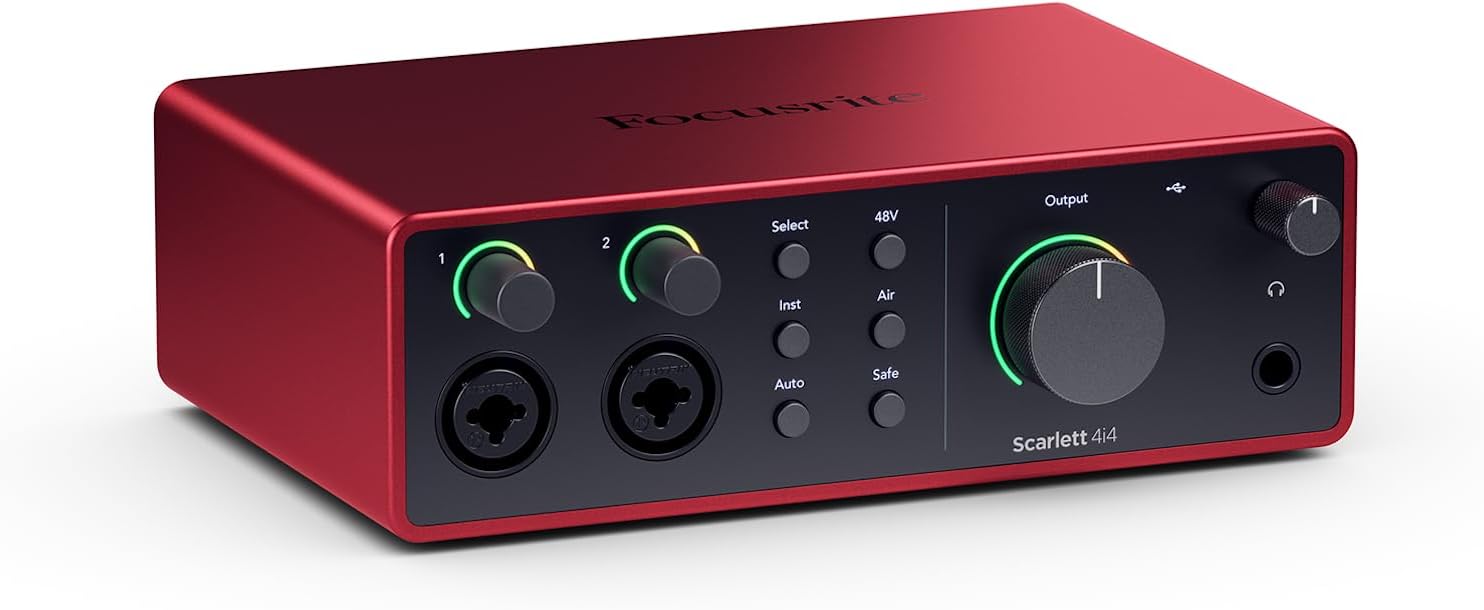
May Not Be Ideal For: Studios requiring more than 2 simultaneous inputs, or users needing extensive analog I/O routing. If you frequently record full bands or require MIDI I/O, consider the Scarlett 4i4 instead.
Comparison Note: The Scarlett 2i2 4th Gen represents the sweet spot between affordability and professional quality. It's the industry standard for entry-level home studios and competes favorably with interfaces costing significantly more.

Pros
- Exceptional value for budget-conscious beginners and experienced musicians on tight budgets
- Midas preamp technology ensures professional-grade sound quality that punches above its price class
- Straightforward setup requires minimal technical knowledge, making it ideal for first-time users
- Durable metal casing and proven track record provide confidence in long-term reliability
- Direct monitor switch and headphone output enable comfortable tracking without latency issues
Cons
- Monitor output quality is noticeably lower than higher-end interfaces, limiting mixing accuracy
- Signal and clipping indicator lights only activate above 50% gain, potentially missing some input issues
- Limited to 48 kHz base sample rate, though it can handle up to 96 kHz with some DAWs
The Behringer UMC22 is a compact 2x2 USB audio interface designed for solo musicians, podcasters, home recordists, and anyone entering the world of digital audio production. This interface brings professional recording capabilities to your laptop or desktop computer without the complexity or expense of high-end gear. It is specifically built for creators who prioritize simplicity, affordability, and reliable performance over flashy features.
The standout feature is undoubtedly the Midas-designed mic preamp, which carries decades of professional audio heritage into this budget-friendly package. Users consistently report that the preamp delivers surprisingly clean, detailed recordings of vocals and acoustic instruments. The combination XLR/TRS input jack accommodates both microphones and line-level gear, while the dedicated 1/4 inch instrument input lets you connect guitars or keyboards without needing external adapters. Direct monitoring capability allows you to hear yourself in real-time during recording, dramatically improving performance quality and reducing latency frustration.
Build quality is solid with an all-metal chassis that feels more durable than competitors at this price point. The interface requires no external power supply thanks to USB bus power, and driver installation is straightforward on both Windows and Mac systems. Setup takes minutes rather than hours, and the device integrates seamlessly with Pro Tools, Ableton Live, Cubase, and virtually every other major DAW on the market. The compact size makes it genuinely portable for mobile recording sessions or travel.
The main limitations are that the monitor output quality is noticeably compromised compared to higher-tier interfaces, and the signal indicator lights require above 50% gain to function properly. The base sample rate tops out at 48 kHz, though some configurations support up to 96 kHz. These tradeoffs are reasonable given the price point and intended use case.
The UMC22 remains an excellent first interface or backup solution for anyone serious about recording but unwilling to spend hundreds of dollars. After a decade on the market with thousands of satisfied users, it has proven its reliability and value proposition repeatedly. For under fifty dollars, you get professional-grade preamp technology, plug-and-play simplicity, and genuine recording capability that will not disappoint beginners or budget-conscious professionals alike.
Audio Connectivity: 2 inputs via combination XLR/TRS jack plus 1/4 inch instrument input, 2 outputs via 1/4 inch TRS jacks, USB 2.0 connection
Audio Quality: 48 kHz sample rate standard, up to 96 kHz maximum, 24-bit resolution, Midas-designed mic preamp with phantom power support
Physical Specs: Ultra-compact all-metal housing, USB bus powered, no external power supply required, weight approximately 16 ounces
Compatibility: Windows and Mac computers, compatible with Pro Tools, Ableton Live, Cubase, and all major DAW software
Features: Direct monitor select switch, headphone output with dedicated volume control, signal and clip indicator LEDs, +48V phantom power switch
Who Should Buy: This interface is perfect for beginners making their first recording setup investment, podcasters needing reliable voice capture, home musicians recording guitar or vocals, and experienced engineers seeking an affordable backup interface. It excels for solo artists working in small spaces or mobile recording situations.
Who Should Look Elsewhere: If you need professional mixing and mastering capabilities with pristine monitor output, or if you require more than two simultaneous inputs, consider stepping up to a higher-tier interface. Producers working at 192 kHz or requiring FireWire connectivity should also explore alternatives.
Setup Tips: Install drivers before connecting the device. Use quality balanced XLR cables for microphone connections to minimize noise. Position the interface on a stable surface away from magnetic interference. Adjust input gain so the signal peaks around 75% to avoid clipping while maintaining headroom.
Best Use Cases: Home recording studios, podcasting setups, guitar and vocal recording, bedroom producer setups, educational environments, and as a portable backup interface for traveling musicians.
Pros
- Exceptional value at under $40 for professional-grade mobile recording capabilities
- No batteries required, no drivers to install, truly plug-and-play simplicity
- Dual output options provide flexibility for headphone practice or live amplifier use
- Lightweight and compact design makes it perfect for traveling musicians and remote recording
- Clean thru switch allows simultaneous use as a tuner and recorder without signal processing
Cons
- Requires Lightning to 3.5mm or USB-C to 3.5mm adapter for newer iPhone and iPad models without headphone jack
- Some users report occasional latency issues on older or lower-storage iOS devices
- Android compatibility is limited compared to iOS, restricting platform options for some users
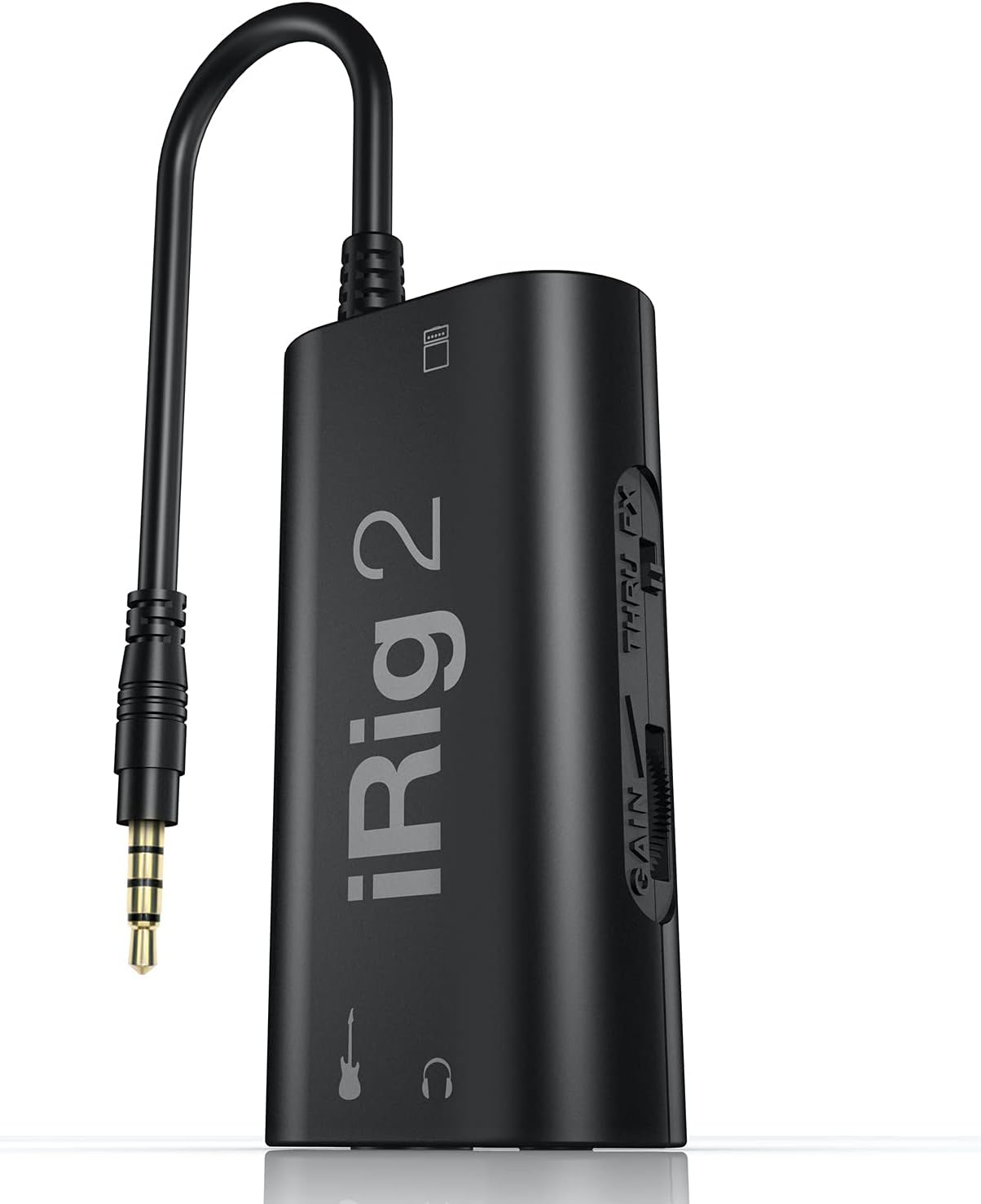
The iRig 2 is a compact guitar audio interface designed to turn your iPhone, iPad, or iPod touch into a portable recording studio. Whether you're a bedroom guitarist looking to capture ideas, a traveling musician needing practice tools, or someone exploring amp modeling and effects, this device delivers professional functionality at an entry-level price point. Its simplicity and reliability have made it a bestseller in the mobile recording space.
What sets the iRig 2 apart is its thoughtful design combining ease of use with genuine flexibility. The adjustable gain dial ensures clean, properly-leveled recordings without distortion. The dual output system is particularly clever, offering a 1/8 inch headphone jack for silent practice and a 1/4 inch amplifier output for integration into your live rig without adapters. The included clean thru switch lets you bypass processing to preserve your guitar's natural tone, making it equally useful as a tuner or recorder alongside the free AmpliTube CS app.
Build quality is solid for the price, with a compact form factor measuring just 1.6 by 2.9 inches and weighing 3.5 ounces. The device requires no batteries and no software installation, making it genuinely plug-and-play. However, newer iPhones and iPads without 3.5mm headphone jacks require a separate Lightning to 3.5mm or USB-C to 3.5mm adapter, which is an additional expense and slight inconvenience. Some users on older devices with limited storage report occasional latency, though this is more a device limitation than an iRig 2 issue.
The main limitation is platform support, as the Android version of AmpliTube lacks features compared to iOS. Additionally, PC users cannot use this device, as most computers lack TRRS inputs. These constraints won't affect most mobile musicians, but they're worth considering if you plan multi-platform use.
The iRig 2 remains an outstanding choice for guitarists seeking affordable, portable recording and practice capabilities. At under $40, it offers exceptional value and has earned its place as a bestseller among mobile audio interfaces. Recommended for beginners, practicing musicians, traveling performers, and anyone wanting to explore digital amp modeling on their mobile device.
The iRig 2 works with all iPhone and iPad models from iPhone 6 and later, including the full iPhone 16 lineup. Devices with built-in 3.5mm headphone jacks connect directly, while newer models require a Lightning to 3.5mm adapter (iPhone 8 through 13) or USB-C to 3.5mm adapter (iPhone 15 and 16 series).
iPad compatibility spans from iPad 6th generation through iPad Pro 7th generation, iPad Air 3rd through 6th generation, and iPad Mini 5th through 7th generation. iPod 7th generation is also supported. Note that the iRig 2 is designed for iOS and iPadOS only, with limited Android functionality. PC and Mac users should explore alternative interfaces designed for those platforms.
Setup is straightforward: connect your guitar to the 1/4 inch instrument input, plug the iRig 2 into your device's headphone jack (or via adapter on newer models), and adjust the gain dial until the input level is optimal. Download the free AmpliTube CS app from the App Store to access virtual amps, effects, and a tuner.
Use the clean thru switch to toggle between processed effects and pure analog signal path. For headphone monitoring, plug headphones into the 1/8 inch output. For live performance or studio recording, use the 1/4 inch output to connect to your amplifier or mixer. No drivers or software installation is required beyond the optional AmpliTube app.
Pros
- Exceptional value at this price point with dual XLR inputs that competitors charge significantly more for
- Compact 7.5-inch width and lightweight design make it genuinely portable for on-the-go recording
- Zero-latency monitoring via USB/Direct switch eliminates the frustration of hearing delayed playback while recording new parts
- Included software suite jumpstarts your production immediately without additional purchases
- Transparent preamps deliver clean, professional-grade audio from entry-level to mid-range microphones
Cons
- Plastic construction feels lightweight, which some users perceive as lower build quality despite reliable performance
- 48kHz maximum sample rate is lower than some competing interfaces, limiting high-resolution audio work
- Gain staging may require careful management with certain microphones, as some users report insufficient gain at maximum levels
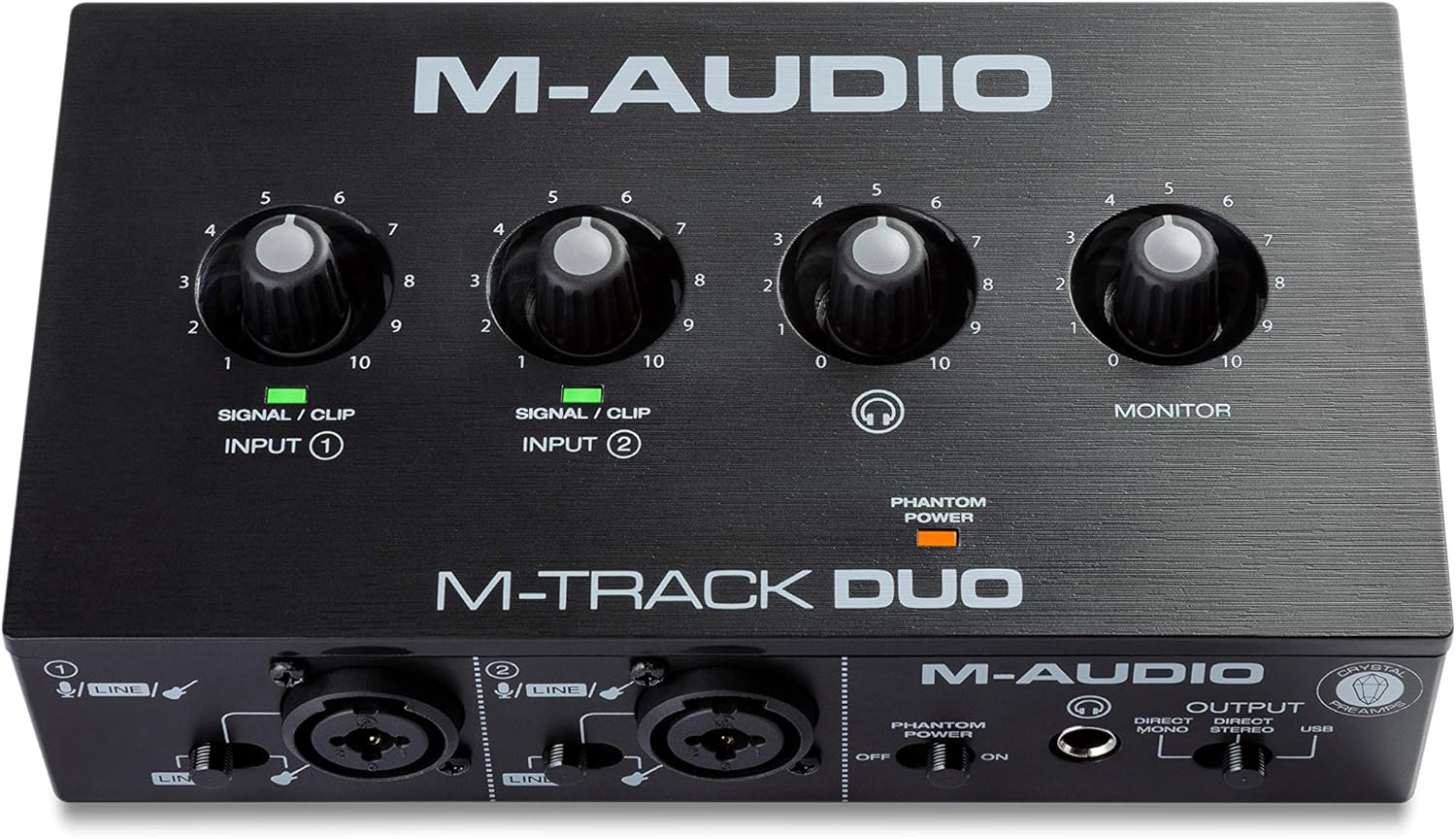
The M-Track Duo is a compact USB audio interface designed for podcasters, musicians, and content creators who need professional recording capabilities without the complexity or cost of larger studio setups. With dual XLR combo inputs, phantom power, and integrated instrument switching, this interface handles vocals, acoustic instruments, guitars, keyboards, and line-level devices with equal competence. It's the kind of gear that lets you go from idea to finished recording in minutes rather than hours.
What sets the M-Track Duo apart is its zero-latency direct monitoring feature, which eliminates the maddening delay that plagues cheaper interfaces. The USB/Direct switch lets you blend your live input signal with playback from your DAW, making it easy to record layered parts or add instruments to existing compositions. The transparent Crystal Preamps deliver clean, detailed audio that punches above its weight class, and phantom power support means you can work with professional condenser microphones without compromise.
Build quality is straightforward plastic construction that feels lightweight but proves durable in real-world use. The compact 7.5-inch width and 0.3kg weight make it genuinely portable, fitting easily into a laptop bag. All connections are professional-grade balanced XLR and quarter-inch TRS connectors, with a headphone output that supports standard stereo headphones via a quarter-inch adapter.
The main limitation is the 48kHz maximum sample rate, which is lower than some competing interfaces in higher price brackets. Additionally, some users report that gain staging requires careful management depending on your microphone, though this is rarely a dealbreaker for entry-level recording. The included MPC Beats software and ProTools First bundle provide legitimate production tools, though you'll likely graduate to more advanced DAWs as your skills develop.
The M-Track Duo delivers genuine value and reliability for anyone starting their recording journey or needing a portable backup interface. It handles its core mission of capturing clean, professional audio without fuss, making it an excellent choice for podcasters, singer-songwriters, and bedroom producers with realistic budgets.
Audio Specifications: Maximum sample rate of 48kHz with 16-bit resolution, 20kHz frequency response, and 1 megaohm impedance. Two channels of audio input and output.
Connectivity: Dual balanced XLR microphone inputs with phantom power, balanced quarter-inch line inputs, unbalanced quarter-inch instrument inputs, stereo quarter-inch main outputs, quarter-inch TRS headphone output, and USB Type B connection for computer and compatible iOS devices.
Dimensions and Weight: 7.5 inches wide by 4.34 inches deep by 2.13 inches tall, weighing just 0.3kg for maximum portability. Completely USB-powered with no external power supply required.
Compatibility: Works with Windows 7 and later via ASIO drivers, Mac OS High Sierra through Big Sur with class-compliant support, iOS with Apple Lightning to USB3 adapter, and Android devices. Compatible with all major DAWs including Logic Pro, ProTools, GarageBand, Studio One, Cubase, and Ableton Live.
Included Accessories: USB Type B to Type A cable, software download cards for MPC Beats and ProTools First, user guide, and safety documentation. Backed by a one-year manufacturer warranty.
Ideal For: This interface is perfect for podcasters launching their first show, musicians recording demos at home, content creators adding professional audio to videos, and anyone needing portable recording capability. It's also excellent for experienced engineers who need a reliable backup interface or travel-friendly setup.
Consider Alternatives If: You require sample rates above 48kHz for professional mastering work, need more than two simultaneous inputs, or demand premium metal construction and extensive onboard controls. However, for the vast majority of recording scenarios, the M-Track Duo delivers everything you need.
Budget Consideration: At this price point, the M-Track Duo offers exceptional value compared to single-channel competitors and provides genuine professional features like phantom power and zero-latency monitoring that many similarly-priced interfaces omit entirely.

Pros
- Exceptional I/O flexibility with ADAT, S/PDIF, and MIDI support for integrating external gear
- Intelligent gain management tools eliminate guesswork and reduce recording errors
- Professional converter quality rivals interfaces costing significantly more
- Includes substantial software bundle that adds real production value
- Reliable Focusrite build quality with 3-year manufacturer warranty
Cons
- Some users report a learning curve with continuous-turn knobs requiring visual confirmation of settings
- Rare power delivery issues reported by isolated users, though Amazon return policy provides protection
- Premium price point may be steep for hobbyists just starting out
The Focusrite Scarlett 18i16 4th Gen is a professional audio interface designed for serious home studio producers, recording engineers, and musicians who need extensive I/O connectivity and studio-grade sound quality. With 18 inputs and 16 outputs, this interface serves as the central hub for complex recording setups, hardware integration, and multitrack production workflows.
What sets this interface apart is its combination of professional-grade components and intelligent workflow tools. The four 4th generation microphone preamps deliver an impressive 69dB of gain, capable of capturing everything from whisper-quiet vocals to hard-hitting drums without compromise. The 24-bit/192kHz converters sourced from Focusrite's flagship RedNet range provide a 122dB dynamic range that rivals much more expensive interfaces. The Air modes add harmonic character and presence that gives recordings the polish of classic studio consoles, while Auto Gain and Clip Safe modes handle real-time level optimization so you can concentrate on the performance rather than technical adjustments.
Build quality is solid throughout, with a compact footprint that doesn't consume excessive desk real estate despite its impressive feature set. The interface connects via USB-C and works seamlessly across Mac, Windows, and iOS platforms. The included software bundle, featuring Pro Tools Intro+, Ableton Live Lite, Cubase LE, and professional effects, provides immediate production capability without additional software purchases.
The primary drawback involves the continuous-turn knobs on the interface, which require you to reference the display indicators for level confirmation rather than relying on tactile stops. This takes minor adjustment time for users transitioning from older Scarlett models. Additionally, while extremely rare, a small number of users have reported power delivery issues, though Amazon's return policy ensures protection against defective units.
The Focusrite Scarlett 18i16 4th Gen delivers exceptional value for professional and semi-professional studios. Its extensive connectivity, superior audio quality, and intelligent gain management make it an excellent choice for recording, mixing, and complex hardware integration. This interface rewards serious producers with the tools and sound quality needed to create professional recordings at home.
Connectivity and I/O: 18 inputs and 16 outputs including four XLR microphone inputs, two Hi-Z instrument inputs, eight line inputs, ADAT, S/PDIF, and MIDI I/O. USB-C connection supports Mac OS, Windows OS, and iOS.
Audio Quality: 24-bit resolution at up to 192kHz sample rate. 122dB dynamic range. Four 4th generation mic preamps with 69dB gain. Hi-Z inputs for direct instrument connection.
Physical Specifications: Dimensions 9.43 inches wide by 6.66 inches deep by 2.38 inches tall. Weight 3.8 pounds. Includes external power supply and USB cable.
Software and Support: Compatible with all audio recording software. Includes Pro Tools Intro+, Ableton Live Lite, Cubase LE, and Hitmaker Expansion. Three-year manufacturer warranty included.
Ideal For: Recording engineers and producers who need extensive I/O for multitrack recording, hardware integration, and complex routing. Musicians and producers working with multiple external instruments, processors, and effects. Anyone seeking professional-grade audio quality without the expense of traditional studio consoles.
Consider Alternatives If: You're a beginner looking for a simple 2-in/2-out interface for basic recording. You need Thunderbolt connectivity instead of USB-C. You require more than four microphone preamps on a single interface.

Pros
- Exceptional reliability and durability compared to higher-priced competitors, with users reporting years of trouble-free operation
- Incredibly low latency performance (as low as 5ms) makes real-time monitoring and overdubbing smooth and responsive
- Transparent Crystal Preamp delivers clean, professional-quality sound from condenser microphones and all input sources
- Truly portable and lightweight at just 10.6 ounces with USB-only power, ideal for traveling musicians and remote podcasters
- Outstanding value for the price with included software and compatibility across Mac, Windows, and iOS platforms
Cons
- Line input accepts mono signals only, limiting stereo recording from certain consumer electronics without additional splitters
- Gain levels run slightly low on some inputs, requiring careful gain staging or boosting in post-production for quieter sources
- Uses USB Type-B connector instead of modern USB-C, requiring an adapter for newer laptops and devices
The M-Audio M-Track Solo is a compact USB audio interface designed for recording, podcasting, live streaming, and music production on Mac and Windows computers. It's perfect for beginners stepping up from built-in audio, budget-conscious musicians, podcasters working remotely, and anyone who needs reliable recording quality without complexity or expense.
The standout feature is its zero-latency direct monitoring capability, which lets you hear your input signal in real-time while recording. Users consistently report achieving 5-10ms latency, making overdubbing and live monitoring feel natural and responsive. The Crystal Preamp delivers transparent, clean audio from condenser microphones, and the switchable XLR/Line/Instrument inputs provide flexibility for guitars, keyboards, and line-level devices. The dual-channel design lets you record stereo instruments or capture two sources simultaneously.
Build quality is solid and reliable. The compact 6.4 x 4.5-inch footprint weighs just 10.6 ounces, making it genuinely portable for traveling musicians and remote workers. USB-only power eliminates the need for an external power supply, and the class-compliant design means Mac users get plug-and-play operation without driver installation. The included MPC Beats software and ProTools First provide immediate production tools out of the box.
The main limitation is that the line input only accepts mono signals, which complicates stereo recording from consumer electronics without additional splitters. Gain levels also run somewhat low on certain inputs, requiring careful gain staging to avoid recording quiet sources. The USB Type-B connection feels dated compared to USB-C on modern laptops.
For the price, the M-Audio M-Track Solo delivers exceptional value and reliability. It's a genuinely professional-quality interface that handles podcasting, music recording, and streaming without the complexity or cost of premium alternatives. Highly recommended for anyone starting out or upgrading from basic computer audio.
Audio Specifications
Sample Rate: 48 kHz maximum
Frequency Response: 20 Hz - 20 kHz
Channels: 2-channel recording and playback
Impedance: 1 megaohm
Inputs and Outputs
Microphone Input: Balanced XLR with phantom power
Line Input: Balanced 1/4 inch TRS (mono)
Instrument Input: Unbalanced 1/4 inch TS
Headphone Output: 1/8 inch stereo
Main Outputs: Stereo RCA connectors
Connectivity and Compatibility
Connection: USB Type-B
Operating Systems: Windows 7-10, macOS High Sierra through Big Sur, iOS (with Lightning to USB3 adapter)
DAW Compatibility: Logic Pro, ProTools, GarageBand, Studio One, Cubase, Ableton Live, and virtually all major DAWs
Physical Specifications
Dimensions: 6.43 inches W x 4.46 inches D x 2.14 inches H
Weight: 10.6 ounces
Power: USB-powered only, no external power supply required
Ideal For
Podcasters and content creators recording interviews, solo episodes, or voiceovers from home or on location. Musicians recording acoustic instruments, vocals, guitar, or keyboards without complex mixing needs. Streamers adding professional audio quality to live broadcasts. Beginners learning music production and recording fundamentals. Traveling musicians needing portable, reliable recording capability.
May Not Be Ideal For
Professional studios requiring multi-track simultaneous recording from multiple instruments. Users needing stereo line input for consumer electronics without workarounds. Those requiring higher sample rates above 48 kHz. Anyone exclusively using modern USB-C equipped devices without adapters.

Pros
- Exceptional audio quality with no background noise, even at budget price point
- Truly plug-and-play functionality works immediately on Windows, Mac, and Linux systems
- Dual combo jacks provide maximum flexibility for microphones, guitars, and line-level sources
- Lightweight and compact form factor ideal for desk space and portability
- Zero-latency monitoring enables confident tracking without hearing delay or echo
Cons
- LED illumination on gain knobs does not function as prominently displayed in product images
- Requires careful gain adjustment when connecting instruments with built-in preamps to avoid clipping
- Limited to 2 input channels, which may not suit users needing more simultaneous inputs
The PIYONE Q2 is a 2x2 USB-C audio interface designed for home recordists, podcasters, guitarists, and content creators who want professional-grade sound without complexity. It bridges the gap between budget-friendly and professional-quality recording, making it an ideal first interface for beginners or a secondary interface for established creators.
The standout feature is its genuine plug-and-play operation. Simply connect the USB-C cable to your computer, and the interface is recognized immediately on Windows, Mac, and Linux systems without any driver installation. The 24-bit/192kHz audio resolution captures professional-quality recordings with excellent clarity and minimal noise. The zero-latency direct monitoring feature eliminates tracking delays, allowing you to hear yourself in real-time without the frustrating latency that plagues cheaper interfaces. Dual XLR/TRS combo inputs with 48V phantom power provide flexibility for condenser microphones, dynamic mics, guitars, and line-level sources.
Build quality and design are impressive for the price. The compact form factor fits easily on any desk without consuming valuable space. The illuminated control knobs create a modern, professional aesthetic that looks great in any studio setup. The interface feels solid and well-constructed, with ergonomic knobs and buttons positioned for comfortable operation during long recording sessions.
One notable drawback is that the LED illumination on the gain knobs does not function as prominently as shown in product images, which may disappoint users specifically drawn to this visual feature. Additionally, users must exercise caution when adjusting gain levels with instruments that have built-in preamps, as excessive gain can cause clipping. The 2-channel limitation means this interface cannot handle multiple simultaneous inputs beyond two sources.
Verdict: The PIYONE Q2 delivers exceptional value for beginners and budget-conscious creators seeking professional audio quality without complexity. Its combination of studio-grade sound, zero-latency monitoring, and truly plug-and-play setup makes it an excellent choice for home recording, podcasting, and content creation. Recommended for anyone starting their recording journey or needing a reliable portable interface.
Audio Quality: 24-bit resolution, 192kHz maximum sample rate, high-performance converters, low-noise design
Connectivity: USB-C port (handles both data transfer and bus power), 3.5mm headphone jack
Inputs: 2 XLR/TRS combo jacks, 48V phantom power supply
Channels: 2 input channels, 2 output channels
Features: Zero-latency direct monitoring, monitor mix function, loopback capability, illuminated control knobs, class-compliant design
Compatibility: Mac, Windows PC, Linux, iOS (via USB-C adapter)
Physical: Compact portable design, 0.74 kg weight, Alloy Red finish
Warranty: 2-year limited warranty
Ideal For: Beginner recording artists, podcasters, singer-songwriters, content creators, home studio enthusiasts, and anyone seeking professional audio quality without complex setup requirements.
Perfect Use Cases: Recording vocals with condenser microphones, capturing acoustic guitar performances, podcasting and voice-over work, streaming with professional audio quality, music production on a budget, portable recording for travel or mobile content creation.
Not Ideal For: Users requiring more than 2 simultaneous inputs, professional studios with extensive I/O requirements, or those specifically seeking prominent LED illumination effects on control knobs.
How to Choose Your Audio Interface
Input Type and Count
First, assess what you need to connect. A dedicated Hi-Z instrument input is essential for guitars and basses. It prevents signal loss and maintains tonal integrity. Combo jacks offering XLR and ¼-inch connections provide maximum flexibility for microphones and line-level sources.
Consider your simultaneous recording needs. A solo vocalist with a guitar might only need two inputs. A small band or someone recording multiple synths will require more. Interfaces like the Focusrite Scarlett 18i16 offer expansive connectivity for complex setups.
Sound Quality and Preamps
The microphone preamplifier is the heart of your signal chain. It must provide clean, quiet gain to boost weak signals without adding noise. Look for interfaces boasting low-noise preamp designs, which are critical for capturing delicate acoustic details.
High-resolution audio conversion, such as 24-bit/192kHz, ensures your recordings have wide dynamic range and clarity. Features like Focusrite’s Air mode or dedicated high-gain preamps, as discussed in our guide on the best audio interfaces with high gain preamps, add professional polish directly at the source.
Connectivity and Latency
Modern interfaces typically connect via USB. USB-C offers faster data transfer and often supplies bus power, eliminating the need for a separate adapter. Driverless, class-compliant interfaces offer plug-and-play simplicity across Mac, PC, and even iOS devices.
Latency, the delay between playing and hearing the sound, can ruin a performance. A direct monitor function, which routes the input signal directly to your headphones, provides zero-latency monitoring. This is a vital feature for any real-time recording situation.
Software and Workflow Features
Many interfaces bundle valuable recording software and plugin suites. These can include digital audio workstations, virtual instruments, and effects, providing a complete production toolkit out of the box. It is a fantastic way to start building your sonic palette.
Workflow enhancements like Focusrite’s Auto Gain, Clip Safe, and illuminated metering streamline the recording process. They help you set perfect levels quickly and prevent ruined takes. For more on clean signal paths, explore our review of the best audio interfaces with low noise preamps.
Final Thoughts
Selecting the right audio interface hinges on matching its capabilities to your creative workflow. For most musicians starting a home studio, the Focusrite Scarlett 2i2 4th Gen USB-C Audio represents an outstanding balance of professional sound, intuitive features, and reliable performance. If your budget is the primary concern and you need a straightforward, no-fuss solution for getting ideas down, the Behringer UMC22 Audiophile 2×2 delivers remarkable value and solid functionality, proving that great recordings do not require a massive investment.
Frequently Asked Questions
What is a Hi-Z input and why do I need it for guitar?
A Hi-Z (High Impedance) input is specifically designed to accept the signal from passive guitar pickups and basses. Using a standard line input can result in a weak, thin, and tonally compromised sound. The Hi-Z input correctly matches the impedance, preserving your instrument’s full frequency response and output level for a robust, natural recording.
Can I use an audio interface with my phone or tablet?
Yes, many modern interfaces are class-compliant, meaning they work with iOS devices and some Android tablets with the appropriate adapter. Dedicated mobile interfaces like the IK Multimedia iRig 2 are built for this purpose. For a broader look at simple connectivity, check our list of the best driverless audio interfaces for 2026.
How many inputs do I really need?
This depends entirely on what you plan to record simultaneously. If you are a solo artist recording vocals and a guitar one at a time, two inputs are sufficient. For recording a drum kit, a full band, or multiple microphones and instruments at once, you will need an interface with eight or more preamps. Consider your future needs to avoid outgrowing your gear too quickly.
Do I need an external power supply for my interface?
Most compact two-input interfaces are bus-powered, drawing all necessary power from your computer’s USB port. This makes them highly portable. Larger interfaces with many inputs and outputs often require an external power adapter to supply enough current for all their circuits. Our guide on best bus powered audio interfaces highlights convenient, portable options.


Write Your Review
No reviews yet. Be the first to share your experience!