
If you’re building a Pro Tools rig, your audio interface is the cornerstone. It’s the gatekeeper between your microphones, instruments, and the pristine digital realm of your sessions. A subpar interface can introduce noise, latency, and frustration, derailing even the most inspired creative sessions. This guide is crafted for musicians, podcasters, and producers who demand reliability and studio-grade sound from their digital audio workstation.
We have evaluated several leading models to identify the top performers that integrate seamlessly with Pro Tools. Whether you’re tracking vocals, laying down guitar parts, or producing full mixes, the right interface makes all the difference. For a broader look at tools for your digital workspace, explore our guide on the best audio interfaces for DAW.

Pros
- Exceptional sound quality at an affordable price point with professional-grade converters
- Auto Gain and Clip Safe features eliminate guesswork and prevent ruined takes
- Includes industry-leading software and plugin bundle worth hundreds separately
- Minimal latency and simple setup makes it accessible for beginners and professionals alike
- Air Mode adds musical character and presence without complex EQ adjustments
Cons
- Limited to 2 inputs and 2 outputs, so users requiring more channels will need to upgrade
- Air Mode's second preset may not suit all vocal types and requires some experimentation
- USB-C cable included, but USB-A adapters not provided for older computers
The Focusrite Scarlett 2i2 4th Gen is a professional USB-C audio interface designed for musicians, podcasters, content creators, and home studio enthusiasts. Whether you're recording vocals, guitars, drums, or streaming, this compact interface delivers studio-quality sound with intelligent features that make recording intuitive and forgiving. It's the interface of choice for bedroom producers and professional touring musicians alike.
The standout feature is the combination of studio-grade converters with 120dB dynamic range, matched to equipment found in world-class recording studios, paired with intelligent Auto Gain and Clip Safe technology. Auto Gain automatically sets optimal recording levels for your microphone or instrument, while Clip Safe prevents distortion from sudden loud peaks. The two ultra-low-noise mic preamps offer 69dB of analog gain, handling even demanding dynamic microphones without struggling. Air Mode adds musical presence and harmonic richness, lifting vocals and guitars forward in the mix with the character of a large-format console.
Build quality is excellent for the price, with a sleek, durable aluminum chassis and intuitive front-panel controls. The amped headphone output delivers full volume through any headphones with independent control, and USB-C connectivity provides bus power directly from your computer with virtually zero latency. Setup is remarkably simple: connect your mic or guitar, plug in USB, launch your DAW, and start recording. The included software bundle (Pro Tools Intro+, Ableton Live Lite, Cubase LE, and Hitmaker Expansion) provides professional tools right out of the box.
The primary limitation is the 2-input, 2-output configuration, which may feel restrictive if you need to record multiple sources simultaneously or require more complex routing. Additionally, Air Mode's second preset cuts midrange aggressively, which works beautifully on some sources but may require switching back to Air Mode 1 or disabling it entirely for certain vocal types. The included USB-A to USB-C cable works perfectly, though older computers may need adapters.
Verdict: The Scarlett 2i2 4th Gen is an exceptional value for anyone serious about recording quality audio at home. Its combination of professional sound, intelligent features, and comprehensive software bundle makes it the industry standard for entry-level and mid-level home studios. Highly recommended for beginners and professionals alike.
Audio Inputs and Outputs: 2 microphone/line inputs, 2 hi-Z instrument inputs, 2 line outputs, headphone output with independent volume control
Audio Quality: 24-bit/192kHz resolution, 120dB dynamic range, 20Hz-20kHz frequency response
Connectivity: USB-C (includes USB-A to USB-C cable), compatible with Mac OS, Windows OS, and iOS
Microphone Preamps: 2 ultra-low-noise preamps with 69dB analog gain, Auto Gain, and Clip Safe features
Physical Dimensions: 7.09 inches wide x 4.61 inches deep x 1.87 inches tall, weighs 1.7 pounds
Software Included: Pro Tools Intro+, Ableton Live Lite, Cubase LE, Hitmaker Expansion (includes Auto-Tune Access, Softube Marshall Silver Jubilee, Native Instruments MASSIVE)
Warranty: 3-year manufacturer warranty with 24/7/365 support
Perfect For: Home recording enthusiasts, singer-songwriters, bedroom producers, podcasters, guitarists, streamers, and anyone upgrading from built-in computer audio. This interface is also ideal for musicians who gig with laptops and need reliable, portable audio I/O.
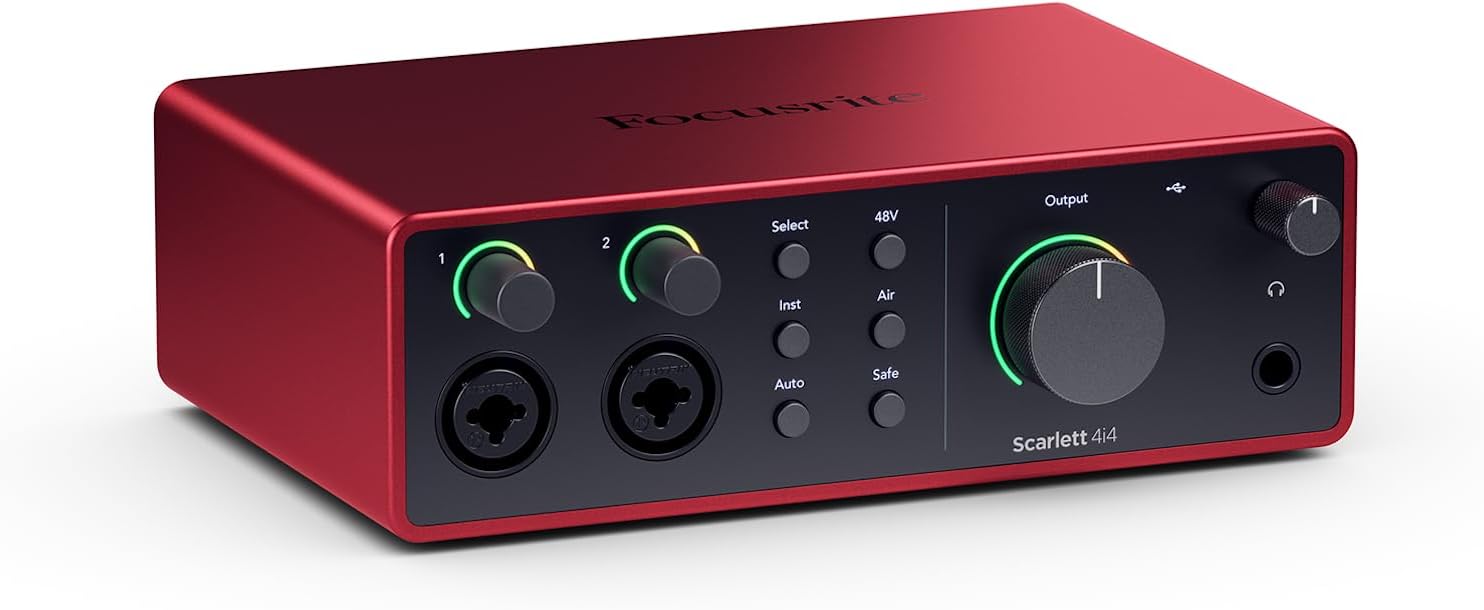
May Not Be Ideal For: Studios requiring more than 2 simultaneous inputs, or users needing extensive analog I/O routing. If you frequently record full bands or require MIDI I/O, consider the Scarlett 4i4 instead.
Comparison Note: The Scarlett 2i2 4th Gen represents the sweet spot between affordability and professional quality. It's the industry standard for entry-level home studios and competes favorably with interfaces costing significantly more.

Pros
- Professional audio quality at an affordable price point with excellent build reliability
- Complete bundle eliminates the need for separate purchases of microphone, stand, and accessories
- Intuitive interface with multicolor gain halos requires no technical knowledge or steep learning curve
- Versatile connectivity supports both XLR microphones and 1/4 inch instruments simultaneously
- Includes Ableton and Pro Tools software for immediate music production capability
Cons
- USB-C connectivity may require adapters for older computers without native USB-C ports
- Standalone mode functionality is limited compared to full computer-based recording workflows
- Included headphones and microphone are entry-level quality, though adequate for most users
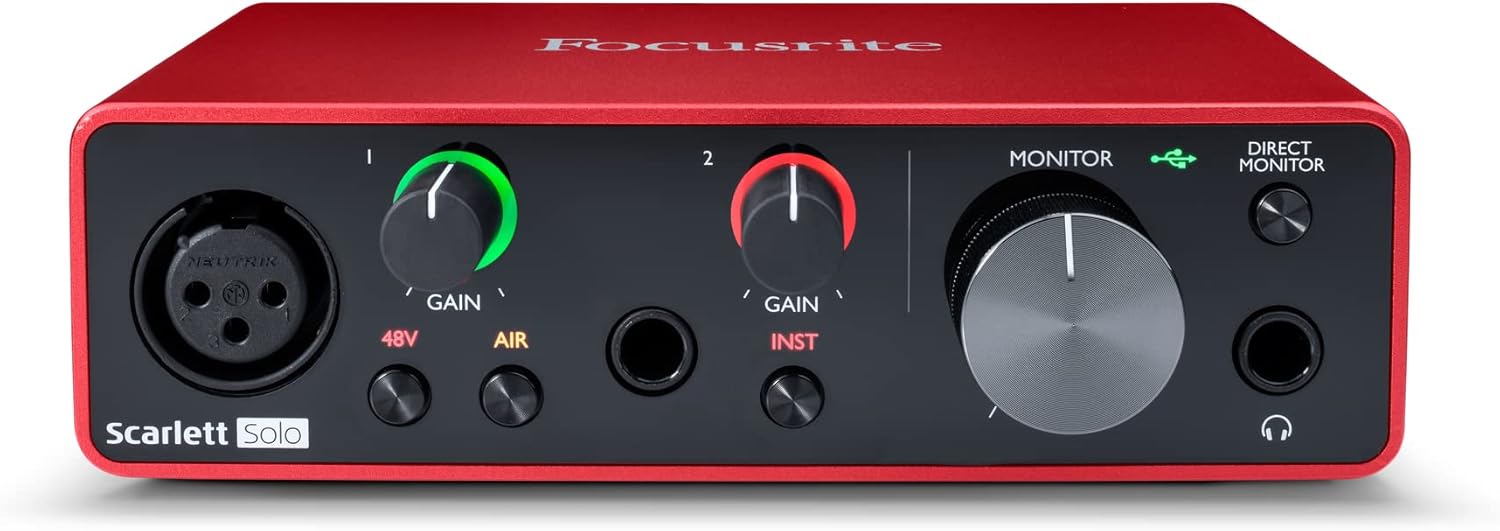
The Focusrite Scarlett Solo 4th Generation is a professional USB-C audio interface designed for musicians, podcasters, singers, and content creators who need studio-quality recording without complexity. This complete bundle provides everything needed to start recording immediately, making it perfect for beginners and experienced creators alike who want portability without sacrificing audio fidelity.
The standout technical achievement here is the 24-bit/192 kHz AD/DA conversion with 120 dB dynamic range, matching professional studio standards. The Air Mode circuit adds clarity and harmonic richness to vocals with a single toggle, while zero-latency direct monitoring eliminates the frustrating delay that plagues many budget interfaces. For podcasters and streamers, the Virtual Loopback feature seamlessly mixes computer audio with external sources, and the new standalone mode enables operation without a computer for live situations.
Build quality is solid with a compact form factor that travels easily. The included CM25 MkIII condenser microphone captures vocals and instruments with respectable clarity, while the SH-450 headphones provide accurate closed-back monitoring. The bundle includes a professional mic stand with boom, pop filter, and quality XLR cables, eliminating the frustration of hunting for compatible accessories.
The main limitation is USB-C connectivity, which requires an adapter on older computers. Additionally, while the included microphone and headphones are capable, experienced producers may eventually upgrade these components. The standalone mode, though useful, offers fewer features than computer-based recording workflows.
Verdict: This is an exceptional value for anyone starting a home studio or upgrading from entry-level equipment. The combination of professional audio quality, intuitive operation, and complete accessories makes it the smartest choice for creators who want results immediately without technical headaches or hidden costs.
This bundle is ideal for singer-songwriters who need to record vocals and guitar simultaneously through the Hi-Z instrument input and XLR mic preamp. The Air Mode is particularly beneficial for vocal recordings, adding professional presence and clarity that would otherwise require expensive plugins.
Podcasters and streamers benefit significantly from the Virtual Loopback feature, which allows mixing guest audio, background music, and system sounds without external mixing boards. The standalone mode also enables backup recording if your computer crashes during a live stream.
Content creators on YouTube, TikTok, and other platforms will appreciate the complete setup that requires no additional purchases. The interface works seamlessly with iPad through USB-C, enabling recording and editing on the go. Beginners find the multicolor gain halos and intuitive design remove all guesswork from audio setup.
Audio Conversion: 24-bit/192 kHz AD/DA conversion with 120 dB dynamic range for studio-quality fidelity.
Inputs and Outputs: XLR microphone preamp with 48V phantom power, 1/4 inch Hi-Z instrument input, stereo headphone output, and 2 monitor outputs for flexible routing.
Connectivity: USB-C connection supports Mac, Windows, and iPadOS with included USB-C to USB-A adapter cable for legacy computers.
Monitoring: Zero-latency direct monitoring with selectable Air circuit for vocal enhancement and Virtual Loopback for streaming applications.
Included Software: Ableton Live Lite, Pro Tools Intro, and Hitmaker Expansion for immediate music production capabilities.
Warranty: 3-year manufacturer warranty provides peace of mind and long-term protection.

Pros
- Exceptional audio quality with no background noise, even at budget price point
- Truly plug-and-play functionality works immediately on Windows, Mac, and Linux systems
- Dual combo jacks provide maximum flexibility for microphones, guitars, and line-level sources
- Lightweight and compact form factor ideal for desk space and portability
- Zero-latency monitoring enables confident tracking without hearing delay or echo
Cons
- LED illumination on gain knobs does not function as prominently displayed in product images
- Requires careful gain adjustment when connecting instruments with built-in preamps to avoid clipping
- Limited to 2 input channels, which may not suit users needing more simultaneous inputs
The PIYONE Q2 is a 2x2 USB-C audio interface designed for home recordists, podcasters, guitarists, and content creators who want professional-grade sound without complexity. It bridges the gap between budget-friendly and professional-quality recording, making it an ideal first interface for beginners or a secondary interface for established creators.
The standout feature is its genuine plug-and-play operation. Simply connect the USB-C cable to your computer, and the interface is recognized immediately on Windows, Mac, and Linux systems without any driver installation. The 24-bit/192kHz audio resolution captures professional-quality recordings with excellent clarity and minimal noise. The zero-latency direct monitoring feature eliminates tracking delays, allowing you to hear yourself in real-time without the frustrating latency that plagues cheaper interfaces. Dual XLR/TRS combo inputs with 48V phantom power provide flexibility for condenser microphones, dynamic mics, guitars, and line-level sources.
Build quality and design are impressive for the price. The compact form factor fits easily on any desk without consuming valuable space. The illuminated control knobs create a modern, professional aesthetic that looks great in any studio setup. The interface feels solid and well-constructed, with ergonomic knobs and buttons positioned for comfortable operation during long recording sessions.
One notable drawback is that the LED illumination on the gain knobs does not function as prominently as shown in product images, which may disappoint users specifically drawn to this visual feature. Additionally, users must exercise caution when adjusting gain levels with instruments that have built-in preamps, as excessive gain can cause clipping. The 2-channel limitation means this interface cannot handle multiple simultaneous inputs beyond two sources.
Verdict: The PIYONE Q2 delivers exceptional value for beginners and budget-conscious creators seeking professional audio quality without complexity. Its combination of studio-grade sound, zero-latency monitoring, and truly plug-and-play setup makes it an excellent choice for home recording, podcasting, and content creation. Recommended for anyone starting their recording journey or needing a reliable portable interface.
Audio Quality: 24-bit resolution, 192kHz maximum sample rate, high-performance converters, low-noise design
Connectivity: USB-C port (handles both data transfer and bus power), 3.5mm headphone jack
Inputs: 2 XLR/TRS combo jacks, 48V phantom power supply
Channels: 2 input channels, 2 output channels
Features: Zero-latency direct monitoring, monitor mix function, loopback capability, illuminated control knobs, class-compliant design
Compatibility: Mac, Windows PC, Linux, iOS (via USB-C adapter)
Physical: Compact portable design, 0.74 kg weight, Alloy Red finish
Warranty: 2-year limited warranty
Ideal For: Beginner recording artists, podcasters, singer-songwriters, content creators, home studio enthusiasts, and anyone seeking professional audio quality without complex setup requirements.
Perfect Use Cases: Recording vocals with condenser microphones, capturing acoustic guitar performances, podcasting and voice-over work, streaming with professional audio quality, music production on a budget, portable recording for travel or mobile content creation.
Not Ideal For: Users requiring more than 2 simultaneous inputs, professional studios with extensive I/O requirements, or those specifically seeking prominent LED illumination effects on control knobs.

Pros
- Unique hybrid connectivity allows simultaneous recording on computer and mobile devices without workflow interruptions
- Exceptional audio quality at 24-bit/192kHz with extremely low noise floor ideal for professional home studios
- Versatile dual XLR inputs accommodate most professional microphones for podcasting, streaming, and music production
- Intuitive independent controls for mute, headphone, and monitor functions provide precise streaming flexibility
- Included ProStudio 2 software with loopback routing and VST effects adds professional production capabilities
Cons
- Limited to 2 channels, which may be restrictive for users needing more simultaneous audio inputs
- Steep learning curve for ProStudio 2 software features despite intuitive hardware controls
- Requires USB power, limiting portability compared to some battery-powered alternatives
The MAONO P2 is a hybrid USB audio interface designed for content creators who work across multiple devices. Whether you're a podcaster recording on desktop while monitoring mobile uploads, a streamer managing simultaneous audio sources, or a musician tracking guitars and vocals across platforms, this interface bridges the gap between stationary and mobile production workflows. Its dual USB connectivity with MFi certification means you can connect a computer and phone or iPad at the same time without sacrificing quality or functionality.
What sets the P2 apart is its studio-grade audio performance paired with practical creator-focused features. The dual XLR inputs capture 24-bit/192kHz audio with a class-leading -130dB EIN, ensuring your vocals and instruments sound pristine even in untreated home studios. Independent mute controls, real-time signal indicators, and low-latency direct monitoring give you precise control during live streams and recordings. The included ProStudio 2 software handles complex audio routing, VST effects, and multi-source loopback capture, letting you blend backing tracks, desktop audio, and instrument inputs seamlessly.
The hardware itself reflects its creator-focused design philosophy. The compact aluminum-alloy chassis features an ergonomic 15-degree tilt that keeps controls within comfortable reach during long recording sessions. At desk-friendly dimensions, it works equally well in a dedicated home studio or as part of a mobile setup. Build quality feels solid, and the modern aesthetic fits contemporary workspace aesthetics without looking overly technical.
The main limitation is the 2-channel configuration, which restricts simultaneous inputs compared to larger interfaces. Additionally, while the ProStudio 2 software is powerful, its learning curve may challenge beginners unfamiliar with audio routing and VST workflows. USB power dependency also means you'll need a reliable power source for mobile use, unlike some battery-powered alternatives.
The MAONO P2 delivers excellent value for podcasters, streamers, and musicians who need professional audio quality without the complexity and cost of larger interfaces. Its hybrid connectivity solves real workflow problems for multi-device creators, and the audio performance justifies the investment for anyone serious about content quality.
Audio Quality: 24-bit/192kHz recording resolution, -130dB EIN, 56dB gain
Connectivity: Dual USB ports with USB-C to USB-A/C cable included, MFi-certified for iOS devices
Inputs: 2x XLR connectors for condenser and dynamic microphones
Channels: 2 channels with independent controls
Monitoring: Direct low-latency monitoring with independent headphone and monitor controls
Compatibility: Mac, PC, iPhone, Android, cameras, guitars, microphones, headphones, smartphones, tablets
Software: ProStudio 2 with VST effects, noise reduction, loopback routing, ASIO support
Supported Platforms: Ableton Live, Studio One, Logic Pro, Cubase, GarageBand, FL Studio, OBS, Twitch, Discord, YouTube, TikTok
Design: Aluminum-alloy housing, 15-degree ergonomic tilt, compact desk-friendly dimensions
Best For: Content creators who record across multiple devices, podcasters managing simultaneous audio sources, streamers needing independent controls, musicians tracking instruments and vocals with professional quality, and anyone transitioning between desktop and mobile production workflows.
Consider This If: You need more than 2 simultaneous audio inputs or prefer simpler software with less routing complexity. Also consider if you require battery-powered portability for field recording without USB power access.
Setup Requirements: USB power source, compatible microphones with XLR connectors or adapters, and basic familiarity with audio interface software. ProStudio 2 requires a computer or mobile device with sufficient processing power for VST effects.
Real-World Performance: Expect professional-grade vocal and instrument recordings suitable for commercial podcasts, streaming broadcasts, and music production. The dual connectivity eliminates common workflow interruptions when managing content across platforms, making it particularly valuable for creators juggling multiple distribution channels simultaneously.
How to Choose Your Pro Tools Audio Interface
Input/Output Configuration and Connectivity
Your first decision is how many sources you need to record simultaneously. A solo vocalist might only need one premium mic preamp, while a duo recording acoustic guitar and vocals will require two. Consider future needs, like adding a hardware compressor or a second microphone.
Connectivity is equally vital. USB-C is the modern standard, offering robust data transfer and often bus power. Some interfaces, like the models ideal for guitar recording, feature dedicated high-impedance (Hi-Z) inputs for plugging in directly without a DI box.
Sound Quality and Converter Performance
The core job of an interface is conversion, turning analog signals into digital bits and back. Look for a high dynamic range (measured in dB) and a low Equivalent Input Noise (EIN) figure. These specs indicate a clean, detailed signal path capable of capturing subtle performances.
Studio-grade converters preserve the integrity of your recordings from the first take to the final master. This is non-negotiable for critical tasks like recording vocals, where every nuance of a performance matters.
Software Integration and Driver Stability
Pro Tools can be demanding on your system. A stable, well-supported driver from the interface manufacturer is essential to prevent clicks, pops, and crashes. Class-compliant interfaces offer plug-and-play simplicity on Mac, but Windows users often benefit from dedicated, optimized drivers.
Many bundles include valuable software, like Pro Tools Intro or plugin suites. These can accelerate your workflow from day one. Reliable drivers ensure your focus stays on creativity, not troubleshooting. For a deep dive into tools for creators, see our recommendations for interfaces suited for music production.
Monitoring and Workflow Features
Features like zero-latency direct monitoring let you hear your input without digital delay, which is crucial for playing in time. Independent headphone and monitor volume controls are invaluable for collaborative sessions or when you need a private cue mix.
Look for thoughtful additions like Air mode for vocal enhancement, hardware monitoring blends, and loopback functions for streaming. These features streamline the recording process, making complex setups manageable. You can find more specialized gear on our main audio interfaces category page.
Final Thoughts
Selecting the perfect audio interface elevates your entire Pro Tools experience. For creators seeking legendary preamp quality and robust software inclusion, the Focusrite Scarlett 2i2 4th Gen USB-C Audio remains a benchmark. Alternatively, if your workflow demands seamless switching between computer and mobile device for streaming or content creation, the versatile MAONO P2 Hybrid USB Audio Interface Dual XLR offers exceptional flexibility. Your ideal choice is the one that reliably captures your sound and disappears into your creative process.
Frequently Asked Questions
Do I need a specific audio interface for Pro Tools?
No, Pro Tools is compatible with any interface that uses standard ASIO (Windows) or Core Audio (Mac) drivers. However, interfaces from brands like Focusrite often come bundled with a Pro Tools license and are rigorously validated for stability, ensuring a smoother experience.
What is the most important spec for an audio interface?
While sample rate and bit depth are important, the quality of the analog-to-digital converters and the preamps is paramount. A high dynamic range and low noise floor will have a more audible impact on your recordings than simply running at the highest sample rate available.
Can I use a USB microphone with Pro Tools instead of an interface?
Yes, Pro Tools will recognize a USB microphone as an audio input device. However, you are locked into that microphone’s built-in preamp and converter, with no ability to connect other sources like instruments or higher-quality microphones. A dedicated interface offers far greater flexibility and sound quality for serious work.
How do I reduce latency in Pro Tools?
First, use your interface’s direct monitoring feature for zero-latency monitoring of the input signal. For monitoring through Pro Tools plugins, reduce the buffer size in your Playback Engine settings. A lower buffer size decreases latency but increases CPU load, so find the lowest stable setting for your system.


Write Your Review
No reviews yet. Be the first to share your experience!