

You’re in the middle of a vocal take, and the backing track is slightly too loud. You reach for a mouse, fumble with a software slider, and lose the moment. For creators who value tactile control, an audio interface with a dedicated, physical volume knob is non-negotiable. It provides immediate, intuitive command over your monitoring levels, allowing you to focus on performance, not software.
This guide is for musicians, podcasters, and streamers who need precise, hands-on control of their audio. We have assessed several popular interfaces and monitor controllers that put a high-quality volume knob front and center. Whether you’re mixing a track, adjusting your stream audio, or simply need to quickly lower your headphone volume, these devices deliver that essential tactile feedback. For a broader look at interfaces, explore our main audio interfaces category.
Pros
- Excellent preamp quality produces bright, clear recordings with minimal noise floor
- Air mode adds professional polish to vocal and acoustic recordings without additional equipment
- Compact design perfect for home studios, bedroom producers, and mobile recording setups
- Included software suite eliminates need for expensive DAW purchases
- Highly reliable brand with strong reputation in professional audio industry
Cons
- Single microphone input limits simultaneous multi-instrument recording capabilities
- May require audio driver updates for optimal performance on some Windows systems
- Learning curve for beginners unfamiliar with audio interface operation and gain staging
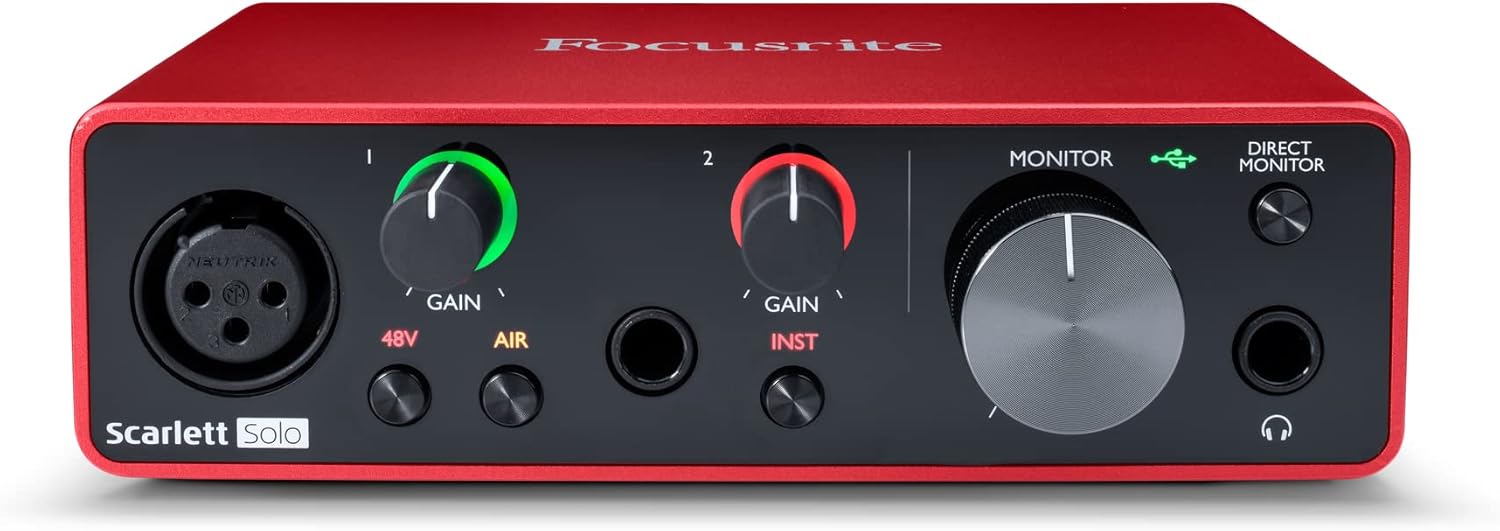
The Focusrite Scarlett Solo 3rd Gen is a professional USB audio interface designed for musicians, podcasters, and content creators who demand studio-quality recordings without the complexity of larger mixing consoles. This compact device bridges the gap between budget-friendly entry-level gear and expensive professional equipment, making it ideal for home studios, bedroom producers, and anyone serious about capturing professional-grade audio.
The standout feature is undoubtedly the high-performance microphone preamp paired with the innovative Air mode, which adds extra clarity and presence to vocals and acoustic instruments. The two high-headroom instrument inputs eliminate clipping and distortion, ensuring your guitar, bass, and other instruments shine through with clarity. Recording at up to 24-bit/192kHz resolution means your productions retain all sonic nuances, while the Gain Halo visual feedback system helps you nail perfect levels every time.
Build quality reflects Focusrite's professional heritage, with a solid metal chassis and intuitive front-panel controls that feel responsive and durable. The USB-C connectivity provides fast, reliable data transfer and modern compatibility with both Mac and Windows systems. The included software bundle (Pro Tools Intro+, Ableton Live Lite, Cubase LE) gives you everything needed to start producing immediately without additional software purchases.
The primary limitation is the single microphone input, which restricts simultaneous multi-track vocal or acoustic recording. Additionally, some Windows users report requiring driver updates for optimal performance. The learning curve for gain staging and audio interface operation may challenge complete beginners, though the included documentation is comprehensive.
The Focusrite Scarlett Solo 3rd Gen represents exceptional value for serious hobbyists and semi-professional creators. Its combination of pristine preamp quality, professional converters, intuitive design, and included software makes it the go-to choice for anyone upgrading from computer microphones or entry-level interfaces. The three-year warranty provides confidence in your investment.
Audio I/O: 1 XLR microphone input, 2 high-impedance instrument inputs, 2 balanced line outputs, headphone output
Audio Quality: 24-bit/192kHz recording and playback resolution with high-performance converters
Connectivity: USB-C to computer, compatible with all major audio recording software
Channels: 2 channels (stereo)
Features: Switchable Air mode, Gain Halo visual feedback, low-noise outputs, headphone monitoring
Software Included: Pro Tools Intro+, Ableton Live Lite, Cubase LE, Hitmaker Expansion
Warranty: 3-year manufacturer warranty worldwide
Compatible Devices: Microphones, instruments, personal computers, headphones, studio monitors
Who Should Buy: Musicians recording at home, podcasters seeking professional audio quality, guitarists and bassists needing quality instrument preamps, content creators upgrading from built-in computer audio, and producers working with limited space.
Who Should Look Elsewhere: Users needing simultaneous multi-microphone recording, those requiring extensive analog mixing features, or professionals running high-channel-count studios requiring more I/O options.
Setup Tips: Ensure your computer meets USB-C requirements and install drivers before first use. Spend time learning gain staging with the Gain Halo visual indicator to avoid clipping. Experiment with Air mode on different sources to understand its impact on your recordings.
Value Comparison: At this price point, the Scarlett Solo 3rd Gen outperforms competitors by offering superior preamp quality, professional software bundle, and proven brand reliability. The included software alone typically costs $200+ if purchased separately.

Pros
- Passive design eliminates active circuitry, ensuring transparent audio quality and minimal noise
- Intuitive 2x2 switching functionality handles multiple sources and monitor pairs without complexity
- Heavy-duty metal construction built to withstand years of studio use
- Affordable entry point for professional monitoring control without sacrificing build quality
- Includes valuable software bundle to jumpstart your production workflow
Cons
- No wireless connectivity, requires wired connections for all audio inputs and outputs
- Limited to two sources and two monitor pairs, may not suit complex multi-source studios
- No active amplification means you must use powered monitors or external amplifiers
The Mackie Big Knob Passive is a straightforward, passive monitor controller designed for studios that prioritize audio purity over complexity. This 2x2 controller lets you manage two audio sources and two sets of monitor speakers, making it perfect for home studios, project studios, and professional editing suites that need reliable level control without breaking the bank.
What sets this controller apart is its passive signal path, which means audio passes through without any active circuitry. This design philosophy delivers exceptional sonic clarity and eliminates the noise floor that active controllers can introduce. The iconic Big Knob volume control provides satisfying tactile feedback and precise level adjustment, while the source and monitor selection switches let you toggle between configurations instantly.
Built with a sturdy metal enclosure, the Big Knob Passive feels substantial and professional despite its affordable price point. The tabletop mount design keeps it accessible on your desk or console, and the compact footprint works equally well in tight home studios or integrated into larger facility setups. Its simplicity is actually a strength, offering zero learning curve for engineers of any experience level.
The main limitation is that this is a passive controller only, meaning you cannot amplify signals. You will need powered monitors or external amplifiers connected to the outputs. Additionally, the 2x2 configuration may feel restrictive if you work with multiple sources regularly, though for most studio setups this covers standard monitoring needs.
The Mackie Big Knob Passive delivers exceptional value for studios seeking transparent, reliable monitoring control. If you prioritize audio quality, durability, and simplicity over advanced features, this proven design remains an industry standard choice that justifies its reputation.
Audio Configuration: 2x2 monitor controller with passive signal path, stereo output mode
Connectivity: USB connectivity protocol, wired subwoofer connectivity, no wireless technology
Physical Design: Metal enclosure construction, tabletop mount, 1-inch speaker sizing reference
Power: Corded electric power source, 120 volts input, 1000 watts maximum output capability
Audio Performance: 20 kHz frequency response, pristine passive audio path for sonic integrity
Included Software: Pro Tools First recording software and The Musician Collection with 23 plugins and instruments
Warranty: 1-year all-inclusive, nontransferable limited warranty
Best For: Home studio owners, project studios, editing suites, and professional facilities seeking passive monitoring control with transparent audio quality and multi-source switching capability.
Consider This If: You value sonic purity, need simple 2x2 source and monitor switching, work with powered monitors, and want a durable, affordable control solution without complex features.
May Not Be Ideal If: You require active amplification, need more than two source inputs, want wireless connectivity, or work with complex multi-monitor setups requiring advanced routing options.
Setup Recommendation: Pair with powered studio monitors or connect to external amplifiers. Place on your console or desk for easy access to the Big Knob volume control and source selection switches. Connect your audio sources to the two inputs and route outputs to your monitors.

Pros
- Exceptional plug-and-play simplicity with zero latency audio processing and no driver installation needed
- Powerful onboard DSP with Auto Level Mode ensures consistent professional sound across any environment
- Incredibly compact and lightweight design makes it ideal for mobile recording, streaming, and travel
- Works with any XLR microphone including high-end condensers and provides essential 48V phantom power
- Versatile cross-platform compatibility including iPhone, iPad, Mac, Windows, and Android devices
Cons
- MOTIV app support for mobile devices may be limited or incomplete depending on your specific device and firmware version
- Single-channel design limits flexibility if you need to record multiple microphones simultaneously
- Some users report variable quality control from third-party sellers, so purchasing directly from Shure is recommended
The Shure MVX2U Gen 2 is a single-channel XLR-to-USB-C audio interface designed for content creators, podcasters, streamers, and anyone who wants to elevate their recording quality without investing in expensive gear. This compact device bridges the gap between professional XLR microphones and modern computers and mobile devices, making it ideal for creators working across multiple platforms.
What sets the MVX2U Gen 2 apart is its intelligent onboard digital audio processing. The Auto Level Mode automatically adjusts gain in real time, ensuring consistent output regardless of your environment or mic technique. The Real-Time Denoiser and Digital Popper Stopper work at zero latency, meaning you get clean, professional sound with zero delay. Users can select from Dark, Natural, or Bright tone profiles and access advanced controls like compression and EQ through the MOTIV app on desktop or mobile, giving you studio-quality processing in a device smaller than your hand.
Build quality reflects Shure's professional heritage. The interface feels solid and premium despite its compact form factor at just 100 grams. Setup is genuinely effortless: plug in your XLR mic, connect the included USB-C cable, and start recording. The device delivers up to 60dB of clean gain and 48V phantom power, supporting both dynamic and condenser microphones. MFi certification ensures reliable performance on iPhones and iPads, while broad compatibility extends to Mac, Windows, and Android devices.
The primary limitation is that mobile app support may be inconsistent across all devices as of the latest updates. Additionally, the single-channel design means you cannot record multiple microphones simultaneously. Some buyers have noted quality control inconsistencies when purchasing through third-party sellers, making direct purchase from Shure preferable.
The MVX2U Gen 2 delivers exceptional value for creators seeking professional audio without complexity or bulk. Its combination of intelligent processing, universal XLR compatibility, and cross-platform versatility makes it an outstanding choice for podcasters, content creators, and anyone upgrading from built-in device microphones to XLR-based recording.
Connectivity and Compatibility: USB-C connection, compatible with Mac, Windows, iOS, and Android. MFi certified for iPhone and iPad.
Audio Performance: Single XLR input channel, supports up to 192 kHz sample rate, provides up to 60dB clean gain, and includes 48V phantom power for condenser microphones.
Processing Features: Onboard Shure Digital Audio Processing with Auto Level Mode, Real-Time Denoiser, Digital Popper Stopper, three tone profiles (Dark, Natural, Bright), compression, EQ, and limiter controls accessible via MOTIV app.
Physical Specifications: Weight 100g, includes 1m USB-C cable, single-channel design. Warranty: 2-year limited coverage.
Ideal For: Podcasters and streamers using XLR microphones on computers or mobile devices, content creators recording video with professional audio, musicians recording acoustic instruments, journalists and reporters needing portable professional audio, and anyone upgrading from USB microphones to XLR-based recording.
Best Use Cases: Desktop podcasting and streaming, mobile recording on iPhone or iPad, video conferencing with professional microphones, traveling content creation, and hybrid setups combining desktop and mobile recording.
May Not Be Ideal For: Users requiring simultaneous multi-channel recording, those needing extensive analog monitoring controls, or anyone exclusively recording on mobile devices without desktop setup access.

Pros
- XLR input with 48V phantom power provides room to grow into professional microphone setups without expensive upgrades
- Individual channel faders give precise control over each audio source, preventing background noise and feedback issues
- Intuitive mute and monitor buttons on the front panel make real-time adjustments effortless during live broadcasts
- Exceptional value for money, offering features typically found in mixers costing two to three times more
- Includes customizable sound effects and voice modulation tools that enhance entertainment value for viewers
Cons
- XLR cable not included in the package, requiring separate purchase for full functionality
- Sound effect quality is basic compared to dedicated soundboard software alternatives
- Microphone preamp gain output is modest compared to higher-end professional audio interfaces
The FIFINE SC3 is a compact audio mixer purpose-built for gamers, streamers, and content creators who need professional-grade sound control without the learning curve or expense of traditional DJ equipment. This mixer bridges the gap between USB microphones and full studio setups, making it perfect for anyone transitioning from basic streaming audio to something more sophisticated.
The standout feature is the XLR microphone input paired with 48V phantom power, which lets you use high-quality condenser microphones immediately. Combined with four independent channel controls for microphone, line input, headphones, and line output, you gain granular control over your entire audio environment. The front-mounted mute and monitor buttons make real-time adjustments intuitive during live streams, while the monitoring feature provides confidence monitoring without latency issues that distract broadcasters.
Build quality feels solid for the price point, with sturdy faders and responsive buttons that withstand frequent use. The compact footprint (6.45 inches wide) fits neatly on any streaming desk without consuming valuable real estate. The customizable RGB lighting is vibrant but not fatiguing to the eyes, and the flowing color modes add visual interest to your setup without appearing gimmicky.
The main drawbacks are the modest microphone preamp gain compared to professional interfaces and the fact that XLR cables are sold separately. Additionally, the built-in sound effects quality is basic, though this is easily remedied with free soundboard software. These limitations are minor given the price and feature set.
The SC3 delivers excellent value for streamers, podcasters, and content creators seeking straightforward audio mixing with room to grow into more sophisticated setups. It's particularly recommended for anyone making the jump from USB microphones to XLR gear without wanting to invest in expensive professional equipment immediately.
Audio Inputs: XLR microphone input with 48V phantom power, 3.5mm line input, 3.5mm headset input
Audio Outputs: 3.5mm headphones jack, 3.5mm line output, 3.5mm headset output
Channels: 4 independent channels with individual volume control
Connectivity: USB-C to computer, 3.5mm jacks for audio devices
Additional Features: 4 programmable sound effect buttons (15 seconds each), 6 voice-changing modes, 12 auto-tune settings, RGB lighting with customizable patterns, mute and monitor buttons
Physical Dimensions: 6.45 inches wide x 4.44 inches deep x 1.6 inches tall
Weight: 0.5 kg (approximately 1.1 pounds)
Power Supply: USB-C from computer
Compatibility: Windows and Mac OS, works with OBS, Twitch, YouTube, TikTok
Warranty: 1 year manufacturer warranty
Included Accessories: USB cable, 3.5mm to 3.5mm audio cable, user manual
Who Should Buy This Mixer: The SC3 is ideal for beginner to intermediate streamers, podcasters, and content creators who want professional audio control without expensive equipment. It's perfect for anyone upgrading from a basic USB microphone to an XLR setup, or for streamers managing multiple audio sources like game audio, music, and microphone input simultaneously.
Who Might Want to Look Elsewhere: Professional audio engineers or high-end podcast studios requiring maximum microphone preamp gain should consider more expensive interfaces. If you exclusively use USB microphones, a simpler mixer may suffice. Those needing more than four channels should explore larger mixing consoles.
What You Need to Buy Separately: An XLR microphone cable is essential if you plan to use an XLR condenser microphone. A quality shielded XLR cable is recommended to ensure audio quality. Budget approximately 10 to 20 dollars for a reliable cable. You'll also need an XLR condenser microphone if you don't already own one.
Setup Tips: Connect the USB-C cable to your computer first for power and data. Use the included 3.5mm cable to connect audio devices like phones or tablets to the line input. Connect your XLR microphone to the XLR input. Plug your headphones into the headphones output. Start with all faders at mid-level and adjust from there. Test your audio levels in your streaming software before going live.
Best Use Cases: Twitch and YouTube streaming, podcast recording, TikTok content creation, Discord gaming sessions, online interviews, and music production for beginners.

Pros
- Outstanding value for the price with more I/O options than comparable competitors
- Crystal clear sound quality perfect for recording music, podcasts, and vocals
- Solid metal construction built to withstand frequent use and transport
- Easy setup with no drivers required, compatible with Windows and Mac systems
- Versatile mixer-interface hybrid design works for recording, live performance, and streaming
Cons
- Output volume levels reported as slightly weak by some users, may require external amplification
- Windows-focused software support, limited compatibility with Linux operating systems
- Steep learning curve for beginners unfamiliar with audio interface controls and effect selection
The Pyle PMUX9 is a professional USB audio interface designed for musicians, podcasters, and content creators who need reliable recording capabilities without breaking the bank. This hybrid mixer-interface device bridges the gap between entry-level interfaces and professional mixing consoles, making it ideal for home studios, small venues, and portable recording setups.
What sets the PMUX9 apart is its impressive feature set: 24 onboard digital effects, 48V phantom power, and extensive connectivity options including XLR combo jacks, 6.35mm guitar inputs, 3.5mm auxiliary, and RCA stereo inputs. The 24-bit, 48kHz recording resolution delivers crystal-clear audio quality, while independent control knobs for each input and output channel provide precise mixing capabilities directly on the unit without relying on computer software.
The build quality is exceptional for the price point. The rugged metal housing feels solid and durable, while the compact dimensions (1.5 x 6.8 x 4.7 inches) make it perfect for small spaces and easy transport between locations. Setup is straightforward with no complex driver installations required, and the unit works seamlessly with both Windows and Mac systems.
The main drawback is that output volume levels run slightly lower than some users prefer, potentially requiring external amplification for certain applications. Additionally, Linux users may encounter compatibility issues. Despite these minor limitations, the PMUX9 delivers exceptional value with more I/O connectivity and built-in effects than competing interfaces at similar price points.
The Pyle PMUX9 is a smart investment for anyone serious about home recording, live streaming, or music production on a budget. Its combination of solid build quality, versatile connectivity, onboard effects, and professional audio quality makes it a compelling choice for beginners and intermediate users alike.
Audio Performance: 24-bit, 48kHz resolution with ultra-low noise design and less than 0.5% THD at +4dBu. Frequency response of plus or minus 1dB at +4dBu and 1kHz.
Connectivity: USB 2.0 Type-B connection. Input: 2 combo XLR and 6.35mm jacks, 1 additional 6.35mm jack, 1 AUX 3.5mm jack, 1 RCA stereo pair. Output: 6.35mm headphone jack, 3.5mm stereo headphone jack, 3.5mm stereo output, 1 RCA monitor pair.
Power and Effects: DC 5V power supply with 7W power consumption and 1A output current. Includes 48V phantom power with LED indicator. Features 24 preset digital effects including reverb, delay, echo, phaser, flanger, chorus, tremolo, wah-wah, and pitch change.
Physical Specifications: Compact dimensions of 1.5 x 6.8 x 4.7 inches. Weight: 0.89 kg. Rugged metal housing. 2 independent channels.
Home Recording: Perfect for recording guitars, vocals, and instruments directly to your computer with professional sound quality and onboard effects.
Podcasting: Multiple microphone inputs and phantom power support make this ideal for podcast production with clean, clear audio capture.
Live Streaming: The mixer-interface hybrid design with independent controls and effects works great for YouTube, Twitch, and social media streaming applications.
Music Production: Beginner and intermediate music producers benefit from the 24 onboard effects and multiple input options without needing additional hardware.
Portable Recording: The compact size and rugged metal construction make this excellent for musicians who record in different locations or perform live with backing tracks.

Pros
- Unique hybrid connectivity allows simultaneous recording on computer and mobile devices without workflow interruptions
- Exceptional audio quality at 24-bit/192kHz with extremely low noise floor ideal for professional home studios
- Versatile dual XLR inputs accommodate most professional microphones for podcasting, streaming, and music production
- Intuitive independent controls for mute, headphone, and monitor functions provide precise streaming flexibility
- Included ProStudio 2 software with loopback routing and VST effects adds professional production capabilities
Cons
- Limited to 2 channels, which may be restrictive for users needing more simultaneous audio inputs
- Steep learning curve for ProStudio 2 software features despite intuitive hardware controls
- Requires USB power, limiting portability compared to some battery-powered alternatives
The MAONO P2 is a hybrid USB audio interface designed for content creators who work across multiple devices. Whether you're a podcaster recording on desktop while monitoring mobile uploads, a streamer managing simultaneous audio sources, or a musician tracking guitars and vocals across platforms, this interface bridges the gap between stationary and mobile production workflows. Its dual USB connectivity with MFi certification means you can connect a computer and phone or iPad at the same time without sacrificing quality or functionality.
What sets the P2 apart is its studio-grade audio performance paired with practical creator-focused features. The dual XLR inputs capture 24-bit/192kHz audio with a class-leading -130dB EIN, ensuring your vocals and instruments sound pristine even in untreated home studios. Independent mute controls, real-time signal indicators, and low-latency direct monitoring give you precise control during live streams and recordings. The included ProStudio 2 software handles complex audio routing, VST effects, and multi-source loopback capture, letting you blend backing tracks, desktop audio, and instrument inputs seamlessly.
The hardware itself reflects its creator-focused design philosophy. The compact aluminum-alloy chassis features an ergonomic 15-degree tilt that keeps controls within comfortable reach during long recording sessions. At desk-friendly dimensions, it works equally well in a dedicated home studio or as part of a mobile setup. Build quality feels solid, and the modern aesthetic fits contemporary workspace aesthetics without looking overly technical.
The main limitation is the 2-channel configuration, which restricts simultaneous inputs compared to larger interfaces. Additionally, while the ProStudio 2 software is powerful, its learning curve may challenge beginners unfamiliar with audio routing and VST workflows. USB power dependency also means you'll need a reliable power source for mobile use, unlike some battery-powered alternatives.
The MAONO P2 delivers excellent value for podcasters, streamers, and musicians who need professional audio quality without the complexity and cost of larger interfaces. Its hybrid connectivity solves real workflow problems for multi-device creators, and the audio performance justifies the investment for anyone serious about content quality.
Audio Quality: 24-bit/192kHz recording resolution, -130dB EIN, 56dB gain
Connectivity: Dual USB ports with USB-C to USB-A/C cable included, MFi-certified for iOS devices
Inputs: 2x XLR connectors for condenser and dynamic microphones
Channels: 2 channels with independent controls
Monitoring: Direct low-latency monitoring with independent headphone and monitor controls
Compatibility: Mac, PC, iPhone, Android, cameras, guitars, microphones, headphones, smartphones, tablets
Software: ProStudio 2 with VST effects, noise reduction, loopback routing, ASIO support
Supported Platforms: Ableton Live, Studio One, Logic Pro, Cubase, GarageBand, FL Studio, OBS, Twitch, Discord, YouTube, TikTok
Design: Aluminum-alloy housing, 15-degree ergonomic tilt, compact desk-friendly dimensions
Best For: Content creators who record across multiple devices, podcasters managing simultaneous audio sources, streamers needing independent controls, musicians tracking instruments and vocals with professional quality, and anyone transitioning between desktop and mobile production workflows.
Consider This If: You need more than 2 simultaneous audio inputs or prefer simpler software with less routing complexity. Also consider if you require battery-powered portability for field recording without USB power access.
Setup Requirements: USB power source, compatible microphones with XLR connectors or adapters, and basic familiarity with audio interface software. ProStudio 2 requires a computer or mobile device with sufficient processing power for VST effects.
Real-World Performance: Expect professional-grade vocal and instrument recordings suitable for commercial podcasts, streaming broadcasts, and music production. The dual connectivity eliminates common workflow interruptions when managing content across platforms, making it particularly valuable for creators juggling multiple distribution channels simultaneously.

Pros
- Exceptional build quality and solid construction that feels premium and durable
- Intuitive single-knob interface makes switching between sources and monitors effortless
- Versatile connectivity supports multiple audio sources including USB, balanced inputs, and smartphone
- Dual headphone outputs with independent level control perfect for artist/engineer monitoring
- Excellent value for a professional-grade monitor controller at mid-range price point
Cons
- Some users report knob attenuation issues where wiggling the controls causes audio dropout or static
- Limited to 2-channel USB recording interface, not suitable for multi-track simultaneous recording
- Occasional firmware connectivity issues reported in reviews, though rare
The Mackie Big Knob Studio is a professional monitor controller and USB audio interface designed for home studios, small recording facilities, and content creators who need flexible audio source management without cluttering their workspace. It combines the legendary simplicity of Mackie's Big Knob design with modern USB connectivity and dual Onyx preamps, making it an all-in-one solution for monitoring and recording.
The standout feature is its ability to seamlessly switch between three different audio sources and control two separate monitor pairs from a single iconic volume knob. Whether you're routing USB playback from your DAW, balanced line-level inputs from external gear, or a smartphone input, the Big Knob Studio handles it with intuitive button-based source selection. The dual independent headphone outputs with separate level control are particularly valuable for recording sessions where artist and engineer need different mix levels simultaneously.
Build quality is solid and feels premium, with a compact 13.4-inch depth that fits easily on any studio desk. The physical design is thoughtfully laid out for quick access to source switching and volume adjustments. However, some users have noted that the knobs can feel slightly loose and may produce audio artifacts if wiggled during operation, which is a notable concern for professional production work requiring absolute reliability.
Recording capabilities include 192kHz/24-bit resolution via USB with dual Onyx preamps and phantom power for condenser microphones. The zero-latency overdubbing and built-in talkback function add professional workflow features typically found in higher-end interfaces. The main limitation is the 2x2 USB channel count, which restricts simultaneous multi-track recording compared to larger interfaces.
Overall, the Mackie Big Knob Studio delivers excellent value for studios prioritizing monitor control flexibility and compact form factor over multi-track recording capability. It excels at what it's designed for: managing multiple audio sources and monitoring scenarios in a professional yet space-conscious setup. Recommended for home studios, small production facilities, and anyone upgrading from a basic audio interface.
Audio Interface Specs: 2x2 USB recording interface, 192kHz/24-bit recording and playback, dual Onyx mic preamps with phantom power, zero-latency monitoring.
Connectivity: USB 2.0, balanced XLR inputs and outputs, 1/4-inch TRS inputs and outputs, 1/8-inch smartphone input, dual 1/4-inch headphone outputs.
Monitor Control: 3-source selection, 2 monitor pair outputs, independent gain trim on all inputs and outputs, separate headphone level control.
Physical: 13.4 inches deep, 8.7 inches wide, 5.6 inches tall, 5.1 pounds weight. Includes quick start guide and 1-year all-inclusive warranty.
Compatibility: Mac OS and Windows operating systems, compatible with all major DAW software including Pro Tools, Logic Pro, Ableton Live, Studio One, and more.
Ideal For: Home studio owners, small recording studios, podcasters, content creators, music producers, and audio engineers who need flexible monitor control and USB recording in a compact form factor.
Perfect If You Have: Multiple audio sources to manage, multiple monitor pairs or headphone users, limited desk space, a need for professional recording capabilities with intuitive interface design.
May Not Be Ideal If: You require more than 2 channels of simultaneous USB recording, need extensive analog I/O expansion, or prioritize absolute knob reliability over general feature set and value.
Buying Guide
Knob Quality and Placement
The feel of the knob itself matters. Look for a smooth, weighted rotation that provides precise adjustment without feeling loose or scratchy. Its placement should be ergonomic, allowing for easy access during a session without accidentally bumping other controls. A well-designed knob enhances workflow significantly.
Monitor Control Features
Beyond a simple master volume, consider what the knob controls. Some interfaces offer a single headphone/output volume. Dedicated monitor controllers, like the Mackie models, provide source switching between multiple audio sources and separate level control for two speaker pairs. This is vital for professional studios comparing mixes. For interfaces with multiple outputs, check our guide on best audio interfaces with main outputs.
Input Configuration and Flexibility
Your volume knob is useless without great sound coming in. Match the input types to your needs: XLR for microphones, combo jacks for versatility, and dedicated instrument inputs for guitars. Interfaces like the MAONO P2 Hybrid USB Audio Interface Dual XLR offer dual XLR inputs with individual gain knobs, pairing detailed input control with a master monitoring knob.
Integration with Your Setup
<!–Consider how the device connects. A simple USB interface like the Focusrite Scarlett Solo integrates directly with your computer. A passive monitor controller, however, sits between your interface and speakers, requiring additional cables but offering pure analog control. Ensure the device supports the connectivity your studio requires, such as balanced outputs for clean signal transfer over longer cable runs, a feature highlighted in our review of interfaces with balanced outputs.
Final Thoughts
Choosing the right device with a volume knob depends entirely on your primary need. For the solo musician or podcaster seeking an all-in-one solution, the Focusrite Scarlett Solo 3rd Gen USB-C Audio offers legendary preamps and a straightforward, high-quality monitor control. If your focus is on managing a complex studio with multiple audio sources and speaker sets, the tactile, dedicated control of a Mackie Big Knob Passive Monitor Controller (2×2) is an invaluable and pure analog tool for critical listening. Both put essential volume adjustment literally at your fingertips.
Frequently Asked Questions
Why is a physical volume knob better than software control? A physical knob provides immediate, tactile feedback and precise adjustment without taking your eyes off your work. It eliminates the lag or inaccuracy sometimes associated with software sliders, which is crucial during live recording or streaming.
Can I use a monitor controller with any audio interface? Yes, in most cases. Dedicated passive monitor controllers like the Mackie Big Knob series are designed to connect between the line outputs of your interface and your studio monitors or amplifier. They provide an additional layer of control for source switching and volume, independent of your interface’s built-in controls.
What’s the difference between a monitor controller and an audio interface with a volume knob? An audio interface converts analog signals to digital for your computer and typically includes a headphone/output volume knob. A monitor controller is primarily for managing playback: switching between different audio sources (like two computers or a turntable) and controlling the volume to multiple sets of speakers. Some advanced interfaces, like the Mackie Big Knob Studio, combine both functions.
Do I need special cables for an interface with balanced outputs? To benefit from the noise-rejection of balanced outputs, you should use balanced cables, typically TRS or XLR. This is especially important in professional environments or when running cables over longer distances to ensure the cleanest possible signal to your monitors, as detailed in our resource on line level inputs and outputs.


Write Your Review
No reviews yet. Be the first to share your experience!