

You’ve dialed in the perfect tone on your amplifier, a sound that resonates with your musical identity. The challenge now is capturing that exact character for a recording or live sound reinforcement. The microphone you place in front of your speaker cabinet is the final, critical link in your signal chain. This guide is crafted for guitarists and home studio engineers seeking to translate their amp’s raw power and nuance into a clear, professional audio signal.
We have assessed the leading microphones designed specifically for this task. From legendary industry standards to versatile budget-friendly options, our review focuses on models that excel at handling high sound pressure levels and delivering the detailed frequency response your guitar tone deserves. Whether you are setting up a home studio or looking for reliable gear for the stage, the right tool makes all the difference. For a broader look at tools for capturing sound sources, explore our guide to the best instrument microphones.

Pros
- Exceptional clarity and presence compared to standard dynamic mics like the SM57, with brighter high-end response
- Space-saving compact design that clamps directly to cabinets, eliminating bulky mic stands on crowded stages
- Superior off-axis rejection thanks to supercardioid pattern, ideal for multi-instrument live sound situations
- Versatile switchable sound characteristics adapt to guitars, bass, drums, toms, snares, and percussion
- Robust metal construction and professional-grade XLR connectivity built for touring and studio use
Cons
- Brighter tonal character may require EQ adjustment if you prefer warmer, more vintage microphone coloration
- Supercardioid pattern requires precise positioning to maintain optimal sound capture
- Premium pricing positions it above entry-level dynamic microphones, though professional users report excellent value
The Sennheiser E906 is a professional dynamic microphone purpose-built for capturing amplified instruments in live and studio environments. It's ideal for sound engineers, recording artists, touring musicians, and studio professionals who demand exceptional clarity and isolation when miking guitar cabinets, drum kits, percussion, and brass instruments.
The E906's standout feature is its supercardioid pickup pattern combined with three switchable presence settings that let you shape the tonal response in real time. Users consistently praise its crystal-clear high-end response and superior clarity compared to industry standards like the Shure SM57. The laterally-mounted capsule is specifically engineered for close-proximity miking of amp cabinets, capturing every detail of your tone without proximity-related coloration issues.
Build quality is exceptional, with a robust metal enclosure, professional XLR connectivity, and a compact flat design that sets it apart from bulkier competitors. The included MZQ 100 clamp enables direct mounting to cabinets and hardware, eliminating the need for mic stands and freeing up valuable stage real estate. At just 120 grams, the E906 is remarkably portable for touring musicians.
The primary consideration is tonal character: the E906 delivers a brighter, more present sound compared to warmer dynamic mics. This clarity is a major strength for recording and live applications where definition matters, but users accustomed to vintage-sounding microphones may need an adjustment period. The supercardioid pattern also demands precise positioning to maximize its isolation benefits.
Overall, the Sennheiser E906 represents professional-grade performance at a competitive price point. It delivers measurable improvements in clarity, isolation, and versatility that justify its position as a top choice among touring and studio professionals worldwide.
Connectivity & Connectors
XLR connector type with 350 ohm impedance, corded electric power source with 1 lithium ion battery required for operation.
Audio Performance
Frequency range spans 25Hz to 18kHz with 40Hz frequency response. Signal-to-noise ratio and audible noise both rated at 25dB for clean audio capture.
Design & Build
Supercardioid polar pattern with laterally-mounted capsule. Metal enclosure construction. Single-channel microphone. Dimensions: 10.4 x 4.5 x 3 inches. Weight: 120 grams.
Included Accessories
E906 microphone, MZQ 100 clamp for direct cabinet mounting, protective pouch, and comprehensive user manual. Backed by 10-year EU spare parts availability and manufacturer warranty.
Perfect For
Live sound engineers managing multi-instrument stages, touring musicians with guitar or bass rigs, studio recording professionals, drummers seeking isolation on tom and snare mics, and audio technicians who prioritize clarity and rejection of ambient noise.
Best Use Cases
Miking guitar amplifier cabinets (especially tight spaces), recording drum kits with superior isolation between instruments, capturing percussion detail in studio and live settings, bass cabinet reinforcement, and professional live sound applications where stage space is limited.
Consider Alternatives If
You prefer warmer, vintage-sounding microphone coloration, need a microphone that doesn't require battery power, or are working with extremely tight budgets and can compromise on tonal clarity and isolation performance.

Pros
- Exceptional transient response captures fast, punchy guitar and drum attacks with precision
- Legendary durability and weather-resistant design withstands demanding touring and studio environments
- Hang-over-cabinet design saves setup time and eliminates mic stand clutter on stage
- Superior isolation compared to omnidirectional mics reduces bleed from other instruments
- Excellent value for professional-quality sound at an accessible price point
Cons
- Super-cardioid pattern requires precise positioning to avoid pickup dead zones behind the microphone
- Heavier than some portable alternatives, though still lightweight at 6.43 ounces
- Wired connection only, no wireless option available for this model
The Sennheiser e609 Silver is a professional dynamic microphone purpose-built for musicians and sound engineers who demand precision instrument miking. Inheriting its design from the legendary MD 409, this microphone excels at capturing guitar amplifiers and drums with remarkable clarity and isolation, making it an essential tool for both touring musicians and studio professionals.
What sets the e609 Silver apart is its innovative flat-profile capsule and laterally-mounted design, which allows you to position the microphone directly in front of a guitar cabinet or drum tom without the typical proximity issues that plague standard microphones. The super-cardioid pickup pattern provides outstanding rejection of ambient stage noise, ensuring your instrument cuts through the mix cleanly. Its ability to handle extreme sound pressure levels without distorting means you can mic loud sources confidently, whether you're capturing a roaring amp or a hard-hit snare drum.
Build quality is exceptional throughout. The all-metal construction with refined steel mesh basket provides legendary Sennheiser durability, while the hum-compensating coil eliminates 50/60Hz electrical interference that plagues live venues. The neodymium ferrous magnet with boron ensures stable performance regardless of temperature or humidity, making this mic equally reliable in freezing outdoor festivals or steamy indoor clubs.
The standout design feature is the ability to hang the microphone directly over a guitar cabinet using the included clip, eliminating the need for mic stands and saving valuable stage real estate. Real-world users consistently report that the e609 Silver requires far less fussy positioning than competing models, delivering excellent results with minimal adjustment. The extended frequency response (40-18,000 Hz) captures both the warmth and detail of your instrument.
If you need a wireless option or prefer a more omnidirectional pickup pattern, this wired super-cardioid design may not suit your needs. However, for guitarists, drummers, and sound professionals seeking a bulletproof, professional-grade instrument microphone backed by a 10-year warranty, the e609 Silver is a proven choice that delivers exceptional value and reliability.
Audio Specifications: Frequency Response: 40-18,000 Hz | Sensitivity: 1.5 mV/Pa at 1 kHz | Signal-to-Noise Ratio: 110 dB | Nominal Impedance: 350 Ohms | Minimum Terminating Impedance: 1,000 Ohms
Physical Specifications: Dimensions: 55 x 34 x 134 mm (2.2 x 5.7 x 1.3 inches) | Weight: 180 g (6.43 oz) | Color: Silver/Grey | Connector: XLR | Material: Alloy Steel and Metal
Performance Features: Polar Pattern: Super-Cardioid | Power Source: Corded Electric | Contact Pressure: 2.5 N | Hum-Compensating Coil: Yes | Magnet Type: Neodymium Ferrous with Boron
Warranty & Support: 10-Year Parts and Labor Warranty | Included: MZQ 100 Clip and Protective Pouch | Manufacturer: Sennheiser
Who Should Buy This Microphone: The e609 Silver is ideal for electric guitarists, drummers, bass amplifier operators, and live sound engineers who need reliable, professional-grade instrument miking. It excels in both studio recording and live performance environments where isolation and clarity are paramount.
Best Use Cases: Miking guitar amplifier cabinets (the primary design application), close-miking drum toms, miking bass amplifiers, and capturing other high-SPL instruments where isolation from other stage signals is critical. The side-hang design makes it particularly valuable for touring musicians with limited stage space.
Comparison Note: Users familiar with the Shure SM57 report that the e609 Silver requires less precise positioning while delivering comparable or superior results, particularly in live settings where quick setup is essential. It's also considered a more affordable alternative to the Sennheiser e906 while maintaining excellent sound quality.
Setup Tip: Leave the mic clip on when hanging the microphone over a cabinet to prevent unwanted rotation. Position the capsule just past the edge of the speaker dust cap for optimal tonal balance, though the microphone's design makes it forgiving of positioning variations compared to more sensitive alternatives.

Pros
- Exceptional build quality and ruggedness that withstands drops, impacts, and years of heavy use
- Precise cardioid pickup pattern effectively minimizes room noise and unwanted bleed in close-miking situations
- Versatile across multiple instruments and applications, making it a true studio and stage workhorse
- Warm, focused tone that captures instrument character without sounding thin, harsh, or over-processed
- Proven reliability with decades of professional use and endorsement across recording and live sound industries
Cons
- Dynamic design produces slightly warmer, less bright tone compared to condenser microphones in some applications
- Requires XLR cable and audio interface connection, not a standalone or USB solution for beginners
- Cardioid pattern is highly directional, requiring precise mic placement for optimal results
The Shure SM57-LC is a professional-grade cardioid dynamic microphone designed for recording and live sound applications. It's ideal for guitarists, drummers, engineers, and musicians who demand reliable, studio-quality results whether in a bedroom setup, professional studio, or on stage.
What sets the SM57 apart is its carefully engineered frequency response that enhances instrument clarity without sounding processed or harsh. The tight cardioid pattern isolates your source exceptionally well, making it perfect for close-miking guitar amps and drums in noisy environments. Users consistently report that the mic captures natural tone, crisp attack, and full character across diverse instruments from snare drums to brass to acoustic guitars.
Build quality is exceptional. The SM57 feels substantial and durable, with a proven track record of surviving drops, road transport, and years of heavy studio and live use. The included swivel stand adapter and storage bag add practical value, though you'll need an XLR cable and audio interface to get started.
The main trade-off is that dynamic microphones like the SM57 produce a slightly warmer, less bright tone compared to condenser mics. This is actually a strength for many applications, as it reduces harshness and captures natural instrument tone. However, if you need extreme brightness or ultra-detailed high-end capture, a condenser mic might be preferable.
The Shure SM57-LC is an investment in professional-grade audio that will serve you reliably for decades. It's the industry standard for good reason, and belongs in every serious musician's or engineer's toolkit.
Connectivity: Wired XLR (3-pin)
Microphone Type: Cardioid Dynamic
Frequency Range: 40 Hz to 15 kHz
Signal-to-Noise Ratio: 78 dB
Polar Pattern: Unidirectional (Cardioid)
Weight: 10 ounces
Dimensions: 6.19 x 1.25 x 1.25 inches
Included Accessories: A25D Swivel Stand Adapter, 95A2313 Storage Bag
Warranty: 2-year limited warranty (proof of purchase required)
Model Number: SM57-LC
Studio Recording: Guitar amplifiers, snare drums, percussion, toms, kick drums, brass instruments, acoustic guitars, woodwinds, and vocals
Live Sound: Instrument miking on stage, guitar and bass cabinets, drum kit miking, brass and horn sections, acoustic instruments
Why It Works: The cardioid pattern isolates each instrument while minimizing bleed from adjacent sources. The contoured frequency response cuts through mix clutter and captures natural tone with crisp attack. Close-miking capability lets you maintain separation in busy sessions without sacrificing sound quality.
Not Ideal For: Ultra-bright ambient room recording, distant miking of orchestral ensembles, or applications requiring extreme high-frequency detail where a condenser microphone would be preferable

Pros
- Delivers professional sound quality comparable to microphones costing 5+ times more
- Supercardioid pattern effectively rejects side and rear noise for clean recordings
- Versatile switchable EQ settings adapt to guitars, drums, brass, percussion, and vocals
- Solid metal construction feels durable and professional with excellent build quality
- High output level ensures strong signal without excessive preamp gain or noise floor issues
Cons
- Limited to XLR connectivity, requiring compatible equipment or adapters for other connections
- Supercardioid pattern requires careful positioning to avoid proximity effect on close sources
- Best suited for instrument and amplifier applications rather than general-purpose studio recording
The Behringer B906 is a professional dynamic microphone engineered for musicians, vocalists, and sound engineers who need reliable, high-quality audio capture without premium pricing. Whether you're recording guitar amplifiers, drums, brass instruments, or vocals, this microphone delivers the performance you need for gigging, touring, or home studio work.
The standout feature is its supercardioid polar pattern combined with switchable EQ options that let you tailor the response to your specific instrument. Users consistently report that the B906 performs remarkably well on guitar amps, sitting closer to the cabinet than competitor models and capturing rich, detailed tone. The high signal output ensures your sound cuts through without requiring excessive preamp gain, keeping noise floors low and clarity high.
Build quality exceeds expectations at this price point. The microphone features a cast metal body with brass construction and metal grill, creating a professional feel that survives the demands of regular gigging. At just 190 grams, it's lightweight enough for easy positioning yet substantial enough to feel like a serious instrument.
The main limitation is its specialization toward instrument and amplifier applications. While some users report success with vocals and other sources, the supercardioid pattern requires careful positioning to manage proximity effect. Additionally, XLR connectivity means you'll need compatible equipment or adapters for other audio interfaces.
The Behringer B906 represents exceptional value for musicians seeking a reliable backup microphone or their first quality instrument mic. Real-world users compare it favorably to professional models costing significantly more, making it an intelligent choice for budget-conscious performers and engineers.
Connectivity and Compatibility
Connector Type: XLR
Compatible Devices: Amplifier, Mixer, Audio Interface
Signal-to-Noise Ratio: 75 dB
Audio Sensitivity: 52 dB
Design and Build
Polar Pattern: Supercardioid
Form Factor: Handheld
Enclosure Material: Brass with metal grill
Weight: 190 grams
Dimensions: 1.54 x 2.21 x 5.67 inches
Performance Features
Switchable EQ: Low-cut, Flat, High-frequency Boost
Special Features: Voice Activated Recording, Mute Function
Power Source: Corded Electric (passive XLR)
Channels: 1
Ideal For
Musicians who gig regularly and need a reliable backup microphone without premium investment. Guitarists recording amplifiers in studios or live settings. Drummers and percussionists seeking versatile instrument miking. Vocalists performing live or recording in home studios. Sound engineers building cost-effective mic collections.
Best Use Cases
Guitar amplifier recording and live reinforcement. Drum kit and percussion miking. Brass instrument capture. Vocal performances in live or studio environments. Upright bass and other acoustic instrument recording. Video conferencing and content creation with professional audio requirements.
May Not Be Ideal For
Users requiring only USB or wireless connectivity. Applications demanding omnidirectional or cardioid polar patterns. Studio recording of distant sound sources requiring less directional pickup.

Pros
- Exceptional value with professional sound quality that rivals mics costing significantly more
- Smooth, natural tone without coloration or unwanted EQ, working well across different guitar types
- Robust construction handles extreme SPL and close mic placement near speaker cones
- Supercardioid pattern effectively minimizes feedback and ambient noise in live venues and studios
- Includes all essential accessories: gooseneck clamp, mic clip, and carrying pouch for immediate use
Cons
- XLR cable not included and must be purchased separately
- Some users report slightly more plastic-like character compared to premium competitors like the Sennheiser e906
- Requires proper distance and angle adjustment to achieve optimal sound, not a plug-and-play solution
The Superlux PRA628MKII is a supercardioid instrument microphone purpose-built for miking guitar amplifiers, bass cabinets, drums, and other high-volume sound sources in both studio and live environments. It's ideal for musicians, sound engineers, and home recordists who need professional-grade tone without premium pricing.
What sets this mic apart is its smooth, powerful sound signature that users consistently describe as superior to the ubiquitous Shure SM-57. The tailored 80Hz-18kHz frequency response captures rich midrange and crisp highs while maintaining a neutral character free of unwanted coloration. The supercardioid polar pattern provides focused pickup that rejects background noise and minimizes feedback, making it equally effective for close-miking amp speakers or capturing instruments in busier environments.
Built with a rugged metal housing and compact low-profile design, the PRA628MKII accommodates close placement near speaker cones without sacrificing durability. The included gooseneck clamp and mic clip offer flexible mounting options, while the 150dB SPL handling ensures clean reproduction even from screaming amplifiers and high-impact percussion without distortion.
The primary consideration is that an XLR cable must be purchased separately, and some users note the build feels slightly less premium than competitors costing three to four times more. However, for the price point, this microphone delivers exceptional performance and reliability that justifies its place in professional studios and touring rigs.
Verdict: The Superlux PRA628MKII is an outstanding value proposition for anyone seeking a dependable, great-sounding instrument microphone. Whether you're recording guitar tones at home or miking amps at a gig, this mic delivers neutral, powerful results that belie its modest cost.
Connectivity: XLR (cable not included)
Polar Pattern: Supercardioid
Frequency Response: 80Hz to 18kHz
Maximum SPL: 150dB
Signal-to-Noise Ratio: 115dB
Impedance: 200 ohm
Weight: 0.45 kg (approximately 1 lb)
Dimensions: 5.91 x 3.94 x 3.15 inches
Construction: Metal and plastic housing
Included Accessories: HM10 mic clip, HM12DA gooseneck clamp, carrying pouch
Guitar Amplifiers: Engineered specifically to capture the full character of electric guitar tones with smooth highs and punchy mids.
Bass Cabinets: Handles low-end frequencies and extreme SPL from bass rigs with clarity and definition.
Drums and Percussion: The 150dB SPL rating and supercardioid pattern make it excellent for tom and snare miking in live and studio contexts.
Live Sound: Feedback rejection and focused pickup ideal for stage monitoring and front-of-house reinforcement.
Home and Project Studios: Budget-conscious engineers and musicians seeking professional results without expensive gear investments.
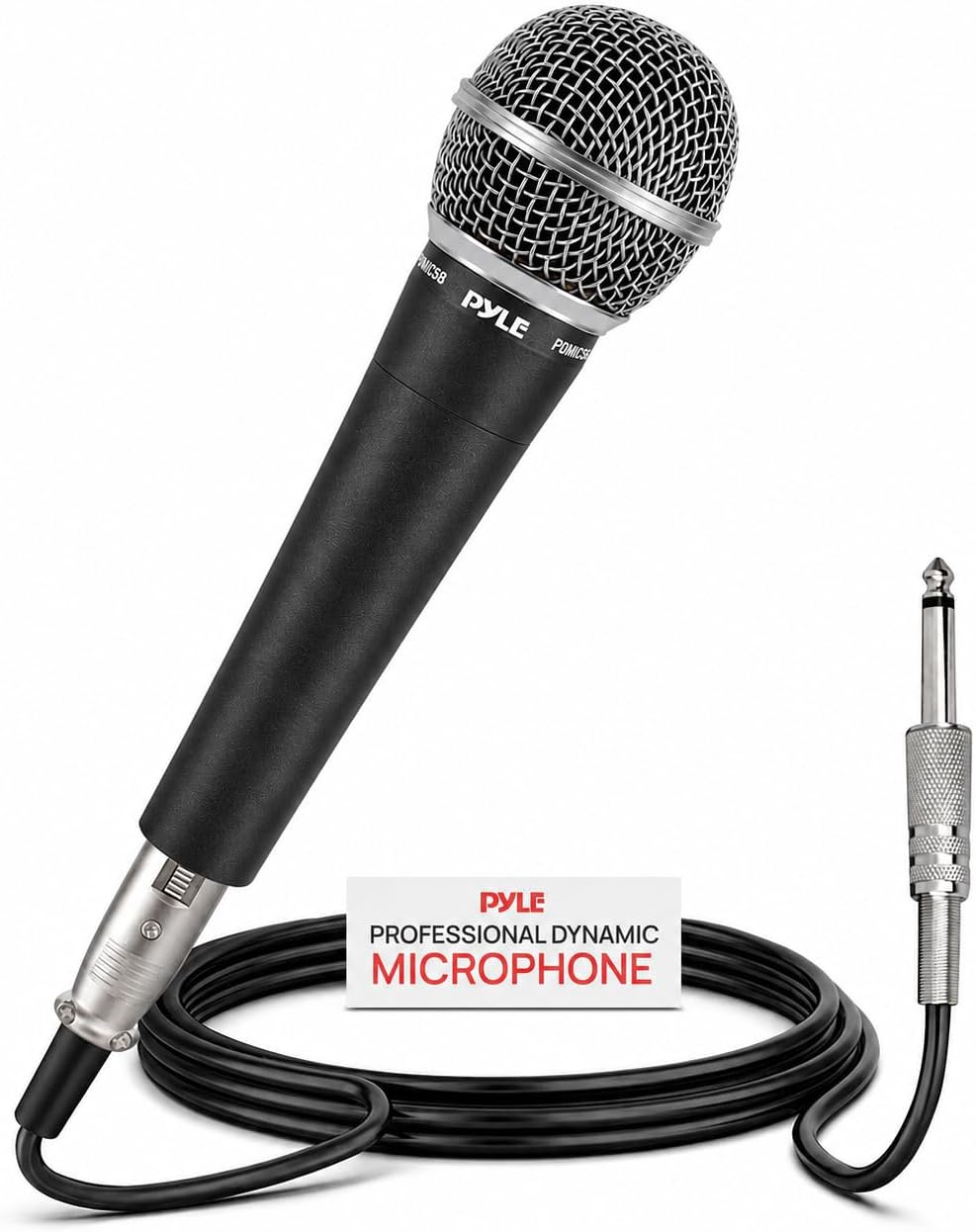

Pros
- Excellent noise cancellation and feedback rejection thanks to cardioid polar pattern
- Delivers clean, low-distortion audio with impressive speech and vocal clarity
- Plug-and-play setup with included cable saves time and money on additional purchases
- Durable metal body and pop filter withstand repeated use in live and studio settings
- Works with any standard audio equipment featuring 1/4" XLR input ports
Cons
- Requires 6.35mm (1/4") input jack, not compatible with 3.5mm connections even with adapters
- Not suitable for USB or direct computer connection without an external audio interface
- Slight low-end prominence in frequency response may require EQ adjustment for some applications
The FIFINE K6 is a wired dynamic microphone built for karaoke enthusiasts, live performers, and anyone needing reliable vocal capture on a budget. This handheld mic features a 6.35mm (1/4") connector that plugs directly into amplifiers, PA systems, audio mixers, and karaoke machines, making it instantly ready for use right out of the box with the included XLR-to-1/4" cable.
The standout technical feature is its cardioid pickup pattern, which captures vocals and instruments while actively rejecting ambient noise and feedback from speakers. The 50Hz to 18kHz frequency response is surprisingly broad for the price point, handling everything from deep vocal warmth to crisp treble detail. Users consistently report clean, distortion-free audio with excellent intelligibility for both singing and speech, whether in a home karaoke setup or outdoor event setting.
Build quality is solid and practical. The microphone features a rugged metal enclosure that feels professional in hand, a built-in pop filter to reduce plosive sounds, and an easy-to-access on/off switch. The 14.8ft detachable cable is long enough to move freely during performances while maintaining reliable signal transmission with minimal noise.
The main limitation is the 6.35mm connector requirement, which means this microphone will not work with standard 3.5mm headphone jacks or USB inputs, even with adapters. If your equipment lacks a 1/4" mic input, you'll need an audio interface or mixer as an intermediary. Additionally, the slight low-end boost in the frequency response, while adding fullness to vocals, may require EQ adjustment in some recording or performance scenarios.
For the price, the FIFINE K6 delivers professional-grade sound quality and reliability. It's an excellent choice for budget-conscious karaoke singers, aspiring musicians recording vocals at home, live performers, and anyone needing a dependable wired microphone for presentations or events. If your equipment supports 1/4" inputs, this microphone offers exceptional value.
Connectivity and Connectors
Connector Type: 6.35mm (1/4") Jack
Cable Length: 14.8 feet (detachable XLR-to-1/4" cable)
Power Source: Corded Electric (no phantom power required)
Channels: 1 (Mono)
Audio Performance
Microphone Type: Dynamic Vocal Microphone
Polar Pattern: Cardioid (Unidirectional)
Frequency Response: 50Hz to 18kHz
Signal-to-Noise Ratio: 60dB
Form Factor: Handheld
Physical Specifications
Enclosure Material: Metal
Weight: 560 grams
Dimensions: 9.06 x 4.72 x 1.97 inches
Color: Black
Special Features: Built-in pop filter, on/off switch
Compatibility
Compatible Devices: Amplifiers, audio mixers, PA systems, speakers, karaoke machines
Requires: 6.35mm (1/4") microphone input jack
Not Compatible: 3.5mm inputs, USB connections, direct computer connection without audio interface
Included Components: Dynamic microphone, XLR-to-1/4" cable, user manual
Warranty: 1 year
Home Karaoke
Perfect for karaoke machines and home karaoke systems. The cardioid pattern isolates your voice while minimizing background music bleed, and the 14.8ft cable gives you freedom to move around the room.
Live Performance and Gigging
Ideal for singers, bands, and performers working with PA systems, mixers, and amplifiers. The feedback rejection and durable construction make it reliable for stage use, outdoor events, weddings, and conferences.
Vocal Recording
Home recording artists can use this microphone with an audio interface or mixer to capture vocals with excellent clarity and minimal distortion. The dynamic design handles close-mic techniques well.
Public Speaking and Presentations
Works great for speeches, conferences, interviews, and presentations where you need clear, intelligible audio without feedback issues.
Instrument Amplification
The wide frequency response makes it suitable for amplifying acoustic guitars, drums, and other instruments in live or rehearsal settings.
How to Choose a Guitar Amp Microphone
Polar Pattern and Placement
The directional pickup pattern of a microphone determines how it captures sound from the front while rejecting noise from the sides and rear. For guitar amps, supercardioid or cardioid patterns are ideal. They allow you to focus directly on the speaker cone, minimizing room ambiance and stage bleed.
This focused capture is essential for achieving a tight, punchy sound in a mix. A supercardioid pattern offers even greater rear rejection than a standard cardioid, which can be beneficial in loud live environments. Understanding polar patterns helps you position the mic correctly, often just an inch or two from the grill cloth.
Frequency Response and Tone Shaping
A microphone’s frequency response defines how it reproduces bass, midrange, and treble frequencies. Some mics are voiced with a presence boost in the upper mids, which can help a guitar cut through a dense mix. Others offer a flatter, more neutral response for a pure representation of your amp’s sound.
Certain models, like the mics we recommend for snare drums, share this need for crisp attack and midrange clarity. Look for features like switchable presence settings or built-in low-cut filters. These allow you to tailor the tone at the source, reducing boominess or adding sparkle before the signal even hits your preamp.
Durability and Build Quality
A microphone for amplifier use must be built to withstand physical and acoustic pressure. Guitar cabinets produce significant vibrational energy and very high sound pressure levels. A rugged metal body and a robust internal capsule are non-negotiable for long-term reliability.
This durability ensures consistent performance whether you are touring or recording daily in your home studio setup. A well-built mic will resist feedback, handle accidental bumps, and deliver the same sound profile gig after gig. The construction quality directly impacts its longevity and value.
Versatility and Additional Use Cases
While optimized for guitar amps, a great instrument microphone often excels on other sound sources. Many of the models reviewed here perform brilliantly on snare drums, toms, brass instruments, and even certain vocal applications. This versatility provides excellent value for your investment.
Owning a microphone that can capture your kick drum’s thump as well as your amplifier’s crunch simplifies your gear locker. It allows you to maintain a consistent sonic character across different instruments in a recording. Consider how a single versatile mic can serve multiple roles in your creative process.
Final Thoughts
Selecting the ideal microphone is a pivotal step in defining your recorded or reinforced guitar tone. For those seeking an industry-standard workhorse known for its consistent clarity and road-ready durability, the Shure SM57 Pro XLR Dynamic Instrument Microphone remains an unparalleled choice. If your priority is a specialized tool with a flat profile for ultra-close placement and switchable tonal options, the Sennheiser Pro Audio E906 Microphone, black offers exceptional flexibility and a modern, focused sound. Pairing your choice with a quality monitoring environment, like the systems in our guide to the best high-end home audio systems for 2026, will help you make the most informed decision for your music.
Frequently Asked Questions
Can I use a vocal microphone on my guitar amp?
While possible, it is generally not recommended. Vocal microphones are often designed with different frequency responses and may not handle the extreme sound pressure levels from a guitar speaker as effectively. A dedicated instrument microphone will provide better clarity, reduced distortion, and a tone tailored for amplified instruments.
Where should I place the microphone on my amplifier?
Start by placing the microphone close to the speaker grill, aimed directly at the center of the speaker cone for a brighter, more aggressive tone. For a warmer, smoother sound, angle the mic slightly off-center or point it towards the edge of the speaker. Always use your ears and make small adjustments while listening through monitors to find the sweet spot for your specific amp and microphone combination.
Do I need a special cable or preamp for these microphones?
Most professional instrument microphones use a standard three-pin XLR connection, requiring an XLR cable to connect to an audio interface, mixer, or preamp. They are typically dynamic microphones, meaning they do not require phantom power. However, a quality preamp will provide clean gain and can significantly enhance the detail and punch of the recorded signal.
How many microphones should I use on a guitar cabinet?
A single well-placed microphone is often sufficient and avoids phase issues. For more complex tones, engineers sometimes use a two-microphone technique. One mic is placed close for a direct, punchy sound, and a second microphone is placed further back or on a different speaker to capture room ambiance. Blending these signals can create a rich, dimensional guitar sound.


Write Your Review
No reviews yet. Be the first to share your experience!