

You’ve dialed in your snare’s tuning, perfected your technique, but your recordings still lack that professional crack and body. The missing link is often the microphone. Choosing the right tool for this critical drum is essential, whether you’re tracking in a home studio or reinforcing your sound on stage.
This guide is crafted for drummers, engineers, and home recordists seeking to capture the true character of their snare. We have reviewed and assessed four top-rated options, from industry-standard single mics to complete drum microphone kits. Our goal is to help you make an informed decision for your specific needs and budget.

Pros
- Exceptional build quality and ruggedness that withstands drops, impacts, and years of heavy use
- Precise cardioid pickup pattern effectively minimizes room noise and unwanted bleed in close-miking situations
- Versatile across multiple instruments and applications, making it a true studio and stage workhorse
- Warm, focused tone that captures instrument character without sounding thin, harsh, or over-processed
- Proven reliability with decades of professional use and endorsement across recording and live sound industries
Cons
- Dynamic design produces slightly warmer, less bright tone compared to condenser microphones in some applications
- Requires XLR cable and audio interface connection, not a standalone or USB solution for beginners
- Cardioid pattern is highly directional, requiring precise mic placement for optimal results
The Shure SM57-LC is a professional-grade cardioid dynamic microphone designed for recording and live sound applications. It's ideal for guitarists, drummers, engineers, and musicians who demand reliable, studio-quality results whether in a bedroom setup, professional studio, or on stage.
What sets the SM57 apart is its carefully engineered frequency response that enhances instrument clarity without sounding processed or harsh. The tight cardioid pattern isolates your source exceptionally well, making it perfect for close-miking guitar amps and drums in noisy environments. Users consistently report that the mic captures natural tone, crisp attack, and full character across diverse instruments from snare drums to brass to acoustic guitars.
Build quality is exceptional. The SM57 feels substantial and durable, with a proven track record of surviving drops, road transport, and years of heavy studio and live use. The included swivel stand adapter and storage bag add practical value, though you'll need an XLR cable and audio interface to get started.
The main trade-off is that dynamic microphones like the SM57 produce a slightly warmer, less bright tone compared to condenser mics. This is actually a strength for many applications, as it reduces harshness and captures natural instrument tone. However, if you need extreme brightness or ultra-detailed high-end capture, a condenser mic might be preferable.
The Shure SM57-LC is an investment in professional-grade audio that will serve you reliably for decades. It's the industry standard for good reason, and belongs in every serious musician's or engineer's toolkit.
Connectivity: Wired XLR (3-pin)
Microphone Type: Cardioid Dynamic
Frequency Range: 40 Hz to 15 kHz
Signal-to-Noise Ratio: 78 dB
Polar Pattern: Unidirectional (Cardioid)
Weight: 10 ounces
Dimensions: 6.19 x 1.25 x 1.25 inches
Included Accessories: A25D Swivel Stand Adapter, 95A2313 Storage Bag
Warranty: 2-year limited warranty (proof of purchase required)
Model Number: SM57-LC
Studio Recording: Guitar amplifiers, snare drums, percussion, toms, kick drums, brass instruments, acoustic guitars, woodwinds, and vocals
Live Sound: Instrument miking on stage, guitar and bass cabinets, drum kit miking, brass and horn sections, acoustic instruments
Why It Works: The cardioid pattern isolates each instrument while minimizing bleed from adjacent sources. The contoured frequency response cuts through mix clutter and captures natural tone with crisp attack. Close-miking capability lets you maintain separation in busy sessions without sacrificing sound quality.
Not Ideal For: Ultra-bright ambient room recording, distant miking of orchestral ensembles, or applications requiring extreme high-frequency detail where a condenser microphone would be preferable
Pros
- Incredible value for money, delivering professional-grade sound quality at budget pricing
- Complete package includes all necessary components: mics, clamps, windscreens, and durable carrying case
- Versatile setup suitable for home recording, live performances, and content creation
- Excellent overhead cymbal mics that capture detailed cymbal articulation and ambience
- Compact and portable design makes setup and breakdown quick and convenient
Cons
- Overhead microphones are unpowered condensers, which may require additional equipment for some studio setups
- Not intended as a replacement for high-end professional studio microphones for critical commercial recordings
- May benefit from room treatment and quality preamps to achieve optimal results in untreated spaces
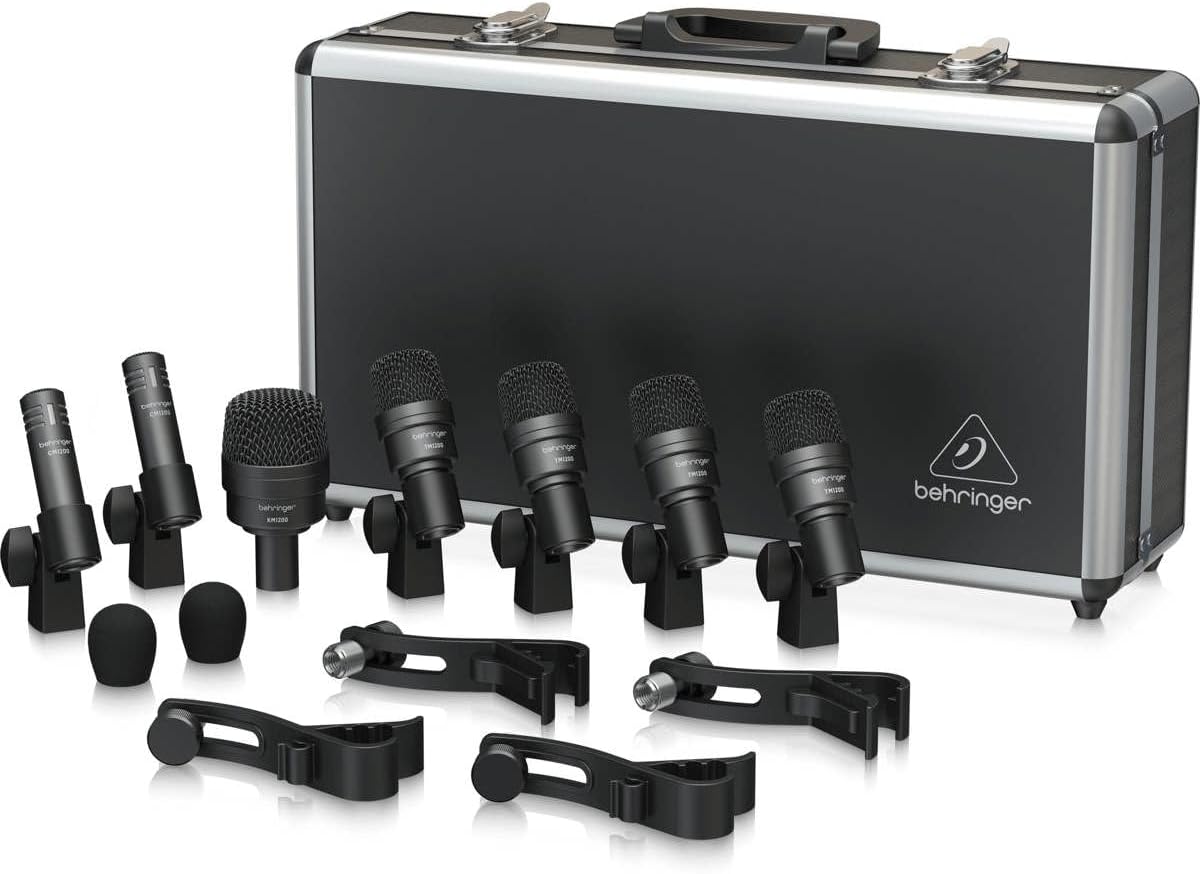
The Behringer BC1200 is a comprehensive drum microphone solution designed for home recordists, live sound engineers, and content creators who need professional-quality drum recordings without premium pricing. This 7-piece set includes everything required to mic a complete drum kit, making it an excellent entry point for anyone serious about capturing better drum sounds.
The kit's standout strength lies in its thoughtful mic selection and real-world performance. The dedicated KM1200 kick microphone delivers thick, thumpy bass drum tones that sit well in modern productions. Four TM1200 tom and snare mics provide clear articulation and punch, while the pair of CM1200 overhead microphones excel at capturing cymbal detail and room ambience. Users consistently report that the overhead mics are particularly impressive, delivering clarity comparable to mics costing significantly more.
Build quality and design are solid for the price point. The microphones feature sturdy XLR connectors, unidirectional polar patterns that reject unwanted background noise, and a respectable 70dB signal-to-noise ratio. The included carrying case with latches and handle protects your investment and makes transport between venues or studios straightforward. All necessary accessories like mic clamps and windscreens are included, eliminating surprise purchases.
The primary consideration is that these are dynamic and unpowered condenser microphones designed for working studios and live sound rather than mastering-grade critical listening environments. Best results come when paired with decent preamps, a quality audio interface, and some basic room treatment. However, multiple users report successfully recording professional sessions with these mics, suggesting that expectations should be recalibrated based on price rather than absolute performance standards.
The Behringer BC1200 represents exceptional value and is genuinely recommended for anyone building a recording setup on a budget or upgrading from single-microphone drum recording. The combination of complete kit functionality, protective case, and proven sound quality makes it a smart investment for serious hobbyists and professionals managing multiple studio setups.
Microphone Configuration: 1x KM1200 kick microphone, 4x TM1200 tom/snare microphones, 2x CM1200 overhead microphones
Connectivity: XLR connectors on all microphones, compatible with audio interfaces, mixers, and recording systems
Audio Specifications: Unidirectional polar pattern, 54dB audio sensitivity, 70dB signal-to-noise ratio, 70dB audible noise specification
Physical Specifications: Total weight 5.5 pounds, case dimensions 18 x 13.9 x 5.2 inches, stainless steel enclosure material
Included Accessories: Microphone clamps for each mic, windscreens for wind and pop noise reduction, protective carrying case with latches and handle
Warranty: 2-year manufacturer warranty covering defects and performance issues
Ideal For: Home recording enthusiasts, small studio owners, live sound technicians, podcasters with drum content, YouTubers and content creators, musicians upgrading from single-mic drum recording, and anyone seeking professional drum sounds on a limited budget.
Best Use Cases: Home studio drum recording, live venue sound reinforcement, rehearsal space documentation, content creation and streaming, drum lesson recording, and demo production for songwriting and arrangement purposes.
May Not Be Ideal For: High-end mastering studios requiring pristine studio-grade microphones, critical commercial recordings where microphone choice significantly impacts final product marketability, or users seeking powered overhead condenser microphones for specific workflow requirements.

Pros
- All-in-one solution with everything needed to mic an entire drum kit out of the box
- Excellent audio clarity with 70dB signal-to-noise ratio and balanced XLR connections
- Universal mounting system works with most drum stands and rims without additional adapters
- Professional carrying case protects your investment during travel and storage
- Outstanding value for the price compared to purchasing individual microphones separately
Cons
- Entry-level dynamic and condenser elements may not match the durability of premium studio-grade mics
- Phantom power requirement means you'll need a compatible audio interface or mixer with 24-48V capability
- Compact size of drum mics may require careful positioning to achieve optimal sound capture on larger kits
The Pyle 7-piece wired drum microphone kit is designed for musicians, recording engineers, and live sound professionals who need a complete miking solution for drum kits and percussion instruments. Whether you're setting up a home studio, performing on stage, or streaming online, this kit provides the essential tools to capture professional-quality drum sounds without the premium price tag.
The standout feature of this kit is its comprehensive approach to drum miking. You get five unidirectional dynamic microphones specifically tuned for kick drums, toms, and snares, plus two condenser microphones for capturing overhead cymbal detail. The balanced XLR connectors with phantom power support ensure clean, noise-free audio transmission to your mixer or audio interface. The 50Hz-18kHz frequency response is wide enough to capture the full tonal range of drum kits, while the -58dB to -45dB sensitivity range provides flexibility across different mic placements and playing dynamics.
Build quality reflects its mid-range positioning. The compact microphones feature durable dynamic and condenser elements, though they don't match the ruggedness of professional touring equipment. The universal mounting system with standard 3/8" and 5/8" threading adapts to most drum stands and rims without additional adapters. The included carrying case with briefcase-style locks offers solid protection for transport, and the windscreens help reduce wind noise during live applications.
One consideration is that phantom power is required to operate the condenser microphones, so your audio interface or mixer must support 24-48V phantom power. Additionally, the compact size of the drum mics means careful positioning is important for optimal sound capture, especially on larger drum kits. Some users upgrading from this kit may eventually seek premium microphones with enhanced durability and frequency response characteristics.
The Pyle 7-piece drum kit represents an excellent entry point for anyone seeking professional miking capabilities without excessive investment. The complete package, balanced audio performance, and universal compatibility make it ideal for studio recording, live performances, and streaming applications.
Audio Performance: 70dB signal-to-noise ratio, 50Hz-18kHz frequency response, -58dB to -45dB sensitivity range, unidirectional polar pattern
Connectivity: Balanced XLR connectors, 24-48V phantom power capable, wired configuration
Included Components: 5 unidirectional drum microphones, 2 condenser microphones, 4 thread clips with inserts, 4 snare/tom clamps, 2 windscreens, microphone holders, universal drum mounts, durable carrying case with locks and keys
Compatibility: Standard 3/8" and 5/8" mic stand threading, amplifiers, audio interfaces, audio mixers, PA systems, speakers
Design: Compact form factor, black color, briefcase-style carrying case with secure locks
Who Should Buy This Kit: Home studio recordists, live sound engineers, drummers wanting to expand their recording capabilities, streamers and content creators, musicians in bands preparing for live performances
What You'll Need: An audio interface, mixer, or PA system with XLR inputs and 24-48V phantom power capability to operate the condenser microphones. Standard XLR cables (not included) to connect mics to your equipment.
Setup Considerations: This kit works best with drum kits of standard size. Larger or custom drum configurations may require additional microphones. Proper mic placement and positioning significantly impacts sound quality, so plan your mic placement strategy before mounting. The phantom power requirement means you cannot use the condenser mics with equipment lacking this feature.
Best Use Cases: Studio recording sessions where you control the acoustic environment, live stage performances with professional sound reinforcement systems, online streaming and content creation, rehearsal space documentation, educational drum recording projects

Pros
- Exceptional value: delivers professional sound quality comparable to industry-standard microphones at a fraction of the cost
- Durable construction: solid metal body feels robust and reliable for both studio and live performance use
- Clear, natural sound: users report impressive clarity with balanced warmth, particularly effective on drums and vocals
- Reliable feedback rejection: unidirectional pattern effectively isolates desired sound sources from stage noise
- Easy setup: works immediately out of the box with standard XLR cables and audio equipment
Cons
- No cable included: requires separate purchase of XLR cables to connect to audio equipment
- Brighter frequency response: has more presence in the 3kHz-12kHz range compared to original SM57, which some users may find too bright
- Tighter low-end: reduced bass response below 90Hz may not suit all recording applications or personal preferences
The WEYMIC WM57 is a professional dynamic handheld microphone designed for vocalists, musicians, and audio engineers seeking reliable performance without premium pricing. This moving-coil dynamic mic excels for live vocals, studio instrument recording, drums, percussion, and amplifier miking. Whether you're performing on stage or recording in a home studio, the WM57 delivers the clarity and durability expected from professional-grade equipment.
What sets the WM57 apart is its impressive sound quality relative to its price point. The microphone features a unidirectional cardioid pattern that isolates your primary sound source while rejecting unwanted background noise and feedback. Users consistently praise its clear, natural tone with balanced warmth, particularly when recording drums and guitar amplifiers. The moving-coil dynamic element provides robust sound reproduction with high gain before feedback, making it ideal for both intimate studio sessions and high-energy live performances.
Build quality is a standout strength. The WM57 features a durable zinc alloy metal construction that feels substantial and professional in hand. Multiple users highlight how sturdy the microphone feels, comparing it favorably to more expensive alternatives. The compact handheld design makes it portable and comfortable to use for extended periods, whether you're performing vocals or positioning it for instrument miking.
A few considerations worth noting: the microphone does not include an XLR cable, so you'll need to purchase one separately (a benefit if you prefer quality cables over bundled alternatives). The frequency response is slightly brighter than the original SM57 it emulates, with a presence peak between 3kHz and 12kHz and tighter low-end response. These characteristics may sound thinner in some applications but provide excellent clarity for cutting through in live mixes.
The WEYMIC WM57 represents outstanding value for anyone building a microphone collection or upgrading their audio setup. Its combination of professional sound quality, rugged construction, and affordable pricing makes it an excellent choice for musicians, podcasters, and recording engineers at any skill level.
Technical Specifications
Impedance: 600 ohms (±30%)
Sensitivity: -52±1dB
Frequency Response: 45 Hz - 16,000 Hz
Polar Pattern: Unidirectional (Cardioid)
Signal-to-Noise Ratio: 120 dB
Connector Type: XLR (3-pin male)
Construction Material: Zinc alloy metal
Form Factor: Handheld
Weight: 0.23 kg
Dimensions: 2.64 x 7.72 x 2.48 inches
Included Components: Microphone only (cable sold separately)
Ideal Applications
The WEYMIC WM57 performs exceptionally well across multiple audio applications. For live performance, it's perfect for lead vocals, backing vocals, and instrument miking in small to medium venues. In the studio, users report excellent results recording drums (particularly toms), guitar and bass amplifiers, acoustic instruments, and vocal tracks. The unidirectional pattern makes it particularly effective in untreated spaces where background noise is a concern.
Compatible Equipment
The WM57 works with any audio interface, mixer, or amplifier featuring standard XLR inputs. Connect via 3-pin XLR male to XLR female cables. It's compatible with professional audio equipment, home studio setups, live sound systems, and portable recording devices with XLR inputs.
How to Choose Your Snare Drum Microphone
Microphone Type and Polar Pattern
Dynamic microphones, like the Shure SM57 Pro XLR Dynamic Instrument Microphone, are the traditional choice for snare drums. They are rugged, handle high sound pressure levels well, and offer a focused, punchy sound. Their cardioid polar pattern isolates the snare, reducing bleed from other drums like hi-hats.
Condenser microphones can also be used, often found in drum microphone kits for overheads or as a second, bottom snare mic. They capture more high-frequency detail and transient response. For most applications, starting with a dynamic mic on top is recommended. Explore our guide on best instrument microphones for a broader look at different types.
Durability and Build Quality
A snare drum microphone lives in a demanding environment. It faces physical vibrations, occasional stick hits, and frequent setup and teardown. Look for models with robust metal construction and proven road-worthiness. A microphone that can withstand the rigors of both studio sessions and live performances is a valuable long-term investment.
This durability is a key reason why certain models become industry standards. Their consistent performance under pressure gives engineers and musicians confidence night after night, gig after gig.
Frequency Response and Sound Character
The frequency response of a microphone determines how it colors the sound of your snare. Many dedicated snare mics have a presence boost in the upper midrange, around 3-6 kHz, to enhance the stick attack and cut through a mix. Consider the sonic signature you want: a bright, cutting crack or a warmer, fuller body.
Your choice here will shape how the snare sits in your overall drum mix. It’s worth listening to audio samples to hear how different models translate the complex sound of shell, wires, and rim. For capturing the full kit, consider pairing your snare mic with options from our list of best bass drum microphones.
Versatility and Value
<!–If you need to mic an entire drum kit, a bundled set like the Behringer BC1200 Professional 7-piece Drum microphone set offers tremendous value. These kits provide dedicated mics for kick, toms, and overheads, ensuring a cohesive sound. They are an excellent starting point for home studios.
For those focused solely on the snare or who already have other mics, a single, high-quality dynamic microphone is the way to go. Its versatility also allows you to use it on guitar amps, brass, or percussion. You can find more specialized microphone options for different applications in our Recording / Musical Instruments category.
Final Thoughts
Selecting the right snare drum microphone is a critical step toward achieving professional-grade drum sounds. For the engineer or gigging musician seeking a legendary, reliable workhorse, the Shure SM57 Pro XLR Dynamic Instrument Microphone remains the benchmark. Meanwhile, drummers building their first recording setup will find incredible value and completeness in a dedicated kit like the Pyle 7-Piece Wired Dynamic Kit-Kick Bass. Whichever path you choose, prioritizing clear attack and reduced bleed will bring your snare sound to life.
Frequently Asked Questions
Where should I place a microphone on a snare drum?
A common starting point is to position a dynamic microphone 1-2 inches above the rim, angled toward the center of the drumhead. This captures a balance of stick attack and shell tone. Experiment with small adjustments in angle and distance to find the sweet spot for your specific drum and desired sound. For more detailed capture techniques, our article on best small diaphragm condenser microphones discusses placement for overheads and room mics.
Can I use a vocal microphone on a snare drum?
While possible, it is generally not recommended. Vocal microphones are often optimized for a different frequency range and may not handle the high sound pressure levels and sharp transients of a snare drum as effectively. Using a microphone designed for instruments, particularly one validated for drums, will yield better results and reduce the risk of damage.
Do I need a separate microphone for the bottom of the snare?
A bottom snare mic is not essential but is a professional technique for capturing the brightness and sizzle of the snare wires. It is often a smaller condenser microphone placed a few inches below the wires. This signal is typically blended subtly with the top microphone to add complexity and air to the overall snare sound, a method commonly used in studio recordings as of 2026.
What’s the difference between a snare mic and a general instrument mic?
Many dynamic instrument microphones are perfectly suited for snare drum. The primary considerations are a tailored frequency response that accentuates the snare’s attack, a cardioid pattern to minimize bleed, and a durable build. Some mics are marketed specifically for drums, but versatile models used on guitar amps and horns often perform excellently on snare as well.


Write Your Review
No reviews yet. Be the first to share your experience!