

You love the warm, authentic sound of vinyl, but you don’t want to invest a small fortune in your first record player. The good news is that you can find a capable and stylish turntable that fits a modest budget perfectly. This guide is crafted for beginners and enthusiasts seeking a great entry point into the world of vinyl without compromising on essential features or sound quality.
We have evaluated six popular models, from versatile multi-media centers to focused belt-drive players, all designed to deliver a satisfying listening experience. Whether your priority is simple setup, Bluetooth connectivity, or a classic aesthetic, our review highlights the standout options available. For those considering a future upgrade, exploring higher-end belt-drive models can show you what’s possible as your collection grows.
Buying Guide
Connectivity: Wired, Wireless, or All-in-One?
Your listening habits should dictate your choice. A pure turntable with RCA outputs offers the most flexibility for connecting to a high-quality separate speaker system. Models with built-in Bluetooth let you stream music wirelessly to headphones or external speakers for a clean setup.
Alternatively, all-in-one consoles with integrated speakers provide maximum convenience in a single package. Some players, like the multi-functional units reviewed, add CD, cassette, and radio playback, creating a complete entertainment hub. Consider how you plan to listen most often.
Drive Type and Setup Ease
Belt-drive systems are common in this category. They isolate the platter from motor vibrations, which can reduce unwanted noise. This design is a hallmark of many recommended budget-friendly turntables. For beginners, an automatic or semi-automatic tonearm is a major benefit.
These models start and stop the record automatically, protecting your stylus and vinyl from accidental damage. Manual turntables require you to place and lift the tonearm yourself, which offers more control but demands more care. Choose based on your desired level of involvement.
Sound Quality and Key Components
Even at this price point, component quality varies. Look for a diamond-tipped stylus, as it is precise and gentle on your records. A magnetic cartridge generally provides better audio fidelity than a ceramic one. Some models include an adjustable counterweight on the tonearm.
This feature allows you to properly balance the tracking force, which improves sound and protects your vinyl from excessive wear. While built-in speakers are convenient, for richer sound, the ability to connect to external, powered speakers is a significant advantage. Understanding these core components helps you assess true value, a principle also explored in our guide to turntables in a slightly higher range.
Final Thoughts
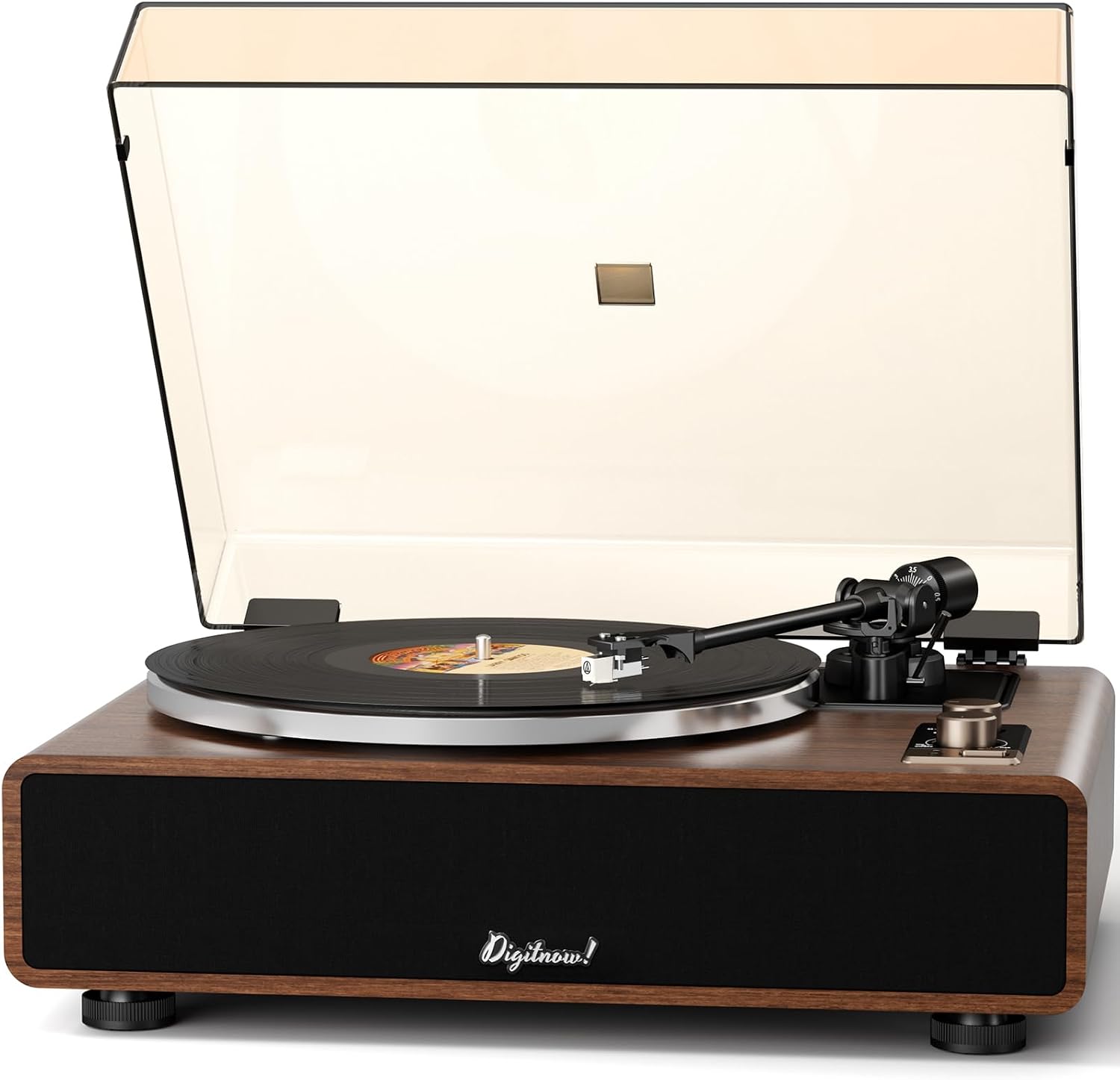
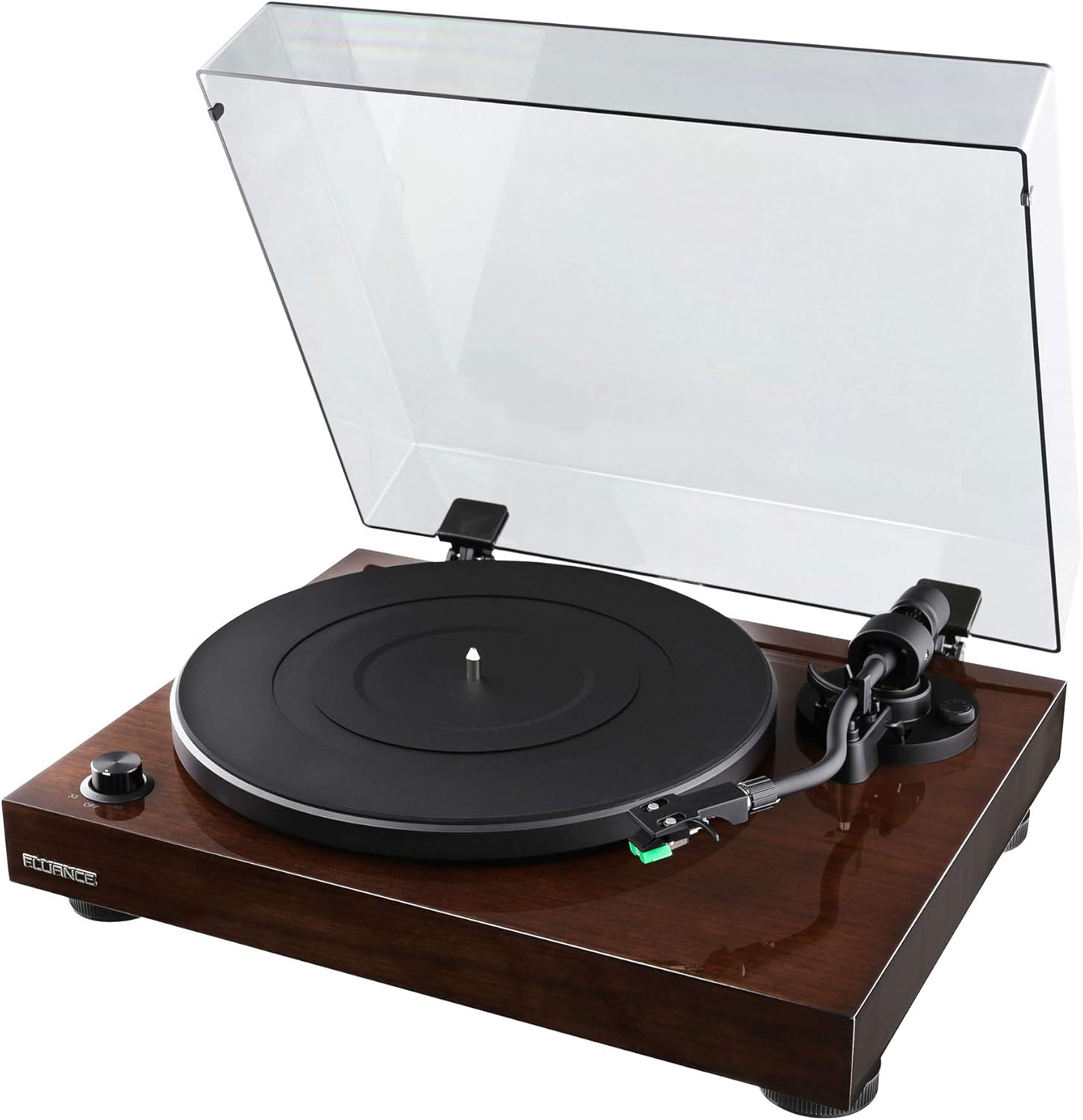
Starting your vinyl journey is exciting, and the right turntable makes all the difference. For the ultimate plug-and-play experience with multiple media formats, the Victrola Quincy – 6-in-1 Bluetooth Record Player is a fantastic and popular choice. If you prefer a dedicated, automatic belt-drive turntable with a sleek design that’s ready to pair with your own speaker system, the Retro Vinyl Record Player is an excellent option. Whichever model you choose, you’re sure to enjoy the unique charm of analog music.
Frequently Asked Questions
Do I need separate speakers for these turntables?
It depends on the model. Some, like all-in-one consoles, have built-in speakers so you can play records immediately. Others are pure turntables that require connection to externally powered speakers or a stereo receiver to produce sound. Always check the product description to confirm what’s included.
Can I connect a turntable to Bluetooth headphones?
Yes, if the turntable has built-in Bluetooth transmission capability. You can pair it directly with compatible Bluetooth headphones or speakers for private, wireless listening. This is a great feature for enjoying music without disturbing others or dealing with cables.
Will playing records damage them over time?
All record playback involves some wear, but using a proper turntable with a quality diamond stylus and correct tracking force minimizes it. Cheap players with heavy tonearms and poor needles can cause more significant groove damage. The models reviewed here are designed to protect your vinyl collection.
What is the difference between 33, 45, and 78 RPM speeds?
These numbers refer to revolutions per minute, the speed at which the record spins. Most modern LPs play at 33 1/3 RPM, while standard singles use 45 RPM. The 78 RPM speed is for older shellac records. A 3-speed turntable gives you the flexibility to play nearly any vinyl format you might own.




Write Your Review
No reviews yet. Be the first to share your experience!