

You have a cherished vinyl collection, but the sound from your current setup feels flat or, worse, the stylus is skating across your records. The culprit is often improper tracking force, which can permanently damage your albums. The solution lies in a key component: an adjustable counterweight on the tonearm.
This guide is for anyone seeking to elevate their listening experience, from newcomers who want to start correctly to seasoned collectors aiming for audio perfection. We have reviewed the top turntables equipped with this essential feature, ensuring you can dial in the perfect balance for your cartridge and enjoy your music as intended. For a broader look at vinyl playback options, explore our main turntables category.
Buying Guide for Turntables with Counterweights
Counterweight and Anti-Skate Precision
The primary function of an adjustable counterweight is to set the correct vertical tracking force (VTF) for your specific cartridge. This ensures the stylus sits perfectly in the record groove without pressing too hard or too lightly. Look for a turntable with a calibrated, easy-to-adjust weight.
Equally important is the anti-skate mechanism, which balances lateral forces to prevent the tonearm from pulling inward. Models like the Audio-Technica AT-LP120XUSB-BK Direct-Drive feature adjustable anti-skate, working in tandem with the counterweight for flawless tracking across both channels.
Drive Type: Belt vs. Direct
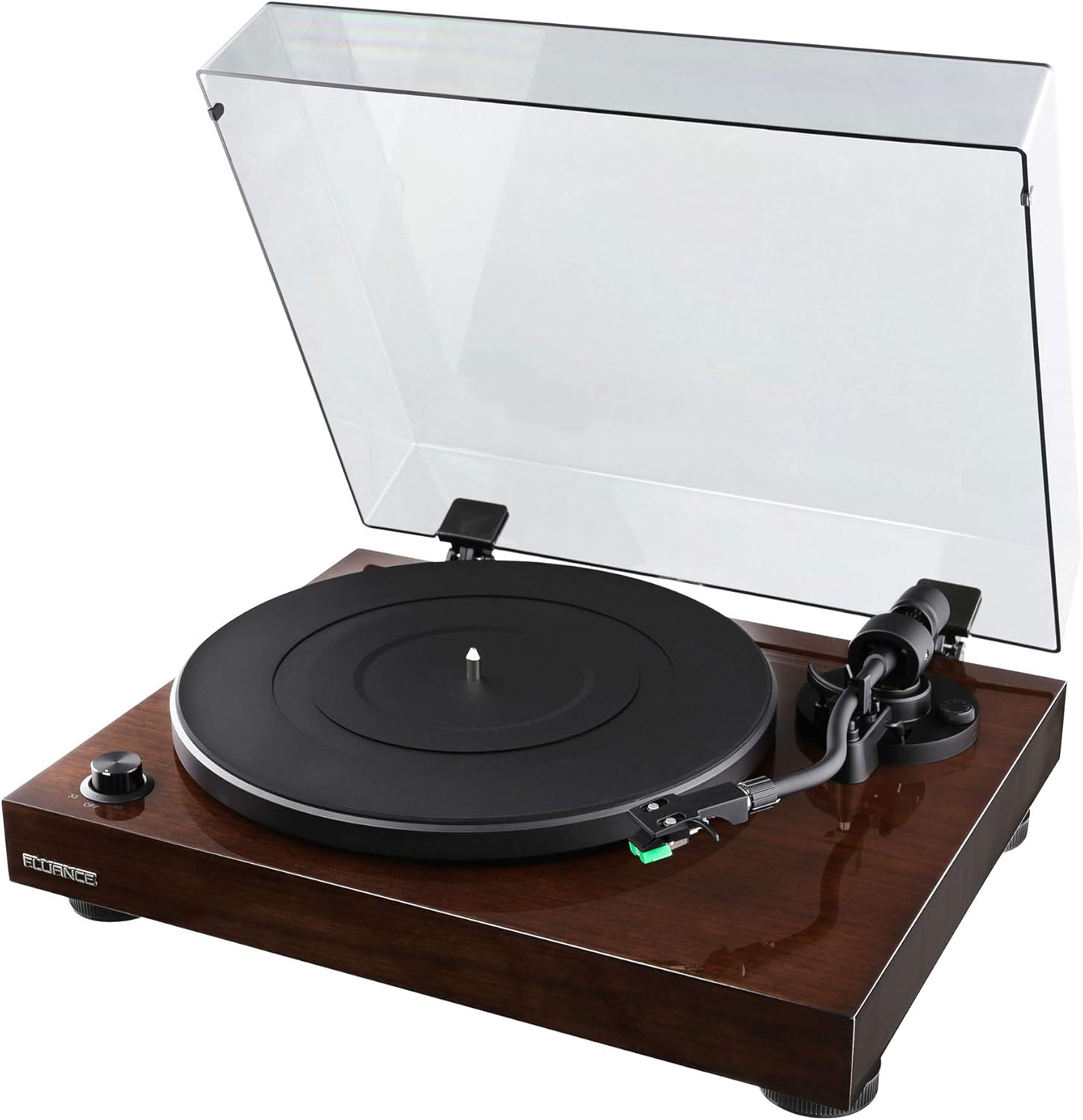
Your choice between belt-drive and direct-drive affects both sound character and functionality. Belt-drive turntables, such as the Fluance RT81 Elite High Fidelity Vinyl Turntable, use a rubber belt to isolate motor vibrations from the platter, typically resulting in quieter operation favored for critical listening.
Direct-drive models have the motor connected directly to the platter, offering superior torque and speed stability, which is ideal for DJing or precise playback. Consider your primary use: pure audiophile enjoyment or features like pitch control.
Tonearm Design and Build Quality
A high-quality tonearm is the conduit for your cartridge’s signal. Look for a balanced, rigid design made from materials like aluminum to minimize resonance. The shape, whether S-shaped or J-shaped, is engineered to reduce tracking error.
The overall plinth construction also matters. A heavy, non-resonant base made from materials like MDF or solid wood, as found on the Fluance RT81, effectively dampens external vibrations and motor noise, ensuring the counterweight’s precise adjustments translate into pure sound.
Connectivity and Modern Features
While the counterweight is an analog essential, modern turntables offer useful conveniences. A built-in switchable phono preamp allows you to connect to a wider range of amplifiers. USB output facilitates digitizing your vinyl collection.
For wireless flexibility, several models in our list include Bluetooth connectivity, letting you stream music to the turntable’s speakers. You can discover more dedicated options in our guide to the best turntables with bluetooth output.
Final Thoughts
Investing in a turntable with a proper adjustable counterweight is a fundamental step toward exceptional vinyl playback and record care. For enthusiasts seeking a classic, hands-on belt-drive experience with outstanding sound, the Fluance RT81 Elite High Fidelity Vinyl Turntable is a superb choice. If you require the robustness, pitch control, and versatility of direct-drive, the feature-packed Audio-Technica AT-LP120XUSB-BK Direct-Drive stands out as a top contender for both listening and digitizing your collection.
Frequently Asked Questions
Why is an adjustable counterweight so important on a turntable?
An adjustable counterweight allows you to set the exact tracking force recommended for your cartridge. Too much force accelerates record and stylus wear, while too little causes mistracking and poor sound. It is the single most important tool for aligning your system and protecting your vinyl investment.
Can I add a counterweight to a turntable that doesn’t have one?
Generally, no. The tonearm is designed and manufactured as a complete unit. A turntable without an adjustable counterweight typically has a fixed, pre-set tracking force. Upgrading would require replacing the entire tonearm, which is often impractical or impossible. It is best to select a model with this feature built-in.
Are automatic turntables with counterweights as good as manual ones?
Yes, many automatic and semi-automatic models feature fully adjustable counterweights. The automation handles tonearm placement at the start and return at the end of a record, but the critical tracking force adjustment remains manual and precise. For a deeper comparison, see our reviews of the best automatic turntables and best manual turntables for 2026.
How often should I check or adjust the counterweight?
You should calibrate the counterweight whenever you install a new cartridge or stylus. Once set correctly, it should remain stable. It is good practice to verify the tracking force with a digital scale periodically, perhaps once a year, to ensure it hasn’t shifted due to vibration or handling.




Write Your Review
No reviews yet. Be the first to share your experience!