

You have a cherished record collection and a quality turntable, but the sound lacks the warmth and detail you crave. Often, the missing link is a proper phono preamplifier, which boosts the delicate signal from your cartridge to a level your speakers can use. While standalone phono stages exist, an integrated amplifier with this feature built-in offers a cleaner, more streamlined setup, eliminating extra boxes and cables.
This guide is crafted for vinyl enthusiasts seeking an all-in-one solution that brings their records to life. We have reviewed a curated selection of amplifiers with integrated phono preamps, from classic stereo receivers to modern hybrid tube designs. Whether you prioritize pristine digital conversion, vintage aesthetic, or pure budget-friendly functionality, you will find a model that elevates your listening experience. For a broader look at versatile audio solutions, explore our roundup of the best Bluetooth amplifiers.
| Pick | Product | BRD Score | Where to buy |
|---|---|---|---|
| Top Pick |
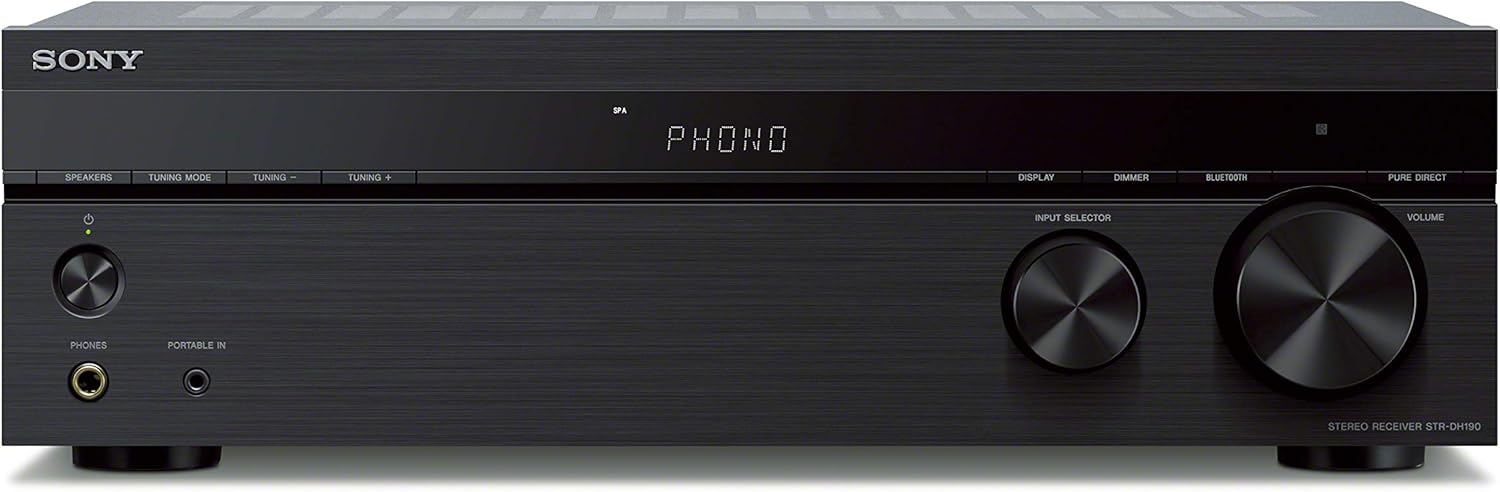 Sony STRDH190 2-Channel Home Stereo Receiver |
9.8/10 | View on Amazon.com |
| 15% OFF |
 Fosi Audio MC331 Tube Integrated Amplifier |
9.6/10 | View on Amazon.com |
| 30% OFF |
 Pyle PP999 Phono Turntable Preamp |
9.4/10 | View on Amazon.com |
Prices and discounts as of Nov 23, 2026 and may have changed. Check Amazon for the current price.
Pros
- Excellent sound clarity with balanced highs, mids, and bass across all input sources
- Phono input eliminates the need for a separate turntable preamp, saving money and desk space
- Bluetooth connection is quick to pair and remains stable during extended listening sessions
- Compact low-profile design fits standard AV furniture without any awkward modifications
- Highly rated by a large number of verified buyers, reflecting consistent real-world reliability
Cons
- Maximum volume output may feel limited for larger rooms or listeners who prefer concert-level loudness
- 2-channel stereo only, so it is not suitable for home theater surround sound setups
- No digital optical or coaxial inputs, which may frustrate users wanting to connect modern TVs or DACs directly
The Sony STRDH190 is a 2-channel home stereo receiver designed for music lovers who want a clean, capable hub for multiple audio sources. Whether you are spinning vinyl, streaming from a phone, or tuning into FM radio, this receiver handles it all in one compact unit. It is particularly well suited to first-time stereo system builders and returning audiophiles who value simplicity over complexity.
Sound performance is the STRDH190's strongest suit. With 100 watts per channel and Sony's large-capacity power transformer, the receiver delivers a composed, detailed soundstage with crisp highs and solid bass. Customer feedback consistently praises its clarity at moderate to high volumes, and High-Resolution Audio support means the unit can resolve fine details that compressed streaming formats often obscure.
The feature set is thoughtfully chosen for its target audience. The built-in phono preamp is a genuine convenience for turntable users, while Bluetooth pairing is described by owners as fast and reliable. The A/B speaker switching is a practical bonus, allowing two pairs of speakers to run simultaneously or independently for multi-room flexibility. A full-size headphone jack and 30-preset FM tuner round out the everyday usability.
On the design side, the STRDH190's low-profile chassis at just over 5 inches tall is a real-world advantage for anyone working with a standard AV cabinet. Build quality feels solid for the price point, and the included remote adds a layer of convenience that budget receivers often skip. The unit weighs 17 pounds, which speaks to the substantial internal components rather than hollow construction.
The main limitations are its 2-channel-only configuration, which rules it out for surround sound duties, and a lack of digital inputs for users wanting to connect a TV or external DAC. Volume headroom in very large rooms can also feel modest. That said, for a stereo-focused listener who values vinyl, Bluetooth, and clean audio in one tidy package, the STRDH190 is a genuinely impressive and well-rounded receiver.
Model: Sony STRDH190 | Color: Black | Channels: 2 (Stereo) | Output Power: 100W x 2 (8 ohms, 1 kHz) | Total Wattage: 200W
Speaker Impedance: 6 to 16 ohms | Inputs: Phono input, 4x stereo RCA, 3.5mm aux | Outputs: Stereo RCA, A/B speaker terminals, 1/4-inch headphone jack
Wireless: Bluetooth (2.4 GHz, max output 5.0 dBm) | FM Tuner: 30 station presets | Audio Format: WMA, High-Resolution Audio
Dimensions: 11"D x 17"W x 5.2"H | Weight: 17.1 lbs | Power: AC 120V, 60 Hz | Warranty: 1 year limited
In the Box: Receiver, remote control (RMT-AA400U), batteries, FM antenna | ASIN: B078WFDR8D | UPC: 027242908383
If you are shopping for your first stereo receiver, the STRDH190 is one of the most complete entry-level options available. It covers all the essential bases: Bluetooth streaming, FM radio, a phono stage for turntables, and enough inputs for a CD player, TV audio output, and more. You will not need to buy a separate phono preamp, which keeps your total system cost down.
Pairing advice: this receiver works best with bookshelf or floor-standing speakers rated between 6 and 16 ohms. Popular matches noted by owners include Yamaha bookshelf speakers and classic Bose 301s. For turntable users, Sony's own PS-LX310BT is a frequently recommended companion that integrates seamlessly with the STRDH190's phono input.
Consider your room size before purchasing. The 100-watt-per-channel rating is more than adequate for small to medium rooms, but listeners in large open-plan spaces who prefer very high volume levels may eventually want to step up to a higher-powered model. For most living rooms and dedicated listening spaces, however, the power on offer is genuinely sufficient.
This receiver is not the right choice if you need surround sound for a home theater setup, or if you want to connect a modern TV via optical or coaxial digital audio. For those use cases, a dedicated AV receiver would be a better fit. But as a pure stereo music receiver with broad source compatibility, the STRDH190 is hard to beat at its price point.
Pros
- Delivers warm, detailed sound quality that rivals amplifiers at significantly higher price points
- Compact footprint with high power output makes it perfect for desktop or shelf placement without sacrificing performance
- Multiple input options support turntables, computers, smartphones, CD players, and wireless devices seamlessly
- Beautiful vintage design with visible vacuum tubes and responsive VU meter adds character to any room
- Replaceable tube design allows you to fine-tune the sound signature to your preferences
Cons
- Tubes are recessed into the chassis and difficult to see unless viewed directly from above, reducing visual impact
- Remote control responsiveness could be improved for faster operation and menu navigation
- Requires a few minutes of warm-up time for tubes to reach optimal sound quality and dynamic range
The Fosi Audio MC331 is a beautifully engineered all-in-one tube amplifier designed for audiophiles and music enthusiasts who want high-quality sound without the complexity or cost of a full separates system. This compact powerhouse combines a DAC, integrated amplifier, preamplifier, and headphone amp into a single chassis, making it ideal for desktop setups, bedroom systems, or as a centerpiece for a small living room audio installation.
What truly sets the MC331 apart is its ability to deliver warm, detailed sound with impressive power output of 105W per channel at 4 ohms. Users consistently praise its ability to drive bookshelf speakers with authority while maintaining clarity and musicality. The tube circuitry imparts a characteristic warmth and smoothness that makes vocals sound intimate and instruments feel present. The built-in DAC handles USB, optical, and coaxial inputs, while Bluetooth connectivity adds modern convenience. Bass response is notably good for the size and price, and the remote-controlled bass and treble adjustments give you real control over the sound character from your listening position.
The design is where this amp truly shines. The visible vacuum tubes and responsive VU meter create a mesmerizing vintage aesthetic that looks equally at home in a retro setup or a contemporary space seeking character. The build quality feels solid and substantial despite the modest price. However, one design compromise is that the tubes are recessed into the chassis, making them difficult to see unless you peer down into the unit from above. For some buyers seeking maximum visual impact, this may be disappointing.
Minor drawbacks include the lack of a physical power switch on the unit itself, requiring you to use the remote to power on and off. Additionally, the tubes require a 3-5 minute warm-up period before reaching their full sonic potential, during which the sound can feel slightly harsh and compressed. Some users also reported that the remote control responsiveness could be more immediate, though this is a minor usability concern rather than a performance issue.
The Fosi Audio MC331 represents exceptional value in the affordable amplifier market. It competes favorably with amplifiers costing twice as much, delivering genuine tube warmth, impressive power, and surprising versatility. Whether you are building your first serious audio system, upgrading a desktop setup, or seeking a compact solution for a secondary listening space, the MC331 deserves serious consideration. Its combination of sound quality, build integrity, aesthetic appeal, and connectivity options makes it one of the best compact amplifiers available today.
Power Output: 105W x2 at 4 ohms
Inputs: Bluetooth, USB, optical, coaxial, RCA
Outputs: RCA pre-out, 3.5mm headphone output
Tubes: 2x vacuum tubes included with tube covers
Dimensions: Compact desktop form factor
Weight: 4.2 pounds
Warranty: 24 months manufacturer warranty
Accessories: Remote control, 24V/4.5A power adapter, tube covers
Who Should Buy: The MC331 is perfect for audiophiles on a budget, music lovers upgrading from computer speakers, vinyl enthusiasts seeking a compact amplifier solution, and anyone wanting to add vintage character to their audio setup. It works exceptionally well with high-quality bookshelf speakers and passive monitors.
Setup Considerations: Ensure adequate ventilation around the unit as tubes generate heat during operation. Allow 5 minutes for warm-up before critical listening. The remote control requires a clear line of sight to the unit for reliable operation. Compatible with turntables that have built-in phono preamps, external DACs, and wireless audio devices.
Sound Quality Expectations: Expect warm, smooth midrange presentation with good detail retrieval. Bass response is punchy and well-defined. Treble is smooth without harshness. The tube warmth is immediately audible and becomes more refined after warm-up. Sound character can be customized by replacing the vacuum tubes with different models.
Comparison Notes: This amplifier punches above its price point compared to solid-state alternatives. It offers better musicality and character than budget Class-D amplifiers while maintaining reliability and ease of use. It is not a replacement for high-end separates but delivers remarkable performance for the investment.
Pros
- Exceptional value for budget-conscious vinyl listeners and casual turntable users
- No audible hum or interference when positioned near the turntable source
- Works reliably with a wide range of turntables and audio equipment combinations
- Simple installation with no technical knowledge required
- Proven durability with over 20 years of market availability and thousands of satisfied users
Cons
- Not suitable for high-end audiophile setups or expensive turntables that deserve better matching components
- Output level may require higher volume settings on some receivers compared to other line-level sources
- Limited to magnetic cartridge compatibility, not compatible with moving coil pickups
The Pyle PP999 is a straightforward phono preamp designed for vinyl enthusiasts on a budget. It solves a common problem for anyone who has inherited or purchased a turntable without a built-in preamp and wants to connect it to modern audio equipment. This preamp is ideal for casual listeners, students, and those just getting into vinyl without wanting to commit significant funds upfront.
The core function of the PP999 is converting weak phono-level signals from a turntable's cartridge into standard line-level signals that modern amplifiers and receivers can process. The preamp handles magnetic pickups with 3mV input sensitivity and delivers a 2V maximum output. Users consistently report clean signal conversion with no noticeable hum or noise interference, especially when the unit is positioned close to the turntable. The low-noise audio operational amplifiers deliver reliable performance for the price point.
Build quality reflects its budget positioning. The compact plastic enclosure measures just 8.25 x 4 x 2 inches and weighs 8.8 ounces, making it easy to position near your turntable. The RCA connectors are solid, and the ground wire connection is straightforward. Setup takes minutes with no special tools or technical knowledge required. The 12V DC power adapter provides stable operation, and the unit runs quietly in the background.
The main limitation is that this preamp targets entry-level users, not audiophiles. While it performs its basic function well, it won't match the sound quality of preamps costing three to five times more. Some users note that output levels may require higher volume settings than other line inputs on their receivers. However, this actually provides flexibility if you want to add external components later.
The Pyle PP999 deserves recognition as an excellent gateway product for vinyl. It removes the barrier to entry for people curious about turntables and vinyl records without requiring a large investment. For its intended audience, it delivers dependable, hassle-free performance that makes vinyl listening accessible and enjoyable.
Physical Specifications
Dimensions: 8.25 x 4 x 2 inches
Weight: 8.8 ounces
Color: Black
Audio Specifications
Input Sensitivity: 3mV at 50K ohms
Output Level: 2V max (p-p) at 10K ohms
Compatibility: Magnetic cartridges only
Signal Type: Stereo RCA
Connectivity
Inputs: Stereo RCA (left/right) plus ground connection
Outputs: Stereo RCA (left/right)
Power: 12V DC adapter (included)
Product Details
Model Number: PP999
Brand: PyleUSA
Manufacturer: Sound Around Inc.
First Available: October 2, 2001
Who Should Buy This Preamp
The Pyle PP999 is perfect for you if you have recently acquired a turntable without a built-in preamp and want to connect it to modern receivers, powered speakers, or audio interfaces. It's ideal for vinyl newcomers exploring the hobby, students setting up dorm room audio, and anyone looking for an affordable way to revive a vintage turntable. Budget-conscious listeners who want to keep their total system investment low will appreciate this option.
Who Should Look Elsewhere
If you own a high-quality turntable with an expensive cartridge or consider yourself an audiophile, invest in a better preamp that matches your equipment's quality level. Similarly, if your turntable uses a moving coil cartridge instead of a magnetic cartridge, this preamp won't work for you. Those seeking precise sound shaping or tone control features should explore more advanced preamps.
Installation Tips
Position the preamp as close as possible to your turntable to minimize cable runs and reduce potential noise interference. Connect the turntable's RCA cables to the preamp inputs and attach the ground wire from your turntable to the ground terminal. Then connect the preamp's RCA outputs to your receiver or powered speakers. Plug in the 12V adapter and you're ready to play. Always ensure your receiver or amplifier is powered off before making connections.
Getting the Best Results
Set your receiver's input level to match other line-level inputs like CD or aux. You may need to adjust volume slightly higher than other sources, which is normal. If you experience hum, double-check that the ground connection is secure and that the preamp isn't positioned near electrical interference sources. The preamp performs best when your turntable and cartridge are in good working condition.
Buying Guide for Amplifiers with Phono Preamp
Sound Signature and Amplifier Type
The core technology of your amplifier defines its sonic character. Solid-state amplifiers, like the Denon models, typically deliver precise, detailed, and powerful sound with excellent channel separation. They are reliable and often pack advanced features like high-resolution DACs.
Hybrid tube amplifiers, such as the Dayton Audio HTA200, introduce vacuum tubes in the preamp stage. This adds a layer of harmonic warmth and a smooth, musical quality that many find flattering to vinyl. Consider which presentation aligns with your taste, whether it’s clinical accuracy or rich, inviting tonality.
Connectivity and Future-Proofing
Look beyond the essential phono input. Modern amplifiers offer extensive connectivity to serve as the hub of your audio system. Optical and coaxial digital inputs are crucial for connecting TVs, game consoles, or streamers, while a built-in DAC ensures high-quality conversion from these sources.
Bluetooth is now a standard expectation, offering convenient streaming from your phone or tablet. Some models, like those featured in our guide on amplifiers with built-in DACs, also include USB inputs for direct computer connection. Assess your current and potential future sources to choose an amp that can grow with your system.
Power Output and Speaker Compatibility
Amplifier power, measured in watts per channel, must match your speakers and listening room. A modest living room might be well-served by 50-70 watts, while larger spaces or inefficient speakers demand more power, like the 100-watt output of the Dayton Audio HTA200. Underpowering an amplifier can lead to distortion at higher volumes.
Equally important is the impedance rating, measured in ohms. Ensure your amplifier’s power specifications align with your speakers’ requirements, typically listed as a range like “6-16 ohms.” A good match ensures clean, dynamic sound and protects your equipment. For systems where you need to place speakers wirelessly, consider our recommendations for the best wireless amplifiers.
Form Factor and Additional Features
Consider the physical design and extra functionalities. A low-profile chassis, like that of the Sony STRDH190, fits easily into media cabinets. If aesthetics matter, the glowing tubes and VU meters of models like the Fosi Audio MC331 add a visual retro charm to your setup.
Useful features include a dedicated headphone jack for private listening, tone controls for fine-tuning, a remote control for convenience, and multiple speaker outputs for multi-room setups. Some amplifiers even include FM tuners or microphone inputs for karaoke. Decide which conveniences enhance your user experience.
Final Thoughts
Ultimately, the right amplifier with a phono preamp unlocks the full potential of your vinyl collection by providing the correct signal gain and equalization. For those building a first serious hi-fi system with a need for both analog purity and modern digital connectivity, the Denon PMA-600NE Bluetooth Stereo Amplifier stands out as a superb, versatile choice. Conversely, if your priority is a budget-conscious, dedicated solution to connect a turntable to any modern receiver, the straightforward functionality of the Pyle Phono Turntable Preamp is remarkably effective. Whichever path you choose, you are one step closer to the rich, immersive sound that makes vinyl so special.
Frequently Asked Questions
Do I need a phono preamp if my turntable has a “line” output?
If your turntable has a built-in phono preamp and a line-level output, you can connect it directly to any standard amplifier input (like AUX or CD). You do not need an amplifier with a dedicated phono input in this case. However, using a higher-quality external phono stage, like a standalone unit or one built into a better amplifier, can still improve sound quality. For more on turntable setup, see our turntables category.
What’s the difference between a phono input and a standard RCA input?
A phono input applies two critical processes, RIAA equalization and signal amplification, to the very low-level signal from a magnetic phono cartridge. A standard RCA input (like AUX) expects a much stronger “line-level” signal. Plugging a turntable without its own preamp into a standard input will result in extremely quiet and tinny sound.
Can I add a phono preamp to an amplifier that doesn’t have one?
Yes, absolutely. You can use an external phono preamplifier, like the Pyle model reviewed here. You would connect your turntable to the preamp’s input, then connect the preamp’s output to any standard line-level input (such as AUX or CD) on your existing amplifier. This is a great way to add vinyl playback capability to any system. For those seeking an upgrade path, our guide to the best preamplifiers under $300 offers excellent external options.
Are newer amplifiers with phono inputs good for vintage records?
Modern amplifiers with phono inputs are generally excellent for all vinyl, both new and vintage. They are engineered to the same RIAA equalization curve standard that has been used for decades. The main advantages of newer models include quieter circuitry, more precise components, and the convenience of integrating other modern audio sources into one unit, making them a smart choice for a mixed-media system in 2026.





Write Your Review
No reviews yet. Be the first to share your experience!