

You are ready to record your podcast, stream your gameplay, or lay down a vocal track. Everything is set, but your “P” and “B” sounds keep creating harsh, distracting bursts of noise. These plosives can make an otherwise professional recording sound amateurish. The solution is simple and surprisingly affordable: a quality pop filter.
This guide is for content creators, musicians, and streamers who want to achieve cleaner audio without a significant investment. We have evaluated several popular models to identify the top performers that effectively block plosives and fit common microphone setups. For a complete studio setup, pairing your new pop filter with a stable boom arm can further improve your sound quality.

Pros
- Effectively reduces plosive sounds and wind noise for noticeably cleaner audio in podcasts and streams
- Universal compatibility with FIFINE models and most condenser mics between 40-70mm diameter
- Thoughtful design with soft padding and included spare bands adds long-term value
- Lightweight and portable construction makes it ideal for mobile streaming setups
- Affordable price point compared to premium pop filter alternatives
Cons
- Not compatible with dynamic microphones like FIFINE AM8, K688, and TANK3 models
- Limited to microphones within the 40-70mm diameter range, excluding larger studio mics
- May require adjustment or experimentation to find optimal positioning for best results
The FIFINE U1 is a compact pop filter designed primarily for FIFINE condenser microphones and compatible with most mics in the 40-70mm diameter range. It's purpose-built for content creators, podcasters, streamers, and voice-over artists who need effective plosive and wind noise reduction without breaking the budget. If you're recording audio content regularly, this accessory is a practical addition to your setup.
The standout feature is the curved metal mesh design combined with dual rubber bands of different sizes. This approach effectively blocks plosive sounds, wind artifacts, and air blasts while the moisture barrier protects your microphone's diaphragm from saliva buildup during long recording sessions. The soft rubber padding inside the frame prevents scratches, which extends your microphone's lifespan and maintains its appearance.
Build quality is solid for the price point. The metal mesh construction feels durable, and the rubber components appear well-made without feeling cheap. Setup is straightforward thanks to the custom handle design, and the included spare bands mean you can adapt it to different microphone sizes or replace worn bands down the line.
The main limitation is compatibility, as it's not suitable for dynamic microphones and requires mics within a specific diameter range. Additionally, some users may need to experiment with positioning to achieve optimal results depending on their recording environment and microphone model.
Overall, the FIFINE U1 delivers solid value for budget-conscious creators seeking professional audio quality improvements. It's a practical, well-designed accessory that does its job effectively without unnecessary complexity or premium pricing.
Compatibility: FIFINE K669, K669B, K670, K670B, K683A, K678, K690, and most condenser microphones between 40-70mm (1.6-2.6 inches) in diameter. Not compatible with dynamic mics including FIFINE AM8, K688, TANK3.
Construction: Metal mesh screen with curved design, rubber frame with soft padding, flexible rubber bands in two sizes (45mm and 55mm).
Package Contents: Pop filter screen, 2 extra rubber bands, user manual. Microphone not included.
Design: Portable, lightweight construction with custom handle for easy single-handed operation. Minimizes obstruction between microphone and user during recording.
Best For: Podcasters, Twitch streamers, YouTube content creators, voice-over artists, and gaming streamers using FIFINE or compatible condenser microphones.
Consider This Product If: You experience plosive sounds (harsh 'p' and 'b' sounds) in your recordings, want to protect your microphone from moisture and scratches, or need an affordable pop filter upgrade from traditional foam shields.
Check Compatibility First: Measure your microphone's diameter or verify your model number against the compatibility list. The U1 is designed for condenser mics and not recommended for dynamic microphones.
Installation Tips: Start with the rubber band size closest to your mic diameter, then adjust as needed. The custom handle allows you to reposition the filter without removing it from the stand, making it easy to find your optimal recording position.

Pros
- Impressive build quality with sturdy metal components that feel durable and professional-grade
- Effectively reduces plosives and wind noise while maintaining natural voice clarity without over-muffling
- Flexible yet stable gooseneck positioning allows precise angle and distance adjustments for optimal sound capture
- Reusable metal mesh screens are more durable than fabric alternatives and easier to clean
- Affordable pricing makes it accessible for home studios, content creators, and professional facilities alike
Cons
- Clamp mount may require slight adjustment when used with certain microphone models like the Blue Yeti for optimal grip security
- Two thin fabric membranes require periodic inspection and replacement for sustained performance over extended use
- Limited compatibility documentation for specific microphone models may require trial and error during initial setup
The Aokeo P10 pop filter is a professional-grade microphone accessory designed for anyone serious about recording clean, broadcast-quality audio. Whether you're a podcaster, streamer, singer, voice-over artist, or content creator, this three-layer metal mesh screen is engineered to eliminate the unwanted plosives and sibilance that plague amateur recordings.
The standout feature is the three-layer metal mesh construction combined with a 360-degree rotating gooseneck arm that offers exceptional flexibility in positioning. Users report that the filter effectively tones down harsh plosives from B, T, and P sounds while reducing the hissing that occurs with S sounds, all without muffling or coloring the natural voice tone. The dual-layer wind pop screen design proves particularly effective for blocking breath noise and environmental interference.
Build quality is genuinely impressive for the price point. The metal components feel sturdy and durable compared to fabric-style filters, while the flexible yet stable gooseneck maintains its position without drooping or shifting during recording sessions. Installation is straightforward with a universal screw-rotation mount that adapts to various microphone stands, though some users note that fit may vary slightly depending on your specific microphone model.
The main consideration is that the clamp compatibility varies across different microphone types, so you may need minor adjustments during setup. Additionally, the two included fabric membranes will eventually require replacement with extended use, though they're easy to swap out and relatively inexpensive.
Overall, the Aokeo P10 represents exceptional value for home studios and professional facilities alike. With its durable construction, effective noise reduction, and flexible positioning, it's a reliable investment for anyone looking to elevate their recording quality without breaking the budget.
Brand: Aokeo
Model: P10
Material: Metal frame with plastic components and metal mesh screens
Weight: 0.27 kg (0.6 lbs)
Color: Metallic
Gooseneck: 360-degree rotating steel tube mount
Filter Head: 360-degree rotating circular design
Mount Type: Adjustable screw-rotation right-angle mount with scratch-resistant clamp
Included Components: Two fabric screens, metal gooseneck mount, universal clamp
Warranty: 1-year manufacturer warranty
Compatibility: Universal fit for all microphone stands and boom arms
Who Should Buy This Pop Filter? The Aokeo P10 is ideal for podcasters, streamers, voice-over artists, singers, and anyone recording audio in home studios or professional facilities. If you're tired of hearing plosives and wind noise in your recordings, this filter delivers noticeable improvement at an accessible price.
Installation Tips: The universal mount works with most microphone stands, but you may need to adjust the clamp tension slightly depending on your specific microphone. Ensure the gooseneck is positioned so the filter sits 2-3 inches in front of your microphone for optimal plosive reduction without affecting proximity.
Maintenance: The metal mesh screens are reusable and can be gently cleaned with a soft brush or compressed air. The two included replacement screens provide backup options when needed. Check the gooseneck flexibility periodically to ensure it maintains its position during recording sessions.
Performance Expectations: You'll notice immediate reduction in harsh plosives and sibilance. However, a pop filter is one component of good recording technique. Proper microphone technique, room treatment, and gain staging also contribute to professional-quality audio. This filter works best when combined with good recording practices.

Pros
- Effective dual-layer filtration significantly reduces plosive sounds and wind noise
- Flexible metal gooseneck maintains position without drooping over time
- Wide compatibility with FIFINE microphones and most standard microphone stands
- Affordable price point for professional-grade pop filter quality
- Compact design doesn't obstruct sightlines during video recording
Cons
- May require slight adjustment to find optimal distance from microphone for best results
- Not compatible with all microphone models, though works with most standard setups
- Limited color options available for aesthetic customization
The FIFINE PF1 is a dual-layer pop filter engineered for anyone serious about recording clean, professional audio. Whether you're a podcaster, voice-over artist, streamer, or bedroom musician, this pop filter addresses one of the most common audio problems: plosive sounds that ruin otherwise perfect takes. The dual-layer design tackles this issue head-on by dispersing airflow before it reaches your microphone.
What sets the PF1 apart is its thoughtful engineering. The first mesh layer catches direct airflow from speech, while the gap between layers disperses pressure, preventing harsh pops from B, P, and S sounds. In practice, this means significantly fewer retakes and less time spent editing out unwanted noise in post-production. The compact mesh surface is surprisingly effective at blocking bursts without muffling your voice or reducing audio clarity.
Build quality is solid throughout. The metal construction with chrome-plated finish feels sturdy and professional, while the 360-degree adjustable gooseneck maintains its position without sagging even after repeated adjustments. The universal clamp securely grips most boom arms and microphone stands, and the rotating mechanism allows you to dial in the exact angle you need. Installation is straightforward: clamp to your boom arm, tighten the knob, and adjust the gooseneck to your preferred position.
The main limitation is that optimal placement requires some experimentation to find the right distance from your microphone. Additionally, while the PF1 is compatible with most standard microphone setups and specifically works with several FIFINE models, you should verify compatibility with your specific equipment before purchasing. The limited color options may also disappoint those seeking aesthetic customization.
For the price, the FIFINE PF1 delivers genuine value. It eliminates a real problem that plagues home recordists and content creators, backed by a one-year warranty and positive user feedback. If you're tired of dealing with plosive noise in your recordings, this pop filter is a smart, budget-friendly investment that will improve your audio quality immediately.
Brand: FIFINE
Model: PF1 (RF2021002)
Filter Type: Dual-layer mesh
Material: Metal with chrome-plated finish
Gooseneck: 360-degree adjustable
Clamp Type: Universal rotating screw clamp
Weight: 0.27 kg (0.6 lbs)
Maximum Height: 10 centimeters
Warranty: 1 year manufacturer warranty
Compatible With: FIFINE T669, T683, T732, K780A and most standard microphone stands
Who Should Buy This? The PF1 is ideal for podcasters, voice-over artists, singers, streamers, and anyone recording audio at home or in a small studio. If you struggle with plosive sounds or want to reduce post-production editing time, this filter is a practical solution.
Installation Tips: Position the pop filter 2-4 inches from your microphone for optimal plosive reduction. Adjust the gooseneck angle so the mesh sits slightly off-axis from your mouth rather than directly in front. This placement minimizes plosive impact while maintaining natural sound quality.
Maintenance: Clean the mesh periodically with a soft, dry cloth to prevent dust buildup. Avoid touching the mesh directly during use to maintain its effectiveness. The metal construction is durable but should be handled carefully to avoid denting.
Compatibility Check: Verify that the universal clamp fits your microphone stand or boom arm diameter before purchasing. Most standard tubular mounts are compatible, but some specialty setups may not work.

Pros
- Effectively reduces plosives and sibilants with dual-layer mesh technology for professional vocal clarity
- Sturdy gooseneck arm maintains position without drooping or unwanted movement
- Universal compatibility works with most microphone stands and microphone types
- Excellent build quality with reinforced clamp and protective rubber padding
- Outstanding value for budget-conscious home studio and content creators
Cons
- Ring assembly holding the mesh screen may require careful handling during setup and replacement
- Gooseneck has limitations for extreme positioning angles and may require adjustment
- Compact 8-inch arm length may not suit all recording setups or mic stand heights
The Samson PS04 is a professional-grade pop filter designed for home studio recording, podcasting, voiceovers, and content creation. It combines affordability with effective plosive reduction, making it ideal for anyone looking to improve vocal recording quality without investing in expensive studio equipment.
The standout feature is the dual-layer nylon mesh screen that genuinely eliminates harsh "P" sounds and sibilants. Users consistently report that the filter performs exactly as intended, catching plosives immediately upon installation. The flexible 8-inch gooseneck allows for easy positioning adjustments, and reviewers praise how the arm stays firmly in place once set, unlike competing models that tend to droop under their own weight.
Build quality is impressive for the price point. The steel construction feels professional and durable, while the clamp features a thick rubber sleeve that protects your microphone stand from scratches and damage. The universal adapter works seamlessly with most studio microphones and stands, making it a versatile addition to any setup.
The main consideration is the compact 8-inch arm length, which is intentionally designed for close-proximity recording. Some users may need a longer gooseneck depending on their specific setup. Additionally, the ring assembly holding the mesh screen requires careful handling, though Amazon's return policy provides peace of mind if issues arise.
Overall, the Samson PS04 delivers professional pop filtering performance at an exceptional price. It's a smart choice for podcasters, voiceover artists, YouTubers, and home studio enthusiasts who want clean vocal recordings without premium pricing.
Brand: Samson
Model: PS04 (SAPS04)
Screen Size: 4.75 inches, dual-layer nylon mesh
Gooseneck Length: 8 inches, flexible steel construction
Adapter: Universal mic stand adapter included
Weight: 4.8 ounces
Material: Steel body with nylon mesh screen and rubber-padded clamp
Warranty: 1 year parts and labor
UPC: 809164015437
Ideal For: Home studio recording enthusiasts, podcasters, YouTube content creators, voiceover artists, and musicians who record vocals at home.
Best Use Cases: Podcast recording, YouTube video narration, voiceover work, home music production, streaming, and any close-proximity vocal recording where plosive reduction is needed.
Budget-Conscious Choice: Perfect for beginners and intermediate users who want professional results without expensive studio equipment. Samson's reputation for quality makes this a reliable entry-level investment.
May Not Be Ideal For: Professional studios with specialized requirements for extreme positioning flexibility or users needing extremely long gooseneck arms for unusual recording distances.
Pros
- Metal mesh construction outperforms ordinary nylon pop filters for plosive reduction
- Sturdy yet flexible gooseneck provides reliable, adjustable positioning
- Universal compatibility with standard microphone mounting systems
- Solid build quality using aluminum and alloy steel materials
- Excellent value for professional-grade audio recording equipment
Cons
- Metal mesh requires careful cleaning to maintain effectiveness over time
- May require slight angling adjustments during recording sessions for optimal performance
- Limited color options, only available in black
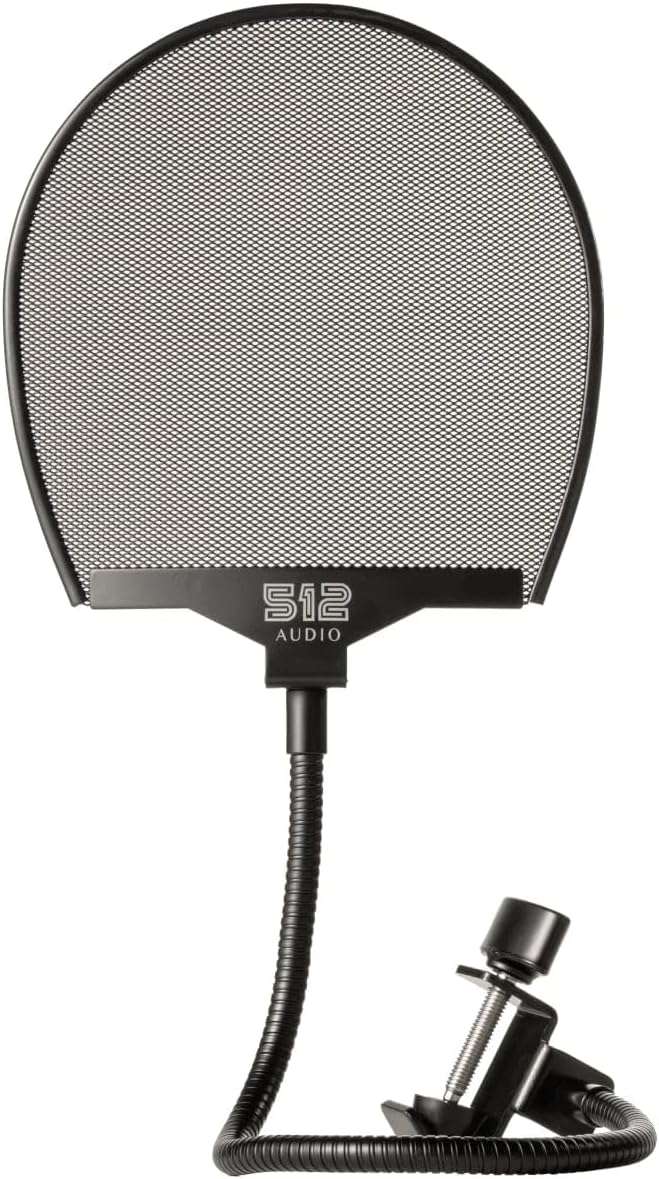
The 512-POP is a professional pop filter designed for content creators, podcasters, voice actors, and musicians who need clean, plosive-free audio. Built by 512 Audio, a brand known for quality recording equipment, this pop filter targets anyone recording close-range vocals or speech who wants to minimize post-production editing and maintain consistent audio quality during live streams.
The standout feature is its metal mesh design, which disperses pops and plosives from harsh consonants like 'P', 'F', and 'S' sounds more effectively than traditional nylon filters. Users benefit from cleaner recordings without the hassle of extensive audio editing, making it particularly valuable for livestreamers who cannot edit in post-production. The flexible gooseneck allows precise mic placement while maintaining a secure hold, and the adjustable swivel c-clamp works with virtually any standard microphone mounting system.
Build quality is solid, with aluminum and alloy steel construction that feels durable and professional. The gooseneck remains flexible yet sturdy enough to hold position reliably during recording sessions. At 7.36 ounces and measuring 20.16 inches in length, it's lightweight and compact enough for both studio and portable setups without adding bulk to your microphone rig.
The main consideration is that metal mesh requires occasional cleaning to maintain peak performance, unlike some nylon alternatives. Additionally, users may need to fine-tune the angle during initial setup to find the optimal position for their specific microphone and recording style. The black finish, while professional-looking, offers limited aesthetic customization options.
The 512-POP delivers genuine value for podcasters, streamers, and voice professionals seeking professional audio quality at an accessible price point. Its metal mesh technology and universal compatibility make it a smart upgrade from basic pop filters, offering real performance improvements that justify the investment for serious content creators.
This pop filter is ideal for podcasters recording in home studios or on-the-go, livestreamers who broadcast live without post-production editing capabilities, voice actors and narrators recording voiceovers or audiobooks, and singers recording vocals at close range. It's also suitable for anyone upgrading from a basic nylon pop filter who wants noticeably better plosive reduction.
The 512-POP is less critical for users who primarily record at a distance from the microphone, those using highly directional cardioid mics with built-in plosive rejection, or budget-conscious beginners just starting their first recording setup. However, at under $15, even beginners benefit from having professional-grade protection from the start.
Brand: 512 Audio
Model: 512-POP
Filter Type: Metal mesh (superior to nylon)
Mounting: Adjustable swivel c-clamp, universal compatibility
Gooseneck: Flexible and sturdy, 20.16 inches length
Materials: Aluminum, alloy steel, plastic components
Weight: 7.36 ounces
Dimensions: 20.16 x 5.51 x 0.4 inches
Color: Black
Warranty: 1 year manufacturer warranty
Best For: Close-range speech, singing, podcasts, voiceovers, livestreams
How to Choose Your Pop Filter
1. Filter Layer Design
The number and material of the filter screen are crucial for performance. Single-layer metal mesh filters, like the one on the FIFINE U1, offer solid basic protection. Dual-layer nylon screens, such as those on the SAMSON PS04, provide enhanced diffusion of air pressure.
For maximum plosive reduction, consider a triple-layer design. This multi-stage approach, found on the Aokeo Mic Mask, systematically breaks up airflow for exceptionally clean vocal capture. The right choice depends on your vocal intensity and recording environment.
2. Mounting and Adjustment
A pop filter is only effective if you can position it correctly. Look for a flexible gooseneck that holds its position without sagging. The 512 Audio by Warm Audio 512-POP features a sturdy gooseneck for reliable, set-and-forget placement.
The clamp is equally important. A universal swivel clamp, like the one on the FIFINE PF1, should securely attach to most microphone stands or boom arms. This ensures the filter stays exactly where you need it during long recording sessions.
3. Microphone Compatibility
Always check the diameter range a pop filter can accommodate. Some models use adjustable rubber bands or clamps to fit a wide variety of mics. Others are optimized for specific brand families, which can offer a more seamless fit.
If you use a popular microphone like the Blue Yeti, you can find specialized recommendations in our guide to the best pop filters for blue yeti. Ensuring a proper fit prevents the filter from slipping and protects your microphone from scratches.
4. Build Quality and Durability
A well-built pop filter is a long-term investment in your audio quality. Metal mesh screens and reinforced goosenecks tend to last longer than flimsy plastic alternatives. They resist bending and maintain their shape over time.
Consider the overall construction. A durable filter not only performs better but also protects your microphone from moisture and physical damage. This is part of building a reliable mic accessories setup that grows with you.
Final Thoughts
Upgrading your audio with a quality pop filter is one of the most cost-effective steps you can take. For streamers and podcasters seeking versatile performance, the Microphone Pop Filter,Aokeo Mic Mask with its three-layer screen is a standout choice. Those who prefer a classic, trusted design from a pro audio brand will appreciate the reliable performance of the SAMSON PS04 Microphone Pop Filter Restock Deal. Either option will help you capture clear, professional-sounding voice audio right away.
Frequently Asked Questions
How close should the pop filter be to the microphone?
Position the filter about one to two inches away from the microphone capsule. This gap allows the plosive air blast to disperse against the screen before it reaches the mic. You can adjust the distance slightly based on your vocal projection and the specific filter’s design for optimal results.
Can a pop filter improve an inexpensive microphone?
Absolutely. A pop filter primarily addresses plosive sounds caused by airflow, which is independent of microphone cost. It can dramatically clean up the audio from any microphone by removing harsh “P” and “B” pops. This makes it a valuable accessory for all recording setups, as confirmed in many user reviews for the models in our guide.
Do I need a pop filter if I use a foam windscreen?
Foam windscreens and pop filters serve different, complementary purposes. A foam cover reduces general wind noise and high-frequency sibilance (“S” sounds). A pop filter specifically targets the low-frequency bursts from plosives. For the cleanest vocal recording, especially in a studio setting, using both is often recommended. You can learn more about accessory synergy in our overview of the best microphone boom arms for complete setups.
How do I clean a metal mesh pop filter?
Gently wipe the metal mesh with a soft, dry cloth to remove dust. For more thorough cleaning, use a slightly damp cloth, but avoid getting the mesh soaking wet. Ensure the filter is completely dry before using it again to prevent any moisture from reaching your microphone diaphragm.


Write Your Review
No reviews yet. Be the first to share your experience!