

You plug in your electric guitar, ready to play, but a persistent hum ruins the silence between notes. Or perhaps you are setting up a home theater system and need to connect an older receiver to modern powered speakers, but the connector types do not match. These common frustrations highlight the critical role of quality unbalanced audio cables in any audio setup.
This guide focuses on two practical solutions for different scenarios: connecting instruments to amplifiers and bridging consumer and pro audio gear. We have assessed key products from a leading brand to help you make an informed choice without the guesswork. Whether you are a musician, audio enthusiast, or home theater hobbyist, selecting the right cable ensures reliable performance and clear sound.
For more specialized needs, explore our guide on the best audio cables for guitars.

Pros
- Excellent value with two cables in one purchase, perfect for backup or multi-instrument connections
- Superior build quality with braided shielding and oxygen-free copper for minimal noise and maximum clarity
- Durable gold-plated connectors resist corrosion and maintain reliable contact over time
- Flexible, kink-resistant design makes setup and storage hassle-free
- Works with virtually any instrument featuring a 1/4 inch TS port
Cons
- Limited to 6-foot length, which may not be sufficient for large stages or studio setups requiring longer cable runs
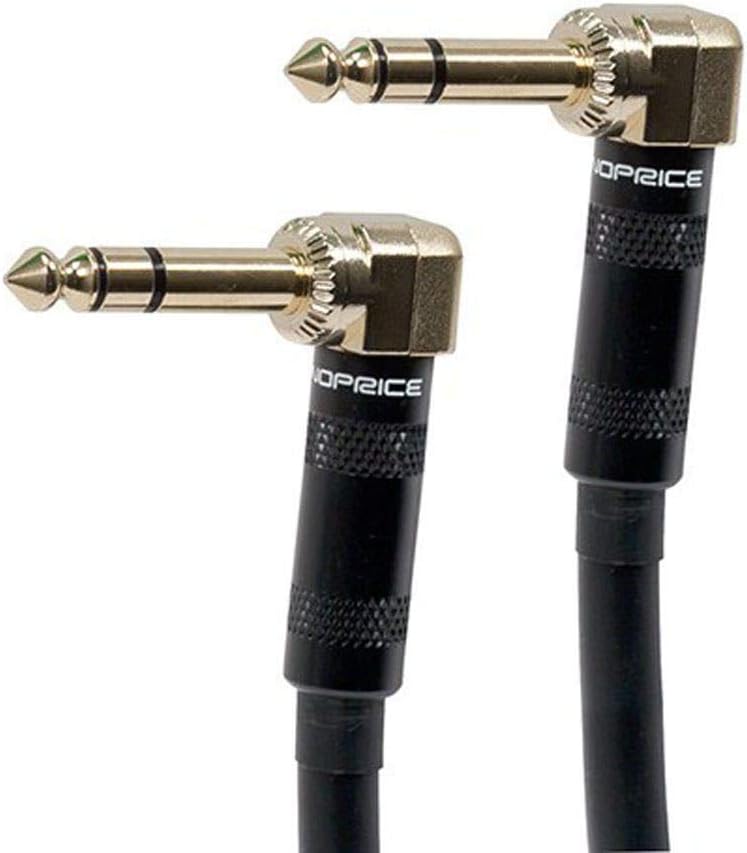
- Straight-to-straight connector configuration offers less flexibility than angled options for tight spaces or pedal boards
The Cable Matters 2-Pack 1/4 Inch TS Guitar Cable is a practical solution for musicians who need reliable instrument cables without breaking the bank. Each 6-foot cable connects guitars, basses, keyboards, and other instruments to amplifiers, mixing consoles, and pedal boards. This product is ideal for gigging musicians, home studio enthusiasts, and anyone who wants dependable spare cables on hand.
What sets these cables apart is their construction quality. The braided shielding effectively minimizes electromagnetic interference (EMI) and hum, while the heavy-gauge oxygen-free copper conductors preserve signal integrity and high-frequency response. The gold-plated connectors resist corrosion and maintain solid connections through repeated use, and the textured grip makes them easier to handle during setup and teardown.
The flexible PVC jacket is a practical design choice that resists kinks and lays flat for convenient storage. This durability means the cables will withstand the rigors of regular use without developing weak points or signal dropouts. The overall construction feels professional and substantial, delivering performance that rivals cables costing significantly more.
The main limitation is the fixed 6-foot length, which works well for most home setups and smaller venues but may fall short for large stages or complex studio routing. Additionally, both connectors are straight rather than angled, which could pose challenges in tight pedal board configurations where space is at a premium.
For the price, this 2-pack offers exceptional value and performance. Whether you need backup cables, want to connect multiple instruments simultaneously, or are building your first cable collection, these Cable Matters cables deliver reliable audio transmission and durability that justifies the investment.
Cable Length: 6 feet per cable
Connector Type: 1/4 Inch TS (Mono)
Conductor: Heavy-gauge oxygen-free copper
Shielding: Braided shielding for EMI noise reduction
Jacket Material: Flexible PVC (Polyvinyl Chloride)
Insulation: Polyethylene for enhanced high-frequency response
Connectors: Gold-plated metal tips with textured grip
Configuration: Straight-to-straight
Unit Count: 2 cables per pack
Compatible Devices: Electric guitar, bass, keyboard, mandolin, ukulele, pedal board, mixing console, amplifier
Model: 500027-6x2
Brand: Cable Matters
Who Should Buy This Product? Guitarists and bassists who perform regularly, home studio musicians who need multiple cable connections, keyboard players using pedal boards, and anyone seeking reliable spare cables at an affordable price.
Cable Length Considerations: At 6 feet, these cables work well for connecting instruments to nearby amplifiers or mixing consoles in home studios, small venues, and practice spaces. For large stages or extended cable runs, consider purchasing longer cables or using these in combination with other lengths.
Connector Type Explanation: The 1/4 Inch TS (Tip-Sleeve) connector is the standard for most guitars, basses, and many keyboards. TS cables carry mono audio signals, making them ideal for instrument connections. If you need stereo connections or balanced audio, look for TRS (Tip-Ring-Sleeve) or XLR cables instead.
Shielding Benefits: The braided shielding in these cables actively reduces hum and interference from power sources, fluorescent lights, and wireless equipment. This is particularly valuable in live performance and recording environments where noise can degrade audio quality.
Gold-Plated Connectors: Gold plating resists oxidation and corrosion better than standard metal connectors, ensuring consistent signal transmission and longer cable lifespan even with frequent use and storage.

Pros
- Excellent build quality with gold-plated RCA plugs and robust XLR connectors featuring strain relief
- Effective noise reduction through braided shielding and oxygen-free copper construction
- Generous 10-foot cable length eliminates the need for additional adapters or extensions
- Versatile compatibility across home audio, studio, and DJ equipment ecosystems
- Highly rated by users with consistent positive feedback on audio performance and durability
Cons
- Unbalanced signal design means it adapts connectors but does not convert unbalanced to balanced audio
- Requires verification that connected equipment uses compatible XLR wiring configuration before purchase
- Not suitable for phone or mobile device connections, limiting use cases to professional audio equipment
The Cable Matters Dual RCA to XLR Male Cable is a professional-grade audio adapter designed for connecting unbalanced stereo sources like AV receivers, DJ controllers, and mixers to balanced XLR inputs on powered speakers, subwoofers, and amplifiers. This 10-foot cable is ideal for home studios, live DJ setups, and professional audio installations where clean signal transmission is critical.
The standout feature is the combination of oxygen-free copper conductors and braided shielding, which work together to minimize electromagnetic interference and unwanted noise. The gold-plated RCA connectors provide corrosion resistance and easy-grip housings, while the molded strain relief on the XLR connectors ensures long-term durability even with frequent cable repositioning. Users consistently report excellent audio clarity and reliable performance in demanding studio environments.
Build quality is impressive throughout. The flexible PVC jacket allows convenient routing through tight spaces and complex installations without kinking or damage. The male-to-male design with standard XLR pin wiring (pin 2 to RCA center, pins 1 and 3 to RCA shield) ensures broad compatibility across professional audio equipment, though verification with your specific gear is recommended before ordering.
One important consideration is that this cable adapts connectors but does not convert an unbalanced signal to a balanced one. This is a technical distinction that matters for audio professionals but may not affect performance in typical home studio or DJ applications. The 10-foot length is generous and eliminates the need for additional adapters in most setups.
Overall, this is a reliable, well-constructed audio cable that delivers professional performance at an accessible price point. It is an excellent choice for anyone upgrading their audio system or building a home studio and needing dependable RCA-to-XLR connectivity.
Cable Length: 10 feet
Connector Type: Dual RCA Male to Dual XLR Male
Connector Gender: Male-to-Male
Number of Pins: 3-pin XLR
Cable Construction: Oxygen-free copper conductors with braided shielding
Outer Jacket: Flexible rubber PVC
RCA Connectors: Gold-plated with easy-grip housings
XLR Connectors: Molded strain relief
Cable Shape: Round
Weight: 0.22 kg
Color: Black
Model Number: 500043-10
Manufacturer: Cable Matters
Who Should Buy This Cable: Home studio owners, DJ equipment operators, audio engineers, and anyone connecting unbalanced stereo sources to balanced XLR speaker inputs. This cable is essential for professional audio setups where signal quality and noise reduction matter.
Compatibility Check: Before purchasing, confirm that your equipment uses standard XLR wiring with pin 2 carrying the audio signal and pins 1 and 3 connected to ground. Most professional audio equipment follows this standard, but some specialized gear may differ.
Installation Tips: The 10-foot length provides flexibility for placement, but ensure cables do not run parallel to power lines to minimize interference. Use the flexible jacket to route cables away from high-voltage equipment when possible.
Maintenance: Gold-plated connectors resist corrosion, but occasional cleaning with a soft, dry cloth helps maintain connection quality. Avoid bending the cable sharply at the connectors to preserve the strain relief and extend cable lifespan.
Buying Guide
Identify Your Connector Types
The first step is confirming the jacks on your equipment. A standard 1/4-inch TS (Tip-Sleeve) connector is ubiquitous for electric guitars, basses, and keyboard outputs. For line-level stereo connections between components like receivers and amplifiers, dual RCA or XLR connectors are common.
Using the wrong connector type simply will not work. Always check your device’s output and input ports before purchasing. A mismatch can lead to poor connections, signal loss, or potential damage.
Assess Cable Construction and Shielding
Unbalanced cables are susceptible to electromagnetic interference (EMI) and radio frequency interference (RFI). Quality construction is your primary defense against this unwanted noise. Look for features like braided shielding and oxygen-free copper conductors.
These materials help contain the audio signal and repel external interference. A flexible, durable outer jacket also matters, especially for instrument cables that are frequently coiled, stepped on, or moved. Robust strain relief at the connector joints prevents internal wire breakage.
Consider Length and Application
Cable length directly impacts signal integrity and convenience. For instrument cables on stage, a longer run provides mobility but can increase susceptibility to noise. For connecting fixed audio components, use the shortest cable that comfortably reaches between devices.
Think about your specific use case. A musician might benefit from a two-pack of shorter cables for pedals and a longer one for the main run to the amp. For home audio, a correctly sized cable keeps your setup tidy and minimizes potential signal degradation. Learn more about component connections in our review of the best audio cables for AV receivers.
Verify Connector Quality and Compatibility
The connectors are the physical interface between your cable and gear. Gold-plated contacts resist corrosion and ensure a solid connection over time. Textured grips on plugs make insertion and removal easier, which is helpful in tight spaces or low-light conditions.
For adapter cables like RCA to XLR, confirm the internal wiring scheme is compatible with your equipment. Some configurations are designed for specific types of outputs. Incorrect wiring will not function properly and could cause issues.
You can find a wider selection of options on our main Cables & Adapters category page.
Final Thoughts
For musicians seeking reliable, noise-free performance from their instruments, the Cable Matters 2-Pack 1/4 Inch TS to TS Guitar offers excellent value and durability in a practical two-pack. Meanwhile, those integrating stereo audio components across different connector standards will find a robust solution in the Cable Matters Dual RCA to XLR Cable, which provides a shielded bridge for clear signal transfer. Choosing the correct unbalanced cable for your specific need ensures your audio system performs at its best.
Frequently Asked Questions
What is the difference between balanced and unbalanced audio cables?
Unbalanced cables, like standard TS instrument cables or RCA interconnects, use two conductors: one for the audio signal and one for the ground shield. They are cost-effective and perfect for short runs but can pick up noise over longer distances. Balanced cables, like XLR or TRS, use three conductors to cancel out noise electronically, making them ideal for long runs in professional settings.
Can I use an unbalanced cable for my home theater system?
Yes, unbalanced cables are commonly used in home theater setups for connecting sources like Blu-ray players, gaming consoles, or streamers to receivers or soundbars via RCA connections. For shorter distances typical in living rooms, they provide excellent performance. For optimal home theater cable selection, consider our guide on the best audio cables for your home theater setup.
Why does my guitar cable produce a humming sound?
A consistent hum in an unbalanced guitar cable is often caused by electromagnetic interference from nearby power sources, lights, or other electronics. This can indicate inadequate cable shielding, a damaged cable, or a ground loop issue in your audio chain. Using a well-shorted cable with robust construction and keeping it away from power cords can significantly reduce this problem.
How long can an unbalanced audio cable be before signal loss occurs?
As a general rule, unbalanced cables should be kept under 15 to 20 feet for optimal signal integrity. Beyond this length, the cable acts more like an antenna, picking up more interference, and the high-frequency response may begin to degrade. For longer runs, a balanced cable system or a direct box to convert the signal is the recommended solution.



Write Your Review
No reviews yet. Be the first to share your experience!