

Picture this: you’re deep in the woods, the stars are out, and your phone’s battery is at 1%. A reliable portable charger isn’t just a convenience for camping; it’s a safety essential. Whether you need to navigate, signal for help, or capture the perfect sunrise, having dependable power is non-negotiable.
This guide is crafted for outdoor enthusiasts who need to keep smartphones, GPS units, and cameras operational far from the nearest outlet. We have evaluated top-performing models that combine capacity, durability, and innovative features like solar charging. For more on keeping your travel gear powered, explore our guide on the best portable chargers for travel.
Buying Guide
Capacity and Power Needs
Your device’s battery size determines the power bank capacity you need. A 10,000mAh unit can recharge a smartphone a few times, ideal for weekend trips. For longer expeditions or powering multiple devices, consider a massive 48,000mAh or higher capacity.
Think about what you’re charging. A standard phone requires less power than a tablet or a laptop. Some advanced power stations offer AC outlets for larger gear. If you need to run a laptop while camping, our review of the best power banks for laptops provides focused recommendations.
Solar Charging Capability
A built-in solar panel transforms sunlight into a trickle charge, offering a lifeline during extended trips. This feature is invaluable for emergency preparedness and off-grid adventures where wall charging isn’t an option.
Not all solar charging is equal. Models with multiple, high-efficiency panels recharge faster. Remember, solar is best for maintaining a charge or providing a slow top-up; it’s not a fast primary charging method. Always pre-charge your unit via an outlet before you head out.
Durability and Weather Resistance
Camping gear gets knocked around. Look for power banks with rugged, shock-resistant construction. An IPX5 or IP65 rating confirms resistance to water jets and dust, protecting the internal components from rain and dirt.
This durability ensures your power source survives accidental drops, moisture, and the general rigors of outdoor use. A sturdy build is just as important as the battery inside it for a reliable camping companion.
Ports, Cables, and Charging Speed
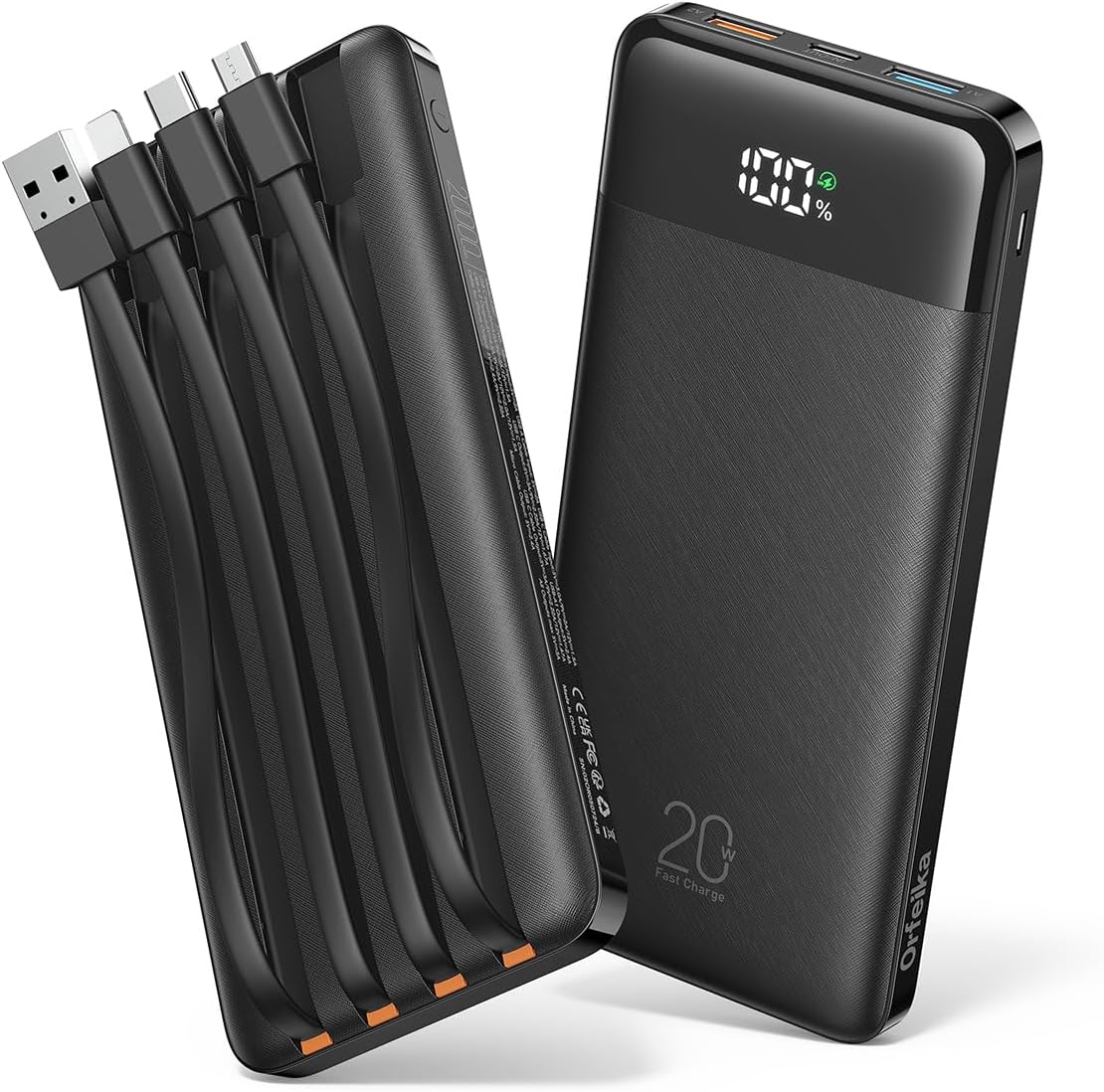
Convenience is key. Built-in cables eliminate the hassle of packing separate cords for iPhones, Android phones, and other devices. Multiple output ports allow you to charge several gadgets simultaneously, perfect for group trips.
Fast charging technology like PD or QC can refill a phone battery to 50% in roughly 30 minutes. Wireless charging pads add another cable-free option. For a compact option with solid capacity, see our picks for the best 10000mAh portable chargers.
Final Thoughts
Selecting the right portable charger empowers your adventures without worry. For those seeking ultimate capacity and built-in versatility for phones, the BLASOUL Solar Power Bank,49800mAh is a standout choice with its integrated cables and rugged design. If your needs extend to powering small appliances or a CPAP machine alongside USB devices, the robust Jackery Explorer 300 Portable Power Station,292Wh offers a more comprehensive power solution. Explore all our reviewed options in the Chargers & Batteries category to find your perfect match for the great outdoors.
Frequently Asked Questions
How long does it take to charge a power bank with solar panels?
Solar charging times vary dramatically based on panel size, sunlight intensity, and cloud cover. A power bank with a single small panel may take dozens of hours of direct sun for a full charge. Models with multiple, high-efficiency panels are significantly faster but still slower than wall charging. Solar is best used to extend battery life, not as a primary charging source.
Can I take a portable power bank on a plane?
Yes, the Federal Aviation Administration allows power banks in carry-on luggage. There are capacity limits, typically under 100 watt-hours (Wh), which covers most power banks. For reference, a 20,000mAh power bank is usually around 74Wh. Always check with your specific airline for their most current regulations before you travel.
What’s the difference between a power bank and a power station?
A power bank is designed primarily for USB-powered devices like phones and tablets, offering compact, portable energy. A portable power station is larger, has a much higher capacity, and often includes AC outlets to run small appliances, medical devices, or laptops. For high-capacity needs beyond phones, our list of the best 20000mAh power banks is a great resource.
How do I maintain my portable charger for longevity?
Avoid exposing it to extreme heat or cold, which degrades the battery. Do not let it fully discharge for long periods; aim to recharge it every three to six months if storing it. Use the manufacturer’s recommended cable and adapter for optimal charging speed and safety. For iPhone users seeking reliable options, we have a dedicated guide on the best portable chargers for iPhones.


Write Your Review
No reviews yet. Be the first to share your experience!