

Picture yourself on a multi-day camping trip, your phone’s battery is critically low, and your GPS is about to shut down. Or perhaps you’re working remotely from a coffee shop when your laptop charger fails. In these moments, a reliable heavy duty portable battery isn’t just convenient; it’s a necessity. These powerhouses are designed to go beyond a single phone charge, providing enough juice to sustain multiple devices through long adventures, power outages, or demanding workdays.
This guide is for outdoor enthusiasts, digital nomads, and anyone who needs dependable off-grid power. We have evaluated several leading models to help you find the right balance of capacity, output, and portability. For those seeking more compact options, our review of the best compact power banks is a great resource.
How to Choose a Heavy Duty Portable Battery
Assess Your Capacity Needs
Capacity, measured in watt-hours (Wh) or milliamp-hours (mAh), dictates how much power a battery can store. A higher capacity means more charges for your devices before you need to recharge the pack itself. For weekend camping, a model with tens of thousands of mAh is suitable. For powering small appliances or a CPAP machine overnight, you’ll want a portable power station with a rating of several hundred watt-hours.
Remember that advertised capacity doesn’t equal usable power due to conversion losses. Also, consider airline restrictions if you travel frequently; power banks over 100Wh often require special approval. Our guide on best high capacity power banks dives deeper into this topic.
Evaluate Output Power and Ports
The output wattage and available ports determine what you can charge and how quickly. For modern laptops, you’ll need a USB-C port with Power Delivery (PD) supporting at least 45W, though 65W or 100W is better for full-speed charging. Look for models with multiple high-output ports if you need to charge several devices simultaneously without slowing down.
Heavy duty portable batteries often include AC outlets for devices like small fans, medical equipment, or camera battery chargers. Verify the continuous and surge wattage ratings to ensure compatibility with your gear. A model with versatile ports, like those found in our review of fast chargers with multiple ports for 2026, offers maximum flexibility.
Consider Recharging Options and Portability
How you recharge your battery pack is crucial. Most can be plugged into a wall outlet, but solar charging capability is a game-changer for extended off-grid use. Check the solar input compatibility and estimated recharge times with compatible panels. For everyday carry, weight and dimensions are key; a ultra-lightweight power station is far easier to hike with than a heavier unit of similar capacity.
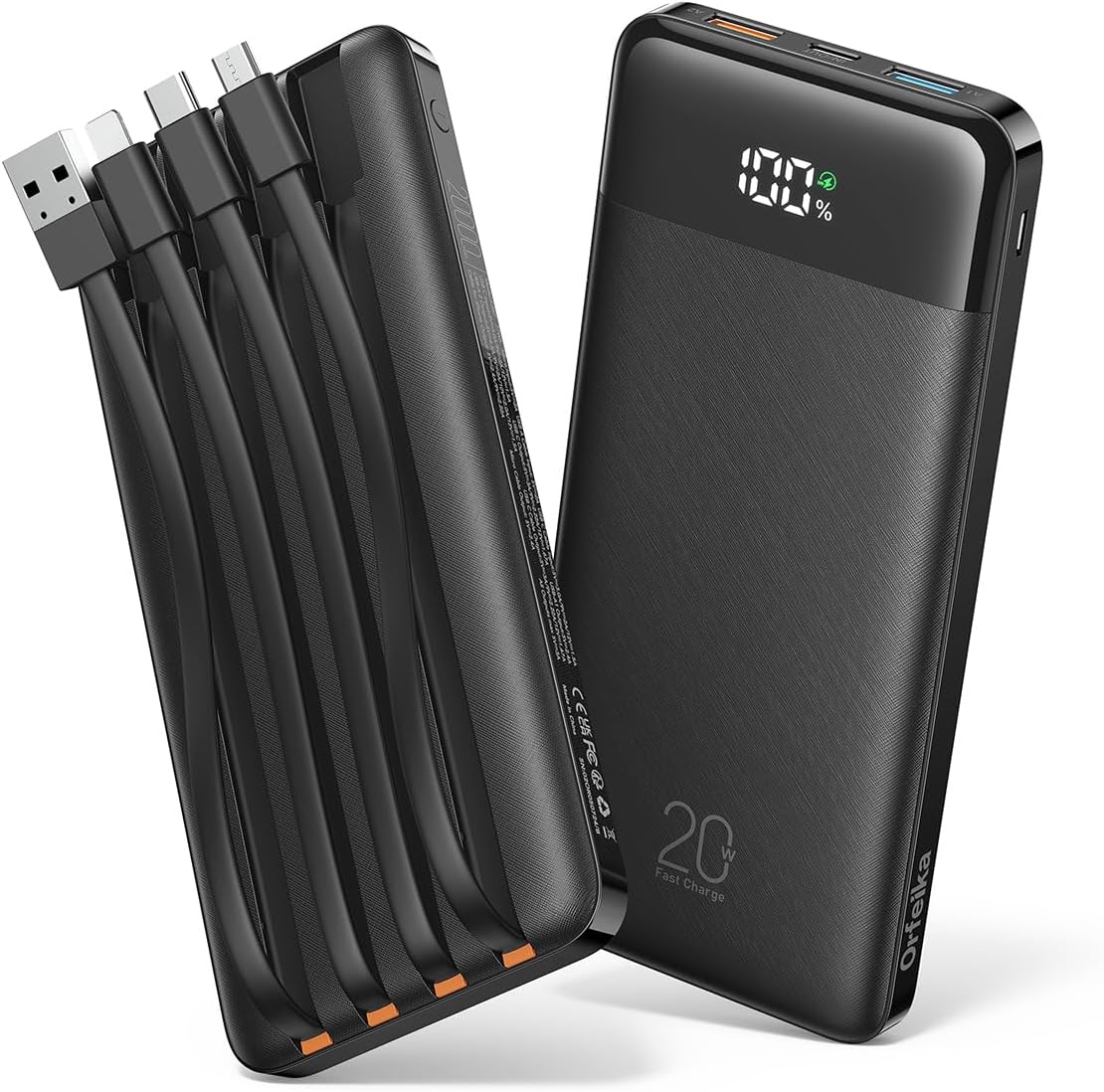
Built-in features like an LED display for remaining charge, integrated cables, or a durable carrying handle add significant convenience. If solar power interests you, explore our dedicated list of the best portable batteries with solar charging.
Final Thoughts
Selecting the right heavy duty portable battery ultimately depends on your primary use case. For robust, multi-device power during extended outdoor trips, the Jackery Explorer 300 Portable Power Station,292Wh stands out with its versatile outlets and solar readiness. If your priority is a high-capacity, travel-friendly bank for phones and laptops, the Anker Laptop Power Bank, 25,000mAh Travel offers exceptional output in a carry-on compliant design. Both represent top-tier solutions for staying powered wherever you go.
Frequently Asked Questions
What’s the difference between a power bank and a portable power station?
A power bank is typically designed for phones, tablets, and sometimes laptops via USB ports. A portable power station is larger, stores more energy (often in watt-hours), and usually includes AC outlets to power small appliances, tools, or medical devices, making it suitable for camping or emergency home backup.
Can I take a heavy duty power bank on an airplane?
Regulations vary, but a common rule is that power banks with a capacity of 100Wh or less are generally allowed in carry-on luggage. Many airlines allow units up to 160Wh with prior approval. Always check with your specific airline’s latest policies before traveling. Models with a clear digital display, like some discussed in our guide to the best portable chargers with digital display, make it easy to verify capacity.
How do I maintain my portable battery for long-term health?
Avoid constantly draining it to 0% or leaving it at 100% charge for extended periods. For long-term storage, aim for a charge level around 50-60%. Use the manufacturer-provided or recommended charger, and keep the unit in a cool, dry place away from direct sunlight to prevent overheating and preserve battery lifespan.
How long does it take to recharge a large capacity portable battery?
Recharge time depends on the battery’s capacity and the input wattage of your charger. A high-capacity power bank can take several hours to refill from a standard wall adapter. Using a faster charger (like a 100W PD charger) or, for compatible models, solar panels can significantly reduce this time, sometimes to just a few hours.


Write Your Review
No reviews yet. Be the first to share your experience!