

Picture this: a storm knocks out the power, your phone battery is at 10%, and you need to contact family or check emergency alerts. In such critical moments, a dependable portable charger transitions from a convenience to an absolute necessity. This guide is crafted for anyone building an emergency kit, planning for outdoor adventures, or simply seeking peace of mind against unexpected blackouts. We have assessed key models to identify the best portable chargers for emergency use, balancing massive capacity with rugged reliability. For those who also travel frequently, you might find our guide on the best portable chargers for travel useful for everyday preparedness.
What to Look for in an Emergency Portable Charger
Battery Capacity and Output Power
Capacity, measured in milliamp-hours (mAh) or watt-hours (Wh), dictates how many times a charger can replenish your devices. For true emergency readiness, prioritize high capacity. Look for units that can fully charge a smartphone multiple times over.
Equally important is output wattage. Fast-charging protocols like Power Delivery (PD) and Quick Charge (QC) can significantly reduce charging times, which is crucial when you need power quickly. A charger with multiple output ports allows you to power several devices at once, a key feature for families or group situations.
Durability and Environmental Protection
An emergency charger must withstand harsh conditions. Ingress Protection (IP) ratings are your best indicator of resilience. Look for ratings like IP65 or IP67, which confirm resistance to dust and water.
Shockproof and rugged construction ensures the charger survives drops or being jostled in a go-bag. Durable, industrial-grade materials are non-negotiable for gear that might be needed during a storm, flood, or outdoor crisis. This focus on toughness aligns with what you’d want for the best portable chargers for camping as well.
Versatile Charging and Input Methods
Solar charging capability provides a vital off-grid power source, allowing you to recharge the bank itself using sunlight. While it’s a slower process, it offers invaluable redundancy when wall outlets are unavailable for extended periods.
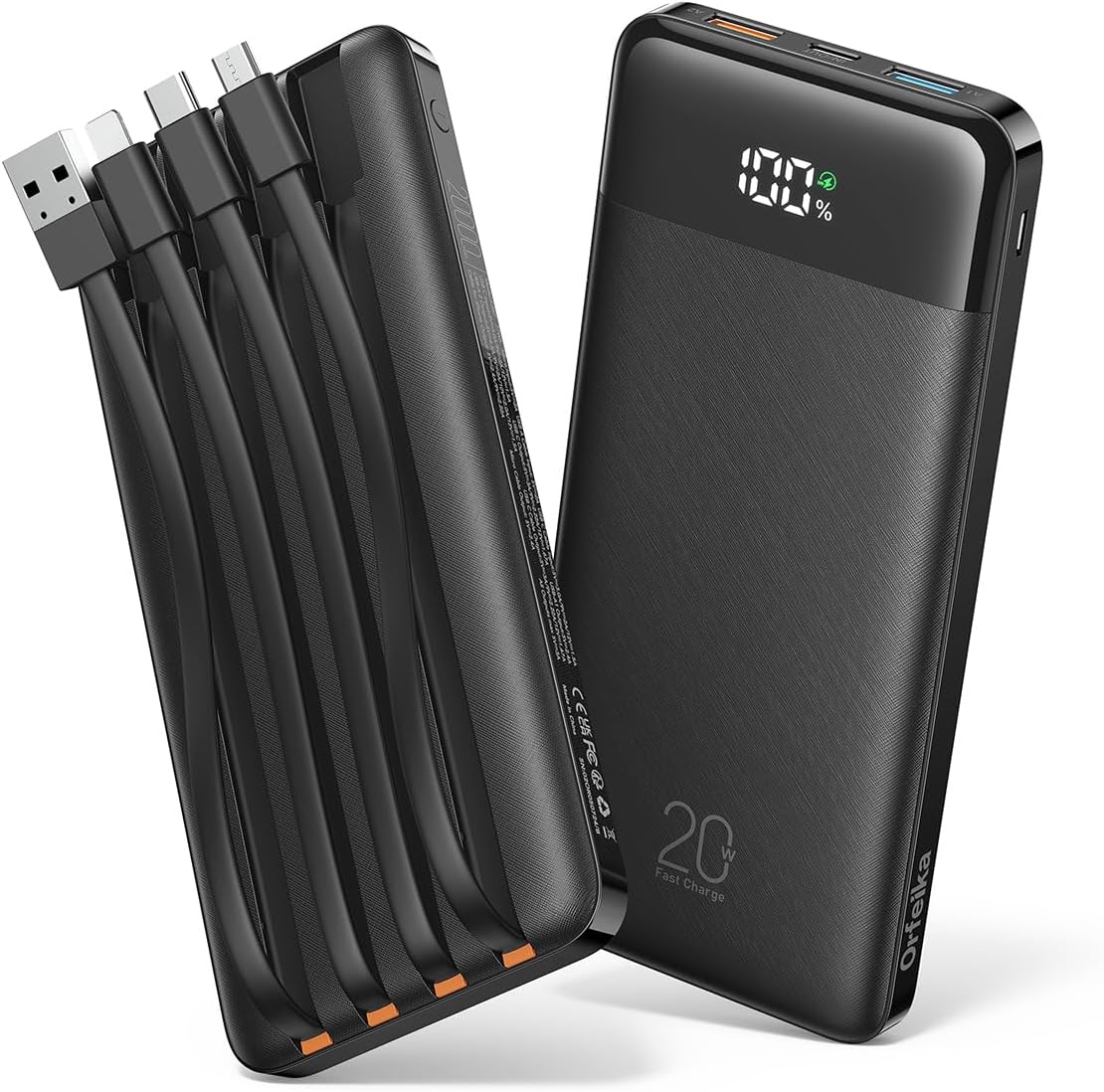
Built-in cables eliminate the panic of forgetting a specific cord. Models that include Lightning, USB-C, and Micro-USB cables directly in the body guarantee you can connect to almost any device immediately. Wireless charging pads add another layer of convenience for compatible phones.
Additional Emergency Features
<!–Integrated LED flashlights are more than a bonus; they are a core safety feature. Models offering multiple modes, including a steady beam, SOS signal, and strobe, can be critical during nighttime emergencies or signaling for help.
Consider the overall portability and whether the design includes a carabiner or comfortable handle for easy attachment to a backpack. For powering larger devices like medical equipment (e.g., CPAP machines) or small appliances, a portable power station with AC outlets becomes essential, as detailed in our review of the best power banks for laptops.
Final Thoughts
Selecting the right emergency charger ultimately depends on your specific scenario. For most individuals and families seeking a balance of immense capacity, built-in versatility, and solar backup, the BLASOUL Solar Power Bank,49800mAh is a formidable all-in-one solution. However, if your needs extend to powering essential electronics like laptops, lights, or medical devices during prolonged outages, the robust and expandable Jackery Explorer 300 Portable Power Station,292Wh offers a more comprehensive power platform. Investing in either ensures you have reliable, life-sustaining power when it matters most.
Frequently Asked Questions
How long do portable chargers last on a single charge?
This depends entirely on the charger’s capacity and the devices you’re powering. A high-capacity power bank rated at 40,000mAh can typically fully charge a modern smartphone 8-10 times. The charge will also slowly deplete over time if stored, so it’s wise to top up your emergency charger every few months. For insights on maintaining charge for specific devices, our guide on the best power banks for steam deck covers similar battery management principles.
Is solar charging effective for emergency power banks?
Solar charging is best viewed as a supplemental or emergency-replenishment method, not a primary charging source. It works reliably but slowly, with speed varying based on sunlight intensity. For a full recharge of a large battery via solar alone, it could take many hours or even days of direct sun. Its true value is in providing a trickle of power to extend your bank’s life when no other power source is available for an extended period.
What’s the difference between a power bank and a portable power station?
Power banks are designed primarily for smartphones, tablets, and other small USB devices. Portable power stations are larger, have a much higher capacity measured in watt-hours (Wh), and include standard AC outlets, allowing them to power laptops, small appliances, lights, and medical equipment. For emergency home backup or powering CPAP machines, a power station is often the necessary choice.
How should I store my emergency portable charger?
Store your charger in a cool, dry place away from direct sunlight and extreme temperatures. For long-term storage in an emergency kit, it’s recommended to keep the battery at around a 50-80% charge and perform a full charge-and-discharge cycle every three to six months to maintain battery health. Always check its charge level before a predicted storm or trip.


Write Your Review
No reviews yet. Be the first to share your experience!