

Your phone hits 10% just as you’re about to board a flight. Your tablet dies during a crucial presentation. We’ve all been there, stranded without power at the worst possible moment. A reliable portable charger isn’t just a gadget, it’s a lifeline for your digital life. Whether you’re a frequent traveler, a busy professional, or someone who simply hates being tethered to a wall outlet, the right power bank makes all the difference.
This guide cuts through the noise to bring you a curated selection of the top portable chargers available. We’ve evaluated nine models based on capacity, charging speed, portability, and unique features. From ultra-slim options for your pocket to high-capacity beasts for group trips, you’ll find the perfect match for your power needs. For those looking for even more versatile charging solutions, our guide on the best 2-in-1 power banks explores other innovative options.
Top Portable Charger Picks at a Glance
How to Choose Your Ideal Portable Charger
Capacity and Device Charging Needs
Capacity, measured in milliamp-hours (mAh), dictates how many times you can recharge your devices. A 10,000mAh bank typically provides two full charges for a modern smartphone. Consider your daily use. A compact 10,000mAh model like the Anker Power Bank,10,000mAh 30W with USB-C Travel is perfect for solo commuters. For weekend trips or powering multiple gadgets, look at 20,000mAh or higher.
If you need serious off-grid power for camping or emergencies, massive capacities over 40,000mAh are available. These function more like compact portable power stations for phones and small electronics. Remember, higher capacity usually means more size and weight, so balance your need for power with portability.
Charging Speed and Output Power
Not all charging is created equal. Standard charging is fine for overnight top-ups, but fast charging gets you back in action quickly. Look for power output measured in watts (W). A 20W USB-C Power Delivery (PD) port can charge an iPhone to 50% in about 30 minutes. For faster laptops or tablets, you may need 30W, 45W, or even higher.
Many modern chargers, like the INIU 10000mAh 45W Fast Charging Portable Charger, support these high-speed protocols. This technology is similar to what you find in the latest GaN chargers for wall outlets, now packaged for on-the-go use. Check your device’s compatible fast-charging standard to ensure you get the speed you pay for.
Port Design and Built-in Cables
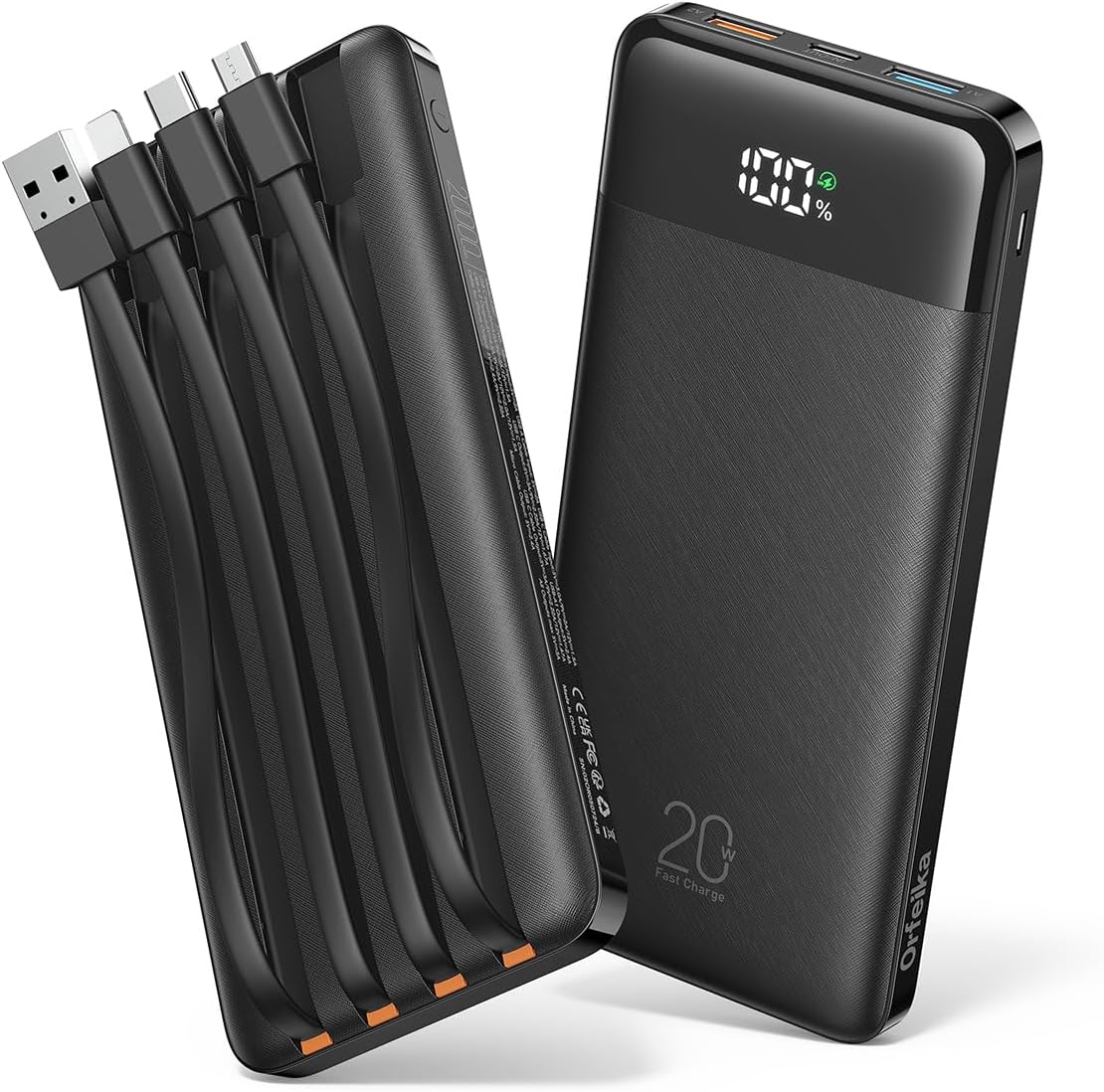
<!–Convenience is key. Models with multiple USB-A and USB-C ports allow you to charge several devices simultaneously, perfect for families or friends. The real game-changer, however, is built-in cables. Products like the Orfeika 20000mAh Power Bank integrate cords for iPhone, USB-C, and Micro-USB, eliminating cable clutter and the panic of forgetting a cord.
This integrated approach means you always have the right cable on hand. It transforms the power bank from a battery pack into a complete, grab-and-go charging kit. For stationary setups that offer similar multi-device convenience, explore our recommendations for the best desktop chargers.
Size, Weight, and Travel Considerations
<!–Your perfect charger should fit your lifestyle. If you carry it in a pocket or small purse daily, prioritize slim, lightweight designs under one pound. The Miady 2-Pack Portable Charger excels here with its ultra-portable form factor. For air travel, ensure the battery’s watt-hour (Wh) rating is under 100Wh for carry-on compliance, a standard most modern power banks meet.
Larger capacity banks are bulkier but offer peace of mind for long journeys. Consider where you’ll store it, your bag’s size, and how much extra weight you’re willing to carry. The goal is to have power without it becoming a burden, complementing other essential tech accessories you might use.
Final Thoughts
Choosing the right portable charger ultimately depends on balancing capacity, speed, and convenience for your specific routine. For the ultimate in hassle-free, all-in-one power, the Orfeika 20000mAh Power Bank with its four built-in cables is a standout choice that keeps you and multiple devices powered without extra gear. If your priority is maximum speed in a minimal footprint, the INIU 10000mAh 45W Fast Charging Portable Charger delivers professional-grade charging in a remarkably compact package. Whichever model you select from our reviewed list, you’ll gain the freedom to use your devices anywhere, anytime.
Frequently Asked Questions
Can I take a portable charger on a plane?
Yes, you can carry portable chargers in your carry-on luggage. The Federal Aviation Administration (FAA) and most international airlines require that power banks with a capacity of 100 watt-hours or less be carried on board. All the models we’ve reviewed for 2026 meet this common safety standard. Always check your airline’s specific policy before flying.
How do I know which charging cable my power bank needs?
Most modern power banks recharge via a USB-C port using a USB-C to USB-C cable. Some older or dual-input models might also use a Micro-USB or USB-A port for input. The product description will specify the input method. For maximum convenience, many of the latest models, featured in our main Chargers & Batteries category, come with a charging cable included or even have one built directly into the unit.
What’s the difference between a power bank and a wireless charger?
A power bank is a portable battery you plug your devices into for a wired charge. A wireless charger is a pad or stand that charges compatible devices without cables but must itself be plugged into a wall outlet. They serve different purposes: one provides mobile power, the other provides cable-free convenience at a fixed location. For a stationary multi-device solution, see our guide on best Multi-Device wireless chargers.
How long does a portable charger last before it needs replacing?
The lifespan of a quality power bank is typically measured in charge cycles, often ranging from 500 to over 1000 full cycles. With regular use, you can expect a well-made portable charger to provide reliable service for two to three years before its capacity noticeably diminishes. Factors like extreme temperatures, frequent full discharges, and using incompatible chargers can shorten this lifespan.


Write Your Review
No reviews yet. Be the first to share your experience!