

Have you ever noticed a subtle buzz or rattle when your subwoofer hits a deep note? Does your turntable skip when someone walks across the floor? These common frustrations are often caused by vibrations traveling between your audio equipment and the surfaces they rest on. Unwanted resonance can muddy bass response, distort midrange clarity, and introduce noise that detracts from your listening experience.
This guide is for anyone looking to refine their home audio setup, from apartment dwellers seeking neighborly peace to audiophiles chasing pure sonic performance. We have evaluated a selection of the leading anti-vibration solutions on the market. By isolating your components, you can achieve tighter bass, clearer vocals, and a more immersive soundstage. For a comprehensive approach, consider pairing these feet with a high-quality vibration damping turntable mat.
How to Choose the Right Anti-Vibration Solution
Consider Your Equipment’s Weight and Footprint
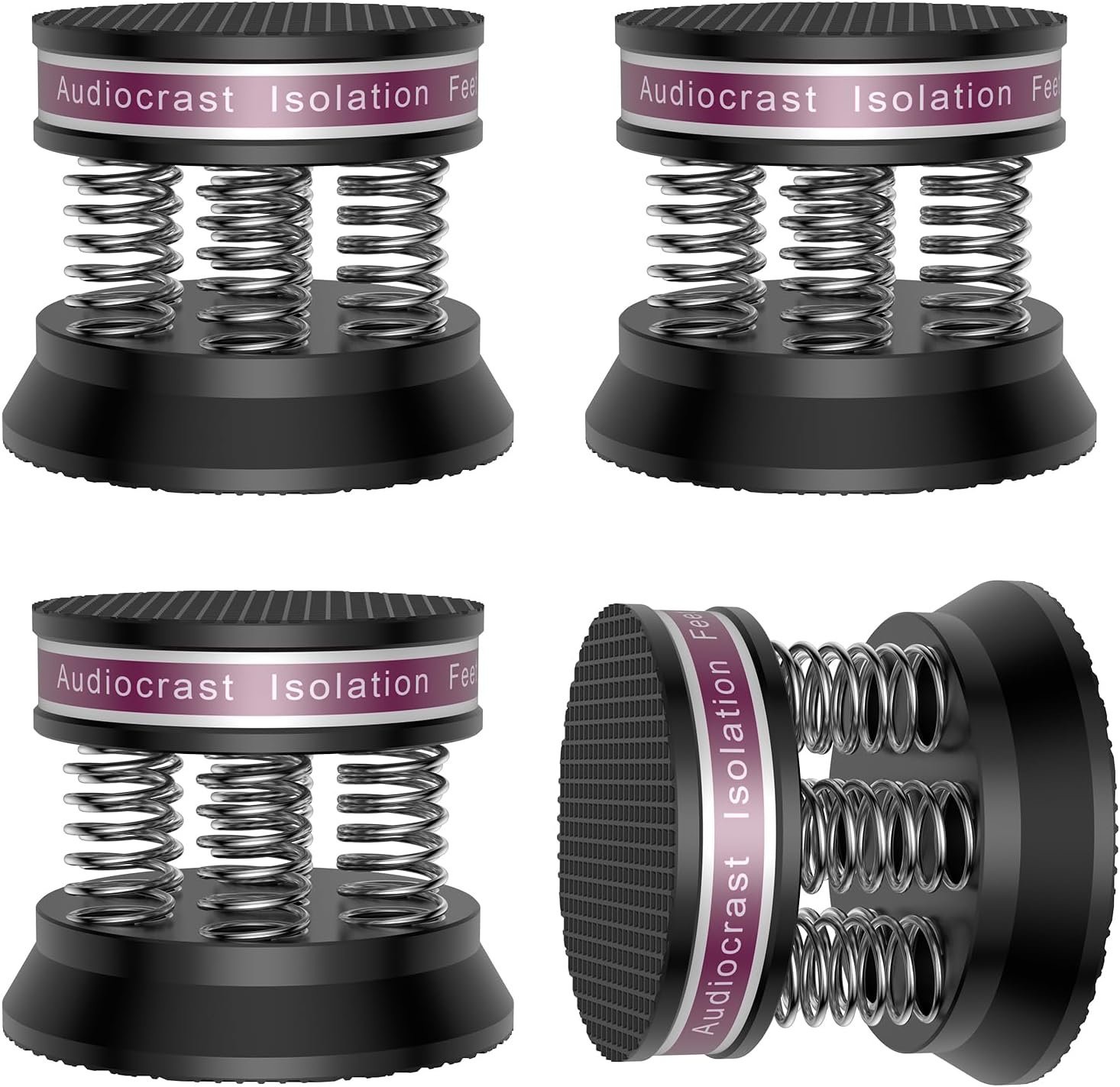
The first step is matching the isolation product’s load capacity to your gear. Heavy subwoofers require robust systems like the screw-in SVS SoundPath Subwoofer Isolation System, 4-Pack, designed for substantial weight. For lighter bookshelf speakers, turntables, or amplifiers, adhesive silicone feet with lower weight ratings are perfectly suitable and often more discreet.
Evaluate the Installation Method
<!–Installation varies from simple peel-and-stick pads to screw-in feet or non-adhesive placement. Screw-in options offer a permanent, secure fit for components with threaded inserts. Self-adhesive pads provide a strong bond for smooth surfaces but are less movable. Non-adhesive cork or rubber pads offer maximum flexibility, allowing you to reposition your equipment easily, which can be useful for fine-tuning speaker placement.
Select the Appropriate Material for Your Needs
<!–Different materials absorb vibrations in distinct ways. Premium silicone, like that used in many Hudson Hi-Fi products, is excellent for absorbing high-frequency resonance and protecting furniture finishes. Dense rubber and cork composites, such as those from PneumaticPlus, are often favored for isolating heavier, low-frequency energy from subwoofers and appliances. The material choice impacts both performance and aesthetics.
Determine the Desired Height and Discreetness
<!–
Isolation feet raise your equipment slightly. Consider if a slimmer profile is needed for a sleek look or if a taller foot provides better decoupling. Some products are nearly invisible, while others have a more pronounced industrial design. For those seeking an alternative isolation method, a sturdy turntable wall mount shelf can also effectively eliminate floor-borne vibration.
Final Thoughts
Upgrading your system with anti-vibration isolation is one of the most cost-effective improvements you can make. For owners of serious subwoofers seeking transformative bass control, we consistently recommend the engineered performance of the SVS SoundPath Subwoofer Isolation System, 4-Pack. Conversely, for those with turntables or lightweight components who value simplicity and natural material, the Sound Isolation Pads. Cork Pads for Turntables offer an elegant and effective solution. Exploring the full range of turntable and hi-fi accessories can further elevate your listening room.
Frequently Asked Questions
Do anti-vibration feet really make a difference for my turntable?
<!–Absolutely. Turntables are extremely sensitive to vibrations, which can cause the stylus to mistrack, resulting in distortion or skipping. Isolation feet decouple the turntable from its surface, absorbing floor vibrations and internal motor resonance. This allows the stylus to accurately trace the record groove, revealing more detail and dynamics in your music. For more on turntable setup, visit our home audio hub.
Can I use the same isolation feet for my speakers and my subwoofer?
<!–It depends on the product’s design and weight capacity. Some general-purpose silicone or cork pads are versatile enough for both, provided they support the weight. However, subwoofers generate intense, low-frequency energy that often benefits from specialized, heavy-duty isolation systems designed to handle greater mass and force. Always check the manufacturer’s specified load limits.
How many isolation feet do I need for my equipment?
<!–Typically, you need one foot for each corner of your component, so a set of four is standard. For very long or heavy equipment like some center channel speakers or large amplifiers, using six or eight feet (placing them along the sides) can provide more even support and better isolation. Most products are sold in packs of four or eight to accommodate this.
Will these pads stop my neighbors from complaining about bass?
<!–While they won’t soundproof your room, high-quality isolation feet significantly reduce the transfer of structural vibration through floors and walls. By preventing your subwoofer’s energy from directly shaking the building structure, you minimize the low-frequency rumble that travels to adjacent spaces. This can lead to fewer complaints, especially in multi-unit dwellings, making it a considerate upgrade for any audio enthusiast in 2026.



Write Your Review
No reviews yet. Be the first to share your experience!