

You’ve invested in quality speakers, but something’s off. The bass sounds boomy, the mids lack definition, and a faint rattle accompanies every beat. Often, the culprit isn’t your gear but the vibrations it transfers to your desk, shelf, or floor. These micro-movements create resonance and distortion, robbing your music of its intended clarity. The right anti-vibration speaker mount acts as a crucial barrier, isolating your audio equipment to let its true potential shine through.
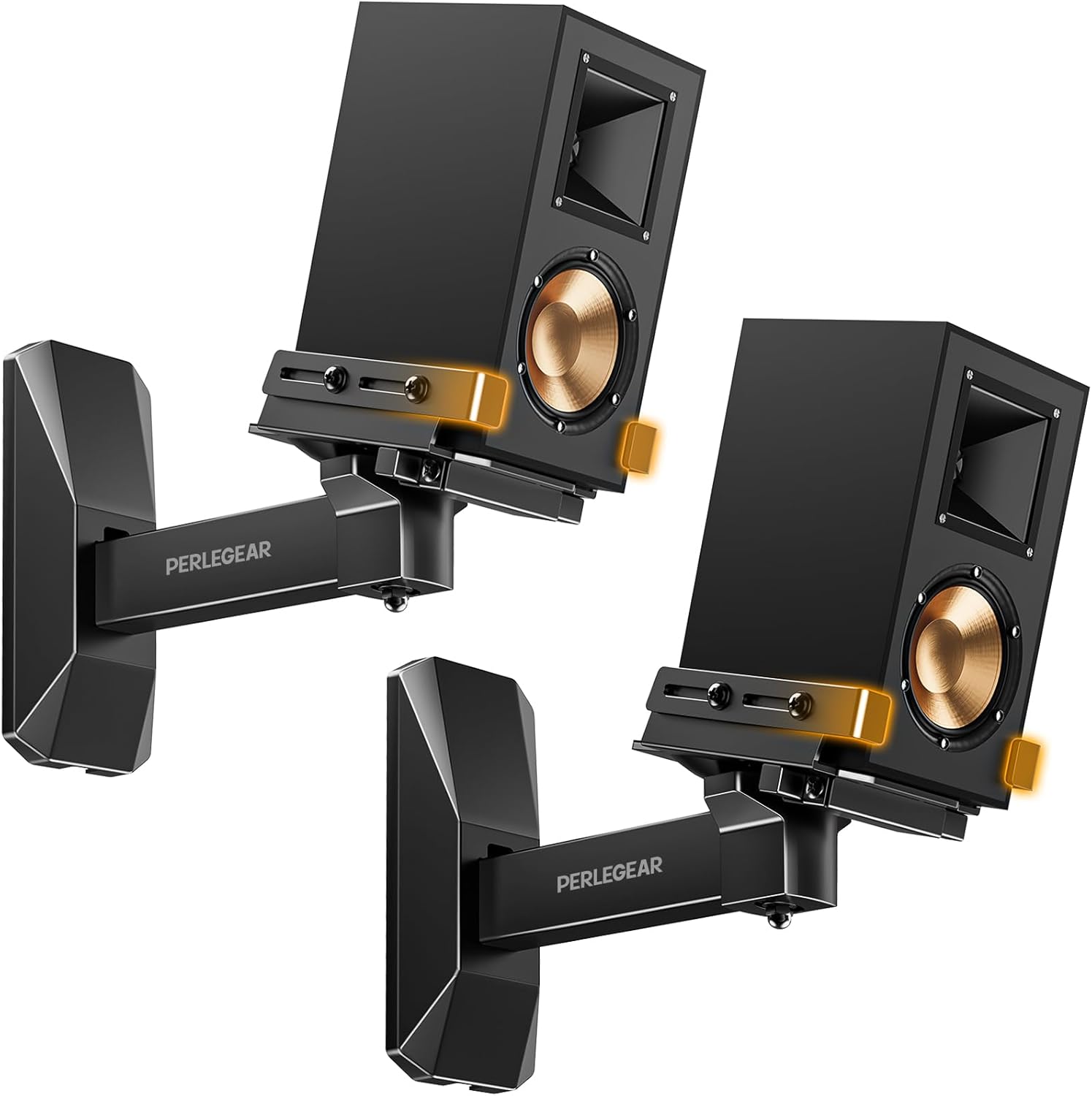
This guide is for audiophiles, home theater enthusiasts, and studio producers seeking to eliminate unwanted noise. We’ve assessed a range of solutions, from simple silicone feet to dedicated isolation platforms, to help you find the perfect match for your setup. Whether you’re fine-tuning a bookshelf speaker pair or taming a powerful subwoofer, effective vibration control is a simple upgrade with profound results. For more permanent installation solutions, explore our guide on the best speaker wall brackets for bookshelf speakers.
How to Choose Anti-Vibration Speaker Mounts
Consider Your Equipment’s Weight and Size
The mount’s load capacity must exceed your speaker’s weight. Heavy subwoofers need robust feet with high weight ratings, while lightweight bookshelf speakers can use smaller pads. Also, measure your speaker’s base to ensure the mount provides adequate surface contact for stability. A platform stand must be large enough to fully support your monitor’s footprint.
Evaluate the Mounting Surface and Method
Will the speaker sit on a desktop, a shelf, or the floor? For finished furniture, non-adhesive, non-slip feet protect surfaces. If relocation is unlikely, adhesive pads offer a secure, permanent bond. Screw-in feet provide the most secure attachment for heavier components but require minor installation. Consider your need for adjustability versus fixed placement.
Select the Right Material for Damping
<!–Different materials absorb specific vibration frequencies. High-grade silicone, like the platinum silicone used in many top picks, targets a broad range of micro-vibrations effectively. Dense rubber is excellent for shock absorption and heavy loads. Multi-layer foam platforms combine materials to decouple the speaker from the surface entirely. The right material choice is key to stopping energy transfer. This is especially critical for studio monitor setups where accurate sound is non-negotiable.
Match the Solution to Your Primary Goal
Are you aiming for pure vibration isolation, raising speakers to ear level, or both? Simple isolation feet decouple the speaker. Tilted stands like the Monoprice wedges also improve sound projection. Larger isolation platforms raise and fully decouple studio monitors. Define whether your priority is acoustic treatment, ergonomics, or a combination. For integrated home theater solutions, our review of the best speaker wall brackets for home theater offers complementary options.
Final Thoughts
Upgrading your audio system with anti-vibration mounts is one of the most cost-effective ways to enhance sound quality. By isolating your speakers, you eliminate a primary source of distortion, resulting in tighter bass, clearer mids, and more detailed highs. For a versatile, high-performance set of adhesive feet, the Hudson Hi-Fi 1.25″ Platinum Silicone Hemisphere is an outstanding choice for most bookshelf speakers and components. If you need a non-adhesive solution with a higher load capacity for a subwoofer or heavier floor-standing speaker, consider the robust Block Silicone Isolation Feet. Your ears will thank you for the cleaner, more precise listening experience.
Frequently Asked Questions
Do anti-vibration speaker mounts really make a difference?
Yes, they can make a noticeable difference, especially with bass-heavy speakers or when equipment is placed on hollow or resonant surfaces like desks or shelves. They work by decoupling the speaker cabinet from the surface, preventing vibrations from transferring and causing unwanted resonance or rattling. This often results in perceived tighter bass and cleaner mid-range frequencies.
What’s the difference between isolation pads and speaker stands?
<!–Isolation pads are typically placed directly under the speaker to absorb vibrations. Speaker stands elevate the speaker and often incorporate isolation mechanisms in their design. Stands can improve sound projection by angling speakers and placing them at optimal listening height, while also providing isolation. The choice depends on whether you need simple decoupling or both elevation and isolation. For rear channel placement where stands are common, see our tips for the best speaker mounts for rear surround sound.
Can I use these for a turntable or other audio equipment?
<!–Absolutely. Anti-vibration mounts are highly recommended for turntables to prevent acoustic feedback from speakers from causing a hum or affecting the stylus. They are also beneficial for CD players, amplifiers, and other sensitive electronics that can be affected by micro-vibrations, potentially improving overall system clarity and detail retrieval.
How do I install adhesive isolation feet?
<!–First, ensure the surface of your speaker base is clean, dry, and free of dust or oils. Peel the protective backing from the adhesive pad and carefully position the foot on the speaker, usually near each corner for stability. Apply firm, even pressure for about 30 seconds to ensure a strong bond. Allow the adhesive to cure for several hours before moving the speaker for the best hold. For a broader look at mounting hardware, visit our main speaker mounts and wall brackets category page.



Write Your Review
No reviews yet. Be the first to share your experience!