

You’ve invested in a high-quality digital music collection, but the sound from your current system feels flat and compressed. The missing link between your pristine digital files and immersive, room-filling sound is often the digital-to-analog converter. A dedicated built-in DAC in your AV receiver can transform your listening experience, revealing details and warmth you never knew were missing. This guide is for audiophiles and home theater enthusiasts who demand the highest fidelity from their digital sources, from streaming services to local libraries. We have assessed six leading AV receivers that prioritize this critical component. For those also focused on high-resolution formats, our guide on the best AV receivers with High-Res audio offers complementary insights.
| Pick | Product | BRD Score | Where to buy |
|---|---|---|---|
| Top Pick |
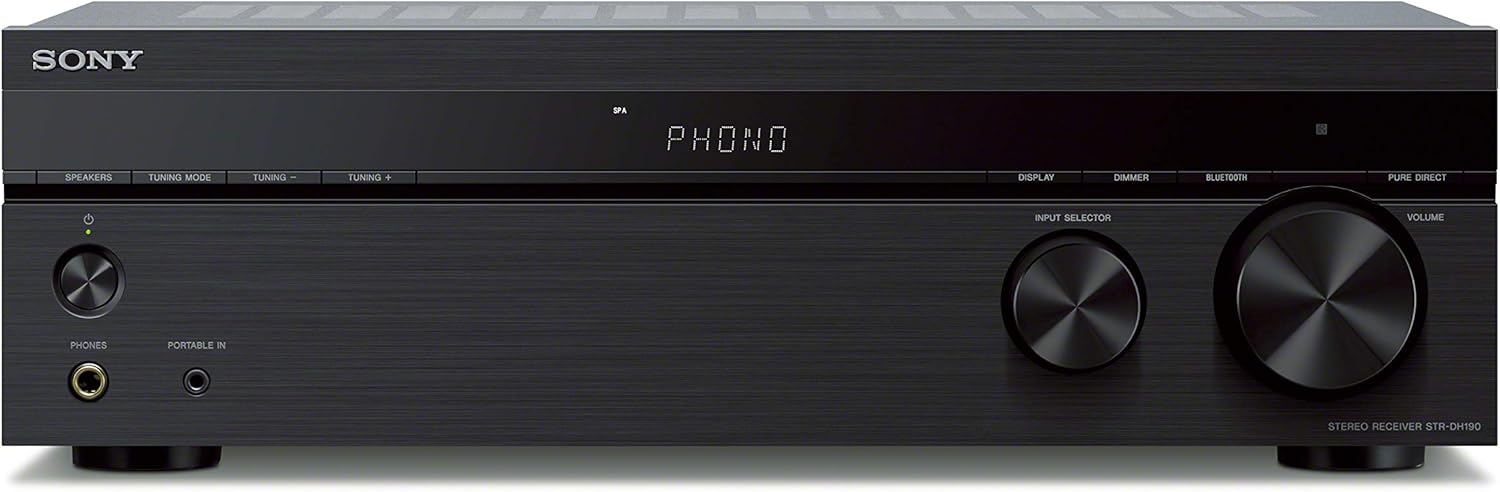 Sony STRDH190 2-Channel Home Stereo Receiver |
9.8/10 | View on Amazon.com |
| 32% OFF |
 Denon AVR-X1700H 7.2 Channel 8K AV Receiver |
9.8/10 | View on Amazon.com |
Prices and discounts as of Nov 23, 2026 and may have changed. Check Amazon for the current price.
Pros
- Excellent sound clarity with balanced highs, mids, and bass across all input sources
- Phono input eliminates the need for a separate turntable preamp, saving money and desk space
- Bluetooth connection is quick to pair and remains stable during extended listening sessions
- Compact low-profile design fits standard AV furniture without any awkward modifications
- Highly rated by a large number of verified buyers, reflecting consistent real-world reliability
Cons
- Maximum volume output may feel limited for larger rooms or listeners who prefer concert-level loudness
- 2-channel stereo only, so it is not suitable for home theater surround sound setups
- No digital optical or coaxial inputs, which may frustrate users wanting to connect modern TVs or DACs directly
The Sony STRDH190 is a 2-channel home stereo receiver designed for music lovers who want a clean, capable hub for multiple audio sources. Whether you are spinning vinyl, streaming from a phone, or tuning into FM radio, this receiver handles it all in one compact unit. It is particularly well suited to first-time stereo system builders and returning audiophiles who value simplicity over complexity.
Sound performance is the STRDH190's strongest suit. With 100 watts per channel and Sony's large-capacity power transformer, the receiver delivers a composed, detailed soundstage with crisp highs and solid bass. Customer feedback consistently praises its clarity at moderate to high volumes, and High-Resolution Audio support means the unit can resolve fine details that compressed streaming formats often obscure.
The feature set is thoughtfully chosen for its target audience. The built-in phono preamp is a genuine convenience for turntable users, while Bluetooth pairing is described by owners as fast and reliable. The A/B speaker switching is a practical bonus, allowing two pairs of speakers to run simultaneously or independently for multi-room flexibility. A full-size headphone jack and 30-preset FM tuner round out the everyday usability.
On the design side, the STRDH190's low-profile chassis at just over 5 inches tall is a real-world advantage for anyone working with a standard AV cabinet. Build quality feels solid for the price point, and the included remote adds a layer of convenience that budget receivers often skip. The unit weighs 17 pounds, which speaks to the substantial internal components rather than hollow construction.
The main limitations are its 2-channel-only configuration, which rules it out for surround sound duties, and a lack of digital inputs for users wanting to connect a TV or external DAC. Volume headroom in very large rooms can also feel modest. That said, for a stereo-focused listener who values vinyl, Bluetooth, and clean audio in one tidy package, the STRDH190 is a genuinely impressive and well-rounded receiver.
Model: Sony STRDH190 | Color: Black | Channels: 2 (Stereo) | Output Power: 100W x 2 (8 ohms, 1 kHz) | Total Wattage: 200W
Speaker Impedance: 6 to 16 ohms | Inputs: Phono input, 4x stereo RCA, 3.5mm aux | Outputs: Stereo RCA, A/B speaker terminals, 1/4-inch headphone jack
Wireless: Bluetooth (2.4 GHz, max output 5.0 dBm) | FM Tuner: 30 station presets | Audio Format: WMA, High-Resolution Audio
Dimensions: 11"D x 17"W x 5.2"H | Weight: 17.1 lbs | Power: AC 120V, 60 Hz | Warranty: 1 year limited
In the Box: Receiver, remote control (RMT-AA400U), batteries, FM antenna | ASIN: B078WFDR8D | UPC: 027242908383
If you are shopping for your first stereo receiver, the STRDH190 is one of the most complete entry-level options available. It covers all the essential bases: Bluetooth streaming, FM radio, a phono stage for turntables, and enough inputs for a CD player, TV audio output, and more. You will not need to buy a separate phono preamp, which keeps your total system cost down.
Pairing advice: this receiver works best with bookshelf or floor-standing speakers rated between 6 and 16 ohms. Popular matches noted by owners include Yamaha bookshelf speakers and classic Bose 301s. For turntable users, Sony's own PS-LX310BT is a frequently recommended companion that integrates seamlessly with the STRDH190's phono input.
Consider your room size before purchasing. The 100-watt-per-channel rating is more than adequate for small to medium rooms, but listeners in large open-plan spaces who prefer very high volume levels may eventually want to step up to a higher-powered model. For most living rooms and dedicated listening spaces, however, the power on offer is genuinely sufficient.
This receiver is not the right choice if you need surround sound for a home theater setup, or if you want to connect a modern TV via optical or coaxial digital audio. For those use cases, a dedicated AV receiver would be a better fit. But as a pure stereo music receiver with broad source compatibility, the STRDH190 is hard to beat at its price point.
Pros
- Intuitive setup process with color-coded connections and an on-screen wizard that guides you step by step
- Exceptional audio performance with support for Dolby Atmos, DTS:X, and virtual height channels for cinema-grade immersion
- Versatile connectivity including phono input, eARC, 6 HDMI ports, Bluetooth, Wi-Fi, and AirPlay 2
- HEOS multi-room streaming and broad voice assistant support add serious smart home value
- Solid build quality and a compact form factor compared to older generation receivers
Cons
- The HEOS app and on-screen interface feel dated and can be clunky to navigate, especially for streaming configuration
- Older 4K TVs may experience compatibility issues with the advanced HDMI feature set, potentially requiring a TV upgrade
- Auto-calibration results may disappoint critical listeners, with some users preferring to manually tune speaker settings
The Denon AVR-X1700H is a 7.2 channel AV receiver aimed at home theater enthusiasts who want a powerful, future-ready centerpiece without spending on a flagship model. With 80 watts per channel, 8K HDMI support, and a rich suite of audio formats, it sits comfortably in the sweet spot between entry-level and premium receivers.
On the audio side, this receiver truly shines. Support for Dolby Atmos, DTS:X, DTS Virtual:X, and Dolby Atmos Height Virtualization means you can enjoy three-dimensional surround sound even in a room without dedicated overhead speakers. Real-world users consistently praise the theater-like experience it creates, particularly in 7.1.2 configurations with height channels.
Setup is one of the AVR-X1700H's strongest selling points. The color-coded rear panel, labeled speaker wire connections, and award-winning on-screen setup wizard make the installation process far less daunting than many competing receivers. Connectivity is equally impressive, offering six HDMI inputs, a phono input for turntables, AirPlay 2, Bluetooth, Wi-Fi, and dual subwoofer pre-outs, covering virtually every source a modern home theater might need.
The main drawback worth noting is the HEOS app and receiver interface, which several users describe as outdated and difficult to navigate. While the hardware performance is excellent, the software experience lags behind the overall quality of the unit. Additionally, users with older 4K televisions may encounter HDMI compatibility hurdles due to the advanced 8K HDMI specification.
Overall, the Denon AVR-X1700H delivers outstanding value for its class. It is a well-built, feature-rich receiver that performs reliably in real home theater environments. If you are upgrading from an older receiver or building a serious surround sound system for the first time, this Denon model is a highly recommended choice backed by strong user satisfaction.
Channels: 7.2 Channel | Power Output: 80W per channel | HDMI Ports: 6 In / 1 Out | Video Support: 8K/60Hz, 4K/120Hz, HDR10, HDR10+, Dolby Vision, HLG, H.264, H.265/HEVC
Audio Formats: Dolby Atmos, Dolby Atmos Height Virtualization, DTS:X, DTS Virtual:X | Wireless: Wi-Fi, Bluetooth, AirPlay 2 | Streaming: HEOS Built-in, Spotify, Amazon Music HD, TIDAL, Pandora, Deezer
Voice Control: Amazon Alexa, Google Assistant, Apple Siri, Josh.ai | Inputs: 2 Digital Optical, 2 Analog, 1 Coaxial, 1 Phono (MM/MC) | Pre-Outs: 2 Subwoofer Pre-Outs | eARC: Yes
Dimensions: 13.3"D x 17.1"W x 6"H | Weight: 19 lbs | Color: Black | Warranty: 3-Year Limited | Model: AVR-X1700H | UPC: 747192134600
If you are considering the Denon AVR-X1700H, it is best suited for buyers building or upgrading a dedicated home theater room with 5.1, 7.1, or 7.1.2 speaker configurations. It delivers the most value when paired with a modern 4K or 8K television that supports HDMI 2.1 features like VRR and ALLM, especially for gaming setups.
This receiver is an excellent fit for users who want multi-room audio capability without purchasing a separate streaming device. The HEOS ecosystem allows you to expand audio to other HEOS-compatible speakers throughout your home, making it a smart long-term investment for whole-home audio enthusiasts.
Vinyl listeners will appreciate the built-in phono stage, which supports both moving magnet and moving coil cartridges, though note that only one type can be used at a time. If you own a turntable and want to integrate it into a modern AV setup, this feature alone sets the AVR-X1700H apart from many competitors at this price point.
Buyers with older 4K televisions should verify HDMI compatibility before purchasing, as the advanced HDMI 2.1 feature set can occasionally cause handshake issues with legacy displays. If you are comfortable with manual speaker calibration, you may also want to plan to fine-tune the auto-calibration results for the best possible audio performance.
Buying Guide for AV Receivers with Built-in DACs
DAC Chip Quality and Audio Formats
The heart of any receiver with a built-in DAC is the converter chip itself. Look for models that specify high-performance DACs from reputable manufacturers like ESS Sabre or Burr-Brown. This specification directly impacts signal-to-noise ratio and total harmonic distortion, key factors in clean sound reproduction. Equally important is format support. Ensure the receiver can handle the audio files you use, from standard CD-quality FLAC to high-resolution PCM and native DSD playback for the ultimate in detail.
Connectivity and Input Options
A superior DAC is only useful if you can connect your digital sources to it. Prioritize receivers with a variety of digital inputs, such as optical, coaxial, and USB. A dedicated USB-B input is often best for connecting a computer directly for bit-perfect audio transmission. For modern home theaters, also evaluate HDMI connectivity, especially if you plan to pass through video from gaming consoles or 4K Blu-ray players. Some models even support advanced features like 8K pass-through, which you can explore further in our dedicated review of the best AV receivers with 8K Pass-Through.
Amplifier Power and Channel Configuration
Match the receiver’s power output and channel configuration to your room size and speaker setup. A powerful amplifier section ensures your speakers are driven properly without distortion, even at higher volumes. For a traditional stereo music setup, a 2-channel receiver like the Sony STRDH190 2-ch Home Stereo Receiver with Phono may be perfect. For a surround sound home theater, you’ll need a 5.1, 7.1, or more advanced configuration like the Denon models offer. Consider future expansion, such as adding height channels for Dolby Atmos.
Network Features and Multi-Room Audio
Modern receivers extend beyond local inputs. Built-in Wi-Fi and Ethernet allow for streaming music directly from services like Spotify, Tidal, and Amazon Music HD, often at high-quality bitrates. Platforms like HEOS (Denon) or MusicCast (Yamaha) enable multi-room audio, letting you stream different music to different zones. For seamless integration with your TV, look for HDMI eARC support, which simplifies connections and allows for high-quality audio from your smart TV apps. Learn more about this feature in our article on best AV receivers with HDMI eARC.
Final Thoughts
Selecting the right AV receiver with a built-in DAC fundamentally elevates your audio experience by ensuring your digital music is converted with precision and clarity. Whether you are building a dedicated stereo system for critical listening or a full immersive home theater, the DAC’s quality is a cornerstone of performance. For audiophiles seeking network streaming prowess and a top-tier ESS Sabre DAC, the Yamaha R-N800A Network Receiver with Phono is an exceptional choice. Conversely, for home theater enthusiasts who want robust surround sound processing, 8K video support, and reliable streaming, the Denon AVR-X1700H 7.2 Channel AV Receiver offers tremendous value and future-proofing. Explore our wider selection of components in the AV Receivers category and the broader Home Audio Sound Bars section for more options.
Frequently Asked Questions
Why is a built-in DAC in an AV receiver important?
A built-in DAC converts digital audio signals from sources like streaming apps, CDs, or computers into analog signals that your speakers can play. A high-quality built-in DAC typically offers superior performance compared to the basic converters found in many source devices, resulting in clearer, more detailed, and less distorted sound. It centralizes this critical conversion process within your primary audio component.
Can I use an external DAC with any AV receiver?
Yes, you can often use an external DAC by connecting it to an analog input on your receiver, such as RCA or XLR. However, this adds another component to your system. Choosing a receiver with a high-quality built-in DAC simplifies your setup, reduces cable clutter, and is often more cost-effective than buying separate components while still delivering excellent performance.
What should I look for in a DAC for music versus home theater?
For pure stereo music listening, prioritize DAC specifications like high-resolution support (e.g., DSD 512, 384kHz PCM), a high signal-to-noise ratio, and dedicated stereo analog circuitry. For home theater, ensure the DAC is part of a receiver that also supports the latest surround sound formats like Dolby Atmos and DTS:X, and has sufficient HDMI inputs for all your video sources. Many modern receivers, like those from Denon, excel at both duties.
Are newer AV receivers with DACs compatible with my old devices?
Most modern receivers are designed with backward compatibility. They include analog inputs like RCA for CD players and dedicated phono inputs for turntables, alongside digital inputs for newer gear. Always check the product’s input list to confirm it has the specific ports you need for your existing equipment, such as optical for an older TV or coaxial for a legacy media player.



Write Your Review
No reviews yet. Be the first to share your experience!