

You want your child to enjoy music, games, and educational content, but you also need them to hear the doorbell, your voice, or approaching traffic. Traditional headphones can isolate them, while earbuds might damage delicate ears. The solution lies in a new category of audio gear designed specifically for young listeners: bone conduction and open-ear wireless headphones.
This guide is for parents, guardians, and gift-givers searching for the best bone conduction wireless kids headphones. We have evaluated ten leading models based on critical safety features, comfort for all-day wear, audio quality, and overall durability. Whether your child needs headphones for school, travel, or play, our review highlights the key differences to help you make a confident choice. For more options focused purely on volume control, explore our guide to the best bluetooth volume limiting kids headphones.
Pros
- Exceptional safety feature allows children to remain aware of classroom and traffic sounds while listening
- Ultra-lightweight at just 20 grams eliminates ear fatigue and pressure, even during all-day wear
- Durable construction with memory titanium neckband and reinforced cable withstands rough handling by active kids
- Excellent sound quality from full-range dynamic driver provides immersive audio across all music genres
- Versatile compatibility works with laptops, tablets, smartphones, and other 3.5mm jack devices
Cons
- Wired connection with 3.5mm jack limits compatibility with modern devices lacking audio jacks
- Not water resistant, so these headphones are unsuitable for swimming or water sports
- Open-ear design may not appeal to children who prefer traditional over-ear or in-ear styles
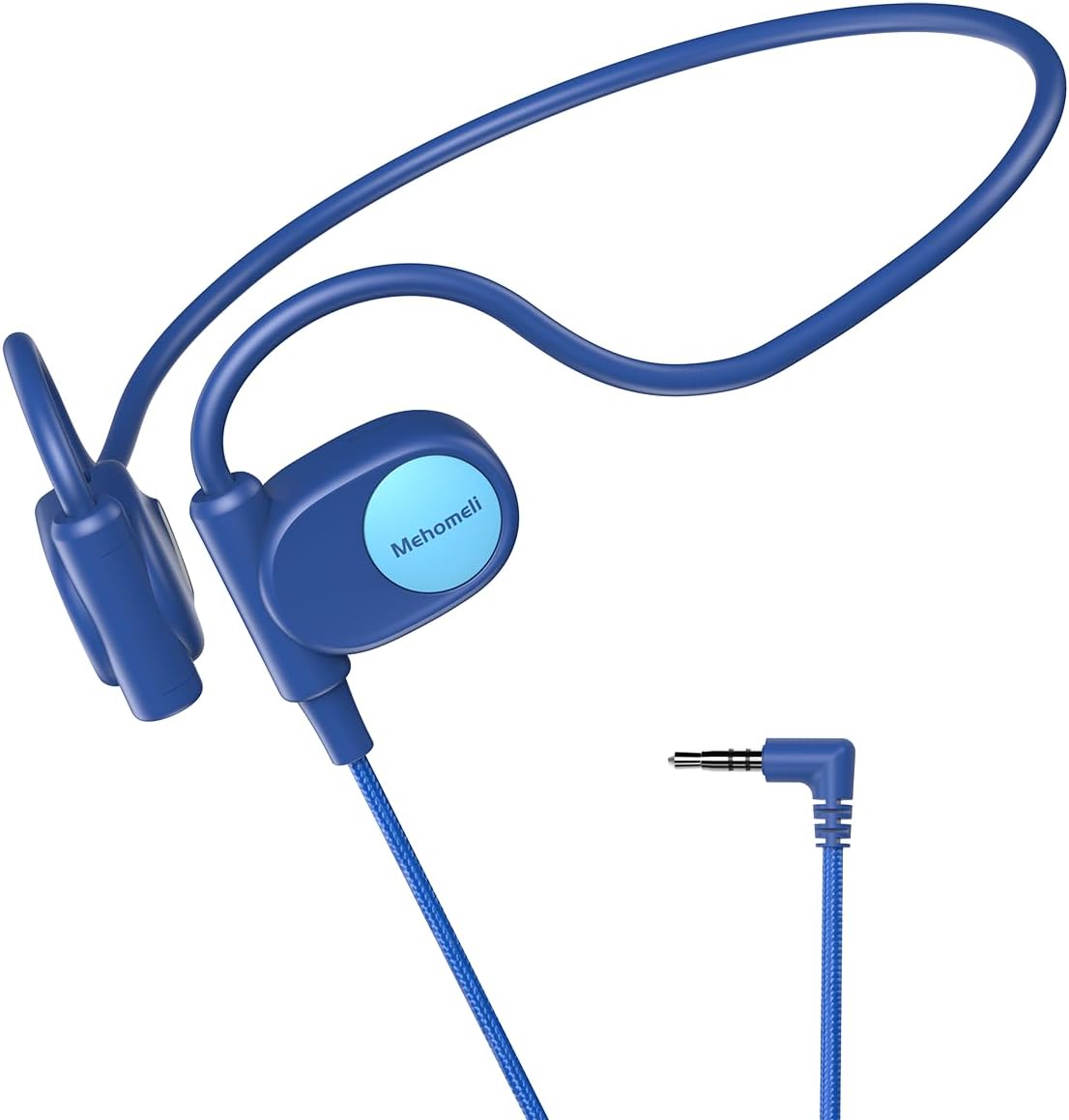
The Mehomeli MEKH02A-K2 open-ear headphones represent a thoughtful approach to children's audio devices, prioritizing safety alongside entertainment. Designed for kids ages 3 to 16, these wired headphones use innovative air conduction technology to deliver sound while keeping young listeners aware of their environment, a critical feature for studying at home, attending classes, or commuting on public transportation.
What sets these headphones apart is their commitment to comfort and durability without sacrificing audio quality. The 16.2mm full-range dynamic driver produces balanced sound with commanding bass, captivating treble, and clear midrange that immerses children in music across all genres. The ergonomic design ensures stability during intense physical activity, while the flexible memory titanium neckband bends 360 degrees without permanent deformation, withstanding the rough handling typical of active kids. At just 20 grams, the lightweight construction eliminates ear fatigue, and the innovative design even accommodates children wearing glasses or helmets.
Build quality is solid throughout, with a high-strength titanium neckband and nylon braided cable that resists tangling and tugging. The tangle-free design is particularly appreciated by parents managing multiple devices and accessories. The wired 3.5mm connection ensures reliable connectivity across various devices including laptops, tablets, and smartphones, though this limits use with newer devices that lack audio jacks.
The primary drawback is the lack of water resistance, making these unsuitable for pool use or water sports. Additionally, the open-ear design may not appeal to children accustomed to traditional over-ear or in-ear styles, though many parents view this as a safety advantage rather than a limitation. Mehomeli backs the product with a comprehensive one-year warranty covering defects in materials and workmanship.
These headphones deliver genuine value for parents seeking a safe, comfortable, and durable audio solution for their children. The combination of air conduction safety technology, premium sound quality, and thoughtful ergonomic design makes them an excellent choice for academic and recreational use.
Model: MEKH02A-K2 (Color: Blue)
Audio Performance: 16.2mm full-range dynamic driver, frequency range 20 Hz to 20,000 Hz
Design: Open-ear air conduction technology, lightweight at 20.14 grams, flexible memory titanium neckband with 360-degree bending capability
Connection: Wired 3.5mm jack, tangle-free nylon braided cable
Compatibility: Laptops, desktops, tablets, cellphones, music production equipment
Age Range: 3 to 16 years old
Warranty: 12-month manufacturer coverage
Materials: Nylon and titanium enclosure
Who Should Buy: Parents seeking safe, comfortable headphones for children who study, commute, or engage in outdoor activities. These are ideal for kids who need to maintain awareness of their surroundings while enjoying audio content, making them particularly valuable for classroom use and travel.
Best Use Cases: Online learning, school study sessions, commuting on buses or trains, outdoor play, music listening during homework, and recreational activities where situational awareness matters.
Key Considerations: Ensure your child's devices have a 3.5mm audio jack, as these are wired headphones. If your child needs water-resistant options for swimming or water sports, consider alternatives. The open-ear design works best for children who appreciate comfort and safety over traditional ear coverage.
Value Assessment: At this price point, these headphones offer exceptional value combining safety technology, premium audio quality, durable construction, and thoughtful ergonomic design in a single package.
How to Choose Kids Bone Conduction Headphones
Prioritize Hearing Safety
The primary reason to choose this style is safety. Look for a certified 85dB volume limiter, which is the recommended maximum for children’s hearing. This feature is non-negotiable. The open-ear or bone conduction design itself adds another layer of safety by maintaining situational awareness. Your child can listen to an audiobook while still hearing your instructions or ambient street sounds.
Some advanced models, like the PHILIPS Kids Open-Ear Bone Conduction Bluetooth, offer app-based parental controls to lock this volume limit and monitor usage. This ensures protection is consistent, even when you are not in the same room.
Assess Comfort and Fit
Children will not wear uncomfortable headphones. The best models use ultra-lightweight materials, often under 1 ounce, with flexible, memory-foam or titanium bands that conform to small heads. An ergonomic design prevents pressure on the ears or temples, which is crucial for extended wear during school or travel.
Fit is also about security. The headphones should stay firmly in place during active play, running, or head movements. Many designs feature over-ear hooks or a wraparound neckband for stability. Ensure the model is compatible if your child wears glasses, a common consideration often overlooked. For a different secure fit style, consider our review of the best On-Ear wireless kids headphones.
Evaluate Durability and Battery Life
Kids are tough on gear. Durability involves both physical construction and resistance to the elements. Look for high-strength memory materials that can bend repeatedly without breaking. An IPX4 or higher waterproof rating is a significant advantage, protecting against sweat from active play and accidental splashes.
Battery life determines daily convenience. A minimum of 6-8 hours of playtime covers a full school day or long trip. Models with 10-20 hours of battery, like some from Mehomeli, reduce charging frequency. Fast USB-C charging is a practical feature that gets them ready quickly. For headphones built for even more active use, see our sport and waterproof earbuds category.
Final Thoughts
Selecting the right headphones means balancing safety, comfort, and fun. For parents seeking a reliable, feature-rich option with excellent battery life and stable connectivity, the Mehomeli Kids Headphones are a standout choice. If advanced parental controls and a trusted brand name are your priority, the PHILIPS Kids Open-Ear Bone Conduction Bluetooth headphones offer unique app-based management. Ultimately, the best model is the one your child will wear comfortably while staying connected to their world, both digitally and in real life. You can explore all our recommendations in the broader kids headphones category.
Frequently Asked Questions
Are bone conduction headphones safe for kids’ hearing?
Yes, when they include a volume limiter. Bone conduction technology bypasses the eardrum by vibrating the cheekbone, which can be gentler. However, the critical safety feature is a built-in 85dB volume limit, which all recommended models have. This cap prevents sound from reaching levels that could cause hearing damage over time.
Can my child wear these headphones with glasses or a helmet?
Most open-ear and bone conduction designs are compatible with glasses because they do not press on the ears. The speakers rest in front of the ear or on the cheekbone. Similarly, the low-profile, behind-the-head band design typically fits under bicycle or sports helmets without conflict, making them versatile for various activities.
How is the sound quality compared to regular kids’ headphones?
Sound quality is clear and sufficient for music, videos, and calls, but it differs from noise-isolating in-ear models. The open design means bass response is less pronounced, and ambient noise is present. The trade-off is situational awareness, which is the primary goal. For focused listening in quiet environments, traditional on-ear headphones might offer richer audio, but they block environmental sound.
What is the average battery life I should expect in 2026?
You can expect a wide range from 6 to 20 hours of playtime on a single charge. More affordable models often provide 6-10 hours, which is adequate for daily use. Premium models with larger batteries can last 15-20 hours, ideal for long trips or reducing daily charging hassle. Always check the manufacturer’s rating for continuous playback at medium volume.


Write Your Review
No reviews yet. Be the first to share your experience!