

Are you tired of the thin, compressed sound from your computer or TV? You know there must be more to your music, games, and movies. The good news is, you are right. The bridge to richer, more detailed audio is often a simple device called a DAC, or digital-to-analog converter. For newcomers, the world of DACs can seem filled with technical jargon and intimidating price tags. This guide is specifically crafted to cut through the confusion.
We have evaluated the leading entry-level models to bring you a clear, practical overview. Whether you want to power demanding headphones, connect to a speaker system, or simply get cleaner sound from your PC, a beginner-friendly DAC is the perfect first step. Our goal is to help you find the right match for your needs and your desk, making your initial foray into high-fidelity audio both rewarding and straightforward. If you are also exploring options specifically for gaming, our resource on the best DACs for gaming offers focused insights.

Pros
- Audiophile-grade chipset delivers transparent, high-fidelity audio across all input sources
- Exceptional power output easily handles planar magnetic and high-impedance headphones
- Flexible connectivity hub replaces multiple devices for streamlined desktop setup
- All-metal aluminum construction provides durability and EMI shielding
- Intuitive controls with angled chassis design for comfortable daily use
Cons
- No user reviews available yet to validate real-world performance claims
- Premium price point may be steep for casual listeners not requiring high-resolution audio
- Requires external 12V power supply, limiting true portability
The Fosi Audio K7 is a desktop DAC headphone amplifier engineered for audiophiles, gamers, and content creators who demand superior sound quality. It combines professional-grade audio processing with gaming-friendly features, making it a versatile hub for PC, PS5, Switch, and studio environments. The K7 bridges the gap between casual listening and serious audio work without requiring a large footprint on your desk.
At its core, the K7 delivers impressive technical performance with the AK4493S DAC, XMOS XU208 USB processor, and dual TPA6120 headphone amplifiers. The 2100mW output power easily drives demanding headphones, from balanced armature monitors to power-hungry planar magnetics. Support for high-resolution audio up to PCM 384kHz/32bit and DSD256 ensures you get every detail in your music, while Bluetooth aptX HD with low-latency support provides wireless convenience without sacrificing quality for gaming sessions.
Connectivity is where the K7 truly shines. USB-C, optical, coaxial, and Bluetooth inputs give you flexibility to connect virtually any audio source, while balanced 4.4mm, single-ended 3.5mm, and RCA outputs let you drive headphones or integrate with powered speakers and external amplifiers. The included 3.5mm microphone input adds functionality for streaming and content creation. The all-aluminum chassis with dual control knobs, five shortcut buttons, and a high-resolution display creates an intuitive, premium user experience.
Build quality reflects the premium positioning. The solid aluminum alloy construction resists wear and provides excellent electromagnetic interference shielding, protecting audio signals from digital noise. The angled chassis design promotes ergonomic comfort during extended use, while the sleek metallic finish complements modern desktop aesthetics.
The K7 is best suited for headphone enthusiasts and gamers willing to invest in audio quality. If you value high-resolution audio, appreciate balanced sound, or need a flexible audio hub for multiple devices, this amplifier delivers exceptional value. The 24-month warranty and included accessories provide confidence in your purchase, though the external power supply does limit portability.
Audio Processing: AK4493S DAC, XMOS XU208 USB processor, TPA6120 headphone amplifiers. Maximum output power: 2100mW. Audio format support: PCM up to 384kHz/32bit, DSD256.
Connectivity: USB-C, Bluetooth 5.0 aptX HD/LL, optical, coaxial, 3.5mm microphone input. Outputs: 4.4mm balanced, 3.5mm single-ended, RCA.
Physical: All-aluminum alloy chassis with angled design. Dual large control knobs, five shortcut buttons, high-resolution display. Power: 12V external supply. Dimensions and weight not specified.
Compatibility: PC, PS5, Nintendo Switch, studio equipment. Works with headphones, powered speakers, and external amplifiers via balanced or single-ended outputs.
Warranty: 24-month manufacturer warranty. Included accessories: K7 unit, USB-A/C to USB-C cable, Y-splitter cable, Bluetooth antenna, 12V power supply.
Is the K7 Right for You? Choose the K7 if you own high-quality headphones, play competitive games on console or PC, create content with multiple audio sources, or appreciate high-resolution audio. It's a long-term investment that grows with your audio setup.
Key Considerations: Verify your headphones are compatible with balanced 4.4mm connectors if you plan to use that output for maximum quality. If you need portable audio, note the K7 requires AC power and isn't battery-powered. Ensure your audio sources support at least one of the available input types (USB-C, Bluetooth, optical, coaxial).
Setup Tips: Use balanced 4.4mm output with compatible headphones for lowest noise floor and best sound quality. For gaming, the Bluetooth aptX LL mode provides low-latency wireless connectivity. The Y-splitter cable helps integrate the K7 with existing audio setups. Experiment with the dual control knobs to fine-tune gain and volume for your specific headphones.

Pros
- Exceptional value for money, offering performance comparable to much more expensive dedicated DACs and amplifiers
- Balanced output (4.4mm) provides noticeably improved sound quality with reduced background noise and better channel separation
- Versatile connectivity with USB, optical, coaxial, and RCA outputs accommodates virtually any audio source or speaker setup
- Easily drives demanding headphones including high-impedance models like the HD650 without distortion or strain
- Sleek, compact metal construction looks professional on any desktop and pairs well with modern RGB lighting setups
Cons
- Menu navigation requires some familiarity and experimentation to fully understand all settings and digital filter options
- Digital filters produce noticeably different sound characteristics, requiring manual selection rather than automatic impedance detection
- Some users report filter presets can sound overly bright, dark, or compressed depending on the selection
The FiiO K11 is a desktop DAC and headphone amplifier designed for audio enthusiasts, PC gamers, and home theater users who want professional-grade sound quality without the premium price tag. It serves as an excellent entry point into high-fidelity audio, offering balanced output connectivity and powerful amplification that rivals dedicated sound cards from just a decade ago. Whether you're upgrading from onboard motherboard audio or seeking better sound from your existing headphone collection, the K11 delivers noticeable improvements in clarity, detail, and dynamic range.
The standout feature is undoubtedly the balanced 4.4mm output, which provides superior stereo imaging and significantly reduces background noise compared to standard single-ended connections. With 1400mW of power output, the K11 effortlessly drives high-impedance headphones up to 350 ohms, making it compatible with professional studio monitors and demanding audiophile-grade headphones. The device supports high-resolution audio formats up to 384kHz/24-bit and DSD256, ensuring your music files are reproduced with studio-quality precision. Users consistently report that even low-impedance headphones sound noticeably more dynamic and controlled through the balanced output.
Build quality is solid and professional, featuring an aluminum alloy chassis with a sleek, compact design that fits naturally on any desktop. The high-definition VA display provides real-time feedback on sampling rate, volume, gain, and output mode, making operation straightforward once you familiarize yourself with the menu system. The included USB Type-C to Type-A cable ensures compatibility with most modern computers, and the multiple input options (USB, optical, coaxial) mean you can connect virtually any audio source without compatibility issues.
The primary consideration is that the K11 requires some menu navigation to access all features, and the adjustable digital filters require manual selection rather than automatic optimization. Different filter presets produce noticeably different sound signatures, ranging from bright and sharp to dark and muffled, so experimentation is necessary to find your preferred setting. Additionally, the device doesn't automatically detect headphone impedance, requiring manual gain adjustment for optimal performance with different headphones.
The FiiO K11 represents outstanding value for budget-conscious audiophiles and anyone seeking to significantly upgrade their desktop audio setup. Its combination of balanced connectivity, powerful amplification, high-resolution audio support, and compact design makes it one of the best dollar-for-performance DAC/amplifier combinations currently available. Highly recommended for PC gamers, music production professionals, and anyone serious about improving their listening experience.
Audio Performance
Maximum Power Output: 1400mW
Headphone Impedance Support: 8 to 350 ohms
Audio Resolution: 384kHz/24-bit, DSD256 compatible
Number of Channels: 2 (stereo)
Connectivity
Inputs: USB Type-C, Coaxial, Optical
Outputs: 6.35mm (1/4 inch) headphone jack, Balanced 4.4mm, RCA line-out, Coaxial
Included Cable: USB Type-C to USB Type-A adapter
Physical Specifications
Dimensions: 9.65 x 7.8 x 2.32 inches
Weight: 2.1 pounds
Material: Aluminum alloy chassis
Mounting Type: Cable mount
Display: High-definition VA display with contrast and long lifespan
Additional Features
Digital Filters: Multiple adjustable filter presets
Warranty: 1 year manufacturer warranty
Manufacturer: FiiO
Who Should Buy This Product
The FiiO K11 is ideal for PC users, console gamers, and home audio enthusiasts who want to significantly upgrade their sound quality without spending $300 or more. It's perfect for anyone with high-impedance headphones (100+ ohms), as it provides the power and control needed to drive them properly. Music producers, podcasters, and content creators will appreciate the high-resolution audio support and multiple connectivity options for different source equipment.
Who Might Want to Look Elsewhere
If you prefer a completely plug-and-play experience with no menu navigation, you may find the K11 slightly inconvenient. Users exclusively using wireless headphones or Bluetooth connectivity should note that the K11 requires wired connections only. Those with very low-impedance headphones (under 32 ohms) may not need the K11's power output and could consider more budget-friendly options.
Setup Tips for Best Performance
Spend time exploring the digital filter options to find the preset that best matches your headphone characteristics and personal listening preferences. Use the balanced 4.4mm output whenever possible for superior sound quality, and manually set the gain mode (low or high) based on your headphone impedance for optimal amplification. For USB connections, ensure your computer drivers are up to date and consider the latest firmware version for improved functionality.

Pros
- Exceptional sound quality with noticeably wider soundstage and cleaner tonality after break-in period
- Multiple connectivity options cover virtually every audio source from TVs to computers to smartphones
- Excellent build quality with premium components and thoughtful design details throughout
- Remote control with preamp bypass switch offers convenient volume management and system flexibility
- Outstanding value for high-resolution audio capability, punching well above its price point
Cons
- Learning curve for beginners unfamiliar with balanced audio connections and DAC functionality
- Stock op-amps provide clean sound but may lack bass heft compared to upgraded alternatives for critical listeners
The Fosi Audio ZD3 is a flagship desktop DAC preamp engineered for audiophiles, music producers, and home theater enthusiasts seeking high-resolution audio conversion without excessive complexity. It bridges the gap between entry-level and professional-grade equipment, offering studio-quality sound at an accessible price point. Whether you're upgrading dusty studio monitors, building a dedicated listening system, or integrating multiple audio sources into one cohesive setup, the ZD3 delivers the connectivity and performance to make it happen.
At the heart of the ZD3 lies an impressive quad-chipset architecture: XMOS XU316 for digital processing, ES9039Q2M for analog conversion, QCC3031 for Bluetooth, and LME49720 op-amps for amplification. This combination supports DSD512 and PCM up to 32bit/768kHz, ensuring you hear every detail your music files contain. Real-world users report a noticeably airier soundstage with reduced listening fatigue, suggesting the ZD3 truly extracts performance from high-resolution sources. The fully balanced signal path minimizes noise and distortion, while five input options (USB, Bluetooth, Optical, Coax, HDMI ARC) mean you'll never need another converter.
The design philosophy emphasizes both form and function. The compact chassis features an elegant 1.5-inch OLED display showing input selection and volume levels with crystal clarity. The included remote control eliminates the need to reach the unit, while the preamp bypass switch lets you integrate the ZD3 into existing systems without compromising signal integrity. Build quality feels premium throughout, with audiophile-grade components and thoughtful details like 12V trigger connectors for synchronized power management with other equipment.
The primary limitation is the learning curve for newcomers unfamiliar with balanced audio connections and DAC operation. Additionally, while the stock TI op-amps deliver clean, clear sound, some critical listeners upgrading from higher-end equipment may find the bass response slightly less hefty than desired, though this remains a minor consideration at this price level. The ZD3 also requires careful cable selection to maximize performance, which adds a small additional investment.
The Fosi Audio ZD3 represents exceptional value for anyone seeking high-resolution audio conversion with genuine versatility. Its combination of premium chipset, multiple connectivity options, intuitive controls, and outstanding build quality make it the ideal centerpiece for modern home audio systems. Whether paired with powered speakers, integrated into a stereo amplifier setup, or used as a TV audio hub, the ZD3 consistently delivers sound quality that exceeds expectations and justifies its position as a best-seller in the digital audio conversion category.
Audio Processing Chipset: XMOS XU316 + ES9039Q2M + QCC3031 + LME49720
Maximum Audio Resolution: DSD512, PCM 32bit/768kHz
Inputs: USB, Bluetooth 5.0, Optical (TOSLINK), Coaxial (RCA), HDMI ARC
Outputs: Balanced XLR (2), Unbalanced RCA (2)
Display: 1.5-inch OLED display
Control: Remote control included, preamp bypass switch, 12V trigger in/out
Channels: 2 (stereo)
Dimensions: Compact desktop form factor
Weight: 2.7 pounds
Warranty: 24 months manufacturer warranty
Who Should Buy the ZD3: The ZD3 is ideal for music enthusiasts upgrading from basic audio setups, home theater installers seeking TV integration, music producers working with studio monitors, and anyone wanting to unlock high-resolution audio from their digital music library. It's perfect for those with multiple audio sources who want one elegant solution.
Who Might Want to Look Elsewhere: If you need headphone-only output without speaker connections, or if you require extreme bass response from stock components, consider alternative options. Those with extremely tight budgets may find entry-level DACs sufficient, though the ZD3's versatility often justifies the investment.
Setup Tips: Allow 50+ hours of break-in time for optimal sound quality. Use quality interconnect cables to maximize the balanced XLR outputs. The HDMI ARC input eliminates cable clutter when connecting modern TVs. The preamp bypass mode works best when integrating with existing preamps or receivers.
Pairing Recommendations: The ZD3 pairs exceptionally well with the Fosi Audio ZA3 amplifier for a complete, cohesive system. It also integrates seamlessly with powered speakers, traditional stereo amplifiers, and modern AV receivers.

Pros
- Outstanding audio clarity with excellent channel separation, vocal definition, and expansive soundstage
- Versatile connectivity supports computers, smartphones, TVs, CD players, and network streaming devices
- Compact 8.66-inch chassis fits easily into any audio setup without requiring extensive space
- Continuous sonic improvement during burn-in period, revealing additional detail and refinement over time
- Exceptional value for money, delivering performance comparable to significantly more expensive alternatives
Cons
- Operates at elevated temperature during use, requiring adequate ventilation to ensure optimal performance and longevity
- Pair with a quality linear power supply for best results, which may require additional investment
- Highly technical specifications may be overwhelming for casual users unfamiliar with DSD, PCM, or R2R technology
The Gustard Audalytic DR70N R2R DAC is a high-performance digital-to-analog converter engineered for serious audiophiles and music enthusiasts who demand transparency and natural sound reproduction. This unit stands out by combining proprietary discrete R2R conversion technology with native DSD512 support, making it an excellent choice for those seeking reference-quality audio without the premium price tags of competing offerings.
The standout feature is undoubtedly the R2R conversion architecture, which bypasses the typical Delta-Sigma approach used in most modern DACs. In Direct DSD mode, the signal converts directly to analog without PCM intermediate steps, preserving the full dynamic range and micro-details of the original recording. With support for PCM up to 768kHz and DSD up to DSD512 (512 times the data density of CD), this DAC future-proofs your audio investment while delivering exceptional clarity across all formats.
Build quality and design reflect its professional-grade pedigree. The compact 8.66-inch square chassis houses customized FPGA technology with femtosecond-level timing accuracy via the CK01 clock. Five input options including USB-C, dual coaxial, optical, and LAN provide flexibility for virtually any audio source. The included remote and integrated volume control add convenience, even enabling use as a standalone preamp in simplified systems.
One practical consideration is heat output during operation. Users report the unit runs warm and requires proper ventilation for sustained use. Additionally, pairing with a quality linear power supply rather than standard switching supplies yields noticeably superior results. These represent minor trade-offs given the performance delivered at this price point.
The DR70N delivers remarkable value in the current market. User comparisons confirm it outperforms DACs priced five times higher, with particular praise for channel separation, instrument definition, and soundstage presentation. This is a genuinely impressive DAC that improves further during the burn-in period, making it an outstanding investment for anyone serious about audio quality.
Audio Specifications
DAC Architecture: Discrete R2R, 1-bit DSD native conversion
DSD Support: Native DSD64 to DSD512, DoP64-DoP256
PCM Support: 16-32bit, 44.1kHz to 768kHz
Coaxial/Optical Inputs: PCM 16-24bit/44.1-192kHz, DSD DoP64
USB/Streamer Inputs: PCM 16-32bit/44.1-768kHz, DSD DoP64-DoP256, Native DSD64-DSD512
Clock: CK01 with femtosecond-level timing accuracy
Physical Specifications
Dimensions: 8.66 inches L x 8.66 inches W
Weight: 1.5 kg (3.3 lbs)
Channels: 2 (Stereo)
Audio Output Mode: Balanced, Fully Discrete
Power Supply: 115V AC (single voltage)
Warranty: 3 years
Connectivity
Inputs: USB-C, Coaxial x2, Optical, LAN
Compatible Devices: Computers, Smartphones, TVs, CD Players, Network Streamers
Included Accessories: USB cable, Power cord, Remote, Warranty card
Who Should Buy This DAC?
The DR70N is ideal for audiophiles seeking high-fidelity audio reproduction, music producers requiring accurate monitoring, and enthusiasts with digital music libraries in DSD or high-resolution PCM formats. It works exceptionally well in desktop audio setups, home theater systems, and dedicated listening rooms where sound quality is paramount.
System Pairing Recommendations
For optimal performance, pair the DR70N with a quality linear power supply rather than relying solely on standard switching supplies. Users report dramatic improvements in sound clarity and detail when using dedicated power conditioning. The unit's integrated volume control enables standalone preamp functionality, simplifying system architecture for minimalist setups.
Setup Considerations
Ensure adequate ventilation around the unit, as it operates at elevated temperatures during sustained use. Allow 100+ hours of burn-in time for full sonic development. Connect via USB or LAN for access to the widest format support and highest resolution capabilities. The dual coaxial inputs provide convenient switching between multiple digital sources.
Comparison Context
In its price range, the DR70N offers exceptional value. Direct comparisons with higher-priced R2R DACs show minimal sonic differences while maintaining superior cost-effectiveness. Users consistently report it outperforms DACs priced significantly higher, making it an outstanding entry point into high-performance R2R conversion technology.
Pros
- Exceptional sound quality with crystal-clear audio output on both headphone and speaker channels
- Compact design packs 165W of power without distortion, easily driving bookshelf speakers and high-impedance systems
- Versatile connectivity and integrated DAC eliminate cable clutter and component switching hassles
- Comprehensive control options via physical knob and full-function remote for convenient operation
- Professional-grade audio components (CS43131 DAC, MA5332MS amplifier) at entry-level pricing
Cons
- Menu navigation requires multiple knob presses to switch between headphone and speaker outputs without remote
- Display design appears basic and outdated compared to modern audio equipment aesthetics
- User manual includes incomplete translations for some EQ settings and features
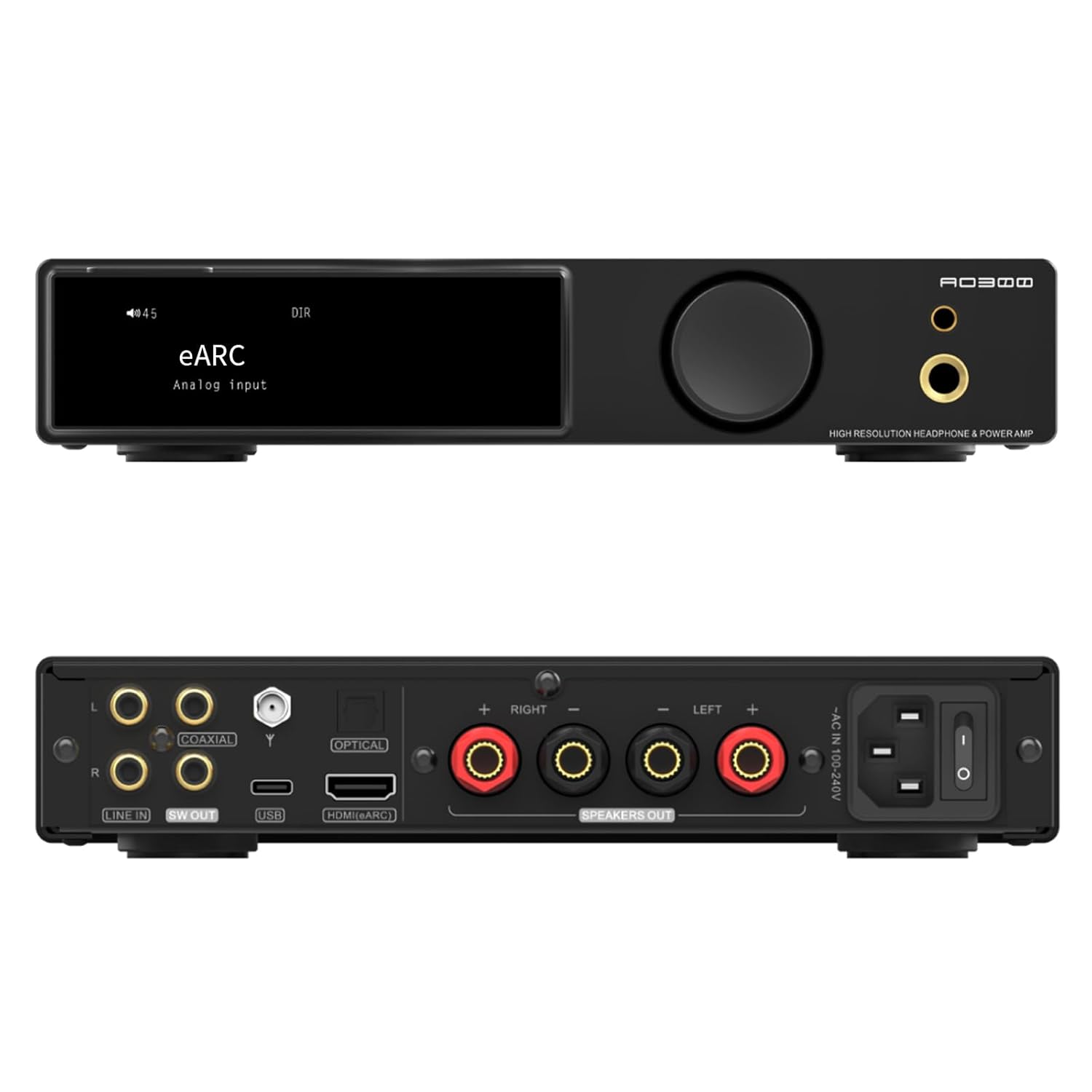
The SMSL AO300 PRO is a comprehensive all-in-one solution for audiophiles and music enthusiasts seeking professional-quality audio without the complexity of separate components. This integrated DAC amplifier combines premium decoding capabilities with powerful amplification, making it ideal for desktop setups, home theater systems, and anyone transitioning from basic PC audio to serious listening.
What sets this unit apart is its impressive technical foundation and real-world performance. The CS43131 DAC chip with XMOS XU-316 interface handles demanding hi-res formats including PCM 32bit/768kHz, DSD256, and full USB MQA decoding. The MA5332MS power amplifier delivers 165W at 4 ohms with an incredibly low 0.003% distortion rating, meaning you get both power and precision. Users consistently report crystal-clear headphone output and speakers that play loud without audible distortion, even with demanding music genres.
Build quality reflects its professional audio heritage. The compact chassis houses sophisticated audio components while remaining approachable for desktop environments. Connectivity is extensive with USB, optical, coaxial, and RCA inputs plus balanced 4.4mm and standard 6.35mm headphone outputs. The physical control knob combined with a full-function remote provides flexibility, though menu navigation requires multiple steps without the remote. Eight EQ modes and five filter options allow personalization for different listening preferences and music genres.
Minor considerations include a basic display design and incomplete user manual translations for some settings. The menu system, while functional, requires patience when switching outputs without the remote. These are minor trade-offs given the audio performance and feature set at this price point.
The SMSL AO300 PRO delivers exceptional value for anyone seeking integrated hi-fi audio with modern connectivity, hi-res support, and genuine amplification power. It successfully bridges entry-level and professional audio worlds, making it a recommended choice for upgrading from standard computer or TV audio.
Audio Decoding: CS43131 DAC chip, XMOS XU-316 interface, supports PCM 32bit/768kHz, DSD256, USB MQA
Amplification: MA5332MS Class D amplifier, 165W x2 at 4 ohms, 85W x2 at 8 ohms
Volume Control: NJW1194 electronic volume control, 0.003% THD+N
Headphone Outputs: 4.4mm balanced, 6.35mm standard jack
Audio Inputs: USB, optical, coaxial, RCA, HDMI eARC
EQ Modes: 8 modes, 5 filter options
Channels: 2.1 configuration with subwoofer expansion support
Accessories: Remote control, USB cable, power cable, HDMI cable, user manual
Warranty: 1 year
Who Should Buy This: The AO300 PRO is ideal for desktop audio enthusiasts, home theater upgraders, and music lovers seeking integrated solutions. It suits anyone currently using computer or TV speakers wanting significant audio improvement without component complexity.
Best Use Cases: Desktop music listening with headphones or bookshelf speakers, home theater audio enhancement via HDMI eARC, garage or office audio systems, and anyone needing both headphone and speaker amplification from one device.
Comparison Considerations: Unlike separate DAC and amplifier combinations, this unit eliminates cable management and component stacking. The 165W output easily handles most home speaker systems. Hi-res format support via USB and optical makes it future-proof for quality music sources.
Setup Tips: Use the included remote for convenient output switching. Explore the 8 EQ modes to optimize sound for your specific speakers or headphones. Connect via USB for best quality when using a computer as source. HDMI eARC connection works best with CEC-compatible TVs for synchronized control.

Pros
- Eliminates PC audio hum and flatness with clean digital-to-analog conversion
- Powerful headphone amplification drives high-impedance headphones with authority and bass impact
- Adjustable EQ knobs provide flexibility that many competitors lack at this price
- Universal compatibility works with PCs, TVs, DVD players, and speaker systems
- Excellent value compared to premium DACs with only minor sonic differences
Cons
- Some units may produce subtle white noise or hissing, particularly noticeable with low-impedance headphones
- Not ideal for professional critical listening or studio mastering applications
- No microphone input limits functionality for voice chat or recording applications
The Fosi Audio Q4 is an entry-level DAC and headphone amplifier designed for PC users, gamers, and home theater enthusiasts seeking audio improvement without complexity. This compact device bridges the gap between budget audio solutions and higher-end equipment, delivering meaningful upgrades to sound quality for everyday listening across multiple content types.
The Q4 excels in eliminating common PC audio problems like ground hum and digital flatness while providing enough amplification power to drive demanding headphones up to 200Ω impedance. The standout feature is the adjustable bass and treble controls, which break from the audiophile orthodoxy of flat response and instead offer real-world flexibility for optimizing sound to your preferences and headphone characteristics. Users report noticeable improvements in clarity, bass impact, and overall engagement compared to standard PC audio jacks.
Build quality impresses with a full metal chassis, quality metal knobs, and a compact footprint that fits naturally into any desktop setup. The device includes all necessary cables for immediate use and supports high-resolution audio up to 24-bit/192kHz with low jitter circuitry. Connectivity is comprehensive with USB, Optical, and Coaxial inputs alongside RCA and 3.5mm outputs, making it compatible with virtually any audio source or destination.
The main limitation is occasional white noise or hissing on certain units, though this is often less noticeable with higher-impedance headphones and may reflect individual unit variation rather than a design flaw. The Q4 is not intended for critical studio work or professional mastering, but for general use across music, movies, and gaming, it delivers excellent performance at its price point.
Verdict: The Fosi Audio Q4 represents outstanding value for anyone seeking meaningful audio improvement on a budget. Its combination of multiple inputs, headphone amplification, sound tuning controls, and no-driver convenience make it an excellent entry point into quality desktop audio without requiring significant investment or technical knowledge.
Audio Specifications: Supports 24-bit/192kHz HD audio with low jitter circuitry. Drives headphones from 16Ω to 200Ω impedance. Stereo output with adjustable bass and treble controls.
Connectivity: Inputs: USB, Optical (TOSLINK), Coaxial. Outputs: RCA (stereo), 3.5mm headphone jack. No microphone input.
Physical Specifications: Dimensions: 3.9 inches length x 2.9 inches width. Weight: 430 grams. Full metal chassis construction. Tabletop mount design.
Power: 5V DC power supply. USB powered or external power adapter compatible.
Warranty: 24-month manufacturer warranty. Includes USB charging cable, optical cable, and PC-USB to Type-B cable.
Who Should Buy: PC gamers seeking improved audio quality, home theater enthusiasts wanting to upgrade TV sound, music listeners with high-impedance headphones, and anyone experiencing ground hum or audio flatness from standard computer outputs.
Who Should Look Elsewhere: Professional audio engineers requiring critical listening tools, users needing microphone inputs for streaming or recording, and those seeking premium sound quality willing to spend significantly more.
Key Considerations: Verify your headphone impedance rating for optimal performance. Higher impedance headphones (100Ω and above) tend to exhibit less background noise. Check your audio source compatibility with USB, Optical, or Coaxial outputs. Consider placement near your PC or audio system for convenient cable management.
Setup Tips: No driver installation needed for USB connection on most systems. Adjust bass and treble controls to match your headphone characteristics and listening preferences. Use optical or coaxial inputs for superior isolation from PC electrical noise if available on your source device.

Pros
- Exceptional audio quality with natural, balanced sound across all frequencies
- Versatile connectivity options support PC, Mac, phones, tablets, and TVs
- Audiophile-grade components and precision circuit design in a compact form factor
- USB bus-powered design eliminates need for separate power adapter
- Ranked #65 in Digital-Analog Converters category, proving its market credibility
Cons
- Windows users must install drivers for full functionality, adding setup complexity
- New product with no customer reviews yet, limiting real-world user feedback
- Premium pricing for desktop DAC category may be steep for casual listeners
The SMSL D1 is a premium desktop digital-to-analog converter designed for audiophiles, music producers, and discerning listeners who demand high-resolution audio. It's built for anyone with a computer, phone, or tablet who wants to unlock the full potential of their music collection and experience studio-quality sound at home.
The standout feature is the ROHM BD34352EKV DAC chip, which delivers exceptional audio fidelity with a THD+N rating of just 0.00038% and an impressive SNR of 126dB. This translates to clean, detailed sound with minimal distortion and noise. The D1 supports cutting-edge formats including DSD512 and PCM at 32-bit/768kHz, ensuring compatibility with virtually any high-resolution audio file you own.
Build quality is excellent, featuring a CNC-machined aluminum alloy chassis that feels substantial and professional. The touch-control interface is intuitive, and the compact design makes it easy to place on a desk, bookshelf, or audio cabinet without taking up valuable space. The XMOS XU-316 firmware provides flexible multi-input options via USB, optical, and coaxial connections, making it compatible with computers, tablets, TVs, and other audio devices.
One consideration is that Windows users need to install drivers, whereas macOS and Linux systems work plug-and-play. Additionally, as a relatively new product, it lacks customer reviews, so early adopters won't have extensive user feedback to reference. The price point is premium for a desktop DAC, though justified by the high-end components and performance specifications.
The SMSL D1 is an excellent investment for anyone serious about audio quality. It delivers genuine Hi-Res audio performance in a compact, stylish package that integrates seamlessly into any setup. Whether you're a professional audio engineer or an audiophile seeking to elevate your listening experience, this DAC delivers measurable improvements in sound clarity and detail.
Core Audio Specs: DAC Chip: ROHM BD34352EKV, Firmware: XMOS XU-316, THD+N: 0.00038%, SNR: 126dB
Supported Formats: DSD512, PCM 32-bit/768kHz sampling rate
Connectivity: USB, Optical, Coaxial inputs, RCA stereo output
Power Requirements: USB bus-powered (5V DC minimum), no external power adapter needed
Compatibility: Windows, macOS, Linux (Windows requires driver installation)
Design: CNC-machined anodized aluminum alloy chassis, touch-control buttons, compact form factor
Channels: Stereo output, 8-channel internal architecture
Package: Includes USB-A to USB-C data cable
Who Should Buy: PC and Mac users, audiophiles, music producers, professional audio engineers, and anyone seeking high-resolution audio quality. Ideal for desktop listening setups where sound quality is a priority.
Who Might Skip It: Casual listeners on a tight budget, those needing portable solutions, or users unwilling to install drivers on Windows systems.
Setup Considerations: The D1 is plug-and-play on macOS and Linux. Windows users should allow time for driver installation. Connect via USB to your computer or use optical/coaxial inputs from other devices. Power is supplied entirely through the USB connection, eliminating cable clutter.
Pairing Recommendations: Works best with quality headphones or powered speakers capable of handling high-resolution audio. Pair with a good USB cable for optimal performance. Compatible with high-end music players and streaming services that support Hi-Res formats.
Your Guide to Choosing a First DAC
Connectivity: What Do You Need to Plug In?
Your first consideration should be the ports. A DAC’s job is to connect your digital sources to your analog outputs. Start by listing your gear. Will you connect via USB from a PC or laptop? Do you need an optical input for a TV or game console? Consider your outputs, too: a 3.5mm or 6.35mm jack for headphones, RCA outputs for powered speakers, or a 4.4mm balanced port for compatible headphones.
Models like the Fosi Audio K7 DAC Headphone Amp excel here with comprehensive options including Bluetooth. Simpler units, such as the Fosi Audio Q4 DAC Headphone Amp for PC, offer essential USB and optical connections perfect for a basic computer setup. Getting the right inputs and outputs ensures a seamless, clutter-free experience from day one.
Power and Headphone Compatibility
If driving headphones is a priority, pay close attention to the amplifier section’s power output, measured in milliwatts (mW). More power allows the unit to properly drive headphones with higher impedance, resulting in better dynamics and control. A device like the FiiO K11 DAC and Headphone Amplifier for Home provides substantial power for a wide range of headphones.
Check the manufacturer’s recommended headphone impedance range. A versatile DAC-amp can grow with your gear. For those diving deep into headphone audio, our dedicated guide on the best DAC-AMPs for headphones explores this synergy in detail. Matching power to your current and future headphones is key to avoiding a weak, unsatisfying sound.
Desktop Footprint and User Experience
A beginner’s DAC should simplify your life, not complicate it. Assess the physical size and design. Will it fit comfortably on your desk? Look for user-friendly features like a clear display, intuitive volume knobs, or even a remote control. The Fosi Audio ZD3 Desktop DAC Preamp, for example, includes a remote and an OLED screen for easy operation from across the room.
Consider the overall user journey. Is it truly plug-and-play, or does it require driver installation? A compact, well-designed unit that feels good to use will encourage you to enjoy your music more often. It becomes a seamless part of your setup rather than a technical hurdle.
Future-Proofing and System Integration
Think about where your audio journey might lead. Are you planning to add a separate amplifier or a set of passive speakers down the line? If so, look for a DAC with dedicated line-level outputs, like RCA or XLR. A model such as the SMSL AO300 PRO DAC Amplifier is an all-in-one solution that can power speakers directly, offering a clear upgrade path.
Features like a preamp function, subwoofer outputs, or HDMI ARC input (as found on the ZD3) can make the DAC the central hub of a future home audio system. Choosing a device with some room to grow can save you from needing an upgrade too soon, making your initial investment more valuable over time. For building a PC-centric system, our review of the best desktop DACs for PCs provides further context.
Final Thoughts
Stepping into the world of high-fidelity audio is an exciting move for any music or movie lover. The right beginner DAC provides a noticeable and immediate improvement in clarity, detail, and overall enjoyment without requiring deep technical knowledge. For those seeking a versatile, powerful all-in-one hub for both headphones and desktop speakers, the Fosi Audio K7 DAC Headphone Amp is a standout choice. If your primary goal is a simple, cost-effective upgrade to your computer’s audio with proven reliability, the Fosi Audio Q4 DAC Headphone Amp for PC remains a classic and highly effective entry point. Whichever model you choose, you are on your way to hearing your favorite content in a whole new light.
Frequently Asked Questions
Do I really need a DAC if my computer already has a sound card?
Yes, a dedicated external DAC typically makes a significant difference. Built-in computer audio is often subject to electrical interference from other components, resulting in noise or a compressed sound. An external DAC isolates the conversion process, uses higher-quality components, and provides a cleaner, more powerful signal to your headphones or speakers.
What is the main difference between a DAC and a DAC-headphone amp?
A DAC (digital-to-analog converter) simply converts a digital audio signal to an analog line-level signal. A DAC-headphone amp includes that converter but also adds a built-in amplifier specifically designed to drive headphones. If you plan to use headphones, a combined DAC-amp is usually the best and simplest solution. For more on portable versions of these, see our guide on the best portable DACs for laptops.
Can a DAC improve sound from streaming services like Spotify?
Absolutely. While a DAC cannot create data that is not in the original file, it can more accurately and cleanly convert the digital data you do have. This means less distortion, better channel separation, and a more robust sound. You will hear the full quality of your Spotify streams without the degradation caused by poor internal conversion.
How do I set up my first DAC?
Setup is generally straightforward. Connect the DAC to your computer or other source using the appropriate cable (often USB). Then, connect your headphones to the DAC’s headphone jack, or use RCA cables to connect to powered speakers. You may need to select the DAC as your output device in your computer’s sound settings. Most beginner-focused models are designed for plug-and-play operation to get you listening quickly.


Write Your Review
No reviews yet. Be the first to share your experience!