

If you have smaller ears, you know the struggle all too well. Standard earbuds slip out during a walk, cause discomfort after an hour, or simply never feel secure. The quest for a pair that feels like they were made just for you can feel endless. This guide is specifically for anyone who has resigned themselves to constant readjustment or audio that cuts in and out due to a poor fit.
We have evaluated the critical factors that make an earbud suitable for smaller ear anatomy, from physical design to included accessories. Our focus is on delivering clear, actionable insights to help you find a pair that offers exceptional comfort, stays put, and delivers the rich sound you deserve. For those who prioritize clear communication, you may also want to explore our dedicated review of the best earbuds for phone calls.
Pros
- Active Noise Cancellation and Transparency mode offer versatile listening options for any environment
- Seamless one-tap pairing and instant switching across Apple devices with Bluetooth 5.3
- Compact USB-C Charging Case is over 10% smaller than the previous generation, making it more pocket-friendly
- IP54 rating on both earbuds and case provides reliable protection during workouts and in wet conditions
- Intuitive gesture and Siri controls make managing music and calls effortless without reaching for your phone
Cons
- Open-ear design without silicone tips means passive noise isolation is limited compared to in-ear alternatives
- USB-C charge cable is sold separately, adding a small extra cost out of the box
- Battery life with ANC enabled drops to 4 hours per charge, which may require mid-day top-ups for heavy users
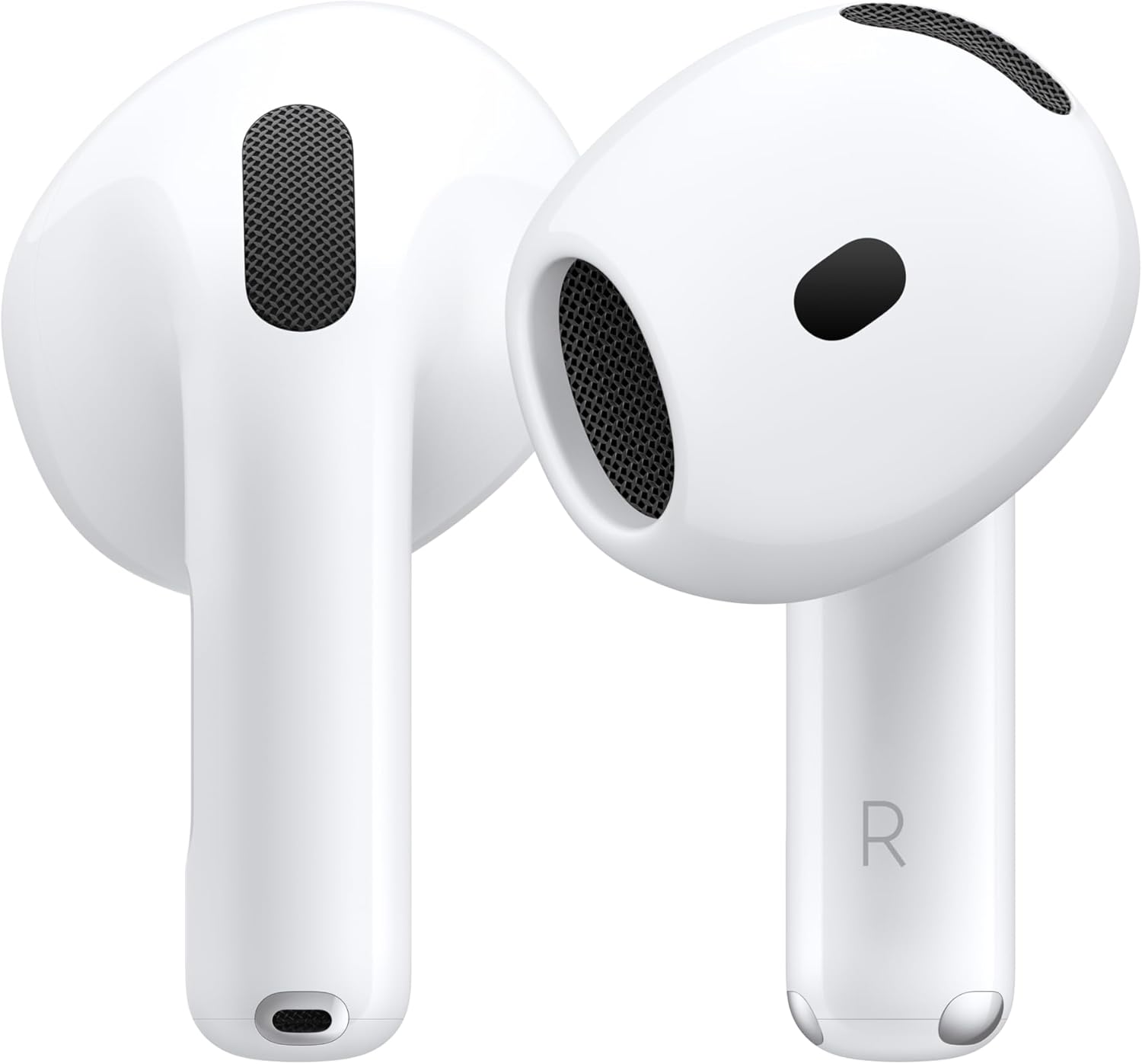
The Apple AirPods 4 are the latest generation of Apple's iconic open-ear wireless earbuds, designed for users who want premium audio quality and seamless Apple ecosystem integration without the discomfort of silicone ear tips. Priced accessibly for an Apple product, they target everyday listeners, commuters, and fitness enthusiasts who live inside the Apple ecosystem and want a refined, hassle-free audio experience.
At the heart of the AirPods 4 is the Apple H2 chip, which enables Active Noise Cancellation, Adaptive Audio, and Personalized Spatial Audio with dynamic head tracking. In practice, this means the earbuds can intelligently blend noise cancellation and transparency depending on your surroundings, while spatial audio creates a convincingly wide, immersive soundstage that makes music and movies feel genuinely three-dimensional. Voice Isolation is a standout feature for calls, effectively cutting out wind and crowd noise so your voice comes through clearly.
Apple has refined the physical design with a shorter stem and a more contoured shape that sits more naturally in the ear, improving both comfort and stability during movement. The Charging Case has also been slimmed down by over 10% compared to the previous generation and now uses USB-C, keeping it compatible with modern charging setups. Both the earbuds and the case carry an IP54 rating, offering solid protection against sweat, rain, and dust during workouts or outdoor activities.
The main trade-off with the open-ear design is that passive noise isolation is inherently limited compared to in-ear earbuds with silicone tips, meaning the ANC has more work to do in very loud environments. Battery life with ANC active sits at around 4 hours per charge, which is on the shorter side for heavy daily users, though the case extends total listening time to 20 hours with ANC on. It is also worth noting that the USB-C charge cable is not included in the box.
Overall, the AirPods 4 represent a meaningful upgrade over their predecessors, combining comfort, intelligent audio features, and a compact design into a well-rounded package. For Apple device owners seeking a reliable, feature-rich pair of everyday earbuds with ANC, they are a compelling and practical choice at their price point.
Chip: Apple H2 headphone chip. Connectivity: Bluetooth 5.3. Ear Placement: In-ear, open design (no ear tips). Color: White.
Battery Life: Up to 5 hours listening (ANC off) or 4 hours (ANC on) per charge. Up to 30 hours total with case (ANC off) or 20 hours (ANC on). Fast charge: 5 minutes for approximately 1 hour of listening time.
Water Resistance: IP54 dust, sweat, and water resistant (earbuds and case). Charging: USB-C, Apple Watch charger, or Qi-certified wireless charger.
Audio Features: Active Noise Cancellation, Adaptive Audio, Transparency mode, Conversation Awareness, Personalized Spatial Audio with dynamic head tracking, Adaptive EQ, Voice Isolation, custom high-excursion Apple driver.
Sensors: Dual beamforming microphones, inward-facing microphone, optical in-ear sensor, motion-detecting accelerometer, speech-detecting accelerometer, force sensor. Dimensions (Case): 1.82 x 1.97 x 0.83 inches. Weight (each earbud): 0.15 oz (4.3 g).
The AirPods 4 are best suited for existing Apple users who own an iPhone, iPad, or Mac, as the seamless one-tap pairing, automatic device switching, and Siri integration are exclusive to the Apple ecosystem. If you primarily use Android or Windows devices, you will miss out on most of the smart features and should consider alternatives.
If you are choosing between the standard AirPods 4 and the AirPods 4 with Active Noise Cancellation, consider how often you listen in noisy environments such as public transit, busy offices, or crowded gyms. The ANC version is worth the upgrade for commuters and office workers, while the standard version suits casual home or outdoor use where ambient awareness is preferred.
For those who require a secure, noise-isolating fit for intense workouts or prefer deeper bass, in-ear earbuds with silicone tips such as the AirPods Pro may be a better match. However, if you find ear tips uncomfortable for extended wear, the open-ear design of the AirPods 4 is a genuine advantage for all-day listening comfort.
Battery life is sufficient for most workday use cases, but heavy listeners who go more than 4 to 5 hours without access to the case should be aware of the ANC-enabled battery limitations. The fast-charge feature helps mitigate this, providing about an hour of listening from just a 5-minute charge.
Buying Guide for Earbuds for Small Ears
1. Physical Design and Contour
The overall shape and size of the earbud housing is the most important factor. Look for models with a refined, compact contour that sits snugly within the concha of your ear. A shorter stem or a stemless design often contributes to a lower profile and better weight distribution.
This prevents the earbud from protruding and feeling loose. Some leading brands have specifically rebuilt their models for greater stability, focusing on a shape that conforms better to various ear sizes. The goal is a design that feels natural and unobtrusive from the moment you put them in.
2. Ear Tip Selection and Material
Never underestimate the power of the right ear tip. A comprehensive set of silicone or foam tips in multiple sizes, including extra small options, is non-negotiable. The tip creates the seal in your ear canal, which is crucial for both audio quality and physical security.
Softer, flexible materials can adapt to your unique ear shape, providing comfort over long listening sessions. A proper seal also enhances bass response and passive noise isolation. It is worth spending time to find the perfect tip size from the included options, as this single adjustment can transform the fit of any earbud.
3. Weight and Overall Stability
Lighter earbuds are inherently more comfortable and less likely to cause fatigue or feel like they are pulling themselves out. Advanced stability features, like integrated ear fins or wings, can provide additional anchoring support for active use. However, for many with small ears, a well-contoured, lightweight design alone can offer sufficient stability.
The center of gravity should be managed so the earbud sits securely without requiring constant adjustment. This is essential whether you are commuting, working out, or simply enjoying your favorite music for critical listening. A secure fit ensures the audio experience remains consistent and immersive.
4. Intuitive Controls and Smart Features
When earbuds fit snugly, you do not want to dislodge them by fumbling with touch controls. Look for models with physical, quick-press controls or highly reliable touch surfaces that require minimal pressure. Features like in-ear sensors that automatically pause playback when you remove an earbud add to the seamless experience.
Smart integration, such as voice assistant support and easy pairing, reduces the need to handle your device constantly. These features complement a comfortable fit by making the earbuds easier and more intuitive to use throughout your day. For a broader look at personal audio options, visit our headphones and earbuds category.
Final Thoughts
Ultimately, the search for the perfect earbuds for small ears centers on a harmonious blend of thoughtful design and personalized fit. Prioritizing a compact, contoured shape and taking full advantage of multiple ear tip sizes will lead you to a pair that feels secure and comfortable for hours. For a standout option engineered specifically for all-day wear, we recommend the Apple AirPods 4 Wireless Earbuds. If your needs extend to powerful portable sound for shared listening, exploring the wider world of Bluetooth speakers is also a worthwhile endeavor.
Frequently Asked Questions
What makes an earbud good for small ears?
A good earbud for small ears features a compact, low-profile housing that does not protrude. It should come with a range of ear tip sizes, including extra small options, to create a secure seal without force. The overall design should be lightweight and contoured to rest comfortably within the ear’s natural shape.
Can I use children’s earbuds if I have small ears?
While children’s earbuds are physically smaller, they often have volume limiters and may not offer the same audio fidelity or feature set as adult models. It is generally better to seek out high-quality adult earbuds that are explicitly designed with a petite fit in mind or that include a comprehensive set of small ear tips.
How important is the ear tip material for comfort?
The material is very important. Silicone tips are common, durable, and easy to clean. Memory foam tips can offer a superior, custom seal by expanding to fill your ear canal, often providing enhanced noise isolation and comfort for extended periods. Trying both types, if available, can help you determine your personal preference.
Are wireless earbuds better for small ears than wired ones?
Wireless earbuds can be advantageous as they remove the weight and potential tugging of a cable, which can pull earbuds out of small ears. Modern wireless models are also increasingly compact. The wireless audio market is vast, and you can learn more about the technology in our guide to wireless and streaming audio solutions for 2026.





Write Your Review
No reviews yet. Be the first to share your experience!