

You have invested time in acoustic panels, bass traps, and diffusion, aiming to tame your room’s reflections and resonances. Yet, the final piece of the puzzle, your floorstanding speakers, can make or break that carefully calibrated environment. The wrong speaker can reintroduce the very distortions you worked to eliminate.
This guide is crafted for audio enthusiasts seeking speakers that partner with acoustic treatment, not fight against it. We have evaluated models from leading brands like Klipsch and Q Acoustics, focusing on designs that promote clarity, accurate imaging, and controlled dispersion to maximize your room’s acoustic potential.
| Pick | Product | BRD Score | Where to buy |
|---|---|---|---|
| Top Pick |
 Klipsch R-620F Floorstanding Tower Speakers Pair |
9.5/10 | View on Amazon.com |
 Klipsch R-26FA Floorstanding Speakers with Dolby |
9.6/10 | View on Amazon.com |
Pros
- Exceptionally crisp and detailed high frequencies that outperform similarly priced competitors
- Wide soundstage with a generous listening area, making them great for both music and home theater
- Solid build quality with reinforced MDF cabinets and a premium aesthetic that looks great in any room
- High sensitivity and efficiency mean they perform well even with modest amplifier setups
- Outstanding value, delivering performance that rivals speakers at several times the price
Cons
- Rear-firing Tractrix port requires adequate clearance from the wall for optimal bass performance
- Highly revealing tweeters can expose weaknesses in lower-quality amplifiers or source equipment, requiring a decent receiver to get the best results
- Once you hear these speakers, it becomes difficult to be satisfied with a budget center channel or subwoofer, which may lead to additional system upgrade costs
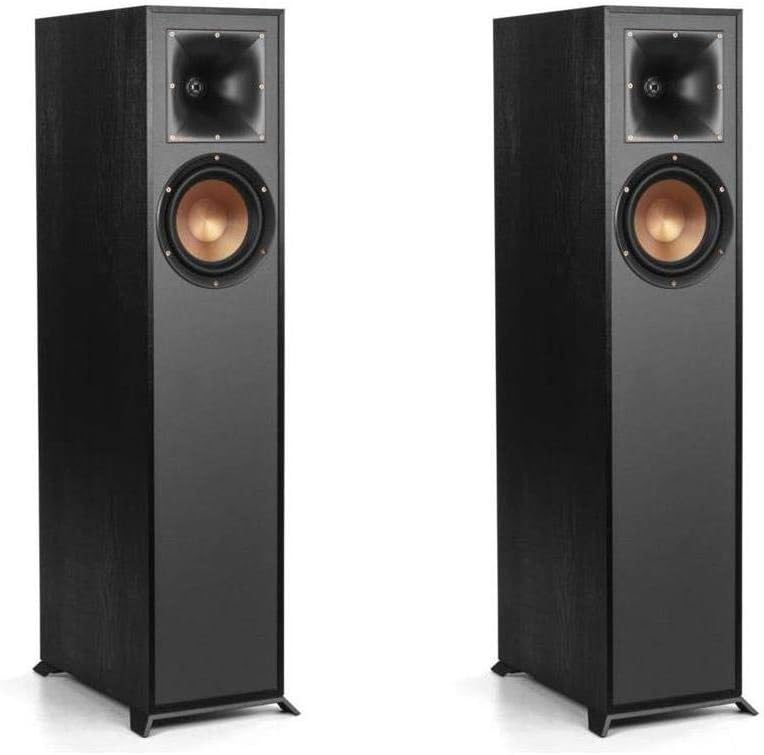
The Klipsch R-620F is a pair of floorstanding tower speakers designed for home theater and serious music listening. Built on more than 75 years of Klipsch acoustic engineering, these speakers are aimed at audiophiles and home theater enthusiasts who want genuine high-fidelity performance without spending a fortune. They work best paired with a quality stereo receiver or AV amplifier in a medium to large living room.
The standout feature is Klipsch's proprietary 90x90 degree Tractrix Horn technology, which channels high-frequency energy directly toward the listener rather than scattering it around the room. This results in a remarkably focused, detailed soundstage that customers consistently describe as concert-like. The Linear Travel Suspension aluminum tweeter, suspended with ultra-light Kapton material, further reduces distortion and brings out fine sonic detail in both music and movie soundtracks.
Bass performance is handled by dual 6.5-inch Injection Molded Graphite woofers with a spun-copper finish. These cones are engineered to be both light and rigid, producing tight, extended low frequencies with minimal breakup. The rear-firing Tractrix port is tuned to the cabinet for smooth airflow, extending bass response down to 38Hz. Many reviewers note that while a subwoofer can complement the system, it is far from essential for most listening scenarios.
The build quality is impressive at this price point. Reinforced MDF cabinets resist resonance and vibration, keeping the sound clean and accurate. The black textured wood grain vinyl finish looks refined and modern, and the low-profile magnetic grilles add a polished touch. One honest caveat is that the highly sensitive tweeter can expose weaknesses in underpowered or low-quality amplifiers, occasionally producing fatiguing highs if the upstream equipment is not up to the task.
Overall, the Klipsch R-620F represents exceptional value in the floorstanding speaker category. Customer reviews consistently praise the clarity, dynamics, and build quality, with many noting that comparable performance from competing brands costs significantly more. For anyone building or upgrading a home theater or two-channel audio system, these speakers are a compelling and highly recommended choice.
Model: Klipsch R-620F | Type: Floorstanding Tower Speaker (Sold as Pair)
Frequency Response: 38Hz to 21kHz (+/- 3dB) | Power Handling: 100W continuous, 400W peak | Sensitivity: 90dB at 2.83V/1m
Tweeter: 1-inch Aluminum LTS with 90x90 Tractrix Horn | Woofers: Dual 6.5-inch Spun-Copper IMG | Port: Rear-firing Tractrix Port
Cabinet: Reinforced MDF with black textured wood grain vinyl | Connectivity: Gold-plated binding posts, wired | Finish: Black Textured Wood Grain Vinyl with magnetic grilles
Dimensions: 18"D x 18"W x 13"H | Weight: 100 lbs | Warranty: 1-Year Limited Warranty
If you are shopping for floorstanding speakers in this price range, the R-620F competes directly with offerings from Polk Audio, Elac, and Wharfedale. Klipsch's horn-loaded design gives it a distinct sonic character: highly efficient, forward-sounding, and exceptionally detailed in the high frequencies, which many listeners find more engaging and lifelike than competing designs.
To get the best out of these speakers, pair them with a quality AV receiver or stereo amplifier rated at 50W or more per channel. Brands like Denon, Yamaha, Marantz, and Pioneer are frequently recommended by Klipsch owners and will bring out the full dynamic range without introducing harshness. Avoid pairing them with entry-level amplifiers, as the sensitive tweeter will reveal any shortcomings in the signal chain.
Room placement matters with rear-ported speakers. Leave at least 12 to 18 inches of clearance between the back of the speaker and the wall to allow the Tractrix port to breathe properly and deliver its best bass response. Placing them too close to a wall can cause bass to sound boomy or congested.
These speakers are an excellent foundation for a 5.1 or 7.1 home theater system. Klipsch offers matching center channel and surround speakers in the Reference series, ensuring a timbre-matched surround experience. If deep sub-bass is a priority for action movies or electronic music, adding a Klipsch subwoofer will round out the system perfectly, though many users find the R-620F alone satisfying for everyday listening.
Pros
- Highly efficient and sensitive design means they sound loud and detailed even with modest amplifiers
- Integrated Atmos elevation channel removes the need for additional height speakers in a surround setup
- Consistently praised by verified buyers for crisp, clear sound across music, movies, and TV
- Solid MDF construction feels premium and contributes to tight, resonant bass performance
- Strong value proposition as a closeout model, offering flagship-adjacent performance at a reduced price
Cons
- At roughly 22 inches deep and tall, these are large speakers that require dedicated floor space and may overwhelm smaller rooms
- Some buyers note the Atmos elevation feature is less impactful without a compatible AV receiver, limiting full functionality for stereo-only setups
The Klipsch R-26FA is a full-size floorstanding speaker pair designed for home theater enthusiasts and serious music listeners who want immersive, room-filling audio. With built-in Dolby Atmos elevation drivers, these speakers are purpose-built for modern surround sound systems, and they perform just as admirably in a dedicated stereo configuration.
The standout feature is the integrated elevation speaker, which bounces overhead audio off the ceiling to simulate height channels without mounting separate speakers. Combined with the 1-inch aluminum diaphragm compression driver and Klipsch's signature 90x90 Tractrix horn, the high-frequency reproduction is remarkably crisp and airy. Verified buyers consistently highlight the clarity and detail across all types of content, from orchestral music to blockbuster film soundtracks.
Bass performance is handled by dual 6.5-inch copper-spun IMG woofers paired with a front-firing port. The result is deep, well-defined low-end output that holds up at high volumes without becoming muddy or boomy. Multiple reviewers noted these speakers fill large, open living rooms with ease, and several found a dedicated subwoofer unnecessary for everyday listening.
Build quality is a genuine strong point. The MDF cabinet with brushed black polymer veneer feels solid and looks refined, and the dual binding posts add flexibility for bi-wiring or bi-amping. The main drawback is physical size: these are large, heavy speakers that demand floor space and a capable AV receiver to unlock the Atmos functionality. Buyers using a stereo-only amplifier will still enjoy excellent sound, but the elevation driver becomes a passive element.
Overall, the Klipsch R-26FA represents outstanding value for anyone building or upgrading a home theater system. With a near-perfect customer rating backed by hundreds of reviews, and performance that rivals speakers at significantly higher price points, this is a smart buy for audiophiles and casual listeners alike.
Model: Klipsch R-26FA | Color: Black | Enclosure: MDF with brushed black polymer veneer
Tweeter: 1-inch aluminum diaphragm compression driver with 90x90 Tractrix horn | Woofer: Dual 6.5-inch copper-spun IMG woofers | Bass Port: Front-firing reflex port
Power Handling: 100W continuous / 400W peak | Maximum Output: 90W | Input Voltage: 2.83V sensitivity reference
Connectivity: Dual binding posts (bi-wire/bi-amp capable) | Mounting: Freestanding | Dimensions: 22 inches D x 22 inches W x 13 inches H
Special Features: Integrated Dolby Atmos elevation speaker | Warranty: 1 Year Limited | UPC: 846431059725
If you are upgrading from bookshelf speakers or a soundbar and want a significant leap in audio quality, the R-26FA is an excellent entry point into full-size floorstanding performance. They work well in medium to large rooms, ideally open-plan living spaces where their output can fully expand.
To get the most from the Dolby Atmos elevation driver, you will need an AV receiver that supports Atmos height virtualization or object-based audio processing. Popular compatible receivers come from Yamaha, Denon, and Marantz. Buyers using a stereo amplifier will still enjoy excellent two-channel performance, but the elevation channel will not be active.
Because these are efficient, high-sensitivity speakers, they pair well with a wide range of amplifiers, including modestly powered units. However, pairing them with a quality 80 to 150 watt per channel receiver will unlock their full dynamic range. A dedicated subwoofer is optional but can enhance very low bass below 40Hz for dedicated home theater setups.
These speakers are sold as a pair and are intended as front left and right channels. For a complete surround system, Klipsch recommends pairing them with matching Reference Series center and surround speakers for a tonally consistent soundstage throughout the room.
Buying Guide: Key Considerations for Treated Rooms
Cabinet Construction and Resonance Control
A speaker’s cabinet is its foundation. In a treated room, low-level cabinet resonance becomes more audible. Look for advanced bracing like the P2P (Point-2-Point) system found in Q Acoustics models, which enhances rigidity.
This reduces unwanted vibration, allowing your acoustic panels to manage room reflections, not speaker coloration. A well-braced cabinet ensures the sound you hear originates from the drivers, not the enclosure itself.
Driver Technology and Dispersion
Driver design dictates how sound interacts with your room. Horn-loaded tweeters, a Klipsch signature, offer controlled, efficient dispersion that can minimize side-wall reflections. This pairs well with absorption panels at first reflection points.
Alternatively, designs like the C³ Continuous Curved Cone from Q Acoustics aim for seamless driver integration. This reduces phase issues and promotes a coherent wavefront, which is easier for a treated room to manage accurately, leading to a more detailed sound.
Bass Management and Port Design
Bass is the most challenging frequency to control. Speakers with optimized bass reflex systems help. Rear-ported designs, like those in many Klipsch speakers, require careful placement away from walls in treated spaces to avoid boominess.
Internal technologies like HPE (Helmholtz Pressure Equalizer) tubes in Q Acoustics speakers reduce internal cabinet pressure. This lowers port noise and distortion, yielding cleaner bass that your room treatment can more effectively handle without overload.
Neutrality and System Synergy
The goal of acoustic treatment is often a more neutral sound. Your speakers should complement this. Assess their tonal balance; a speaker that is overly bright or bass-heavy will work against your room’s corrected response.
Consider how a speaker’s character aligns with your treatment goals. A balanced speaker in a treated room reveals the true quality of your source material and amplification, unlocking the full dynamic range of your recordings.
Final Thoughts
Selecting the ideal floorstanding speakers for an acoustically treated room is about synergy. You need a design that respects the controlled environment you have created. For those seeking immersive, three-dimensional sound with integrated Dolby Atmos, the Klipsch Reference R-26FA Floorstanding Speaker presents a compelling option. If your priority is cabinet integrity and refined driver integration for critical listening, the Q Acoustics 5040 Floorstanding Speakers offer exceptional engineering. Both choices, when paired with proper treatment, can transform your listening experience from ordinary to extraordinary.
Frequently Asked Questions
Do I need acoustic treatment if I buy high-quality floorstanding speakers?
Yes, even the best speakers interact with your room. Quality speakers reveal more detail, but room acoustics can still smear imaging and cause frequency imbalances. Treatment manages the room’s contribution, allowing the speaker’s true performance to shine through.
What speaker features help create a wider soundstage in a treated room?
Controlled dispersion and precise driver alignment are key. Horn designs and well-engineered baffles help direct sound. In a treated room, reduced reflections mean these directional cues are preserved, enhancing the perception of a wide soundstage. Cabinet rigidity also ensures stable stereo imaging.
How does speaker placement change in a room with acoustic treatment?
Treatment provides more flexibility. With reflections controlled, you can often place speakers further from side walls without losing soundstage body. The primary goal remains forming an equilateral triangle with your listening position. Treatment simply makes the sweet spot larger and more defined.
Are certain speaker types better for home theaters with acoustic treatment?
Speakers with high sensitivity and dynamic capability excel in home theaters. Treated rooms have less ambient noise and reverb, so dynamic sounds in movies become more impactful. Explore our full floorstanding speakers category for models rated for both music and cinematic performance.


Write Your Review
No reviews yet. Be the first to share your experience!