

You’ve invested in a quality amplifier and a pair of revealing speakers, but the sound feels digital, lacking the organic warmth and precise imaging you crave. The missing link might be your digital-to-analog converter. A dedicated HiFi DAC with a fixed, line-level output serves as the critical bridge, transforming digital files into the purest analog signal for your amplifier. This guide is crafted for audio enthusiasts looking to elevate their system’s performance, focusing on DACs that deliver an unwavering, high-quality signal without the variable output of a headphone amplifier interfering.
We have carefully evaluated a range of desktop and portable DACs renowned for their fixed output capabilities. Our selection includes models from respected brands like FosiAudio, QUDELIX, and SMSL, each offering distinct approaches to achieving exceptional sound. Whether you seek a fully balanced network streamer or a compact, high-value performer, our comparisons will help you identify the ideal component to complete your audio chain. For those also considering variable output options, our related guide on the best HiFi DACs with line level output provides additional context.
Top HiFi DACs with Fixed Output
| Pick | Product | BRD Score | Where to buy |
|---|---|---|---|
| Top Pick 19% OFF |
 blafili B3 Professional XLR Bluetooth 5.1 Receiver |
9.6/10 | View on Amazon.com |
| 9% OFF |
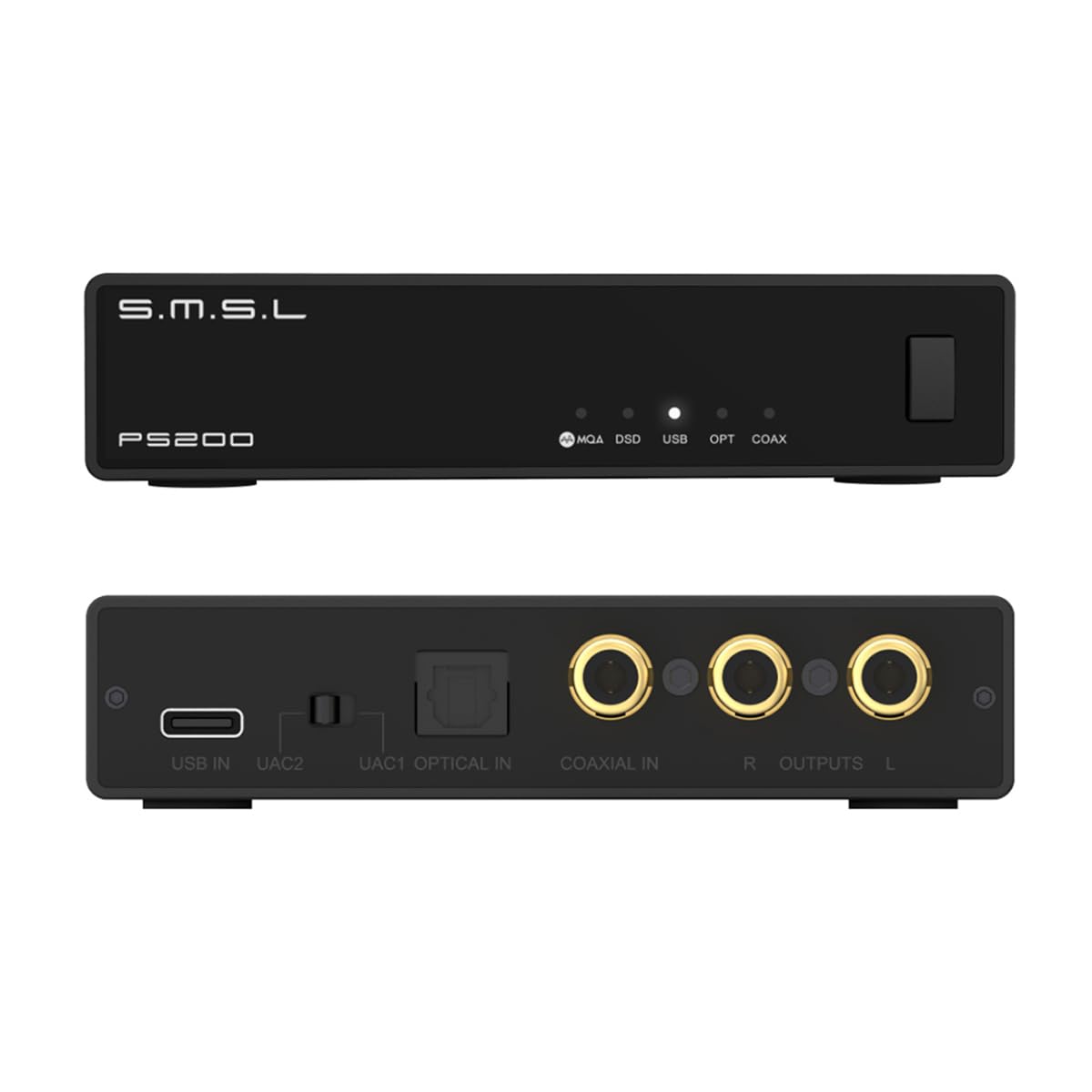 SMSL PS200PRO ES9039Q2M HiFi DAC |
9.5/10 | View on Amazon.com |
Prices and discounts as of Nov 23, 2026 and may have changed. Check Amazon for the current price.
Pros
- Exceptional codec support including LDAC and aptX HD enables true hi-res wireless audio streaming
- Versatile multi-output design with all outputs active simultaneously allows flexible routing in complex audio setups
- Commercial-ready features like custom Bluetooth naming and passcode protection are rare at this price point
- Responsive customer support praised in multiple reviews for quick and effective troubleshooting
- Solid build quality with a satin black alloy chassis and reliable long-term performance confirmed by real-world users
Cons
- Power adapter is not included in the box, which may be an inconvenience for first-time buyers who need to source one separately
- RCA, coaxial, and XLR cables are also not included, adding potential extra cost to get fully connected out of the box
- Functions only as a receiver, not a transmitter, so users hoping to send audio from a TV or stereo to Bluetooth headphones will need a different device
The blafili B3 is a professional Bluetooth 5.1 audio receiver designed to add wireless streaming capability to existing wired sound systems. It is aimed at a wide audience ranging from home audiophiles and hi-fi enthusiasts to AV installers working in schools, churches, gyms, and commercial venues. Rather than replacing your amplifier or speakers, it slots seamlessly into any setup as a high-quality wireless front end.
The standout feature of the B3 is its combination of a Qualcomm QCC5125 Bluetooth chipset and an ESS ES9018K2M DAC. Together, these components deliver stable wireless connectivity and audiophile-grade audio conversion with low noise, low distortion, and a wide dynamic range. Codec support is comprehensive, covering LDAC, aptX HD, aptX Low Latency, aptX, AAC, and SBC, meaning the B3 can extract the best possible audio quality from virtually any Bluetooth source device.
Connectivity is a genuine strength of this unit. All four output types, including balanced XLR, RCA, optical Toslink, and coaxial, can operate simultaneously, giving users maximum flexibility in routing audio to multiple destinations. The removable RP-SMA antenna supports a wireless range of up to 100 feet, and real-world reviewers have confirmed solid, uninterrupted connections across large spaces like school theaters. The silent pairing mode, which eliminates the beeps and voice prompts common on cheaper receivers, is a thoughtful touch for professional and quiet environments.
On the downside, the B3 ships without a power adapter, RCA cable, coaxial cable, or XLR cable, so buyers should budget for accessories. It is also strictly a receiver and cannot transmit audio from a TV or stereo to Bluetooth headphones, a point the manufacturer is upfront about but which can catch some buyers off guard. The USB DAC functionality is a welcome bonus but is limited to 16-bit 48kHz resolution rather than higher PCM rates.
Overall, the blafili B3 represents exceptional value for a professional-grade Bluetooth receiver. It earns high praise from audiophiles, PA installers, and commercial users alike for its sound quality, build, and feature set. For anyone looking to add reliable, high-resolution wireless audio to a wired system, the B3 is one of the most capable and well-rounded options available at this price.
Bluetooth Version: 5.1 with Qualcomm QCC5125 chipset. Supported Codecs: LDAC, aptX HD, aptX Low Latency, aptX, AAC, SBC. DAC: ESS ES9018K2M for low noise and wide dynamic range audio conversion.
Outputs: Balanced XLR (L+R), RCA (L+R), Optical Toslink, Coaxial. All outputs operate simultaneously. USB DAC: Plug-and-play, up to 16-bit 48kHz. Wireless Range: Up to 33 meters (100 feet) with included RP-SMA antenna.
Display: 1.3-inch diagonal status screen. Dimensions: 3 inches deep x 5.6 inches wide x 1.5 inches high. Weight: 0.24 kg. Power: USB-C 5V (adapter not included). Warranty: 3-year manufacturer warranty.
In the Box: blafili B3 unit, removable RP-SMA antenna, USB to USB-C power cable, optical cable, 4 self-adhesive feet bumpers, quick start guide. Note: power adapter, RCA cable, coaxial cable, and XLR cables are not included.
The blafili B3 is the right choice if you already own a wired audio system, such as a hi-fi amplifier, powered speakers, a PA mixer, or an AV receiver, and want to add high-quality Bluetooth streaming without sacrificing sound quality. It is not suitable for driving passive speakers directly, and it cannot send audio from a TV or stereo to wireless headphones or Bluetooth speakers.
For home audiophiles, the LDAC and aptX HD codec support means you can stream at near-lossless quality from a compatible Android phone or Sony device. Pair it with a tube amplifier or high-end integrated amp via the balanced XLR outputs for the cleanest possible signal path. The ESS DAC ensures the analog conversion is transparent and detailed.
For commercial or institutional installers, the customizable Bluetooth device name and optional 4-digit passcode are key differentiators. These features let you manage multiple units in the same building without confusion or unauthorized connections. The silent pairing behavior and long antenna range make it well-suited for permanent rack-mount installs in theaters, chapels, gyms, and conference rooms.
Before purchasing, make sure you have a USB-C power adapter available, as one is not included. You will also need to source your own RCA, XLR, or coaxial cables depending on your setup. Only an optical cable is provided in the box. If you need to stream audio from a TV to Bluetooth headphones, this device will not fulfill that role and you should look for a Bluetooth transmitter instead.
Pros
- Outstanding audio performance with industry-leading ES9039Q2M DAC chip and ultra-low distortion specifications
- Versatile connectivity with three input types and UAC mode switching eliminates need for multiple adapters
- Durable aluminum construction provides superior build quality and improved heat management over plastic alternatives
- MQA decoding support maximizes audio quality from compatible streaming platforms and high-resolution music files
- Compact, portable design makes it ideal for desktop setups, gaming consoles, and portable audio systems
Cons
- UAC mode switching requires device restart to take effect, adding minor inconvenience when switching between different source devices
- Limited to stereo RCA output, which may require additional equipment for surround sound or multi-channel audio setups
- Compact size means smaller heat dissipation surface compared to larger DAC units, though aluminum construction mitigates this concern
The SMSL PS200PRO is a high-performance digital-to-analog converter designed for audiophiles, gamers, and music enthusiasts who demand studio-quality sound from their digital devices. This compact DAC serves as an essential bridge between modern digital sources like PCs, gaming consoles, and streaming devices, converting digital audio into pristine analog signals that reveal the full detail and nuance of your favorite music.
The standout feature of the PS200PRO is its exceptional technical foundation, built around the ESS ES9039Q2M DAC chip paired with an XMOS XU-316 processor and quad dual op-amp configuration. This combination delivers extraordinary performance metrics: USB input handles PCM up to 32bit/768kHz and DSD512, while maintaining a remarkable 125dB signal-to-noise ratio and virtually imperceptible distortion at 0.00009% THD+N. Real-world performance reflects these specs, delivering audio that is noticeably clearer, more detailed, and more dynamic than typical onboard sound solutions.
The aluminum alloy chassis represents a significant upgrade from the original PS200, offering superior durability and improved thermal management for stable, consistent audio output. The device provides three input options (USB, optical, coaxial) with full MQA and MQA-CD support across all inputs, making it compatible with virtually any digital audio source. The UAC1/2 mode switch ensures optimal compatibility with PS5 and Switch consoles as well as PCs and tablets, though switching modes does require a device restart.
The main limitation is the stereo RCA output configuration, which restricts use in multi-channel or surround sound scenarios. Additionally, the compact form factor, while beneficial for portability, provides less surface area for passive cooling compared to larger desktop DACs, though the aluminum construction effectively mitigates heat concerns.
The SMSL PS200PRO delivers professional-grade audio performance at a compelling price point, making it an excellent choice for anyone serious about improving their digital audio quality without breaking the bank. Whether upgrading a gaming setup, enhancing a PC audio system, or building a portable audiophile rig, this DAC consistently punches above its weight in sound quality and versatility.
Audio Performance: ESS ES9039Q2M DAC chip, XMOS XU-316 processor, 4x dual op-amp configuration, 125dB SNR, 0.00009% THD+N at -120.5dB
Audio Format Support: PCM 32bit/768kHz, DSD512, MQA decoding, MQA-CD, DoP64
Connectivity: USB (UAC1/2 switchable), Optical, Coaxial inputs; Stereo RCA outputs
Physical Specs: 4.13 inches length x 4.13 inches width, aluminum alloy construction, 6-pin configuration
Compatibility: PC, PS5, Nintendo Switch, tablets, CD players, televisions
Who Should Buy This DAC? The PS200PRO is ideal for PC gamers seeking console-quality audio, music enthusiasts using high-resolution streaming services, console gamers upgrading from standard audio outputs, and anyone with a quality audio system looking to maximize digital source performance.
Setup Considerations: Ensure your audio source supports at least one of the three input types (USB, optical, or coaxial). For PS5 and Switch, use UAC1 mode. For PC and tablets, use UAC2 mode and remember to restart after switching. Connect the RCA outputs to your amplifier, active speakers, or audio interface.
Maximizing Performance: Use high-quality shielded RCA cables to minimize interference. Place the DAC away from heat sources and ensure adequate ventilation. For best results, use quality USB cables with PS5 and PC connections. Consider upgrading your cables and power supply for even greater sonic improvements.
Compatibility Check: Verify your devices support at least one input type before purchasing. The DAC works best with quality amplification or active speakers, as it outputs line-level analog signals rather than headphone-level output.
How to Choose Your Fixed Output DAC
Output Interface and Signal Path
The primary goal is a clean, unaltered signal path to your amplifier. Look for dedicated RCA or balanced XLR outputs designed for line-level use. Some advanced units, like the Fosi Audio ZD3 Desktop DAC Preamp, offer both, providing flexibility for different system configurations. Ensure the DAC’s architecture prioritizes the fixed output stage, often using discrete components or high-quality op-amps to preserve signal integrity before it reaches your amp.
Connectivity and Input Versatility
Consider all your digital sources. A versatile DAC should accommodate USB from your computer, optical from a TV, and coaxial from a CD transport. Modern features like Bluetooth with high-resolution codecs such as LDAC, found on the B3 Professional XLR Bluetooth 5.1 Audio Receiver, add wireless convenience without significant quality loss. For a streamlined system, a model with multiple inputs allows you to consolidate all your digital sources into one high-quality DAC. Explore our dedicated list of best HiFi DACs with LDAC for more wireless options.
DAC Chipset and Supporting Circuitry
While the DAC chip (like ESS ES9039 or AKM’s Velvet Sound series) is important, the supporting circuitry is equally critical for performance. Look for designs with high-quality clocking systems to minimize jitter, robust power supplies, and well-implemented analog output stages. Some purist designs, such as the Gustard R26II, use discrete R-2R resistor ladder networks instead of common chip-based solutions, aiming for a more analog-like sound character. The implementation always matters more than the chip model alone.
Form Factor and System Integration
<!–Desktop space and system aesthetics are practical concerns. Compact units like the SMSL PS200PRO fit neatly into any setup, while fuller-featured models like the Kaiboer DAC-K7 offer integrated displays and remote controls for ease of use. Consider if you need trigger outputs for synchronizing power with other components, or if a simple, plug-and-play device like the Fosi Audio Q4 DAC Headphone Amp for PC better suits your needs. Matching the DAC’s footprint and functionality to your existing rack or desk ensures a seamless integration.
Final Thoughts
Selecting the right HiFi DAC with a fixed output is a decisive step toward unlocking the full potential of your audio system. For enthusiasts seeking an all-in-one solution with exceptional connectivity and balanced outputs, the DAC-K7 HiFi DAC AMP,Desktop Headphone presents a compelling package. If your priority is absolute purity and a unique analog-esque sound signature from a dedicated network streamer, the Gustard R26II Network Streaming DAC represents the pinnacle of specialized design. We invite you to browse our full HiFi DAC category for more insights and comparisons to find the perfect centerpiece for your listening pleasure.
Frequently Asked Questions
What is the advantage of a fixed output DAC?
A fixed output DAC provides a consistent, line-level signal directly to your amplifier or preamplifier. This bypasses any additional amplification stages or volume control circuits that could color the sound, ensuring the purest possible signal transfer. It is the preferred choice when using an external amplifier with its own volume control, as it treats the DAC solely as a precision source component.
Can I use a DAC with both fixed and variable outputs?
Yes, many modern DACs offer this flexibility. Devices like the Fosi Audio ZH3 or the Topping E50 II often include both fixed RCA/XLR outputs for your main system and a separate variable headphone amplifier output. This allows one unit to serve dual purposes: a reference-grade source for your speaker system and a powerful amp for private listening, all without compromising the integrity of the main fixed output signal.
Do I need balanced XLR outputs?
Balanced XLR connections are beneficial for longer cable runs, as they are better at rejecting noise and interference. If your amplifier has balanced inputs and your cables exceed a few meters, using the XLR outputs from a DAC like the Fosi Audio ZD3 can yield a cleaner signal. For typical short home runs, well-made RCA connections are perfectly capable of delivering excellent sound quality. The choice often depends on your existing equipment and setup geometry.
How do I connect a DAC to my existing audio system?
Connection is straightforward. Use a USB cable from your computer, an optical cable from your TV, or a coaxial cable from a CD player to the DAC’s corresponding input. Then, connect the DAC’s fixed RCA or XLR outputs to an available input on your integrated amplifier, preamplifier, or powered speakers. Ensure you select the correct input on your amp. For a broader look at audio components, visit our Home Audio hub. Most modern DACs are plug-and-play, though some may require a quick driver installation for full functionality on a Windows PC.




Write Your Review
No reviews yet. Be the first to share your experience!