

You’ve invested in a stunning 4K HDR television, ready to experience movies and games with breathtaking color and contrast. But that visual splendor can be lost if your audio system acts as a bottleneck, degrading the signal before it reaches your screen. The solution is a home theater system equipped with HDR pass-through, a feature that preserves the full integrity of high dynamic range video. This guide is for anyone looking to build a truly modern home cinema where both the picture and sound are equally impressive.
We have evaluated nine leading systems and receivers to find the ones that deliver seamless HDR compatibility alongside immersive audio. Whether you prefer a sleek, wireless soundbar setup or a more traditional component-based system, the right choice ensures your content looks exactly as the creators intended. For a broader look at video compatibility, you can explore our guide to the best home theater systems with 4K Pass-Through.
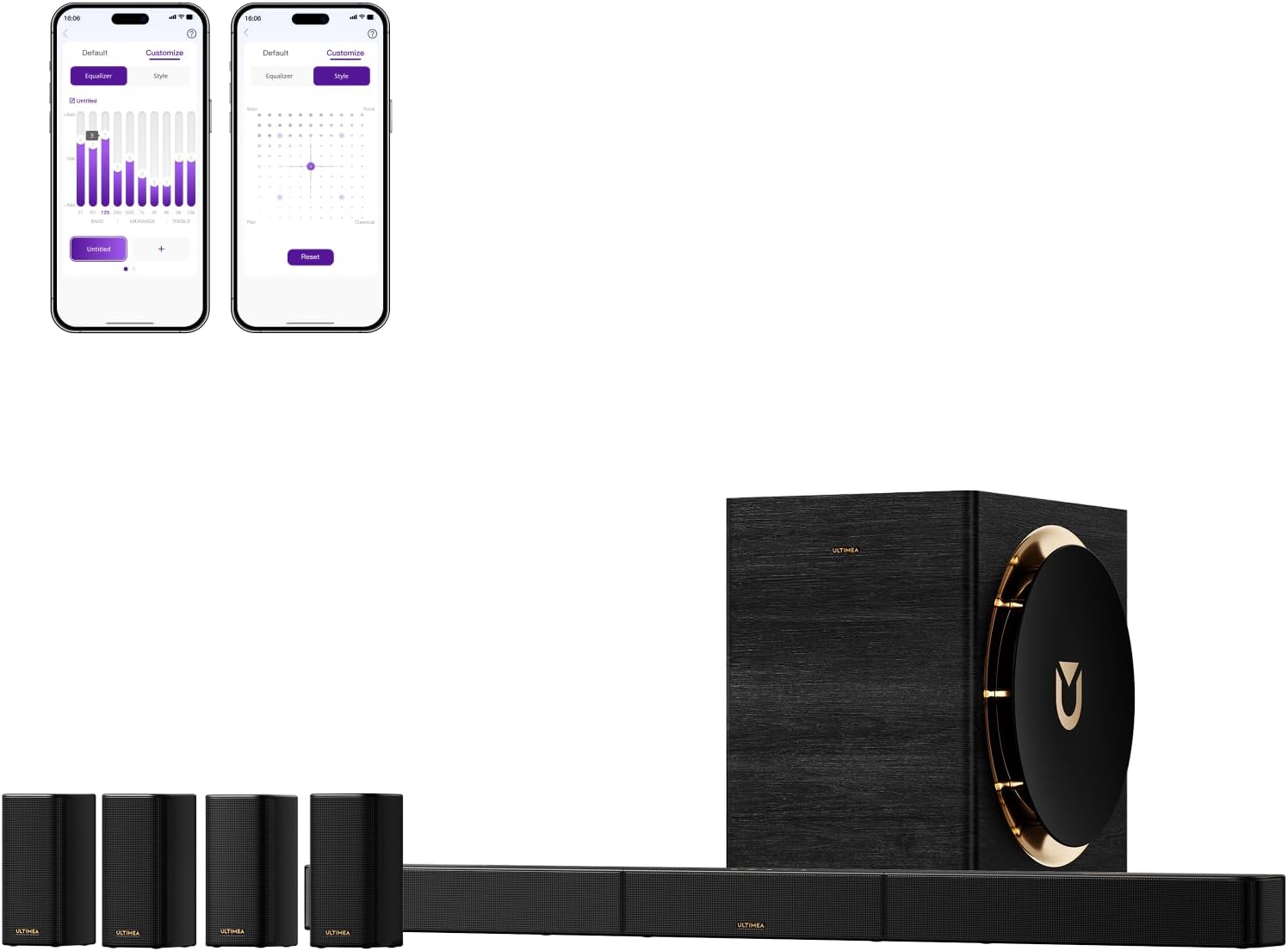
Pros
- Fully wireless ecosystem eliminates cable clutter while maintaining synchronized playback below 20ms latency
- THX-tuned system guarantees consistent, professional-grade audio across movies, TV, music, and games
- Flexible surround speaker placement with independent level control compensates for any room asymmetry
- Powerful 1,500W output with efficient GaN amplification provides room-filling sound without thermal issues
- Complete package includes soundbar, dual subwoofers, four surround speakers, and all necessary cables
Cons
- Requires compatible Dolby Atmos or DTS:X content to fully utilize the 9.1.6-channel architecture
- Limited customer reviews available, so long-term reliability and real-world performance data are sparse
The ULTIMEA Skywave X100 is a flagship wireless home theater system engineered for audiophiles and cinema enthusiasts who demand premium sound without traditional AV receiver complexity. This 9.1.6-channel configuration combines a THX-tuned soundbar, dual wireless subwoofers, and four wireless surround speakers to create immersive horizontal, vertical, and rear soundscaping. It targets users with modern living spaces who prioritize clean aesthetics and seamless connectivity over traditional wired setups.
The standout feature is its dual 5GHz CineMesh wireless technology, which synchronizes all speakers with sub-20ms latency, effectively eliminating audio lag between channels. The system's 2,000 MIPS NeuraCore DSP processor renders object-based Dolby Atmos and DTS:X content with precision, while the 1,500W peak output with GaN amplification delivers dynamic range and fast transient response. The 20Hz bass extension with Gravus Ultra-Linear Bass Technology ensures deep, controlled low frequencies optimized for Atmos LFE channels without muddiness or compression artifacts.
Build quality reflects its premium positioning, with a sleek black and gold aesthetic designed for wall mounting. The included accessories are comprehensive, featuring a 1.5m optical cable, HDMI cable, four surround power adapters, and mounting hardware for straightforward installation. The app-based control system allows independent adjustment of each surround speaker's level, a crucial feature for compensating room asymmetry and maintaining balanced sound across varied listening positions.
The main limitation is its $999 price point, which positions it as a luxury purchase rather than an entry-level upgrade. Additionally, the system's full potential depends on compatible Dolby Atmos and DTS:X content, meaning standard stereo or basic surround mixes will not activate all 9.1.6 channels. The single customer review provides limited long-term reliability data, though the THX certification and GaN amplifier design suggest robust engineering.
The ULTIMEA Skywave X100 delivers genuine theater-quality immersion for users willing to invest in wireless, cable-free surround sound. Its combination of THX tuning, advanced DSP processing, and flexible speaker placement makes it an excellent choice for dedicated home cinema rooms or modern living spaces where aesthetic appeal matters as much as audio performance.
Audio Configuration: 9.1.6-channel surround with 6 dedicated height channels, 4 wireless surrounds, and dual wireless subwoofers
Audio Formats: Dolby Atmos, DTS:X with object-based rendering
Wireless Technology: Dual 5GHz CineMesh with sub-20ms latency
Power Output: 1,500W peak system output with GaN amplification
Bass Extension: 20Hz low-frequency response with Gravus Ultra-Linear Bass Technology
DSP Processing: 2,000 MIPS NeuraCore with 24-bit/192kHz signal path
Control: Dedicated mobile app with independent channel-level adjustment
Connectivity: HDMI, Digital Optical input, wireless subwoofer and surround links
Included Components: Soundbar, 2 subwoofers, 4 surround speakers, mounting brackets, cables, and power adapters
Warranty: 1 year manufacturer coverage
Weight: 60.6 pounds total system
Who Should Buy: Home theater enthusiasts with modern living spaces who prioritize wireless aesthetics and immersive surround sound. Ideal for dedicated media rooms, large living areas, and users with Dolby Atmos compatible TVs and content libraries.
Room Requirements: Works best in rooms 250+ square feet with flexible surround speaker placement. The independent level control accommodates asymmetric layouts, but larger rooms benefit most from the 9.1.6 channel count.
Content Compatibility: Maximize the investment with Dolby Atmos movies, streaming services like Netflix and Disney Plus, and DTS:X enabled games. Standard stereo or basic 5.1 mixes will not utilize all channels.
Installation Considerations: Wireless subwoofers and surrounds require clear 5GHz paths and power outlets near speaker positions. The wall-mount soundbar needs a sturdy TV wall or dedicated mounting surface. Professional installation is recommended for optimal height channel placement.
Alternatives to Consider: Traditional wired 7.1 or 9.1 systems offer lower cost but require cable management. Soundbar-only systems lack true surround immersion. Budget options skip THX tuning and advanced DSP processing.
Long-Term Value: The THX certification and premium components suggest durability, but limited reviews mean real-world longevity data is unavailable. The 1-year warranty provides basic coverage for defects.

Pros
- Exceptionally deep and adjustable bass that suits both action-packed movies and quieter listening sessions
- True 5.1.4 channel configuration with physical rear speakers creates a genuinely immersive surround sound stage
- Simple setup process with an intuitive companion app for fine-tuning audio settings on the fly
- Premium build quality with a sophisticated aesthetic that enhances any living room setup
- Outstanding value compared to traditional multi-component home theater systems at a similar price point
Cons
- Some users report that dialogue and vocals can sound thin or tinny at certain settings, which may require EQ adjustment through the app
- The auto power-off feature when no audio signal is detected can cause the TV to revert to its built-in speakers, requiring a manual input switch to restore soundbar output
The ULTIMEA Skywave X50 is a premium 5.1.4-channel surround sound bar system aimed at home theater enthusiasts who want a true cinematic audio upgrade without the complexity of a traditional AV receiver setup. With a fully wireless design, dedicated rear surround speakers, a powered subwoofer, and 760W of peak output, it targets buyers ready to move beyond a basic single-bar soundbar experience.
The standout feature here is the fully wireless architecture powered by dual 5GHz transmission. Unlike systems that still require a wired rear speaker connection, the Skywave X50 keeps the entire surround setup cable-free, making room placement flexible and installation clean. The NEURACORE audio engine processes 24-bit/192kHz audio with less than 0.5% distortion, and the GaN amplifier ensures that power is delivered efficiently with minimal heat buildup. Reviewers consistently praise the bass depth and the noticeable improvement in sound staging once the rear speakers are placed correctly.
In terms of design, ULTIMEA has clearly invested in aesthetics as much as acoustics. The main sound bar features a refined metal grille and rose gold accent details, while the subwoofer sports a wood-finish enclosure that looks at home in a modern living space. At 43 inches wide and weighing just over 22 pounds for the full system, the components are substantial without being overwhelming.
There are a couple of practical considerations worth noting. A small number of users have found that vocal and dialogue clarity can feel slightly thin at default settings, though the companion app offers enough EQ flexibility to compensate. The auto-shutoff feature, which activates after a period of audio silence, has also caused some users to find their TV reverting to its built-in speakers, requiring a manual input reselection. These are manageable quirks but worth knowing before purchase.
Overall, the ULTIMEA Skywave X50 delivers a compelling combination of wireless convenience, genuine surround sound immersion, and premium build quality at a price point that undercuts many comparable systems. For buyers who want a significant step up from a single-bar soundbar and do not want to invest in a full AV receiver stack, this system is a strong and well-rounded contender.
Audio Channels: 5.1.4 (supports up to 17 channels via NEURACORE engine)
Peak Power Output: 760W
Frequency Response: 28Hz
Signal-to-Noise Ratio: 100dB
Audio Processing: 24-bit / 192kHz, less than 0.5% THD
Connectivity: HDMI eARC, Digital Optical, Bluetooth 5.0, USB
Wireless System: Dual 5GHz RF transmission for subwoofer and rear speakers
Bluetooth Range: Up to 15 meters
4K HDR Pass-Through: Yes
Control: Companion app
Subwoofer Driver: 8-inch woofer
Sound Bar Dimensions: 43.31 inches wide x 2.76 inches deep x 3.94 inches tall
Total System Weight: 22.1 pounds
Color: Black and Gold
Warranty: 1-year limited manufacturer warranty
In the Box: 1 x Sound Bar, 1 x 8-inch Wireless Subwoofer, 2 x Wireless Surround Speakers, 1 x HDMI Cable, 1 x Digital Optical Cable, 1 x Sound Bar Power Adaptor, 1 x Subwoofer Power Cord, 2 x Surround Speaker Power Adaptors, Wall Mounting Hardware, User Manual
If you are upgrading from a basic single-bar soundbar or a built-in TV speaker, the Skywave X50 represents a substantial leap in audio quality. The inclusion of physical rear surround speakers and a dedicated subwoofer creates a sound stage that a single bar simply cannot replicate, making it particularly rewarding for action films, gaming, and live sports.
Room size is an important consideration. With 760W of peak power and bass extension down to 28Hz, this system is well suited for medium to large living rooms. In smaller spaces it may require careful volume and bass management through the app, but the adjustability means it is not limited to large rooms exclusively.
Buyers who prioritize dialogue clarity, such as those who frequently watch dramas or news content, should plan to spend a few minutes tuning the EQ settings in the companion app after setup. Default vocal reproduction has received mixed feedback, and a small adjustment to the mid-range can make a meaningful difference to speech intelligibility.
For connectivity, ensure your TV supports HDMI eARC for the best audio signal quality and to take full advantage of Dolby processing. If your TV only has an optical output, the included optical cable will still deliver excellent performance, though some advanced audio formats may be limited. The 4K HDR pass-through is a practical bonus for those routing their streaming devices or gaming consoles through the sound bar rather than directly into the TV.

Pros
- Exceptional value for a fully featured 5.1-channel system with a well-respected brand and proven audio performance
- YPAO room optimization makes setup straightforward even for users with no prior home theater experience
- Versatile connectivity with four HDMI ports, Bluetooth, USB, and legacy audio inputs covers nearly every device
- 4K HDR passthrough including Dolby Vision ensures the system remains future-compatible with modern displays
- Compact speaker footprint and flexible virtual front placement options suit a wide variety of room sizes and layouts
Cons
- Included speaker wire is thin and short, so most users will want to purchase heavier-gauge wire separately for longer runs or better performance
- Occasional video signal dropout has been reported when used with certain gaming consoles, which may require troubleshooting HDMI handshake settings
- No built-in Wi-Fi or multi-room audio support limits wireless functionality to Bluetooth only, which may disappoint users wanting network streaming features
The Yamaha YHT-4950U is a complete 5.1-channel home theater system designed for buyers who want genuine surround sound without the complexity or cost of assembling individual components. It includes an AV receiver, two front speakers, a center channel, two surround speakers, and a powered subwoofer, making it a true plug-and-play solution for living rooms, dedicated media rooms, and basement theaters alike.
Audio performance is where this system genuinely shines. Reviewers consistently describe the surround sound as comparable to a real movie theater, with clean dialogue reproduction through the center channel and satisfying low-end impact from the subwoofer. The Compressed Music Enhancer also does a commendable job of restoring detail to compressed streaming audio, so Bluetooth playback from Spotify or Pandora sounds noticeably better than on budget competing systems.
The YPAO automatic room calibration is one of the most user-friendly features in this price range. Using a supplied microphone, the system measures your room acoustics and adjusts speaker levels, distances, and EQ automatically. This removes the guesswork from setup and consistently delivers a balanced soundstage regardless of room shape. The Virtual CINEMA FRONT mode is an added bonus for apartments or rooms where running cables to rear speakers is impractical.
On the connectivity front, four HDMI 2.0 inputs with HDCP 2.2 support and 4K HDR passthrough including Dolby Vision mean this receiver will handle every modern source device without a bottleneck. The inclusion of Bluetooth, optical, coaxial, and USB inputs ensures older devices are not left out either. One honest drawback is the absence of Wi-Fi, which limits wireless audio to Bluetooth range only and rules out integration with multi-room audio platforms.
Overall, the Yamaha YHT-4950U represents outstanding value in the home theater category. It delivers on its core promise of clear, immersive 5.1 surround sound, backs it up with thoughtful features like YPAO calibration and flexible speaker placement, and comes from a manufacturer with a strong reputation for reliability. For anyone stepping into home theater for the first time or upgrading from a soundbar, this system is a highly recommended choice.
Audio Configuration: 5.1-channel surround sound with 150 watts total output. Frequency response ranges from 28Hz to 25kHz, covering deep bass through crisp high frequencies for a full-spectrum listening experience.
Video Compatibility: Supports 4K Ultra HD passthrough at 60 frames per second with HDCP 2.2. HDR formats include Dolby Vision and Hybrid Log-Gamma, ensuring compatibility with the latest televisions and projectors.
Connectivity: 4 HDMI inputs, 1 HDMI output, Ethernet, optical digital, coaxial digital, USB, auxiliary, and Bluetooth. Wireless technology also includes AM/FM tuner for traditional broadcast radio.
What Is Included: 1 AV receiver, 2 front speakers, 1 center speaker, 2 surround speakers, 1 subwoofer, speaker wire, and subwoofer cable. The receiver measures 17 inches wide by 6 inches tall by 12 inches deep. Total system weight is approximately 51.8 pounds.
Additional Details: Standby power consumption is under 0.2 watts. The system carries a 2-year manufacturer warranty and is ranked among the top home theater systems in its category on Amazon.
Is This System Right for You? The YHT-4950U is best suited for buyers who want a single-purchase, all-in-one solution for 5.1 surround sound. If you are upgrading from a soundbar or setting up your first dedicated home theater, this package removes the complexity of matching separate components and delivers a cohesive, tuned system out of the box.
Room Size Considerations: This system performs well in small to medium-sized rooms, typically up to around 400 square feet. For very large open-plan spaces, you may eventually want to supplement with additional speakers or a more powerful receiver, but for most standard living rooms and media rooms it is more than sufficient.
What to Buy Alongside It: Most reviewers recommend purchasing additional speaker wire, especially for longer runs to rear surround speakers. A heavier gauge wire (16 AWG or thicker) will ensure a clean signal over distance. If your room layout makes rear speaker placement difficult, the Virtual CINEMA FRONT mode allows all five speakers to be positioned at the front of the room as a practical alternative.
Pairing With Your TV or Projector: Use an HDMI ARC connection between the receiver and your television for the simplest setup. This allows your TV remote to control the system volume and eliminates the need for additional cables. The system is also an excellent match for 4K projectors, as confirmed by multiple buyers who use it in dedicated home cinema rooms.
When to Consider Alternatives: If Wi-Fi streaming, multi-room audio, or voice assistant integration are priorities for you, consider stepping up to a receiver with network audio capabilities. Similarly, if you are an advanced audiophile with a large room and high-efficiency speakers already, a standalone AV receiver with more power headroom may serve you better.

Pros
- Future-proof 8K video support at competitive price point for early adopters
- Excellent multi-room audio capabilities with HEOS streaming and major music service support
- Strong gaming performance with Variable Refresh Rate and Auto Low Latency Mode
- Comprehensive audio format support including lossless Dolby and DTS codecs
- Easy voice control integration with Alexa for convenient hands-free operation
Cons
- 75W per channel is moderate power output, may require higher-sensitivity speakers for larger rooms
- Limited to 5.2 channels, not ideal for those wanting full 7.1 or 9.2 surround configurations
- 8K content remains limited, making the 8K passthrough feature less immediately practical for most users
The Denon AVR-S670H is a mid-range home theater receiver designed for users ready to embrace 8K video technology while maintaining excellent surround sound quality. This 5.2-channel amplifier is ideal for home theater enthusiasts, gamers, and music lovers who want a versatile receiver that handles movies, gaming, and multi-room audio streaming without breaking the bank.
Performance-wise, the AVR-S670H shines with its comprehensive audio codec support, including Dolby TrueHD, Dolby Digital Plus, and DTS-HD Master Audio for movie soundtracks that truly immerse you in the action. The 75 watts per channel across five channels provides solid, dynamic sound for most room sizes, though larger spaces may benefit from more powerful amplification. Gaming features like Variable Refresh Rate (VRR), Auto Low Latency Mode (ALLM), and Quick Frame Transport (QFT) ensure smooth, responsive gameplay without lag or stuttering.
Build quality is solid with a compact design measuring 17.1 inches wide and weighing 20.7 pounds, making it easy to fit in most entertainment centers. The receiver includes eight HDMI ports with 8K/60Hz and 4K/120Hz passthrough capabilities, plus 8K upscaling of 4K content for enhanced picture quality. The included Audyssey microphone helps optimize audio performance for your specific room acoustics.
One consideration is that 75 watts per channel is moderate power for very large rooms or low-sensitivity speakers. Additionally, while 8K video support is impressive, current 8K content remains scarce, so this feature is more about future-proofing than immediate utility. The 5.2 configuration also limits expansion compared to 7.1 or 9.2 systems if you plan major upgrades later.
Overall, the Denon AVR-S670H represents excellent value for home theater enthusiasts seeking a future-ready receiver with strong gaming performance, multi-room audio capabilities, and voice control convenience. It strikes a good balance between affordability and advanced features for the discerning buyer.
Audio Performance: 75 watts x 5 channels, 5.2 surround sound configuration, Dolby TrueHD, Dolby Digital Plus, Dolby ProLogic II, DTS-HD Master Audio, DTS Neo:6 upmixer support.
Video Specifications: 8K/60Hz and 4K/120Hz HDMI passthrough, 8K upscaling of 4K content, HDR10+, HLG, HDR, Dolby Vision, and Dynamic HDR support, HDCP 2.3 copy protection.
Connectivity: 8 HDMI ports with ARC/eARC, Bluetooth wireless technology, Wi-Fi streaming, AM/FM antennas, compatible with Spotify, TIDAL, and Pandora.
Gaming Features: Variable Refresh Rate (VRR), Auto Low Latency Mode (ALLM), Quick Frame Transport (QFT) for responsive gameplay.
Control: Amazon Alexa voice control integration, remote control included, Audyssey microphone for room calibration, 2-year manufacturer warranty.
Who Should Buy: Home theater enthusiasts upgrading to 8K displays, gamers seeking responsive performance with VRR and ALLM support, music lovers wanting multi-room audio capabilities, and anyone seeking a future-proof receiver at mid-range pricing.
Room Size Considerations: The 75-watt per channel output works well in small to medium rooms (up to 300 square feet). Larger spaces or low-sensitivity speakers may benefit from additional amplification or a more powerful receiver model.
Speaker Compatibility: Works with most passive speakers rated 6 ohms or higher. Ensure your speakers have adequate sensitivity (85dB or higher) for optimal performance at moderate listening levels.
Alternative Consideration: If you need 7.1 surround sound or higher wattage output, consider stepping up to a more powerful Denon model. If 8K support is unnecessary, older AVR models may offer better value.
Setup Tips: Use the included Audyssey microphone to calibrate audio for your room, position the receiver in a well-ventilated space, and connect via HDMI eARC for best sound quality from your TV.

Pros
- Intuitive setup process with color-coded connections and an on-screen wizard that guides you step by step
- Exceptional audio performance with support for Dolby Atmos, DTS:X, and virtual height channels for cinema-grade immersion
- Versatile connectivity including phono input, eARC, 6 HDMI ports, Bluetooth, Wi-Fi, and AirPlay 2
- HEOS multi-room streaming and broad voice assistant support add serious smart home value
- Solid build quality and a compact form factor compared to older generation receivers
Cons
- The HEOS app and on-screen interface feel dated and can be clunky to navigate, especially for streaming configuration
- Older 4K TVs may experience compatibility issues with the advanced HDMI feature set, potentially requiring a TV upgrade
- Auto-calibration results may disappoint critical listeners, with some users preferring to manually tune speaker settings
The Denon AVR-X1700H is a 7.2 channel AV receiver aimed at home theater enthusiasts who want a powerful, future-ready centerpiece without spending on a flagship model. With 80 watts per channel, 8K HDMI support, and a rich suite of audio formats, it sits comfortably in the sweet spot between entry-level and premium receivers.
On the audio side, this receiver truly shines. Support for Dolby Atmos, DTS:X, DTS Virtual:X, and Dolby Atmos Height Virtualization means you can enjoy three-dimensional surround sound even in a room without dedicated overhead speakers. Real-world users consistently praise the theater-like experience it creates, particularly in 7.1.2 configurations with height channels.
Setup is one of the AVR-X1700H's strongest selling points. The color-coded rear panel, labeled speaker wire connections, and award-winning on-screen setup wizard make the installation process far less daunting than many competing receivers. Connectivity is equally impressive, offering six HDMI inputs, a phono input for turntables, AirPlay 2, Bluetooth, Wi-Fi, and dual subwoofer pre-outs, covering virtually every source a modern home theater might need.
The main drawback worth noting is the HEOS app and receiver interface, which several users describe as outdated and difficult to navigate. While the hardware performance is excellent, the software experience lags behind the overall quality of the unit. Additionally, users with older 4K televisions may encounter HDMI compatibility hurdles due to the advanced 8K HDMI specification.
Overall, the Denon AVR-X1700H delivers outstanding value for its class. It is a well-built, feature-rich receiver that performs reliably in real home theater environments. If you are upgrading from an older receiver or building a serious surround sound system for the first time, this Denon model is a highly recommended choice backed by strong user satisfaction.
Channels: 7.2 Channel | Power Output: 80W per channel | HDMI Ports: 6 In / 1 Out | Video Support: 8K/60Hz, 4K/120Hz, HDR10, HDR10+, Dolby Vision, HLG, H.264, H.265/HEVC
Audio Formats: Dolby Atmos, Dolby Atmos Height Virtualization, DTS:X, DTS Virtual:X | Wireless: Wi-Fi, Bluetooth, AirPlay 2 | Streaming: HEOS Built-in, Spotify, Amazon Music HD, TIDAL, Pandora, Deezer
Voice Control: Amazon Alexa, Google Assistant, Apple Siri, Josh.ai | Inputs: 2 Digital Optical, 2 Analog, 1 Coaxial, 1 Phono (MM/MC) | Pre-Outs: 2 Subwoofer Pre-Outs | eARC: Yes
Dimensions: 13.3"D x 17.1"W x 6"H | Weight: 19 lbs | Color: Black | Warranty: 3-Year Limited | Model: AVR-X1700H | UPC: 747192134600
If you are considering the Denon AVR-X1700H, it is best suited for buyers building or upgrading a dedicated home theater room with 5.1, 7.1, or 7.1.2 speaker configurations. It delivers the most value when paired with a modern 4K or 8K television that supports HDMI 2.1 features like VRR and ALLM, especially for gaming setups.
This receiver is an excellent fit for users who want multi-room audio capability without purchasing a separate streaming device. The HEOS ecosystem allows you to expand audio to other HEOS-compatible speakers throughout your home, making it a smart long-term investment for whole-home audio enthusiasts.
Vinyl listeners will appreciate the built-in phono stage, which supports both moving magnet and moving coil cartridges, though note that only one type can be used at a time. If you own a turntable and want to integrate it into a modern AV setup, this feature alone sets the AVR-X1700H apart from many competitors at this price point.
Buyers with older 4K televisions should verify HDMI compatibility before purchasing, as the advanced HDMI 2.1 feature set can occasionally cause handshake issues with legacy displays. If you are comfortable with manual speaker calibration, you may also want to plan to fine-tune the auto-calibration results for the best possible audio performance.

Pros
- Generous 725W power output supports large rooms and demanding speaker configurations
- 4K HDR and HDCP 2.2 support keeps the receiver compatible with the latest TVs and streaming devices
- Bluetooth Standby mode adds modern convenience for wireless music streaming
- S-Force PRO virtual surround works well for users who cannot accommodate a full 5-speaker layout
- Multiple input options including 4 HDMI, 4 RCA stereo, and digital audio inputs offer broad device compatibility
Cons
- No built-in Wi-Fi or network streaming limits smart home integration compared to higher-end receivers
- THD of 0.9% at rated power is higher than audiophile-grade receivers, which may concern critical listeners
- Pandora is the only supported internet streaming service, which feels limited for modern users
The Sony STR-DH590 is a 5.2 channel AV receiver designed for home theater enthusiasts who want powerful, cinematic sound without the complexity or cost of high-end separates. At 725 watts total output and priced in the mid-range segment, it targets upgraders moving from a basic soundbar or entry-level receiver to a full surround sound system.
The standout feature of this receiver is its combination of 4K HDR passthrough with HDCP 2.2 support, ensuring it remains compatible with the latest Ultra HD content from streaming services and Blu-ray players. Bluetooth connectivity adds everyday convenience, and the Standby mode means you can power on the unit and start playing music directly from your phone without touching a remote. Sony's S-Force PRO virtual surround is a practical bonus for those who cannot place rear speakers, delivering a convincing wide soundstage from just two speakers.
Build quality is consistent with Sony's mid-range lineup, featuring a clean black chassis measuring 17 inches wide and weighing a solid 17.1 pounds. The front panel includes a quarter-inch headphone jack, which is a welcome touch for late-night listening. The layout is straightforward, and the included remote keeps day-to-day operation simple and accessible.
On the downside, the absence of Wi-Fi and multi-room audio support means this receiver cannot compete with network-connected alternatives from Denon or Yamaha at a similar price point. The 0.9% THD rating, while acceptable for most listeners, falls short of what dedicated audiophiles might prefer. Streaming service support is also limited to Pandora, which feels dated compared to competitors offering Spotify Connect or Tidal integration.
Overall, the Sony STR-DH590 is a compelling choice for anyone building or upgrading a 5.1 or 5.2 home theater system on a reasonable budget. It delivers reliable power, solid 4K video handling, and convenient Bluetooth use in a no-fuss package. If you do not need Wi-Fi streaming or advanced room correction, this receiver punches well above its weight class.
Model: Sony STR-DH590 | Channels: 5.2 | Total Output Power: 725W | Impedance: 6 ohms | THD: 0.9% at 1kHz
HDMI: 4 inputs / 1 output with ARC | HDCP: 2.2 | Video Support: 4K HDR, H.264, H.265/HEVC | Audio Inputs: 4x Stereo RCA | Digital Outputs: 1x Optical, 1x Coaxial
Wireless: Bluetooth 2.4GHz | Special Audio: 360 Reality Audio, High-Resolution Audio | Tuner: FM Radio | Headphone: 1/4 inch jack | Streaming: Pandora
Dimensions: 11.75"D x 17"W x 5.25"H | Weight: 17.1 lbs | Color: Black | Power: AC 120V 60Hz / AC 230V 50Hz | Warranty: 1 Year Limited
If you are shopping for your first true surround sound receiver, the Sony STR-DH590 is one of the most accessible entry points into 5.2 channel audio. It pairs well with any passive bookshelf or floor-standing speakers rated at 6 ohms or higher, and the 725W total power means it can comfortably drive a mid-sized living room without strain.
For buyers who primarily stream music wirelessly, note that this receiver uses Bluetooth rather than Wi-Fi. This means you will need to keep your phone or tablet nearby for streaming, and multi-room audio setups are not supported. If whole-home audio or voice assistant integration is a priority, consider stepping up to a Wi-Fi enabled receiver such as the Sony STR-DN1080 or a comparable Denon AVR model.
The four HDMI inputs make this receiver a strong hub for households with multiple devices such as a gaming console, streaming stick, Blu-ray player, and cable box all connected simultaneously. The 4K HDR and HDCP 2.2 support ensures compatibility with modern 4K televisions and protected content, so you will not need to upgrade the receiver when you upgrade your TV.
Budget-conscious buyers who want to start with a 2.0 or 3.1 speaker setup can still benefit from this receiver today and expand to a full 5.2 configuration over time. The S-Force PRO virtual surround mode bridges the gap in the meantime, making the STR-DH590 a practical long-term investment for growing home theater systems.

Pros
- Excellent on-screen setup wizard and color-coded connections make installation straightforward even for beginners
- Robust 8K HDMI support with Variable Refresh Rate and Auto Low Latency Mode ideal for next-gen gaming
- Immersive audio processing with Dolby Atmos, DTS:X, and height virtualization creates theater-quality sound
- HEOS built-in wireless streaming supports Spotify, Tidal, Amazon Music HD, and AirPlay 2 for flexibility
- Strong customer satisfaction with reliable performance and powerful subwoofer drive capabilities
Cons
- Bluetooth transmitter functionality has reported limitations and cannot simultaneously receive and transmit audio
- Complex menu system requires patience to navigate, with some settings buried in multiple submenus
- ARC volume level display inconsistencies noted with certain TV models during eARC operation
The Denon AVR-X1800H is a capable mid-range AV receiver designed for home theater enthusiasts who want modern video standards and immersive audio without premium pricing. It's particularly suited for small to medium-sized rooms where 80W per channel provides adequate power, and for users building new systems or upgrading from older receivers lacking 8K support and current surround sound technologies.
This receiver excels in video handling with three dedicated 8K/60Hz inputs and one 8K output, plus support for all major HDR formats including Dolby Vision and HDR10+. The gaming features are solid, including Variable Refresh Rate, Quick Frame Transport, and Auto Low Latency Mode. Audio processing is comprehensive with Dolby Atmos, DTS:X, and a unique height virtualization feature that creates overhead effects without requiring additional height speakers. The built-in HEOS system enables multi-room wireless streaming across compatible speakers, making it easy to enjoy music throughout your home.
Build quality is solid with a well-designed layout and color-coded connections that simplify setup. The on-screen calibration guide using Audyssey is genuinely helpful, walking users through speaker placement and optimization. Remote control and connectivity options are extensive, including WiFi, Bluetooth, and integration with major streaming services and voice assistants. The 2-year warranty provides reasonable peace of mind for this price tier.
Some limitations exist worth noting. Bluetooth functionality has quirks where transmitter mode becomes unavailable after using a Bluetooth source, requiring workarounds. The menu system, while comprehensive, can feel cluttered with settings scattered across multiple levels. Some users report inconsistent volume display behavior with certain TV models during eARC operation, though audio passthrough generally works reliably.
Overall, the Denon AVR-X1800H represents solid value for home theater builders seeking modern video standards, capable surround sound processing, and wireless streaming in a mid-range package. It delivers on its core promises with reliable performance and professional-grade setup assistance, though it's not without minor usability quirks.
Audio Performance: 80W per channel across 7 channels, Dolby Atmos, DTS:X, DTS Virtual:X, height virtualization technology, dual subwoofer outputs, front L/R and Zone 2 pre-outs
Video Connectivity: 6 HDMI inputs and 2 outputs, three 8K/60Hz capable inputs, one 8K output, 4K/120Hz support, 40Gbps bandwidth, Dolby Vision, HDR10+, Dynamic HDR, HLG support
Wireless & Streaming: Built-in HEOS multi-room audio, WiFi, Bluetooth, AirPlay 2, Spotify, Tidal, Amazon Music HD compatible, voice control ready
Gaming Features: Variable Refresh Rate (VRR), Quick Frame Transport (QFT), Auto Low Latency Mode (ALLM)
Physical: Dimensions 21 inches deep by 18 inches wide by 9 inches high, weight 23.1 pounds, black finish
Warranty: 2 years manufacturer coverage
Who Should Buy: Home theater enthusiasts building new systems or upgrading from older receivers, gamers wanting 8K/120Hz support, users with small to medium-sized rooms seeking multi-room wireless audio, those prioritizing modern video standards and immersive surround sound over absolute power output
Who Should Consider Alternatives: Large room owners needing more than 80W per channel, users requiring extensive Bluetooth transmitter functionality, those wanting simpler menus with fewer setup options, budget-conscious buyers seeking entry-level receivers
Setup Considerations: Plan for 1-2 hours initial setup using the on-screen guide. Position the included Audyssey microphone appropriately for room calibration. Ensure your TV supports eARC for full functionality. Have speaker wire ready for connecting your 7.2 or 5.2.2 configuration.
Long-term Value: This receiver future-proofs your investment with 8K support while remaining practical for current 4K content. HEOS integration means you can expand your audio system room by room without replacing the receiver. Regular firmware updates typically add features and improve performance over time.

Pros
- Intuitive setup process with on-screen HD Setup Assistant gets you enjoying content within minutes
- Excellent audio quality across streaming services, modern codecs, and legacy content with Neural:X upmixing
- Comprehensive connectivity including phono input for turntables, dual subwoofer outputs, and multiple HDMI options
- Strong value proposition for the features offered compared to higher-end models
- Reliable Denon brand heritage with 3-year warranty and proven long-term performance
Cons
- 95W per channel is adequate but lower than some competing receivers in the price range
- GUI menu system can experience occasional lag during navigation
- May require patience with initial setup if you have many legacy devices with different connection types
The Denon AVR-X2800H is a mid-range home theater receiver designed for enthusiasts ready to embrace 8K content while enjoying premium surround sound today. It's perfect for living rooms and dedicated home theaters where you're running a 7.2 or 5.2.2 speaker configuration and want modern streaming capabilities without premium pricing. This receiver bridges the gap between entry-level and high-end components, offering genuine upgrades over older technology.
The standout features center on immersive audio and future-proofing. Dolby Atmos and DTS:X support creates overhead sound effects that truly enhance movies and games, while the height virtualization technology lets you achieve impressive results even in 2.1 or 5.1 setups without adding speakers. The 8K/60Hz pass-through ensures compatibility with next-generation displays, and gaming optimizations including VRR and ALLM deliver smooth performance on PlayStation 5 and Xbox Series X. Built-in HEOS streaming makes this a genuine multi-room music hub, eliminating the need for separate components.
Build quality reflects Denon's 110-year audio heritage. The chassis feels solid and professional, with the included Audyssey microphone and calibration system providing room-specific optimization that rivals much pricier receivers. Connectivity is comprehensive: 8 HDMI ports, dual subwoofer outputs, phono input for turntables, and wireless options via Bluetooth, AirPlay2, and Wi-Fi cover virtually any source device you might own. The remote is straightforward, and Alexa integration adds convenient voice control.
Real-world performance impresses across streaming services, Blu-ray movies, and gaming. Users report that newer compression formats and streaming audio codecs work seamlessly, while the Neural:X upmixer breathes new life into older stereo content. The 95W per channel output is sufficient for most room sizes, though those with very large spaces or extremely demanding speaker loads might want to consider higher-wattage alternatives. The GUI occasionally shows lag, but this is a minor inconvenience that doesn't impact audio performance.
The Denon AVR-X2800H delivers genuine value for home theater builders who prioritize ease of use, immersive audio, and future-ready video connectivity. It's not the most powerful receiver available, but it's thoughtfully engineered to handle modern content and streaming services with aplomb. Recommended for anyone upgrading from older technology or building a new system on a reasonable budget.
Audio Performance: 7.2 channel configuration, 95 watts per channel, Dolby Atmos, DTS:X, Dolby Surround, DTS Neural:X upmixer, Dolby Height Virtualization, DTS Virtual:X
Video Connectivity: 8 HDMI ports (6 in, 2 out), 8K/60Hz pass-through, 4K upscaling on 3 HDMI inputs, HDR10+, HLG, HDR, Dolby Vision, Dynamic HDR, HDCP 2.3, eARC support, VRR, ALLM, QFT
Audio Inputs: Analog inputs, digital inputs, phono input for turntables, USB, dual subwoofer outputs
Wireless and Streaming: HEOS Built-in, Wi-Fi, Bluetooth, AirPlay2, Pandora, Spotify, TIDAL compatible
Control and Integration: Voice control with Alexa and Siri, Apple HomeKit compatibility, Audyssey Room Correction Suite calibration, HD Setup Assistant
Physical Dimensions: 17.1 inches wide, 13 inches deep, 6.6 inches tall, 11 pounds, black finish
Warranty: 3 years manufacturer coverage
Who Should Buy: This receiver is ideal for home theater builders with 7.2 speaker systems, gamers wanting next-gen console optimization, and music enthusiasts who stream from services like Spotify and Tidal. It's also perfect for anyone upgrading from receivers older than 5 years who wants modern audio codecs and 8K readiness without premium pricing.
Who Might Want to Look Elsewhere: If you have a very large room requiring maximum power output, consider higher-wattage models. If you need the absolute latest gaming features or are building a reference-grade theater, stepping up to the X3800H or X4800H provides additional capabilities. Budget-conscious buyers with smaller rooms and simpler speaker setups may find entry-level receivers adequate.
Setup Considerations: Plan 30-45 minutes for initial setup using the guided on-screen assistant. Have your speaker wire, HDMI cables, and source devices ready. The included Audyssey microphone requires a clear line of sight to your listening position for optimal room calibration. If you're connecting legacy devices like tape decks or older DVD players, ensure you have appropriate cables, as this receiver focuses on modern connectivity.
Value Assessment: The AVR-X2800H offers strong value in the $1100-1200 range, delivering features typically found in more expensive receivers. The 8K support, Dolby Atmos, built-in streaming, and gaming optimizations justify the investment for anyone building or upgrading a modern home theater system. Compare directly with Yamaha RX-V6A and Onkyo TX-RZ50 to ensure you're getting the best fit for your specific needs.

Pros
- Exceptional connectivity with HDMI ARC, Bluetooth 5.3, phono input, and multiple legacy audio formats
- Powerful 75W front channels deliver rich, detailed sound for movies and music without distortion
- User-friendly multifunction remote controls all EQ settings across any input source
- Automatic settings memory saves your preferred EQ, volume, and input mode between sessions
- Compact footprint makes it suitable for smaller entertainment centers without compromising performance
Cons
- No customer reviews available yet, so real-world performance feedback is limited
- Surround and center channels deliver lower wattage (38W each) compared to front speakers, which may feel less immersive in smaller rooms
- One-year warranty is relatively standard but shorter than some competing receivers in this price range
The Donner MAMP8 is a feature-rich 5.2 channel AV receiver designed for home theater enthusiasts and music lovers who want versatile connectivity without breaking the bank. This compact amplifier serves as the central hub for any modern entertainment system, supporting everything from streaming devices and gaming consoles to vinyl turntables and traditional audio components.
The standout feature is the combination of 4K HDR pass-through capability with 75W front channels, delivering theater-quality sound for movies, TV shows, and games. Bluetooth 5.3 connectivity ensures seamless wireless streaming from smartphones and tablets, while the dedicated phono input caters to vinyl collectors. The seven different input options (HDMI ARC, USB, optical, coaxial, RCA, FM radio, and phono) make this receiver truly future-proof and backward-compatible with virtually any audio source you might own.
Build quality appears solid with a professional black finish and compact 10.6-inch width that fits neatly into most entertainment centers. The multifunction remote provides independent control over treble, midrange, and bass adjustments across any input mode, and the receiver automatically saves your preferred settings for convenience. The upgraded FM tuner with direct frequency entry is a thoughtful touch for radio enthusiasts.
The main limitation is the lower wattage on surround (38W each) and center channels compared to the front speakers, which may impact immersion in larger rooms. Additionally, without customer reviews currently available, potential buyers cannot verify long-term reliability or real-world performance claims.
The Donner MAMP8 represents excellent value for anyone building or upgrading a home theater system. Its comprehensive connectivity, customizable sound, and compact design make it a practical choice for both casual listeners and serious audiophiles seeking an affordable, versatile amplifier solution.
Audio Configuration: 5.2 channel surround sound with front channels at 75W RMS each (4 ohms) and surround/center channels at 38W RMS each (4 ohms). Supports 2 active subwoofers.
Connectivity: 2 HDMI inputs with Audio Return Channel (ARC), Bluetooth 5.3, USB (up to 64GB), RCA, optical, coaxial, phono (turntable), and FM radio inputs.
Physical Dimensions: 16.9 inches deep, 10.6 inches wide, 5.1 inches high. Weight: 19.3 pounds. Compact black design suitable for most entertainment centers.
Control Features: Multifunction remote with independent treble, midrange, bass, echo, and talkback controls. Automatic settings memory for EQ, volume, and input mode. Direct FM frequency entry for convenient radio tuning.
Warranty: 1 year manufacturer warranty. Includes stereo receiver, remote control, and user manual.
Who Should Buy: The Donner MAMP8 is ideal for home theater newcomers, music enthusiasts with vinyl collections, and anyone seeking a versatile AV receiver without premium pricing. It works well for living rooms, bedrooms, or media rooms of small to medium size.
Room Size Consideration: The 75W front channels perform best in rooms up to 250 square feet. Larger spaces may benefit from additional amplification or higher-wattage alternatives.
Source Compatibility: If you stream music via Bluetooth, use a turntable, watch 4K content, or connect gaming consoles, this receiver handles all scenarios. The phono input is particularly valuable for vinyl collectors.
Setup Tips: Position surround speakers at ear level 90-110 degrees from the center listening position for optimal 5.2 channel performance. The automatic settings memory means you can customize the sound once and forget about manual adjustments.
Alternative Consideration: If you need higher surround channel wattage or more HDMI ports for multiple 4K devices, consider larger receivers. However, for compact spaces and versatile connectivity, the MAMP8 delivers excellent value.
Buying Guide for HDR-Compatible Home Theater
Video Format Support
Not all HDR pass-through is created equal. The key is to confirm support for the specific HDR formats your content uses. Look for systems that explicitly list HDR10, HDR10+, Dolby Vision, and HLG. This ensures compatibility with streaming services, Ultra HD Blu-rays, and next-gen gaming consoles. A system like the ULTIMEA 5.1.4ch Professional Surround Sound Bar lists 4K HDR pass-through as a core feature, guaranteeing vibrant color and fine detail.
Future-proofing is also a consideration. While 4K HDR is the current standard, many newer receivers, such as several Denon models in our list, also support 8K pass-through and advanced gaming features. This protects your investment as content evolves. For a deeper dive into the technical aspects of video handling, our AV receivers category offers further insights.
Audio Immersion and Channel Configuration
Your system should match your room and desired experience. Object-based audio formats like Dolby Atmos and DTS:X create a three-dimensional soundscape. A 5.1.4-channel system, for example, adds four height channels for overhead effects like rain or aircraft. The ULTIMEA Skywave X100 takes this further with a 9.1.6 THX-tuned design for incredibly precise sound placement.
Consider your space and wiring preferences. Wireless surround systems offer a clean, cable-free installation, while traditional AV receivers provide maximum flexibility for speaker choice and expansion. Your decision will balance convenience with ultimate customization potential.
Connectivity and Ease of Use
Ample HDMI inputs are essential. You need enough ports for your game console, streaming device, Blu-ray player, and cable box. Look for the latest HDMI standards with features like eARC, which simplifies connecting your TV and can send high-quality audio back to the receiver. Modern systems also integrate seamlessly into smart homes, offering voice control and multi-room audio streaming via Wi-Fi or Bluetooth.
Setup should be straightforward. Many receivers include automated room calibration with a supplied microphone to optimize sound for your specific acoustics. Soundbar systems often boast a plug-and-play design, getting you from box to theater in minutes. This is perfect for enhancing live events, making a system with strong HDR pass-through one of the best home theater systems for sports.
Final Thoughts
Choosing a home theater system with robust HDR pass-through is the final step in unlocking your display’s full potential. For users seeking a premium, all-in-one wireless solution with exceptional spatial audio, the ULTIMEA Skywave X100 9.1.6 THX-Tuned Wireless Home represents a top-tier cinematic experience. Alternatively, if you value brand heritage, extensive connectivity, and the flexibility to build your own speaker setup, the Denon AVR-X1700H 7.2 Channel AV Receiver offers superb performance and future-ready features. Either choice will ensure your visuals remain as stunning as your sound.
Frequently Asked Questions
What is HDR pass-through and why is it important?
HDR pass-through is a feature on AV receivers and soundbars that allows a High Dynamic Range video signal to travel from your source device to your television without being altered or degraded. It is crucial because it preserves the wider color gamut, brighter highlights, and deeper shadows that define the HDR viewing experience. Without it, the video signal might be downgraded to standard dynamic range, losing the visual impact you paid for.
Can I get Dolby Atmos sound from a soundbar?
Yes, many modern soundbars are fully capable of delivering Dolby Atmos and other immersive audio formats. They use upward-firing drivers and sophisticated digital signal processing to reflect sound off your ceiling, creating the illusion of height channels. Systems like the ULTIMEA 5.1.4ch Professional Surround Sound Bar are designed as complete, wireless packages that include surround speakers and a subwoofer for a convincing, room-filling Atmos experience without the complexity of multiple separate components.
How many HDMI inputs do I need on my AV receiver?
You should have at least one more HDMI input than you currently have source devices, to allow for future additions. A common setup includes a gaming console, a 4K Blu-ray player, a streaming device, and a cable or satellite box, which would require four inputs. Many receivers in our list offer six or more inputs, providing ample room for growth. Also, ensure several of these inputs support the full bandwidth required for 4K HDR, 120Hz, or 8K signals if you plan to use next-gen gaming or video equipment.
Is an AV receiver better than a soundbar?
The better choice depends on your priorities. An AV receiver offers maximum power, flexibility, and upgrade potential. You can choose any speakers you like and expand your system over time. A soundbar provides a much simpler, more compact, and often more affordable all-in-one solution with minimal wiring. For the 2026 buyer, high-end soundbars have closed the performance gap significantly, offering features like wireless surrounds and Dolby Atmos that were once exclusive to receiver-based setups.


Write Your Review
No reviews yet. Be the first to share your experience!