

You want the rumble of a movie explosion and the punch of a bass guitar, but your living space says otherwise. A full-sized subwoofer feels like an impossible addition. That’s where micro subwoofers shine, offering a sophisticated solution for impactful bass in a surprisingly small cabinet.
This guide is for anyone setting up a home theater, gaming station, or music system where space is at a premium but performance is non-negotiable. We have assessed seven leading models to help you find a compact bass powerhouse. For a broader look at contemporary audio solutions, explore our guide to the best modern subwoofers.
Pros
- Powerful 100W dynamic output in a compact, space-saving enclosure ideal for smaller rooms
- Versatile hookup options including RCA and speaker-level connections suit a wide range of receivers and amplifiers
- Adjustable crossover and volume controls make tuning simple and precise for any listening environment
- Durable resonance-free driver materials ensure consistent performance during extended high-volume use
- Comprehensive 5-year limited warranty with dedicated amplifier coverage adds strong long-term value
Cons
- At 11.8 kg the unit is relatively heavy for its size, which may complicate placement or repositioning in tight spaces
- The 40-160 Hz frequency response means it is optimized for bass duties only and will not extend into higher mid-range frequencies
- No wireless connectivity option means cable management is required for clean installation in modern setups
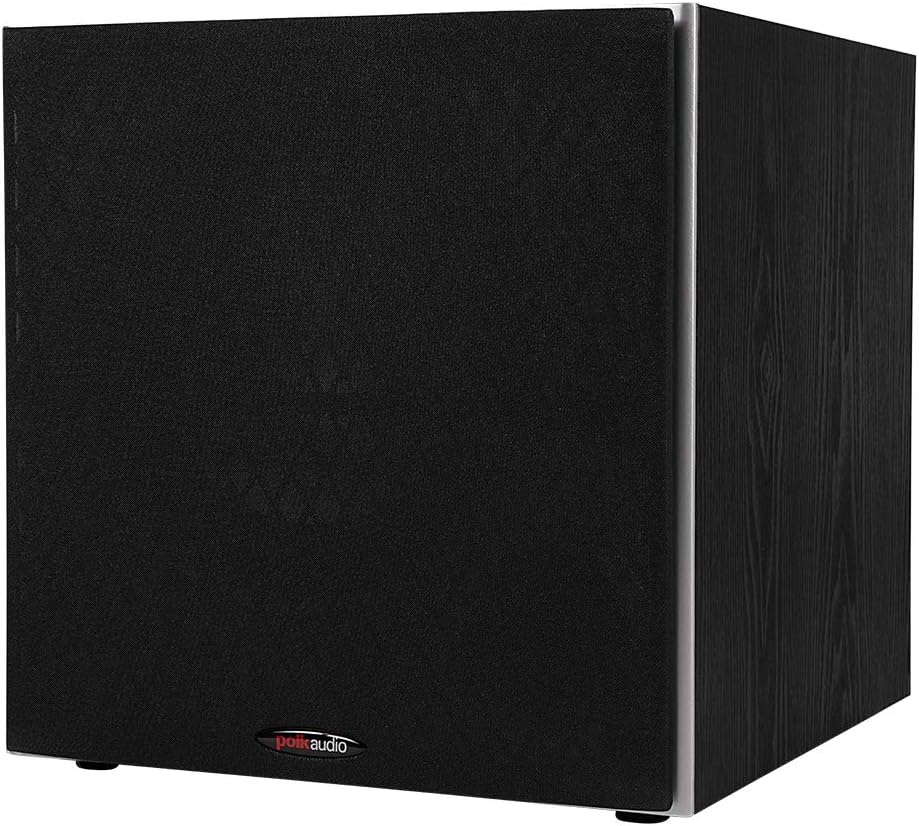
The Polk Audio PSW10 is a 10-inch powered subwoofer designed for home theater and stereo enthusiasts who want impactful bass without dedicating a large footprint to their audio setup. It targets small to mid-sized rooms and works as a straightforward upgrade to any existing speaker system, requiring no separate amplifier thanks to its fully self-contained design.
At the heart of the PSW10 is a Dynamic Balance woofer paired with a high-current 50W RMS amplifier capable of delivering up to 100 watts of dynamic power. The configured directed port enhances bass depth and extension, producing a frequency response of 40-160 Hz that covers the full range of cinematic low-end effects and musical bass lines with impressive accuracy and minimal distortion.
The cabinet is engineered from non-resonant materials, which prevents unwanted vibrations from coloring the sound at high volumes. A detachable front grille, clean black finish, and compact 17 x 14.25 x 14.5 inch dimensions give the PSW10 a tidy, unobtrusive appearance that fits neatly alongside most furniture. Connectivity is straightforward, with RCA line-level and speaker-level inputs and outputs on the rear panel alongside a Phase Toggle Switch for users running dual subwoofer configurations.
One honest drawback is the lack of wireless connectivity, which is increasingly common at this price point and would simplify placement in modern living rooms. The unit is also on the heavier side at nearly 12 kg, so moving it around during setup can be a bit cumbersome. Additionally, the crossover filter tops out at 160 Hz, so users pairing it with small satellite speakers should verify their main speakers can cover the upper bass and midrange adequately.
Overall, the Polk Audio PSW10 is a well-engineered, reliable subwoofer that delivers genuine low-frequency performance in a compact package. Its flexible inputs, adjustable crossover, and robust warranty make it a smart and accessible choice for anyone looking to add serious bass to a home theater or music system without complexity or compromise.
Driver Size: 10 inches | Amplifier Power: 50W RMS, 100W Dynamic | Frequency Response: 40-160 Hz (-3dB) | Impedance: 8 ohm | Channels: 5.1 compatible
Crossover: Continuously variable 80-160 Hz low-pass filter | Connectivity: RCA line-level input/output, Speaker-level input/output | Power Source: AC corded | Mounting: Floor mount
Dimensions: 17 inches D x 14.25 inches W x 14.5 inches H | Weight: 11.8 kg | Color: Black | Model Number: AM1055-C (PSW10)
Warranty: 5-year limited warranty, 3 years on amplifier parts and labor | In the Box: Powered subwoofer, grille, online registration card, owner's manual | Manufacturer: DEI Holdings (Polk Audio)
If you are shopping for your first subwoofer, the PSW10 is an excellent starting point. Its self-contained amplifier means you do not need to budget for a separate sub amp, and its dual input options make it compatible with virtually any AV receiver, stereo amplifier, or even a soundbar with a subwoofer output.
Room size is an important consideration. The PSW10 performs best in rooms up to roughly 2,000 square feet. For larger spaces or dedicated home theater rooms, you may want to consider a larger driver or a higher-wattage model, but for typical living rooms and apartments this unit delivers more than enough output.
When positioning the subwoofer, start by placing it near the front of the room close to your main speakers, then use the rotary volume and crossover controls to dial in a balanced blend. The Phase Toggle Switch is particularly useful if you ever expand to a dual-subwoofer setup, helping eliminate bass cancellation between units.
Buyers who prioritize wireless convenience or who are building a fully cable-free setup should note that the PSW10 uses only wired connections. In that case, pairing it with an aftermarket wireless subwoofer adapter is a straightforward workaround. For everyone else, the PSW10 represents a dependable, high-value choice backed by a strong warranty and Polk Audio's decades of acoustic engineering expertise.
How to Choose a Micro Subwoofer
Driver Configuration and Amplifier Power
The driver size and amplifier design determine a subwoofer’s output and character. Models like the SVS 3000 Micro use dual opposing drivers, which cancel cabinet vibration for cleaner sound. Look for a high-quality Class-D amplifier with ample RMS power for distortion-free performance at any volume.
This ensures the subwoofer can handle dynamic peaks in music and film soundtracks without strain. A robust amp paired with a well-designed driver is the heart of any great subwoofer, a principle detailed in our overview of subwoofers.
Connectivity and System Integration
Consider how the subwoofer will connect to your existing audio system. Most models offer standard RCA inputs for easy connection to AV receivers. Wireless options, like the Sonos Sub 4, provide incredible placement flexibility within their specific ecosystem.
Check for features like a low-pass filter crossover and phase switch. These controls allow you to blend the subwoofer’s output seamlessly with your main speakers, creating a cohesive soundstage rather than a localized bass source.
Cabinet Design and Placement Flexibility
A micro subwoofer’s primary advantage is its small footprint. Evaluate the actual dimensions and shape to see where it can fit in your room. Some, like the Rockville Slim Shaker, are designed specifically to slide under furniture.
The cabinet material also matters. A dense, well-braced MDF enclosure, as used in the Edifier T5, minimizes unwanted resonance. This focus on clean output aligns with the goals highlighted in our review of the best subwoofers with low distortion.
Advanced Features and Control
Modern subwoofers often include smart features for fine-tuning. Smartphone apps, like the one for the SVS 3000 Micro, offer convenient control over settings from your listening position. Digital Signal Processing (DSP) can optimize performance for your room’s unique acoustics.
Other features to consider include auto-on/standby circuits for energy savings and multiple EQ presets for different content types. These tools help you get the most out of your subwoofer regardless of room challenges.
Final Thoughts
For those seeking the ultimate in compact, high-fidelity bass, the SVS 3000 Micro R|Evolution Gloss Black Powered represents a pinnacle of engineering with its immense power and sophisticated control. If you are building a streamlined, wireless Sonos ecosystem, the Sonos Sub 4 – Wireless Subwoofer – Black offers seamless integration and potent, distortion-free bass that perfectly complements their soundbars. For more on integrating bass into a Sonos setup, see our resource on the best subwoofers for sonos. Whichever model you choose, a quality micro subwoofer can dramatically enhance your audio experience without compromising your room’s aesthetic.
Frequently Asked Questions
Can a micro subwoofer really provide enough bass for a home theater?
Absolutely. Modern micro subwoofers use advanced driver technology, powerful amplifiers, and smart DSP to produce deep, room-filling bass that rivals larger units. They are engineered for maximum output from a minimal cabinet size, making them ideal for small to medium-sized rooms.
Where is the best place to put a micro subwoofer in a room?
The classic advice is to use the “subwoofer crawl”: place the sub in your main listening seat and crawl around the room to find where it sounds best. Their small size offers more placement options, like under a couch or in a corner. Just ensure it’s not completely obstructed and has some clearance for the driver or port to breathe.
Do I need a special receiver to use a micro subwoofer?
Most micro subwoofers connect via a standard RCA cable to the subwoofer output on any modern AV receiver or stereo amplifier. Wireless models like the Sonos Sub 4 connect directly to compatible speakers via WiFi. Always check the connectivity options to ensure compatibility with your existing system or bookshelf speakers.
How do I set the crossover frequency on my new subwoofer?
Start by setting the crossover on the subwoofer to match the lowest frequency your main speakers can cleanly reproduce, often around 80Hz. You can then adjust slightly up or down based on your listening tests. The goal is a smooth transition where the bass sounds like it’s coming from your speakers, not a separate box.



Write Your Review
No reviews yet. Be the first to share your experience!